Stunning Two Tone Bedroom Walls with Earthy Color Blocking
Key Points
The Power of Two Tone Bedroom Walls Color blocking can completely rewrite the proportions of a room.
When you split a vertical plane horizontally,…
The Power of Two Tone Bedroom Walls
Color blocking can completely rewrite the proportions of a room. When you split a vertical plane horizontally, ceilings suddenly feel higher and heavy furniture anchors itself effortlessly. Too many homeowners stick to sterile, single-shade perimeters out of fear. That hesitation leaves incredible visual depth on the table.
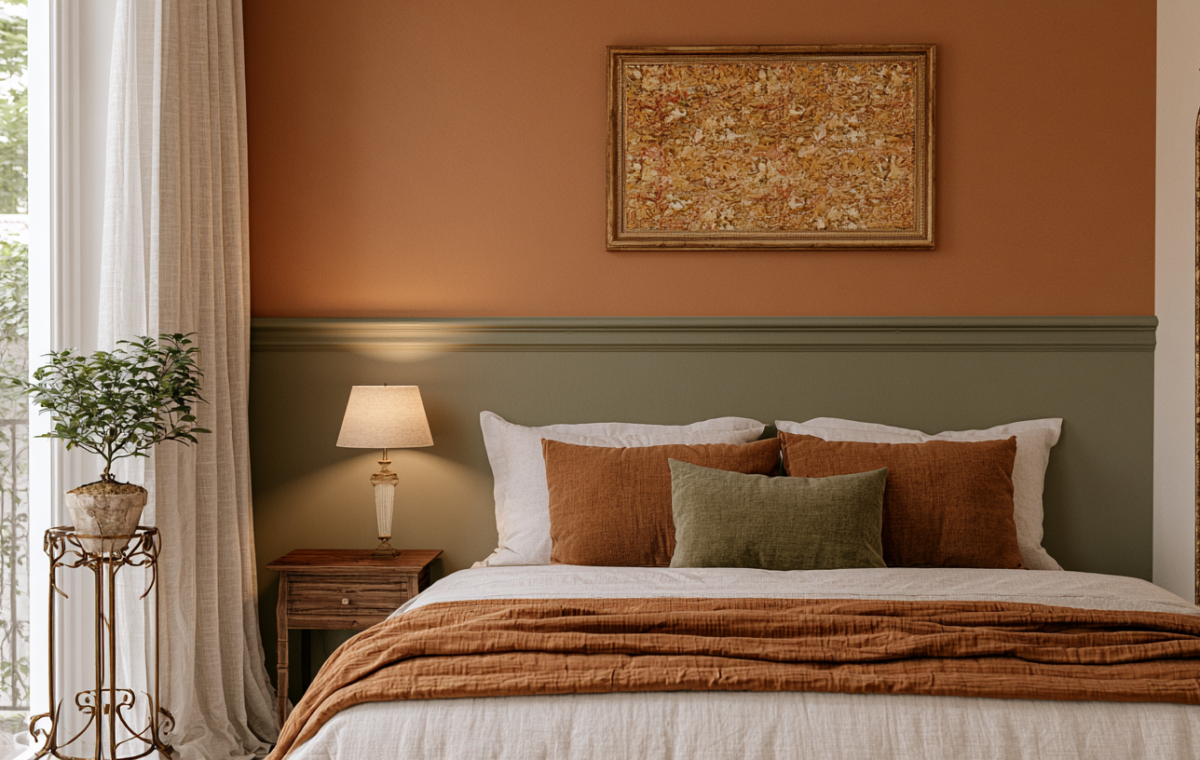
Take a close look at how the burnt sienna upper zone meets a grounded, mossy green lower half. This specific division creates an immediate sense of shelter. It acts as an organic headboard extension without buying extra furniture. Paint becomes structural architecture.
Balancing Saturated Hues
Working with high-pigment tones requires restraint and nerve. A rusty terracotta shade on top reflects morning light with warmth, while the muted olive green below absorbs shadows gracefully. This pairing stops a room from feeling flat or clinical. Pair these shades with unbleached linens and warm wooden nightstands to keep the rustic vibe authentic.
Choose a paint finish with low sheen for earthy pigments.
Keep trim details consistent to anchor the horizontal color break.
Incorporate organic textures like linen, rattan, and forged iron.
Lighting changes everything when dealing with saturated split walls. A simple ceramic table lamp with a warm bulb highlights the texture of the plaster and pulls out the undertones in the green wainscoting effect. Without this localized glow, deep colors can swallow a room during evening hours.
Avoiding Common Painting Pitfalls
Getting a razor-sharp dividing line takes patience. Painter’s tape alone often fails on textured plaster. Sealing the tape edge with your base color first prevents bleeding and guarantees a professional finish. It is a tedious extra step that saves hours of touch-up frustration later.
How are you planning to split your own walls, and what color combinations keep you up at night?
Editorial Lookbook & Photo Collection
Photo Archive: Stunning Two Tone Bedroom Walls with Earthy Color Blocking
36 Photos
Written by
JayhawkRent Editorial Team
Culinary Critic exploring visual stories and modern design based in Paris, France.
Editorial review fields are available through custom fields: jayhawk_reviewer_name and jayhawk_reviewer_note.
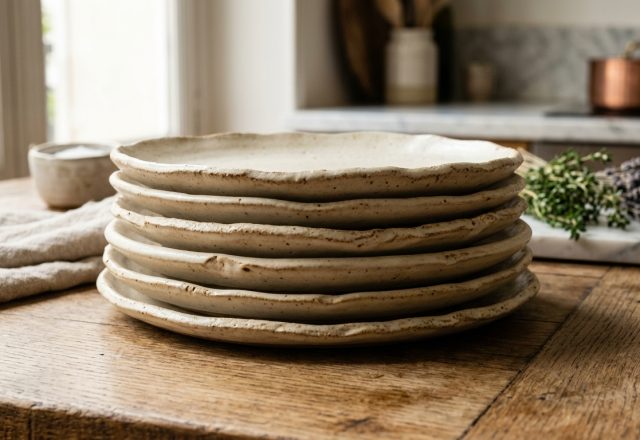
The Allure of Imperfection Mass-produced dinnerware lacks soul. Every plate that rolls off a factory line looks identical, stamped out with mechanical precision. But…