CURATORIAL CRITIQUE & DESIGN ANTHOLOGY: The Evolution of the Fluid Sanctuary
Walking through the quiet, light-drenched corridors of contemporary urban lofts, one notices a profound shift in how we curate our sanctuaries. It isn’t merely about the furniture we choose, but how that furniture negotiates with the void. In this evolving architectural landscape, the modern wall bed has transitioned from a utilitarian necessity to a cornerstone of spatial intelligence. We are no longer designing rooms for a single purpose; we are choreographing environments that breathe, expand, and retract in harmony with our daily rituals. The contemporary home demands a level of versatility that static floor plans simply cannot provide, pushing designers to rethink the very boundaries of the bedroom.
As an architectural curator, I view the integration of a bed into the vertical plane not as a compromise, but as an opportunity for structural poetry. It is about the ‘hidden’ becoming a design statement in its own right. When the mattress disappears, the room doesn’t just empty; it transforms, offering a renewed sense of negative space breathing room that is essential for mental clarity in high-density living. The objective is to achieve a spatial cadence where every square inch is intentional, grounded in the reality of architectural clearances while flirting with the boundaries of luxury minimalism.
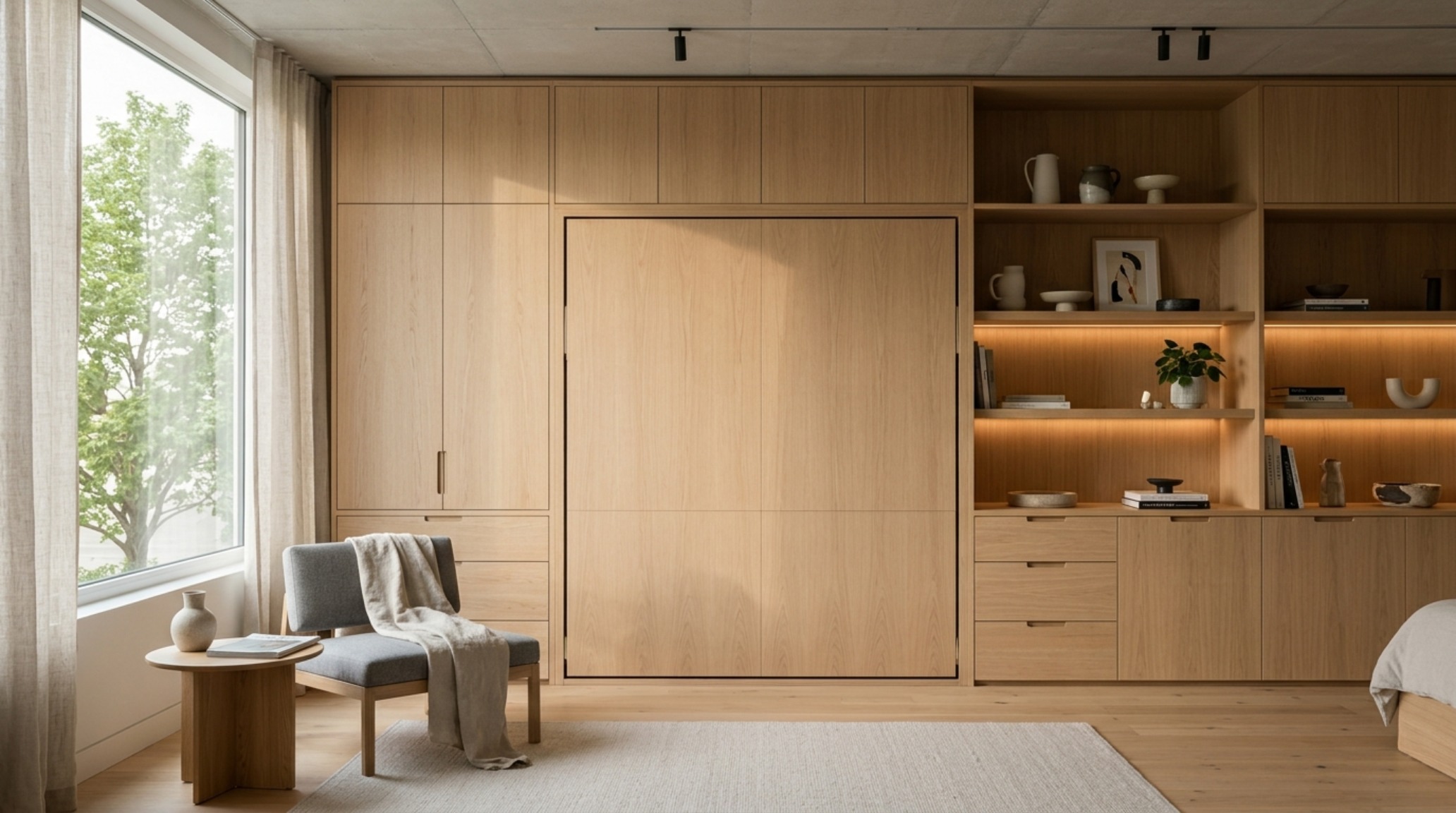
Modern Modern Wall Bed Ideas: Rethinking the Vertical Plane
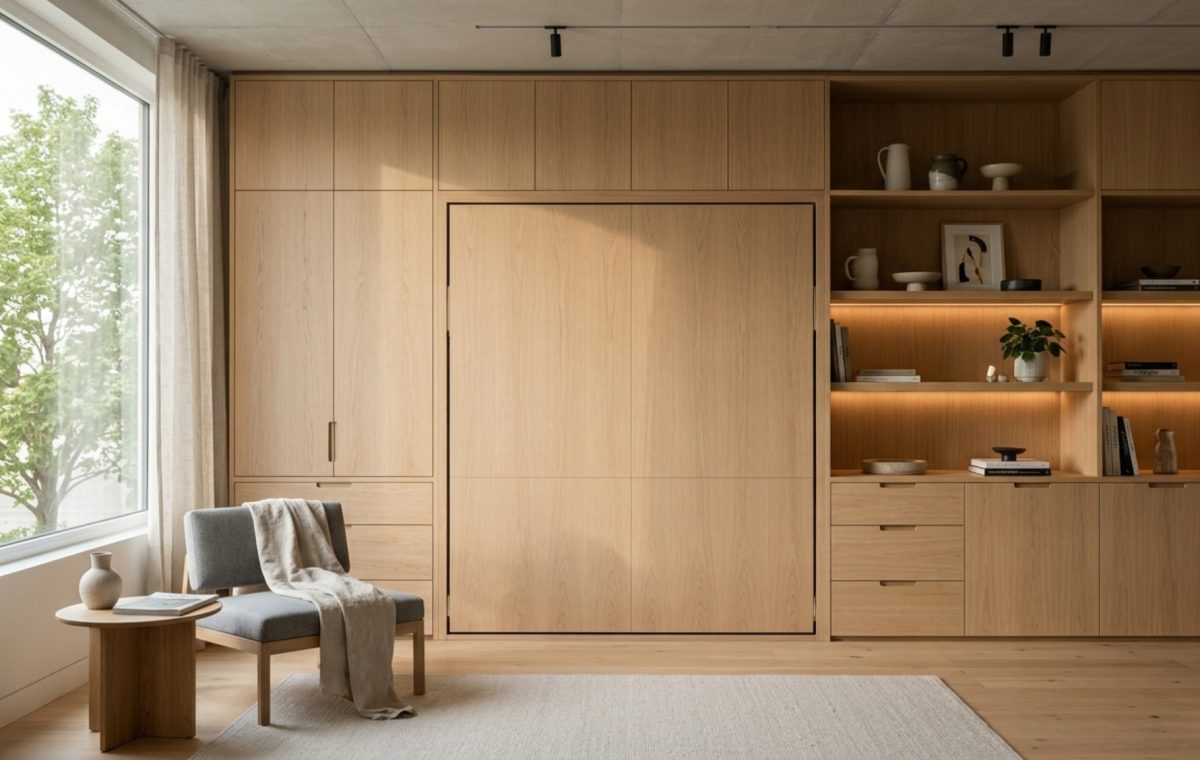
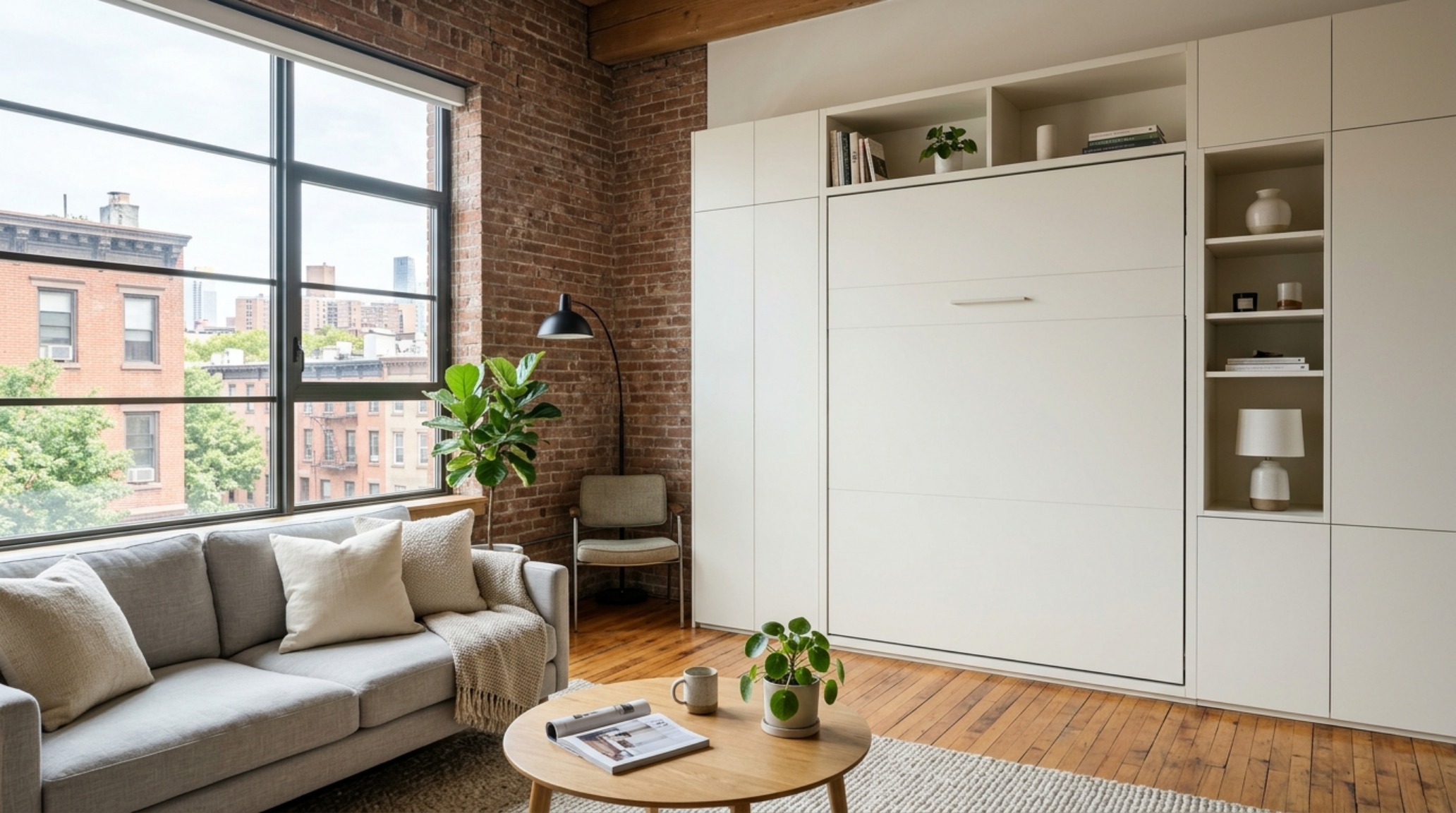
When we discuss modern modern wall bed ideas, we must look beyond the hinge. We are looking at integrated joinery that acts as a primary architectural feature. Imagine a floor-to-ceiling installation in Farrow & Ball Setting Plaster, where the bed is encased in a seamless cabinetry system that mimics the surrounding wall. This creates a monochromatic continuity that elongates the room, making a standard 9-foot ceiling feel significantly more expansive. The key is to align the cabinetry handles with the sightlines of existing window frames or door headers, creating a sense of structural permanence.
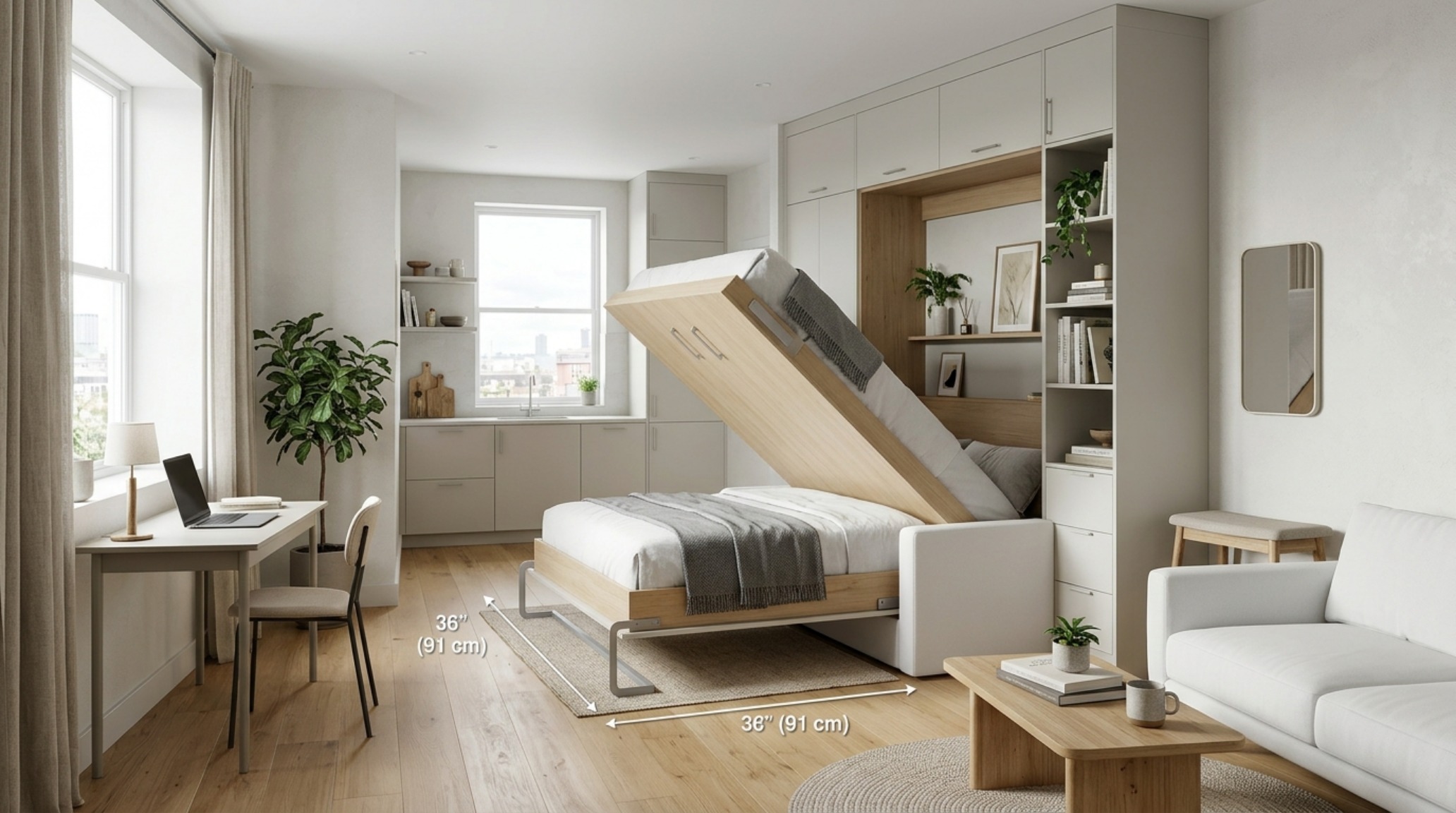
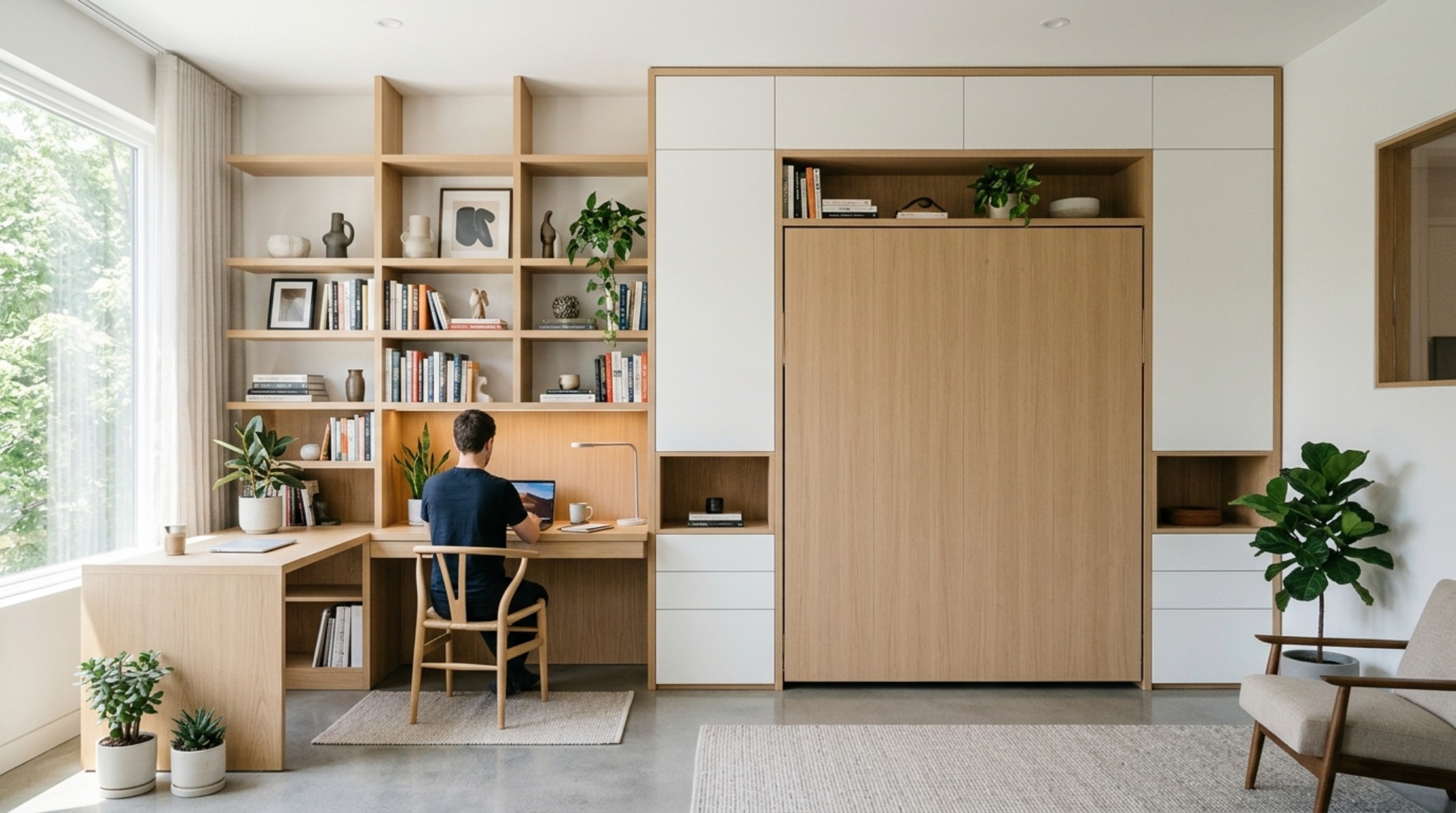
The most successful designs treat the underside of the bed as a canvas. Instead of a blank panel, we are seeing the rise of integrated shelving that remains level when the bed is lowered, or perhaps a foldable desk finished in a matte linoleum. This dual-purpose approach ensures that the room maintains its functionality 24 hours a day. In a 12×12 bedroom, a wall bed allows for a primary circulation path of 36 inches—the gold standard for comfortable movement—which would be otherwise consumed by a static queen-sized frame.
Small Space Modern Wall Bed: The Art of the Invisible Bedroom
In the context of the small space modern wall bed, every millimeter is a negotiation. The goal is to maximize the floor plane without sacrificing the ergonomics of sleep. We often utilize a ‘sideways’ or horizontal orientation for particularly narrow rooms. This allows for a lower profile when the bed is deployed, leaving ample room for a 30-inch dining chair clearance or an 18-inch coffee table reach between the bed and a facing sofa. This layout is particularly effective in studio apartments where the living and sleeping quarters are one and the same.
Architecturally, we are looking at ‘pocket’ installations. By recessing the bed unit into a non-load-bearing wall, the unit sits flush with the drywall. When closed, it is indistinguishable from the architecture. I often recommend a soft, matte finish like Benjamin Moore Swiss Coffee for these units; its subtle warmth prevents the large vertical surface from feeling sterile or clinical, providing a tactile grounding that makes the room feel inhabited rather than just occupied.
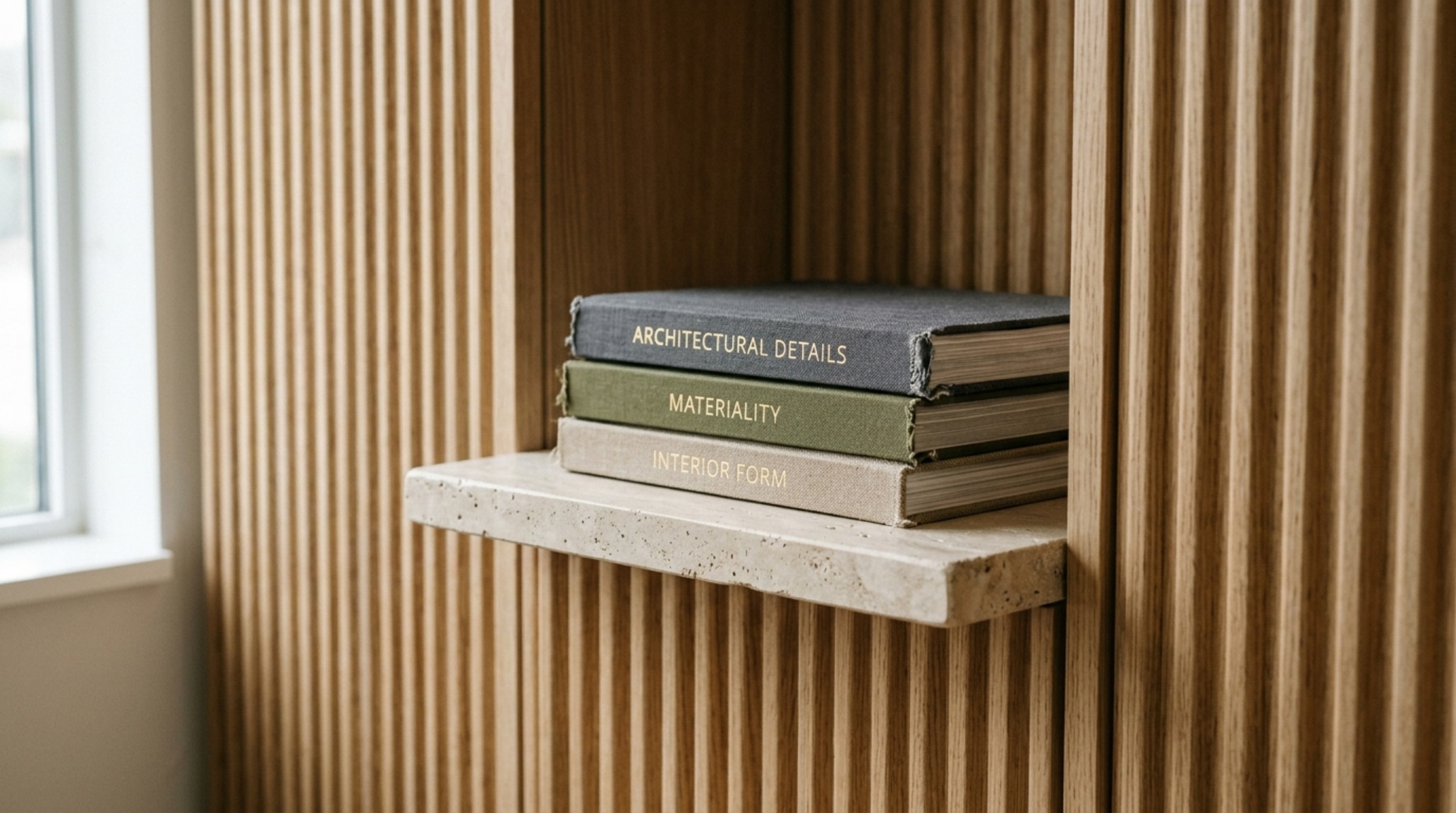
Luxury Modern Wall Bed Textures: A Tactile Narrative
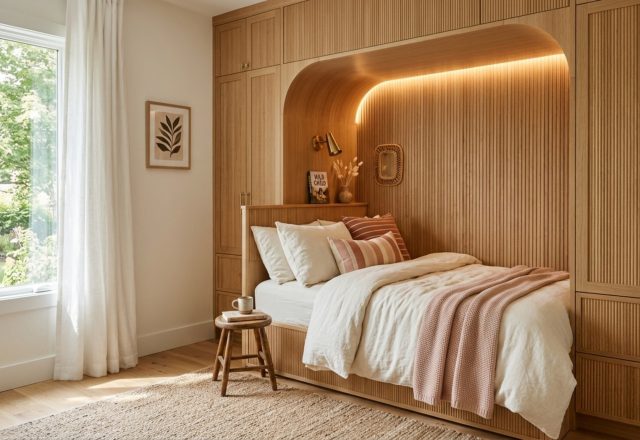
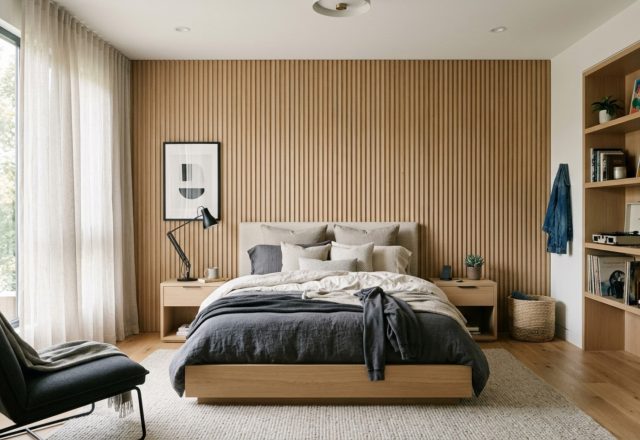
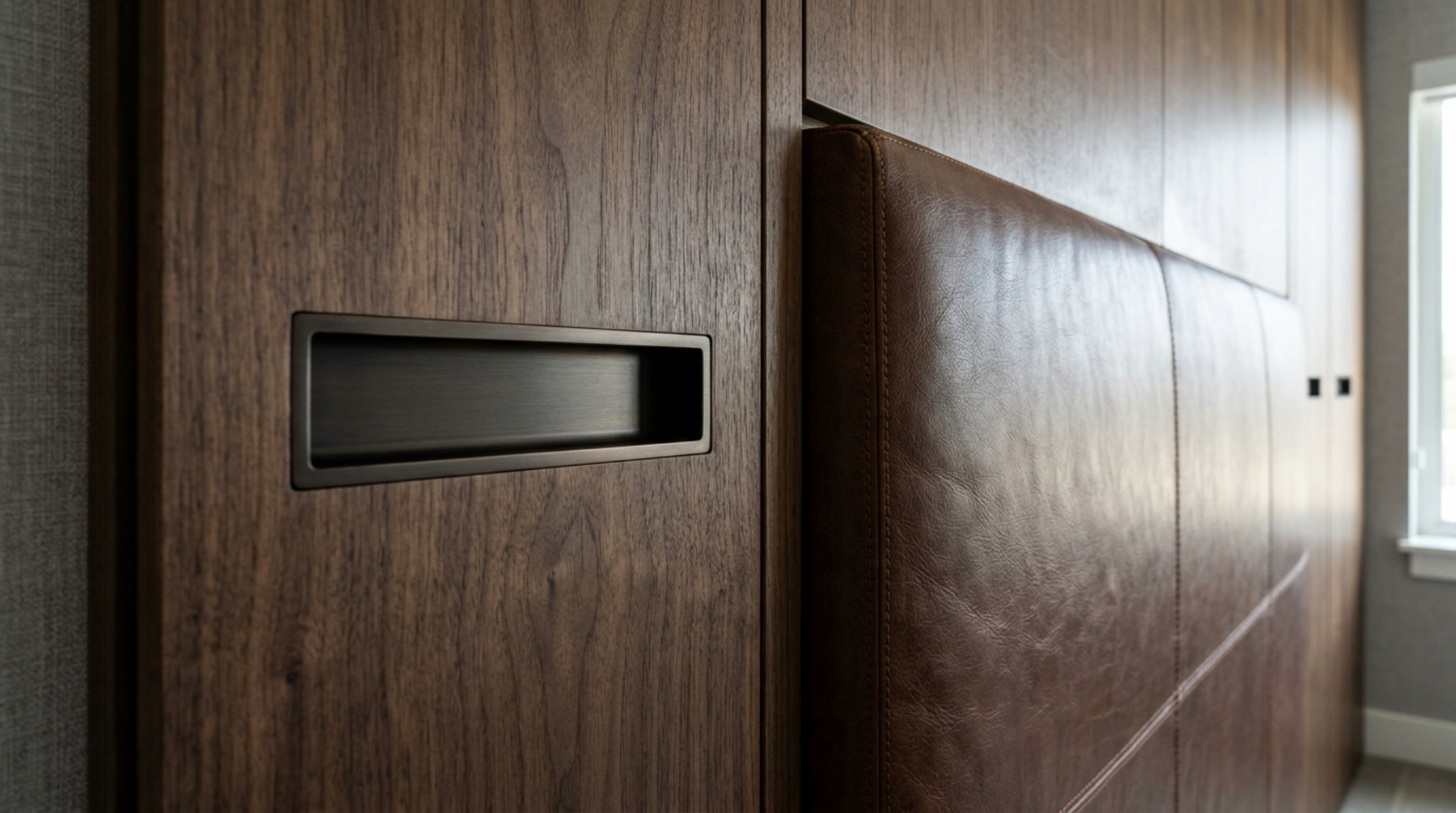
Luxury is defined by the touch. When exploring luxury modern wall bed textures, I lean heavily into the juxtaposition of organic materials. Think fluted white oak panels that catch the morning light, creating a rhythmic shadow play across the surface. This texture isn’t just aesthetic; it’s acoustic. The ridges help diffuse sound, contributing to the quietude of a high-end master suite. To elevate the interior of the bed cabinet, one might consider a lining of vegan leather or a high-thread-count textile in a deep slate charcoal.
The inclusion of natural stone, such as a honed travertine ledge built into the headboard area, provides a permanent place for a carafe of water or a book without the need for traditional nightstands. This ‘built-in’ mentality reduces visual clutter, allowing the materials to speak for themselves. In these high-end installations, the hardware is often recessed or touch-to-open, maintaining a clean, uninterrupted silhouette that aligns with the principles of quiet luxury. The goal is a tactile experience that feels as intentional as a custom-built wardrobe in a Parisian pied-à-terre.
Modern Wall Bed Lighting Guide: Atmospheric Precision
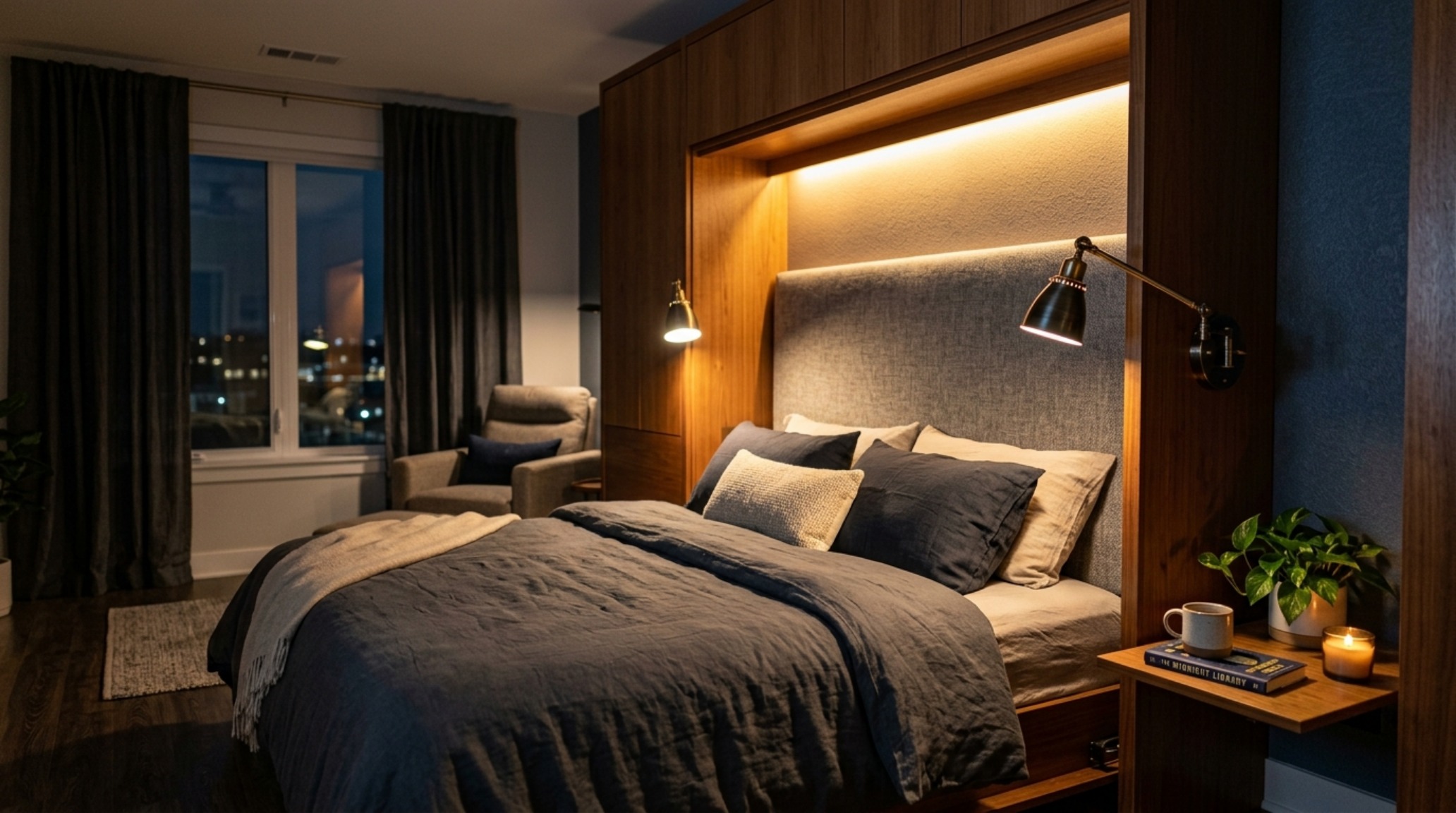
No architectural feature is complete without a sophisticated modern wall bed lighting guide. Lighting is the medium that defines the mood of the transition from day to night. Inside the bed cavity, we utilize recessed LED strips with a 2700K warm ambient temperature. It is critical to select LEDs with a high CRI (Color Rendering Index) of 90+, ensuring that the textures of your linens and wood finishes appear rich and true to life. These strips should be dimmable, allowing for a soft glow that mimics the warmth of a candle.
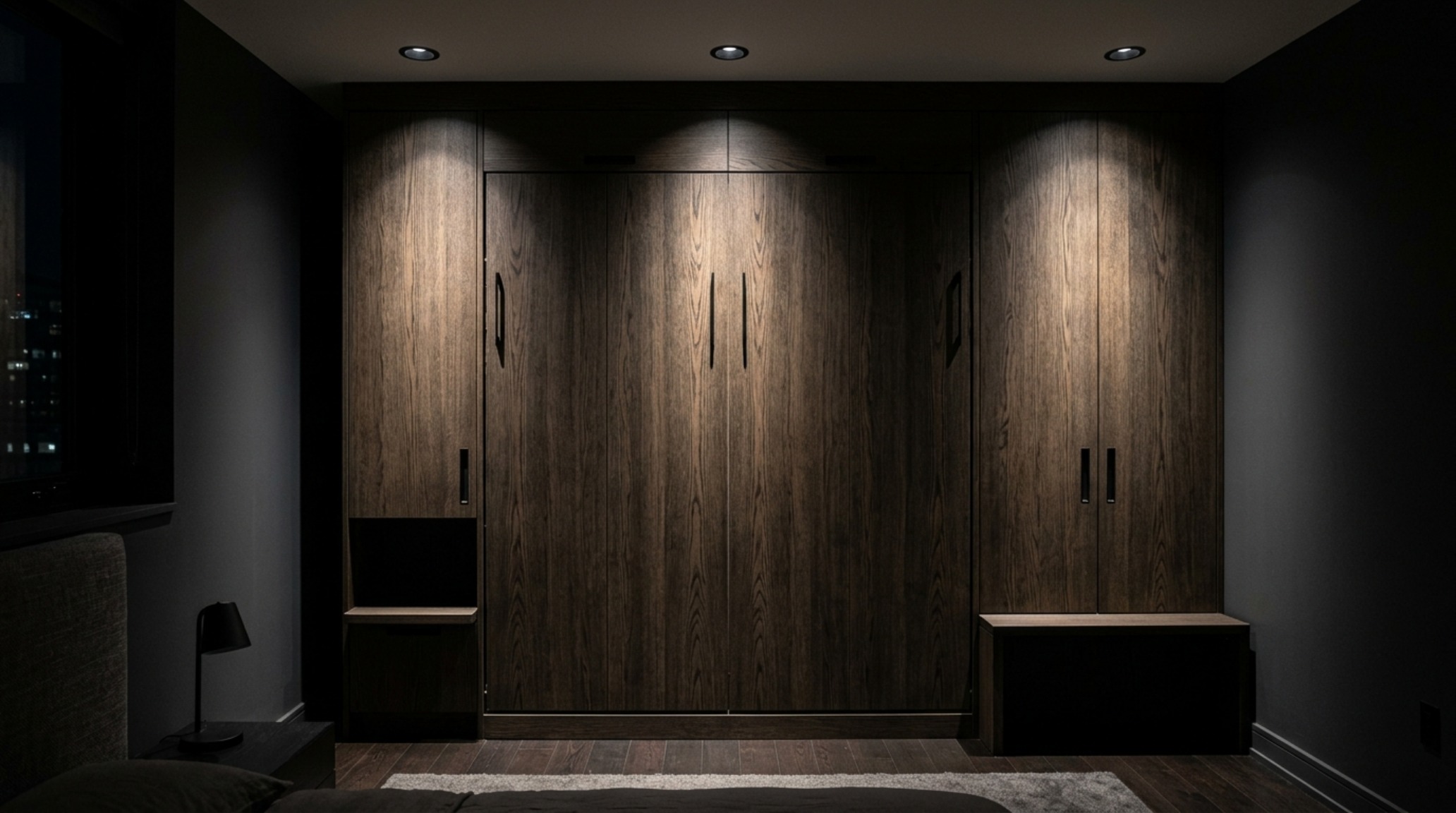
For task lighting, we often integrate directional reading lights with a 3000K temperature for better focus. These should be mounted on articulating arms that can be tucked away when the bed is closed. On the exterior of the unit, consider ‘wash’ lighting—narrow beam downlights that highlight the grain of the wood or the texture of the fluted panels. This shadow play gives the unit a sense of depth, preventing it from looking like a flat box against the wall. The interaction between light and shadow is what truly activates the spatial flow of the room.
Architectural Vignettes & Spatial Flow
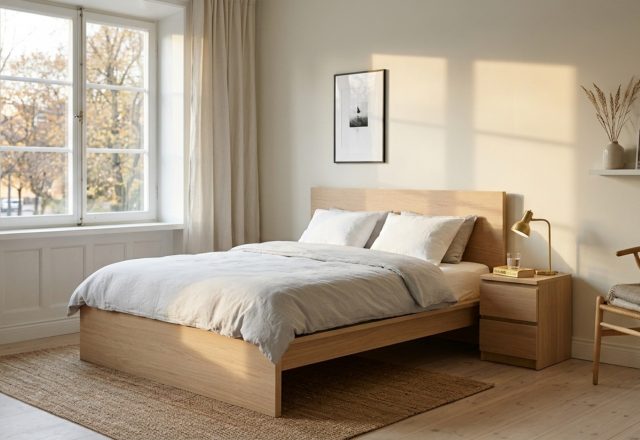
Designing for a modern wall bed requires a deep understanding of the floor plane’s movement. We must account for the arc of the bed as it descends. This ‘dead zone’ must remain clear of heavy furniture, but it doesn’t have to remain empty. Lightweight, sculptural pieces like a Wegner-style chair or a minimalist side table can be easily shifted. The transition should feel like a practiced ritual, not a chore. By using a consistent flooring material—perhaps a wide-plank light oak—throughout the entire space, the boundary between the ‘bedroom’ and the ‘living area’ is blurred, creating a cohesive visual narrative.
In the visual concept gallery of modern living, we see the wall bed acting as a pivot point. In one scenario, it is the backdrop for a home office, with the underside of the bed housing a sleek, cantilevered desk. In another, it is the focal point of a media room, flanked by bookshelves that store a curated collection of art and literature. The versatility of the mechanism is matched only by the creativity of the cabinetry design. We are seeing a move toward ‘living walls’ where the bed is just one component of a larger, multifunctional storage system that wraps around the room, maximizing every cubic foot of available volume.
Spatial Breakdown & Finish Specifications
Comprehensive architectural blueprint detailing finishes, paint hex codes, and structural balance.
The future of residential design lies in our ability to embrace fluidity without sacrificing the soul of the home. By integrating the modern wall bed into our architectural plans with the same reverence we give to a grand fireplace or a floor-to-ceiling window, we unlock a new dimension of living. It is a commitment to the idea that our homes should work for us, adapting to our needs for both connection and solitude. As we continue to refine the balance between form and function, the wall bed remains a powerful tool in the architect’s kit—a silent guardian of space that promises a more thoughtful, intentional way of inhabiting our world.
Editorial Silo • Recommended Architecture Studies
- The Architectural Playbook: Cute Bedroom Ideas For Girls & Optimizing Structural Flow and Custom Joinery in Girls’ Bedrooms — Archival Design Case Study
- The Tactile Aesthetic of Cool Bedrooms For Teenagers: Materials, Moods & Lighting Kelvin — Archival Design Case Study
Editorial Living Space Catalog
A tactile photo journey through spatial flow, tonal warmth, and balanced structural geometries.
Curated Visual Lookbook
Design Gallery & Spatial Studies
A visual curation of architectural arrangements, lighting concepts, and material palettes featured in this space.