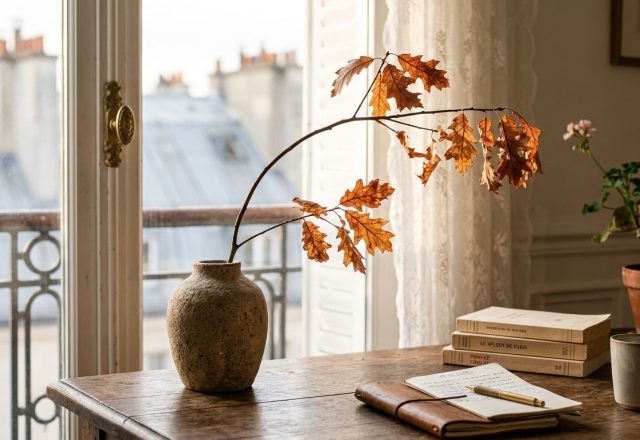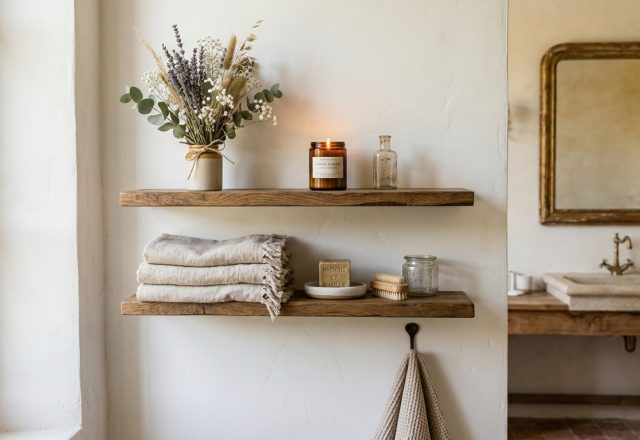
We often buy elaborate floral arrangements only to watch them droop within forty-eight hours. The water turns cloudy. The petals drop on the floor. It feels like an expensive chore. But Mother Nature offers a much more resilient option sitting right outside our doors. A few bare, dried branches placed quietly in a vessel change the entire mood of a room without demanding daily maintenance.
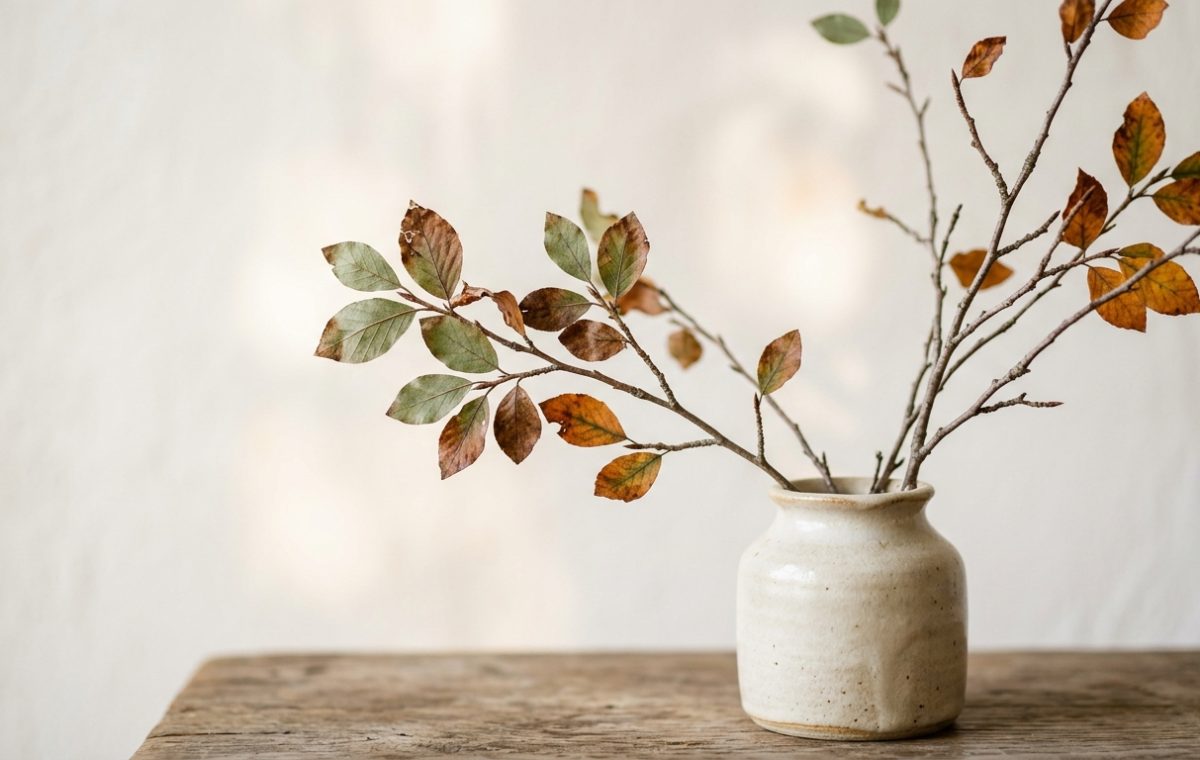
Look at how a simple beige ceramic jar anchors raw wooden surfaces. The pottery carries a subtle, handcrafted texture that grounds the delicate, fading foliage above it. It is raw, honest, and entirely unfussy. You do not need professional floristry skills to pull this off. You just need a sharp pair of pruning shears, a sturdy container, and an eye for asymmetry.
The Appeal of Withered Stems
Green leaves get all the glory during spring and summer, but autumn foliage brings complex character. Dried beech branches retain their papery crispness for months. Their muted brown, green, and amber tones add warmth to stark white walls and neutral plaster finishes. They refuse to demand attention, yet they quietly command the corner of any wooden console table or entryway chest.
Styling with dried botanicals forces us to slow down and appreciate imperfections. A crooked stem is no longer a flaw; it becomes the focal point. When gathering branches from the yard, look for branching structures that lean naturally to one side. This organic curve creates movement, guiding the eye across the tabletop rather than trapping it in a rigid, vertical standstill.
Choosing the Right Vessel
The container matters just as much as what goes inside it. Shiny glass or ornate crystal will clash with the earthy honesty of dried wood. Instead, opt for pottery with a matte glaze, speckled stoneware, or terracotta. A narrow neck helps support sparse stems so they do not flop over, while a heavy base prevents the whole arrangement from tipping when someone bumps the table.
- Select matte or textured ceramic finishes to echo natural elements.
- Keep the vessel neutral in color—sand, off-white, or raw clay works best.
- Ensure the opening is narrow enough to hold stems at an appealing angle.
- Skip floral foam entirely; let the natural friction inside the jar do the work.
There is real freedom in decorating with what is already finished growing. No watering schedule. No sunlight tracking. Just pure texture that lasts through winter storms and early spring transitions.
Editorial Lookbook & Photo Collection