The Art of Curating Vintage Shelves
Stop trying to make your home look like a pristine furniture catalog. Real character comes from friction, weight, and history. When you line up objects with too much symmetry, spaces instantly feel dead. Vintage shelf styling relies on tension between different textures, heights, and centuries. A heavy stack of calfskin-bound volumes tells a richer visual story than any generic plastic trinket ever could.
Notice how leather-clad books group together naturally alongside organic elements like dried wheat stalks. They provide earthy texture and subtle contrast against rigid wooden spines. It is not about perfection. It is about curation.
Balancing Scale and Weight
Heavy objects belong on the bottom or anchored securely to create visual gravity. If you put a delicate porcelain piece on the edge of a high shelf, the room feels top-heavy and anxious. Ground your console or bookcase with substantial volumes first. Then, layer lighter ceramic vessels featuring botanical motifs nearby. This creates natural breathing room across the wooden surface.
Real design depth takes time. Collect your pieces over years, not through a single afternoon shopping spree.
Avoid clutter traps by leaving negative space untouched. Every single inch does not need an ornament. Let empty walls and bare wood show through. That restraint separates thoughtful vintage shelf styling from messy hoarding.
Integrating Timeless Elements
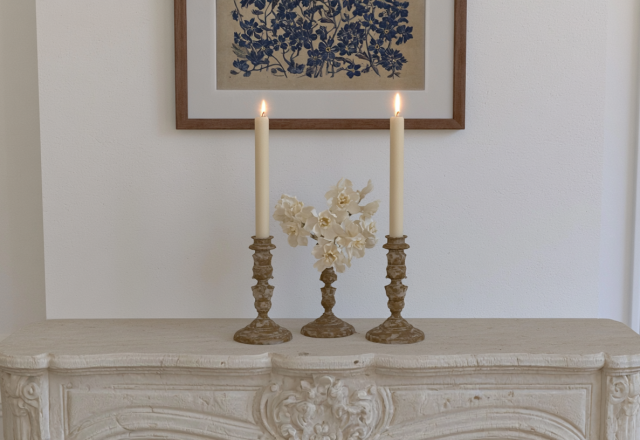
Antique frames, hand-painted vases, and weathered paper create instant soul in otherwise sterile modern rooms. You do not need an entire historic estate to pull this off. A single hand-thrown ceramic vase paired with vintage literature shifts the entire mood of a hallway console table.
What vintage pieces are currently gathering dust in your attic that deserve a proper spotlight on your shelves today?
Editorial Lookbook & Photo Collection