The Quiet Evolution of Kitchen Linens
Synthetics absorb water like plastic wrap. Cheap terry cloth pills after three washes and smells stale by Thursday. Nobody talks about the quiet frustration of a bad kitchen towel until you are halfway through cleaning up dinner and realize your rag is just smearing grease across the counter instead of soaking it up.
Pure linen kitchen towels change the math entirely. Flax fibers naturally repel moisture when dry, but weave them into a loose, tactile textile and they pull liquid away from ceramic and stainless steel faster than conventional cotton. They dry out in minutes hanging from an oven handle, which cuts down on that sour damp smell that lingers in humid houses.
Why Texture Matters More Than Thread Count
Smooth, factory-printed tea towels look nice in a catalog photo, but they fail the moment you need to grip a hot cast-iron skillet or dry a delicate wine glass. Real, washed linen carries a distinct pebble texture that catches crumbs and polishes glass without leaving lint behind.
- Long-staple flax creates superior durability that outlasts cotton by years.
- Stonewashed finishes give textiles an instant lived-in drape.
- Natural antimicrobial properties keep the fabric fresh between cycles.
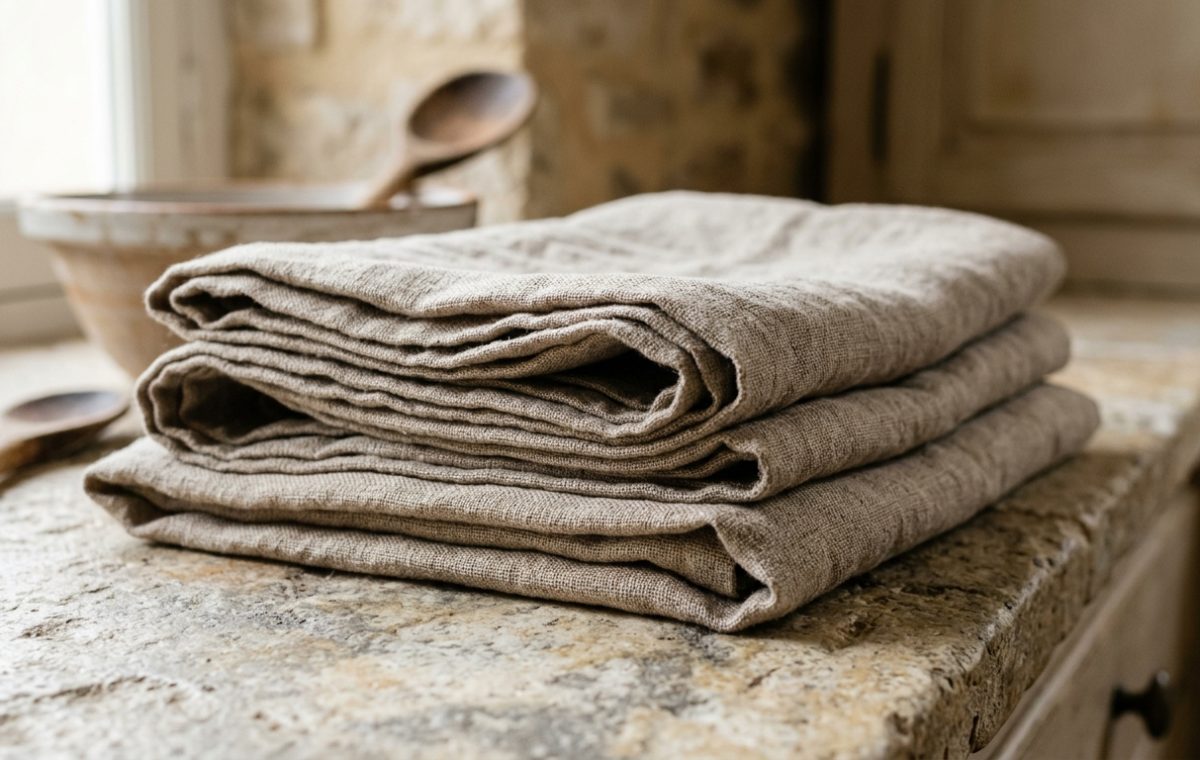
Running your hands over a stack of folded neutrals resting on a stone countertop reveals the appeal. There is zero pretense here. Just heavy-duty utility disguised as quiet aesthetic warmth.
Upkeep and Real-World Wear
Let us be honest about maintenance. Linen wrinkles. If you require every textile in your house to look pressed from a box, flax will drive you crazy. But in a working kitchen, those soft creases add character. Toss them into a warm wash with mild detergent, skip the chemical fabric softeners that coat fibers and ruin absorbency, and let them air dry or tumble low. They get softer with every single cycle.
How often do you find yourself replacing ratty dish rags, and are you ready to upgrade your workspace with textiles that actually perform under pressure?
Editorial Lookbook & Photo Collection