How to Style and Grow an Indoor Herb Garden in Your Kitchen
Key Points
The Appeal of Living Greens Real greenery changes the texture of a cooking space instantly.
Forget plastic arrangements or artificial styling props.
A humble…
The Appeal of Living Greens
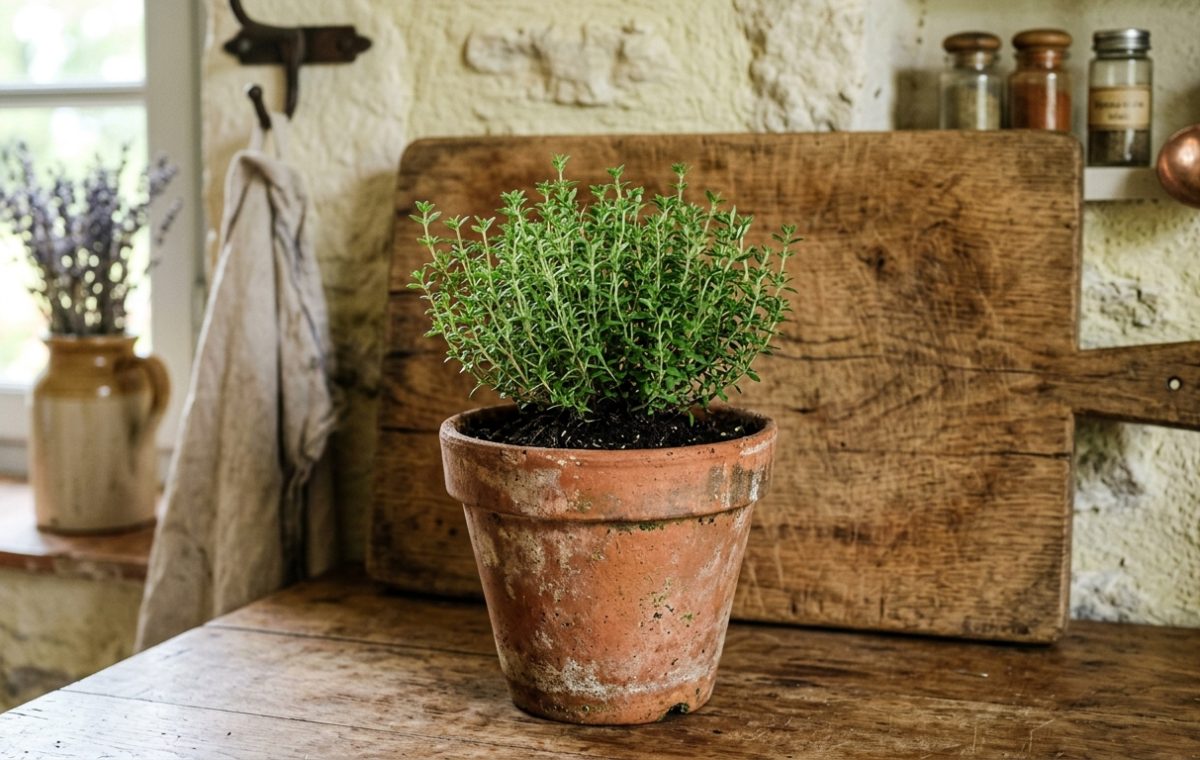
Real greenery changes the texture of a cooking space instantly. Forget plastic arrangements or artificial styling props. A humble clay pot sitting on a wooden counter brings genuine life into a room. Thyme, rosemary, and basil do more than flavor meals. They soften harsh architectural lines and introduce earthy scents the moment you brush past them.
Sunlight dictates everything. If your windows face south, your small pots will thrive. North-facing spaces require patience and perhaps a modest supplemental light fixture. Do not hide your herbs in dark corners. They need visibility and proper airflow to avoid root rot.
Choosing the Right Vessels
Plastic containers rarely age well indoors. Weathered terracotta tells a story. Notice how moisture slowly etches mineral rings into the porous clay, giving each piece unique character over time. Glazed ceramics trap moisture longer, which works wonders if you tend to forget your watering schedule. Terracotta breathes. It dries out quickly, demanding mindful attention from whoever holds the watering can.
Use unglazed pots for drought-tolerant Mediterranean herbs.
Ensure drainage holes are unobstructed by saucers.
Match pot sizes to root balls rather than visual proportions.
Fresh herbs within arm’s reach change how you cook. You stop relying on stale dried jars and start tasting actual oils.
Managing Moisture and Soil Quality
Overwatering kills more indoor kitchen plants than neglect ever will. Stick your finger an inch deep into the soil. If it feels cool and damp, step away. Wait until the substrate turns dusty before bringing water back into the equation. Standard garden dirt packs down too tightly inside enclosed spaces. Opt for a light, well-draining potting mix blended with perlite or coarse sand.
Pruning is not optional. Snipping the top leaves encourages lateral growth instead of vertical stretching. Your plants will look bushier and produce higher yields week after week.
How do you usually arrange your kitchen plants to balance natural light with everyday cooking convenience?
Editorial Lookbook & Photo Collection
Photo Archive: How to Style and Grow an Indoor Herb Garden in Your Kitchen
36 Photos
Written by
JayhawkRent Editorial Team
Culinary Critic exploring visual stories and modern design based in Paris, France.
Editorial review fields are available through custom fields: jayhawk_reviewer_name and jayhawk_reviewer_note.
The Beauty of Imperfect Textures Perfection is exhausting. When every pillow is karate-chopped and every blanket sits at a rigid forty-five-degree angle, a room…