Hallway Runner Rug Guide: Style Your Entryway Like a Pro
Key Points
The Forgotten Threshold Most entryways are treated as pure transit zones.
People drop keys, kick off dirty shoes, and rush past toward the kitchen.…
The Forgotten Threshold
Most entryways are treated as pure transit zones. People drop keys, kick off dirty shoes, and rush past toward the kitchen. Yet this narrow corridor sets the tone for your entire home. When you step onto a well-chosen hallway runner rug, the spatial dynamic shifts instantly. Bare hardwood feels too stark. A textured textile softens both the acoustic echo and the visual weight of long, blank drywall.
Choosing the right textile requires balancing foot traffic against aesthetics. High-traffic zones demand durable wool blends or low-pile synthetics that survive muddy boots and heavy winter coats hanging on wall hooks. Avoid thick, shaggy fibers here. They trap grit and quickly flatten under repeated pressure from daily comings and goings.
Balancing Proportion and Scale
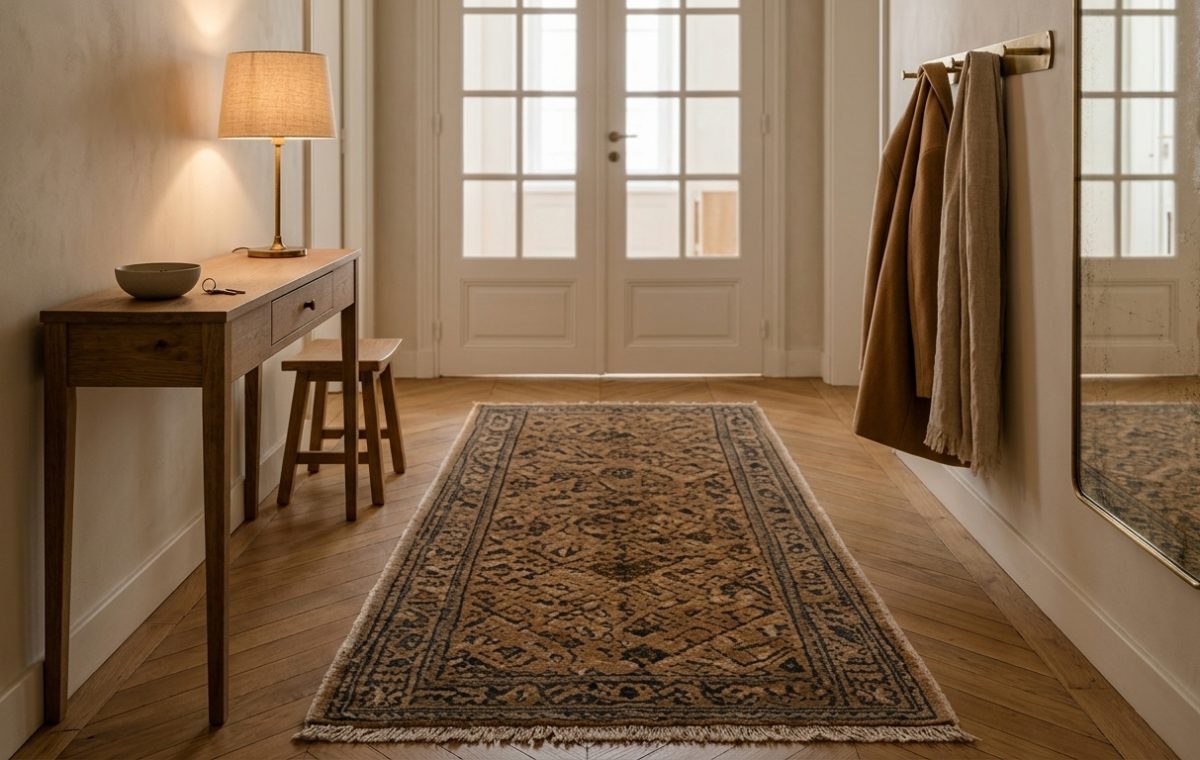
Proportion dictates success in narrow spaces. A runner that is too wide cramps the corridor, while one that is too narrow looks like an afterthought floating on a sea of exposed floor. Leave equal amounts of bare wood visible on both sides. This frames the passage cleanly, drawing the eye toward double doors or focal points at the far end of the hall. Notice how a slim wooden console table with a soft table lamp balances heavy side walls without overcrowding the walkway.
Measure your corridor length, subtracting at least six inches from both ends.
Prioritize low-pile weaves to prevent doors from catching on the edge.
Anchor lightweight rugs with a quality non-slip pad underneath.
Maintenance is the hidden chore nobody likes discussing. Runners accumulate dust faster than standard area rugs because air funnels down narrow corridors. Vacuum weekly with a brush-roll attachment turned off to protect delicate fringe edges. Rotate the rug every six months so foot traffic wears down the fibers evenly instead of creating a bald transit path right down the middle.
How do you currently handle the transition space right inside your front door?
Editorial Lookbook & Photo Collection
Photo Archive: Hallway Runner Rug Guide: Style Your Entryway Like a Pro
36 Photos
Written by
JayhawkRent Editorial Team
Culinary Critic exploring visual stories and modern design based in Paris, France.
Editorial review fields are available through custom fields: jayhawk_reviewer_name and jayhawk_reviewer_note.
The Allure of Vintage Bathroom Decor Most modern bathrooms feel like sterile operating rooms. Cold porcelain, harsh recessed lighting, and glossy tiles leave zero…
Most city dwellers treat their outdoor perches as glorified storage lockers. That metal grate with a view of concrete rooftops becomes a dumping ground…