The Allure of Labeled Pottery
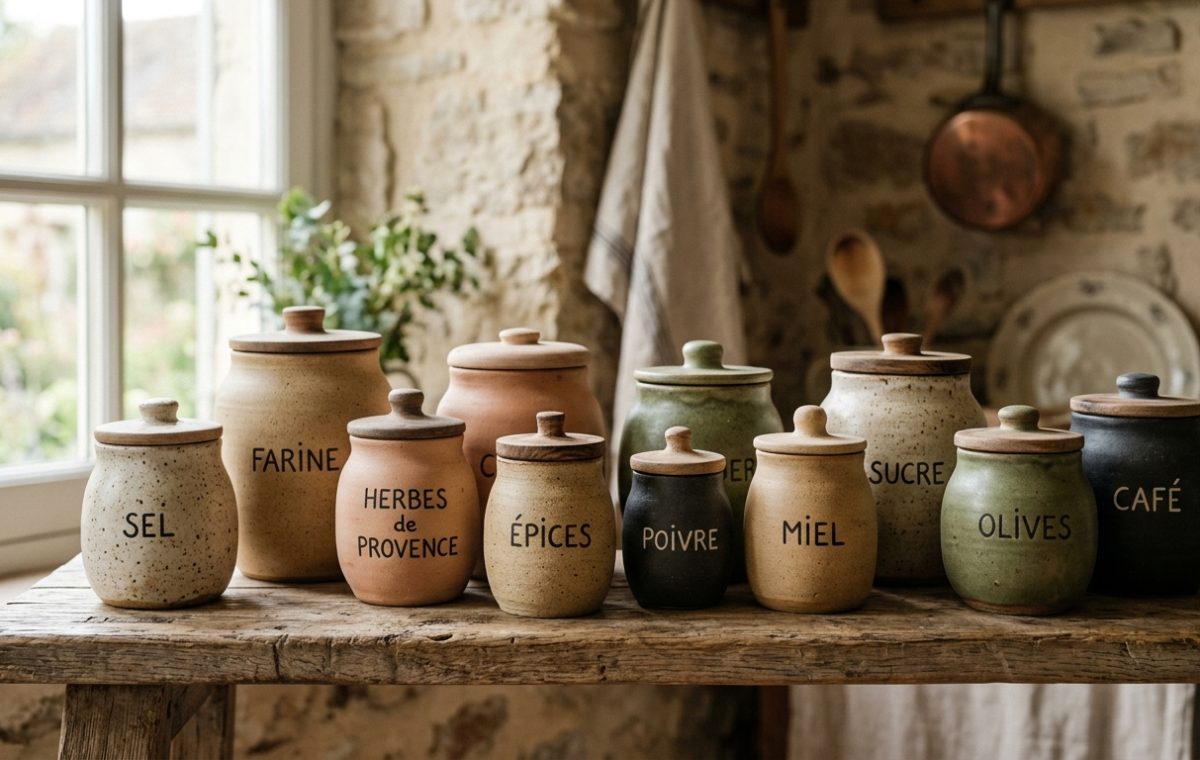
Plastic bins and clear acrylic dispensers have had their moment in the organization spotlight. Yet, they lack soul. Staring down a row of identical plastic containers feels a bit like auditing a medical supply closet. Contrast that sterile aesthetic with a lineup of handcrafted ceramic jars resting on a worn wooden workbench. These pieces carry weight, history, and a deliberate slowness that modern manufacturing simply cannot replicate. Glazes run slightly thin at the edges. Letters stamped onto the clay bodies reveal minor irregularities that tell you a human hand shaped the earth.
Using French country pantry canisters changes how you interact with daily cooking ingredients. When flour, salt, and coffee sit inside opaque earthenware rather than transparent plastic, your kitchen shifts from a high-efficiency workspace into a room anchored in tradition. You rely on memory and habit rather than glancing through a clear window to check supply levels. That minor friction point is actually a design feature, forcing you to slow down and engage with your ingredients before dinner preparation even begins.
Selecting the Right Glazes and Finishes
Building a collection takes patience. Buying a matching set off a big-box store shelf defeats the entire point of rustic styling. The real charm lies in accumulation. Mix speckled beige stonewares with mossy greens and deep charcoal jars. Vary the heights deliberately. A squat container labeled for black pepper looks striking next to a tall, cylindrical crock meant for baking flour. Lids with wooden knobs or tightly fitted ceramic tops help seal out moisture, keeping dry goods fresh without needing modern rubber gaskets that eventually crack and degrade.
Practical Placement and Upkeep
Heavy ceramics require sturdy foundations. A flimsy wire shelf will buckle under the collective weight of eight or nine filled crocks. Solid timber boards mounted on heavy iron brackets or deep, reclaimed wood countertops provide the necessary structural support. Keep frequently used items like coffee, salt, and spices within arm’s reach of your prep zone, while reserving bulk storage for harder-to-reach lower cabinets. Hand-washing these jars is usually best, as harsh dishwasher cycles can craze vintage glazes over time.
How do you currently store your daily dry goods, and are you tempted to bring a bit of old-world pottery into your cooking space?
Editorial Silo • Recommended Architecture Studies
- Designing a Classic French Apartment Living Room Layout — Archival Design Case Study
- How to Style a Rustic Kitchen Table Centerpiece With Fruit — Archival Design Case Study
Curated Lookbooks & Architectural Studies
- Round Wooden Coffee Table Decor: Simple Styling Ideas
- The Materiality Error: Why Your ‘Aesthetic’ Closet Feels Sterile Instead of Quiet Luxury
- Decorating Small Apartment Ideas
- Parisian Hallway Decor: How to Style a Grand Narrow Foyer
- Mastering Neutral Bedroom Pillows and Textures
- Narrow Hallway Design Ideas to Transform Tight Spaces
Curated Visual Lookbook
Design Gallery & Spatial Studies
A visual curation of architectural arrangements, lighting concepts, and material palettes featured in this space.