In the evolving landscape of residential architecture, the concept of a ‘Green Room’ has transitioned from a backstage luxury to a vital domestic sanctuary. It is no longer just a trend; it is a holistic approach to spatial wellness. When we discuss green room decor ideas, we are looking at the intersection of biophilic psychology and rigid architectural efficiency. The challenge lies in creating a space that feels expansive and restorative without sacrificing the pragmatic requirements of modern living. We are moving away from the cluttered ‘plant parent’ aesthetic and toward a refined, ergonomic mastery where every millimetre of negative space is as considered as the furniture itself.
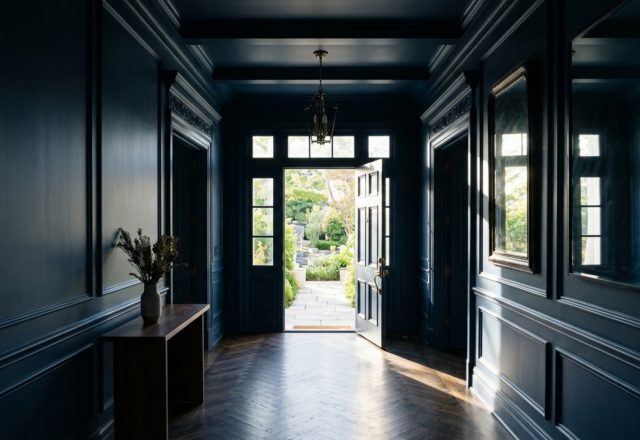
Designing with green is inherently about balance. It is about the weight of a deep forest olive against the lightness of a 36-inch clear walkway. It is about how a fluted oak console can hide a workstation while maintaining the visual serenity of a verdant retreat. To master this, we must look at the room not as a collection of objects, but as a choreography of movement and light.
Designing for Flow: Why Ergonomics Drive Modern Green Room Decor Ideas
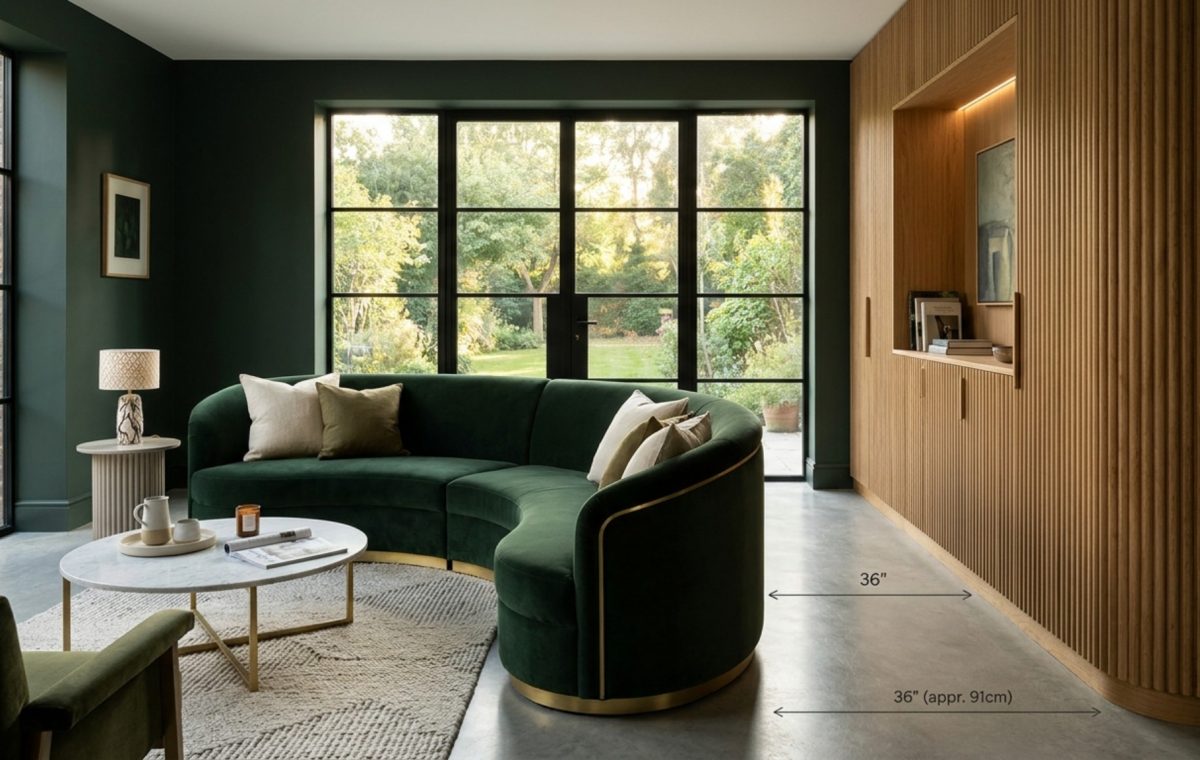
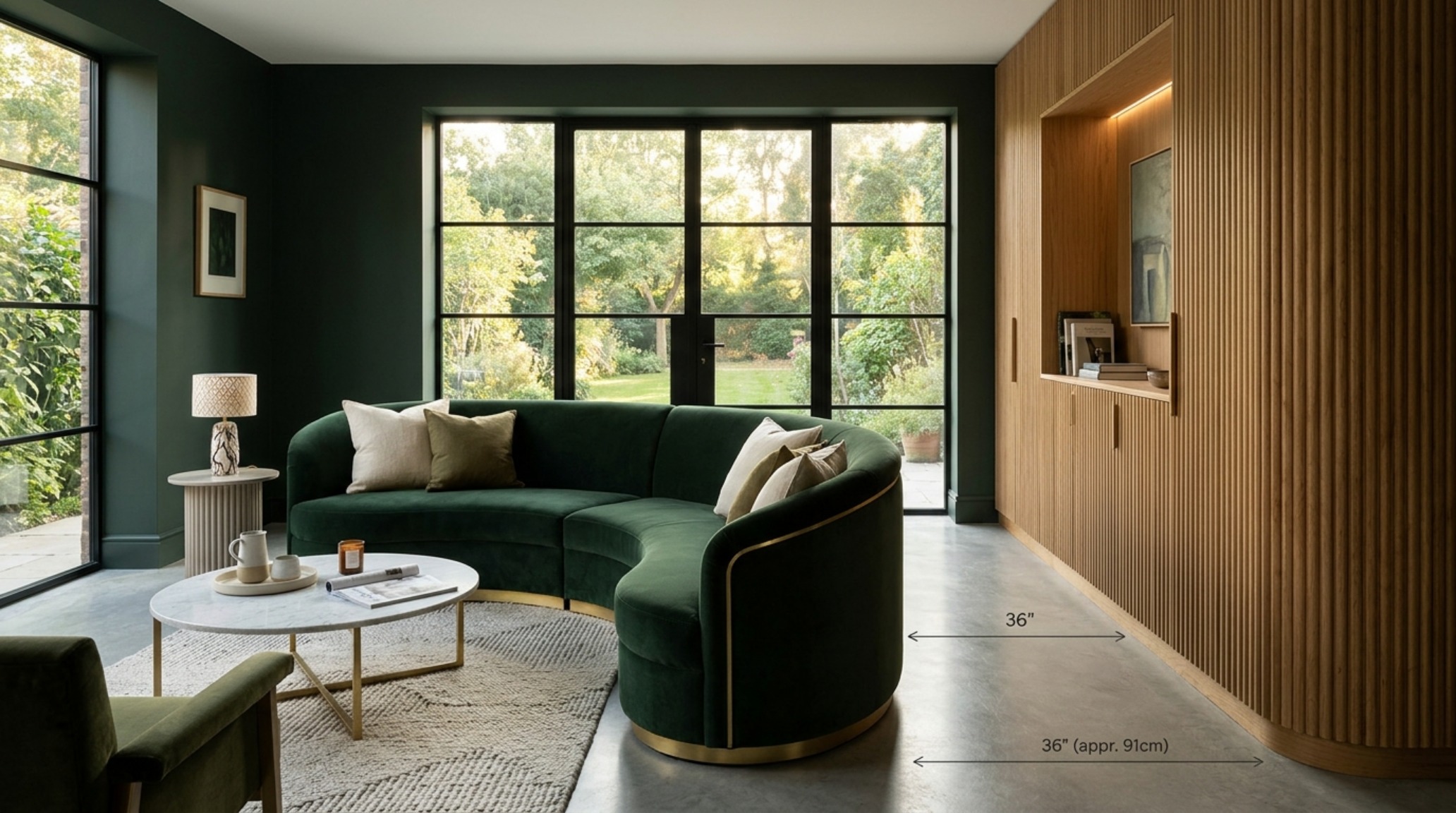
The success of any interior hinges on its ‘spatial cadence’—the rhythm at which a person moves through the environment. In a room dedicated to rejuvenation, the ergonomics of circulation are paramount. Standard architectural clearances dictate a minimum of 36 inches for primary walkways to ensure a sense of ease rather than constriction. When integrating green room decor ideas into a layout, I often recommend floating furniture off the walls to create a ‘breathing’ perimeter.
The 18-Inch Rule and Sightline Alignment
Consider the proximity of your seating to your surfaces. A coffee table should sit exactly 18 inches from the edge of the sofa—close enough for a book or a cup of tea, but far enough to allow for natural leg movement. In a green-themed room, these distances prevent the heavy, saturated colors from feeling claustrophobic. Sightline alignment is equally critical; by keeping the vertical center of your art at a standard 57 inches (eye level), you anchor the room’s height, allowing the darker botanical tones on the lower third of the walls to ground the space without dragging the ceiling down.
We also need to consider the tactile grounding of the furniture. In a high-traffic green room, choose pieces with rounded edges. Ergonomically, our brains perceive sharp corners as ‘threats’ in a space meant for relaxation. Curved silhouettes in sage-toned velvet not only soften the room’s geometry but also facilitate a more fluid movement pattern, particularly in compact urban dwellings.
Small Space Green Room Decor Ideas: Verticality and Hidden Storage
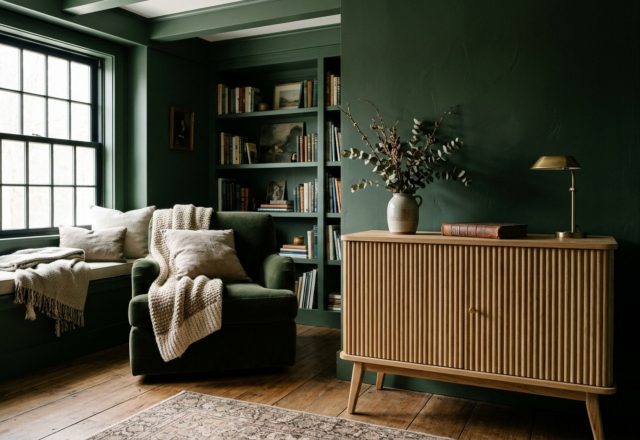
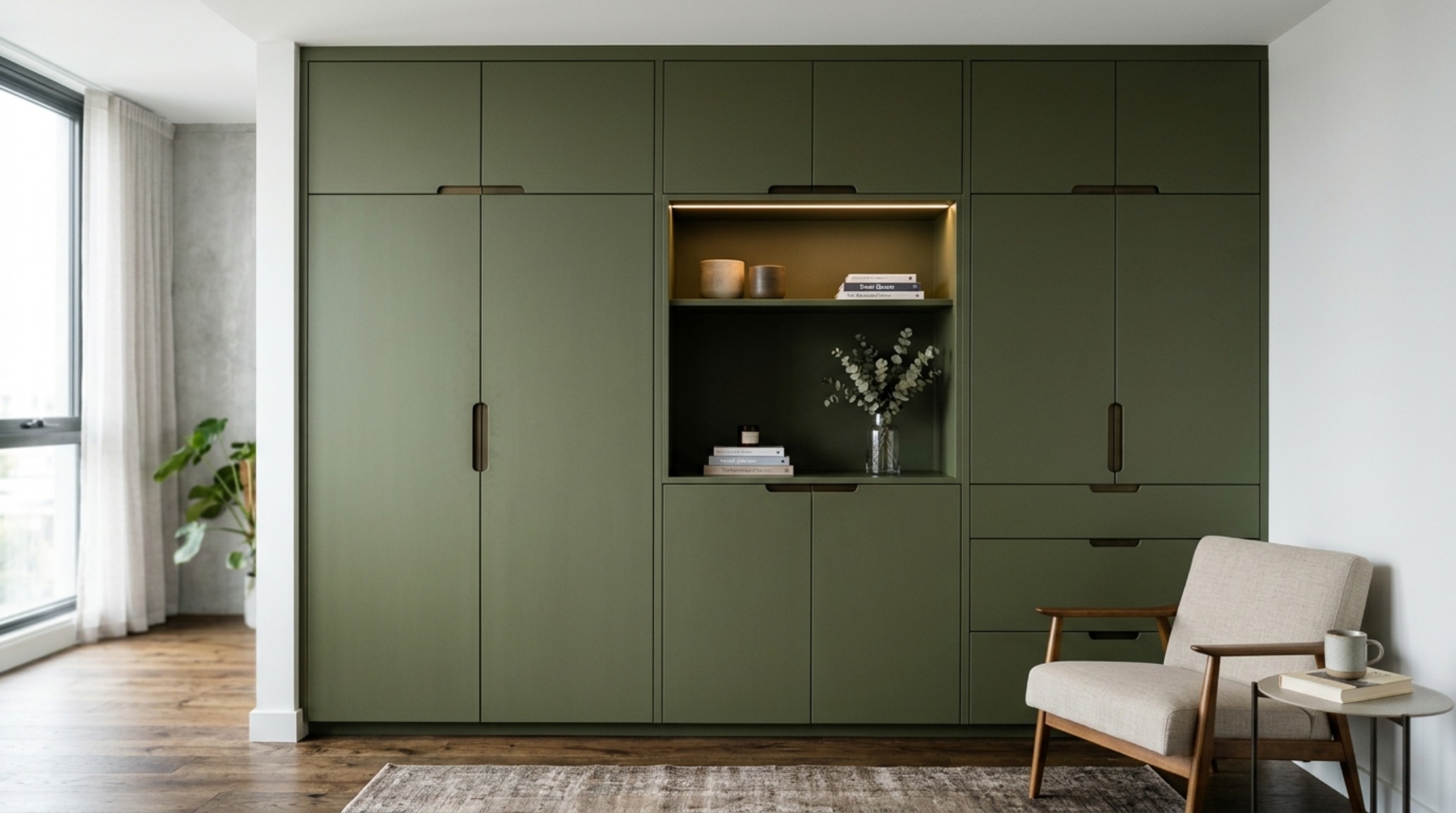
When square footage is a premium, the floor is your most precious commodity. The most ingenious small space green room decor ideas leverage the vertical plane. Think of your walls as functional canvases. Built-in cabinetry, painted in a matte finish like Farrow & Ball’s Studio Green, can vanish into the architecture, hiding tech clutter and peripheral storage while providing a seamless, immersive color experience.
The Art of the ‘Disappearing’ Workspace
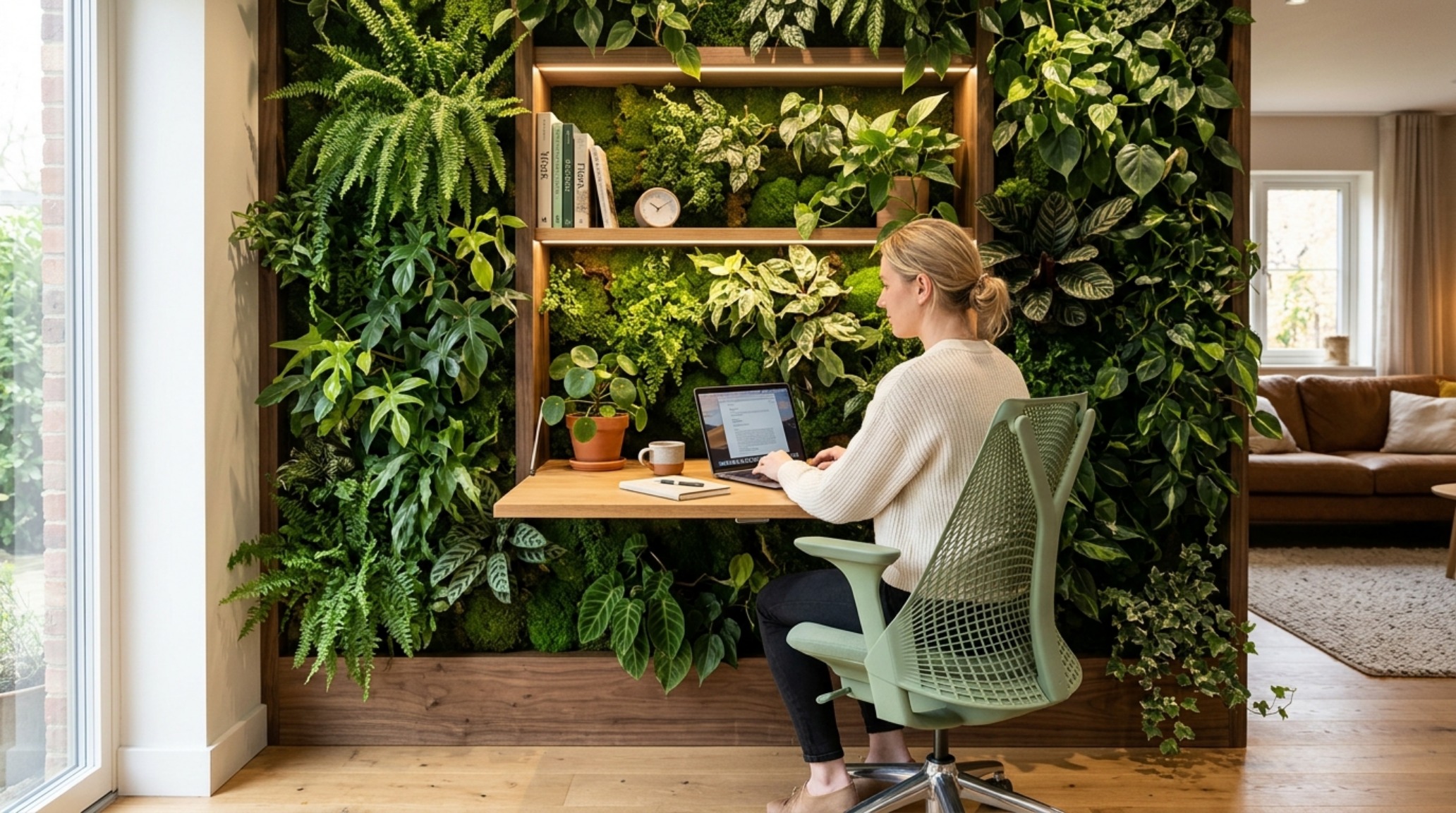
For those of us working from home, a green room often pulls double duty. The ergonomic hack here is the ‘cloffice’ or the fold-down secretary desk. By using a monochromatic palette—matching the desk material to the wall paint—the workspace disappears when the day is done. This mental ‘zoning’ is essential for psychological well-being. Using a high-back ergonomic chair upholstered in a matching forest green linen ensures that while you are working, your body is supported, but when you stand up, the chair doesn’t scream ‘office furniture’ against your curated aesthetic.
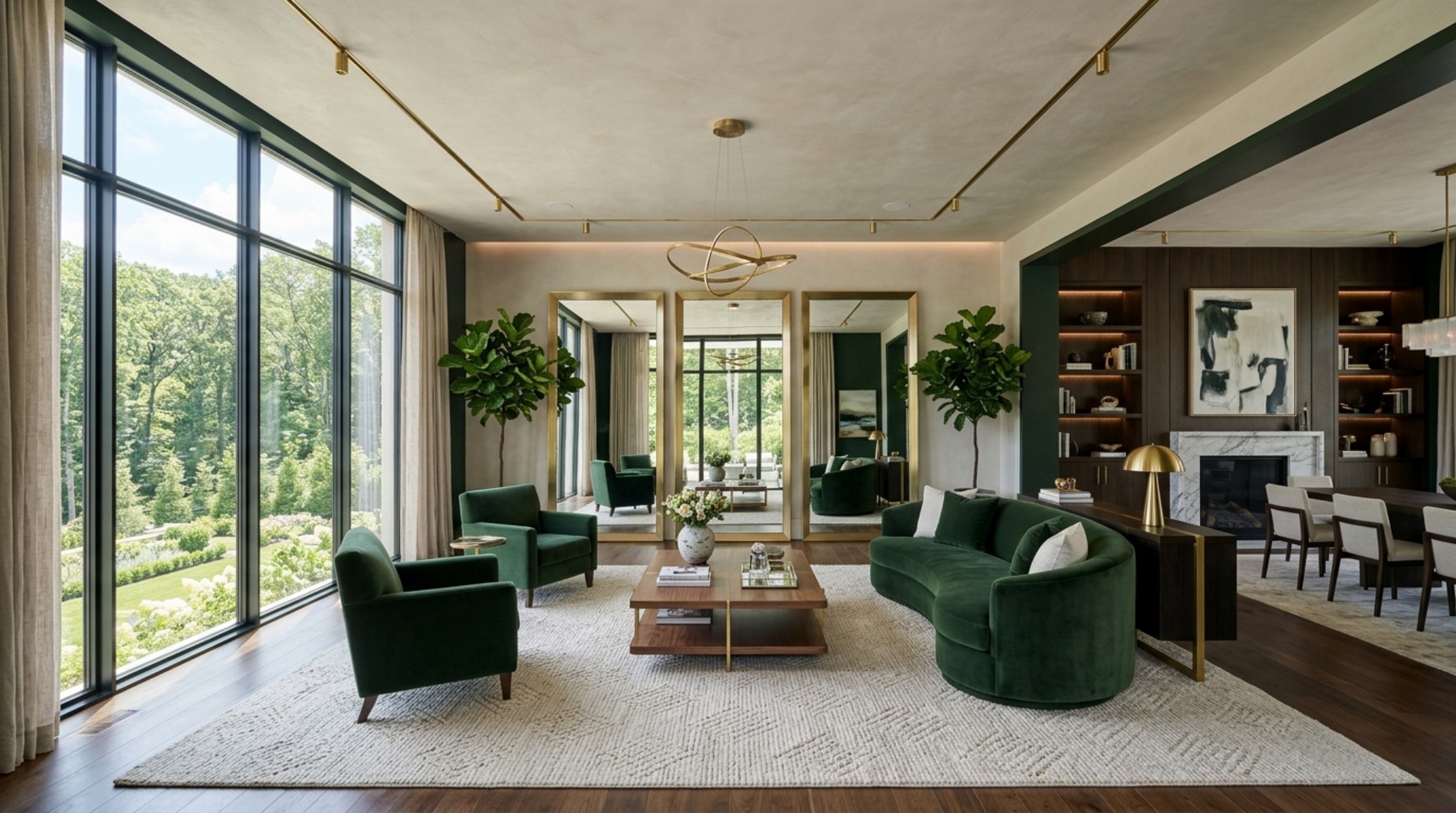
- Mirror Placement: Use oversized floor mirrors opposite windows to bounce light into darker corners, effectively doubling the visual depth of the room.
- Leggy Furniture: Select sofas and armchairs with exposed legs (tapered oak or brushed brass) to allow light to pass underneath, making the floor area feel larger.
- Multi-functional Ottomans: Replace a heavy coffee table with two smaller green leather ottomans that can serve as extra seating, footrests, or—with a tray—table surfaces.
Luxury Green Room Decor Ideas Textures: The Materiality of Calm
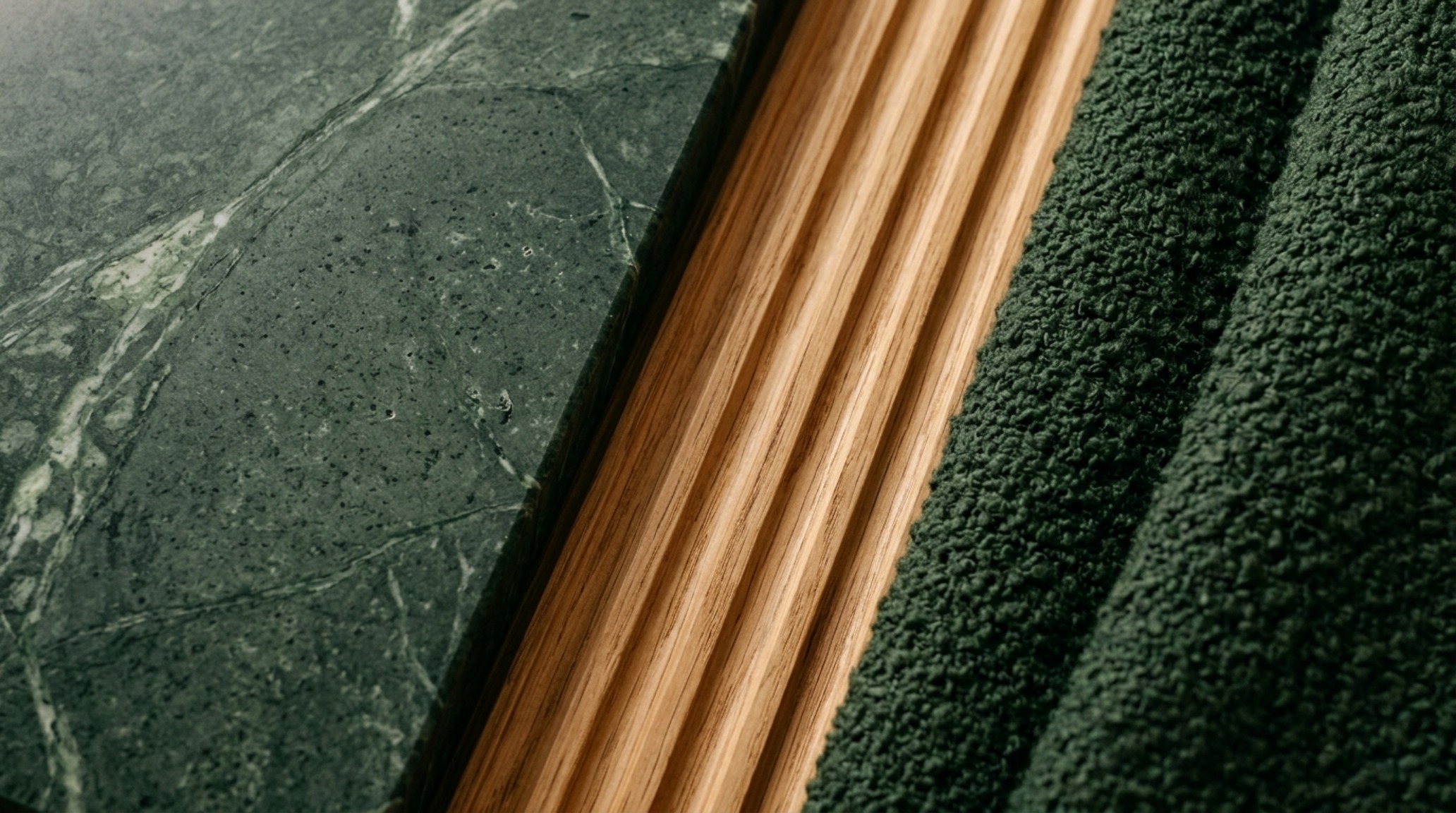
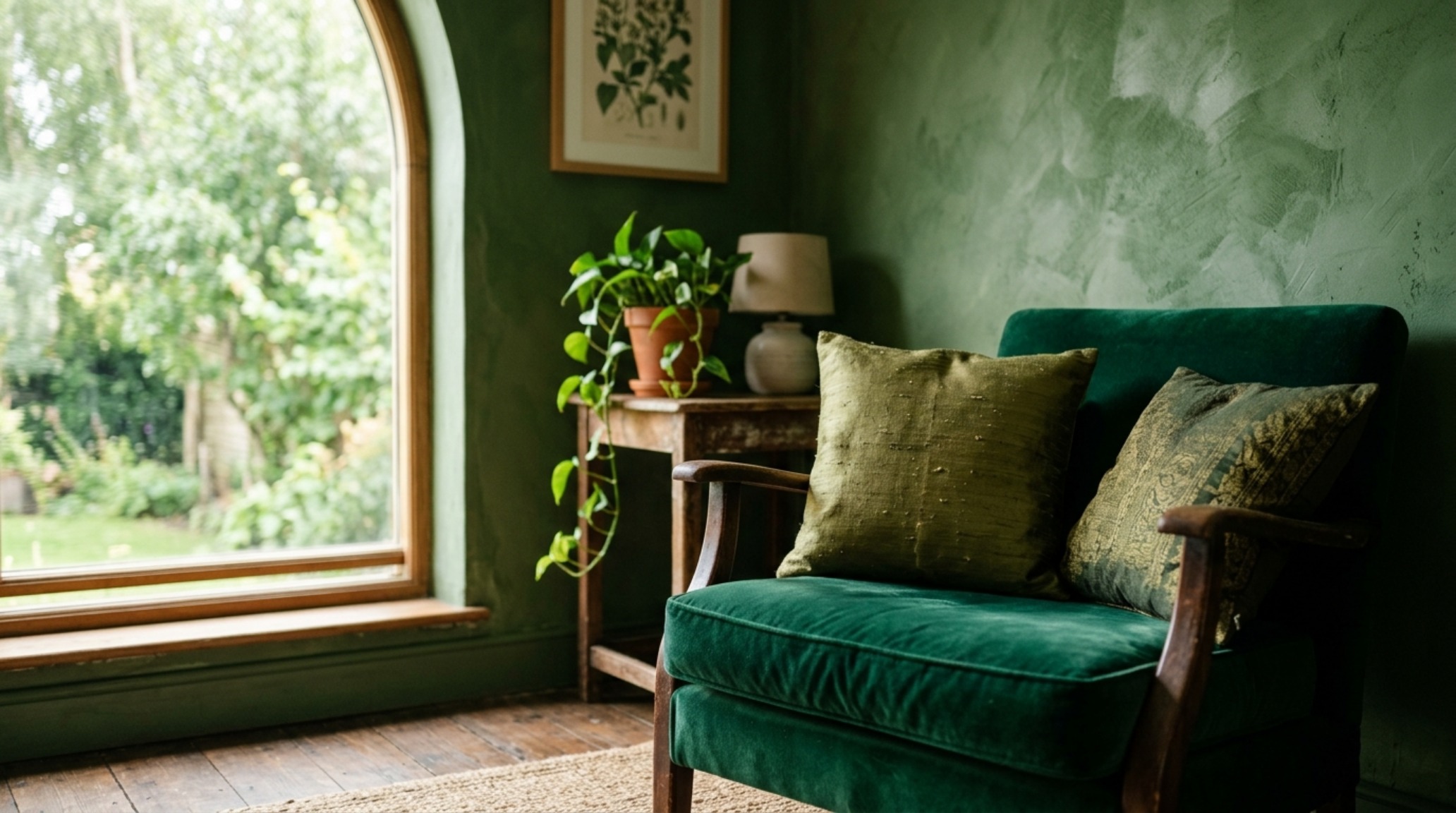
Luxury is defined by the touch. In a space dominated by green, the interplay of textures prevents the color from feeling flat or institutional. I advocate for a ‘material stack’ approach. This involves layering luxury green room decor ideas textures like honed Verde Guatemala marble against the warmth of fluted white oak and the soft shimmer of silk-blend rugs.
“Design is not just what it looks like and feels like. Design is how it works.” — This Steve Jobs mantra applies perfectly to the ergonomic green room. The texture must serve a purpose.
A bouclé armchair in an olive tone provides a high-friction, comfortable surface that keeps you positioned correctly during long reading sessions. Conversely, a smooth, cool-to-the-touch marble side table offers a sensory contrast that keeps the mind engaged. When selecting materials, focus on the High CRI (Color Rendering Index) of your lighting. A CRI of 90+ is non-negotiable; it ensures that your moss-colored velvets and emerald-stained woods look rich and authentic, rather than muddy under artificial light.
The Green Room Decor Ideas Lighting Guide: Setting the Mood
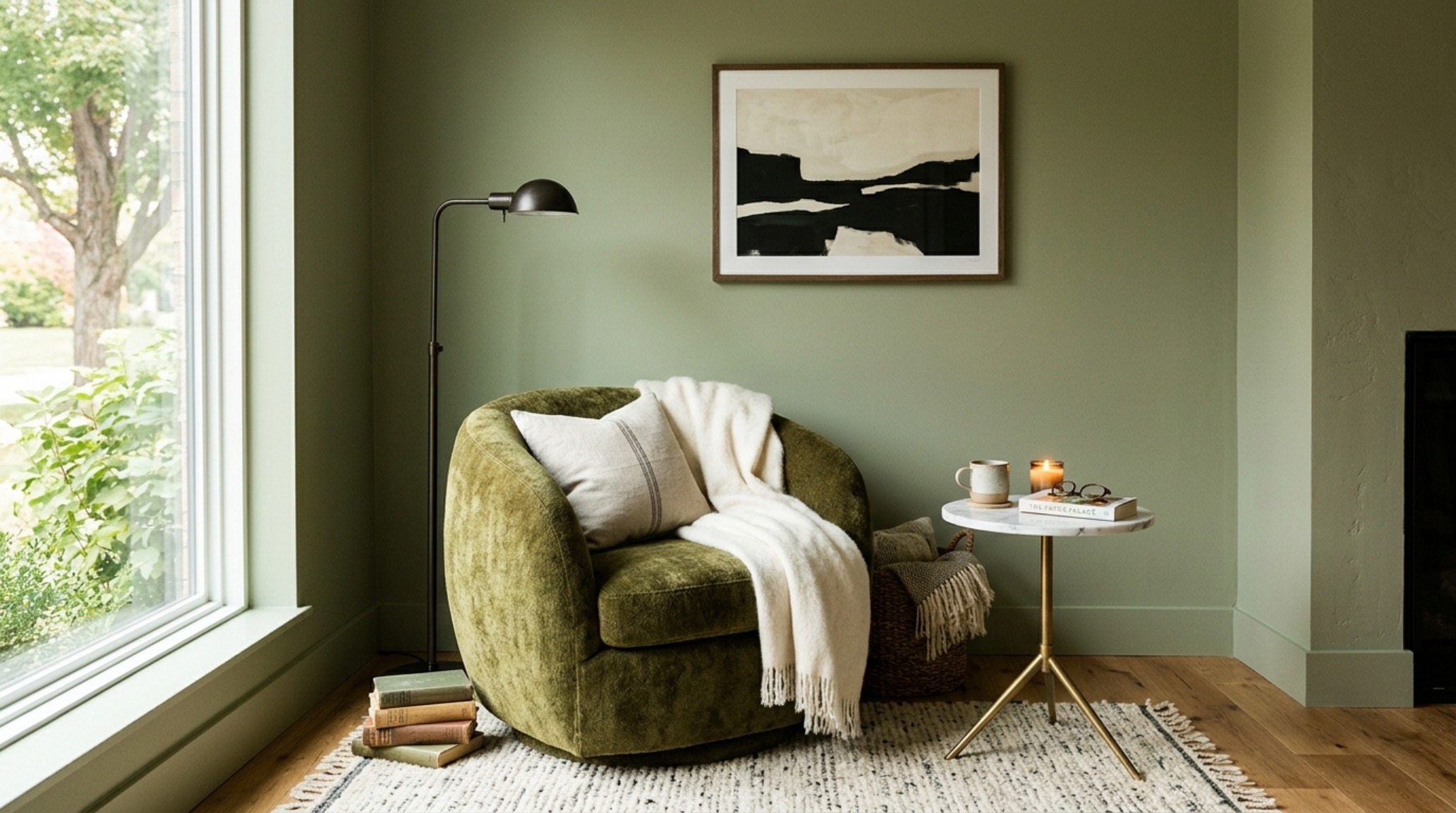
Lighting is the invisible architecture of a room. No amount of high-end furniture can save a space with poor illumination. For a green room, the goal is ‘atmospheric layering.’ Start with a warm ambient base—2700K is the sweet spot for residential interiors. It provides a soft, golden glow that complements the natural yellow undertones in many green paints.
Task, Accent, and Kinetic Light
Task lighting should be more precise, perhaps 3000K, positioned specifically where functional work happens—over a reading nook or a desk. But the secret to green room decor ideas lighting guide success is accent and kinetic light. Use small, cordless LED ‘mushrooms’ to highlight specific textures, like the grain of a lime-washed wall. Kinetic light—the flicker of a candle or a low-wattage dimmable bulb—adds a sense of life and movement to the room’s shadows, preventing the deep green walls from feeling static.
Shadow play is an ergonomic tool as well. By directing light upward (uplighting) behind large-leafed plants like a Fiddle Leaf Fig or a Monstera, you create dramatic shadows that add height and architectural interest to the corners of the room, effectively making a standard 8-foot ceiling feel significantly loftier.
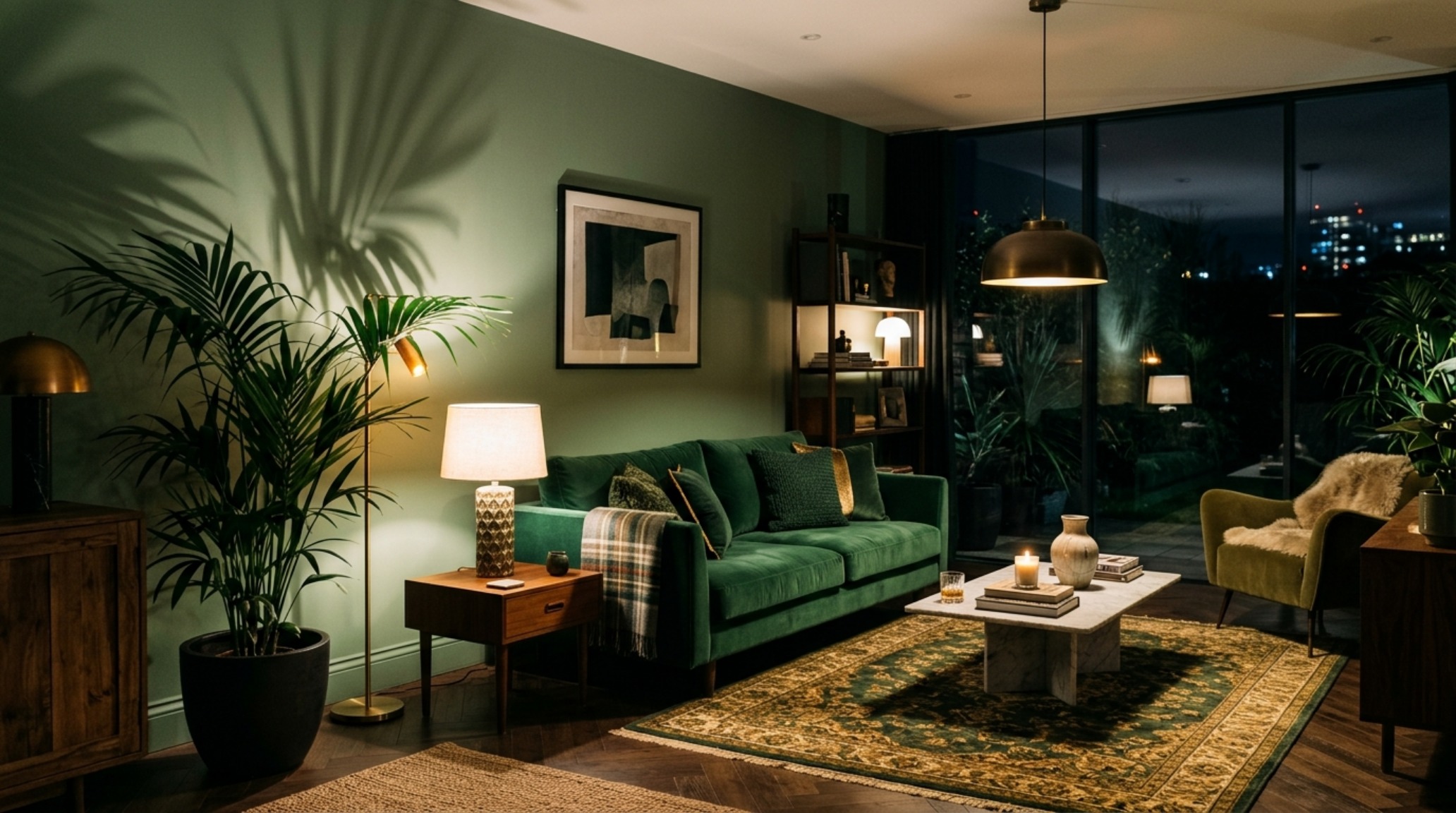
Architectural Precision and Decluttering
Decluttering is the ultimate ergonomic hack. In a green room, visual noise is the enemy of the ‘forest floor’ serenity we aim to achieve. This is where ‘sightline hygiene’ comes into play. Ensure that the tops of your cabinets and bookshelves are not crowded. Leave at least 20% of your shelf space empty—this is ‘negative space breathing room.’ It allows the eye to rest and emphasizes the objects you’ve chosen to display.
Consider the ‘reach zone’ for storage. Frequently used items should be stored between hip and shoulder height. In a green room, this might mean a beautiful custom-built credenza in a deep hunter green where the most-used items are easily accessible, while seasonal decor is stored in the lower or upper quadrants. This reduces physical strain and maintains the room’s streamlined profile.
Architectural Specification & Material Matrix
Curated tactile palette, spatial dimensions, and atmospheric lighting index for this design scheme.
Mastering green room decor ideas is an exercise in restraint and precision. By honoring the physical laws of ergonomics while embracing the emotional depth of the green spectrum, we create spaces that do more than just look beautiful on a screen. They become functional engines for better living. As we look forward, the trend is shifting away from the ‘staged’ look and toward spaces that anticipate our needs—where a hidden cabinet or a perfectly angled lamp is the ultimate expression of luxury. A well-designed green room is a quiet reflection of a life lived with intentionality, where architecture and comfort finally speak the same language.
Editorial Silo • Recommended Architecture Studies
- Architectural Indigo: Engineering Spatial Depth Through Color Drenching and Structural Geometry — Archival Design Case Study
- The Small-Space Paradox: Why Deep Hues and Receding Walls Outperform Neutral Minimalism — Archival Design Case Study
Architectural Inspiration Lookbook
A high-resolution study in spatial proportions, tactile materiality, and light choreography curated for enduring modern living.
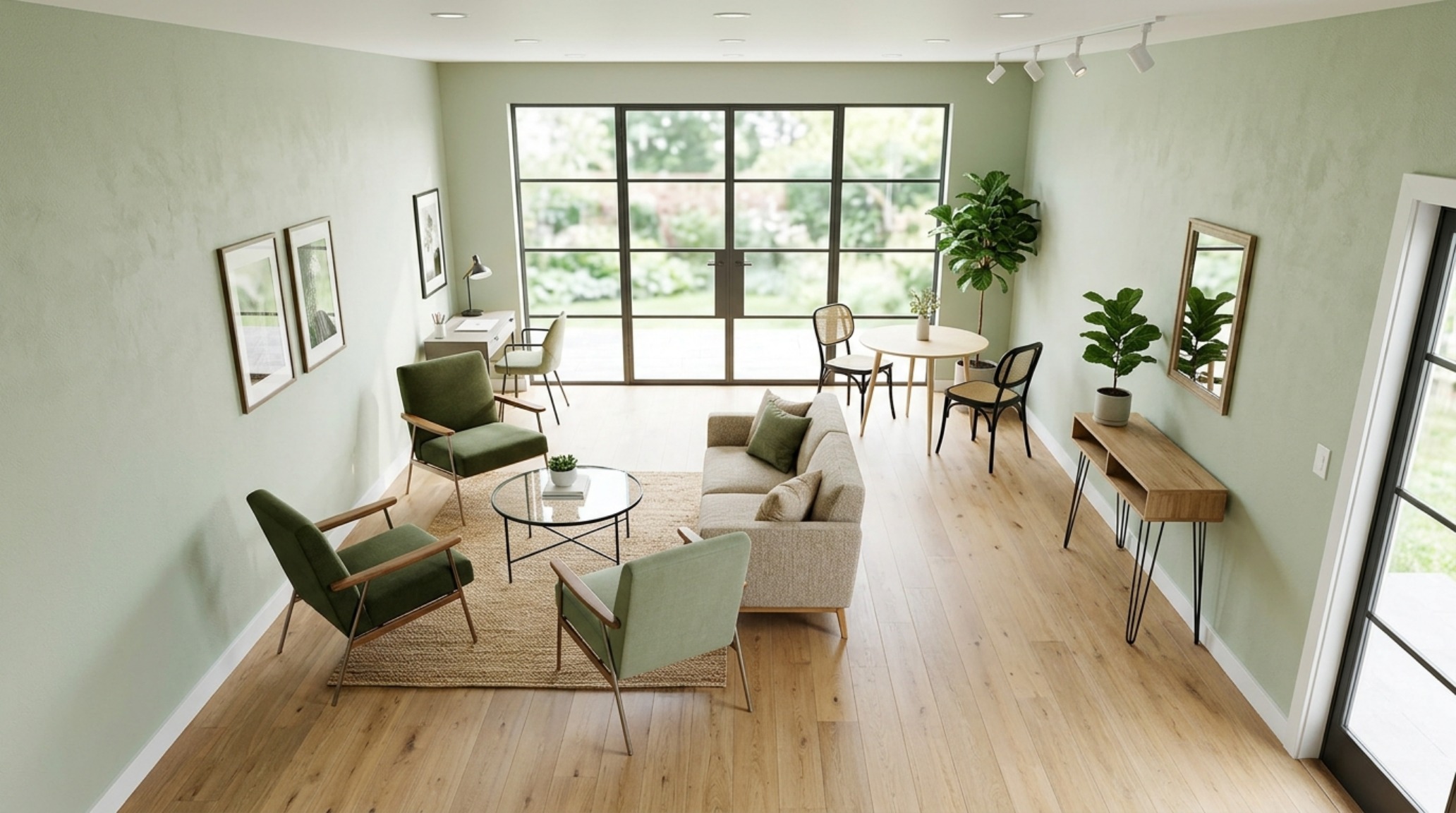
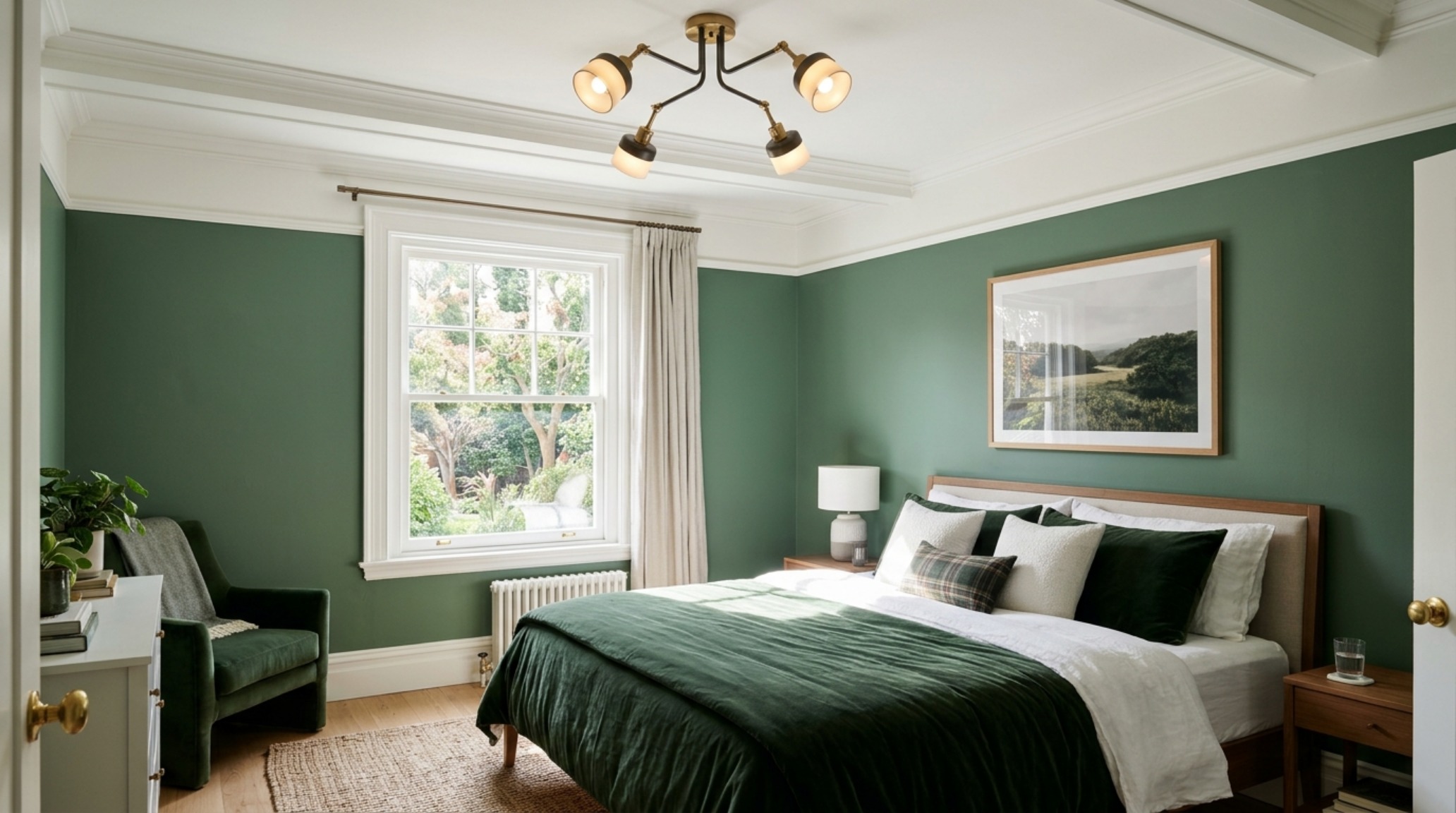
Curated Visual Lookbook
Design Gallery & Spatial Studies
A visual curation of architectural arrangements, lighting concepts, and material palettes featured in this space.