The Anatomy of a Well-Styled Rustic Side Table
Styling a rustic side table is rarely about perfection. It is about friction and balance. When you place a rough-hewn wooden bench against a crisp white wall, you create immediate visual tension. Too many people treat these surfaces like display shelves in a retail store. They pack them with matching trinkets until the entire vignette screams sterile showroom. Real rooms breathe. Real rooms show age and utility.
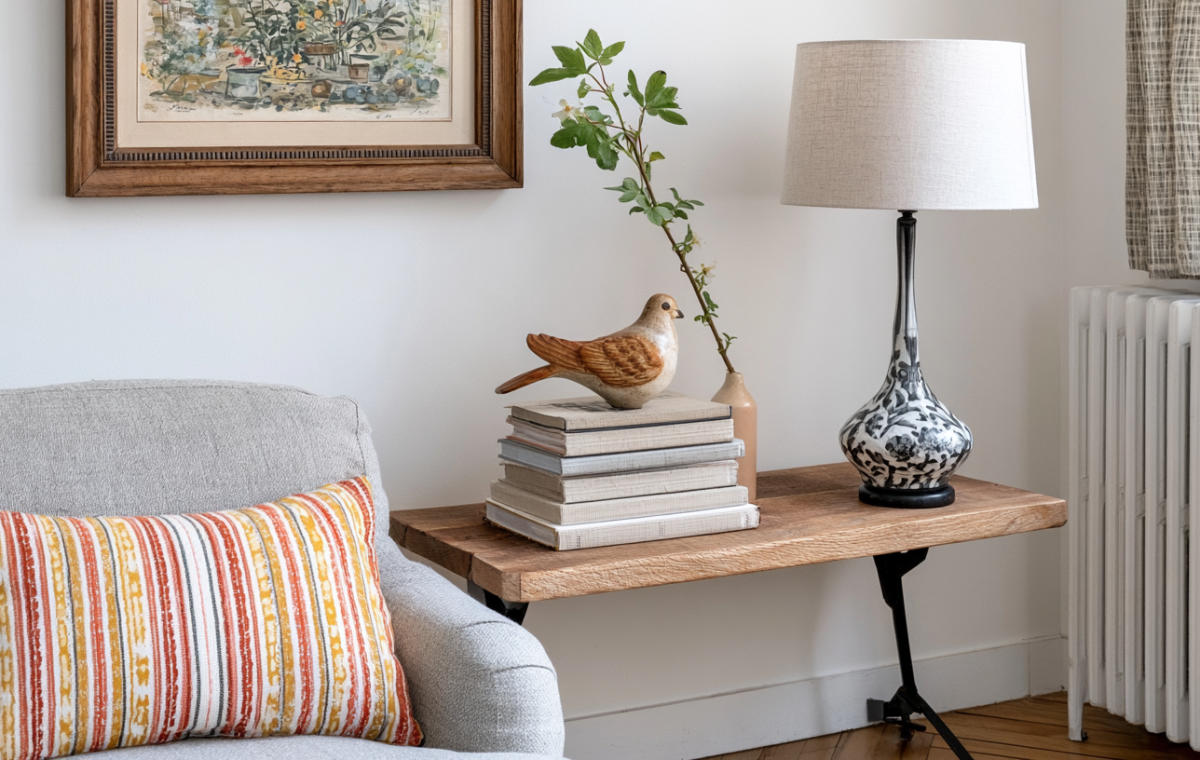
Look closely at how a stack of neutral vintage books acts as a sturdy pedestal for something unexpected, like a hand-carved wooden bird. Books provide immediate horizontal weight. They anchor the vertical thrust of a tall table lamp. But don’t stack them neatly to the millimeter. Let the edges stagger. Let the paper show its yellowed patina. That minor imperfection makes the entire corner feel approachable rather than untouchable.
Balancing Scale and Textures
Lighting ruins many wooden side table arrangements because of bad proportions. A massive shade swallows a delicate base. A skinny candlestick holder gets lost next to heavy armchairs. A ceramic lamp with a subtle dark botanical pattern bridges that gap nicely. It introduces a contrasting vertical line against plain walls while leaving enough negative space for a slender glass bottle holding a fresh botanical cutting.
- Mix rough timber surfaces with smooth ceramics and matte paper.
- Vary the heights so the eye travels smoothly from the seating to the wall art.
- Limit your decorative objects to three distinct focal groups to prevent clutter.
Let’s talk about the cost of maintaining open tabletop displays. Dust loves rough wood grain. Unsealed timber absorbs moisture from rogue coffee mugs instantly. If you choose a raw-edge console piece, invest in hidden coasters and accept that minor scuffs are simply part of the narrative. Perfection belongs in museums, not in a room where people actually put their feet up.
Integrating Art and Architecture
Your table does not live in isolation. It responds to the artwork hung directly above it and the radiator tucked away beside it. A framed vintage botanical print in a warm walnut frame pulls the earthy tones from the furniture upward, tying the vertical plane together. Meanwhile, functional elements like heavy cast-iron table legs remind us that utility always precedes decoration.
How is your current living room corner working for you? Are your surfaces telling a genuine story, or are they just holding random clutter waiting to be cleaned?
Editorial Lookbook & Photo Collection