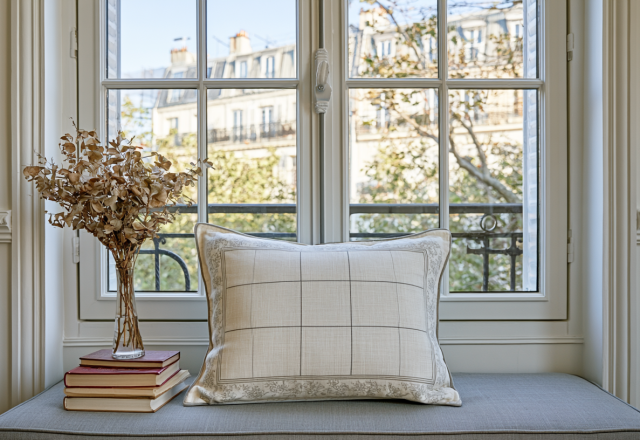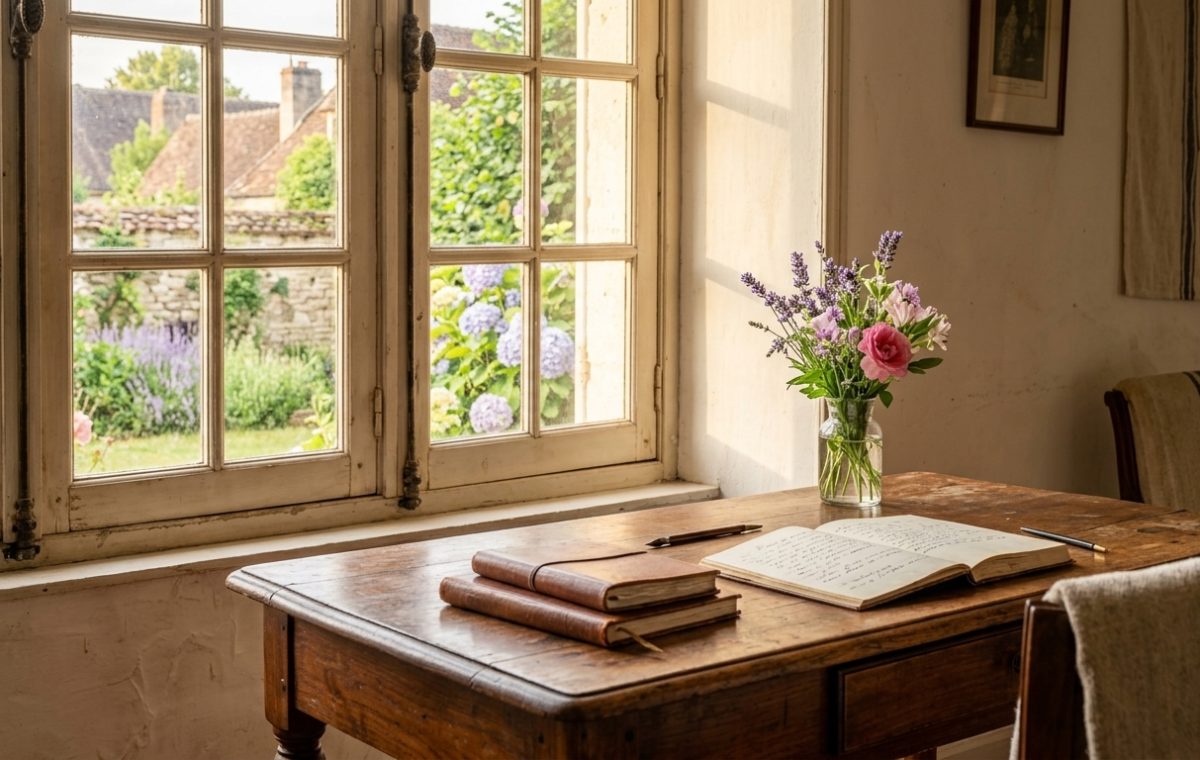
Most modern productivity advice focuses on screens, cables, and relentless efficiency metrics. Yet, the most enduring creative spaces usually run on a completely different logic. Look at a worn wooden table pressed against a deep-set windowpane. Sunlight streams across stacked leather journals, highlighting the delicate textures of a simple glass vase filled with freshly gathered garden stems. This is not about sterile optimization. It is about friction-free access to your own thoughts.
Setting up a workspace in an older property or aiming for a historic interior style requires patience with imperfections. Plaster walls are rarely flat. Historic window frames might draft slightly when the wind picks up from the garden. These quirks are features, not flaws. When your desk sits directly in the path of morning light, your entire routine shifts with the sun. You trade harsh artificial LED glare for the organic warmth of daylight filtering past stone walls and blooming hydrangeas.
Choosing the Right Anchor Furniture
Skip the laminated flat-pack desks that wobble under the weight of a heavy coffee mug. A true study or creative alcove needs gravity. Solid hardwood bearing decades of honest use brings an irreplaceable soul to a room. Look for reclaimed tables with turned legs, minor surface dents, and hand-rubbed wax finishes. The wood should feel alive under your forearms. Pair it with a simple chair that prioritizes breathable natural textiles like unbleached linen or heavy wool rather than ergonomic plastic engineering.
The Power of Analog Tools
Screens demand attention. Paper demands nothing until you pick up the pen. Keeping leather-bound notebooks open on a desktop changes how you process information. It creates a physical barrier against digital fatigue. When a notebook is permanently left open to a blank page or scrawled handwriting, the barrier to starting a task drops to zero. You do not need to boot up a machine or navigate folder trees. You simply sit down and write.
- Position your writing surface perpendicular to the light source to minimize glare on paper.
- Keep a small glass vase or ceramic pitcher handy for seasonal outdoor clippings.
- Opt for low-maintenance upholstery fabrics that age gracefully with daily wear.
Real workspaces accumulate clutter, but the right kind. A stray pencil, an antique inkwell, or a framed print hung casually on a plaster wall build a narrative. Try moving your primary writing desk closer to an existing window this weekend and notice how your concentration shifts when you can look up and watch the seasons change outside.
Editorial Lookbook & Photo Collection