The Tension Between Productivity and Poetics
Why is it that we can design a master suite that rivals a five-star retreat, yet our workspaces often feel like a utilitarian afterthought? Discovering how to organize your office space at home requires a shift in perspective—viewing the desk not as a surface for labor, but as a curated sanctuary for thought. The traditional approach to organization usually begins and ends with plastic bins and labeling machines, but architectural clarity demands more. It demands a dialogue between the tactile quality of a fluted oak cabinet and the precise clearance of a swivel chair. When we bridge the gap between rigorous efficiency and high-end materiality, the workspace stops being a room where we work and becomes a room that works for us.
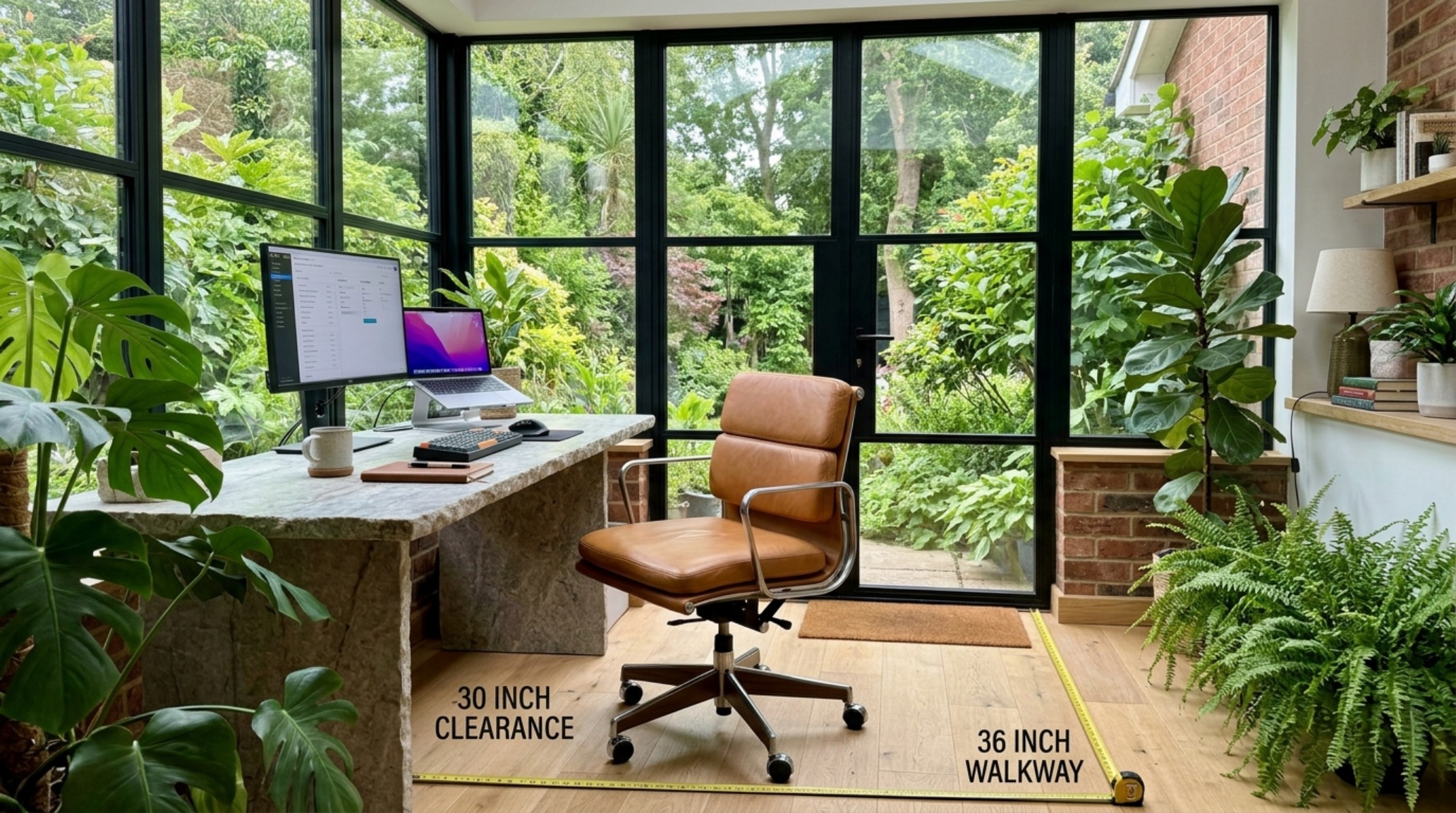
The fundamental challenge of the modern home office is the ‘visual noise’ of daily life. We are often forced to choose between the sterile minimalism of a corporate cubicle or the cluttered chaos of a creative studio. However, by applying the principles of spatial zoning—specifically the 36-inch standard walkway clearances favored by Architectural Digest—we can create a sense of ‘negative space breathing room.’ This isn’t just about tidying up; it’s about establishing a spatial cadence that allows the mind to settle into a deep state of flow. We must treat every object, from the weight of a brass paperweight to the sheen of a lacquered shelf, as a contributor to the room’s sensory atmosphere.
Aesthetic Office Decor and Organization: The Visual Weight of Ritual
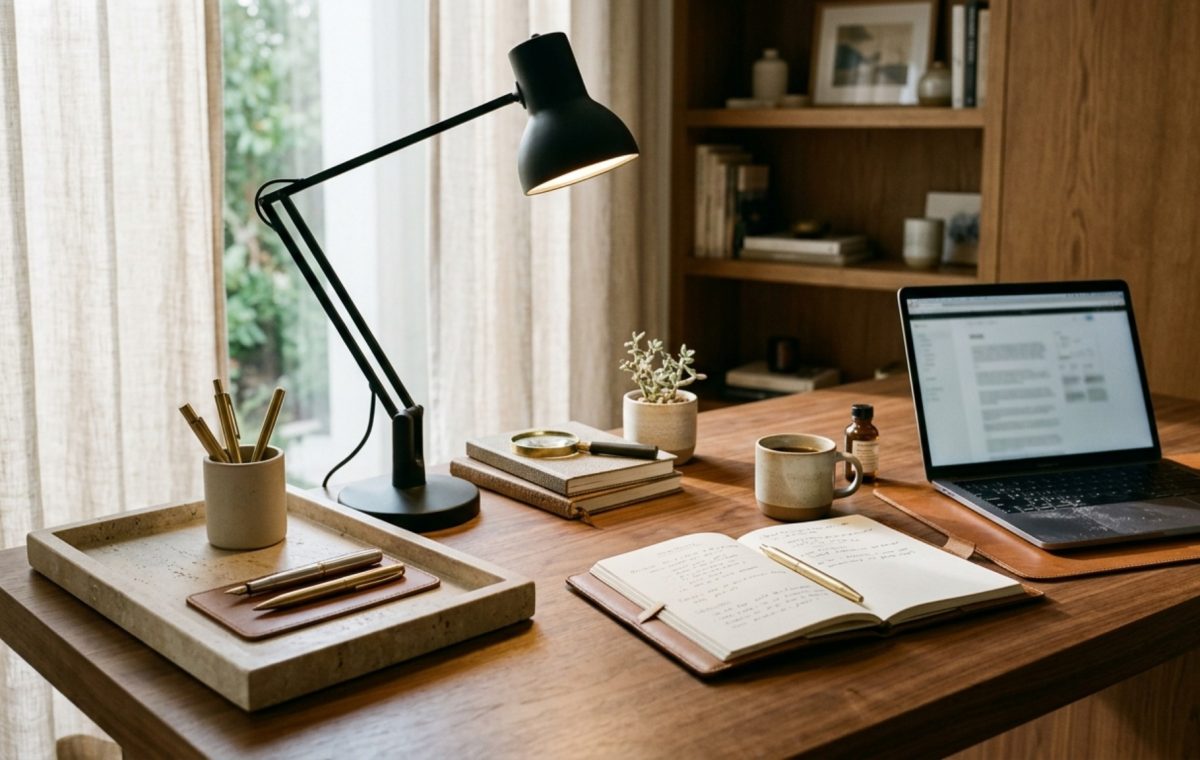
Organization is often mistaken for invisibility, yet the most inspiring workspaces celebrate the objects they house. Aesthetic office decor and organization should focus on ‘curated vignettes’ rather than hidden hoarding. Think of your desktop as a landscape. Instead of a messy jar of pens, consider a heavy, honed travertine tray that anchors your most-used tools. This provides a tactile grounding, reminding you of the physical reality of your work in an increasingly digital world.
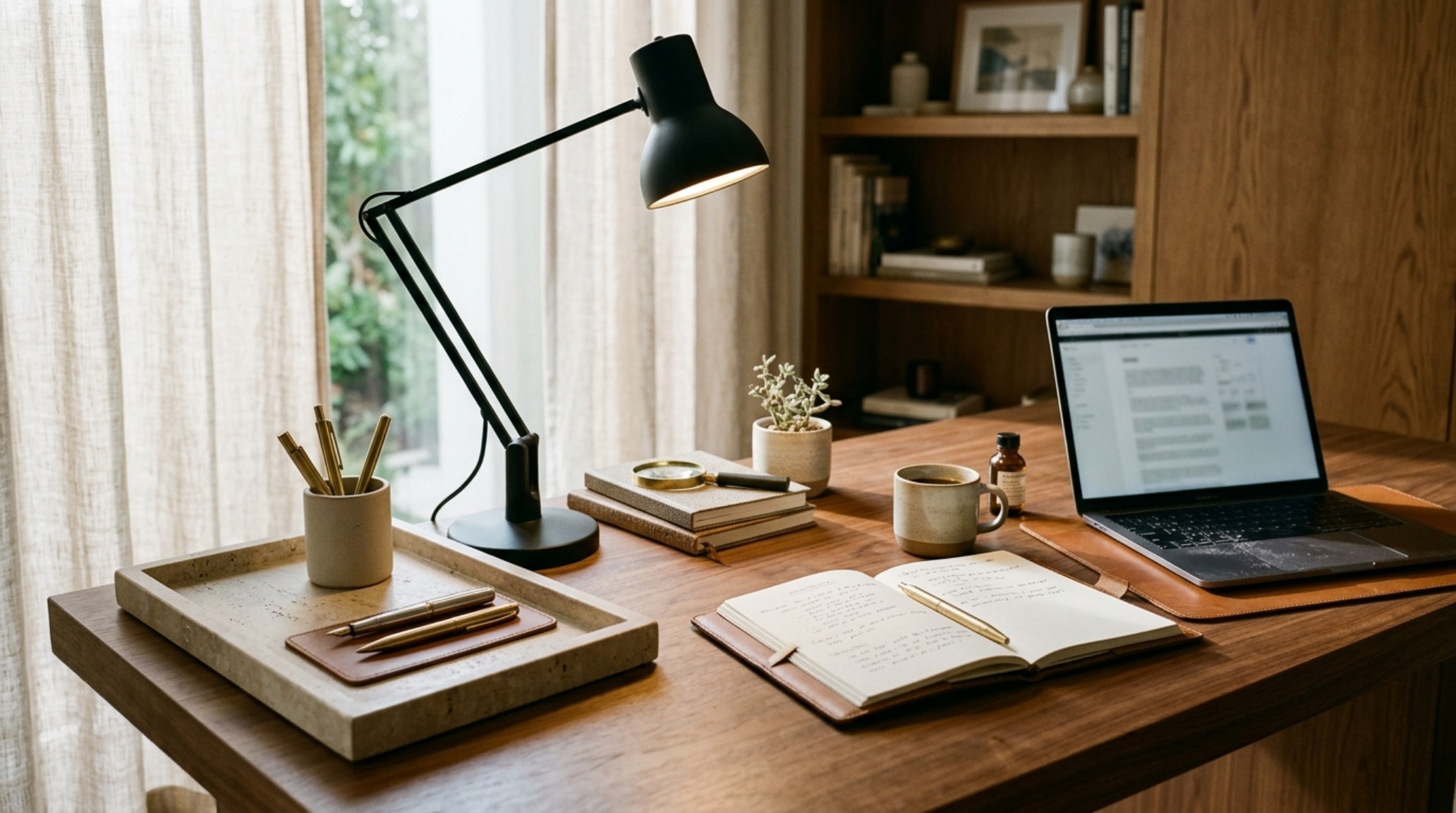
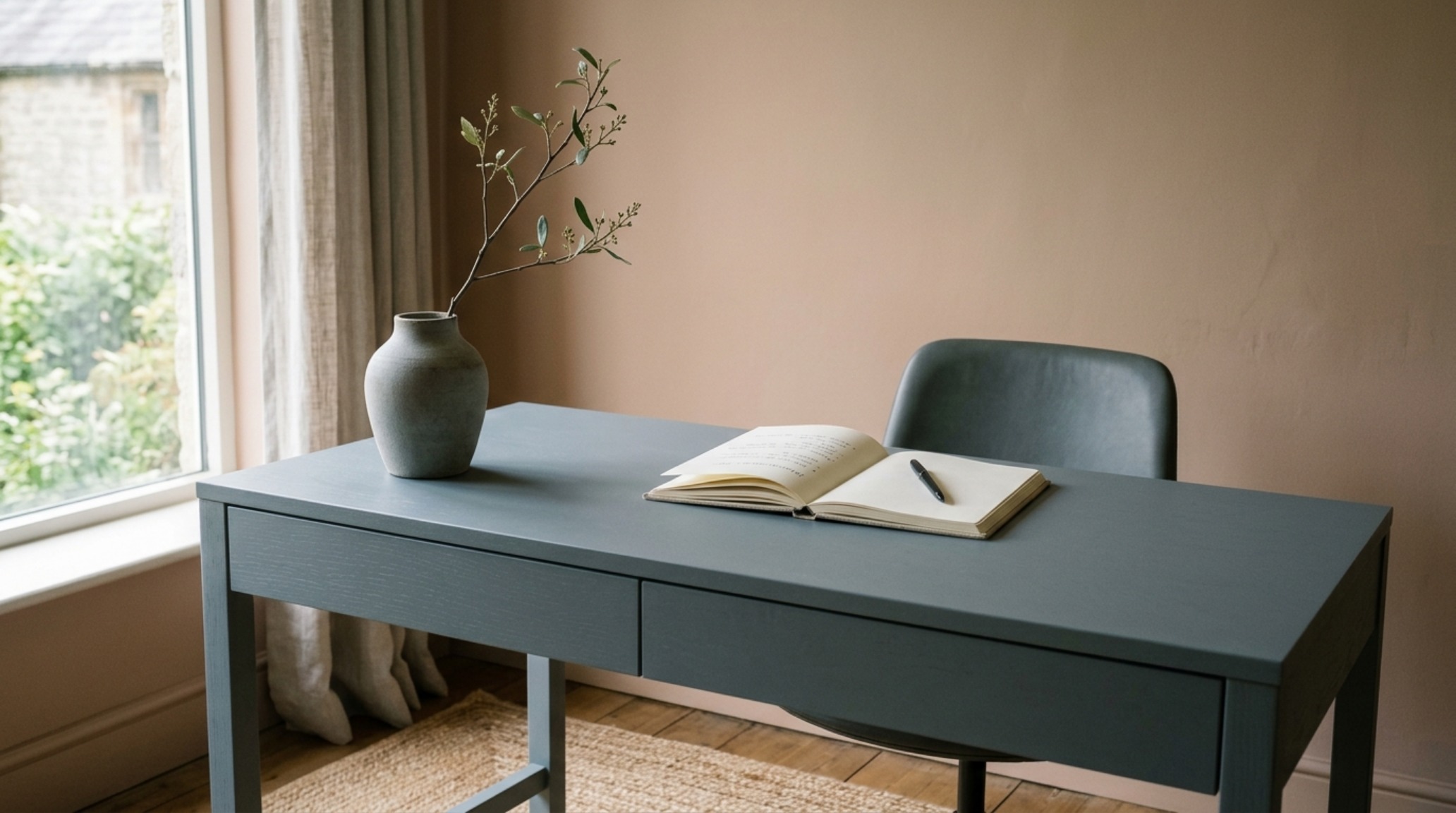
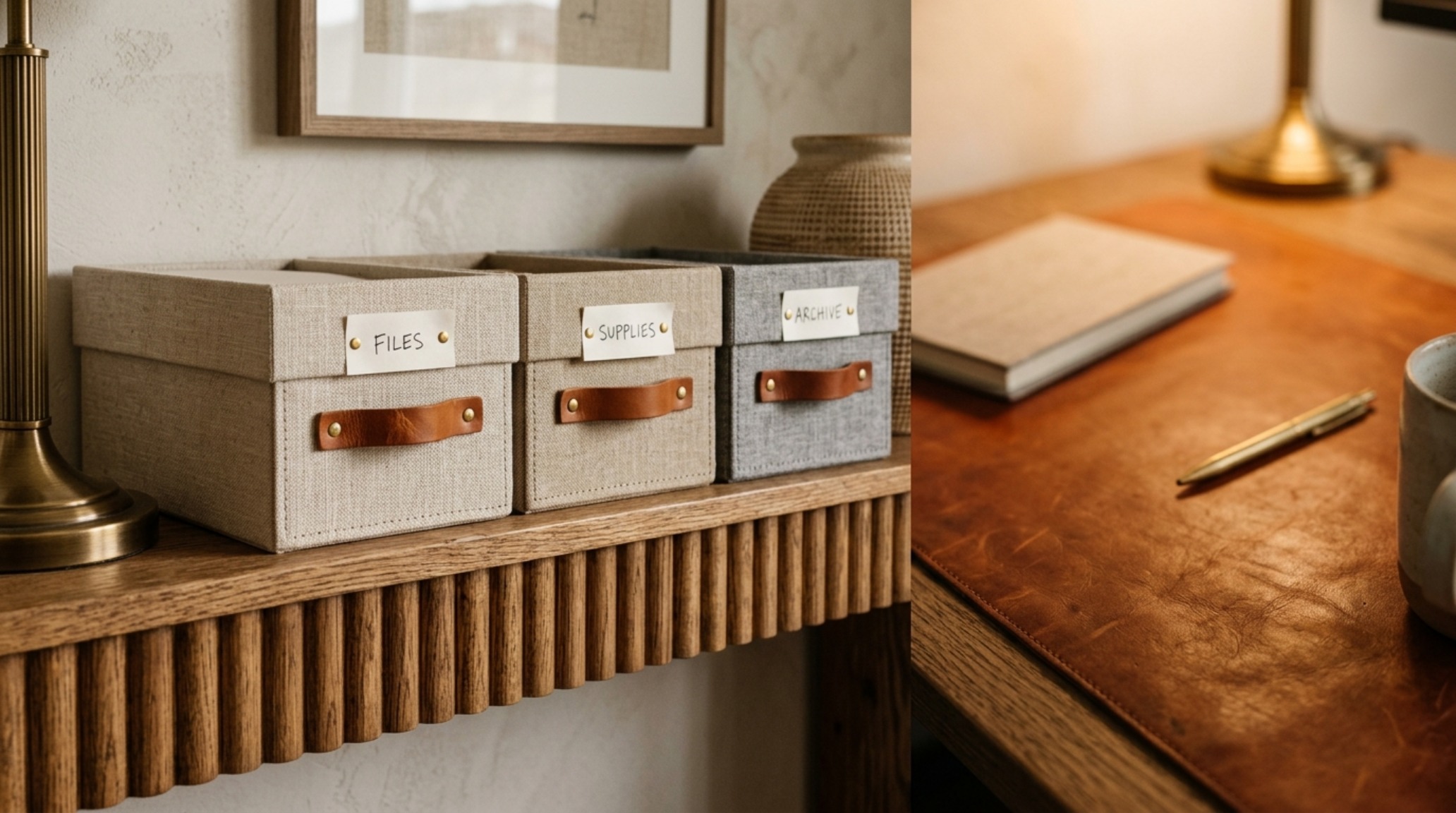
When selecting materials for organization, prioritize those that age gracefully. A cognac leather desk mat doesn’t just protect the surface; it develops a patina that tells the story of your progress. By integrating these high-end textiles, you create a soft-touch environment that counters the hard edges of technology. This is where color psychology plays its part. Moving away from clinical whites toward something like Benjamin Moore Swiss Coffee or the soft, earthy embrace of Farrow & Ball Setting Plaster can reduce eye strain and promote a sense of calm. These hues provide a muted backdrop that allows your ‘mood board’—whether physical or digital—to pop without overwhelming the senses.
Vertical Office Storage Ideas: Leveraging the Vertical Plane
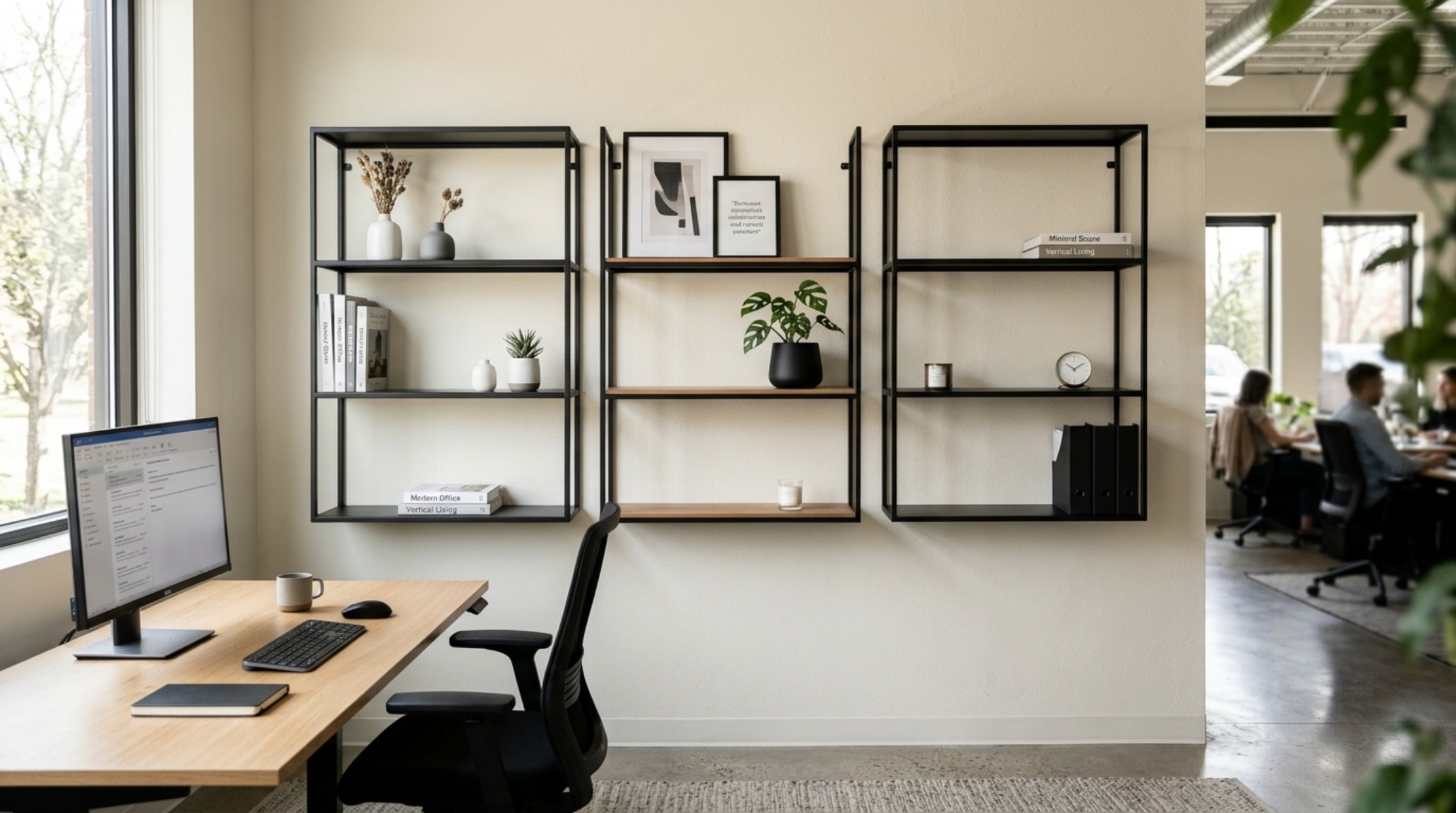
In smaller environments, the floor is the most precious real estate. Vertical office storage ideas are the architectural solution to square-footage limitations. Instead of bulky, floor-bound filing cabinets, consider bespoke floor-to-ceiling cabinetry with integrated LED strip lighting (3000K for task clarity). This draws the eye upward, making a 10×10 room feel like a vaulted studio. The key is to mix closed storage—to hide the unsightly reams of paper and peripheral hardware—with open, rhythmic shelving for inspiration.
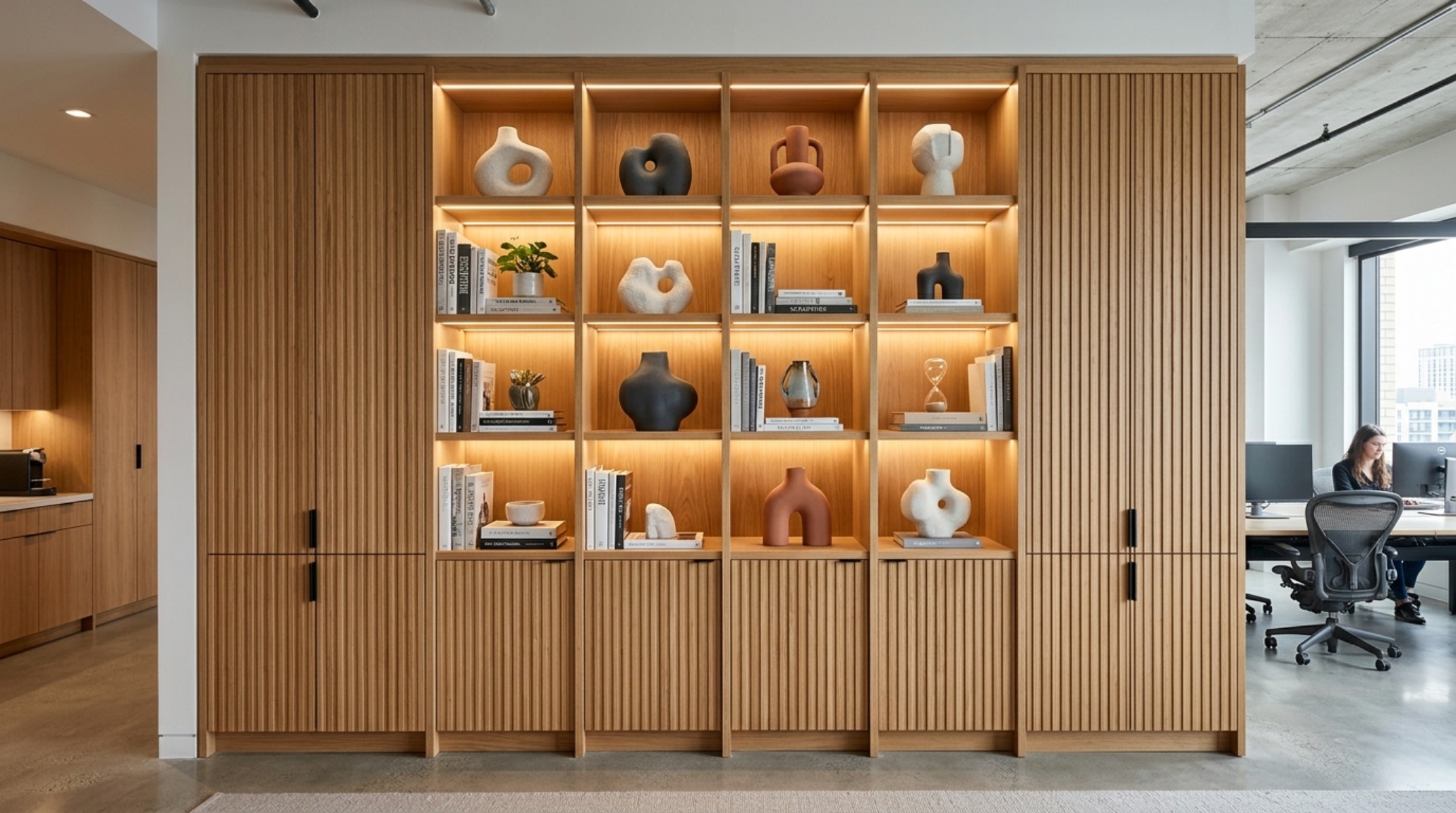
To maintain a high-design feel, use the ‘rule of thirds’ on your shelves. One-third books, one-third sculptural objects, and one-third ‘breathing room’ or negative space. This prevents the vertical plane from feeling heavy or oppressive. Use materials like fluted white oak or smoked glass to add texture. When the storage itself is a piece of art, the act of putting something away becomes a satisfying conclusion to a task rather than a chore. Remember to maintain a 30-inch clearance for any pull-out drawers or chair movements to ensure the verticality doesn’t infringe on your physical range of motion.
Cable Management for Desks: The Invisible Infrastructure
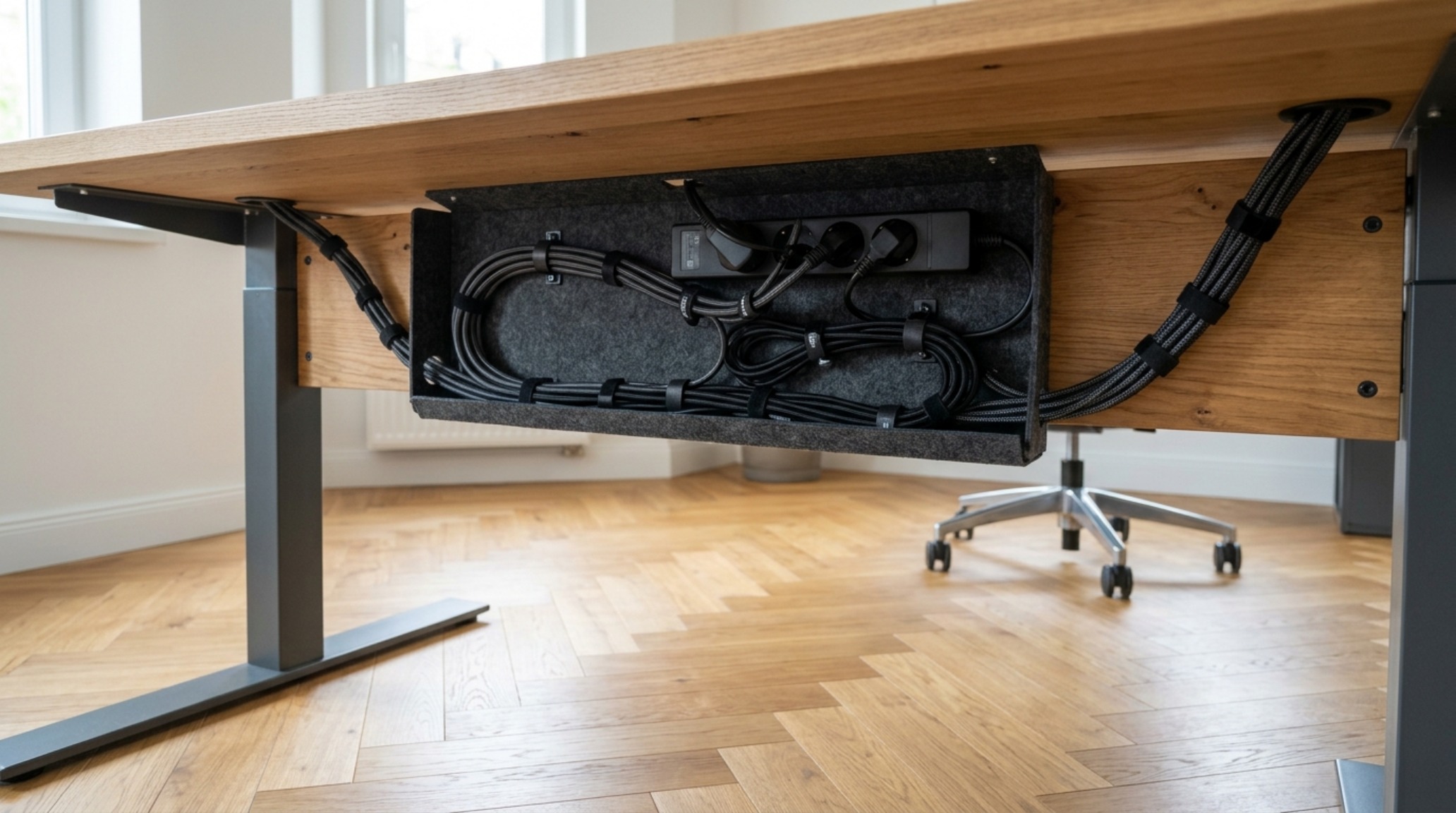
Nothing shatters the illusion of a luxury workspace faster than a ‘spaghetti’ of tangled black wires. Cable management for desks is the invisible infrastructure that separates a professional setup from a temporary one. True architectural organization integrates power directly into the furniture. Look for desks with hidden grommets or under-desk trays lined with felt to dampen the sound of clicking hardware. If you are working with an antique or heirloom piece, use leather cord organizers that match the wood tone to bundle wires neatly along the legs of the desk.
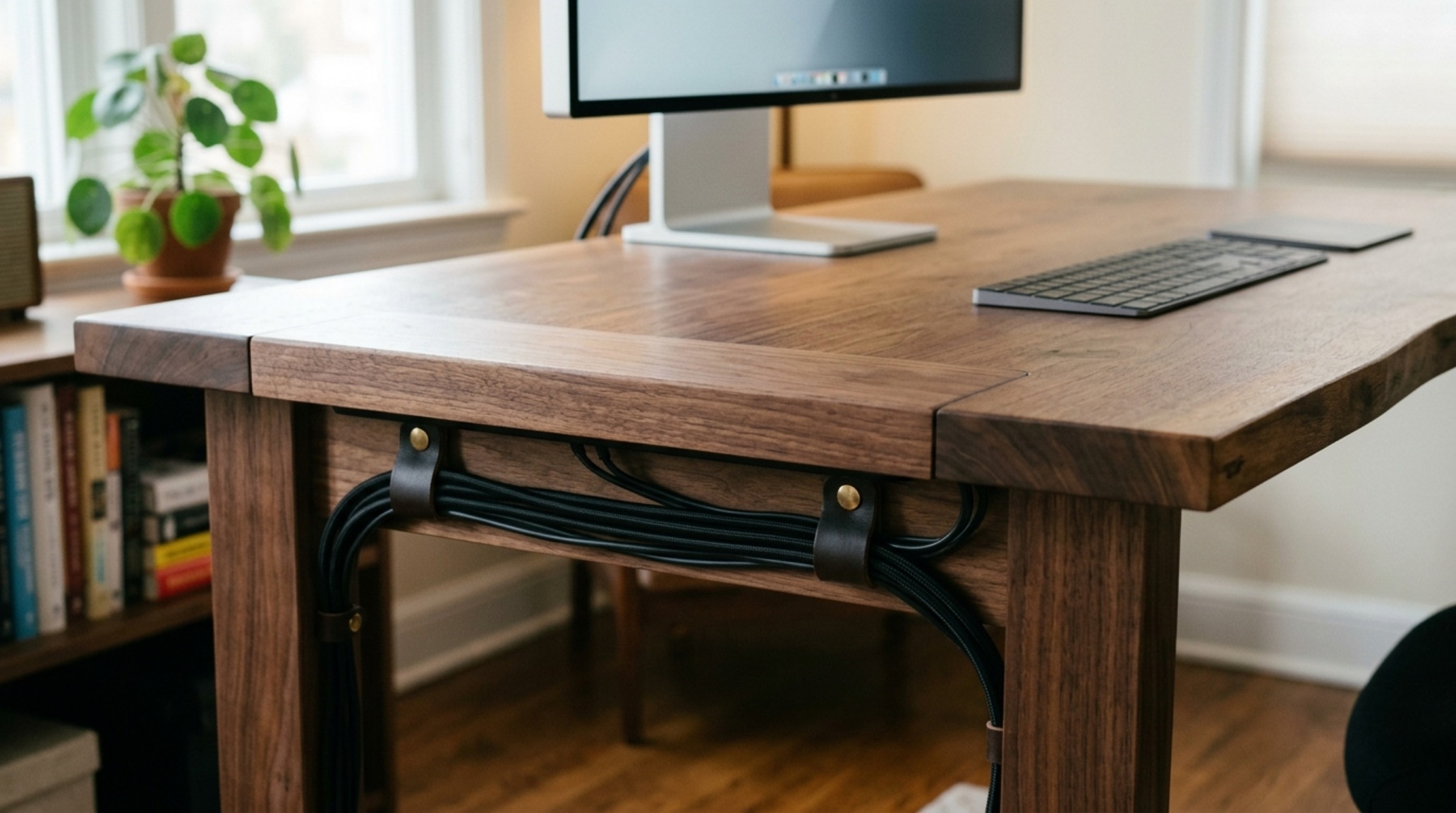
The goal is a ‘zero-cable’ aesthetic where the only things visible are the things you intend to see. This extends to your peripheral placement. A wireless charging pad recessed into a stone desk accessory or a monitor arm finished in matte black can elevate the entire sightline. By clearing the visual field of technical clutter, you allow the materiality of your workspace—the grain of the wood, the weave of the rug—to take center stage. This lack of distraction is the ultimate luxury in a world of constant digital pings.
Productive Home Office Setup: Ergonomic Rigor and Flow
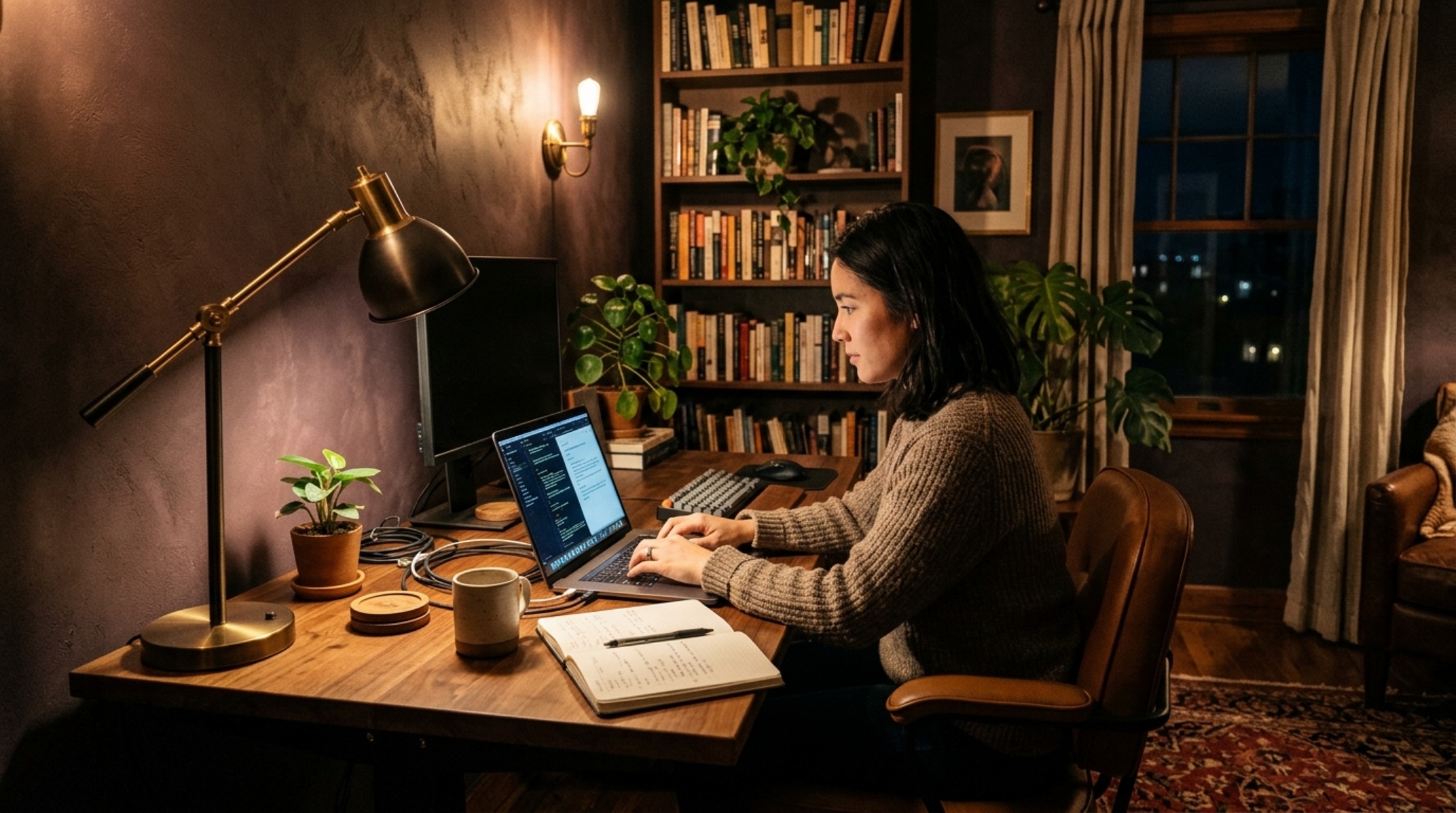
A productive home office setup is a marriage of ergonomics and atmosphere. It’s not enough for a chair to look good in a Pinterest photo; it must support the body through 90-degree angles at the hips and knees, with 18 inches of reach to the most frequent tools on your desk. But productivity is also sensory. We often neglect the ‘atmospheric lighting’ that defines our working hours. While 3000K task lighting is essential for focus, a secondary layer of 2700K ambient light—perhaps from a sculptural plaster wall sconce or a vintage table lamp—creates a ‘shadow play’ that softens the room as the day ends.
Consider the ‘scent-scape’ of your office. A high-end candle with notes of cedarwood or tobacco can trigger a psychological ‘work mode,’ while a linen-covered acoustic panel can soften the echoes of a Zoom call. These layers of sensory organization ensure that your mind isn’t fighting against the environment. When the air is filtered, the light is diffused, and the seating is supportive, the ‘how’ of organization transitions into the ‘why’—creating a space that fosters deep, uninterrupted thought.
Curated Concept Gallery & Spatial Vignettes
Design is an iterative process. When contemplating how to organize your office space at home, it helps to look at the workspace as a series of interconnected zones. The ‘Active Zone’ (your desk), the ‘Reference Zone’ (your library), and the ‘Reflective Zone’ (perhaps a single lounge chair near a window with 36-inch clearance). Each of these areas requires its own organizational logic but should be tied together by a consistent material palette.
Small Home Office Organization: The Art of the Micro-Niche
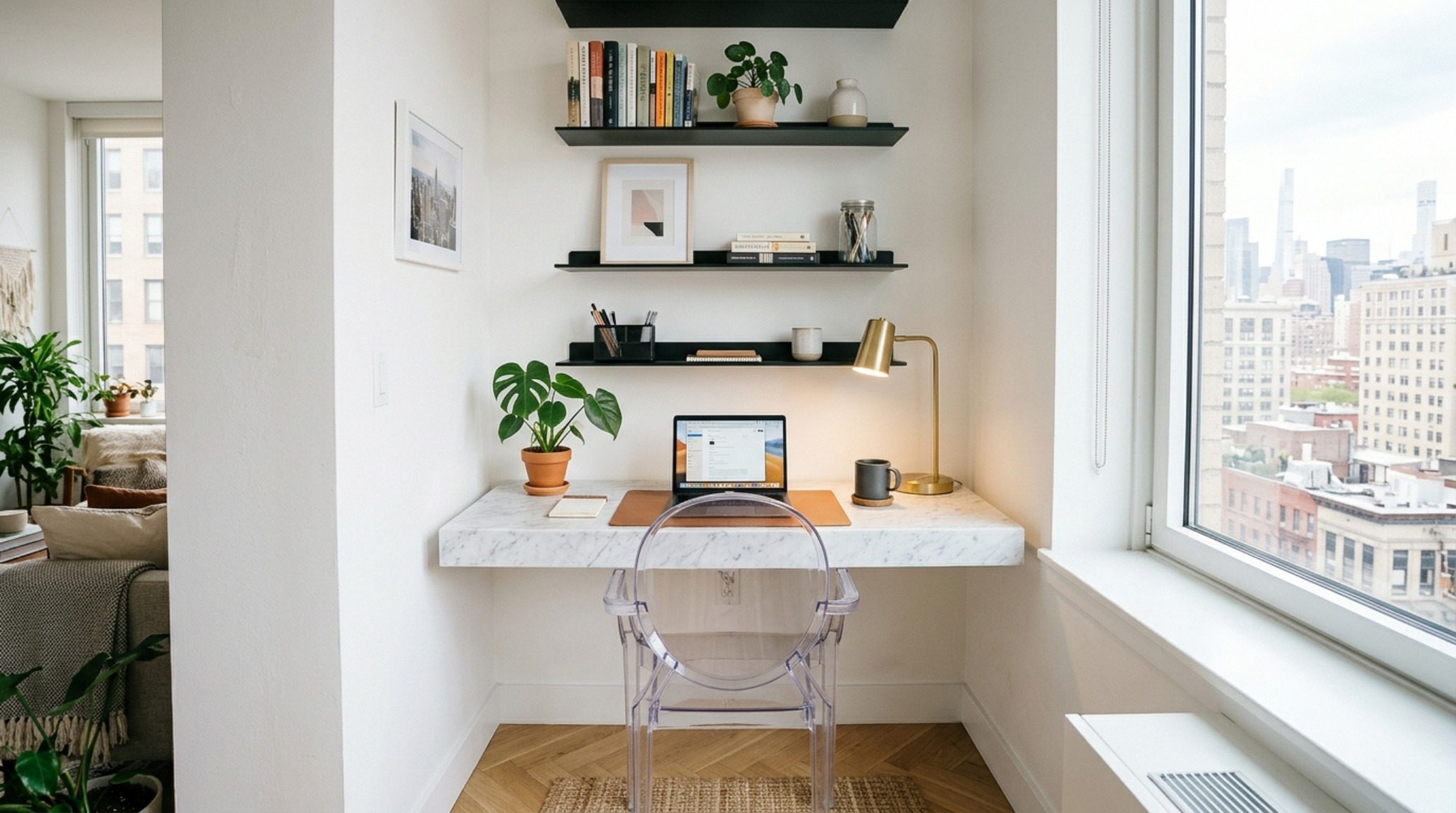
For those working within a bedroom or a hallway nook, small home office organization relies on the concept of ‘visual boundaries.’ Use a different rug texture—perhaps a low-pile wool in a slate charcoal—to define the office footprint against the rest of the room. Use ‘ghost’ furniture like acrylic chairs or glass-topped desks to maintain sightlines and prevent the space from feeling cramped. The tighter the space, the more disciplined the organization must be. Every item must earn its place through both function and beauty.
Minimalist Home Workspace Tips: Curated Restraint
True minimalism isn’t about having nothing; it’s about having exactly what you need and nothing more. My primary minimalist home workspace tips involve the ‘one-in, one-out’ rule for desk accessories and a strict daily reset. At the end of every afternoon, clear your desk of everything but one inspiring object. This ritual signals to your brain that work is done, allowing the home to return to a place of rest. Use hidden storage for the ‘visual noise’ of printers and routers, ensuring that the surfaces you interact with are pure and intentional.
Spatial Finishes, Color Registry & Specs
Detailed finish schedule outlining authentic architectural surfaces, color values, and clearances.
Ultimately, the mastery of a workspace lies in the realization that order is a living, breathing thing. It is not a static state achieved once and forgotten, but a daily curation of the things that move us forward. By grounding our organizational choices in authentic materials and precise architectural clearances, we create more than just an efficient desk; we build a sanctuary for our most ambitious ideas. The quiet click of a well-fitted drawer and the soft glow of a perfectly placed lamp are the subtle cues that tell our subconscious we are ready to create. As the sun shifts across your organized surfaces, you begin to see that the space between the objects is just as important as the objects themselves—the final, most vital element in understanding how to organize your office space at home.
Editorial Silo • Recommended Architecture Studies
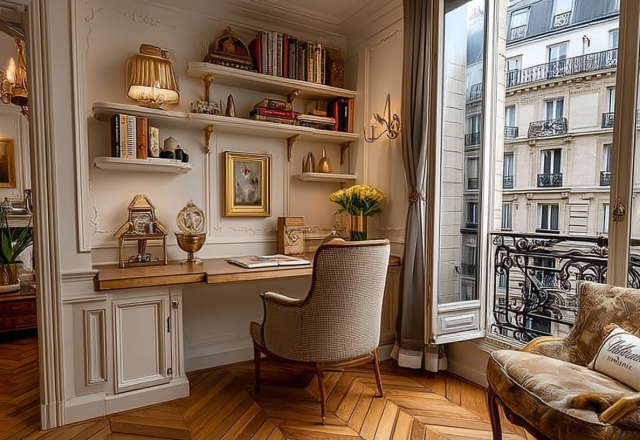
- Designing a French Apartment Home Office with Historic Charm — Archival Design Case Study
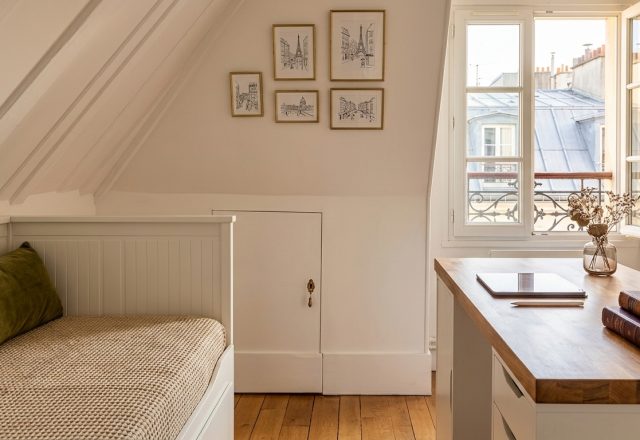
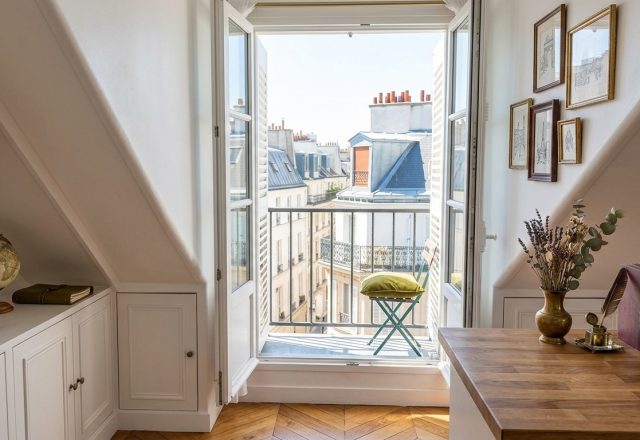
- Smart Attic Bedroom Office Ideas for Small Spaces — Archival Design Case Study
The Design Journal Lookbook
Curated spatial snapshots examining the quiet dialogue between architectural daylight and tactile surfaces.
Curated Visual Lookbook
Design Gallery & Spatial Studies
A visual curation of architectural arrangements, lighting concepts, and material palettes featured in this space.