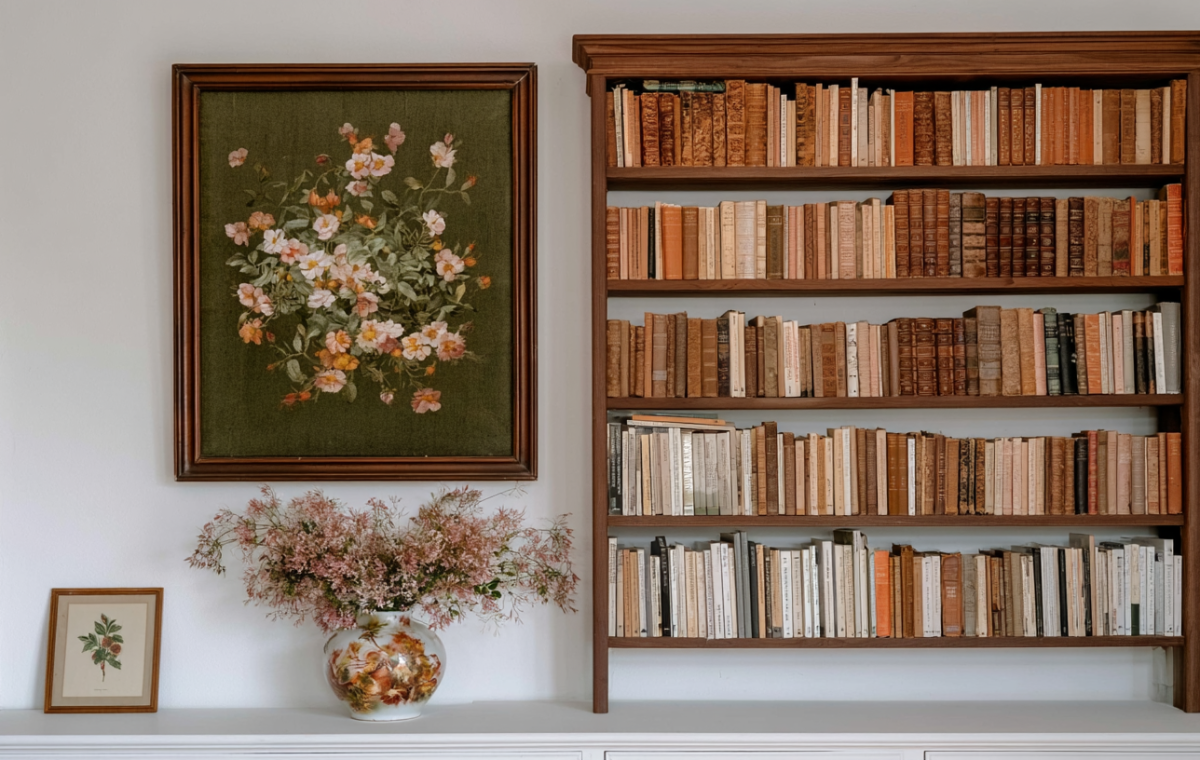
Styling a massive wall unit is harder than it looks. Slap too many trinkets on the wood, and the room feels cluttered. Leave it empty, and the space turns sterile. The sweet spot lives in restraint, texture, and organic balance. Look closely at how dense rows of aged volumes create visual weight, anchoring an entire white wall without demanding neon accents or trendy plastic bins.
Embracing Patina and Antique Books
New paperbacks rarely give you the rich warmth required for a truly inviting reading corner. Antique volumes with faded spines, sun-bleached cloth covers, and foxed pages do the heavy lifting here. When arranging books, skip the rigid color-blocking trend unless you want a stark museum aesthetic. Mix vertical stacks with horizontal resting piles to let natural light catch different textures. The goal is a lived-in look that whispers history rather than screaming for attention.
Layering Art and Botanicals
Shelves should never host books alone. Break up monotonous rows by hanging framed botanical art directly adjacent to the woodwork or resting smaller botanical prints on lower ledges. Notice how the large floral canvas with its deep green background pulls the whole vignette together, echoing the earthy tones of the wooden cabinetry. A ceramic vase packed with dried or delicate stems softens the hard corners of the furniture and introduces an organic, wild element.
- Group books by height or physical condition rather than strictly by genre.
- Incorporate framed vintage illustrations to bridge the gap between heavy wood furniture and blank walls.
- Use heavy ceramic vessels to ground lightweight floral arrangements.
Dusting remains the silent chore nobody loves, especially when dealing with open display shelving. But that minor upkeep is a small price to pay for a room that feels genuinely grounded and deeply personal. How do you usually balance open book storage with decorative accents in your own space?
Editorial Lookbook & Photo Collection