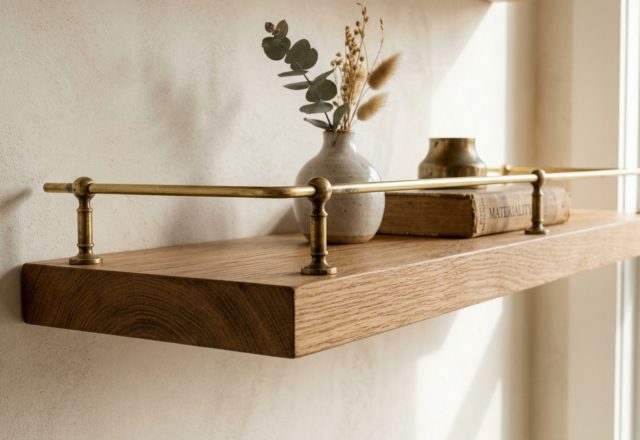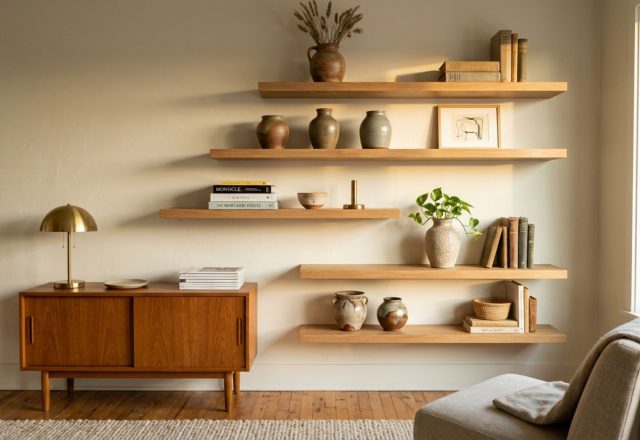
There is a specific, quiet frustration that comes with inhabiting a space you do not own. It is the visual hunger for permanence—the desire to see a room anchored by the weighted authority of custom millwork, only to be met with the sterile, white-box limitations of a standard rental agreement. For years, we have been told that high-end interior architecture requires a drill, a stud finder, and a permanent commitment. But the design landscape is shifting. We are moving toward an era of temporary architecture, where the goal isn’t just storage, but the engineering of heavy-duty visual built-ins that command a room without ever puncturing a wall. By exploring sophisticated living room floating shelves ideas, we can finally bridge the gap between the nomadic lifestyle and the soul-satisfying depth of a bespoke library.
The secret lies in shifting our perspective from ‘hanging a shelf’ to ‘installing a system.’ When we treat shelving as a structural intervention rather than a decorative afterthought, the entire spatial cadence of a home transforms. It’s about creating sightlines that feel intentional and grounded. We are no longer looking for mere ‘apartment storage hacks’; we are looking to curate a tactile experience that mirrors the grandeur of a brownstone’s custom-built alcoves.
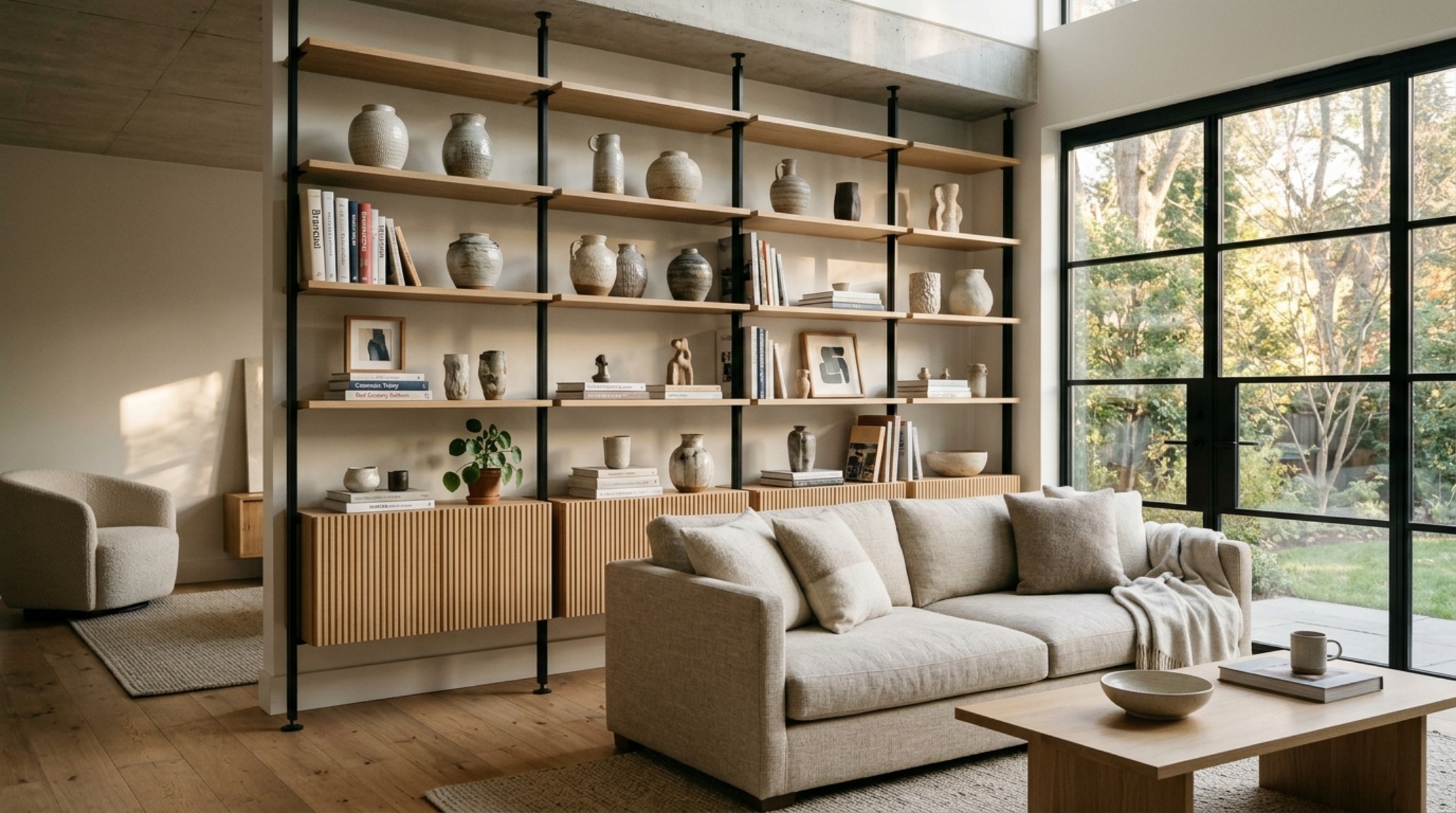
The Engineering of Height: Tension Poles as Structural Anchors
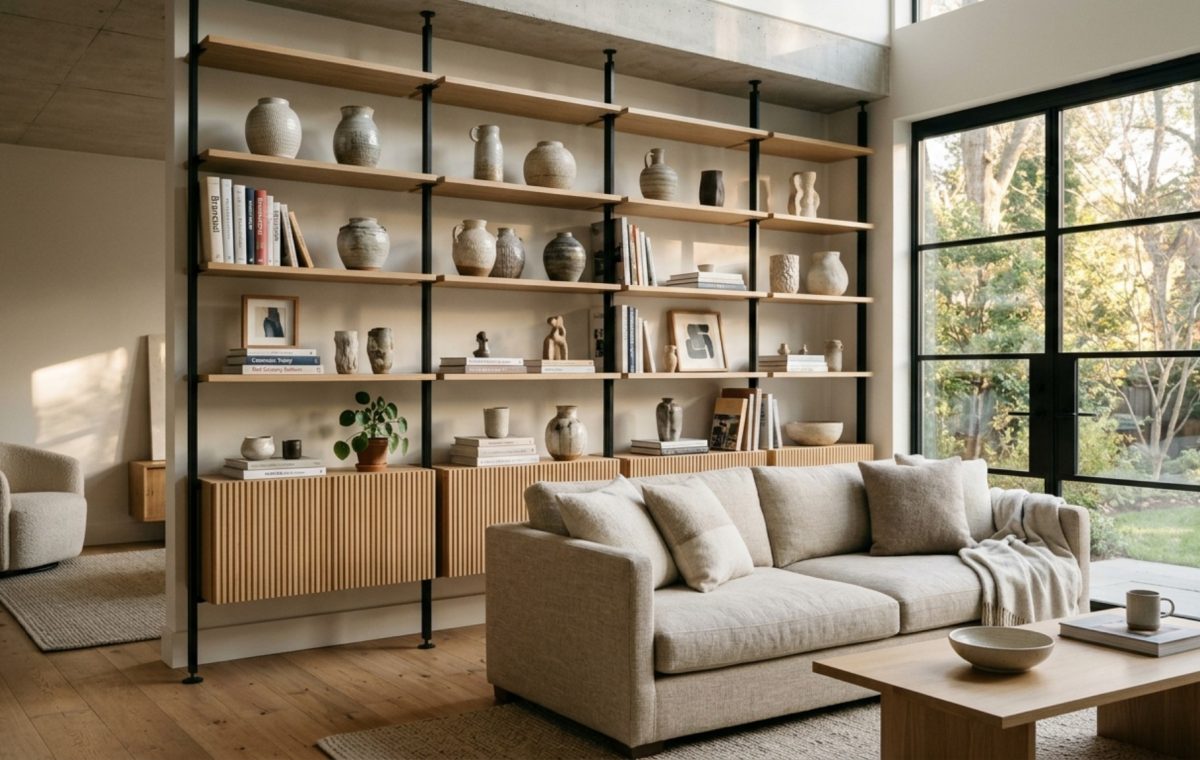
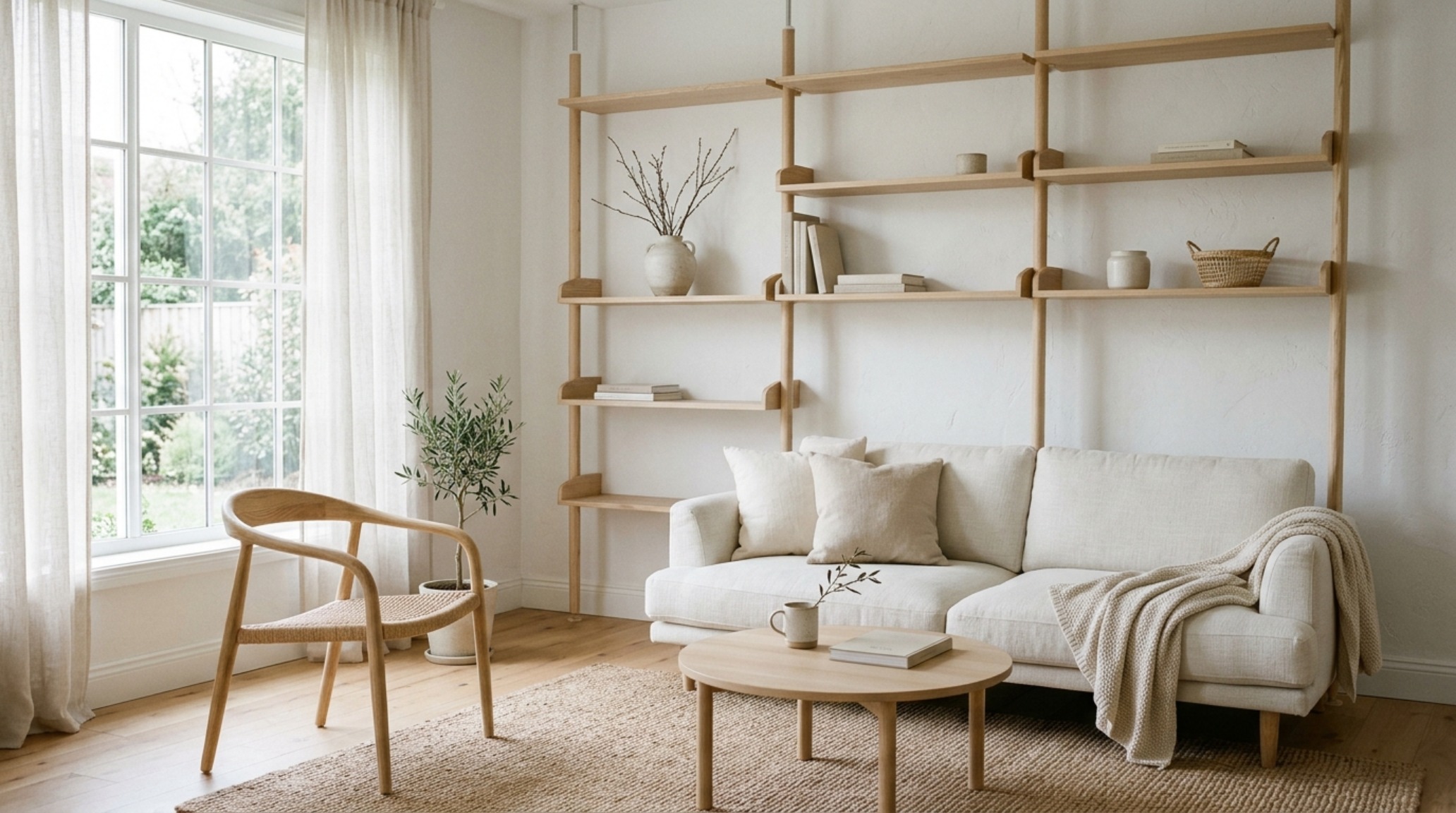
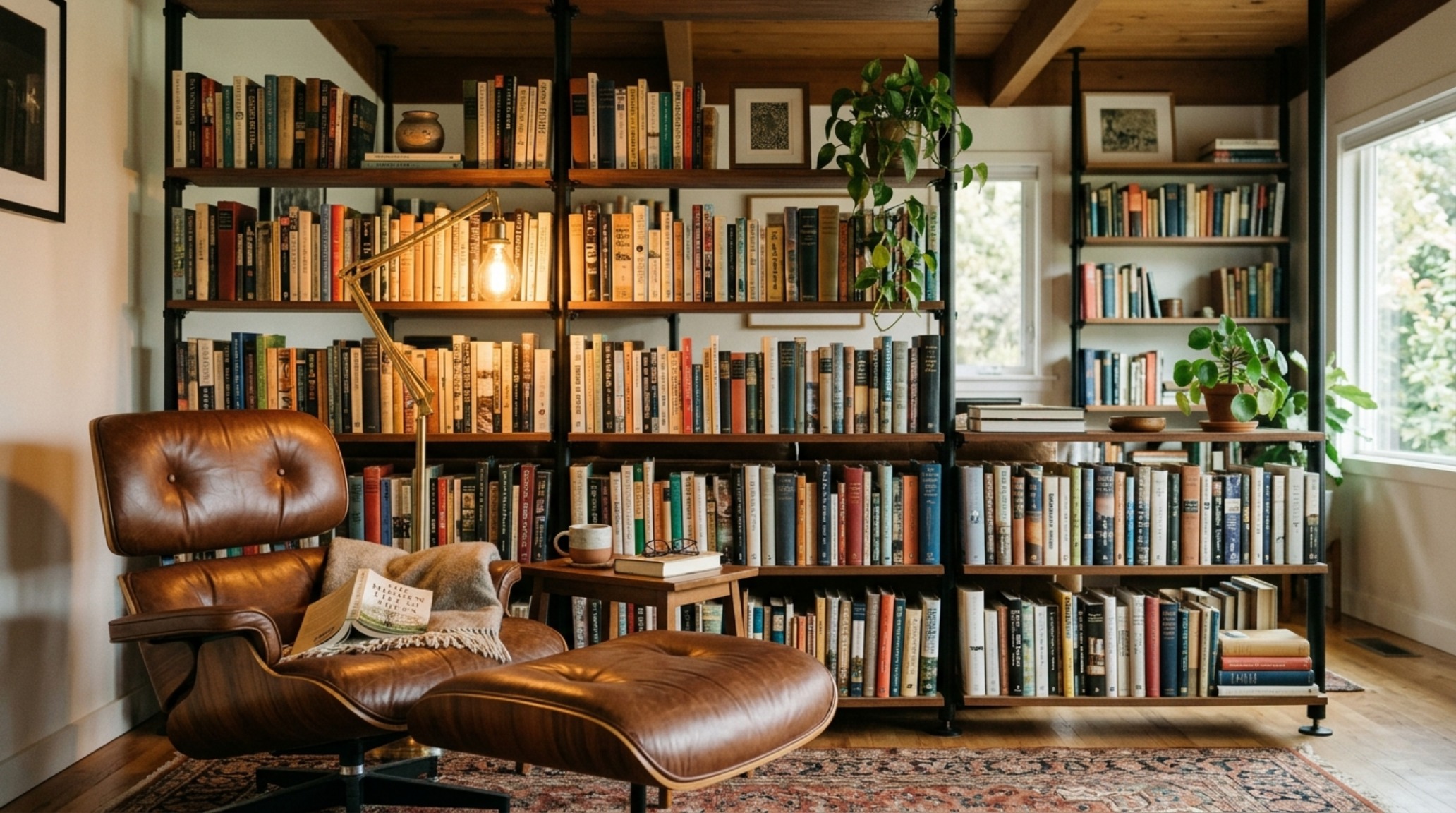
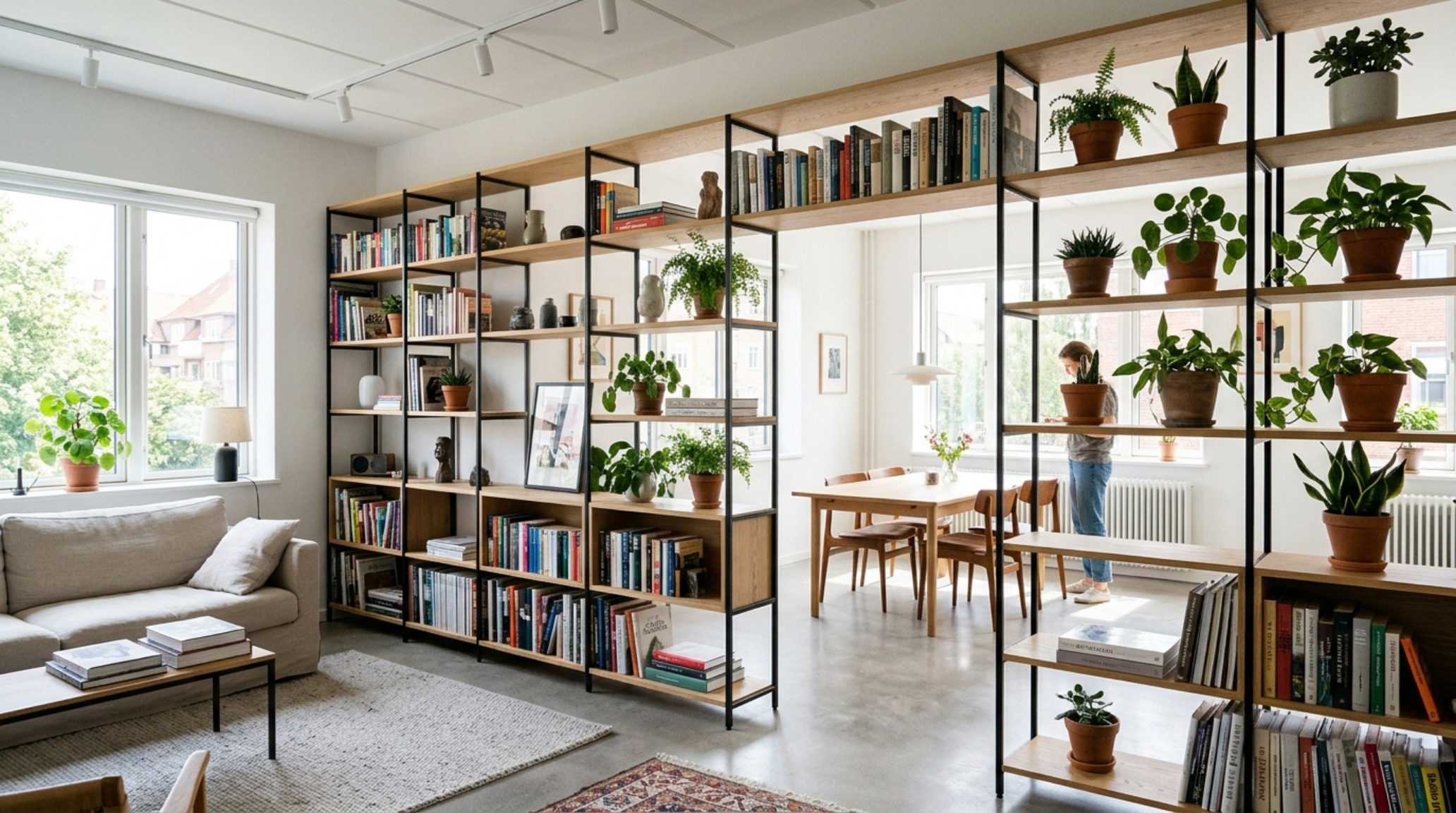
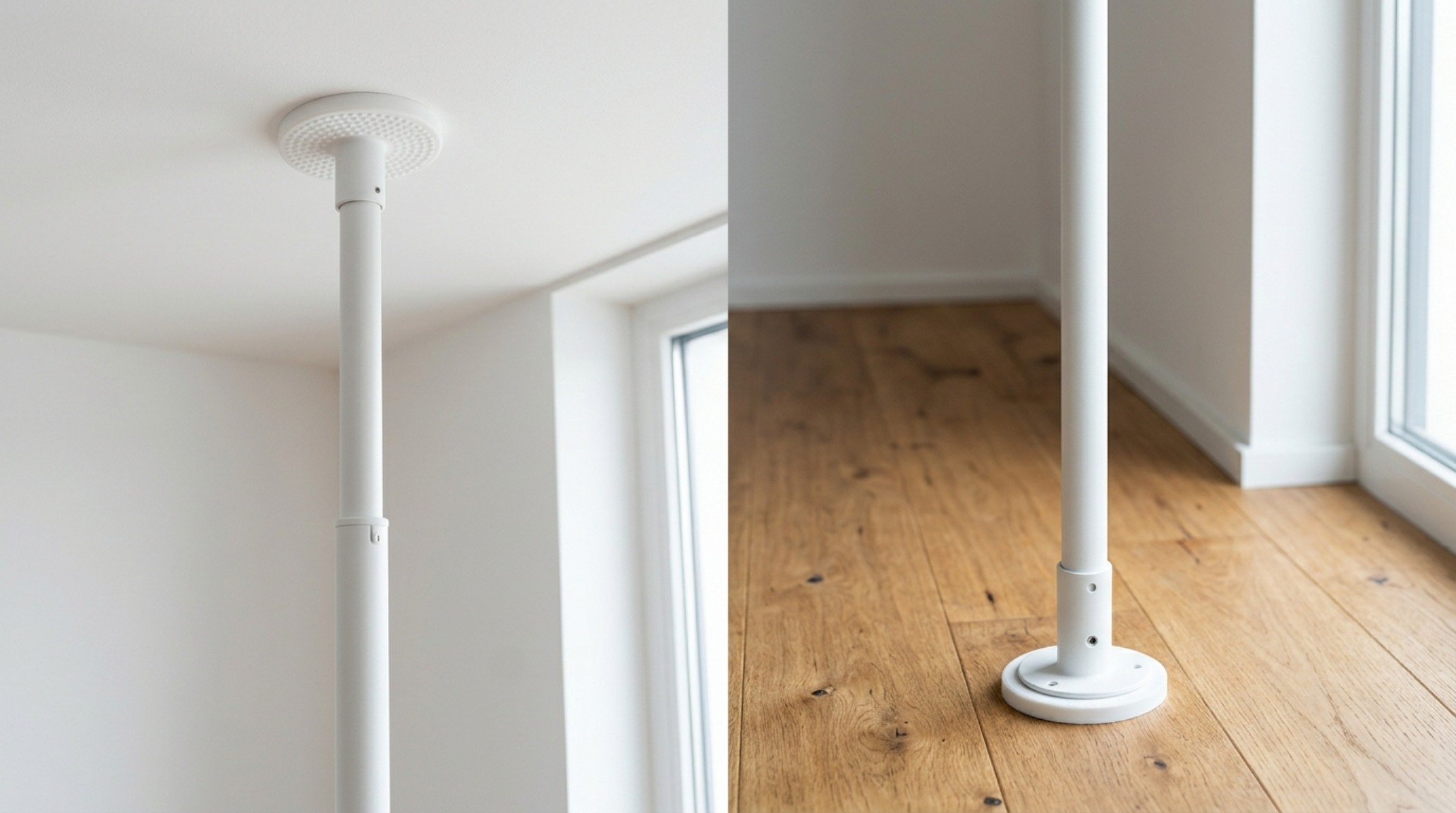
The most profound way to achieve the look of a permanent installation without damaging the drywall is to look vertically—not toward the wall, but toward the floor and ceiling. Tension-pole shelving systems have evolved far beyond the flimsy wire racks of the past. Today’s high-end systems use industrial-grade aluminum or solid oak masts that apply vertical pressure to secure themselves. This creates a ‘visual built-in’ effect that mimics the vertical columns of traditional Greek or Neoclassical architecture.
When planning your living room floating shelves ideas, consider the floor-to-ceiling masts as the skeleton of your design. By choosing masts in a matte charcoal or a powder-coated bronze, you introduce a rhythmic verticality that draws the eye upward, making standard eight-foot ceilings feel significantly more expansive. The reliability of these systems is rooted in physics: by distributing weight across a vertical axis rather than a cantilevered wall bracket, you can safely display heavy art books, ceramic vessels, and even mid-sized sculptures without the terrifying ‘sag’ often associated with no-drill wall shelves.
Mastering Architectural Clearances and Spatial Flow
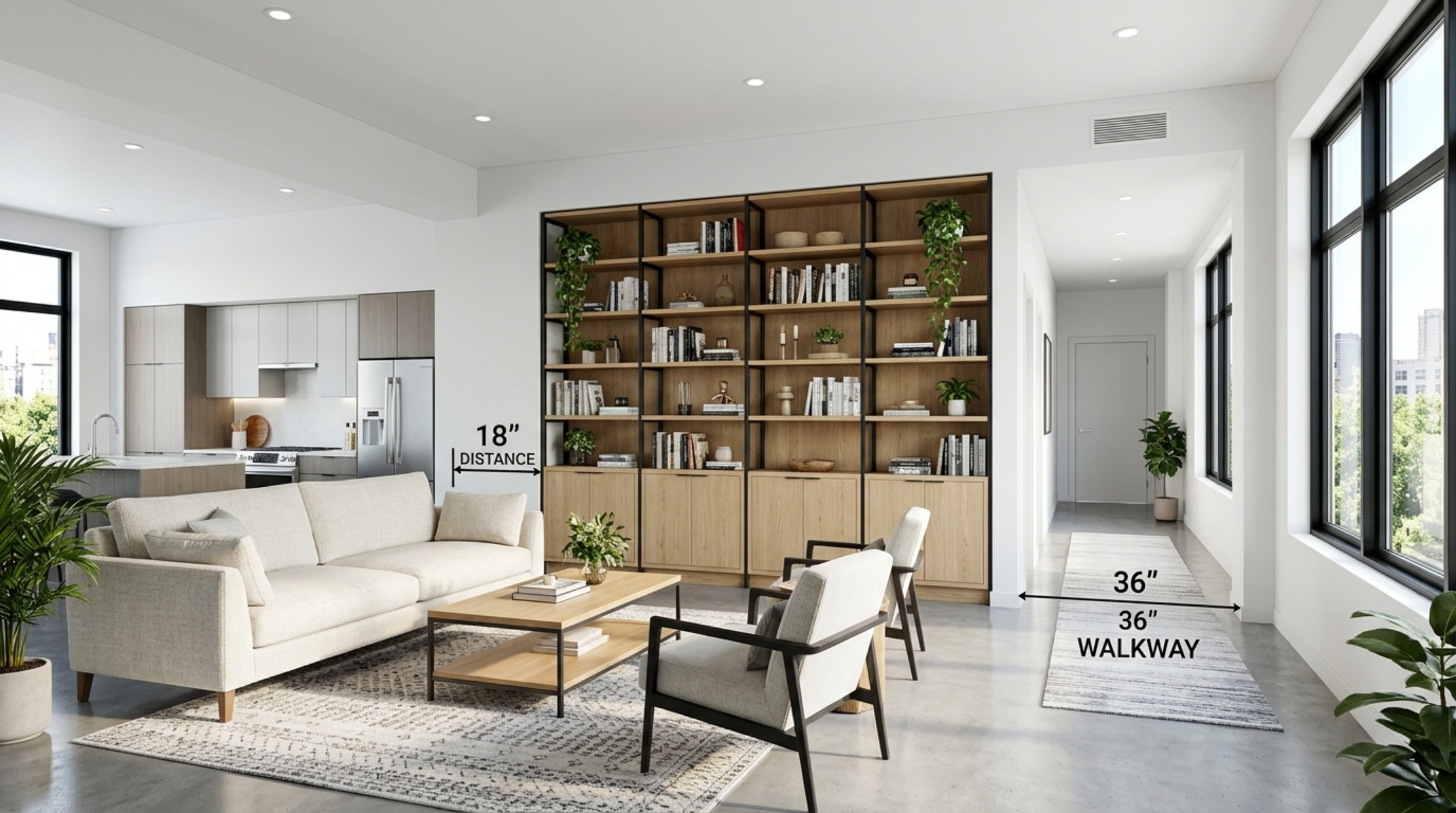
Design is as much about the space between objects as the objects themselves—what we call ‘negative space breathing room.’ In a standard apartment layout, the primary circulation path should maintain a 36-inch standard walkway clearance. This is non-negotiable for a home that feels professional and effortless. When you install deep, heavy-duty shelving, it is tempting to maximize every inch of storage, but overcrowding the floor-plane creates visual friction.
To maintain a high-end editorial feel, ensure your shelving depth doesn’t encroach on the ‘reach zone.’ For example, if your shelving sits behind a sofa, you need at least 12 to 18 inches of clearance to ensure the seated guest doesn’t feel ‘loomed over.’ Similarly, the bottom shelf should ideally float 6 to 10 inches off the floor, allowing the flooring material to continue underneath. This simple trick maintains the floor’s visual continuity, making the room feel larger and the installation feel lighter, despite its structural mass.
The Aesthetic Fusion: Japandi Meets Organic Modernism
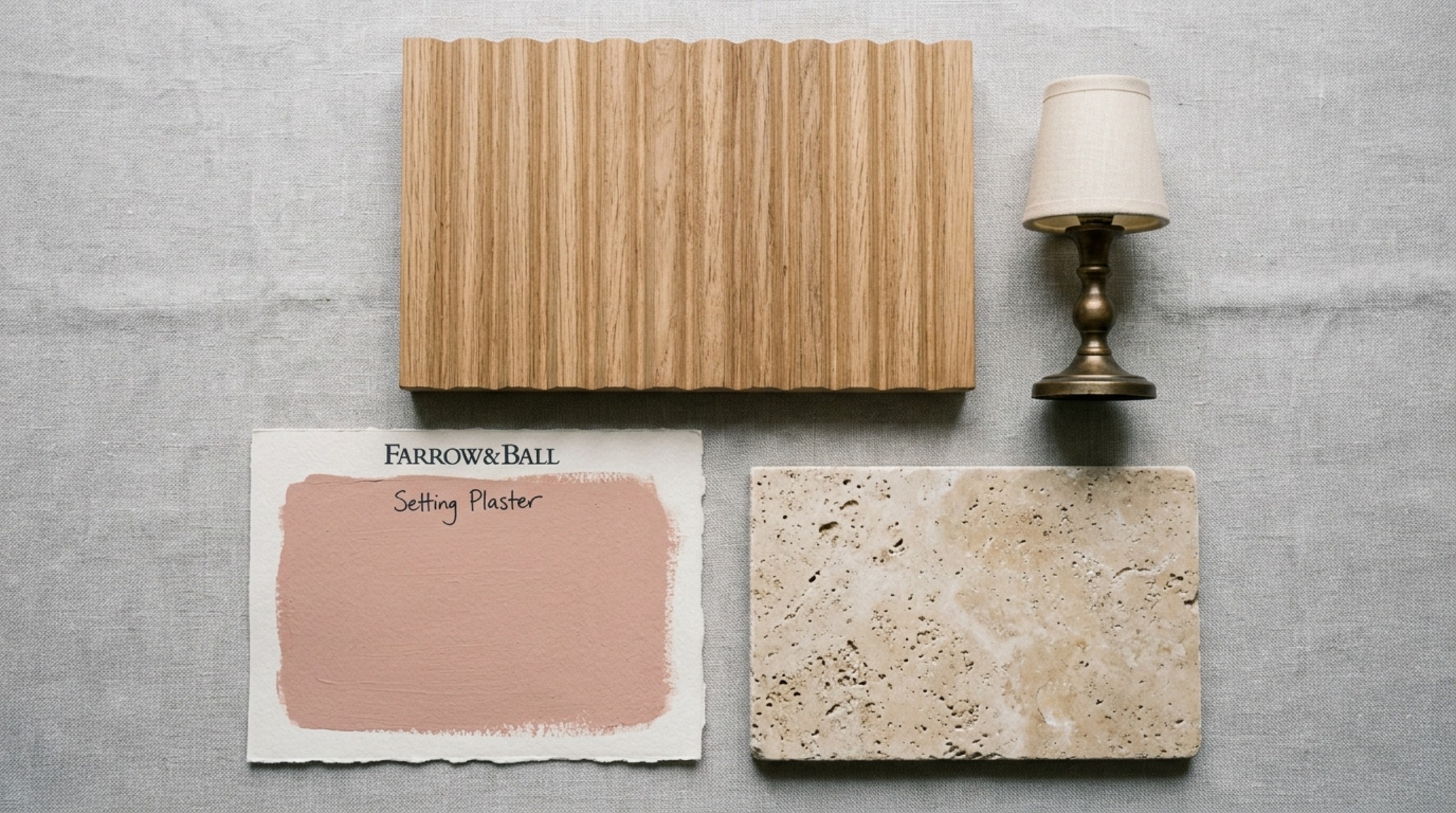
The most successful contemporary interiors are currently leaning into a fusion of Japandi’s minimalist discipline and Organic Modernism’s tactile warmth. This aesthetic is perfectly suited for temporary wall decor because it relies on high-quality materials rather than permanent structural changes. Imagine a tension-pole system using fluted white oak shelves paired with matte black hardware. The contrast is sharp, sophisticated, and instantly elevates the room from ‘furnished’ to ‘designed.’
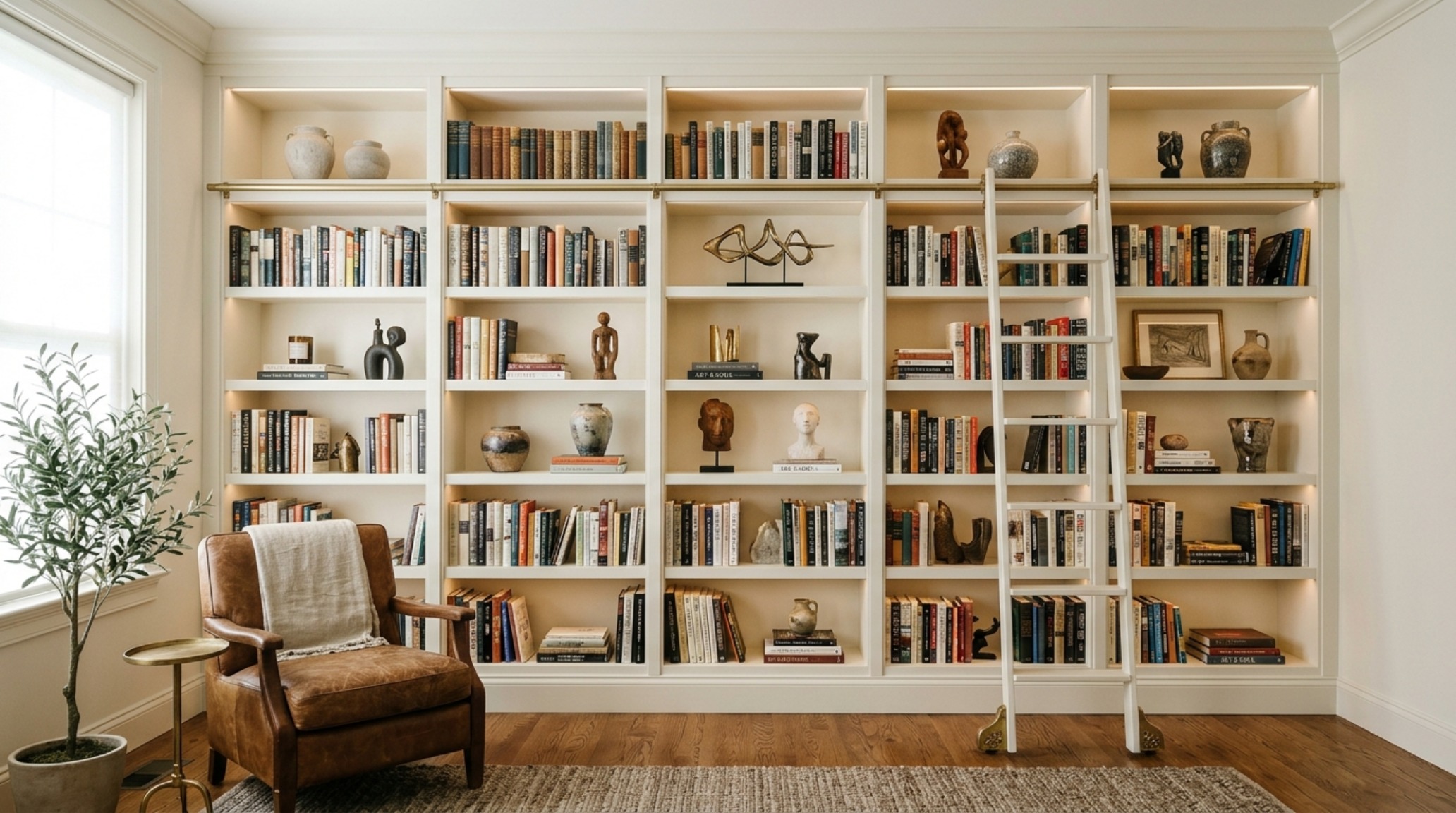
Color choice is your most potent tool for creating an architectural illusion. To make your shelving feel like it was born within the room, match the shelf color to your wall color. If you are surrounded by Benjamin Moore Swiss Coffee or Farrow & Ball Setting Plaster, paint your shelving units to match. This monochromatic approach minimizes visual ‘noise’ and allows the objects on the shelves to take center stage, mimicking the look of expensive, recessed cabinetry. When the shelves and walls speak the same chromatic language, the boundaries of the room soften, and the shelves become part of the architecture rather than just furniture.
Styling with the Rule of Thirds and Shadow Play
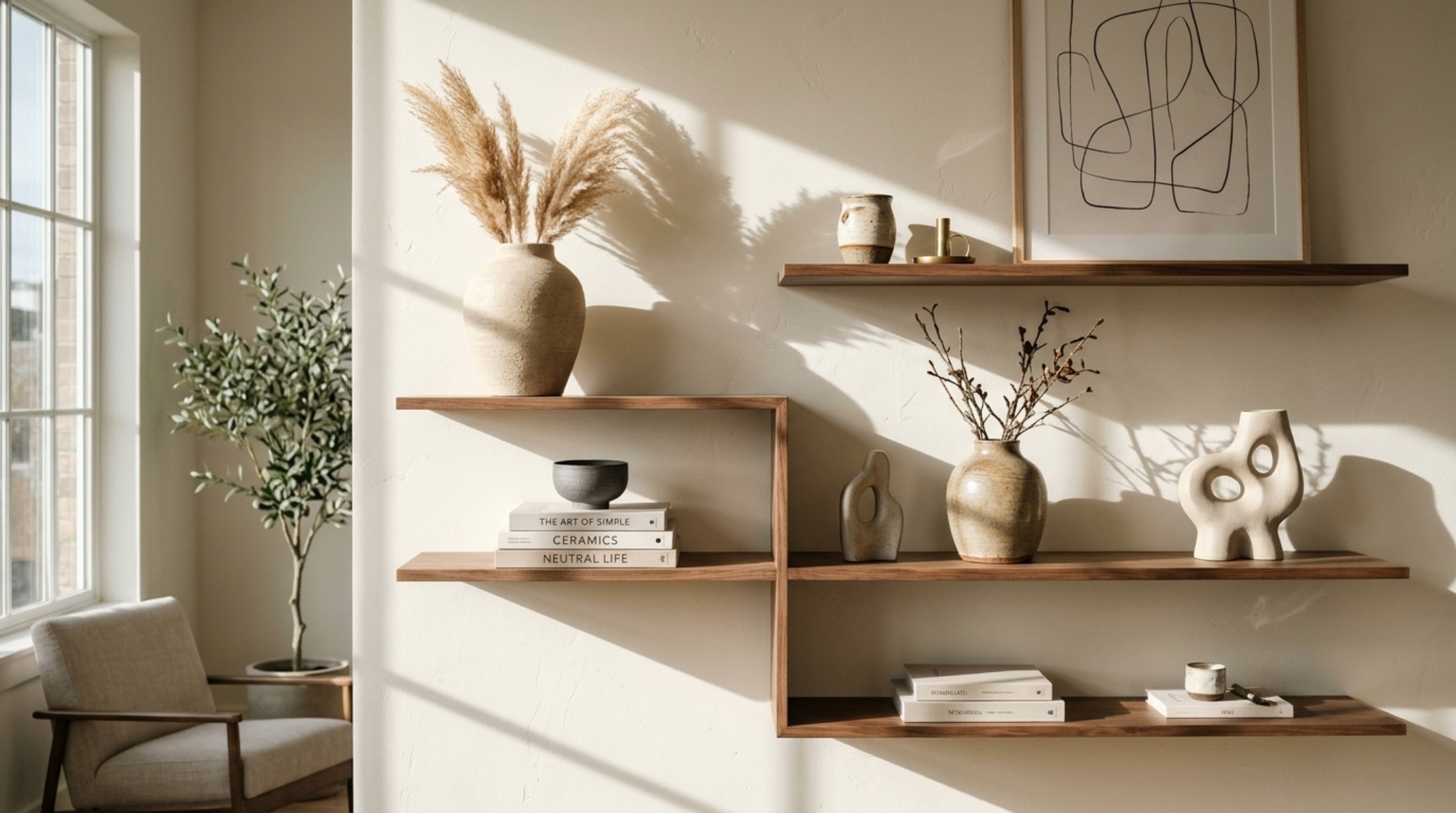
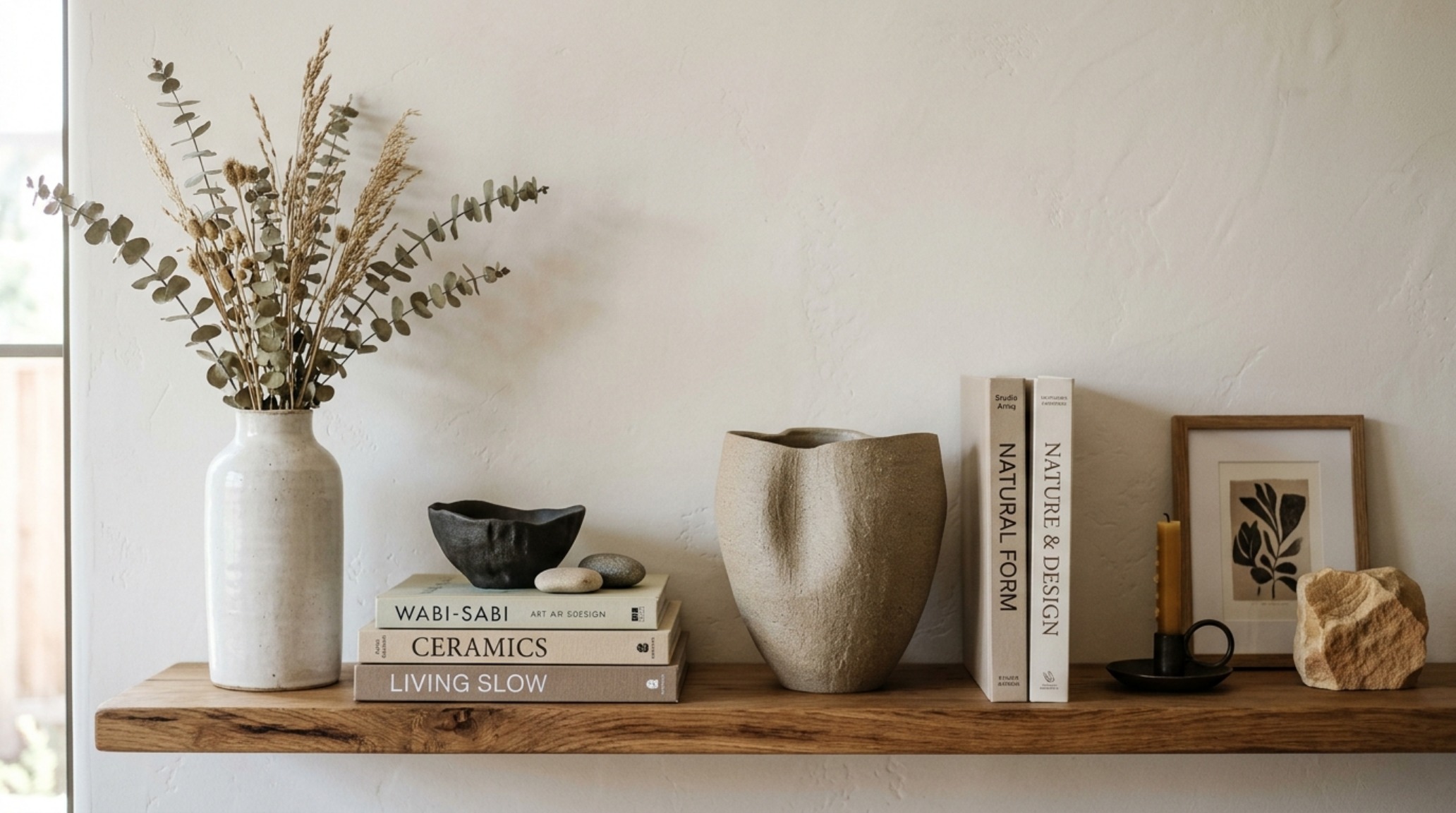
Styling is where many DIY projects lose their professional edge. To achieve an ‘Architectural Digest’ finish, you must master asymmetrical floating shelves decor. This isn’t about symmetry; it’s about balance. Use the Rule of Thirds to group objects. Place a tall, structural branch in a heavy stoneware vase on one side, balanced by a lower, horizontal stack of books and a small marble tray on the other. This creates a ‘zig-zag’ movement for the eye, leading the viewer through the display rather than forcing them to take it all in at once.
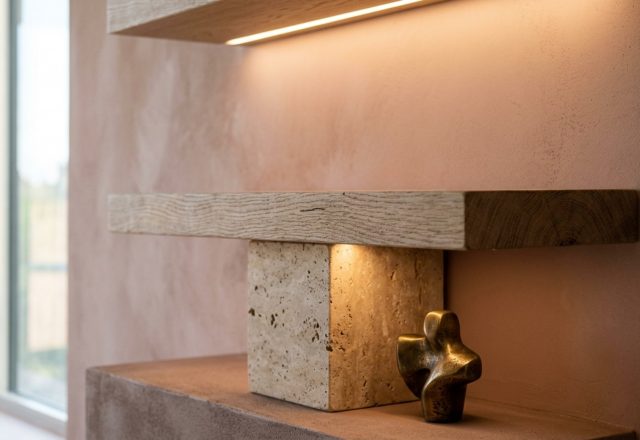
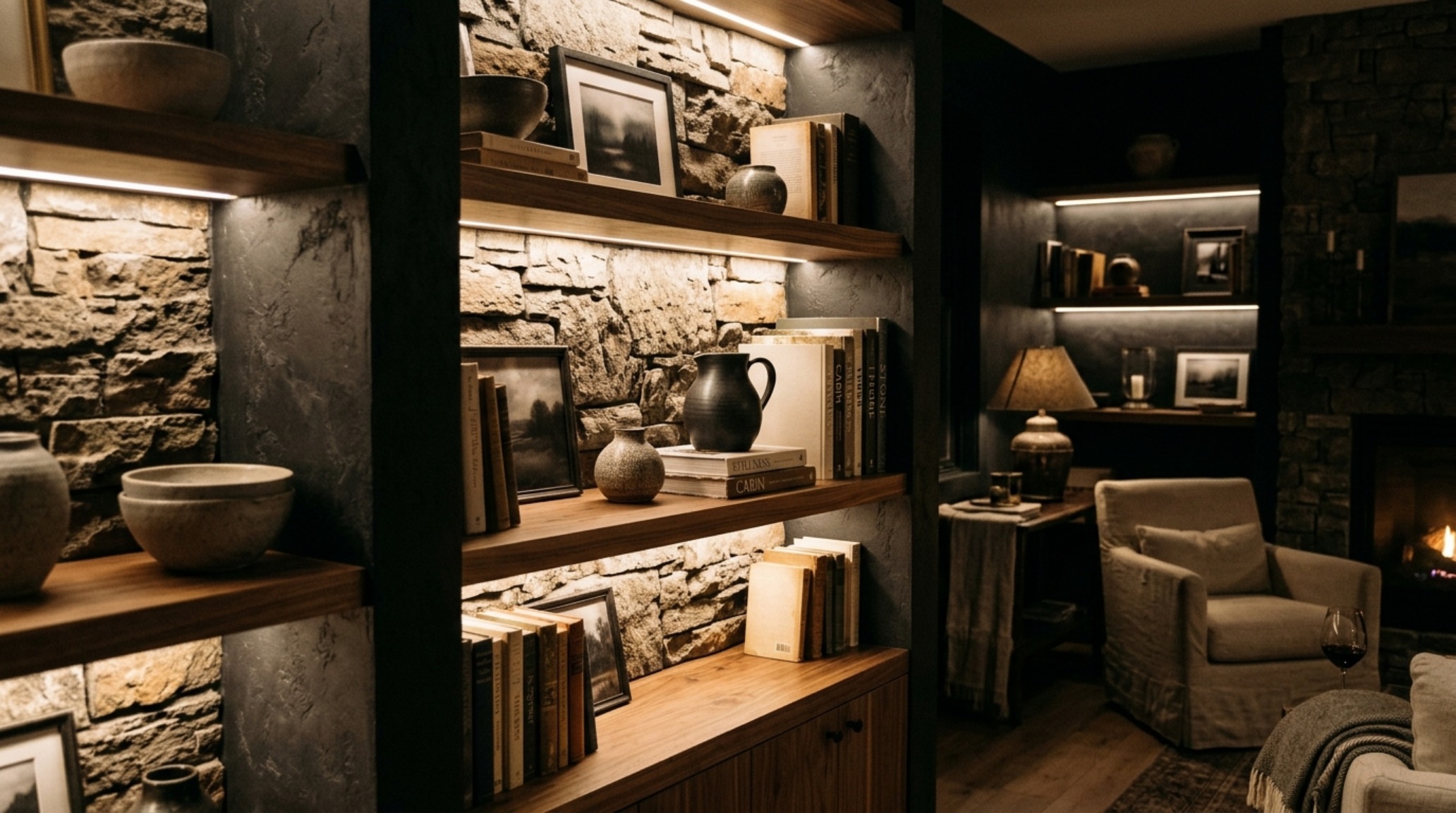
Shadow play is another overlooked element of high-end design. By using no-drill floating shelf installation methods that incorporate integrated LED strips, you can create depth where there is none. A thin LED channel tucked under the lip of a shelf provides a soft wash of light onto the objects below, casting shadows that define the texture of a ceramic bowl or the grain of a wooden bookend. This layered lighting is what separates a basic storage rack from a curated gallery wall.
Navigating Weight-Bearing Reliability in Temporary Systems
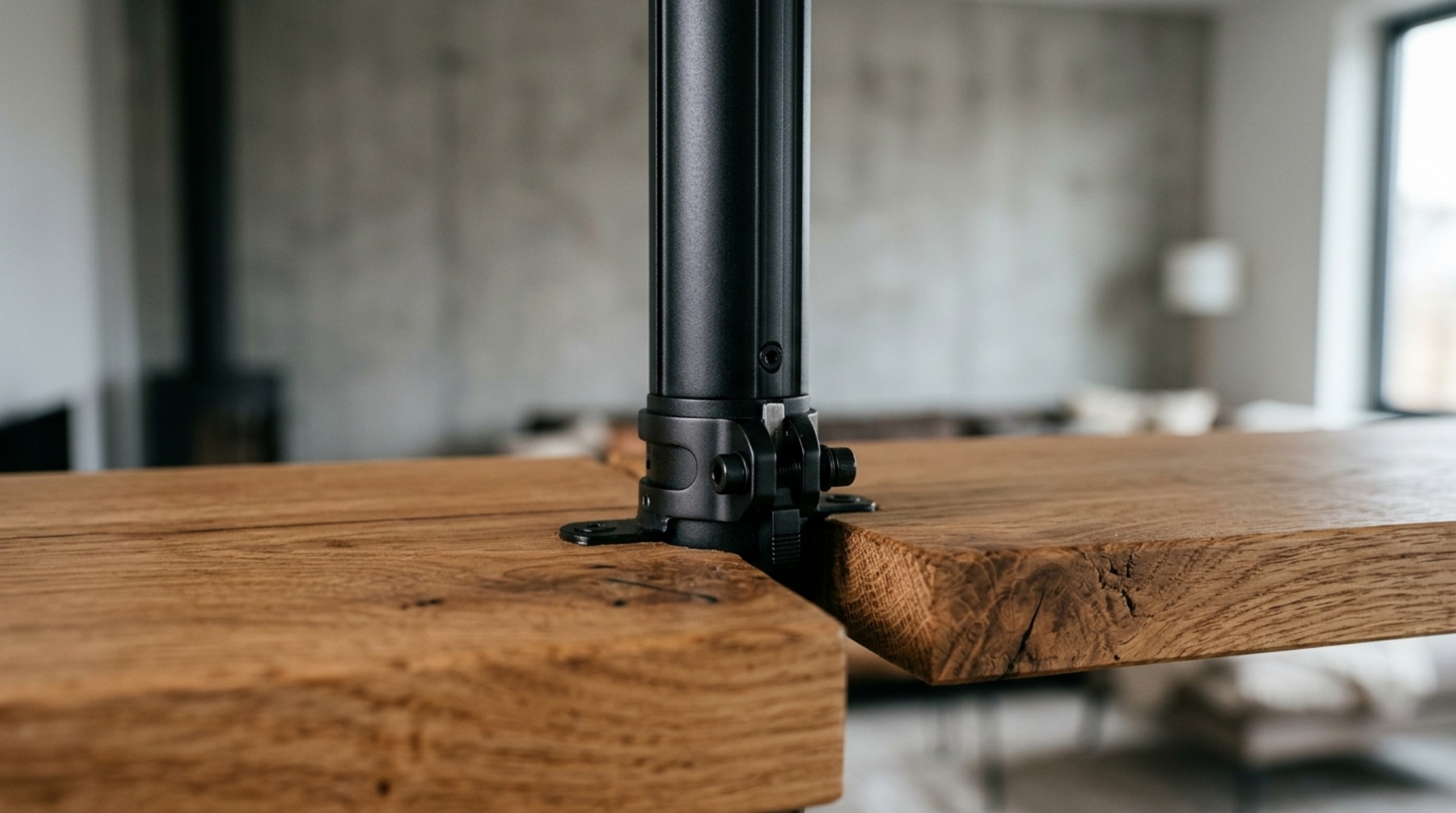
One of the biggest concerns with renter friendly shelving is the fear of collapse. However, modern engineering has solved this through better weight distribution and high-friction contact points. Silicon-padded feet on tension systems prevent slippage on hardwood or tile floors while protecting the ceiling from scuffs. If you are opting for ‘leaner’ style shelves—which lean against the wall at a slight angle—the weight of the objects actually pushes the feet further into the floor, increasing stability.
For those looking for a more traditional look without the screws, consider heavy-duty command-style adhesive brackets designed specifically for lightweight decorative shelving. However, for a true ‘visual built-in,’ the tension system remains the gold standard. It allows for a higher weight capacity—often up to 50lbs per shelf—meaning you don’t have to compromise on your collection of heavy art monographs. Always verify the manufacturer’s load-bearing specifications and distribute the heaviest items toward the bottom of the unit to lower the center of gravity, further grounding the installation.
Atmospheric Lighting: The High CRI Difference
Lighting is the final, essential layer of the architectural illusion. Most apartment dwellers suffer under the harsh, cool glow of 4000K ‘daylight’ bulbs that make wood textures look gray and lifeless. To achieve a high-end feel, switch to 2700K warm ambient lighting for your shelf-integrated lamps or puck lights. Look specifically for bulbs with a high CRI (Color Rendering Index) of 90 or above. This ensures that the warm ochres of your ceramics and the deep greens of your indoor plants appear rich and saturated.
Consider the ‘glow’ rather than the ‘beam.’ Use diffused directional lighting—perhaps a small, cordless brass lamp perched on a middle shelf—to create a localized pool of light. This creates ‘islands’ of interest within the shelving unit, making the installation feel intimate and intentional. When the sun sets, these pockets of warmth transform the room’s atmosphere, highlighting the depth of the shelves and reinforcing the illusion of a permanent, custom-lit library.
Mastering the Cadence of Living Room Floating Shelves Ideas in Open-Plan Layouts
In larger, open-plan apartments, shelving can serve as a non-permanent room divider. A double-sided tension system placed perpendicular to a wall can define a dining area or a home office without blocking natural light. This ‘zoning’ is a key principle in architectural design. By maintaining sightline alignment—ensuring the top of your shelves aligns with the top of a nearby door frame or window—you create a sense of order and cohesion that feels planned rather than haphazard. This level of detail is what makes a temporary setup feel like a permanent, architect-led renovation.
Architectural Specification & Material Matrix
Curated tactile palette, spatial dimensions, and atmospheric lighting index for this design scheme.
Ultimately, the art of the ‘renter-friendly built-in’ is a masterclass in compromise-free living. It proves that we do not need to wait for homeownership to experience the quiet power of a beautifully engineered wall. By synthesizing the best of living room floating shelves ideas with the structural integrity of tension-based systems, we reclaim our agency over our surroundings. We create homes that are not just places to keep our things, but spaces that reflect our aesthetic values, our intellectual curiosities, and our need for a grounded, tactile sanctuary. The walls may remain untouched, but the room itself will never be the same.
Editorial Silo • Recommended Architecture Studies
- The Gallery Rail Renaissance: Redefining Living Room Floating Shelves Ideas with Structural Discipline — Archival Design Case Study
- Small Space, Big Soul: Nate Berkus-Inspired Functional Hacks for Modern Wall Shelving — Archival Design Case Study
Architectural Inspiration Lookbook
A high-resolution study in spatial proportions, tactile materiality, and light choreography curated for enduring modern living.
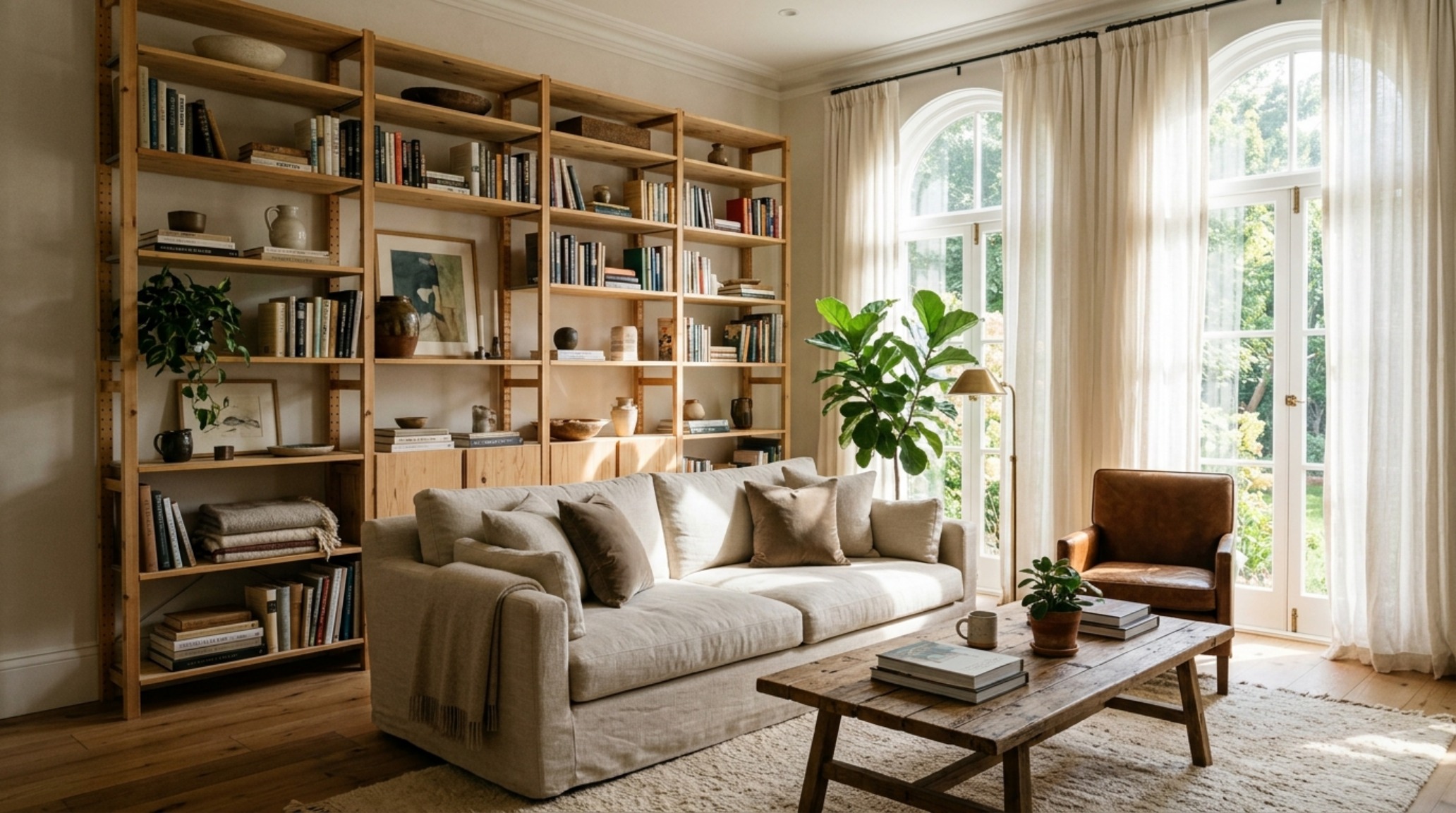
Curated Visual Lookbook
Design Gallery & Spatial Studies
A visual curation of architectural arrangements, lighting concepts, and material palettes featured in this space.