The Allure of Limewash and Warm Stone
Curb appeal starts long before anyone reaches your front door. It hits you in the peripheral vision as you drive down the street. Too many modern builds rely on flat, sterile siding that feels entirely disconnected from nature. Authentic architecture demands texture. A textured stucco or limewash facade catches the late afternoon sun differently than standard brick, casting soft shadows that shift as the day wears on.
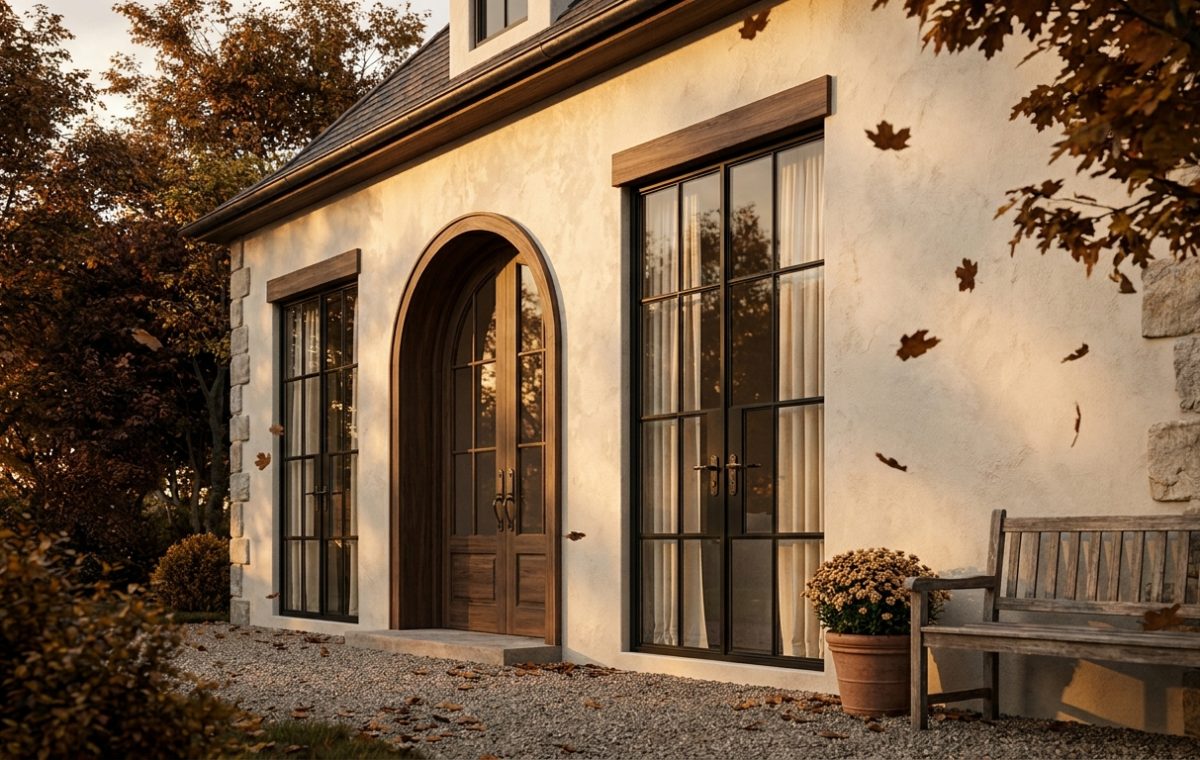
Building character requires leaning into organic imperfections. Smooth, uniform walls look manufactured. Hand-trowelled plaster carries the quiet confidence of a European estate that has stood through centuries of changing seasons. Pair those uneven, cream-colored walls with dark, substantial timber headers above the windows, and you immediately establish visual weight.
Balancing Heavy Materials with Fine Lines
Slim-profile black steel windows serve as the modern anchor for rustic architecture. They provide a striking contrast against pale plaster without feeling jarring. The delicate grid pattern keeps the facade feeling airy, letting natural light flood the interior spaces while giving the exterior a crisp, tailored edge.
- Use multi-pane black steel frames for architectural contrast
- Incorporate warm oak or walnut for the primary entry doors
- Keep hardware subtle, opting for aged bronze or iron
Notice how the arched wooden double doors break the rigid rectangular rhythm of the surrounding windows. Curves soften a facade instantly. If your home features an entirely boxy floor plan, introducing an arched entryway or a rounded portico alters the entire geometry of the approach.
Grounding the Structure with Natural Landscape
Paved concrete driveways often destroy the charm of a rustic home. Crushed gravel paths make a satisfying crunch underfoot, signaling a slower pace of life. They drain well, look completely natural, and cost a fraction of poured stone pavers.
Landscaping shouldn’t look overly manicured either. Simple terracotta planters holding hardy shrubs, combined with seasonal foliage like falling autumn leaves, anchor the building to its plot. A weathered wooden bench tucked beneath a window invites quiet observation, turning an empty patch of yard into a lived-in space.
Upkeep remains a real factor here. Limewash requires refreshing every few years, and gravel needs occasional raking to keep weeds at bay. Yet that maintenance is precisely what prevents the home from looking stagnant. How do you balance the desire for low-maintenance siding with the rich texture of authentic historical materials on your own property?
Editorial Lookbook & Photo Collection