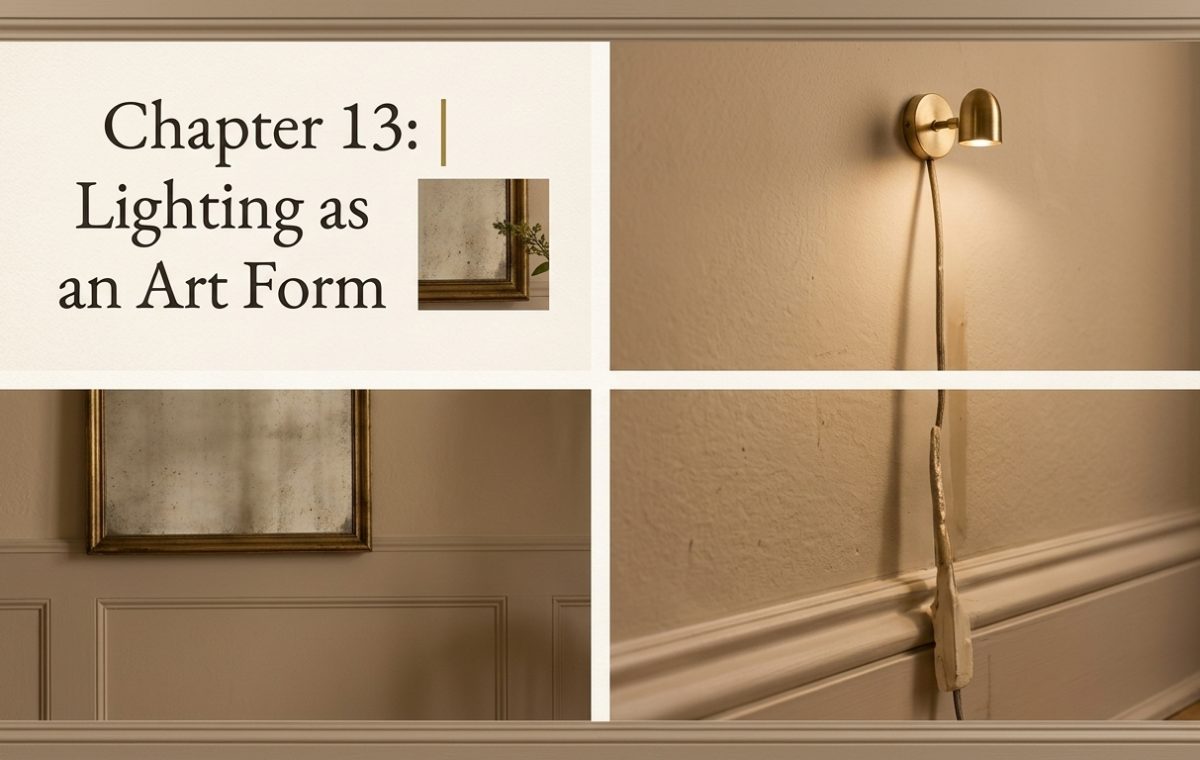
That exposed cord dropping straight down the taupe wall shouldn’t work. By conventional decorating rules, wires belong hidden behind fresh drywall. Yet pinned cleanly against classical wainscoting detail, this small brass wall sconce stops being an electrical nuisance. It becomes an intentional sculpture.
Treating Shadows as a Physical Material
Most residential illumination fails because people mistake raw brightness for comfort. We map out recessed ceiling cans, flip a switch, and drown a room in an unforgiving flood. It feels sterile. It flattens architectural depth. Purposeful accent lighting design operates on the opposite principle: you curate the dark spots first.
Light is directional force. When a petite brass hood angles downward, the wall’s chalky texture awakens. Panel moldings cast soft drop-shadows. The room suddenly breathes with dimension. To pull this off, commit strictly to a warm color temperature between 2400K and 2700K. Anything above 3000K strips the warmth right out of mushroom-toned paint, leaving you with an office reception vibe.
The Practical Truth About Plug-In Sconces
Chasing electrical channels through masonry or original horsehair plaster is messy and expensive. For historic renovations and rentals, plug-in wall fixtures remain the best functional compromise. But let us be honest about the trade-off: you have a wire to manage.
Never hide cords under clunky plastic adhesive channels. Those plastic covers look cheap within a week. Instead, treat the cable as honest joinery:
- Select heavyweight braided rayon or twisted linen cords over glossy PVC jacket wire.
- Keep the run perfectly plumb. Use minimal brass tack clips aligned to your millwork.
- Place the inline toggle switch at natural elbow height so you are not fishing behind baseboards in the dark.
A slack, diagonal cord looks sloppy. A dead-straight, weighted cord looks architectural.
Reflecting Imperfection: Framing the Beam
A solitary spotlight needs an anchor. Mount a directional light into empty drywall, and it just points accusingly at nothing. Pair it with an antiqued mirror or textured oil painting, and the math changes completely. Foxed, mercury-mottled glass softens focal hotspots, bouncing honey-colored reflections back into the room without blinding whoever sits across the table.
Direct glare reveals utility; grazed light creates mood.
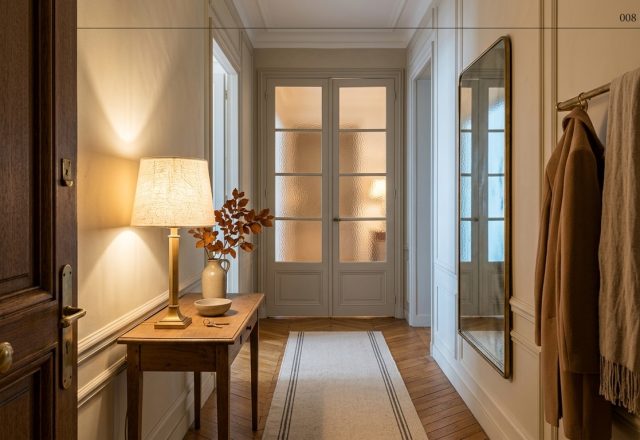
Successful layered lighting is not about packing ten random lamps into a sitting room. It is about establishing three heights: low pools from table lamps, eye-level accents from wall lights, and discreet ceiling wash kept on deep dimmers. Kill the central overhead pendants after dusk. Let your walls carry the quiet weight of the evening.
Look at your current living space after dark. How many fixtures exist just to illuminate a task, and how many give the eye a reason to slow down?
Editorial Lookbook & Photo Collection