Practical Guide to Drying Herbs Indoors for Your Kitchen
Key Points
Supermarkets sell tiny plastic clamshells of herbs for ridiculous prices.
Meanwhile, fresh rosemary and thyme sit outside in the garden, practically begging to be…
Supermarkets sell tiny plastic clamshells of herbs for ridiculous prices. Meanwhile, fresh rosemary and thyme sit outside in the garden, practically begging to be preserved. Turning a sunny window frame into a practical drying station solves both problems.
The Mechanics of Air Drying
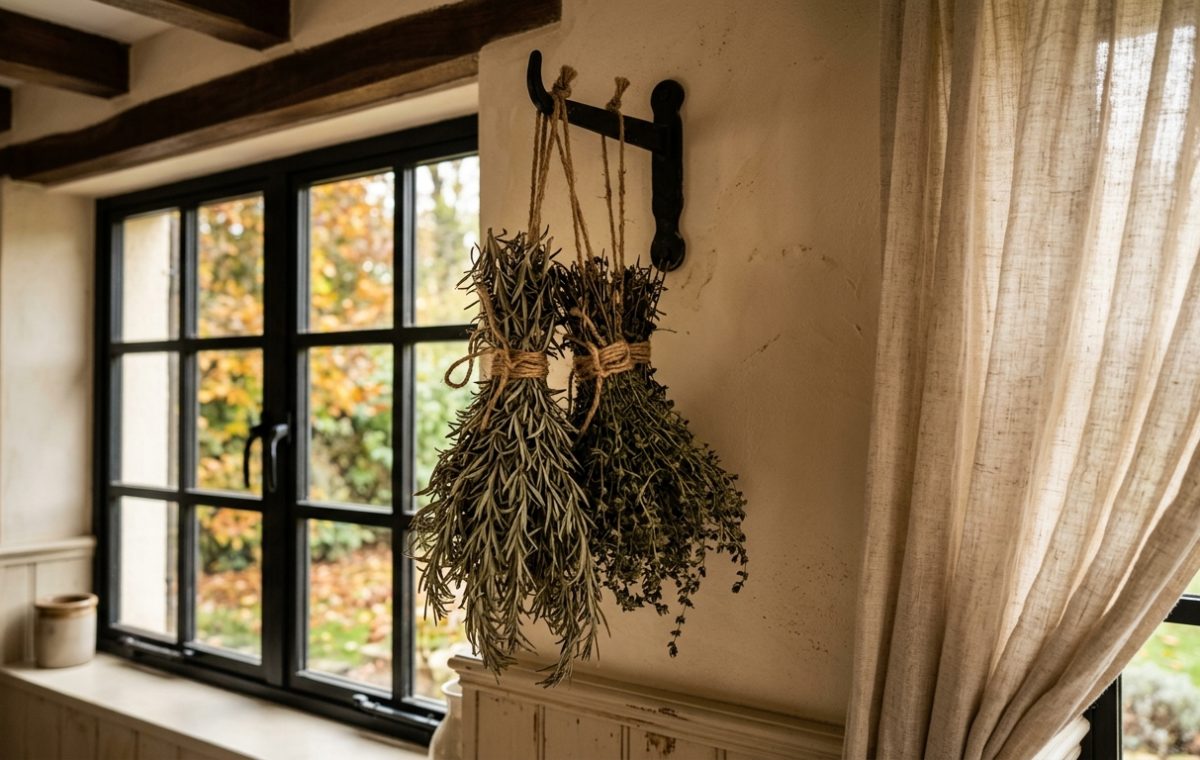
You do not need fancy dehydrators or expensive gadgets to build a winter supply of seasoning. Natural airflow and indirect sunlight do the heavy lifting. Tie sturdy twine around the base of sturdy stems like rosemary, sage, or oregano. Hang them upside down from a heavy iron hook mounted securely to plaster or wood trim.
Choosing the Right Spot
Avoid placing hanging bundles in direct, scorching sunlight or high-moisture zones like directly over a boiling sink. A drafty windowsill provides the ideal microclimate. Air circulates freely around the leaves, evaporating moisture slowly without bleaching out essential aromatic oils.
Keep bundles small. Thick bunches trap humidity in the center, leading to mold instead of crisp, flavorful seasoning.
Expect the process to take anywhere from one to three weeks depending on home humidity levels. Once leaves crumble easily between your fingers, strip them from the woody stems and store them in airtight glass jars away from direct heat.
How do you usually store your garden harvest when winter arrives?
Editorial Lookbook & Photo Collection
Photo Archive: Practical Guide to Drying Herbs Indoors for Your Kitchen
36 Photos
Written by
JayhawkRent Editorial Team
Culinary Critic exploring visual stories and modern design based in Paris, France.
Editorial review fields are available through custom fields: jayhawk_reviewer_name and jayhawk_reviewer_note.
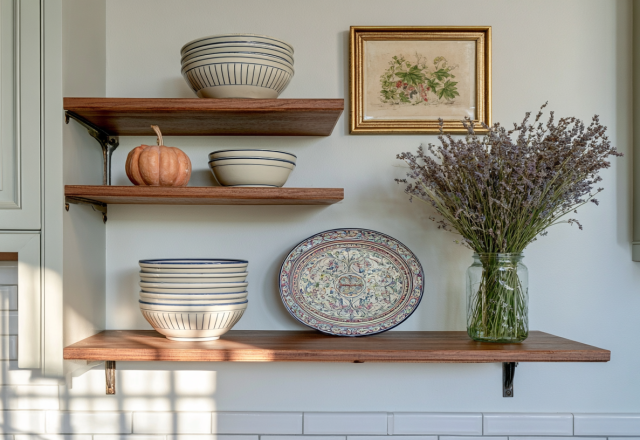
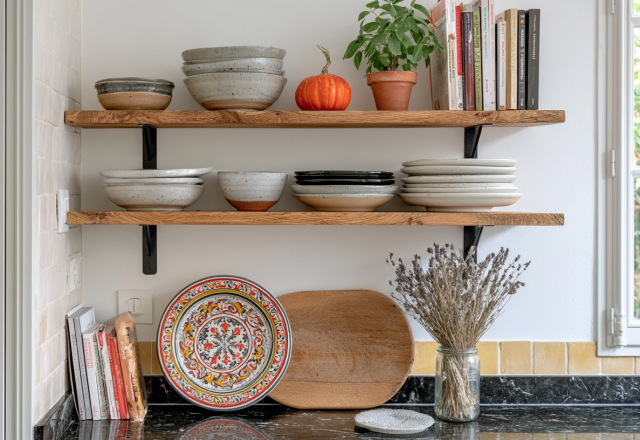
The Reality of Open Kitchen Shelving Open kitchen shelving looks effortless in glossy magazines. Real life is messier. Dust accumulates, mismatched mugs clash, and…
The Reality of Open Storage Open kitchen shelving looks effortless in glossy magazines. Real life is messier. Dust accumulates, mismatched mugs happen, and weight…