The Overhead Downlight Mistake
Recessed ceiling spotlights kill atmosphere. They cast hard, unflattering shadows straight down, turning a hallway into something resembling an airport terminal corridor. It feels sterile. It feels rushed. Yet when you come through the front door after dark, you need decompression, not interrogation-level glare.
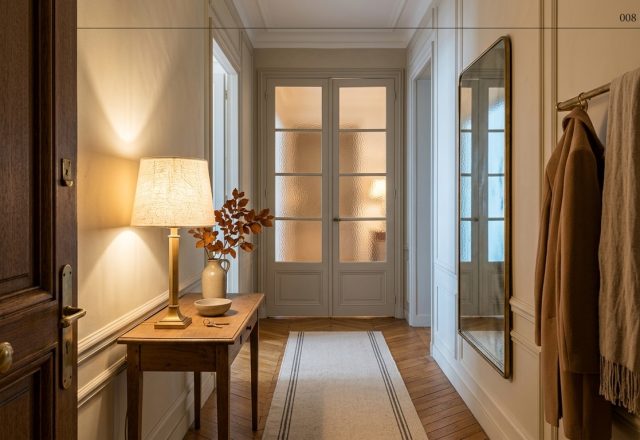
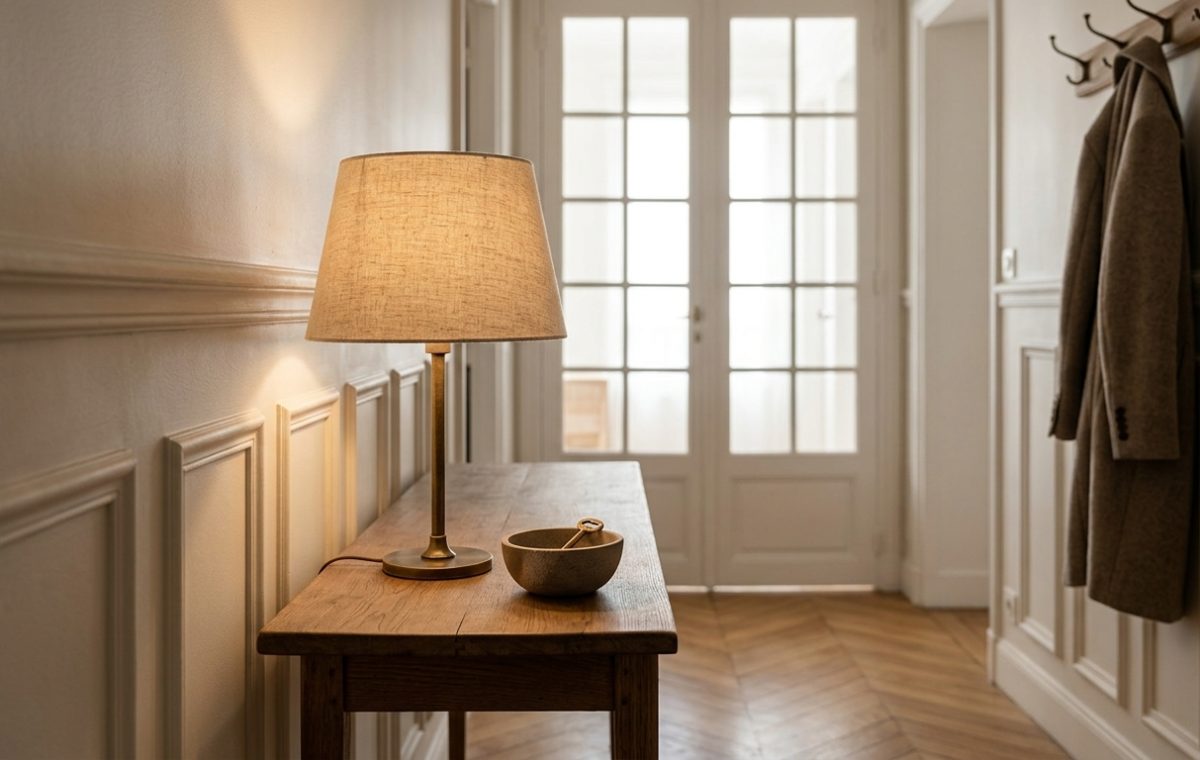
Look at what happens when you substitute that ceiling glare with a single table lamp. Soft illumination pools around a linen shade. It touches the timber grain of the table, catches the molding on the wainscoting hallway walls, and leaves the ceiling softly subdued. The hallway instantly drops its shoulders. Low-level glow creates depth where flat recessed cans flatten everything in sight.
Scale Matters in Tight Thoroughfares
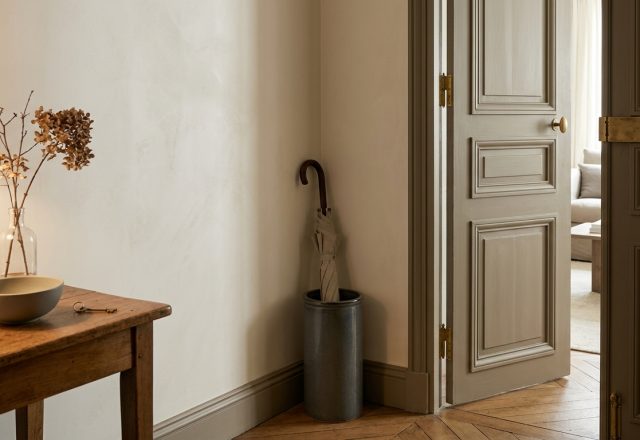
Hallways are workhorses. They take coats, damp umbrellas, keys, and incoming mail. Because square footage is usually scarce, people panic and push everything against the walls or leave the corridor completely bare. Neither choice works well.
A slender rustic table anchors the passage without stealing clearance. Notice how narrow the table in the space actually is. It barely protrudes past the door frame, leaving ample breathing room across the chevron parquet floor. A heavy storage chest would choke this circulation path. A floating shelf might feel too cold. A narrow timber table, however, gives utility an honest presence. Pair that with a shallow stone bowl for pocket clutter. It keeps everyday drop-offs contained so the surface never devolves into an unruly drop zone.
Light Quality and Everyday Practicalities
If you set up console table lighting, pay attention to the bulb inside that shade. Color temperature dictates the entire mood. Anything above 2700K will turn linen and raw oak into a cold, clinical tableau. Stick to 2400K to 2700K. You want warm accent lighting that signals shelter.
There is, of course, a minor headache: cord management. Old corridors rarely have floor outlets situated precisely where you want a piece of furniture. Running a brown braided fabric cord neatly along the baseboard molding prevents an unsightly mess while keeping the setup grounded. Avoid cheap plastic extension strips sitting exposed under the legs; they ruin the deliberate stillness of the room.
The first ten seconds inside a front door should quiet your nervous system, not shock it with twenty-four watts of raw downlight.
Balancing Utility with Restraint
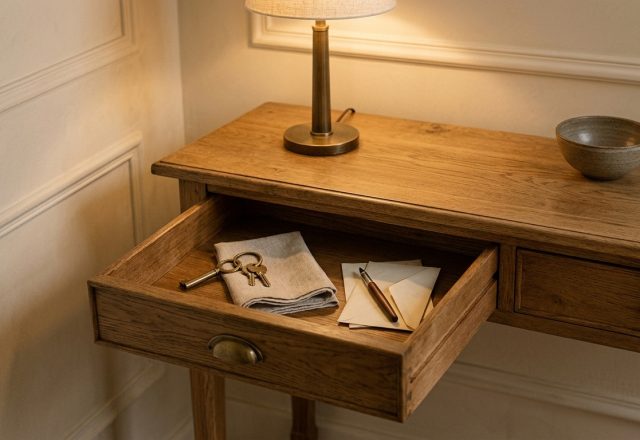
Small foyer styling often fails because people over-decorate. They stack trays, lean mirrors, line up diffusers, and scatter framed prints until dusting becomes a chore. Keep the composition lean. A substantial brass stem, a textured drum shade, and a simple receptacle for your front door key are plenty. When the architectural backdrop features handsome paneling and clean paint, extra knickknacks simply create visual noise.
Step back and evaluate your own corridor the next time you unlock the front door at twilight. Does the space greet you with a blinding overhead blast, or does it offer a quiet corner of warmth to guide off your shoes?
Editorial Lookbook & Photo Collection