The Anatomy of a Functional Reading Nook
Most homes suffer from wasted square footage. We push furniture against walls and leave corners completely empty. Yet, that awkward space beside a window often holds untapped potential for relaxation. A well-executed cosy reading corner design relies entirely on balance rather than expensive square meters. It requires seating that invites you to stay, good illumination for overcast afternoons, and a surface to rest a cup of coffee.
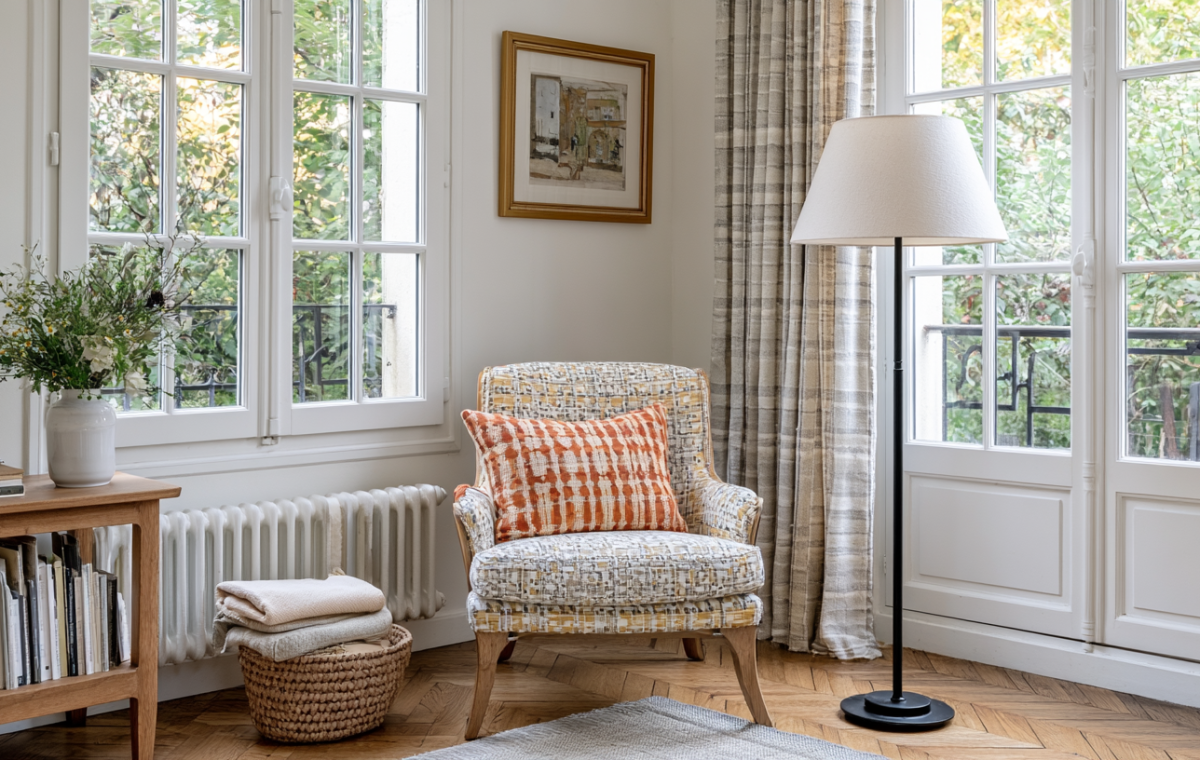
Natural light remains the ultimate luxury in any interior. Position your seating perpendicular to a window if possible. This prevents harsh glare directly on your book pages while still flooding the surrounding space with soft daylight. When the sun dips below the horizon, task lighting takes over. A slender floor lamp with a diffused shade introduces warm, directional light without cluttering the floor space.
Choosing the Right Seat and Textiles
Scale matters immensely in compact spaces. Bulky recliners swallow small rooms whole. Instead, opt for an upholstered armchair with a lower profile and exposed wooden legs that keep the floor plane visible. Patterned tweed or textured fabrics hide minor wear and tear far better than flat linen, making them practical for daily lounging. Throw in a lumbar pillow with a punch of burnt orange or rust to break up neutral tones and support your lower back during long reading sessions.
Good design isn’t about filling every inch of available floor space; it is about making the functional zones feel entirely intentional.
Accessories should earn their keep. A woven basket tucked neatly beneath a radiator or beside the chair holds extra wool blankets for chilly mornings. Stacked art books on a nearby timber console provide visual weight and a handy surface for fresh wildflowers in a ceramic vase. Notice how the classic herringbone parquet flooring anchors the entire vignette, lending instant warmth and historical character to the room.
Avoiding Common Layout Mistakes
Avoid pushing every single item flat against the perimeter walls. Pulling your armchair slightly inward creates an inviting, conversational micro-environment. Keep extension cords hidden by choosing a lamp with a generous cord length that runs cleanly along the baseboards. Upkeep is straightforward, but remember that textured upholstery requires regular vacuuming to keep dust from settling into the deep weave. How do you currently handle that lonely, unstyled corner in your own living space?
Editorial Lookbook & Photo Collection