The Weight of Authentic Architecture
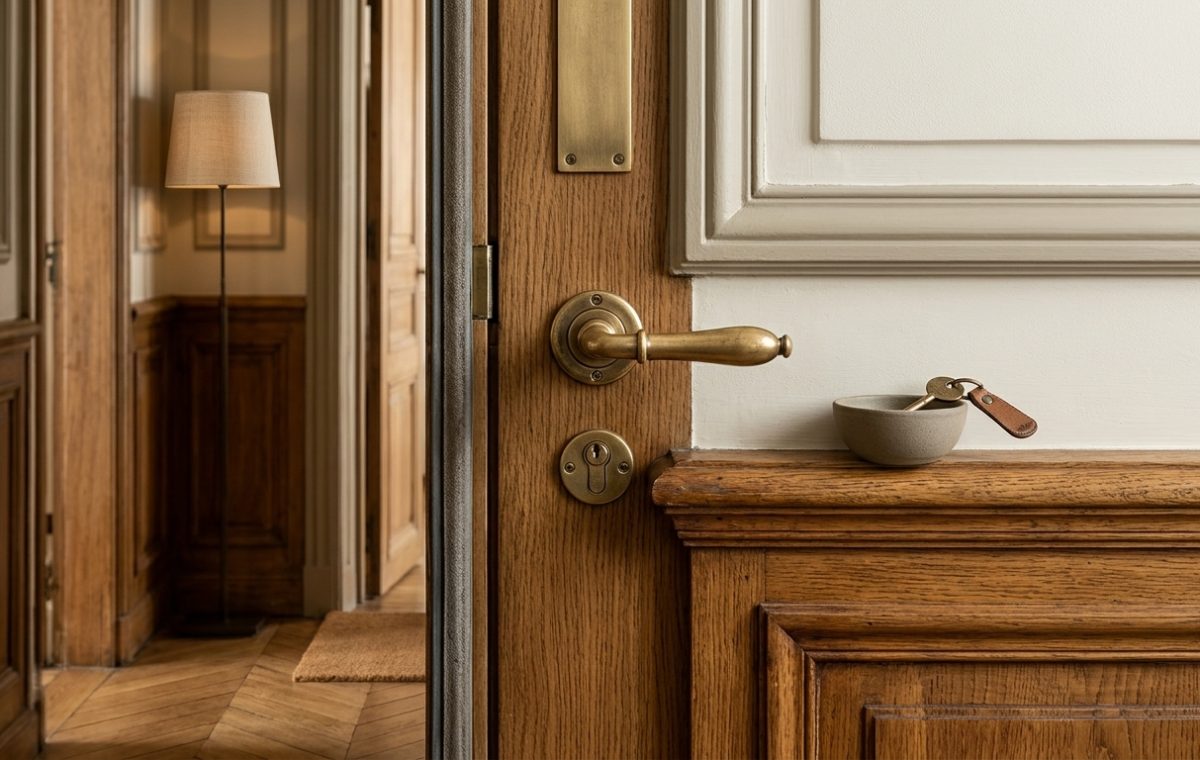
Standard builder-grade fixtures never quite fit an older structure. They feel light. They jiggle in the hand. True period properties demand heavy brass, tarnished patinas, and solid timber that has settled into place over generations. When you turn a solid brass door handle in a paneled corridor, the tactile feedback alone changes how you move through a room. Every creak of the floorboards and heavy wooden sweep tells a story that sleek contemporary flats simply cannot replicate.
Details That Anchor a Corridor
Look at how a simple drop bowl for keys rests beside the doorframe. These tiny rituals define daily habitation. We drop keys, check coats, and slide heavy timber latches shut without thinking. Yet, these micro-interactions dictate our relationship with the house. Restoring vintage paneling or sourcing matching mortise locks takes patience. You will spend hours aligning strike plates and tracking down screws that match the original era. It is messy work. Paint chips. Wood expands and contracts with the seasons, making doors stubbornly refuse to latch when humidity spikes.
Balancing Preservation and Daily Comfort
Preserving history does not mean living in a museum. Modern heating and electrical wiring must coexist with Victorian or Edwardian architecture. The trick lies in hiding the modern conveniences behind period-accurate facades. Heavy wood wainscoting conceals modern insulation gaps, while vintage lighting fixtures house efficient LED bulbs wired safely behind brass plates. It is a constant negotiation between how people lived a century ago and how we live right now.
How do you balance keeping architectural integrity with the practical needs of modern storage and lighting in your own space?
Editorial Lookbook & Photo Collection