The Problem with Tight Transitional Spaces
Most hallways get treated like dumping grounds. Keys pile up, coats slide off cheap hooks, and corners remain dark because wiring a new sconce feels like a major renovation headache. But your entryway is the first physical transition from the chaos outside into the sanctuary of your home. Treat it like an afterthought, and that cluttered feeling greets you every single time you walk through the door.
Layering Light to Expand Tight Walls
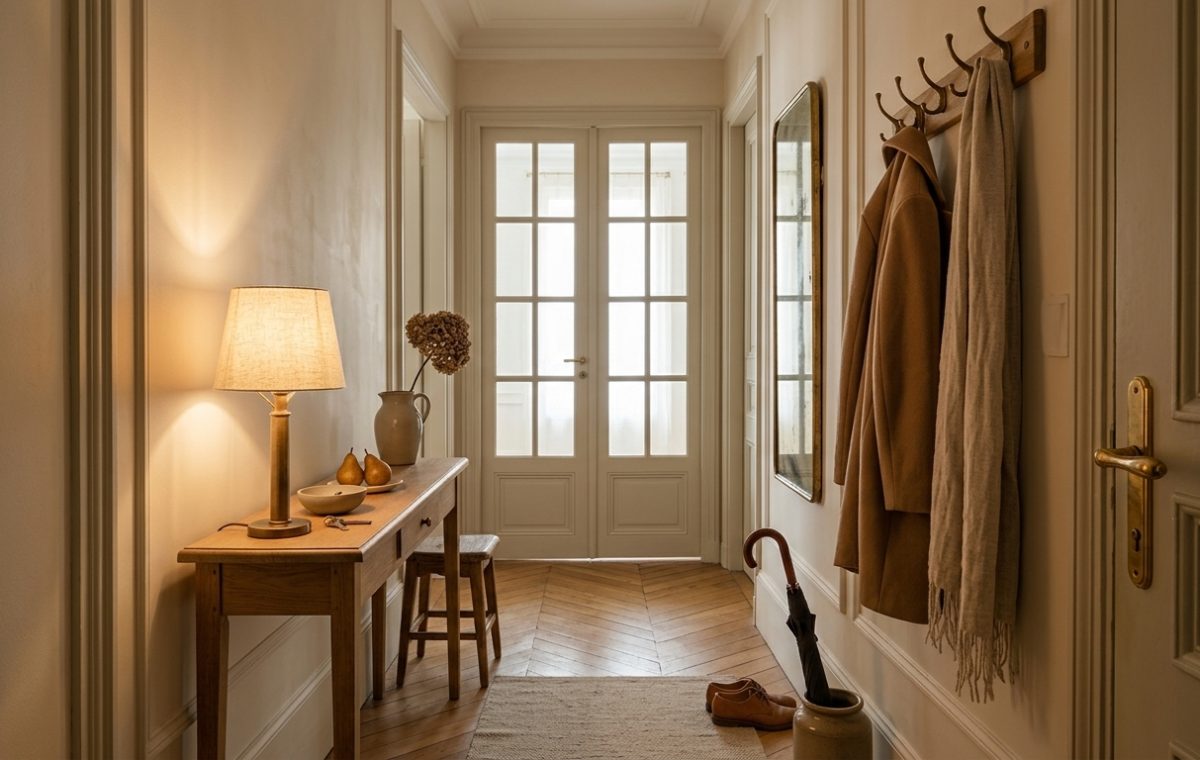
Overhead lighting in a narrow corridor usually feels sterile. It creates harsh shadows and makes narrow walls feel like closing in around you. Moving the illumination source down to furniture level completely changes the spatial geometry. A simple table lamp with a textured linen shade throws a soft, horizontal glow against neutral plaster surfaces. That golden wash of light softens hard architectural lines and makes a cramped corridor breathe.
Slim Furniture and Practical Layouts
Floor space is premium territory in any apartment or older home. Standard furniture will block traffic flow instantly. The trick lies in opting for a shallow console table that hugs the baseboard while leaving enough clearance for foot traffic. Pair it with a tucked-away wooden stool underneath for an effortless look that remains functional when someone actually needs to sit down and untie muddy boots.
- Use shallow console tables under twelve inches deep
- Mount peg rails high enough to keep bulky coats off the floor
- Hang a vertical mirror to bounce ambient light back across the corridor
- Keep floor surfaces clear except for a durable, low-profile runner
Of course, open coat hooks require discipline. If your household tends to collect heavy winter gear, puffy parkas, and canvas bags all at once, an exposed wall rack can quickly look messy rather than curated. Balance the visual weight by keeping the hanging items minimal and color-coordinated.
Textures Over Colors
When square footage is limited, slapping bright paint everywhere often backfires. Monochromatic palettes work wonders if you lean hard into texture instead of relying on flat paint hues. Smooth plaster, warm oak wood grain, heavy woven wool on the floor, and hammered brass door hardware create depth without screaming for attention. How do you currently handle the awkward transitional spaces in your own layout?
Editorial Lookbook & Photo Collection