The Trap of Monotone Neutrals
People often paint a room gray and expect it to look like an architectural digest spread immediately. It rarely does. Flat paint paired with cold furniture makes a space feel like a doctor’s waiting room rather than a home. You have to fight the chill.
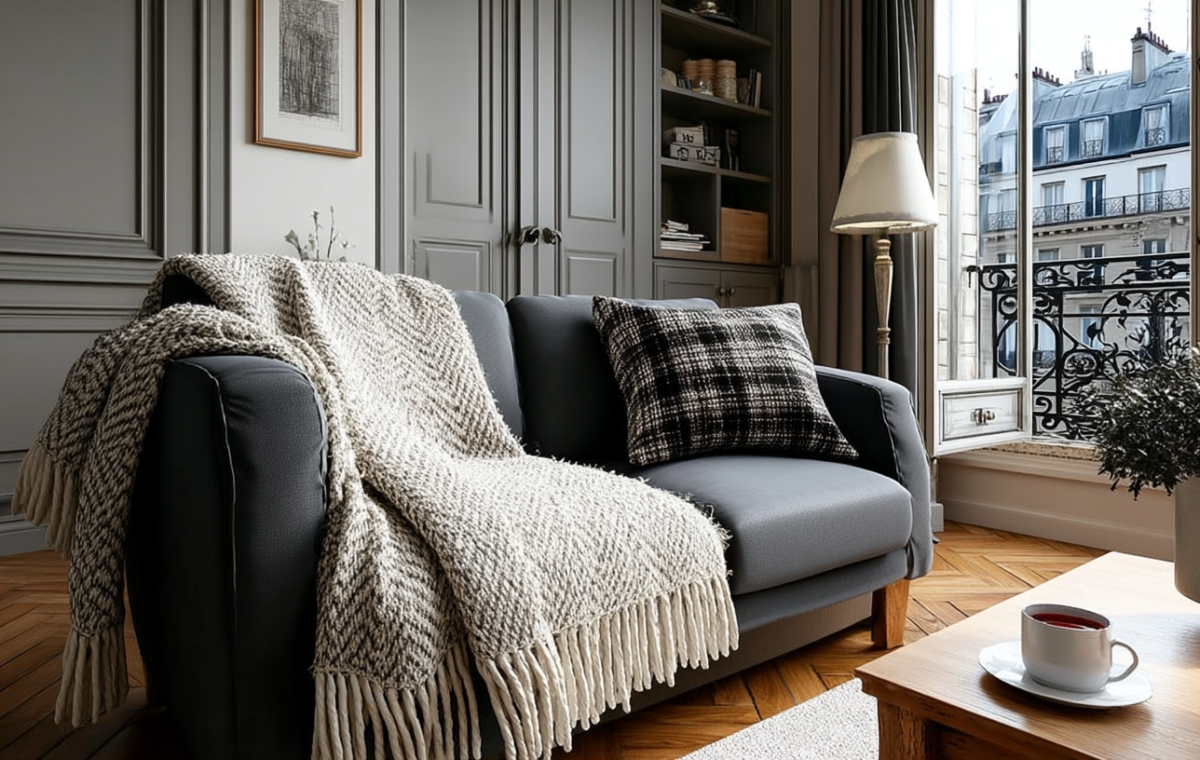
Layering textures saves a neutral room from falling completely flat. Take that heavy herringbone throw blanket draped casually over the dark sofa. That is not just for decoration on chilly nights; it breaks up the dark fabric mass and introduces heavy woven contrast. Without that tactile layer, the seating area would vanish into the shadowy wall panels.
Balancing Dark Tones with Natural Light
Dark upholstery absorbs light aggressively. If you place a charcoal or dark gray sofa against moody walls, the room risks feeling like a cave unless you deliberately invite daylight in. Large windows with wrought-iron balconies change everything, flooding the floorboards with warm afternoon sun. Wood flooring grounds the space, adding golden undertones that cut right through the gray scheme.
- Mix rough wools with smooth cottons to trick the eye
- Keep wood tones warm to counter cold wall paint
- Let natural light hit low-profile furniture directly
Accessorizing needs to remain minimal. A single plaid pillow on the opposite cushion brings in pattern without creating visual clutter. Too many decorative items on a compact couch turn a cozy seating zone into an obstacle course.
Everyday Upkeep Realities
Dark couches hide very little over time. Dust shows up instantly on matte charcoal fabrics, and pet hair loves textured throws. You will find yourself vacuuming the cushions far more often than you care to admit. It is a minor tax to pay for a dramatic, moody aesthetic that feels grounded rather than sterile.
How do you plan to balance dark seating without making your space feel heavy?
Editorial Lookbook & Photo Collection