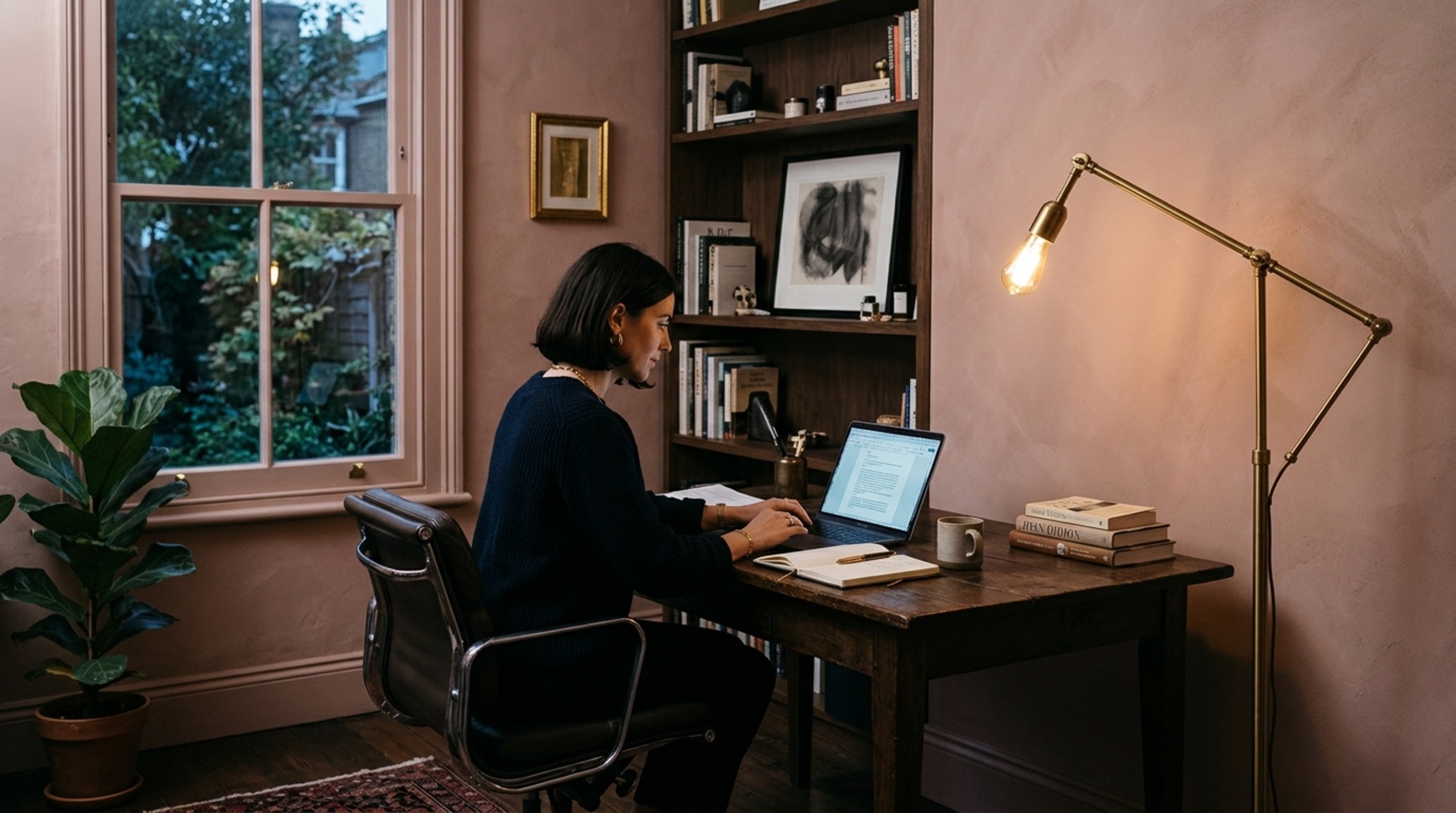
Soft light from a 2700K architectural pendant grazes the surface of a fluted white oak desk, casting elongated shadows that emphasize the room’s quiet geometry. Choosing a good computer chair is the decisive act that bridges the gap between static furniture and the living, breathing movement of a productive interior.
When we look at a workspace, we aren’t just looking at a place to sit; we are looking at a series of sightlines and physical clearances. A chair is a structural element in a room’s composition. Its base diameter, usually ranging between 26 and 30 inches, dictates the primary circulation path. If the chair is too visually heavy, it anchors the room in a way that feels stagnant. If it is too flimsy, it fails to provide the tactile grounding required for deep focus. To find a good computer chair that honors the architecture of your home, one must look past the foam and fabric to the underlying silhouette and its relationship with the surrounding negative space.
The Visual Concept Gallery: Silhouette and Structural Weight
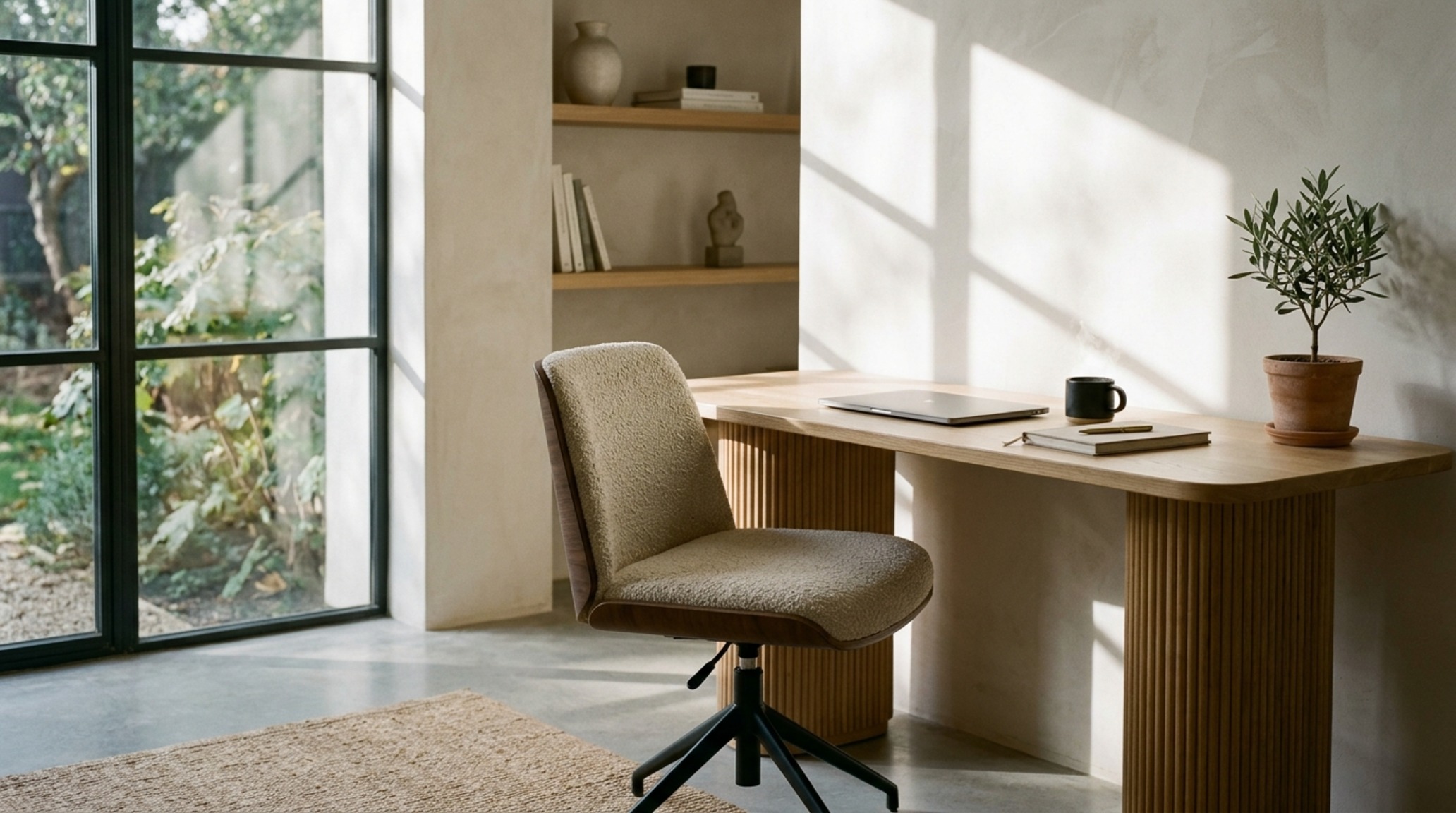
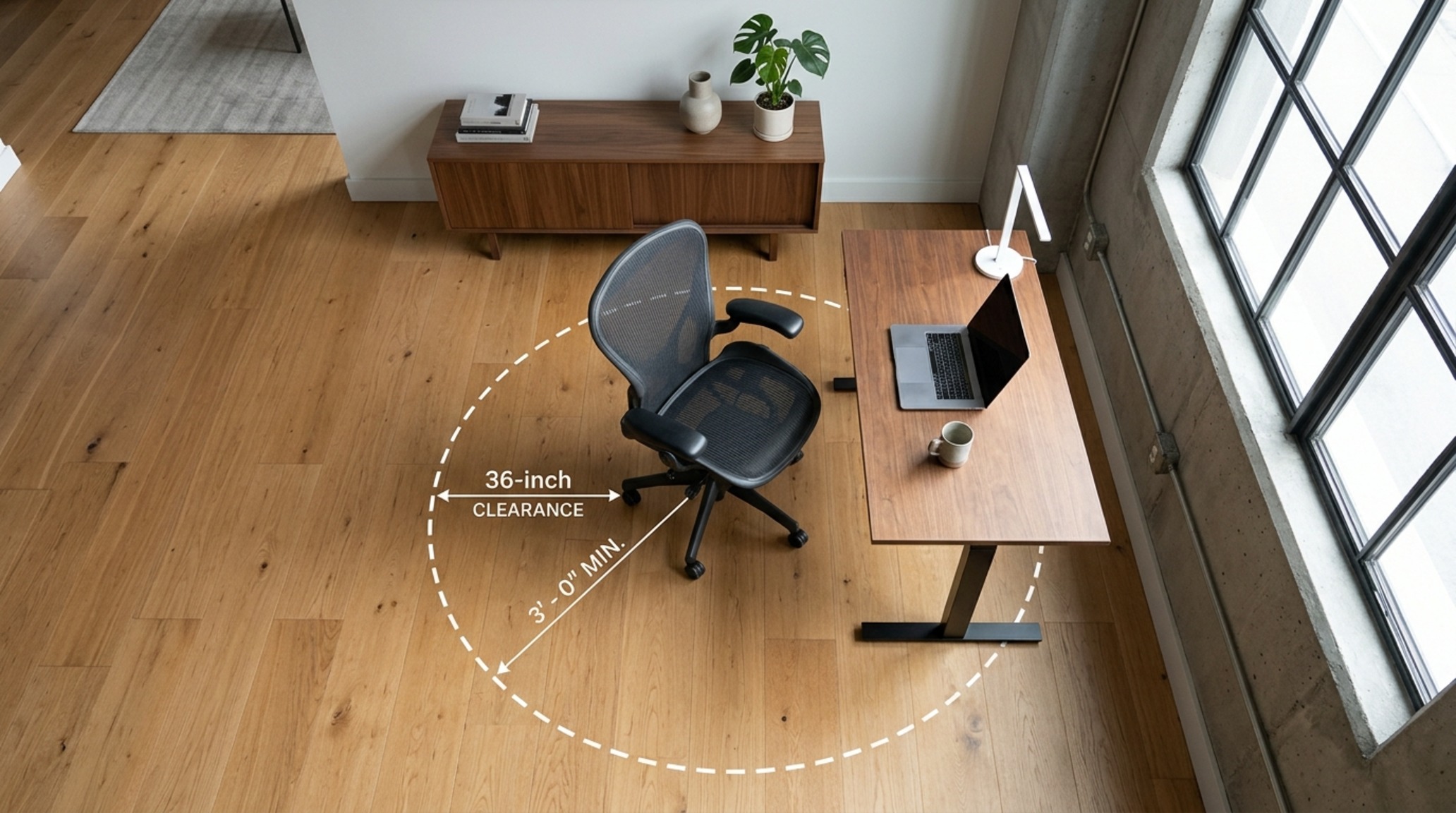
In contemporary interior architecture, the “visual weight” of a chair refers to how much ocular space it consumes. A chair with a thick, padded backrest upholstered in dark leather feels permanent and heavy, often requiring a larger room with 36-inch walkway clearances to feel balanced. Conversely, a chair with a mesh back or a slender frame allows the eye to travel through the furniture, making a small 10×10 office feel significantly more expansive. This transparency is vital for maintaining spatial flow in open-plan living areas where the desk must coexist with the lounge furniture.
Accessible Mastery: Entry-Level Solutions for Fluid Workspaces
Designing on a budget does not necessitate a sacrifice in architectural integrity. At the entry level, the focus should be on clean lines and a compact footprint that avoids the bulky, over-padded tropes of traditional “big box” office furniture. A good computer chair in this tier often utilizes high-density plastics and breathable textiles to achieve a lightweight profile.
Modern Task Chairs for Minimalist Spatial Cadence
The modern task chair has evolved into a staple of the streamlined home office. Options like the Branch Task Chair or the IKEA Alefjäll offer a refined geometry that complements a mid-century modern or Scandi-industrial aesthetic. These chairs prioritize a smaller base diameter, which is crucial when your workstation is tucked into a hallway nook or a bedroom corner. By maintaining a 30-inch clearance from the desk edge to the nearest wall, these chairs allow for effortless swiveling without marring the baseboards or disrupting the room’s flow.
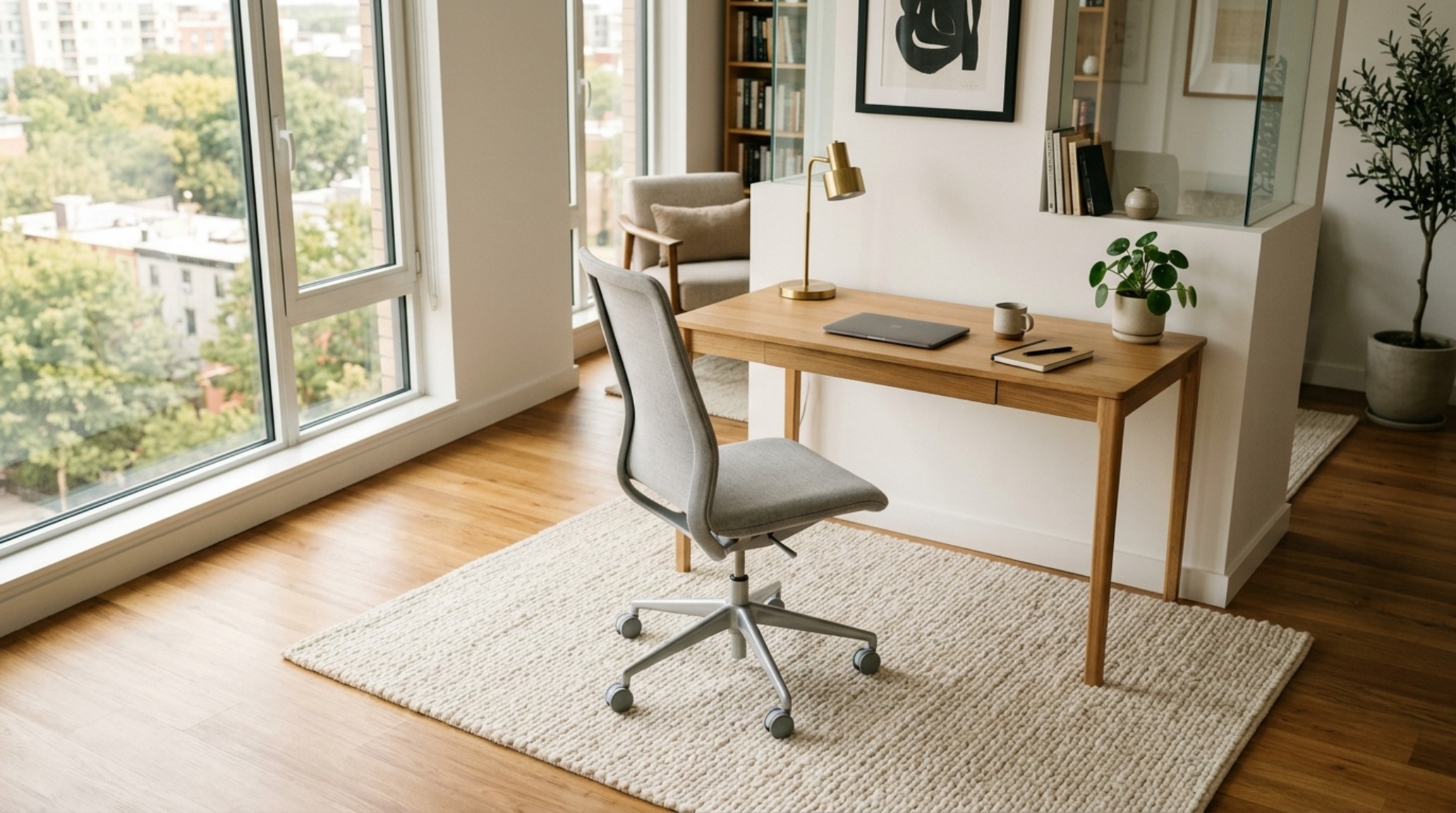
When styling these more accessible pieces, consider the materiality of the surrounding floor. A hard-floor caster on a light-colored rug, perhaps a low-pile wool in a shade like Benjamin Moore Swiss Coffee, creates a soft visual transition that prevents the chair from looking like an island. The goal is to integrate the chair into the room’s palette, rather than letting it stand out as a purely utilitarian object.
Mid-Range Harmony: Balancing Ergonomic Rigor with Form
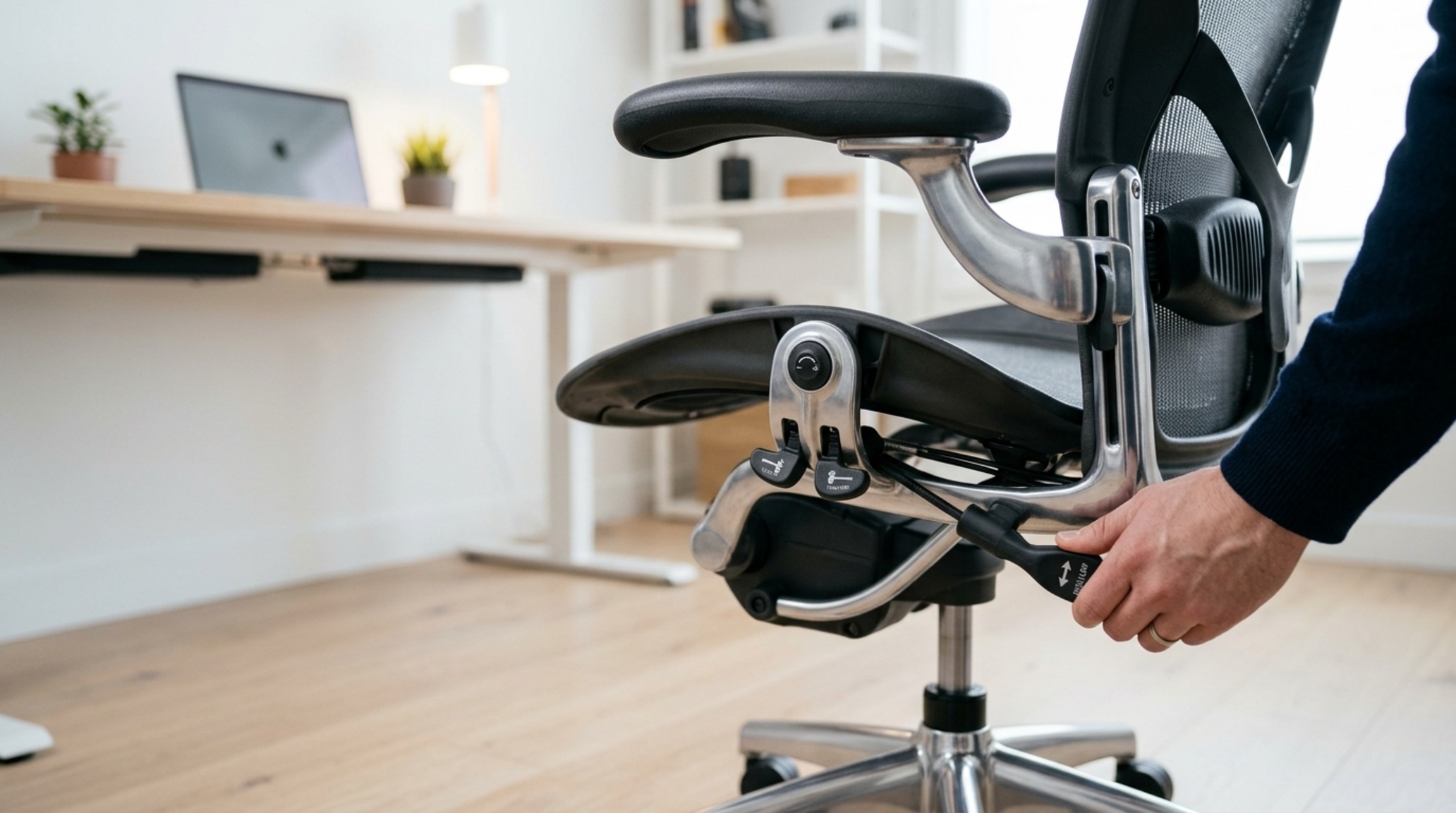
As we move into the mid-range tier, the engineering becomes more sophisticated, allowing for a more customized relationship between the sitter and the architectural environment. Here, the focus shifts to adjustable office seating that can disappear when not in use. This is where we see the introduction of refined synchron-tilt mechanisms that move the seat and backrest in a 2:1 ratio, keeping the user’s sightline consistent even when reclining.
Adjustable Office Seating and the 30-Inch Plane
Standard desk height is 29 to 30 inches, but the adjustable office seating found in this price bracket allows for a more nuanced alignment. Chairs like the Steelcase Series 1 or the Hon Ignition 2.0 provide the flexibility to align the armrests perfectly with the desk surface. This creates a continuous horizontal plane that minimizes visual clutter. From an architectural perspective, this alignment is identical to the way a countertop flows into a backsplash—it eliminates the jagged transitions that make a space feel frantic.
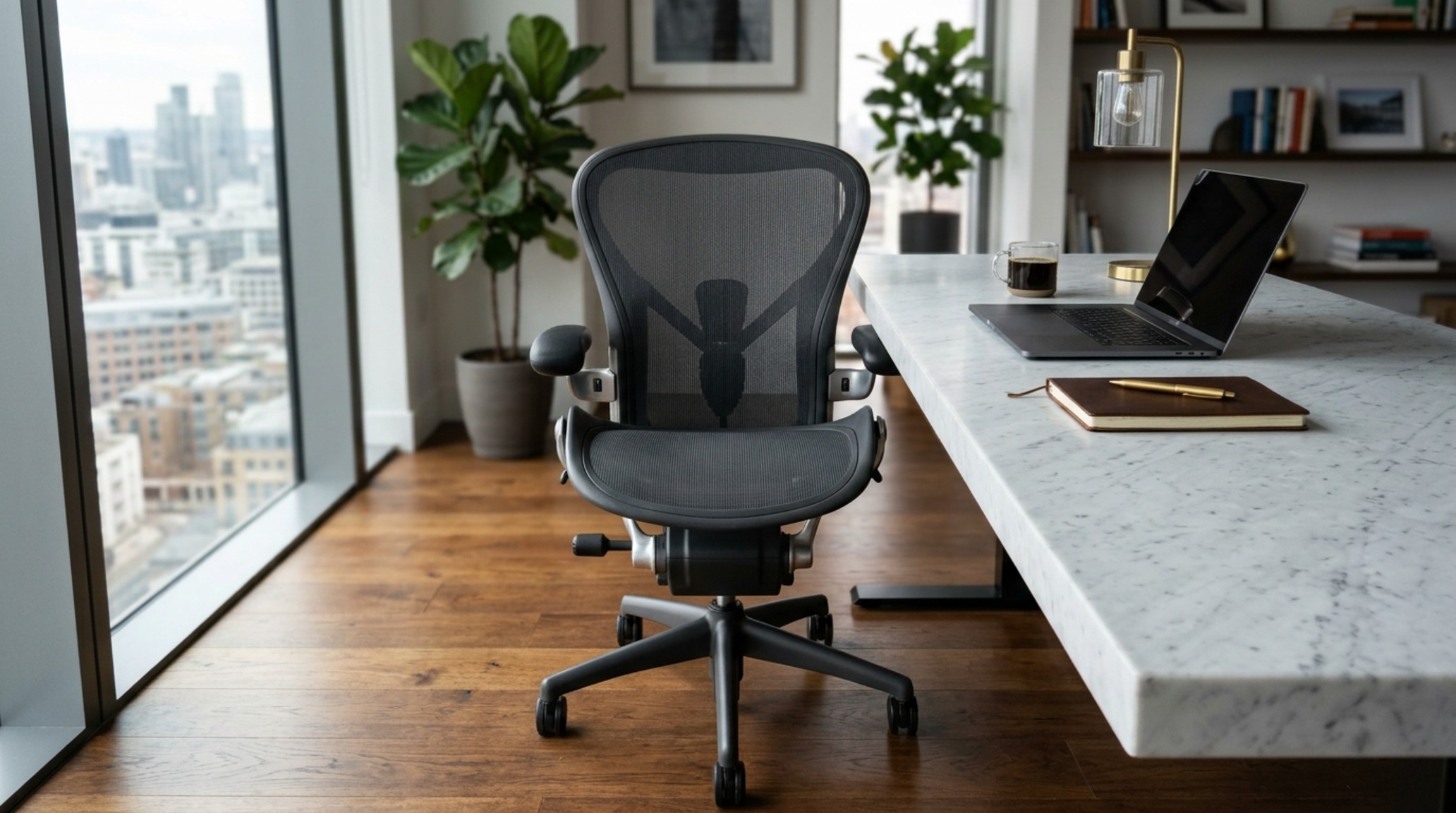
In this tier, materiality takes center stage. We start to see performance fabrics with high Martindale counts (a measure of durability) that still maintain a soft, residential hand-feel. Look for muted tones—slate grays, earthy ochres, or deep olives—that harmonize with Farrow & Ball’s Setting Plaster or other muddy, sophisticated neutrals. This ensures that the chair feels like a part of the interior design scheme rather than an after-thought from a corporate warehouse.
The Architectural Splurge: Investment Seating for Permanent Flow
At the highest tier, a good computer chair is an investment in both spinal health and the long-term value of the home’s interior. These are the icons—the chairs that have earned their place in the MoMA and the pages of Architectural Digest. They are designed not just to fit a body, but to define a space.
High Back Swivel Chairs: Commanding Verticality
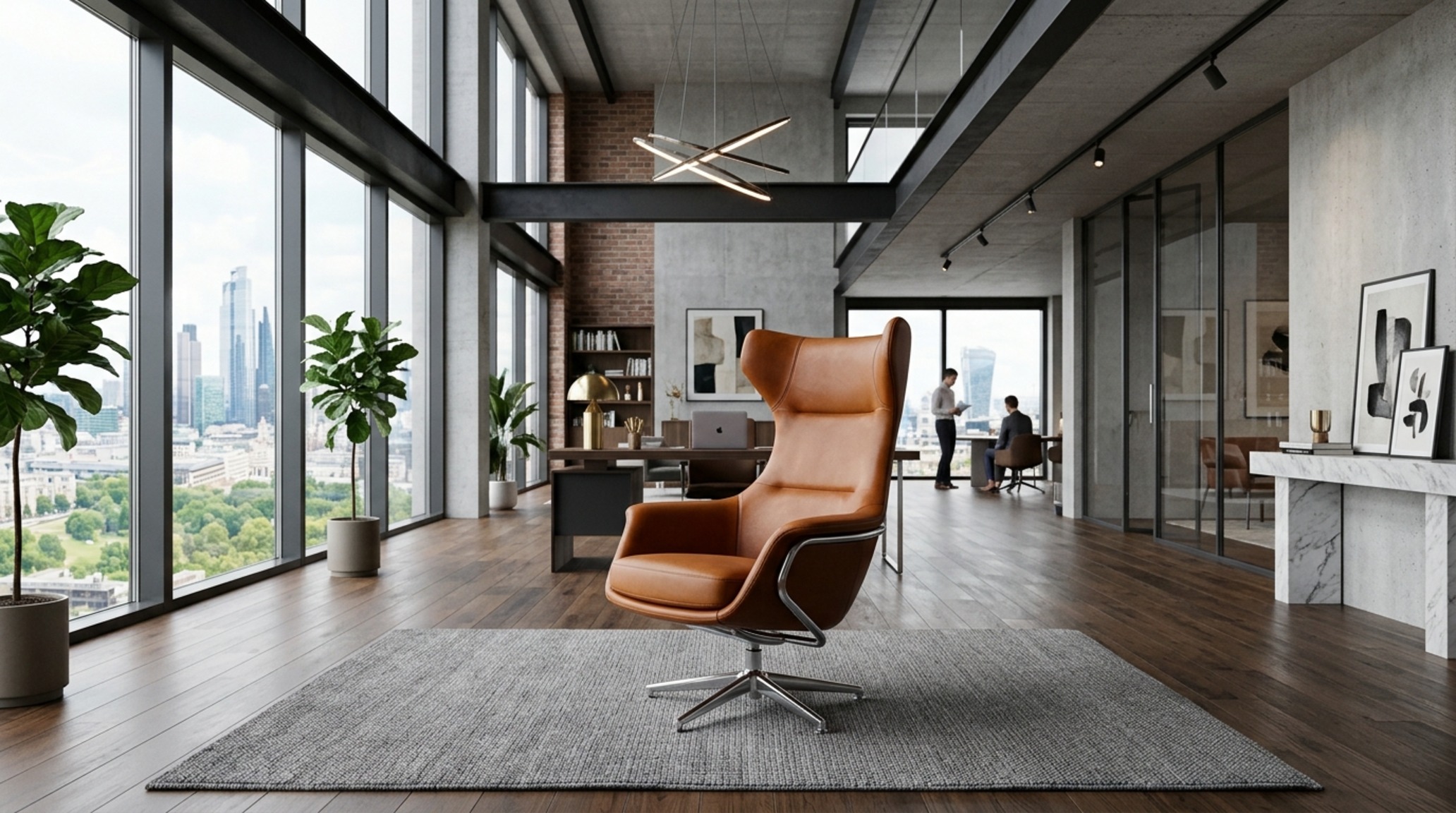
For executive suites or spacious home libraries, high back swivel chairs like the Herman Miller Embody or the Vitra Physix offer a sense of architectural verticality. These pieces act as the “exclamation point” of the room. The height of the backrest should be balanced against the ceiling height; in a room with 8-foot ceilings, a very high back can feel imposing, whereas in a vaulted space, it provides the necessary scale to ground the room. The Embody, with its exposed “pixelated” spine, adds a layer of technological texture that contrasts beautifully against natural materials like fluted white oak or honed travertine.
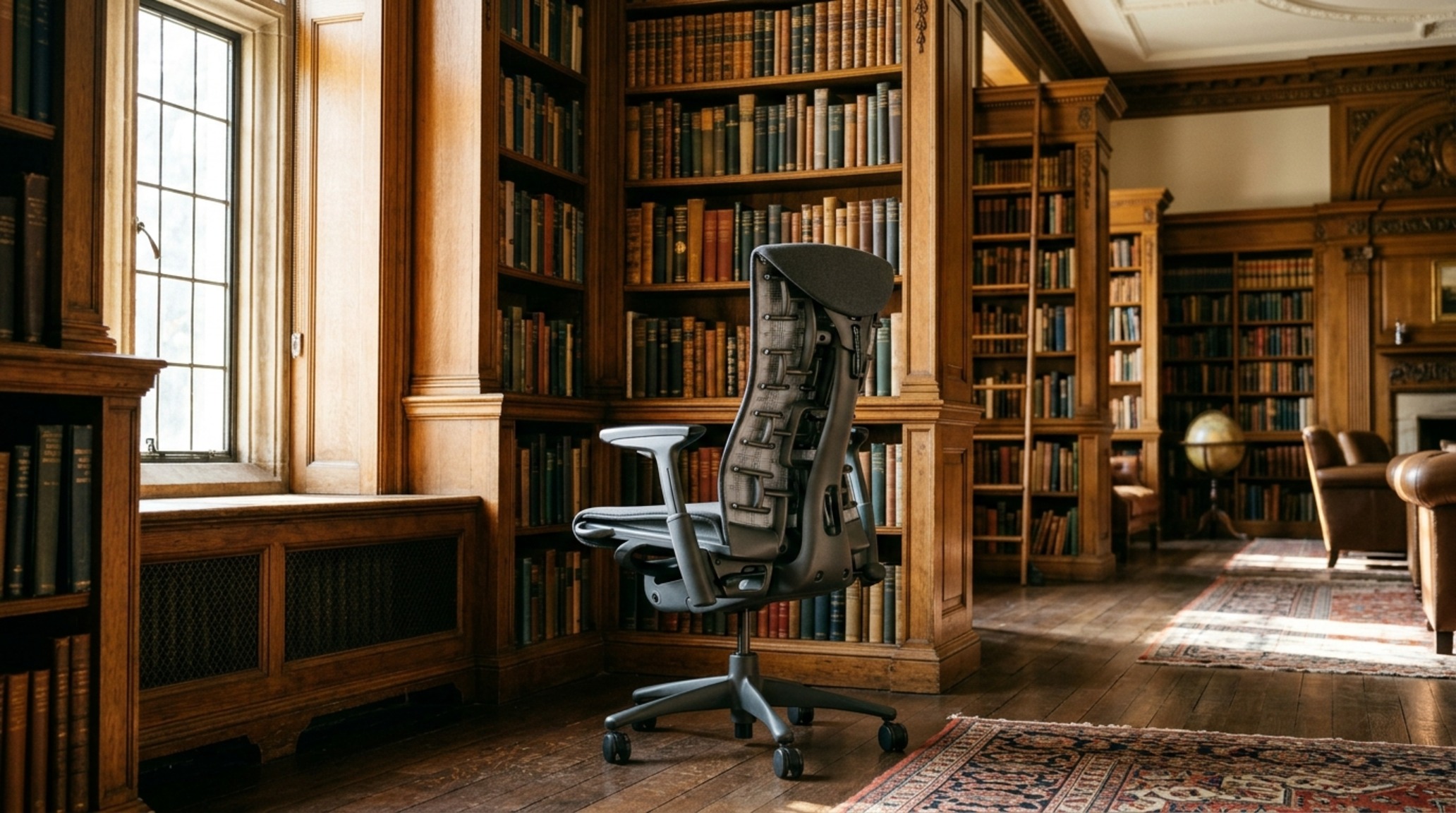
When placing a high-end chair, the orientation is everything. A 36-inch primary circulation path around the chair is non-negotiable to allow the silhouette to be appreciated from all angles. The base should be polished aluminum or a high-quality powder coat that catches the light, reflecting the 3000K task lighting used to illuminate the workspace.
Design Gallery & Material Composition: Transparency and Support
The choice between a solid back and a mesh back is one of the most critical decisions for spatial flow. This choice determines how light and air move through the workstation.
Mesh Back Chairs: The Transparency of Negative Space
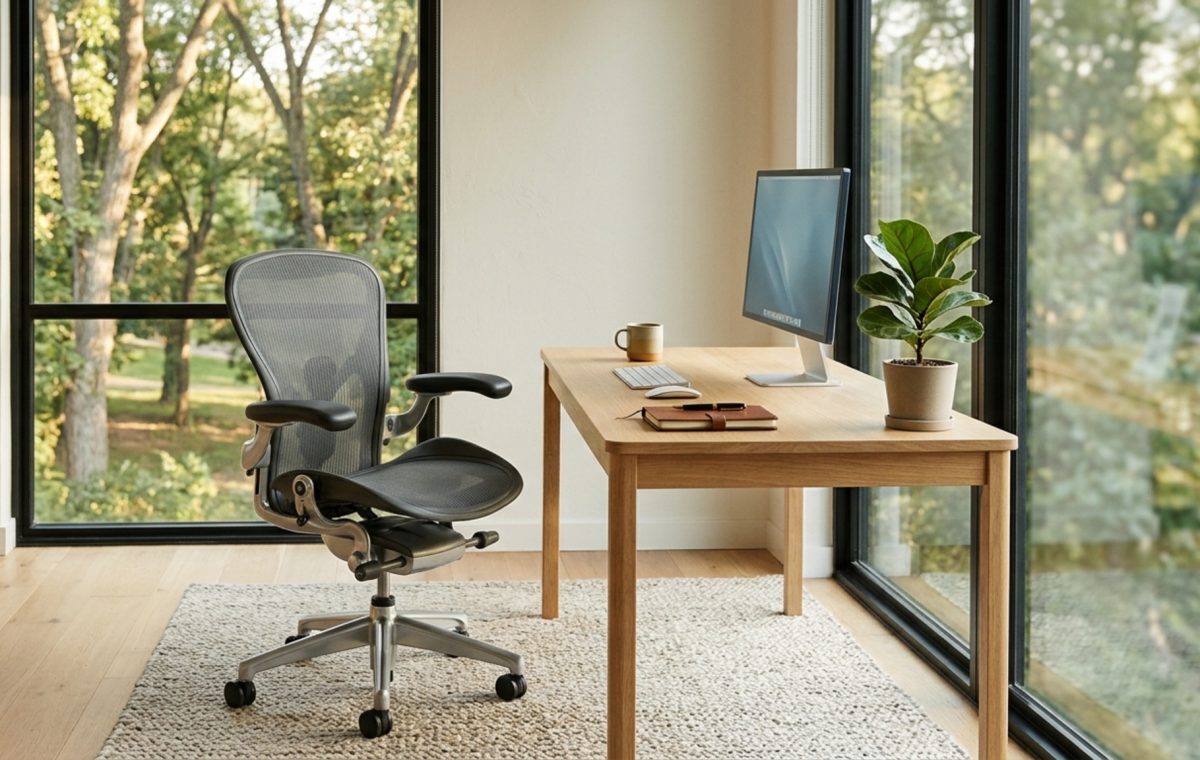
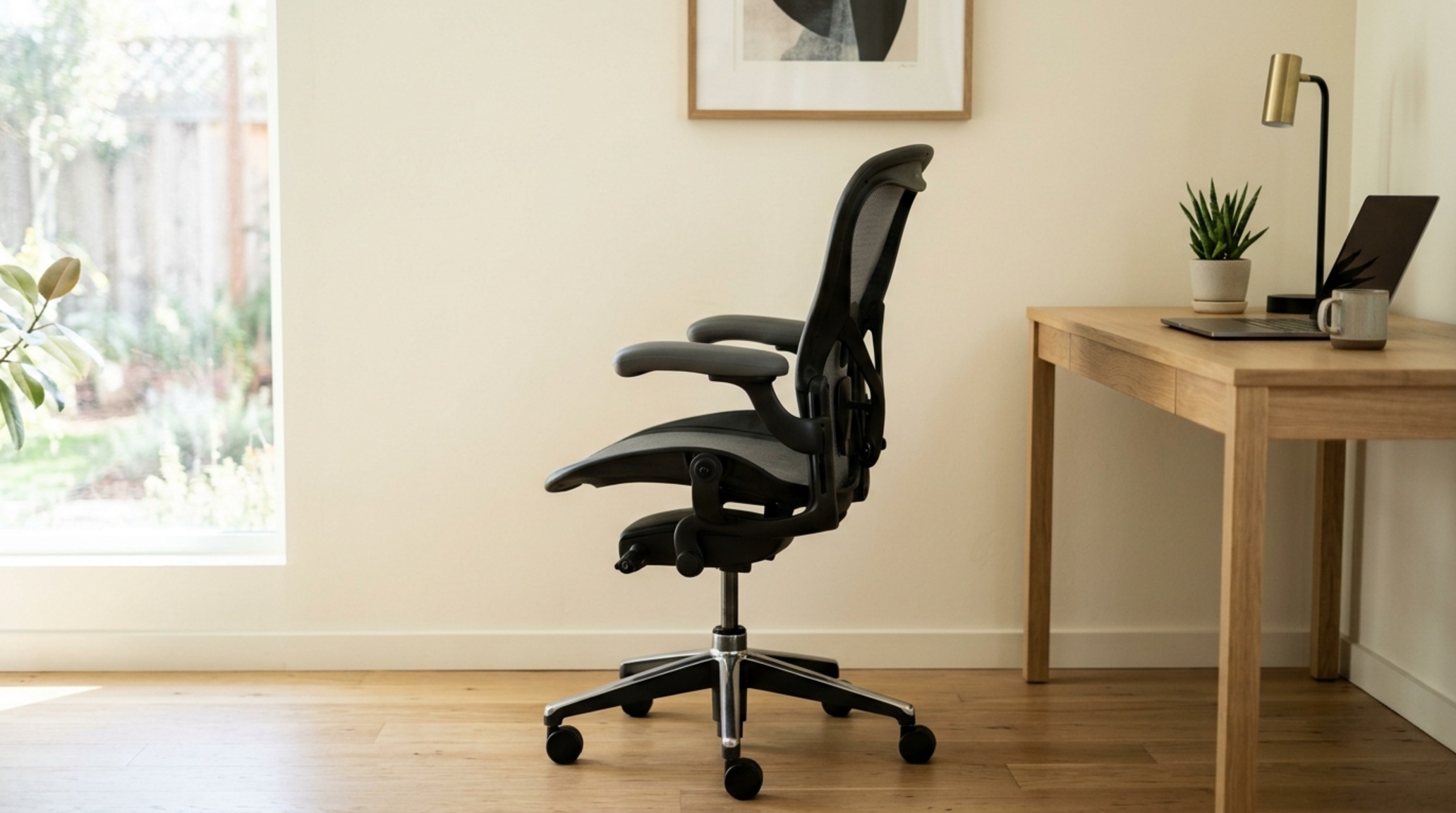
A mesh back chair is the ultimate tool for the “invisible” office. The suspension material, such as the Pellicle found on the classic Aeron, allows the wall color and light to pass through the chair. This is particularly effective when the desk is positioned in front of a window. A solid back would block the view and create a dark silhouette; the mesh allows the landscape outside to remain part of the interior experience.
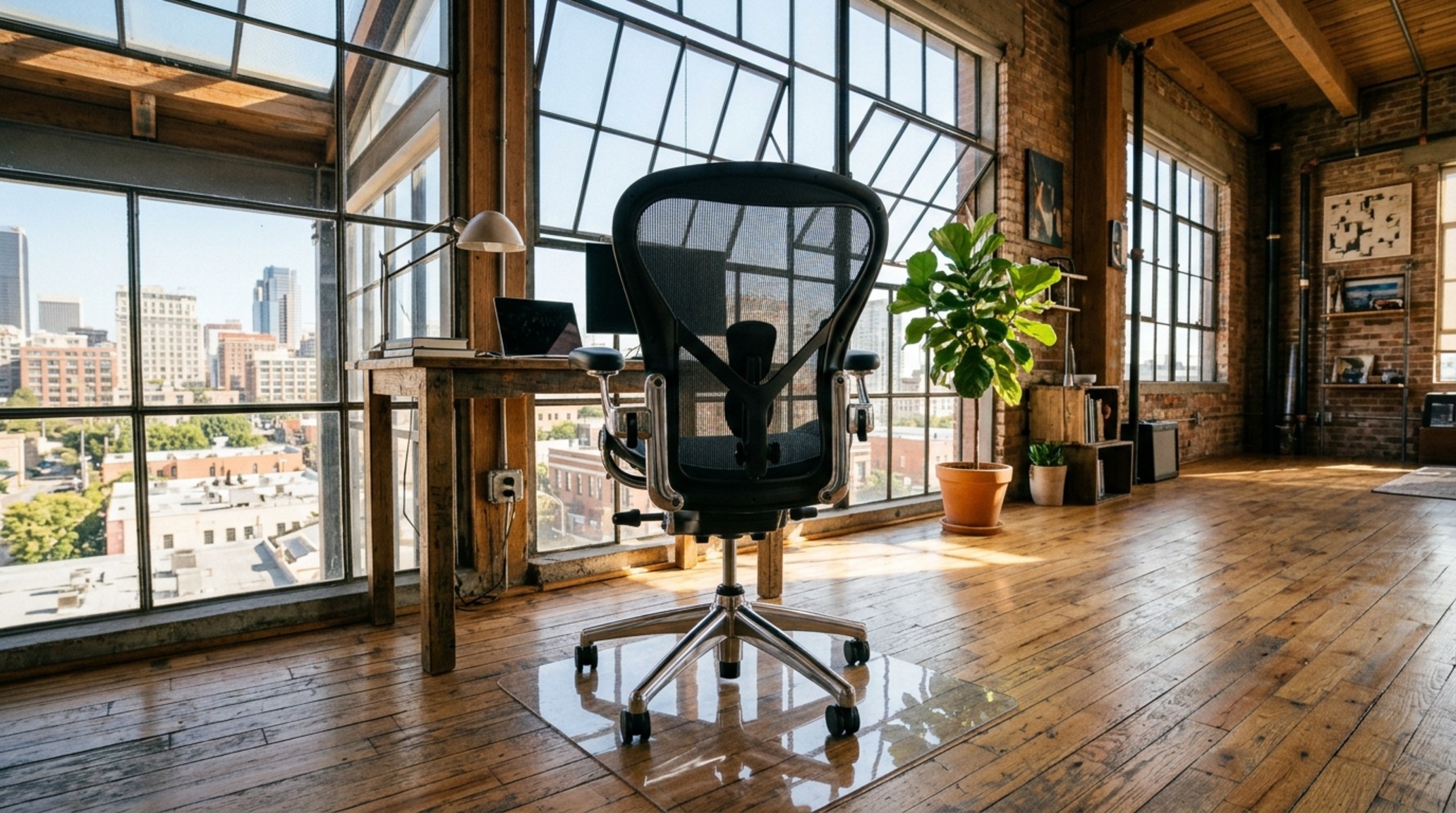
The tactical advantage of mesh is its ability to regulate temperature, but architecturally, its advantage is its lightness. It pairs perfectly with minimalist glass or metal desks, where the goal is to keep the floor plane as visible as possible. By exposing more of the floor, the room feels larger, and the flow remains uninterrupted.
Lumbar Support Chairs: The Geometry of Human Support
Functional beauty is nowhere more evident than in lumbar support chairs that integrate the support into the frame itself. Rather than an ugly external cushion, modern engineering allows for an S-curve backrest that mimics the natural human spine. When a chair like the Knoll Generation is viewed from the side, the curve creates a beautiful rhythmic line that echoes other architectural curves in the room, such as an arched doorway or a rounded coffee table edge.
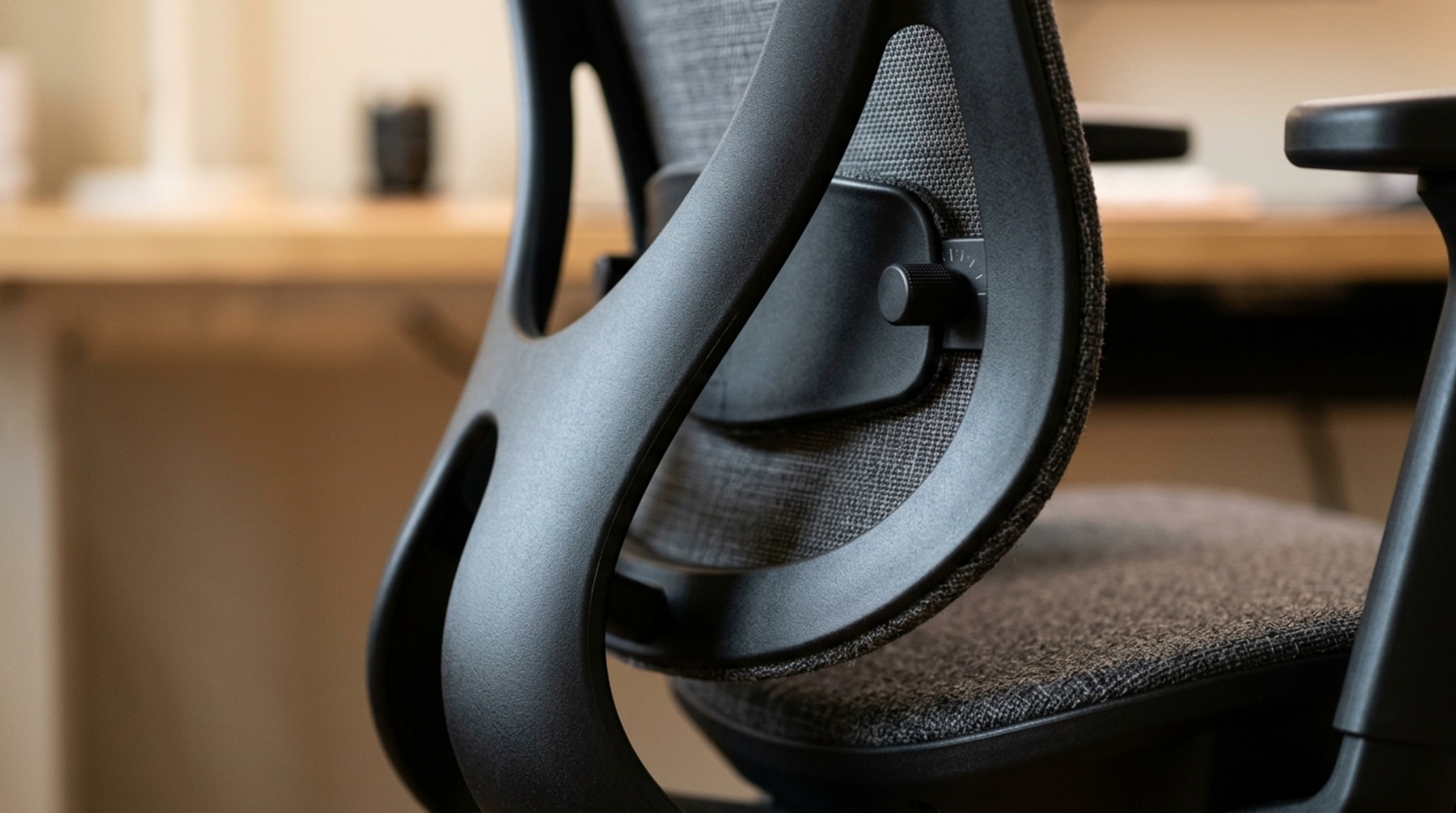
This integration of support allows for a “good computer chair” that doesn’t scream “ergonomic.” It allows the furniture to remain sophisticated. When selecting your finish, consider a high-CRI 90+ light source above the desk to highlight the texture of the lumbar mesh or the grain of the textile, ensuring the colors remain true and the atmosphere remains soothing.
Interior Architecture Specification Sheet
Summary of authentic finishes, designer paint selections, and standard architectural clearances.
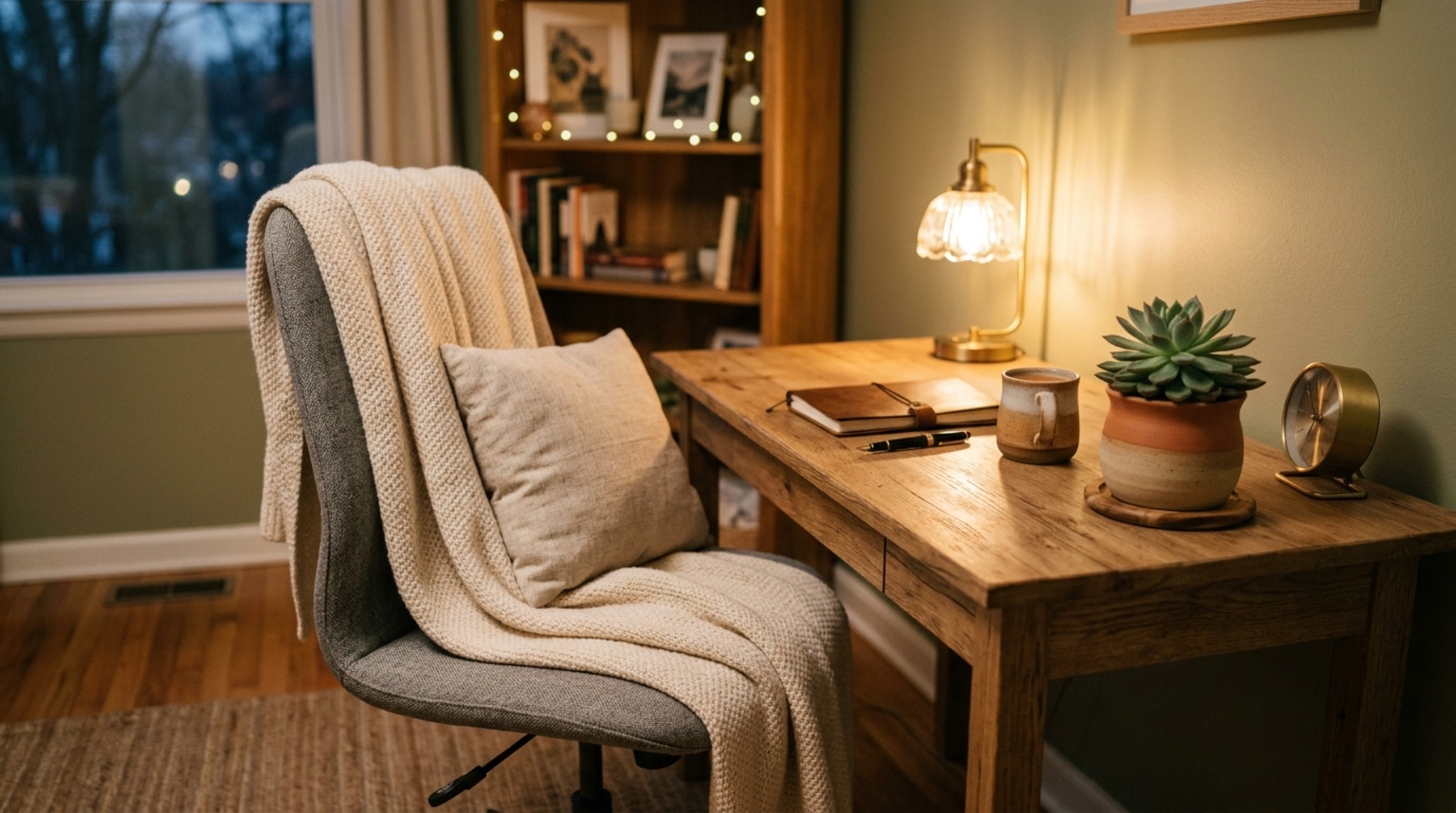
Final styling often involves the smallest details: the way a textured wool throw is draped over the backrest or the placement of a small sculptural object on the desk to counter the chair’s technicality. The right seating doesn’t just support your back; it supports the entire visual narrative of your home. When you step back and look at your workstation, does the chair invite the eye to move or does it bring the energy to a halt? Which element of your current office setup do you feel is most disrupting your spatial flow?
Editorial Silo • Recommended Architecture Studies
- Mindful Pictures of xmas decorations: 12 Tactile Styles — Archival Design Case Study
- Glowing Luxury Penthouses In New York For Sale — Archival Design Case Study
Architectural Form Portfolio
A photographic study celebrating natural textures, refined joinery, and balanced spatial volume.
Curated Visual Lookbook
Design Gallery & Spatial Studies
A visual curation of architectural arrangements, lighting concepts, and material palettes featured in this space.