How do you reconcile the sprawling ambition of your creative workflow with the finite, often stubborn reality of a 48-inch desktop? The answer lies in curating creative office supplies that function less like stationery and more like precision-engineered architectural interventions. In the modern interior landscape, where the home office often doubles as a guest room or a sanctuary of deep work, every square inch must justify its existence through both utility and aesthetic resonance. We are no longer merely ‘organizing’ a desk; we are managing spatial cadence and tactile grounding to reclaim the surface area that allows for true mental clarity.
The Do’s and Don’ts of Small-Scale Workspace Optimization
When approaching a compact footprint, the most common mistake is thinking in two dimensions. We treat the desktop like a flat map rather than a three-dimensional volume. To master creative office supplies in a tight space, one must look upward and inward, utilizing the vertical plane and the hidden recesses of the desk’s underside.
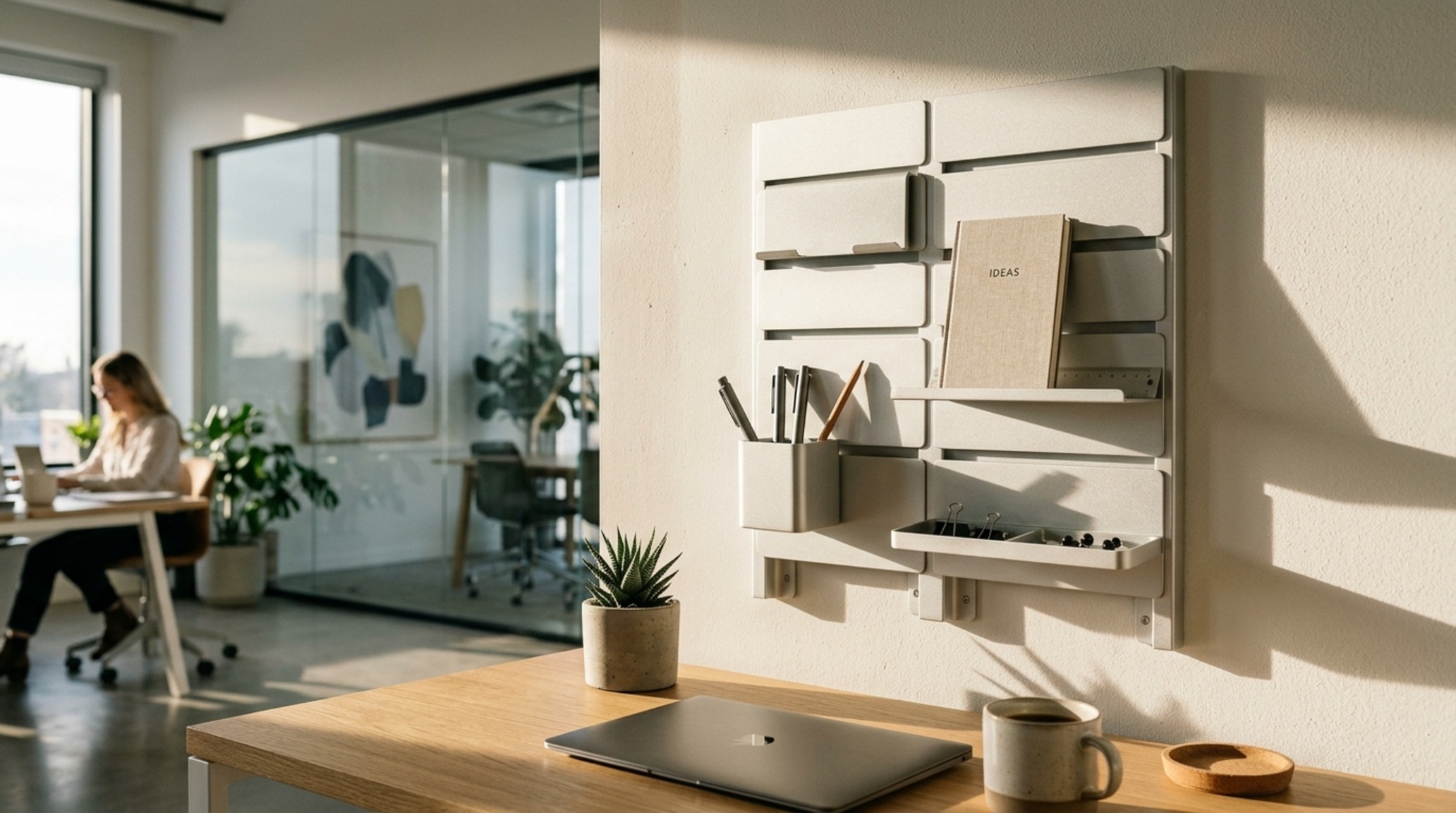
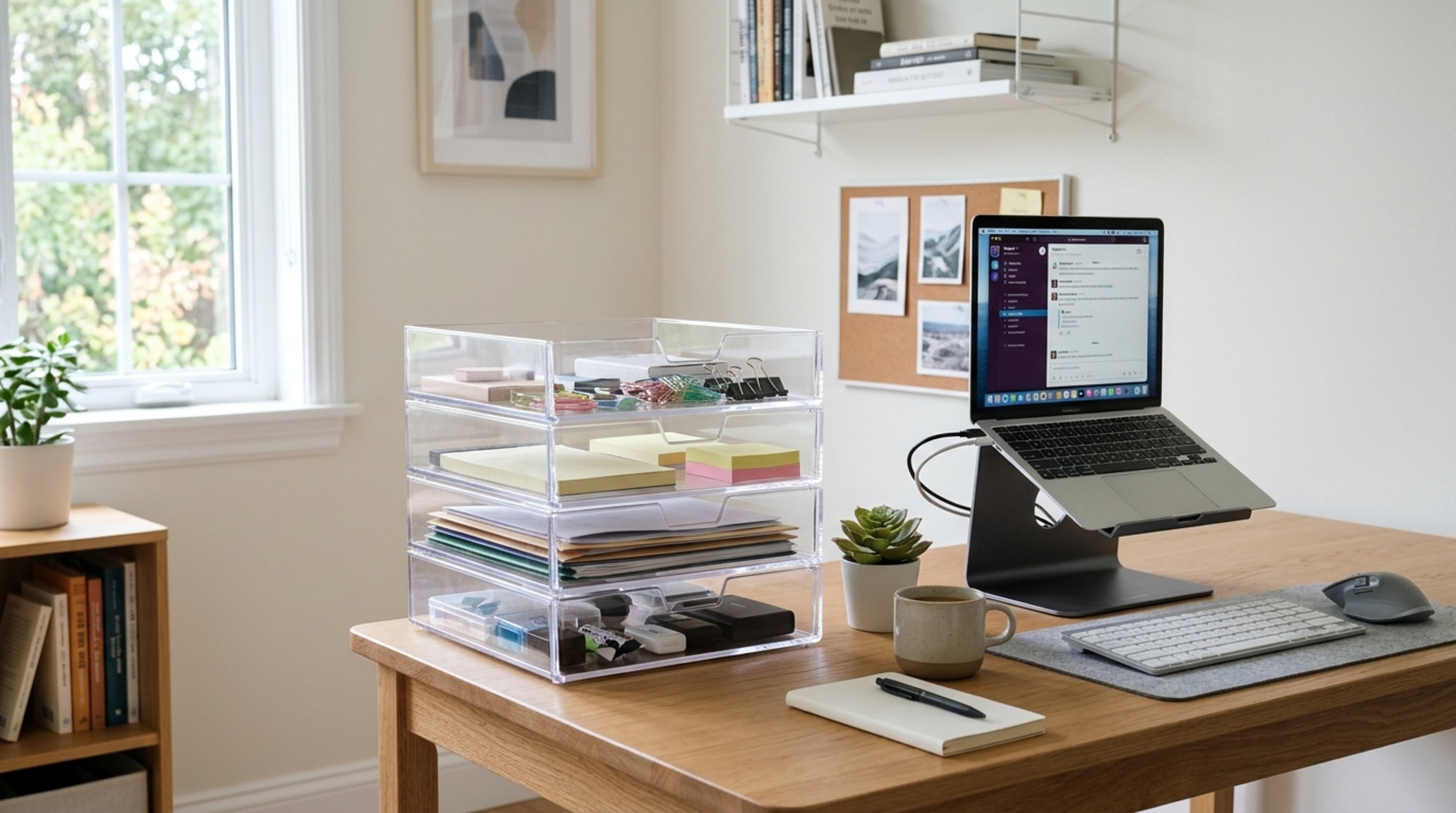
- DO: Prioritize Verticality and Suspension. If an object can be lifted off the primary work surface, it should be. Use monitor risers with integrated drawer systems or wall-mounted pegboards finished in a sophisticated Benjamin Moore Swiss Coffee to keep the eye moving upward.
- DO: Invest in Multi-Functional Materiality. Choose items that serve dual purposes, such as a leather desk mat that acts as both a mousepad and a dampener for acoustic vibrations.
- DO: Maintain Clearances. Ensure that your chair has at least a 30-inch clearance for rotation and that you maintain 36 inches of primary circulation space around the desk to prevent the room from feeling claustrophobic.
- DON’T: Over-Index on Novelty. Small spaces cannot afford the visual noise of ‘cute’ but inefficient gadgets. If a tool doesn’t improve your ergonomic flow or save space, it is a liability.
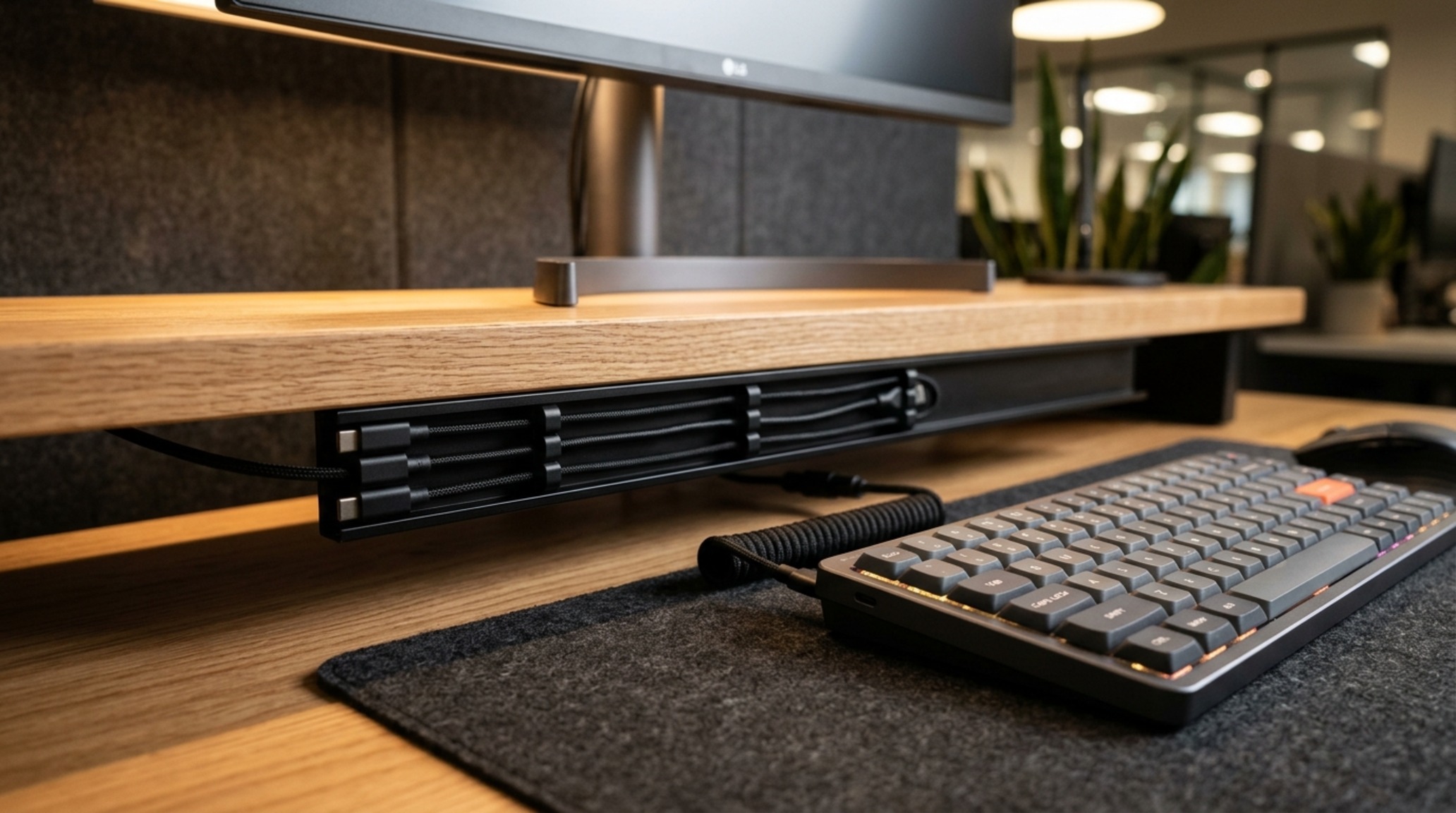
- DON’T: Neglect Cable Management. Visual clutter is mental clutter. Exposed wires act as ‘visual static,’ breaking the clean lines of a well-styled workspace.
PRO TIP: Use 3000K task lighting with a high CRI (90+) for your primary work area. It provides a crisp, daylight-adjacent clarity that reduces eye strain without the clinical coldness of higher Kelvin temperatures.
Architectural Office Decor: Sculpting the Vertical Plane
In a restricted layout, the wall becomes your most valuable asset. Architectural office decor is defined by its ability to merge structural integrity with aesthetic grace. Consider the installation of a modular aluminum rail system. These systems allow you to hang pencil cups, tablet holders, and even small planters, freeing up the entire front edge of your desk for tactile work. When we look at professional studios, the use of negative space breathing room is what separates a cramped cubicle from an intentional atelier.
By selecting supplies that feature sandblasted aluminum or fluted oak textures, you introduce a sensory variety that keeps the workspace from feeling sterile. The goal is to create a sightline alignment where your most-used tools are within a 15-inch ‘reach zone,’ while archival items are relegated to the 24-inch ‘extended zone.’
Unique Office Tools: Engineering for Precision and Portability
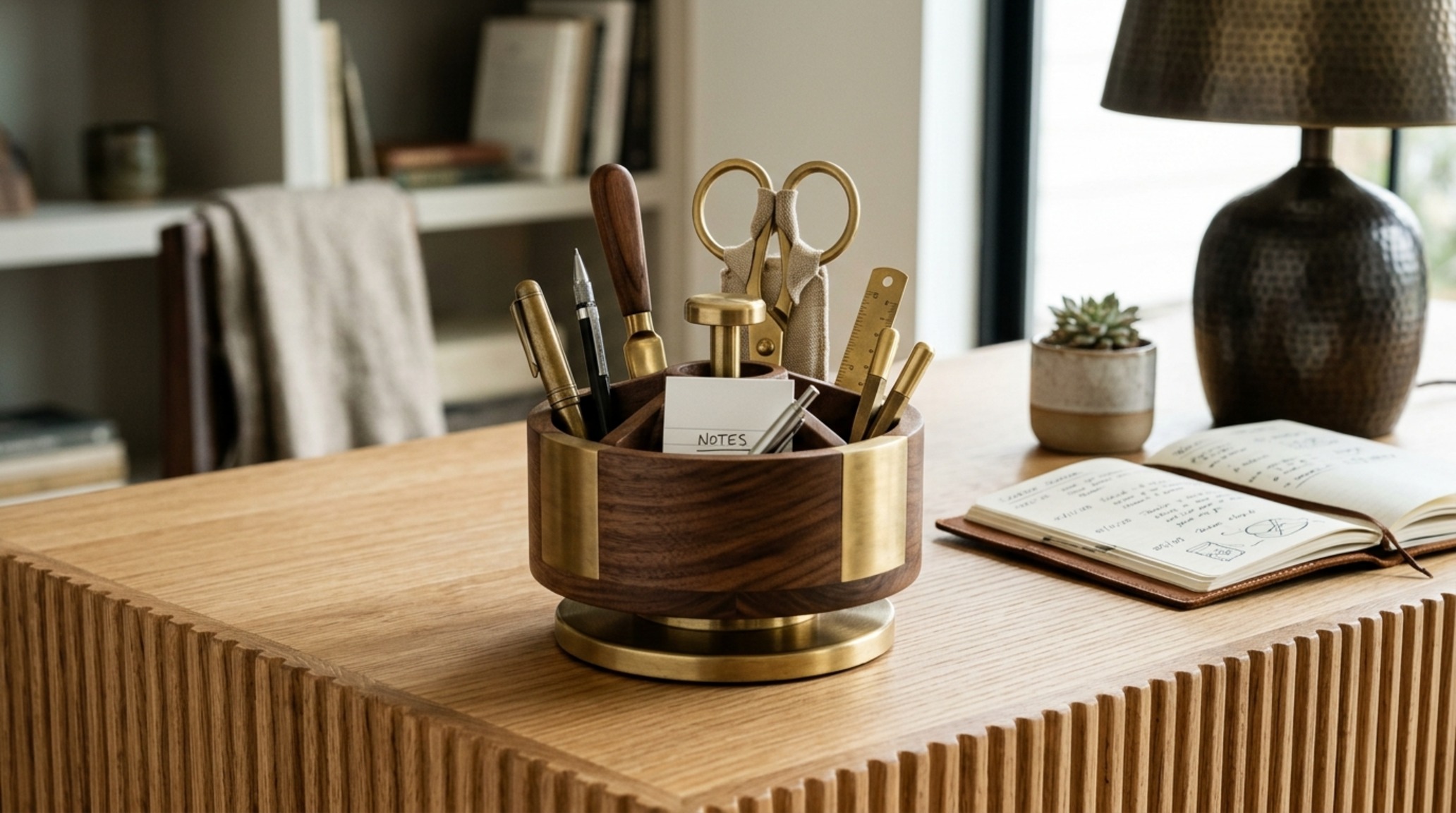
Why settle for a standard stapler when you can utilize unique office tools that are weighted like fine sculpture? Compact solutions today often borrow from the world of horology and aerospace engineering. Think of a rotary desktop organizer—not the plastic bins of the past, but a heavy-weight brass and walnut carousel that rotates with the satisfying click of a precision instrument. These tools offer a tactile grounding that connects the digital worker back to the physical world.
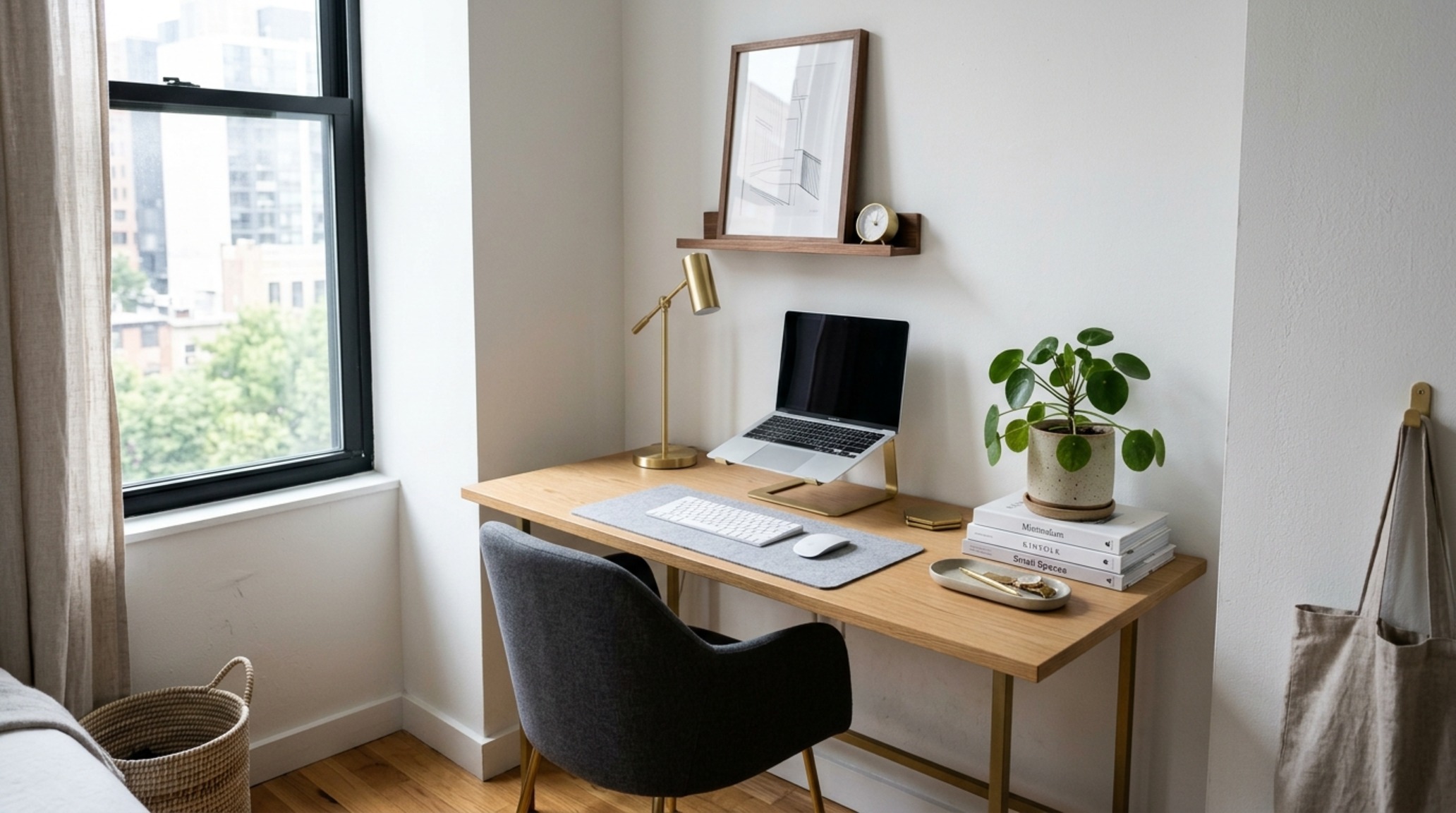
Another essential compact solution is the vertical laptop stand. By docking your machine vertically when connected to an external monitor, you reclaim nearly 100 square inches of desk real estate. This is the essence of architectural precision: reorienting the footprint to maximize the floor plane of the desk.
Visual Narrative & Detail Studies
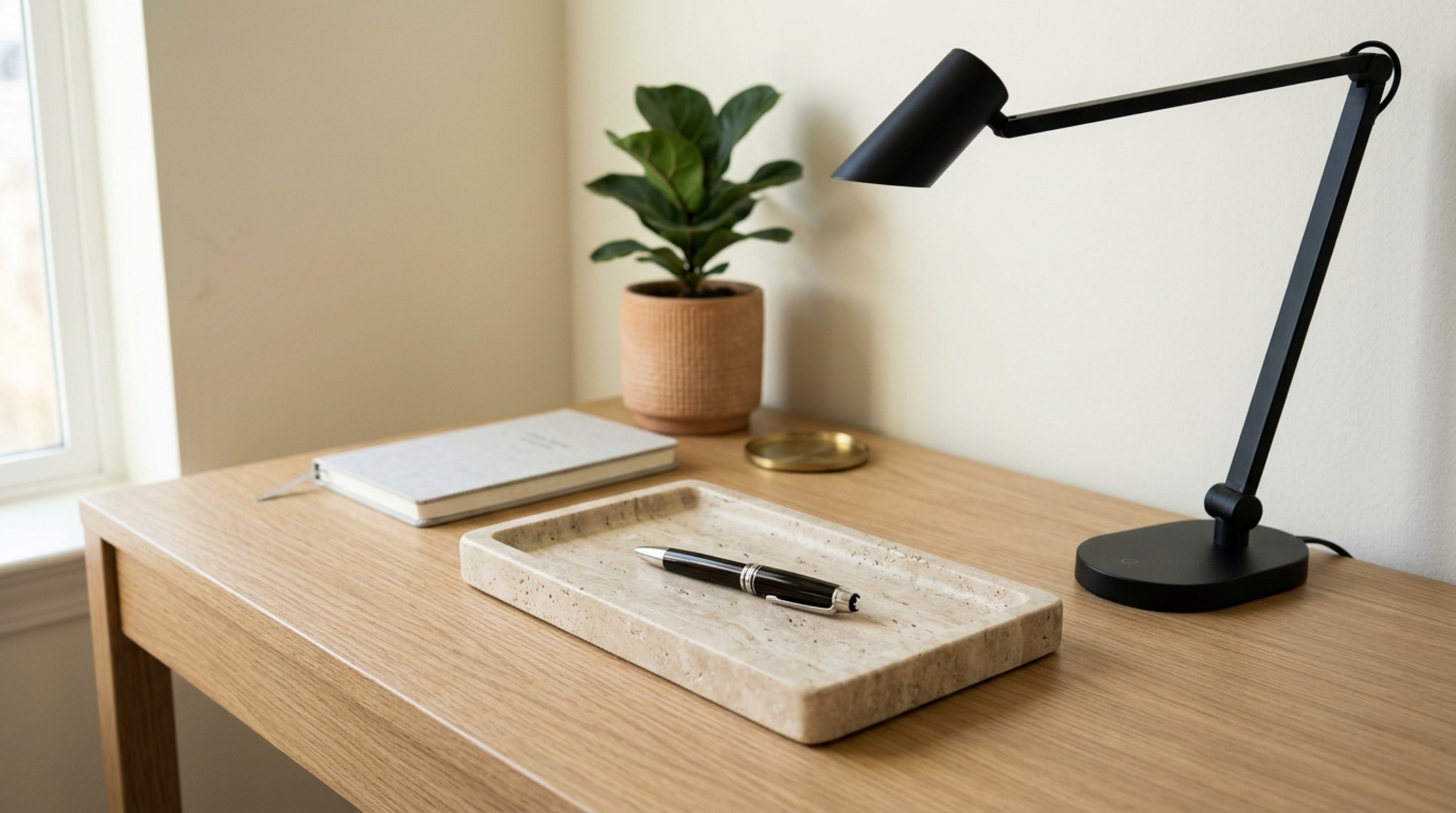
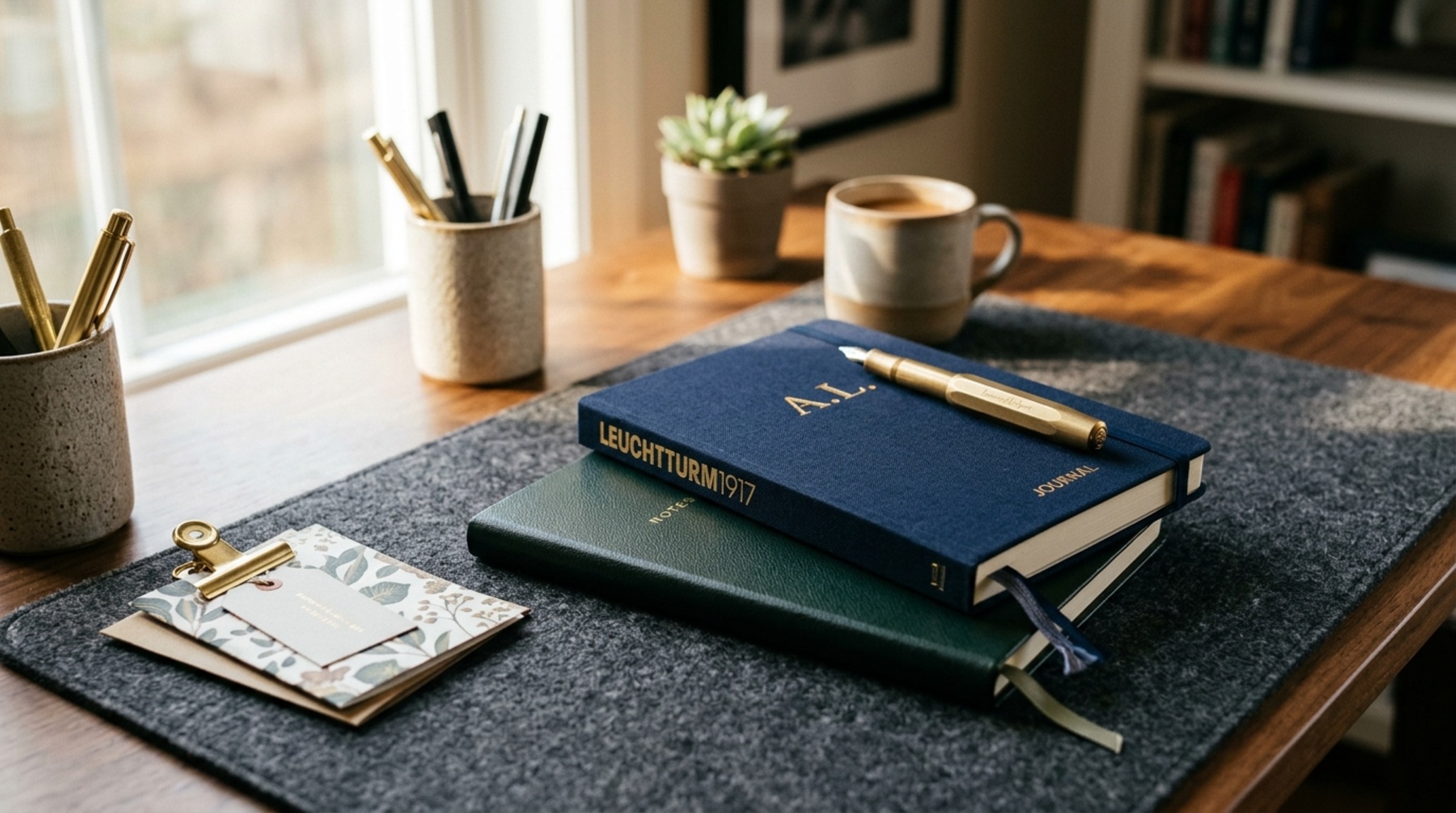
In our curated visual lookbook, we observe the interplay of shadow and light on varied surfaces. Notice how a matte charcoal desk lamp creates a sharp silhouette against a warm-toned wall. This contrast isn’t just about beauty; it’s about defining the boundaries of your focus. When selecting creative office supplies, consider how their finish will interact with your 2700K ambient lighting during the evening hours. A high-gloss surface may create distracting glare, whereas a honed stone or matte polymer will diffuse light softly across your workspace.
Modern Workspace Essentials: The Ergonomic Core
True productivity is born from physical comfort. Modern workspace essentials now include ergonomic tools that disappear into the design. Under-desk drawers that clamp onto the frame provide a home for stationery without requiring a bulky pedestal file. Furthermore, integrated power strips that mount to the back of the desk ensure that your creative office supplies remain powered without the ‘spaghetti’ of cables dragging on the floor.
When we discuss the ergonomics of small spaces, we must mention the ’30-inch rule.’ A standard desk height is 29 to 30 inches, but for compact setups, ensuring your keyboard tray or surface is at the correct elbow height is paramount. This prevents the hunched posture often associated with working at a small, cramped vanity or makeshift desk.
Professional Desk Styling: Curation over Accumulation
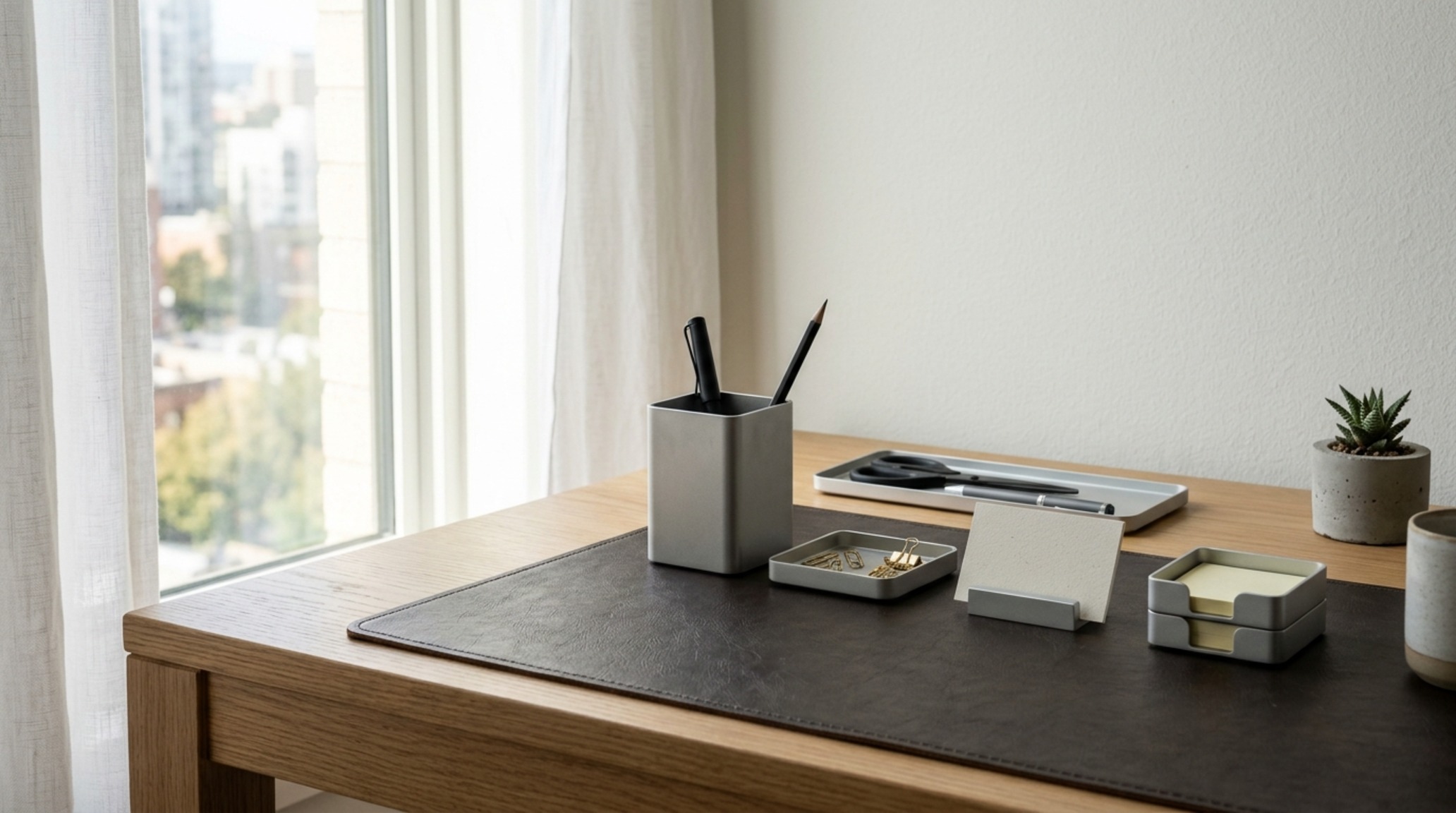
The secret to a high-end look is professional desk styling. This involves a rigorous edit of what remains on the surface. Apply the ‘rule of three’: group a task lamp, a single sculptural object (perhaps a stone paperweight), and a vessel for pens. This creates a focal point without overwhelming the senses. Choose a palette that complements your room’s architecture. For instance, if your walls are Farrow & Ball Setting Plaster, brass or copper accents provide a warm, tonal harmony that feels curated rather than accidental.
PRO TIP: Use a magnetic cable management system. Small magnetic blocks can be adhered to the edge of the desk, keeping charging cables perfectly aligned and preventing them from sliding behind the furniture when unplugged.
Aesthetic Desk Decor: The Psychology of Color and Texture
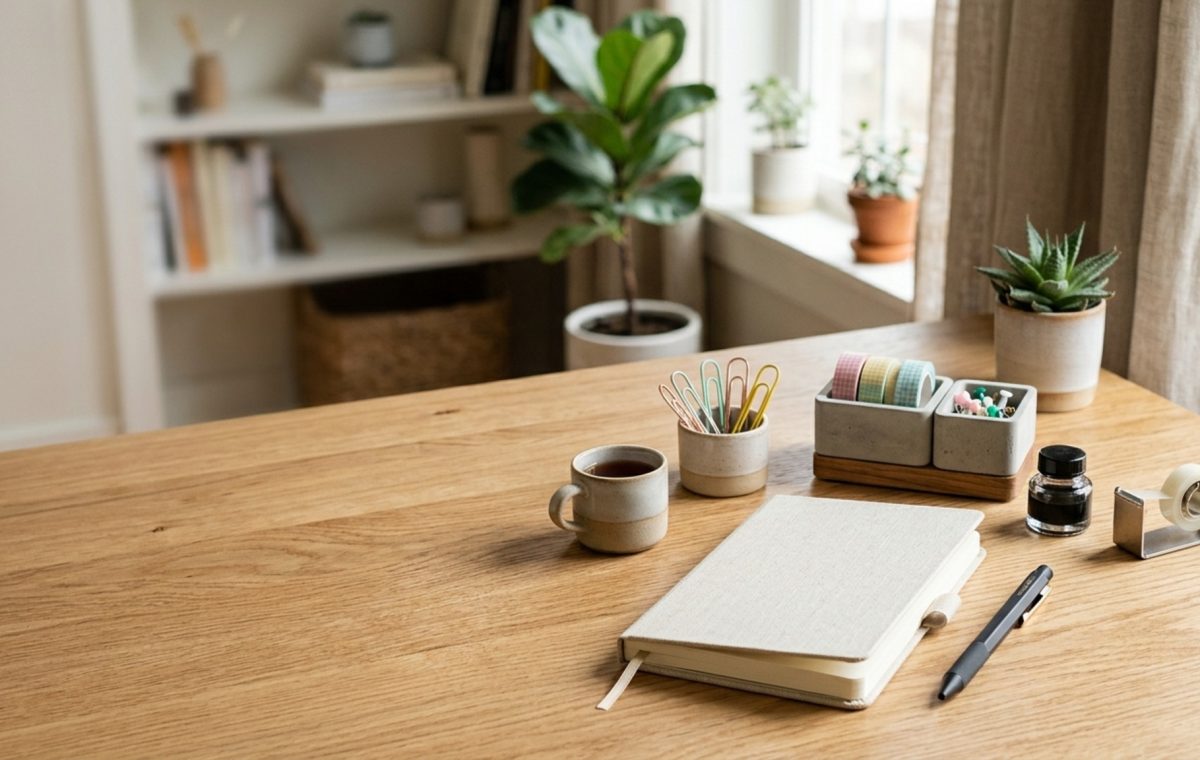
Finally, we must address the sensory experience of the workspace. Aesthetic desk decor should provide a ‘tactile break’ from the digital screen. A small tray made of honed travertine or a notepad with heavy-weight, linen-textured paper offers a moment of physical connection. These aren’t just ‘supplies’; they are the materials of your daily life. Selecting a color palette of muted earth tones—slate, clay, and sand—creates a calming environment that facilitates the ‘flow state’ required for creative work.
Tactile Blueprint & Material Specifications
Architectural breakdown detailing authentic surfaces, paint references, and standard circulation clearances.
The evolution of our workspaces reflects a broader shift toward intentionality in design. When we choose creative office supplies that honor both form and function, we transform the daily grind into a ritual of high-performance creativity. As you refine your own compact sanctuary, remember that the most powerful design choice you can make is the one that removes friction between your mind and your work. Your desk is not just furniture; it is the launchpad for your most significant ideas, a reflection of your professional identity, and a carefully balanced ecosystem where every architectural detail serves the flow of thought.
- Edit Ruthlessly: Remove one item from your desktop every week that hasn’t been used, maintaining the visual integrity of your workspace.
- Invest in Quality: Choose one high-performance tool—like a custom mechanical keyboard or a designer lamp—to serve as the anchor of your desk’s aesthetic.
- Optimize Flow: Ensure all cables are concealed and vertical storage is utilized to keep your primary reach zone clear for active projects.
Editorial Silo • Recommended Architecture Studies
- Mindful Pictures of xmas decorations: 12 Tactile Styles — Archival Design Case Study
- Glowing Luxury Penthouses In New York For Sale — Archival Design Case Study
The Architectural Gallery
A visual anthology detailing craftsmanship, tailored millwork, and nuanced ambient illumination.
Curated Visual Lookbook
Design Gallery & Spatial Studies
A visual curation of architectural arrangements, lighting concepts, and material palettes featured in this space.