Mastering the First Impression
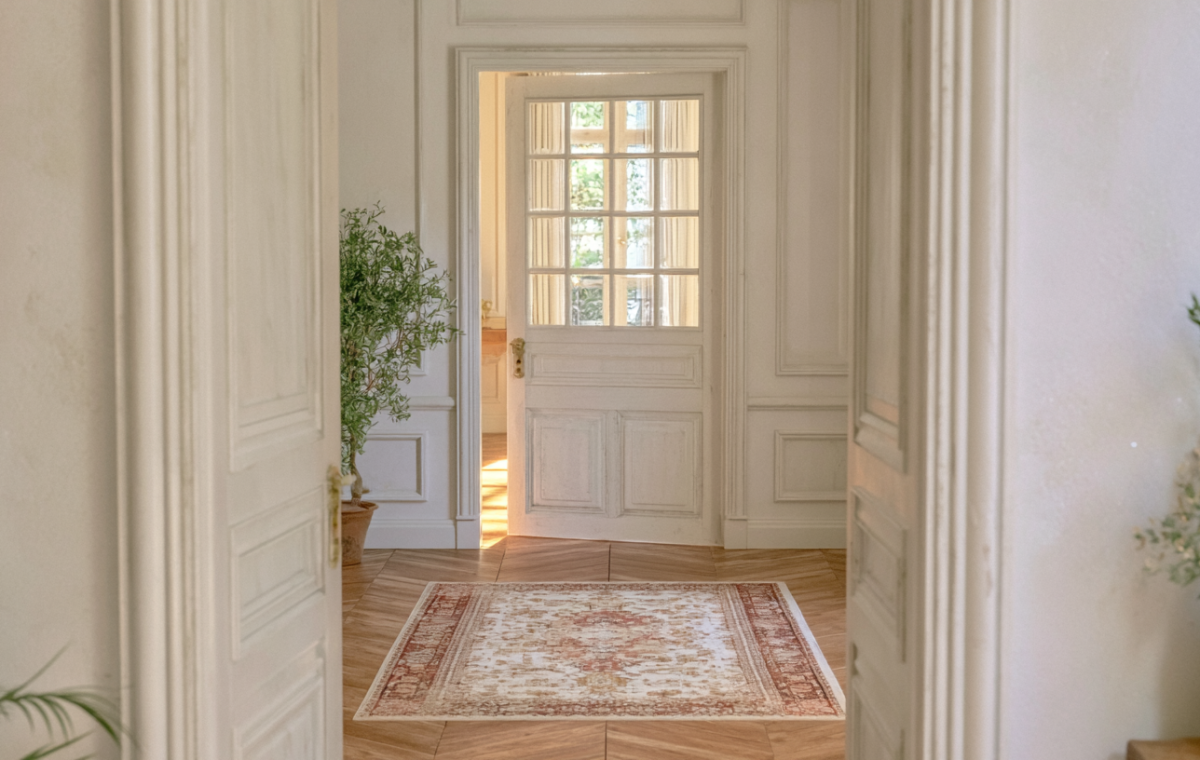
Passing through rooms should feel like an intentional journey, not a boring afterthought. Too many homes treat corridors as dead zones. They receive a coat of neutral paint and get left behind while main living areas hog the budget. But look closer at how architectural bones change everything. Deep wainscoting, tall panel doors, and classic multi-pane glass transoms turn a simple corridor into a sophisticated gallery.
Grounding the Space with Textiles
Hardwood floors deserve company. Walking down a bare passage sounds hollow and feels stark, especially during colder months. Laying down a vintage-inspired flatweave runner softens the acoustics while anchoring the entire composition. Pay attention to scale. A rug floating in the center needs breathing room around the edges to let the chevron or plank pattern peek through. It is a balancing act between warmth and structural exposure.
Bringing Life into Passageways
Natural light always wins. If you have interior glass doors, let the morning sun cascade straight through to brighten darker corners. When natural brightness falls short, lean on organic textures. A potted faux olive tree or a simple ceramic vase filled with delicate branches adds height and breaks up the rigid vertical lines of wall paneling. Maintenance matters here. Real plants struggle without adequate direct light, so choose durable faux alternatives if your passage lacks windows.
How do you currently handle transition spaces in your floor plan, and could your own corridors use a textural upgrade?
Editorial Lookbook & Photo Collection