The Allure of Distressed Floor Textiles
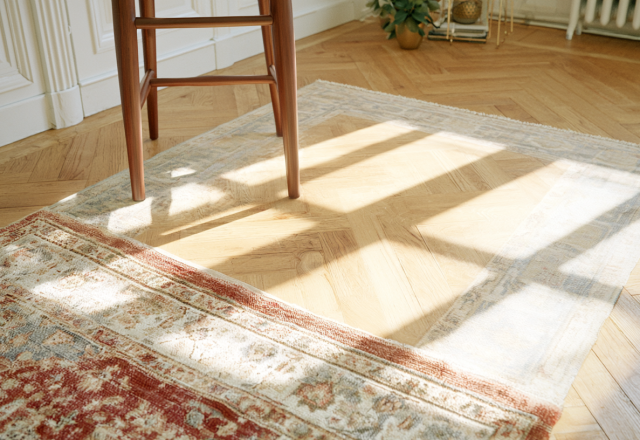
Laying down a vintage style area rug changes the entire geometry of a room. Hardwood planks demand contrast. When bare timber feels too exposed, an antique look floor covering bridges the gap between raw structure and finished comfort. This specific piece relies on muted earth tones, faded rust accents, and an ivory base to soften the sharp lines of traditional herringbone wood floors.
Perfection is overrated in interior design. Pristine carpets trap dust and signal sterile environments. Rugs featuring worn motifs and faded borders bring immediate history into new construction. They hide minor everyday lint and add character that brand new textiles simply lack.
Balancing Wood Grain and Carpet Patterns
Pairing patterned floor coverings with patterned wood requires restraint. Herringbone and chevron layouts already create strong visual movement. A busy rug overwhelms the space. The secret lies in scale. Notice how the muted border on this low-pile textile frames the floor without fighting the wood angles beneath it. Contrast is essential, yet harmony keeps the eye moving smoothly.
- Choose low-pile options for high-traffic zones.
- Let natural light hit the rug edge to expose fiber texture.
- Anchor heavy furniture legs squarely on the carpet corners.
Maintenance Realities
Vintage motifs hide stains exceptionally well. That is their superpower. However, low-pile weaves still trap grit that grinds down fibers over time. Frequent vacuuming without a brutal beater bar is mandatory. Rug pads keep the edges from curling and prevent slipping on slick polyurethane finishes.
How do you usually balance statement flooring with decorative textiles in your own home?
Editorial Lookbook & Photo Collection