The Architectural Synthesis: Balancing Industrial Rigidity with Organic Modern Rustic Furniture
For decades, the design world labored under a binary choice: the cold, clinical precision of industrial modernism or the heavy, over-ornamented weight of traditional country aesthetics. Those early 2000-era rustic attempts often felt like a stage set—bulky pine armoires and overstuffed leather sofas that swallowed floor space without offering a shred of architectural grace. However, a significant shift has occurred in the spatial landscape. We have moved beyond mere ‘cabin chic’ into a more disciplined, refined era of composition. The emergence of modern rustic furniture serves as the critical bridge in this evolution, offering a sophisticated counter-narrative to the glass-and-steel shells of contemporary architecture. It is no longer about filling a room with wood; it is about the curated tension between the machine-made and the earth-grown, ensuring that even the most soaring minimalist volume feels grounded and human-centric.
Spatial Cadence and the Golden Ratio of Materials
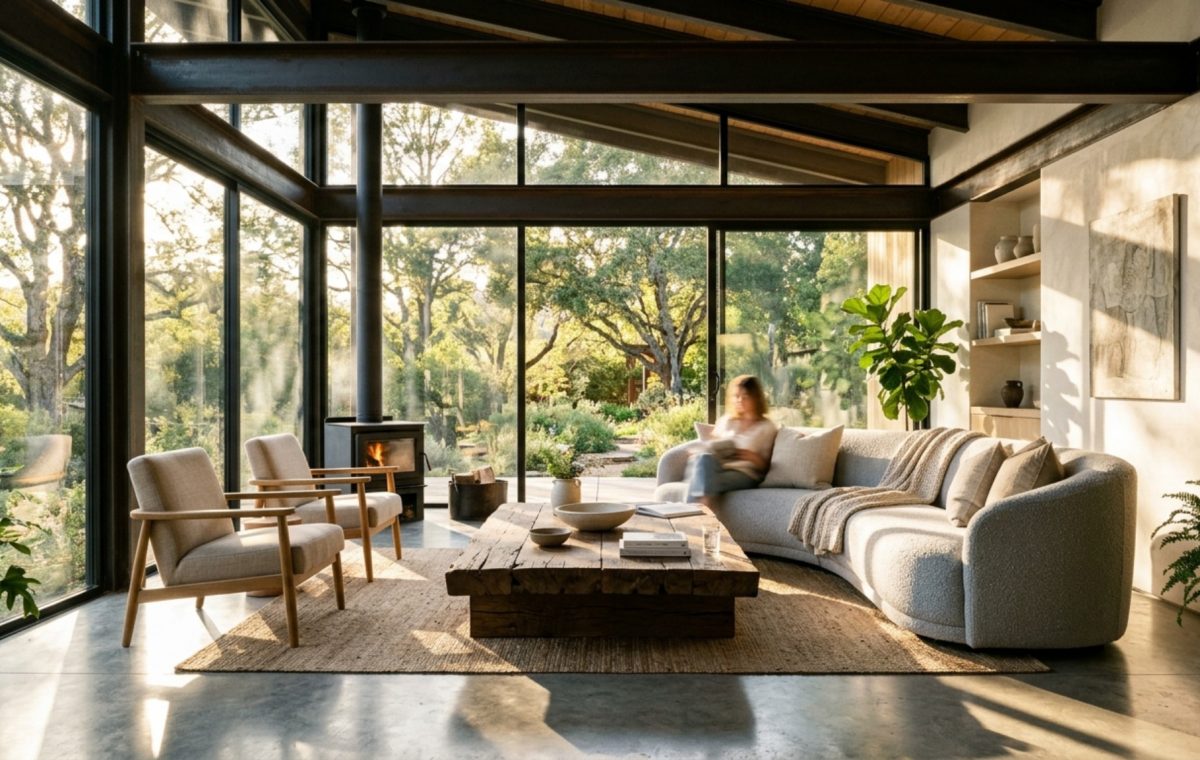
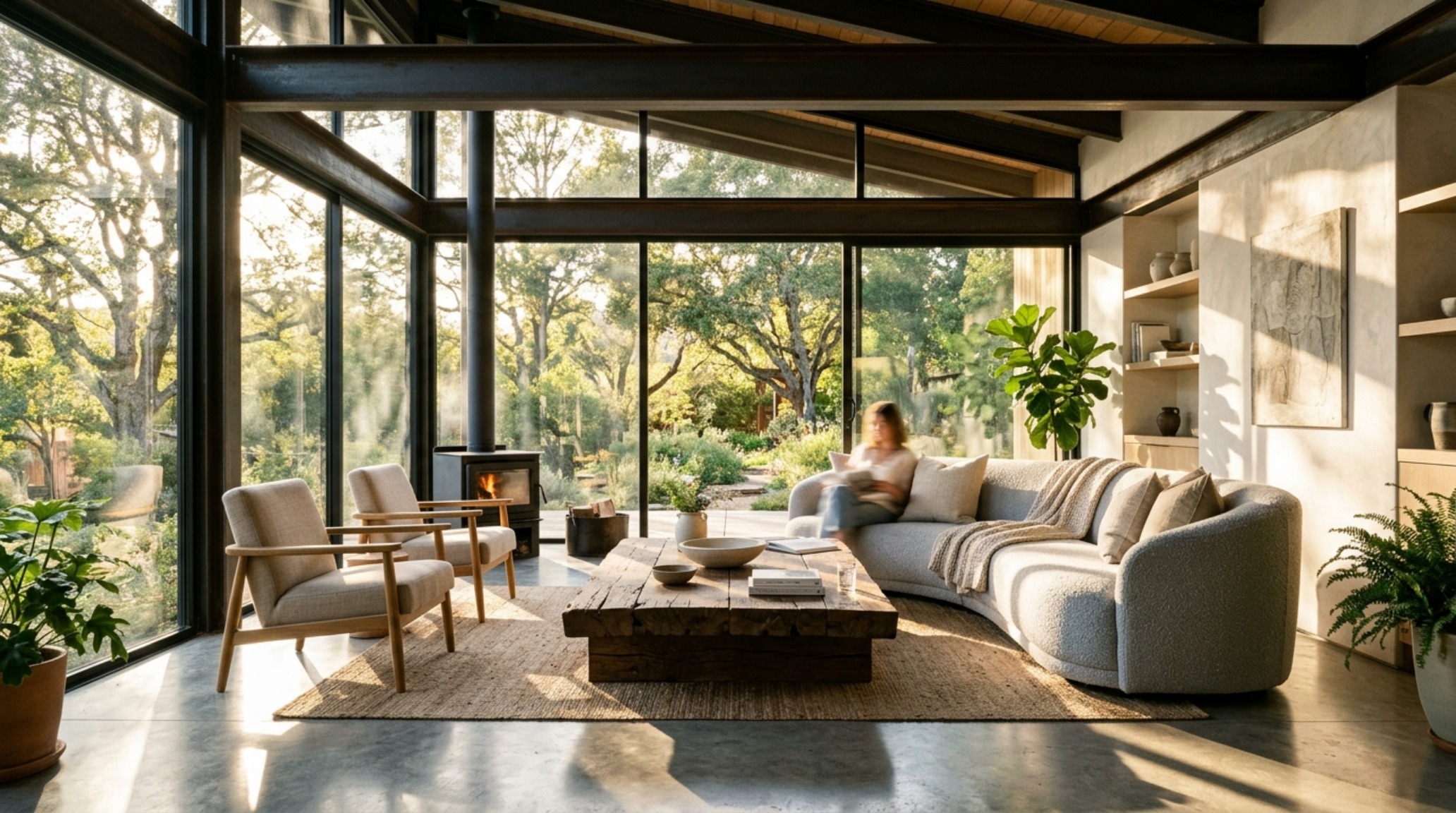
In high-ceilinged, open-concept environments, the primary architectural challenge is the management of ‘visual coldness.’ Large expanses of polished concrete and floor-to-ceiling glazing create a stunning envelope, but they often lack the tactile frequency required for true comfort. This is where the materiality of modern rustic furniture performs its most essential function. By introducing the irregular, warm grains of reclaimed timber against the uncompromising line of a steel beam, we create a ‘material friction’ that delights the eye. I often look for a 70/30 distribution—70% clean, architectural lines and 30% organic, raw texture. This ratio ensures the space remains forward-looking while benefiting from the ancestral comfort of natural materials.
Organic Modern Living Room: Layering Softness and Structure
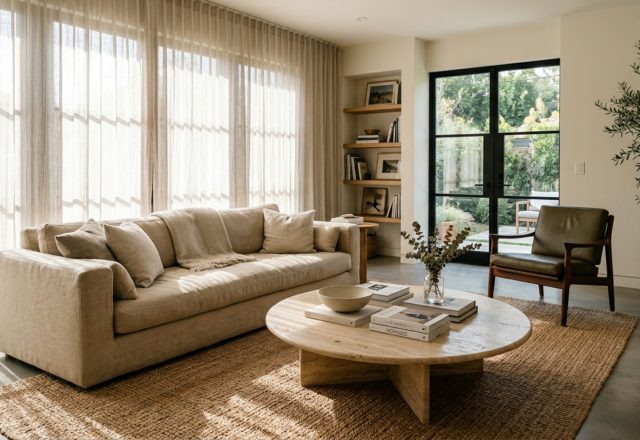
Designing an organic modern living room requires an intimate understanding of negative space and ‘breathing room.’ In a large-scale loft or a modern glass house, the furniture shouldn’t fight the architecture; it should anchor it. We achieve this by selecting pieces with biomorphic silhouettes—think sofas with soft, curved backs upholstered in heavy-weight bouclé or linen-blend fabrics in stone hues. These soft forms act as a necessary foil to the rigid geometry of the structural shell. To maintain the industrial edge, I frequently specify a low-profile coffee table crafted from a single slab of reclaimed elm, supported by architectural, blackened steel legs. The 18-inch clearance between the sofa edge and the table remains the gold standard for ergonomics, providing a functional reach without cluttering the floor plane.
Live Edge Wood Dining Tables: The Anchor of Spatial Flow
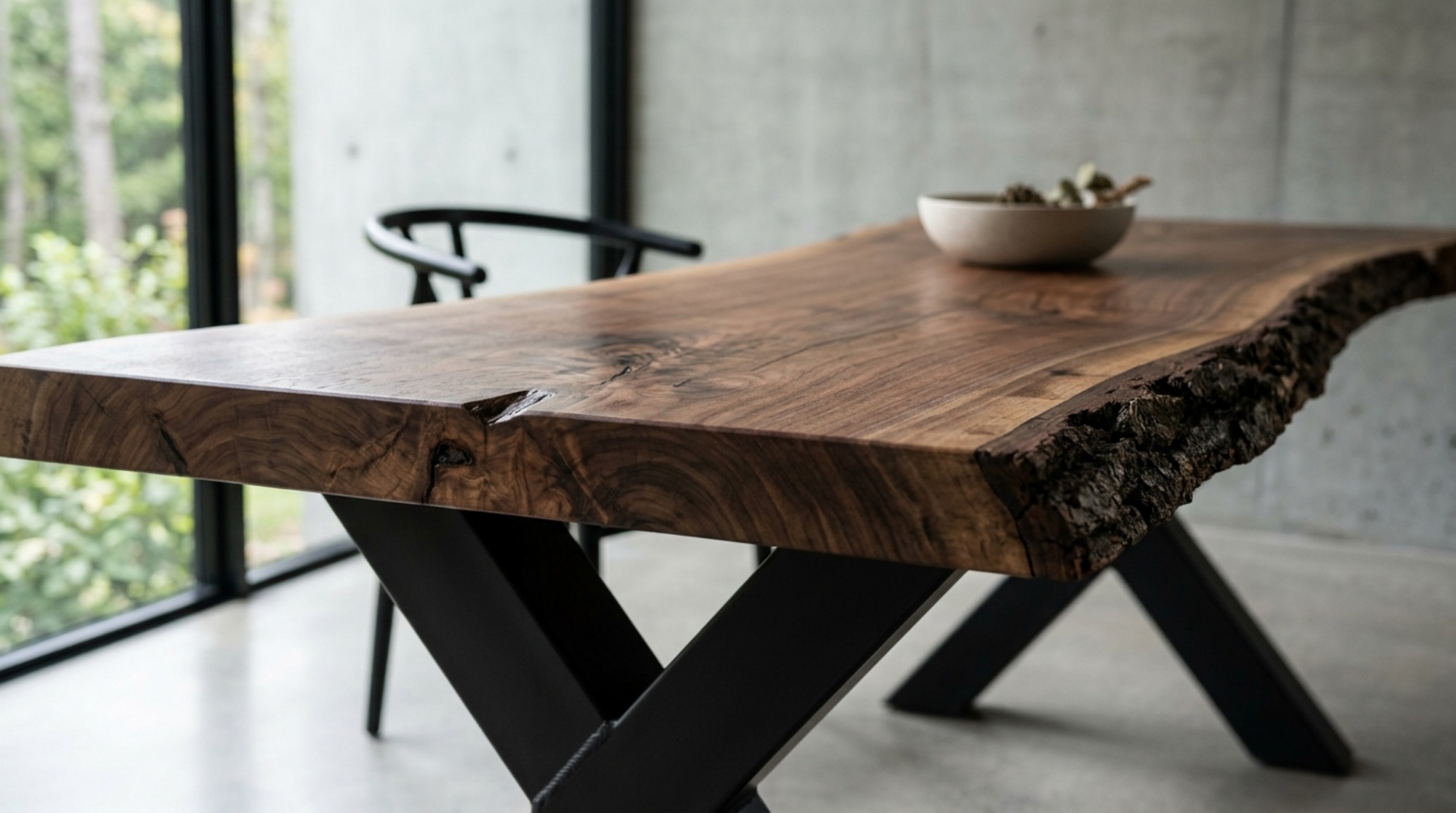
In the dining zone, the centerpiece is invariably the table. While a perfectly rectilinear glass table might disappear into the room, live edge wood dining tables demand an emotional response. A massive slab of French Oak or Walnut, its edges left in their natural, undulating state, serves as a grounding anchor in a room that might otherwise feel untethered. When placing these substantial pieces, spatial clearances are non-negotiable. To ensure fluid movement, a 36-inch primary circulation path around the table is essential, allowing guests to move freely even when the 30-inch dining chairs are occupied. The contrast here is purely architectural: the precision of a laser-cut steel base supporting a top that was sculpted by decades of growth and weather. This is the ‘Biomorphic Rustic’ movement in its purest form—where the hand of nature and the hand of the craftsman meet.
Matte Black Hardware Furniture: The Precision Finish
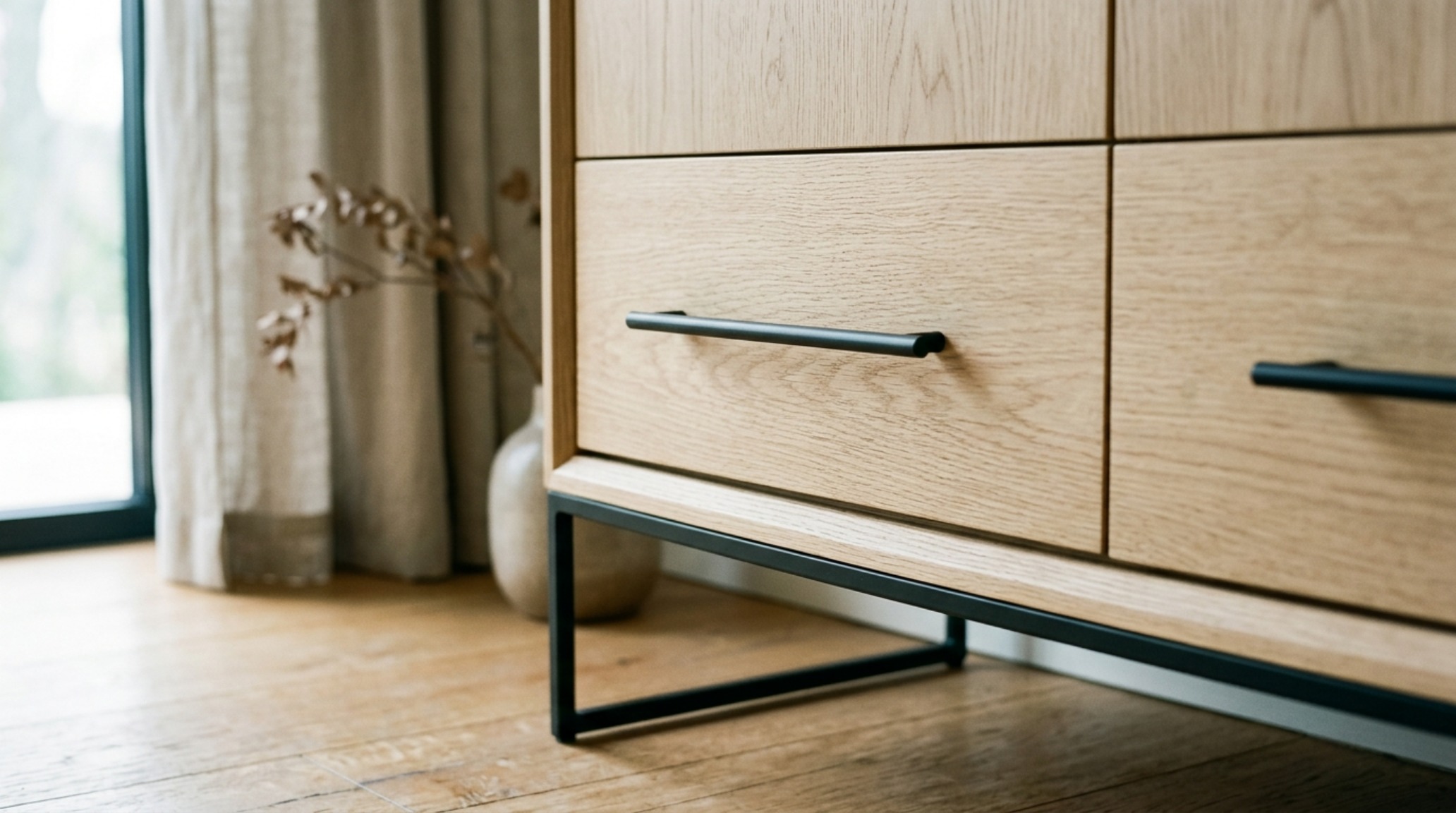
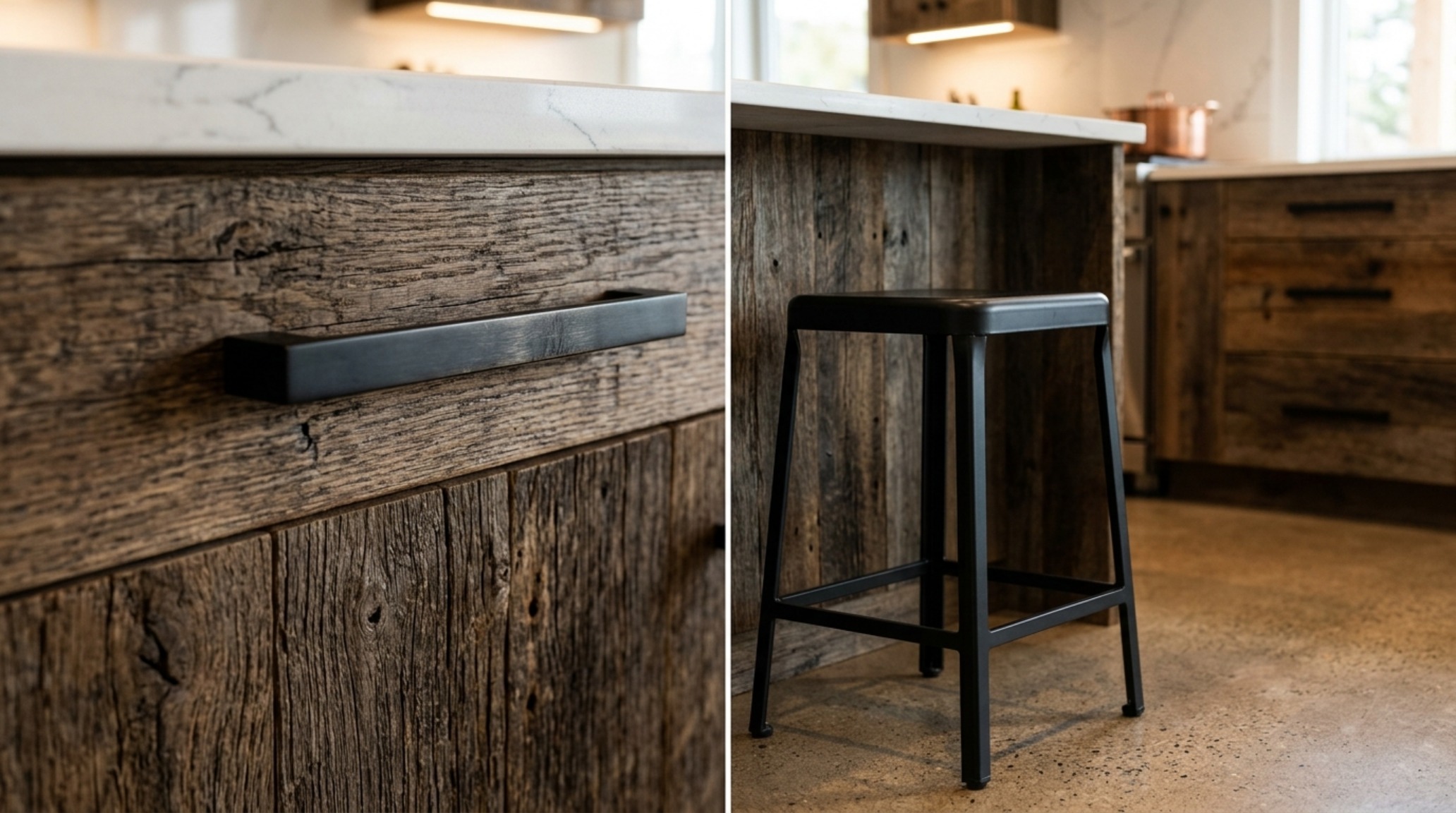
To prevent the rustic elements from feeling too nostalgic, we rely on the sharpening effect of matte black hardware furniture details. This could be a sideboard featuring reclaimed wood doors accented by slim, minimalist powder-coated steel handles, or a shelving unit that utilizes thin-profile metal uprights to support thick, hand-hewn timber planks. The matte black finish acts as a visual ‘ink line,’ defining the boundaries of the furniture and tying it back to the architectural hardware of the building, such as window mullions or exposed ductwork. It provides a contemporary rhythm that keeps the organic wood from feeling ‘heavy.’ Using a paint like Benjamin Moore ‘Iron Mountain’ on nearby cabinetry or trim can further unify these disparate textures into a singular, cohesive narrative.
Sustainable Furniture Trends 2025: Biomorphic Rustic
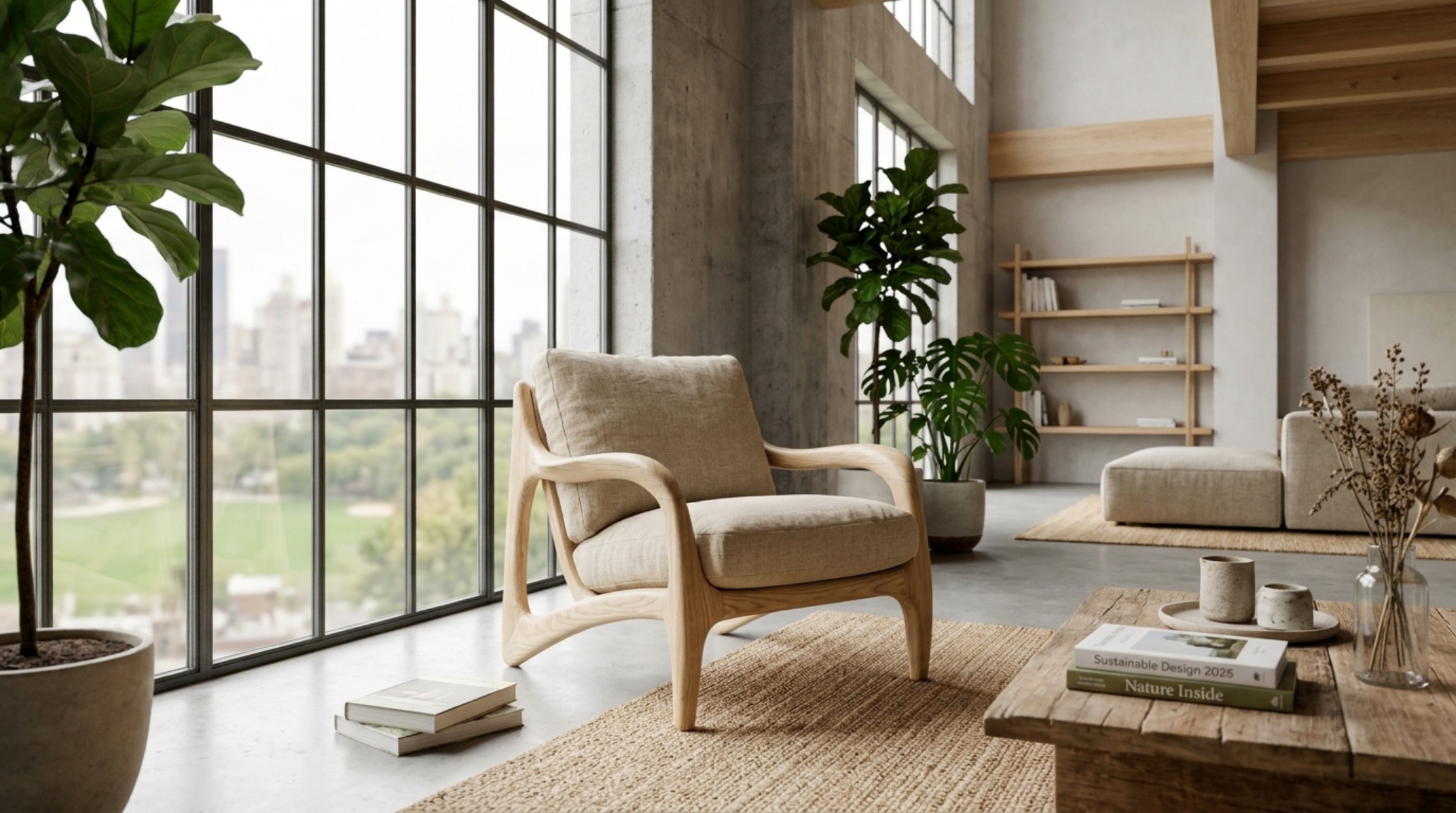
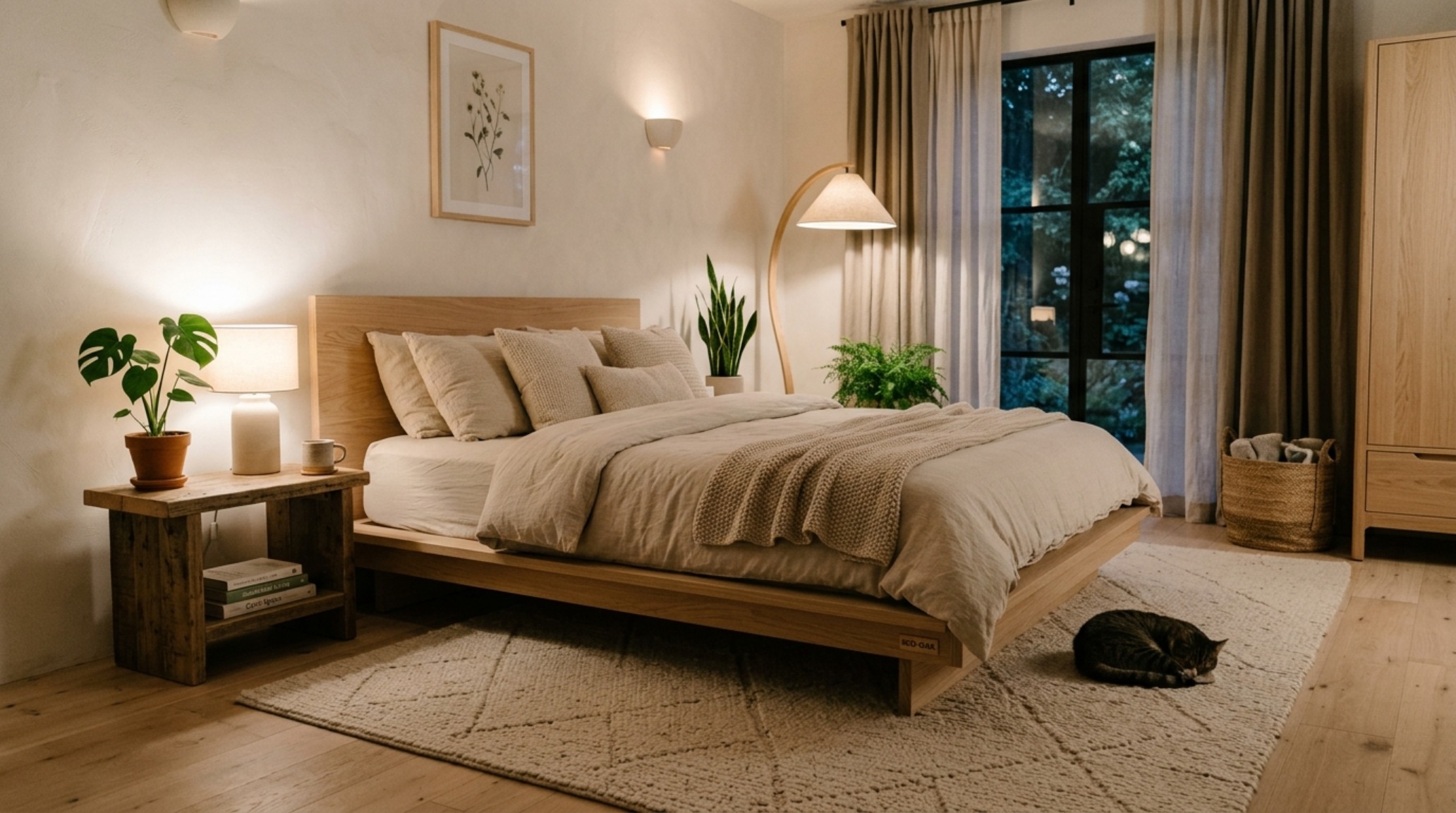
As we look toward the sustainable furniture trends 2025, the conversation is shifting from simple ‘recycling’ to ‘regenerative materiality.’ Designers are increasingly favoring woods sourced from managed forests and finished with low-VOC, plant-based oils that highlight the grain rather than choking it under thick polyurethane. We are seeing a move toward fluted textures and sculpted, rounded corners—avoiding sharp angles in favor of forms that mimic the erosion patterns found in nature. This approach, often dubbed Biomorphic Rustic, prioritizes the longevity of the piece. A well-constructed cabinet in white oak or ash, built with traditional joinery but styled with modern restraint, is an investment in both aesthetic and environmental permanence. It’s about creating an interior that matures alongside its inhabitants.
Rustic-Chic Color Palettes: From Plaster to Charcoal
The success of this architectural synthesis relies heavily on the ‘color of light’ and the chromatic backdrop. Developing rustic-chic color palettes involves moving away from the bright, clinical whites of the previous decade toward ‘muddy’ neutrals and earthy tones. I often start with a base of Farrow & Ball ‘Setting Plaster’—a dusty, sophisticated pink-taupe that brings a glow to raw wood. For the ceiling or accent walls, a soft, warm white like Benjamin Moore ‘Swiss Coffee’ at 75% strength provides a soft bounce for natural light. Lighting itself should be layered: 2700K warm ambient light for the evenings, with 3000K task lighting in work areas, all with a high CRI of 90+ to ensure the rich tones of the wood grains are rendered accurately. This lighting strategy emphasizes the ‘shadow play’ across the textured surfaces, adding a cinematic depth to the home.
Modern Farmhouse Decor Ideas: Opening Sightlines
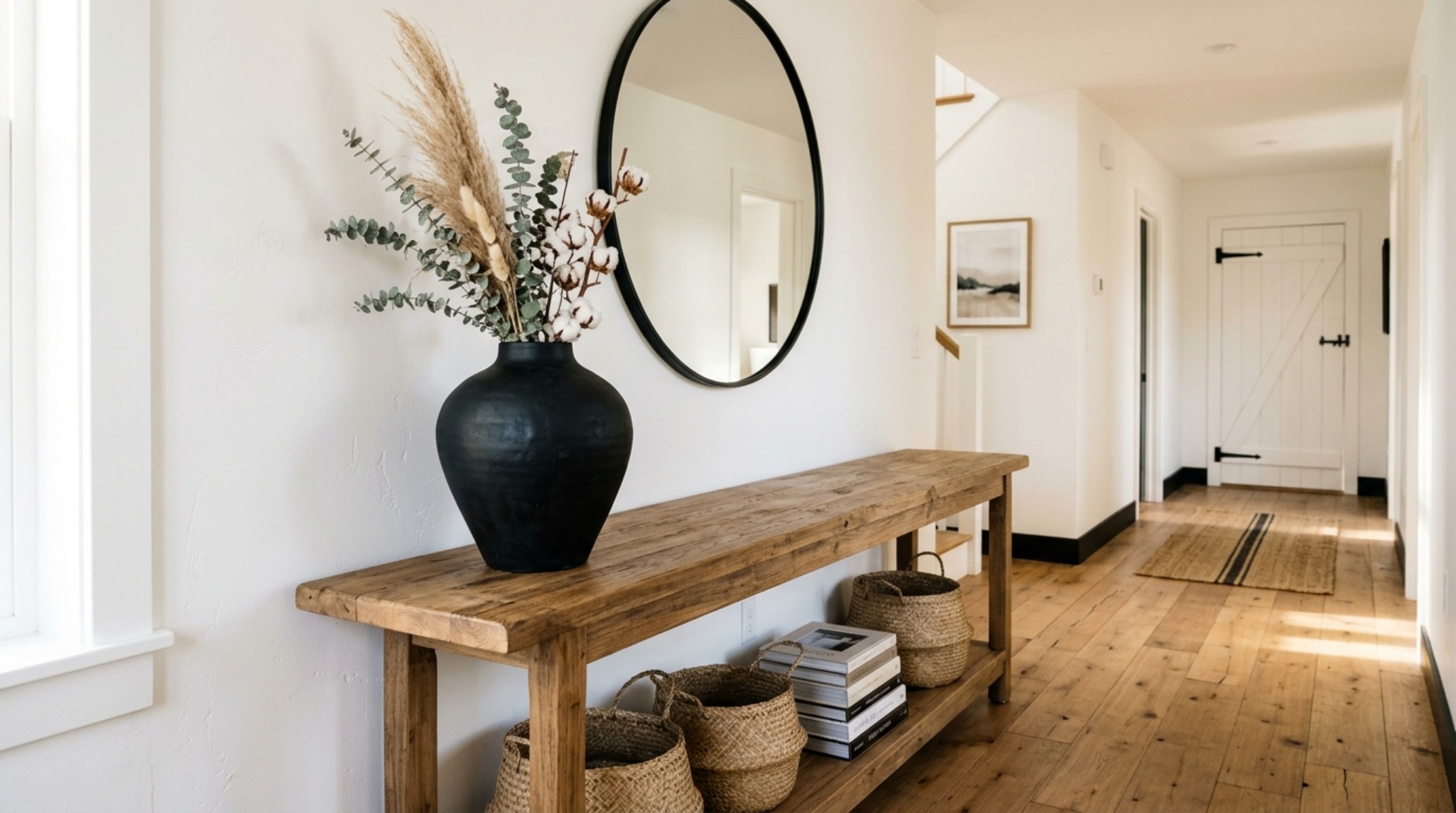
When implementing modern farmhouse decor ideas in a contemporary context, the goal is ‘editing.’ We are no longer cluttering shelves with kitsch; we are selecting a few, high-impact pieces that respect the sightline alignment of the room. A single, oversized ceramic vessel on a console, a curated stack of linen-bound books, or a pair of heavy, hand-forged iron sconces can convey the rustic narrative without overwhelming the architectural clarity. The ‘farmhouse’ element comes from the honesty of the materials—iron, stone, wood, and wool—rather than a literal interpretation of rural life. It’s about the soul of the object and its relationship to the negative space surrounding it.
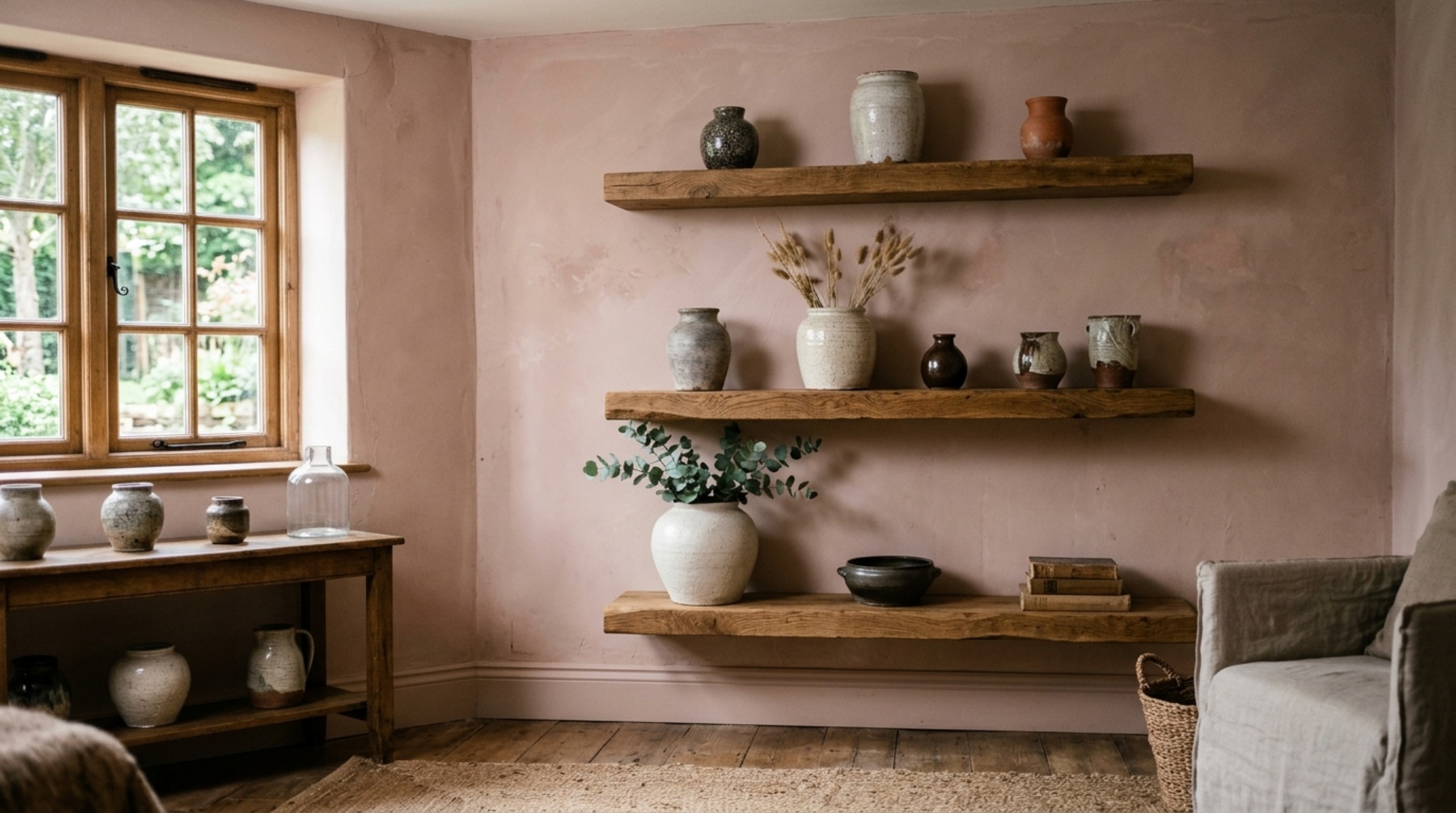
Tactile Palette, Finish Guide & Clearances
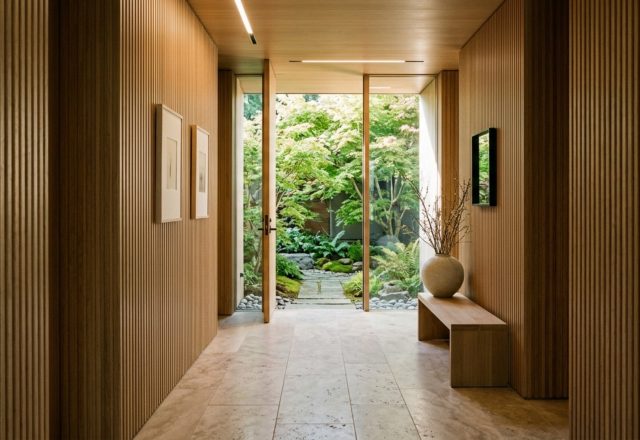
Curated architectural summary documenting material selections, color swatches, and spatial flow.
The ultimate goal of this architectural synthesis is not to achieve a static ‘look,’ but to facilitate a living experience that feels both expansive and protective. When we introduce the tactile honesty of modern rustic furniture into a precisely engineered shell, we are humanizing the machine. We are creating a space where the soaring height of a steel-framed ceiling is anchored by the deep, resonant grain of a table that lived a life before it became part of our own. It is in this delicate equilibrium—between the industrial future and the organic past—that we find the true essence of modern living: a home that breathes, endures, and connects us to the ground beneath our feet even as we reach for the light.
Editorial Silo • Recommended Architecture Studies
- The Master Blueprint: Engineering Structural Flow When You Create Your Own House Design — Archival Design Case Study
- Kinetic Living: Engineering Ergonomic Fluidity into Modern Home Interiors Designs — Archival Design Case Study
The Design Journal Lookbook
A tactile photo journey through spatial flow, tonal warmth, and balanced structural geometries.
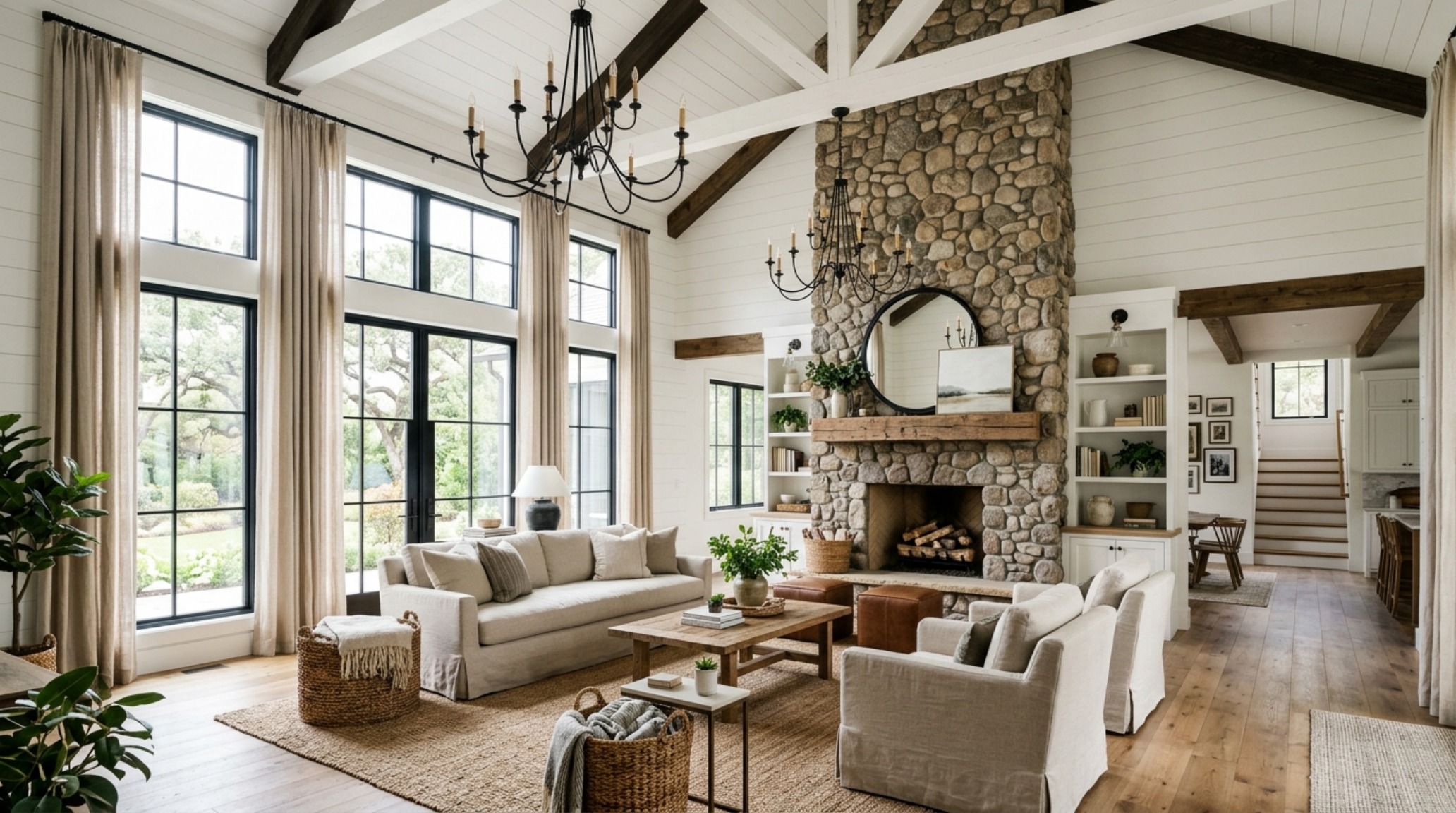
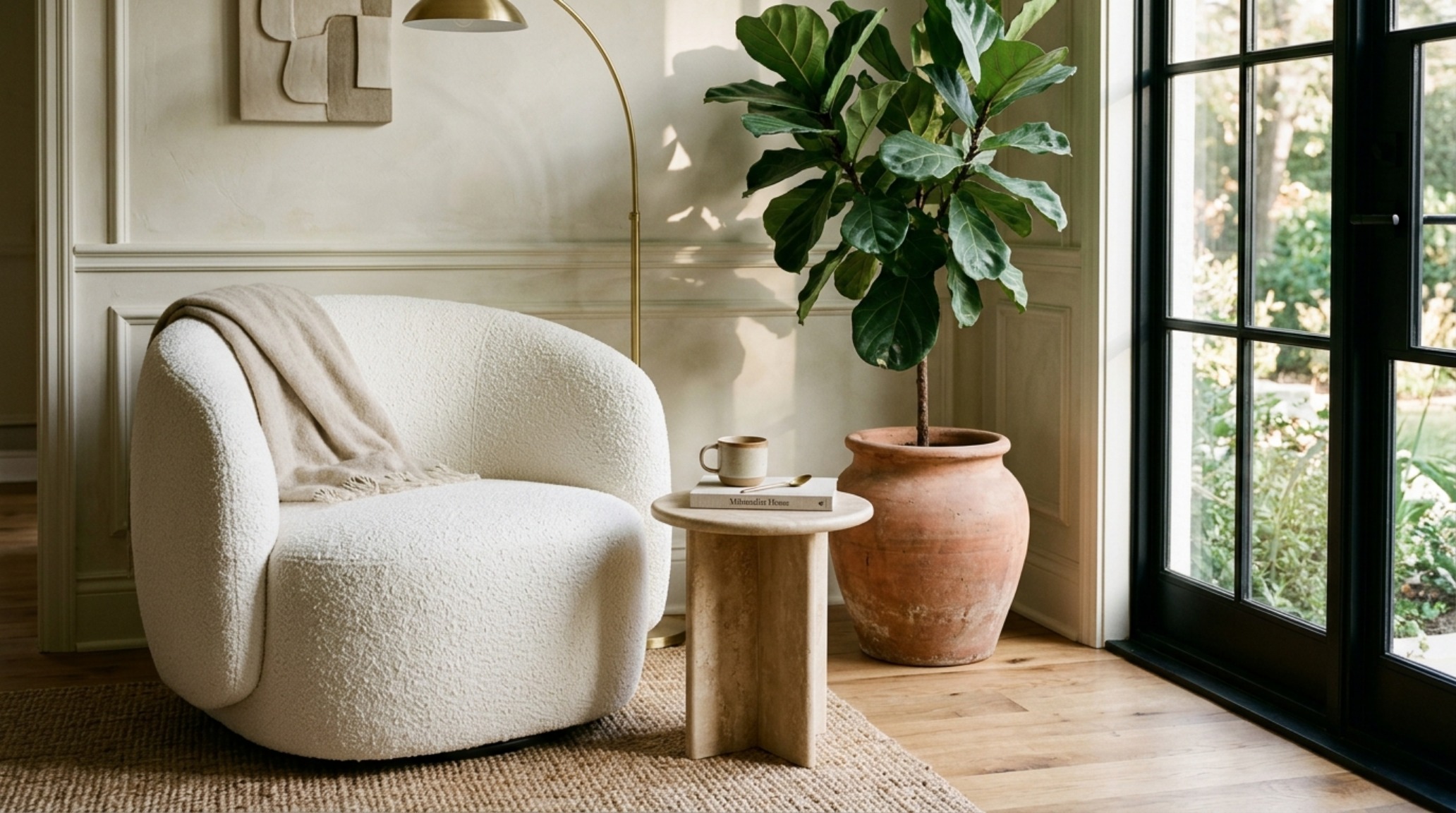
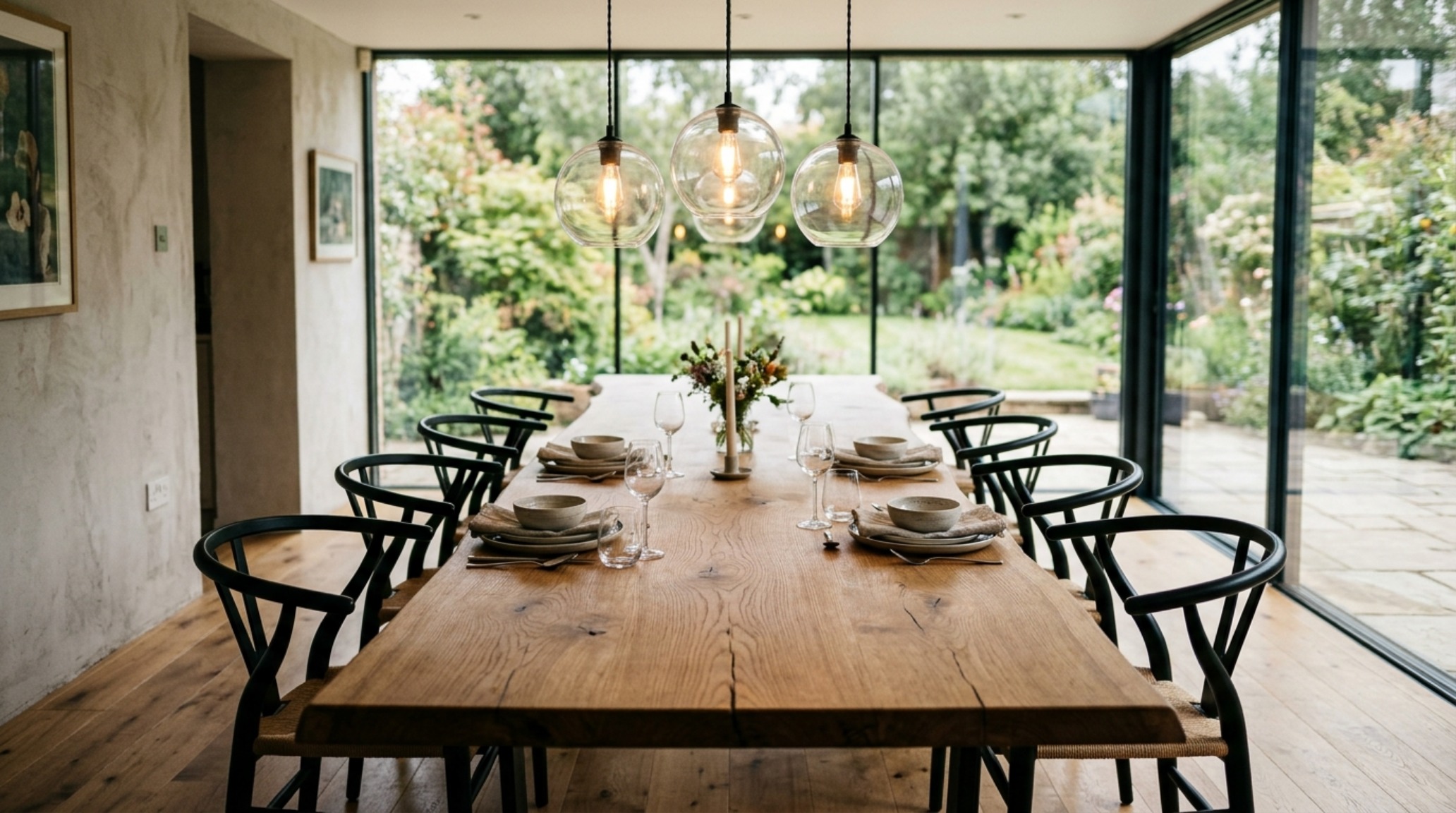
Curated Visual Lookbook
Design Gallery & Spatial Studies
A visual curation of architectural arrangements, lighting concepts, and material palettes featured in this space.