The Evolution of the Urban Sanctuary
Historically, interior grandeur was defined by heavy mahogany, sprawling footprints, and architectural mass—a literal manifestation of status through volume. However, the contemporary shift toward vertical, compact living has necessitated a radical evolution in how we define the concept of ‘home.’ We are no longer in an era of filling space; we are in an era of curating atmosphere. This transition has birthed a new standard of home decor ideas for apartments where sensory luxury—the visceral way a surface feels under a hand or how a shadow stretches across a room—replaces the outdated reliance on sheer square footage. It is a meticulous engineering of intimacy, where ‘visual warmth’ becomes the primary architectural currency, transforming a standard rental box into a high-end, atmospheric retreat that commands presence.
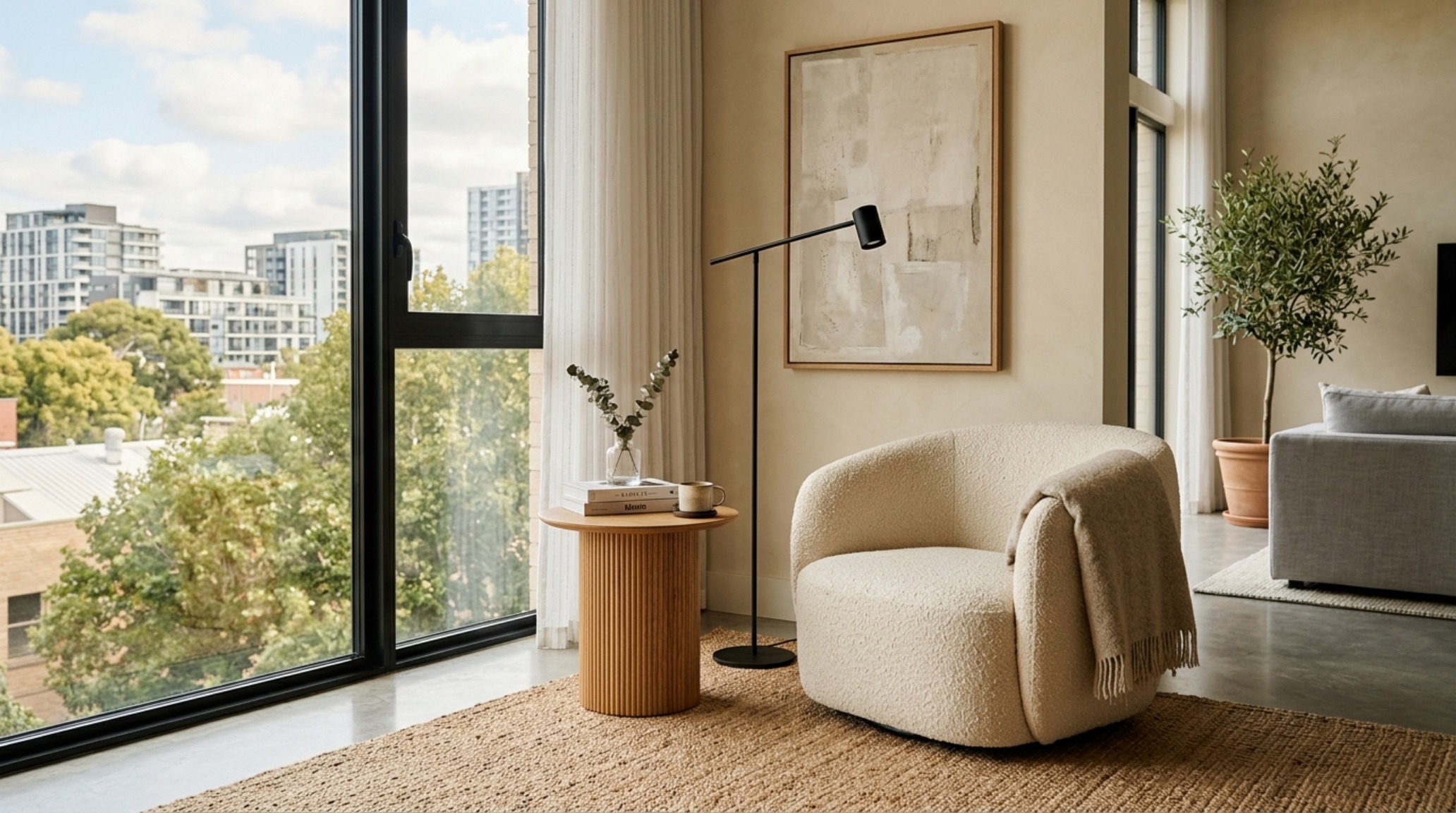
The Science of Tactile Grounding: Why Texture Trumps Color
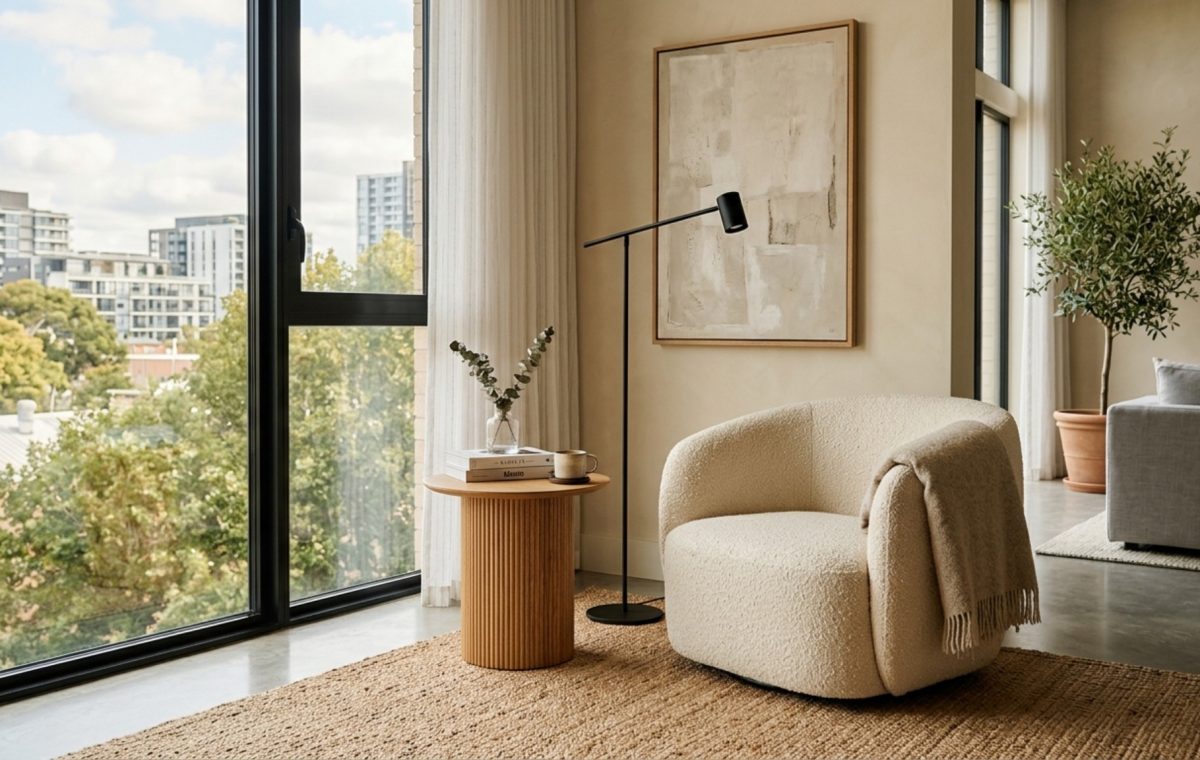
In a compact interior, the eye processes information quickly. When surfaces are uniform and flat, the brain registers the space as ‘sterile’ or ‘temporary.’ To counteract this, we employ tactile grounding. This involves the intentional pairing of opposing physical sensations to create a sense of permanence. Think of the friction provided by a hand-knotted wool rug against the cool, unforgiving surface of a polished concrete floor, or the way a heavy Belgian linen curtain softens the hard edge of an industrial window frame. These contrasts aren’t just aesthetic choices; they are neurological cues that signal comfort and stability.
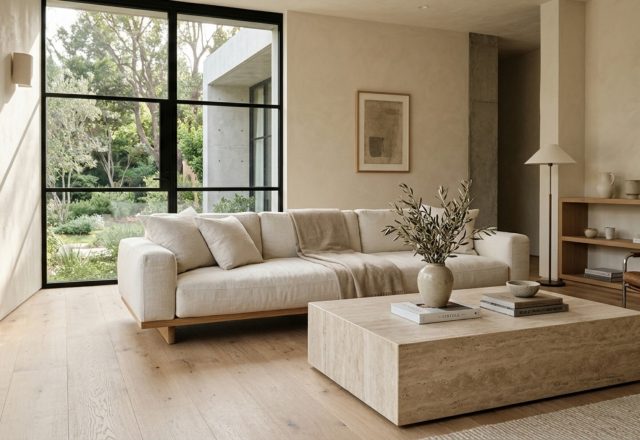
When selecting home decor ideas for apartments, prioritize materials with a ‘living finish.’ Unlacquered brass that develops a patina over time, or a honed travertine coffee table that feels buttery to the touch, adds a layer of soul that mass-produced laminate simply cannot replicate. By focusing on the ‘hand’ of the material—the tactile quality—you create a space that feels expensive because it feels real.
Studio Apartment Layout Ideas for Flow: The Geometry of Movement
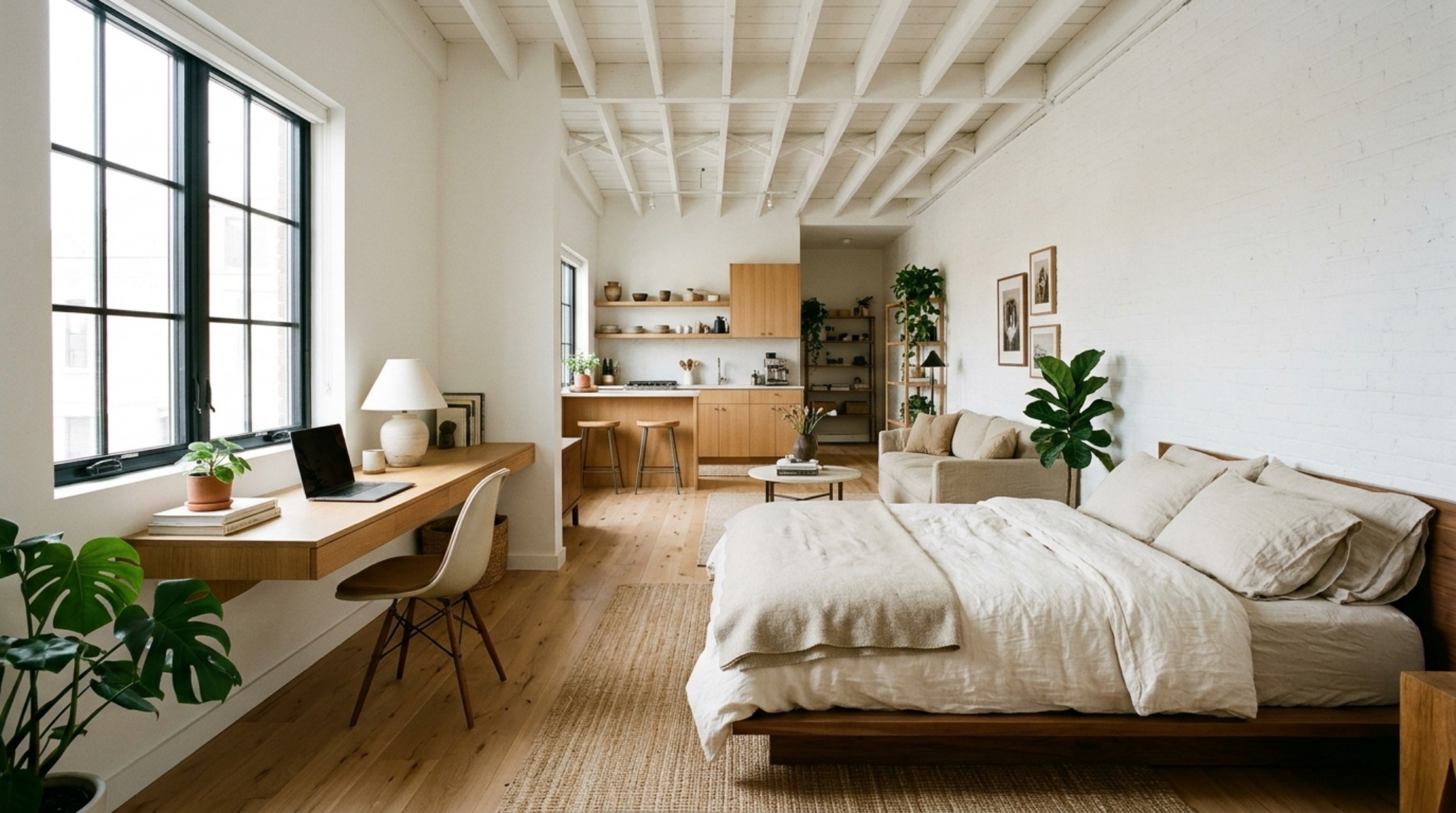
The most common mistake in small-scale living is the ‘peripheral huddle’—pushing every piece of furniture against the walls in a desperate bid for floor space. This actually highlights the room’s limitations rather than concealing them. Instead, we look to the studio apartment layout ideas for flow used by high-end architects: creating ‘islands of function’ anchored by light and texture. Movement within a home should feel intuitive, not restricted.
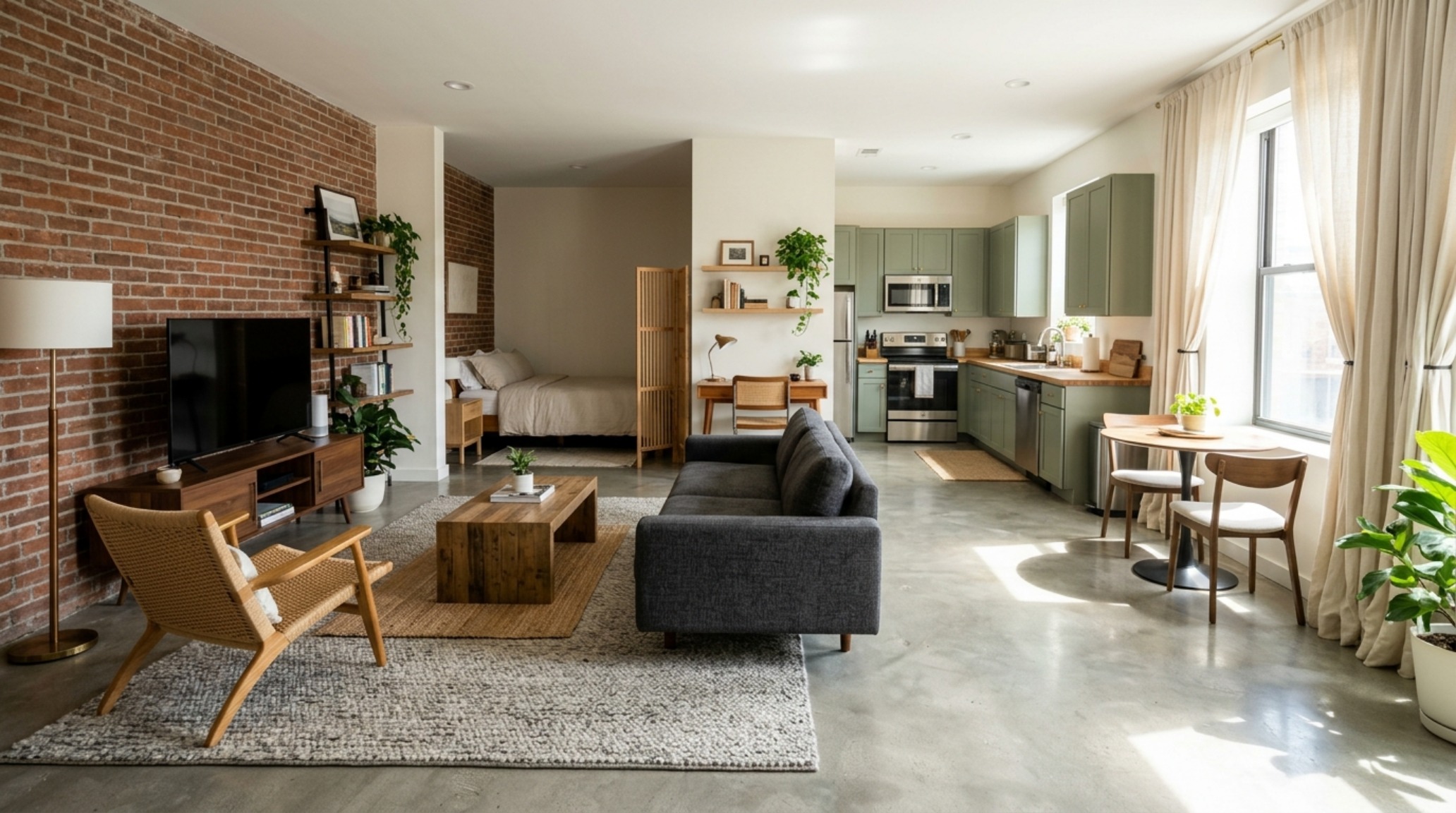
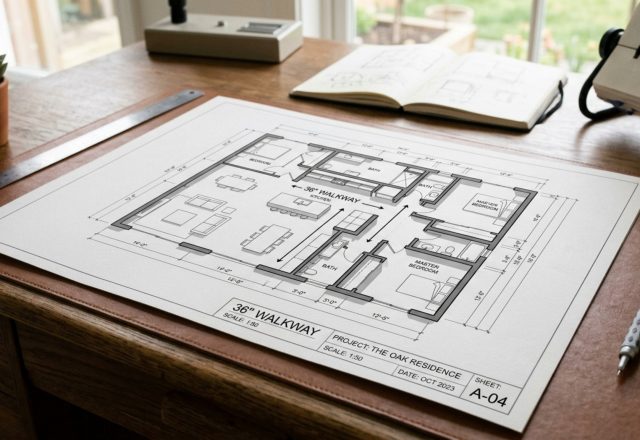
Adhere to the 36-inch rule: primary circulation paths—the ‘highways’ of your home—should maintain a minimum of 36 inches of clearance to prevent a cramped, claustrophobic feel. Secondary pathways, such as the space between a sofa and a coffee table, can tighten to 18 inches, creating a sense of ‘reachability’ and intimacy. By floating a sofa even six inches away from the wall, you introduce negative space that allows the room to breathe, suggesting that you have space to spare, even if you don’t. This spatial cadence is what separates a cluttered room from a designed one.
Apartment Lighting Layers and Mood: Sculpting with Kelvin and Contrast
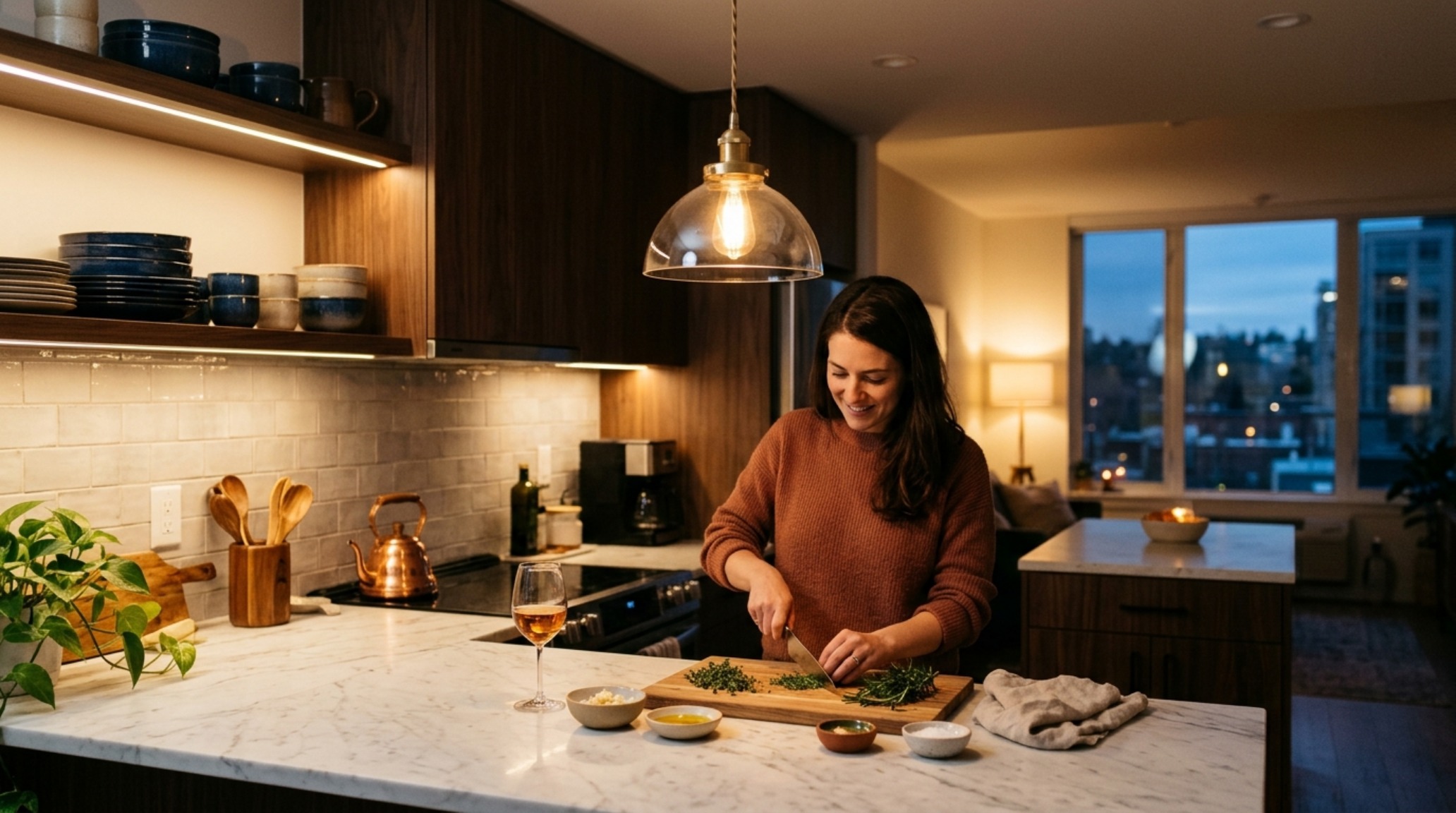
Lighting is the invisible architect. In a rental, the ‘boob light’ or the harsh overhead LED is the enemy of atmosphere. To achieve a high-end feel, you must think in layers: ambient, task, and accent. The goal is to eliminate shadows in the corners while creating ‘pools’ of light that draw the eye to specific vignettes.
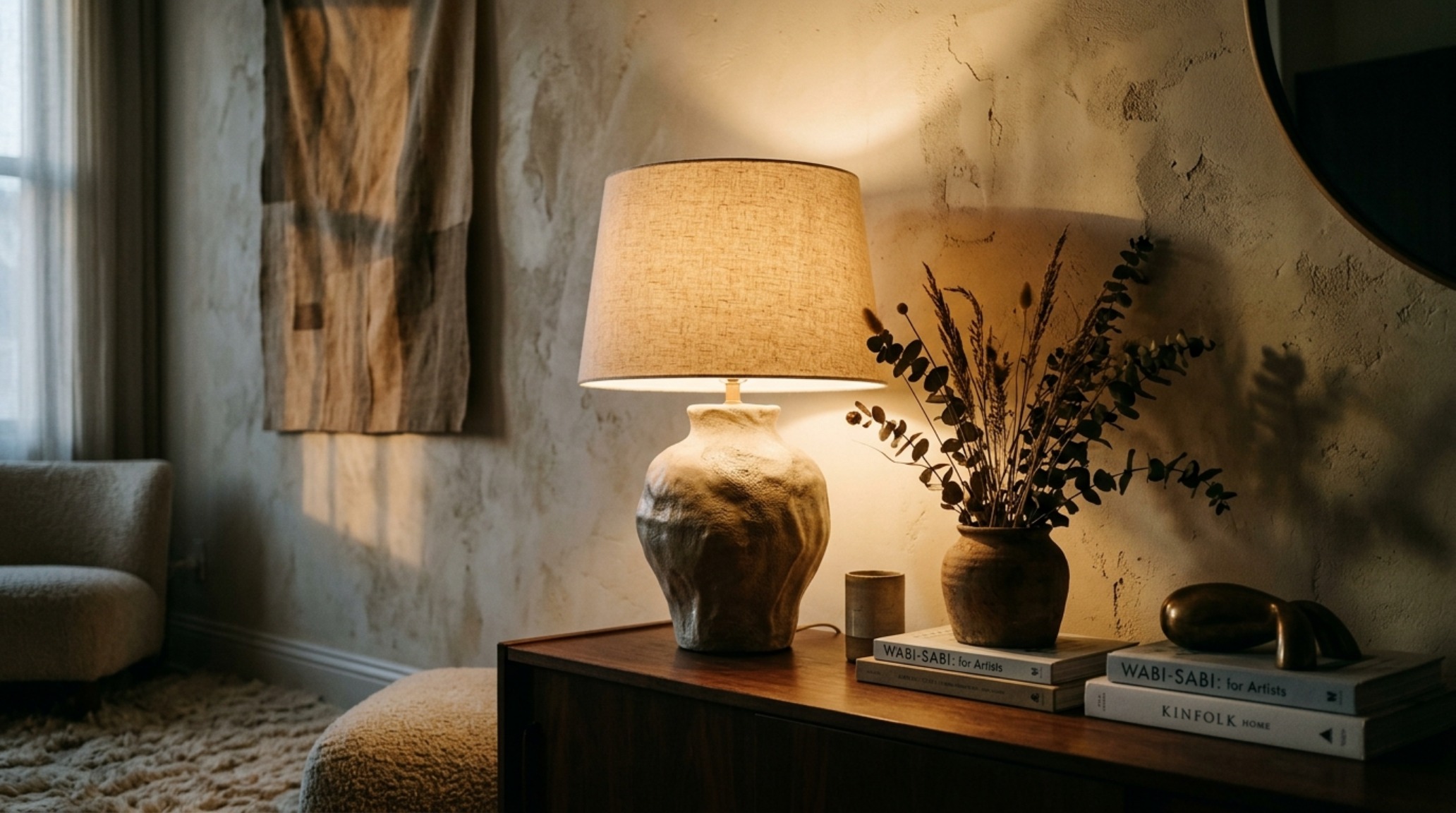
For ambient lighting, aim for a 2700K color temperature. This is the ‘golden hour’ of light bulbs—warm, inviting, and flattering to skin tones. Task lighting, such as a sleek pharmacy lamp for reading or under-cabinet strips in the kitchen, should move toward 3000K for clarity without becoming clinical. Ensure your bulbs have a high Color Rendering Index (CRI) of 90+. This ensures that the deep forest green of your velvet sofa or the subtle taupe of your walls looks exactly as the designer intended, rather than washed out by poor-quality light. Apartment lighting layers and mood are about more than just visibility; they are about theatricality, using shadow to hide what is mundane and light to celebrate what is beautiful.
Renter-Friendly Wall Decor Solutions: Architectural Depth Without Permanence
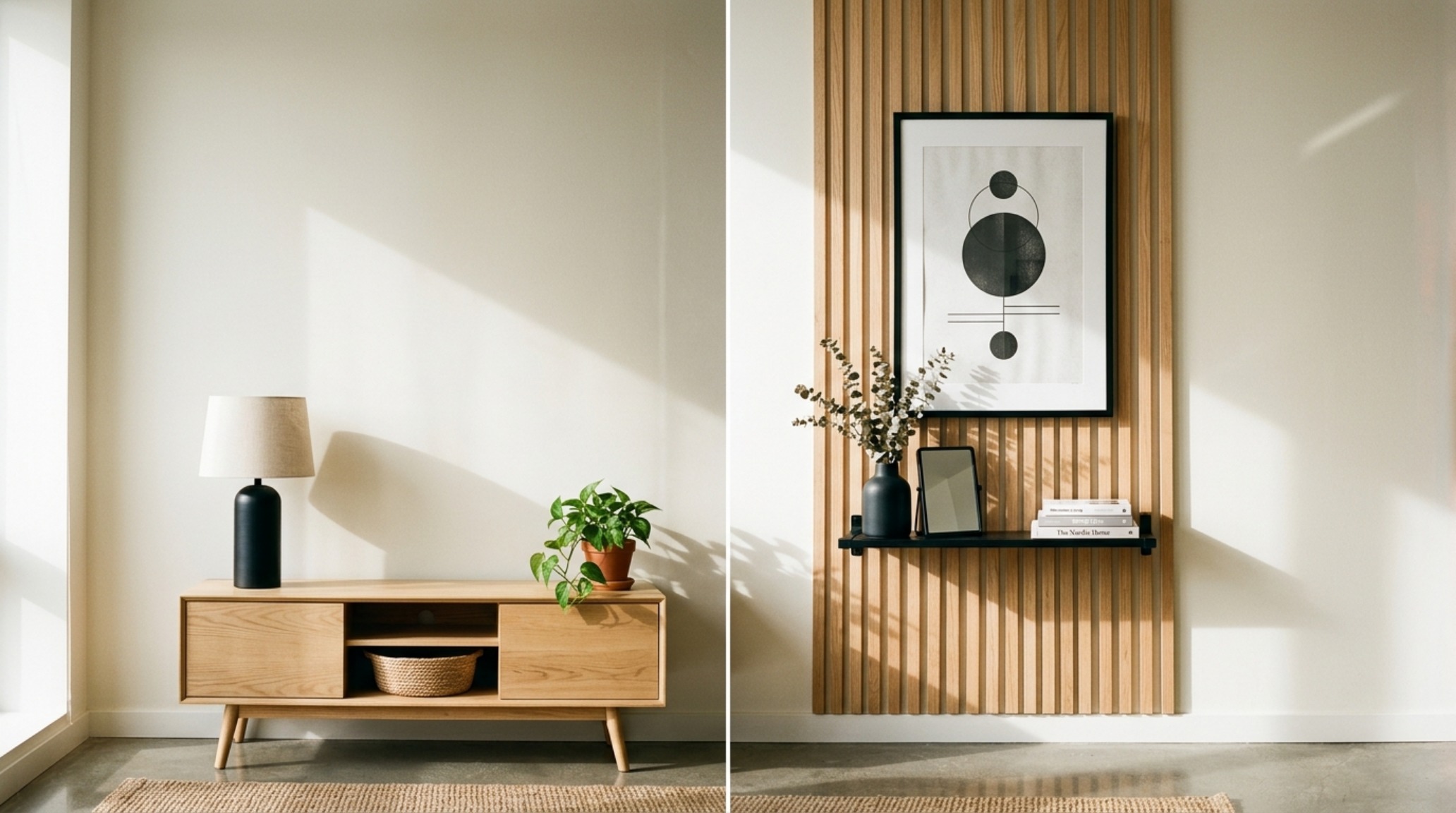
One of the greatest challenges in a rental is the ‘white box’ syndrome. When you cannot renovate, you must innovate. Renter-friendly wall decor solutions have moved far beyond the basic gallery wall. We are now seeing the use of oversized, textile-based art and modular, non-permanent moulding that adds three-dimensional relief to flat surfaces. A large-scale canvas or a hanging tapestry doesn’t just fill a void; it acts as an acoustic dampener, softening the ‘bounce’ of sound that often plagues modern apartment buildings.
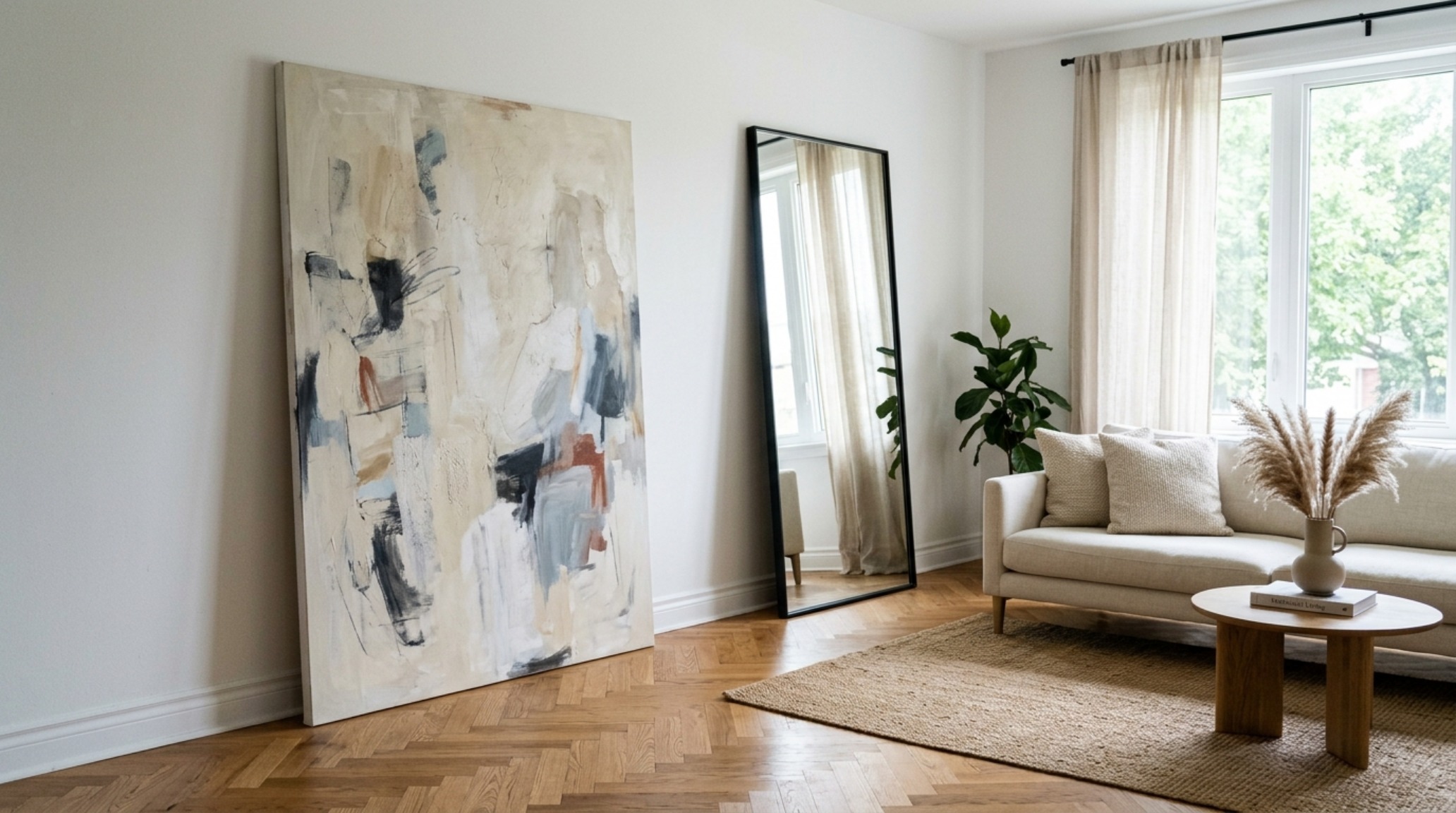
Consider the ‘Fifth Wall’—the ceiling. While you might not be able to paint it, changing a standard light fixture for a sculptural pendant can redefine the entire volume of the room. Use tension-based shelving systems or ‘leaner’ mirrors that reach toward the ceiling. A mirror that stands 7 feet tall doesn’t just reflect light; it creates an architectural ‘aperture,’ tricking the brain into perceiving a doorway where there is only a wall. This is how we manipulate the visual narrative of home decor ideas for apartments to suggest a larger, more complex floor plan.
Space-Saving Furniture for Small Living Rooms: The Art of the Multipurpose Silhouette
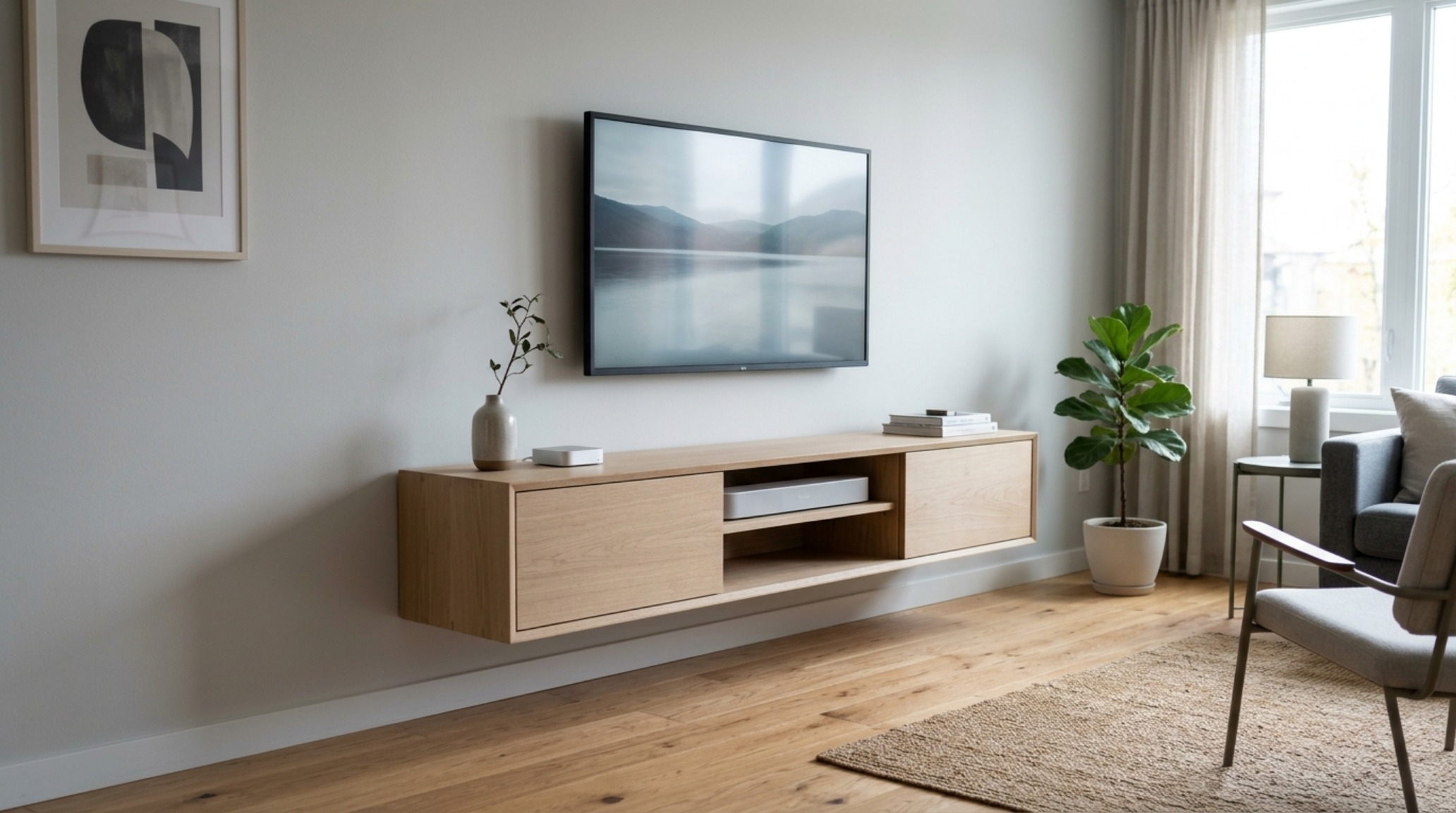
In a compact footprint, every piece of furniture must earn its keep twice over. However, ‘multi-functional’ should never mean ‘utilitarian.’ We look for pieces with ‘visual lightness’—furniture that stands on legs rather than sitting flush to the floor. This allows the eye to see the continuous line of the floor plane, which creates an illusion of expansiveness. Space-saving furniture for small living rooms should prioritize slim profiles and transparent materials like glass or acrylic where appropriate.
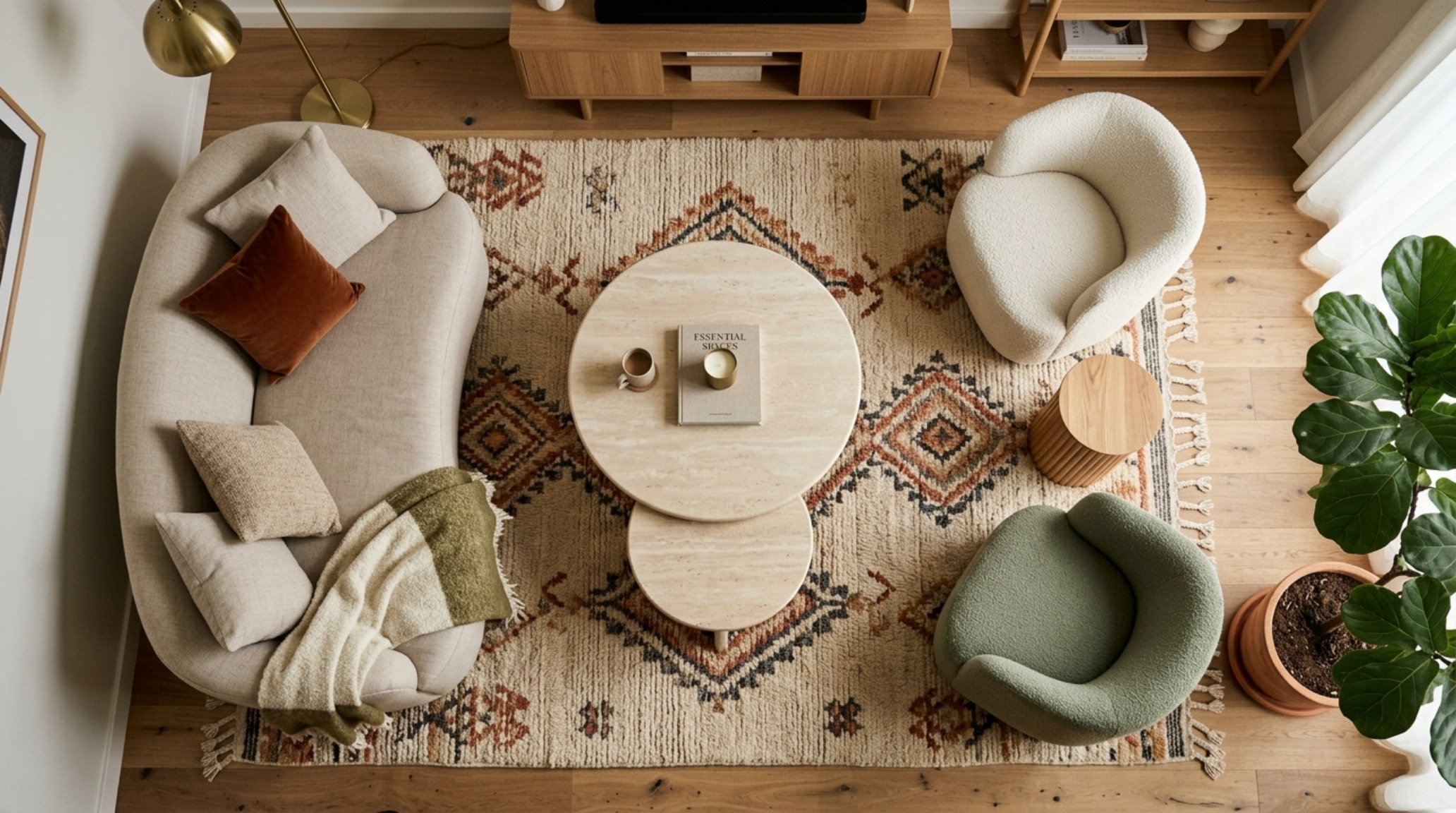
A nesting coffee table set allows for flexible entertaining without a permanent footprint. A fluted wood sideboard provides essential storage while adding a high-end, tactile rhythm to the room. The key is to vary the heights of your furniture. If every piece sits at the same horizontal level, the room feels stagnant. By mixing a low-slung lounge chair with a tall, slender floor lamp and a medium-height bookshelf, you create a visual landscape that keeps the eye moving, suggesting depth and discovery.
Modern Apartment Aesthetic 2027: The Rise of the Tactile Sanctuary
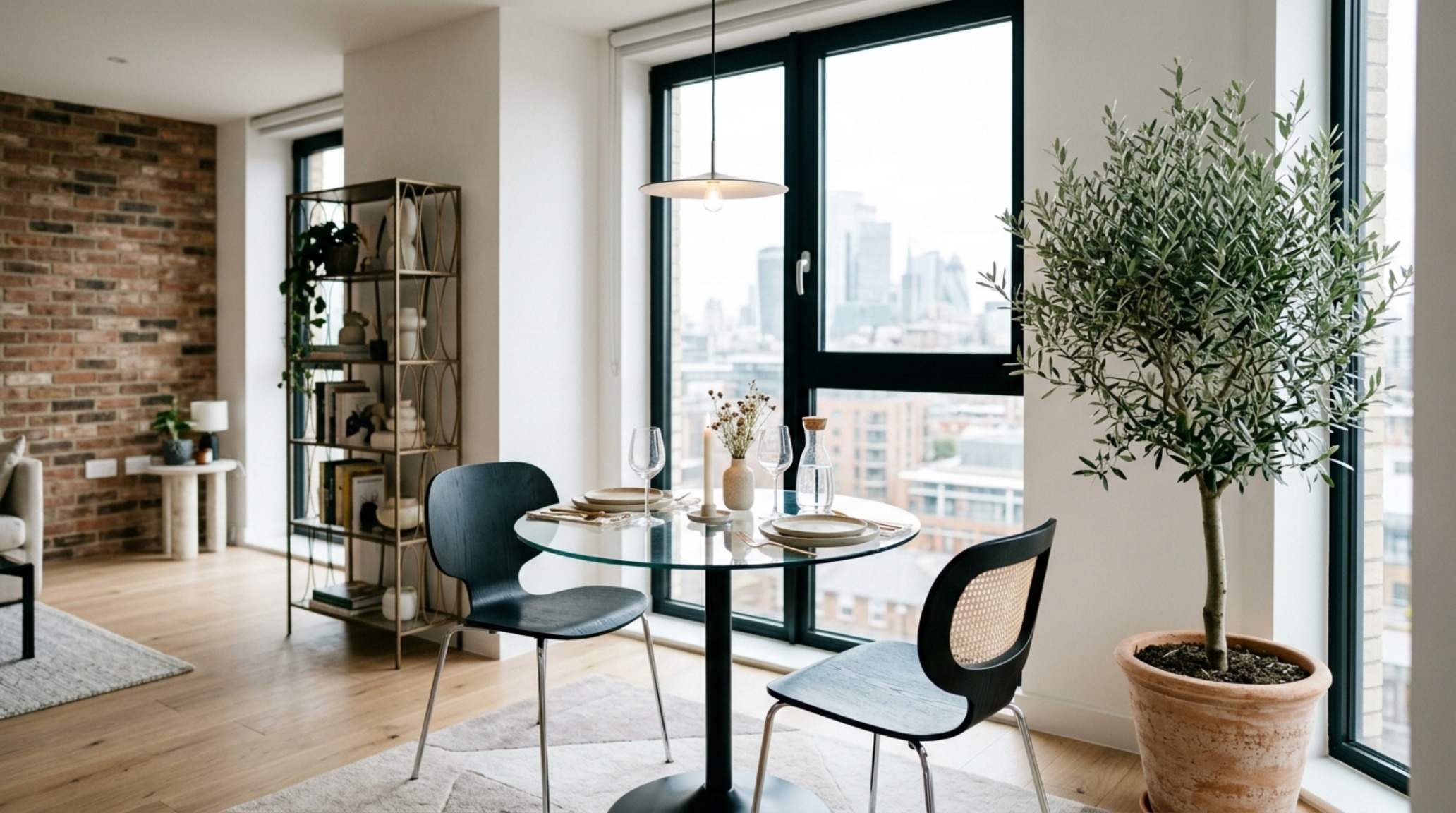
As we look toward the modern apartment aesthetic 2027, we see a move away from the ‘fast furniture’ trends of the last decade. The future of small-scale living is rooted in ‘Sensory Minimalism.’ This isn’t about having less; it’s about having better. We are seeing a palette of warm neutrals—bone, clay, and sand—anchored by bold black architectural accents. This high-contrast approach gives a small space ‘bone structure.’ Black metal frames on a shower door or a slim black track light across the ceiling act like eyeliner for a room, defining its edges and giving it a ‘Main Character’ energy.
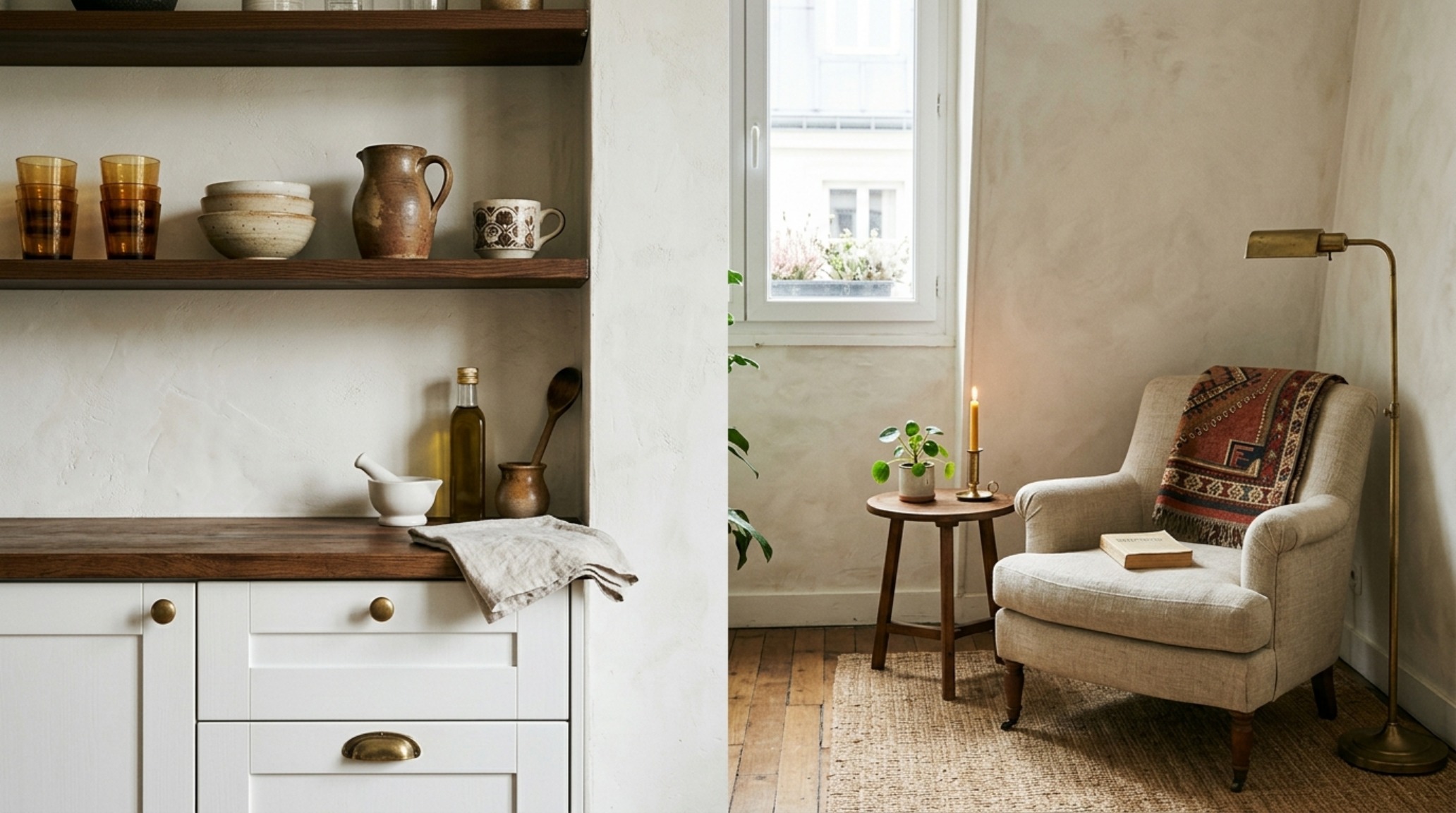
This aesthetic also embraces the ‘Green Lung’—the integration of oversized, structural plants like a Fiddle Leaf Fig or a Dracaena. These aren’t just decor; they are living sculptures that provide organic contrast to the hard lines of a modern apartment. When paired with sustainable, high-quality materials like reclaimed wood and recycled stone, the 2027 aesthetic creates a home that feels like an ecosystem, not just a residence.
How to Decorate a Small Apartment on a Budget: Curating the ‘High-Low’ Mix
Luxury is often a matter of perception rather than price tag. Learning how to decorate a small apartment on a budget requires a ‘High-Low’ strategy: investing in the things you touch every day while being resourceful with the rest. Spend your budget on a high-quality, high-CRI floor lamp and premium hardware for your kitchen cabinets. These are the ‘handshake’ of the home—the points of physical contact that define the quality of the space. For the ‘low,’ look to vintage textiles, DIY lime-wash paint finishes that add plaster-like depth to drywall, or scouring marketplaces for second-hand designer silhouettes that can be reupholstered in a luxury fabric like mohair or boucle.
Design Ledger: Materials, Palette & Clearances
Curated palette registry detailing authentic textures, lighting Kelvin ratings, and ergonomic reach.
Ultimately, the success of a compact home lies in the rejection of the ‘temporary’ mindset. By applying sophisticated home decor ideas for apartments that prioritize the architecture of the senses, we move beyond merely living in a space to truly inhabiting it. The urban sanctuary is not defined by the size of the walls, but by the quality of the light that hits them and the richness of the textures that ground us within them. As we continue to redefine our relationship with the city, our homes must become the tactile, atmospheric anchors that hold us steady.
Editorial Silo • Recommended Architecture Studies
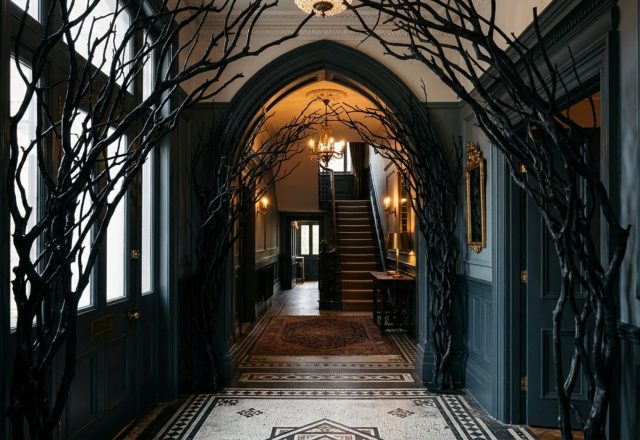
- The Architecture of Shadows: Scaling Your Halloween Decorating Ideas Indoor to Match Your Home’s Bones — Archival Design Case Study
- Precision Living: Home Design Tool Free & Optimizing Every Square Inch with the Most Intelligent Home Design Tool for Free — Archival Design Case Study
Architectural Sightlines & Details
Detailed photographic vignettes showcasing texture balances, lighting nuances, and functional luxury.
Curated Visual Lookbook
Design Gallery & Spatial Studies
A visual curation of architectural arrangements, lighting concepts, and material palettes featured in this space.