The Weight of History in Modern Rooms Old buildings demand a specific kind of restraint.
You do not fight high ceilings or heavy double…
The Weight of History in Modern Rooms
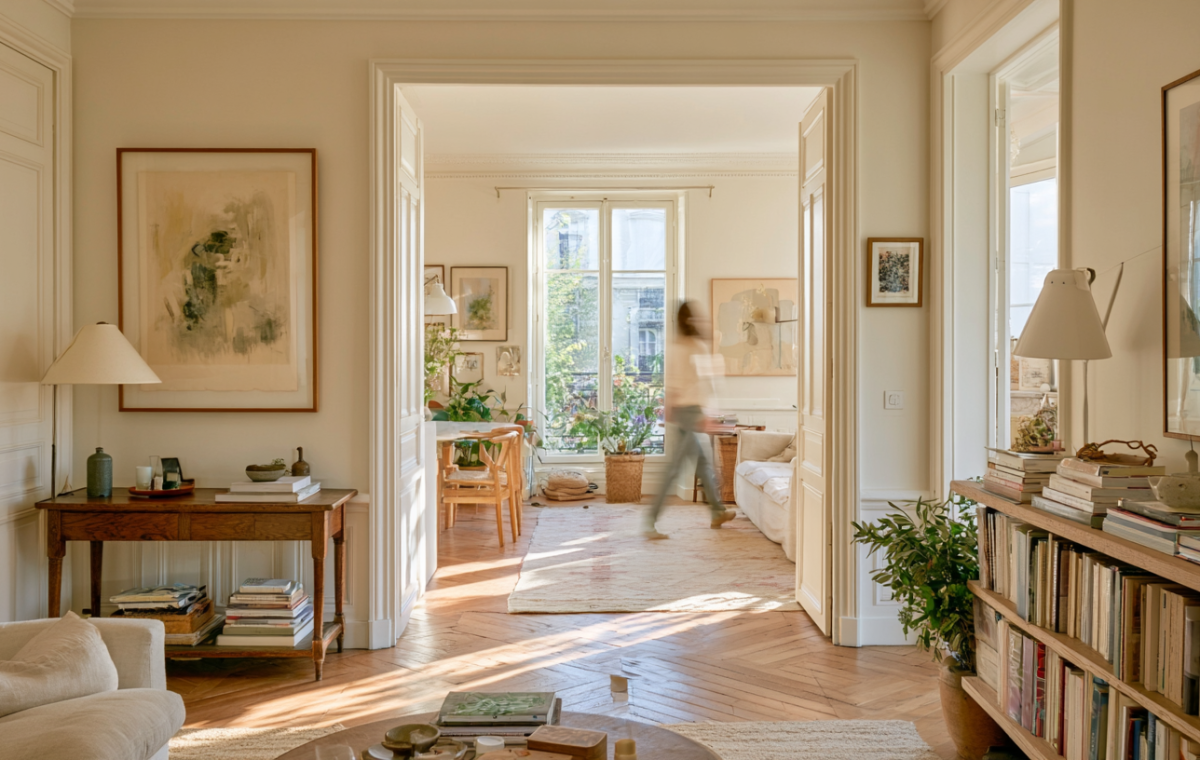
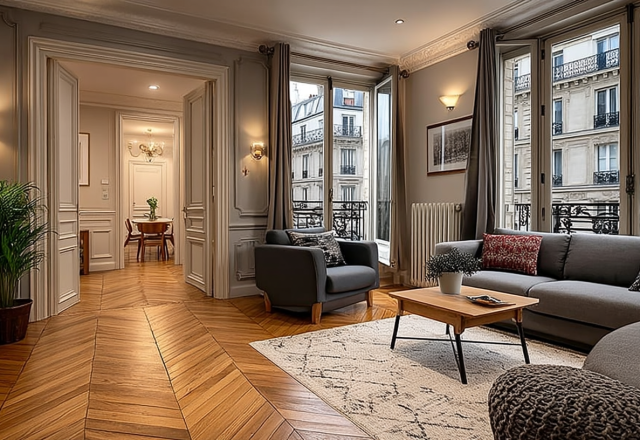
Old buildings demand a specific kind of restraint. You do not fight high ceilings or heavy double doors. You let them breathe. When dealing with historic properties, the floor plan often dictates how light moves through the space. Look closely at the warm herringbone parquet flooring catching the morning sun. It anchors the entire sequence of rooms without screaming for attention.
Many homeowners make the mistake of over-furnishing rooms with grand proportions. They try to fill every square inch. The result feels cluttered rather than curated. Keeping walls in muted, chalky tones lets the natural shadows do the heavy lifting throughout the day.
Functional Flow Through Double Doors
Original architectural openings change how we live. Passing from one chamber to the next feels cinematic yet entirely grounded in everyday routines. Built-in low bookcases lining the walls manage vertical space efficiently, keeping stacks of literature accessible without blocking windows or sightlines.
Embrace aged wood finishes that show character.
Keep window treatments minimal to maximize natural daylight.
Allow negative space around large pieces of art.
There is a distinct upkeep reality to historic spaces. Drafty windows, uneven floorboards, and solid plaster walls require patience during maintenance. Yet, these minor inconveniences pale in comparison to the tactile satisfaction of living surrounded by authentic craftsmanship.
How do you plan to balance your own desire for modern convenience with the preservation of older architectural bones?
Curating a Season of Quiet Comfort Autumn arrives without knocking. One morning the air smells like chimney smoke, and suddenly your bright summer linen…