The Reality of Open Kitchen Shelving
Open kitchen shelving looks effortless in glossy magazines. Real life is messier. Dust accumulates, mismatched mugs clash, and weight limits haunt your weekend projects. Yet, the appeal remains high. Storing everyday bowls on open wooden floating shelves transforms how a cooking space functions. You stop hunting for lids and start grabbing plates in one fluid motion.
Balancing Weight and Wall Anchors
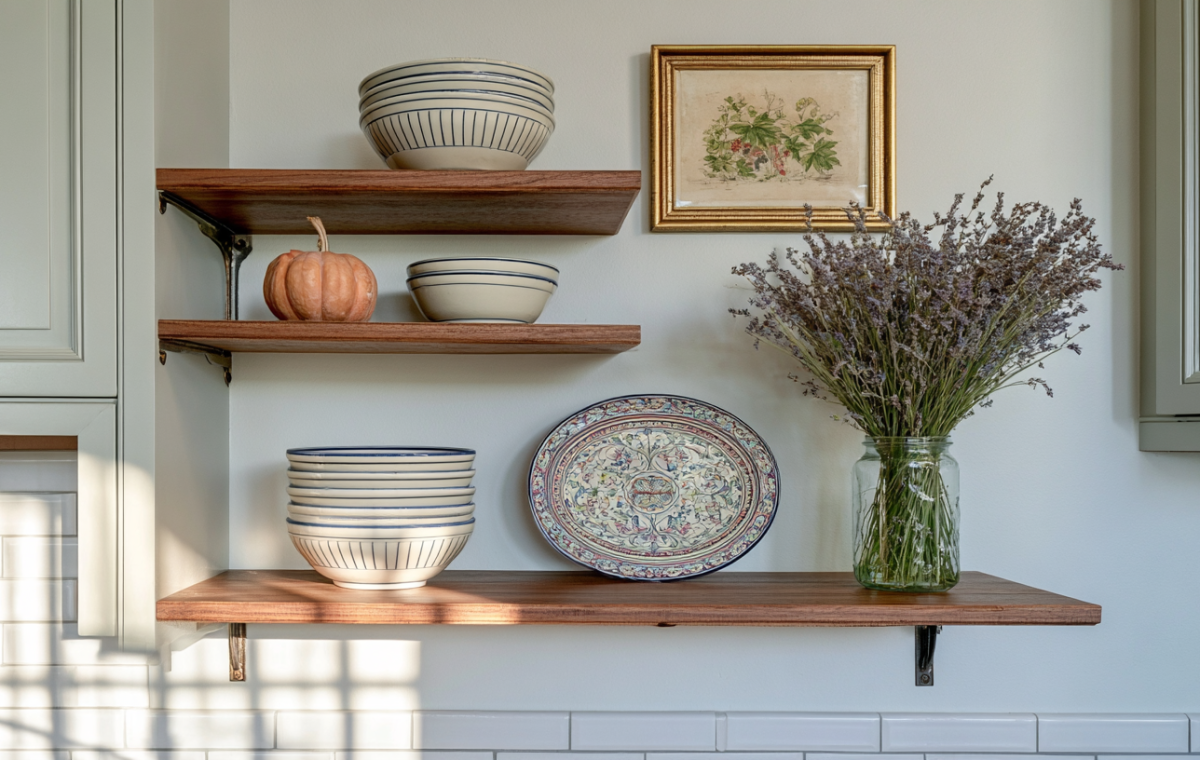
Before putting up any brackets, look at your walls. Plaster, drywall, and masonry require completely different fasteners. Stacking heavy stoneware bowls demands heavy-duty support. If your brackets are weak, the shelf will sag under pressure. Notice how sturdy iron brackets anchor the rich walnut timber, offering both industrial grit and reliable load-bearing capacity. Never trust drywall alone when heavy ceramics are involved.
Layering Texture and Practicality
A purely functional shelf looks sterile. A purely decorative one frustrates a home cook. Strike a balance by mixing utility with curated objects. Stacked ceramic bowls share vertical space with a framed botanical print, a petite pumpkin, and a heavy glass jar stuffed with dried lavender. This keeps the composition grounded. You get daily accessibility without sacrificing visual warmth against a neutral tiled backsplash.
Dust, Maintenance, and Daily Life
Let us address the elephant in the room: cleaning. Open shelves collect airborne grease and dust faster than upper cabinets with doors. If you live in an active kitchen that sees heavy frying and steaming, items left untouched for weeks will feel sticky. Rotate your dinnerware frequently. When every bowl and plate gets used and washed on a regular schedule, dust never gets the chance to settle.
How do you handle the tension between hiding kitchen clutter and showing off your favorite ceramic pieces?
Editorial Lookbook & Photo Collection