The Evolution of the Culinary Envelope
For decades, the domestic kitchen was a compartmentalized engine room, often relegated to the back of the house and defined by a rigid geometry of small-format ceramic squares and thick, visually disruptive grout lines. These historical conventions, while functional, often felt bulky and fragmented, chopping up the floor plan and creating visual noise that competed with the architectural bones of a home. Today, we are witnessing a profound design breakthrough where the kitchen is reimagined as a monolithic sculpture. The selection of modern kitchen tile options has evolved from a simple surface treatment into a primary structural language, allowing for a seamless transition between vertical and horizontal planes. By embracing large-scale materiality, we can now dissolve the boundaries of the traditional ‘work triangle’ and treat the kitchen as a cohesive, architectural volume that breathes with the rest of the living space.
The Monolithic Shift: Large-Format Porcelain Slabs and Spatial Continuity
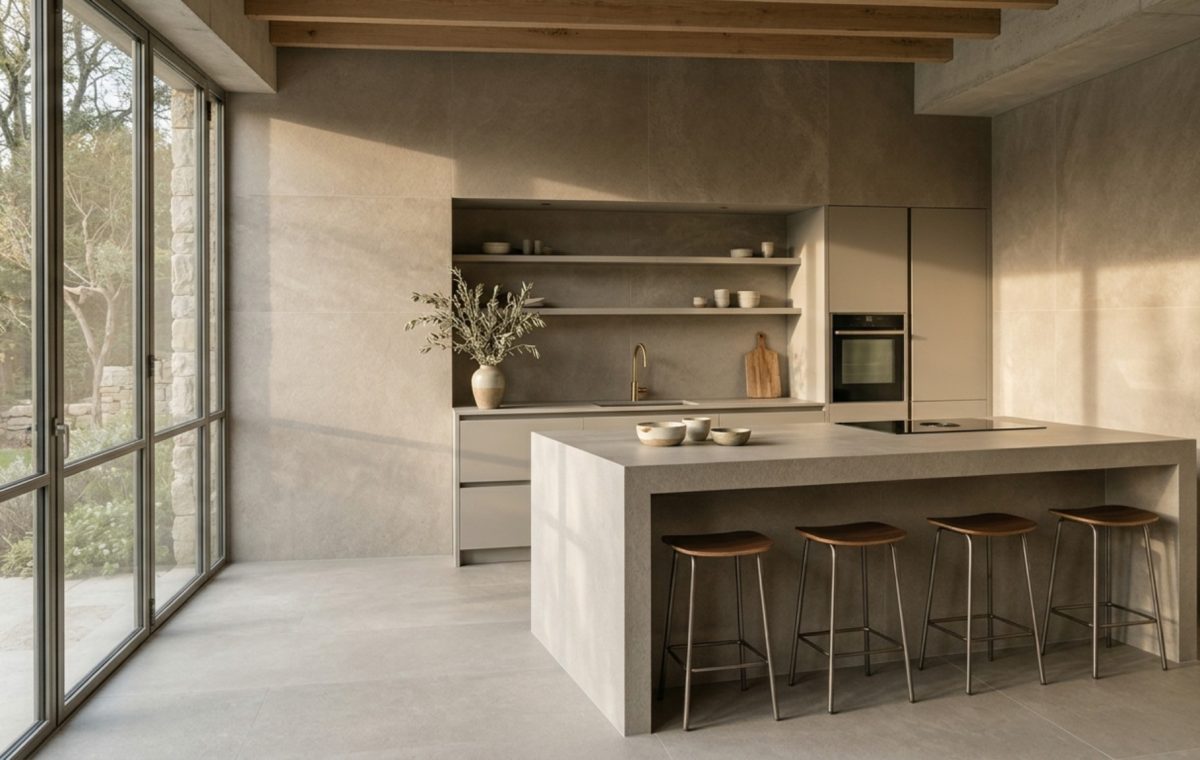
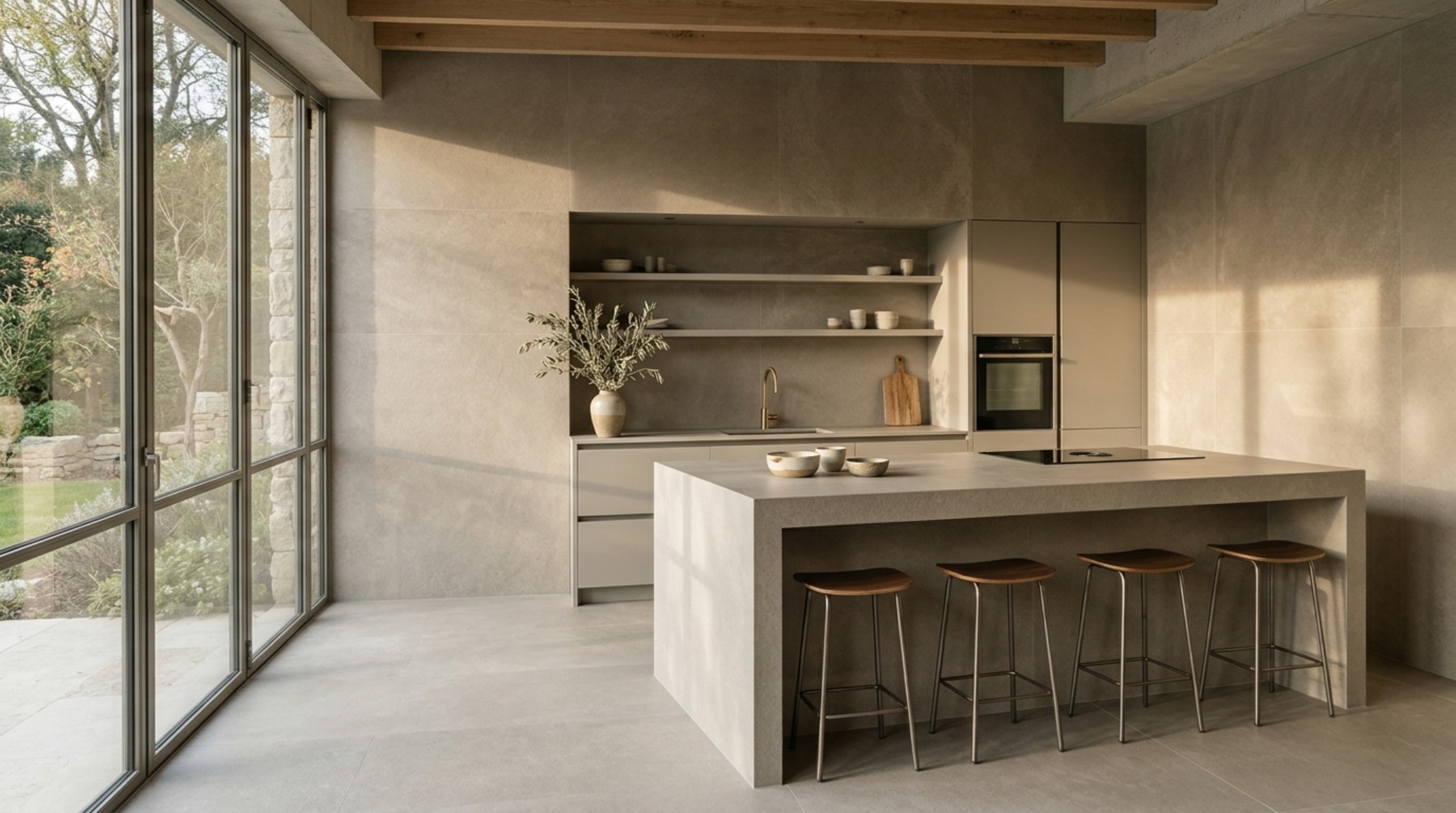
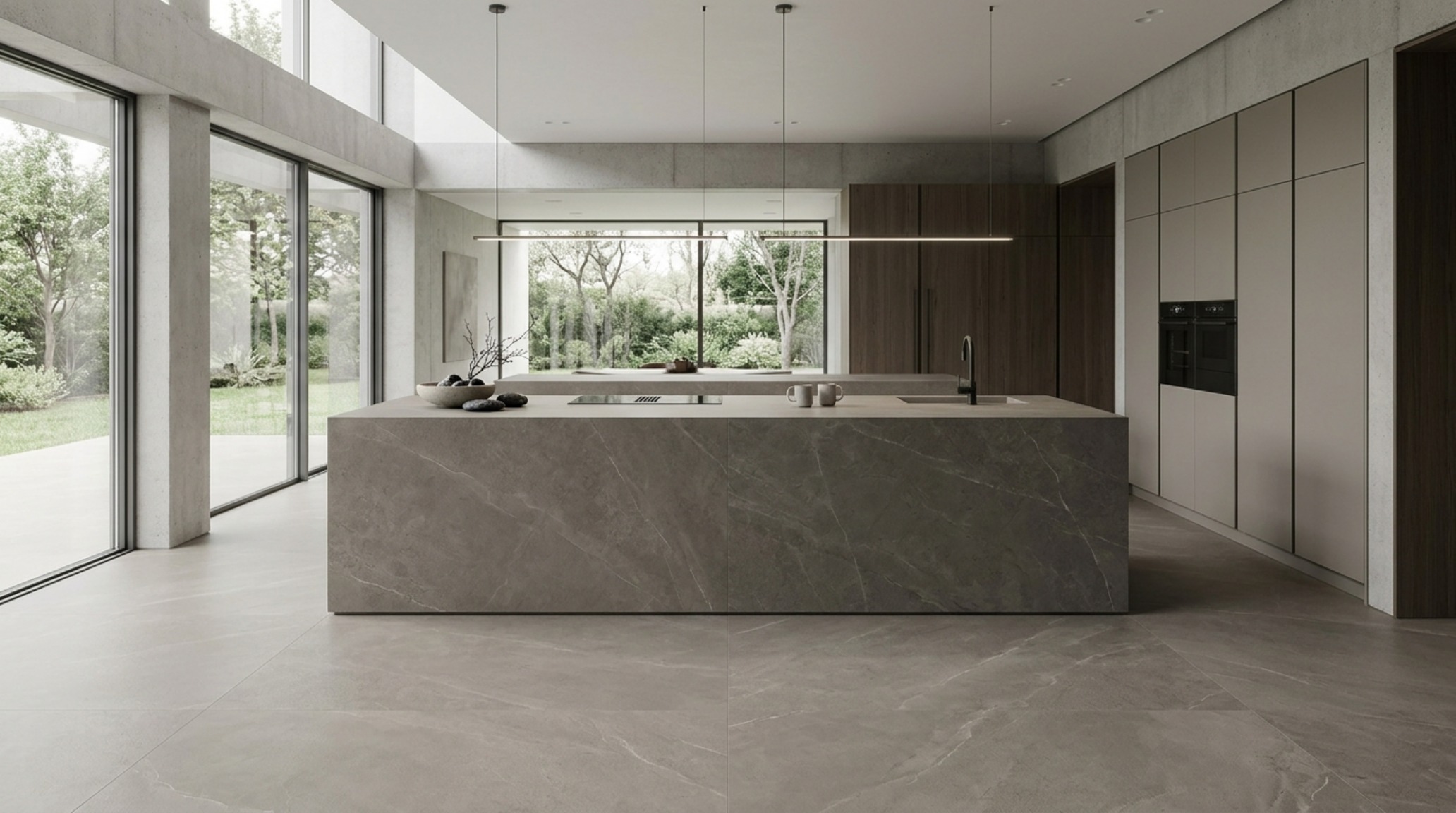
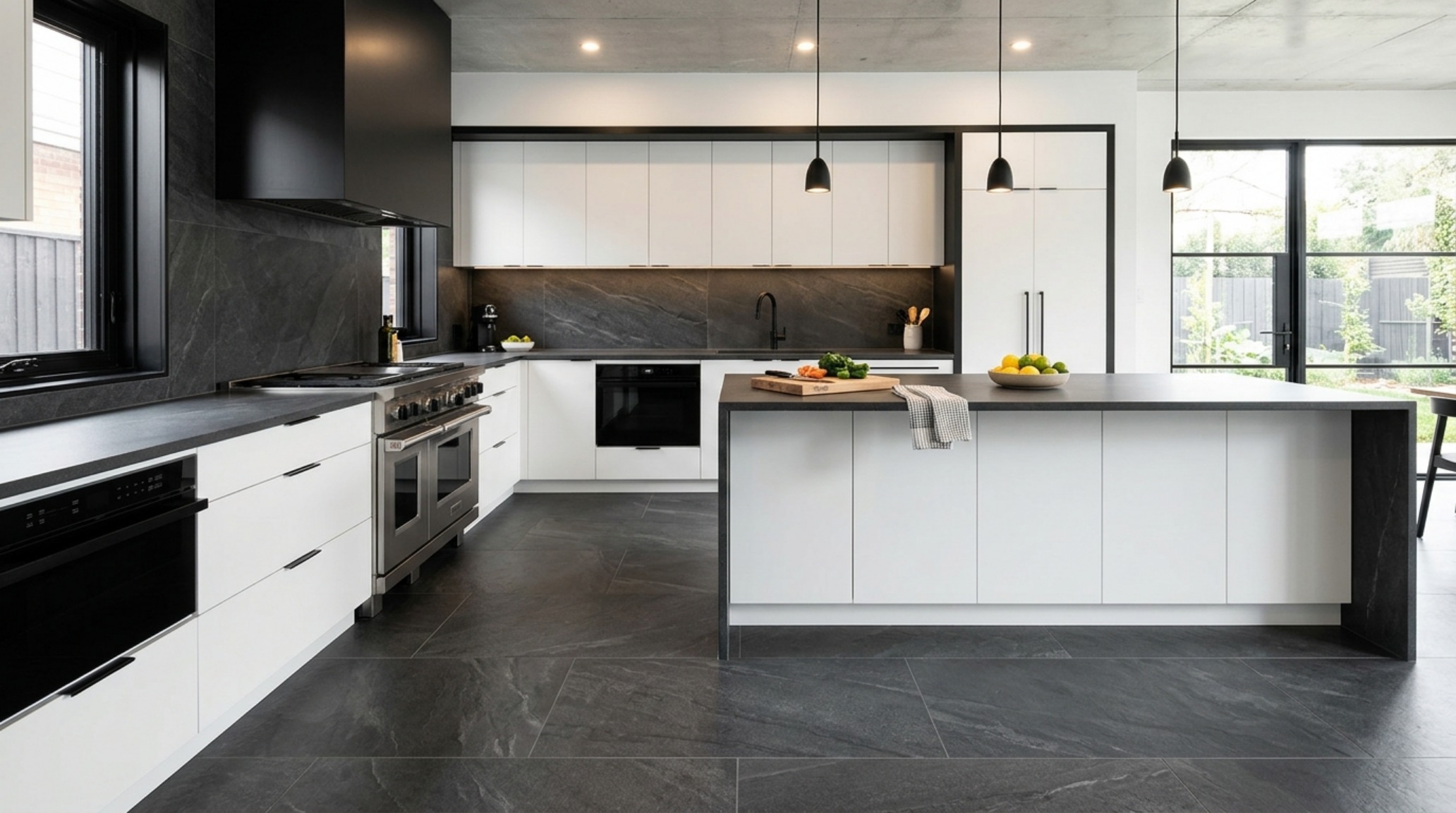
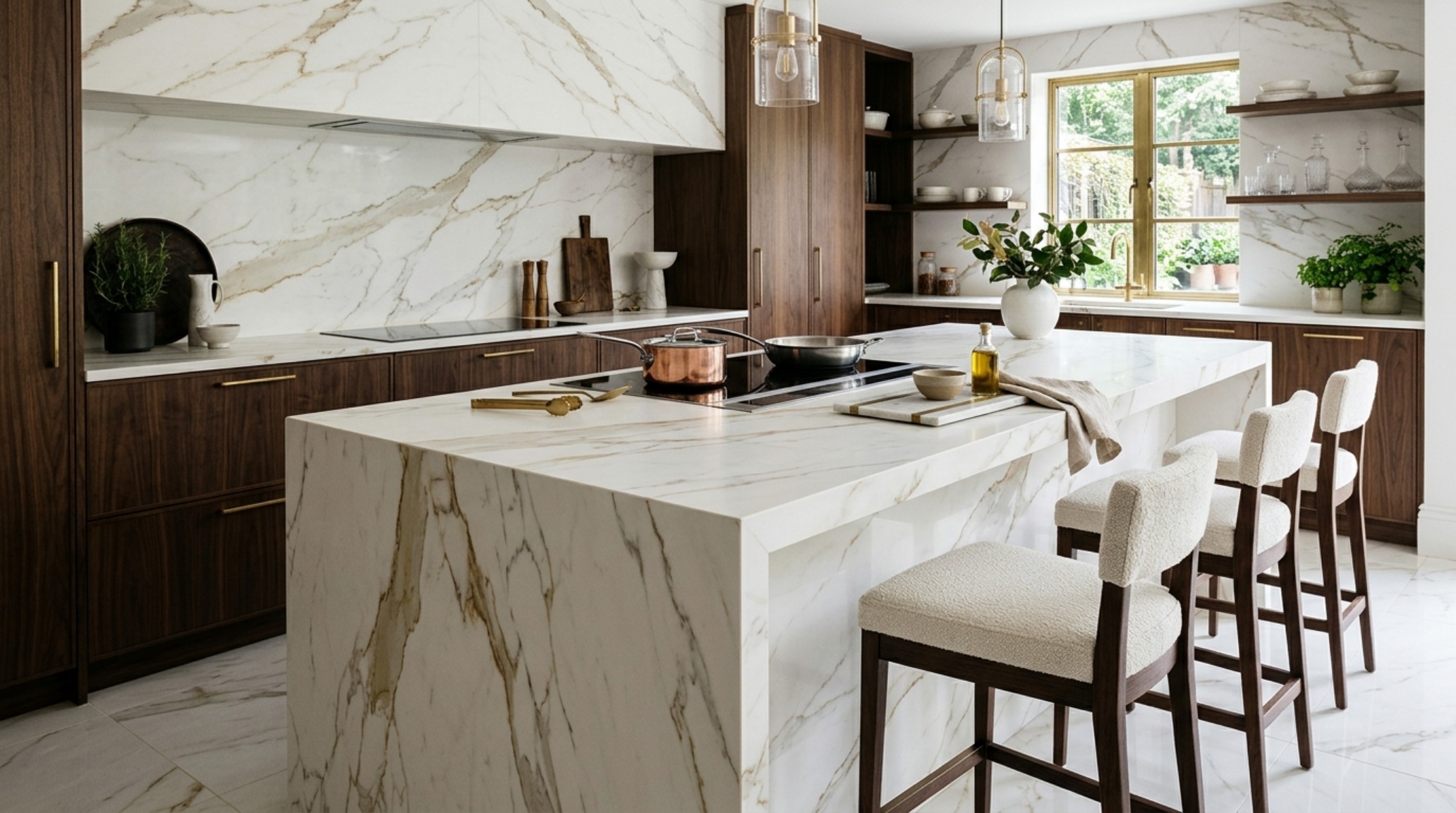
The move toward large-format porcelain slabs represents the most significant shift in kitchen architecture since the invention of the open-plan layout. These massive panels, sometimes reaching dimensions of 5 feet by 10 feet, allow us to minimize grout lines to the point of near-invisibility. When we eliminate the ‘grid’ on the floor or the wall, the eye no longer stops at every joint; instead, it glides across the surface, extending the perceived limits of the room. This creates what I call ‘spatial cadence’—a rhythmic, uninterrupted flow that makes a 150-square-foot kitchen feel double its size. These slabs are not just for the floor; they are being utilized to wrap cabinetry and islands, creating a ‘stone block’ aesthetic that feels grounded and permanent.
Breaking the Grid: The Unfitted Kitchen Philosophy
In the ‘unfitted’ kitchen movement, we move away from the wall-to-wall cabinetry that can often feel suffocating. Instead, we use kitchen tile options to define zones. Imagine a single, monolithic slab of honed porcelain that starts at the floor, climbs the wall, and becomes a floating shelf. This structural use of tile reinforces the room’s geometry. In a recent project, we used 36-inch primary circulation paths to ensure that these large-scale elements had enough ‘negative space breathing room’ to be appreciated as art pieces rather than just utilities.
Modern Kitchen Backsplash Ideas: Creating Vertical Continuity
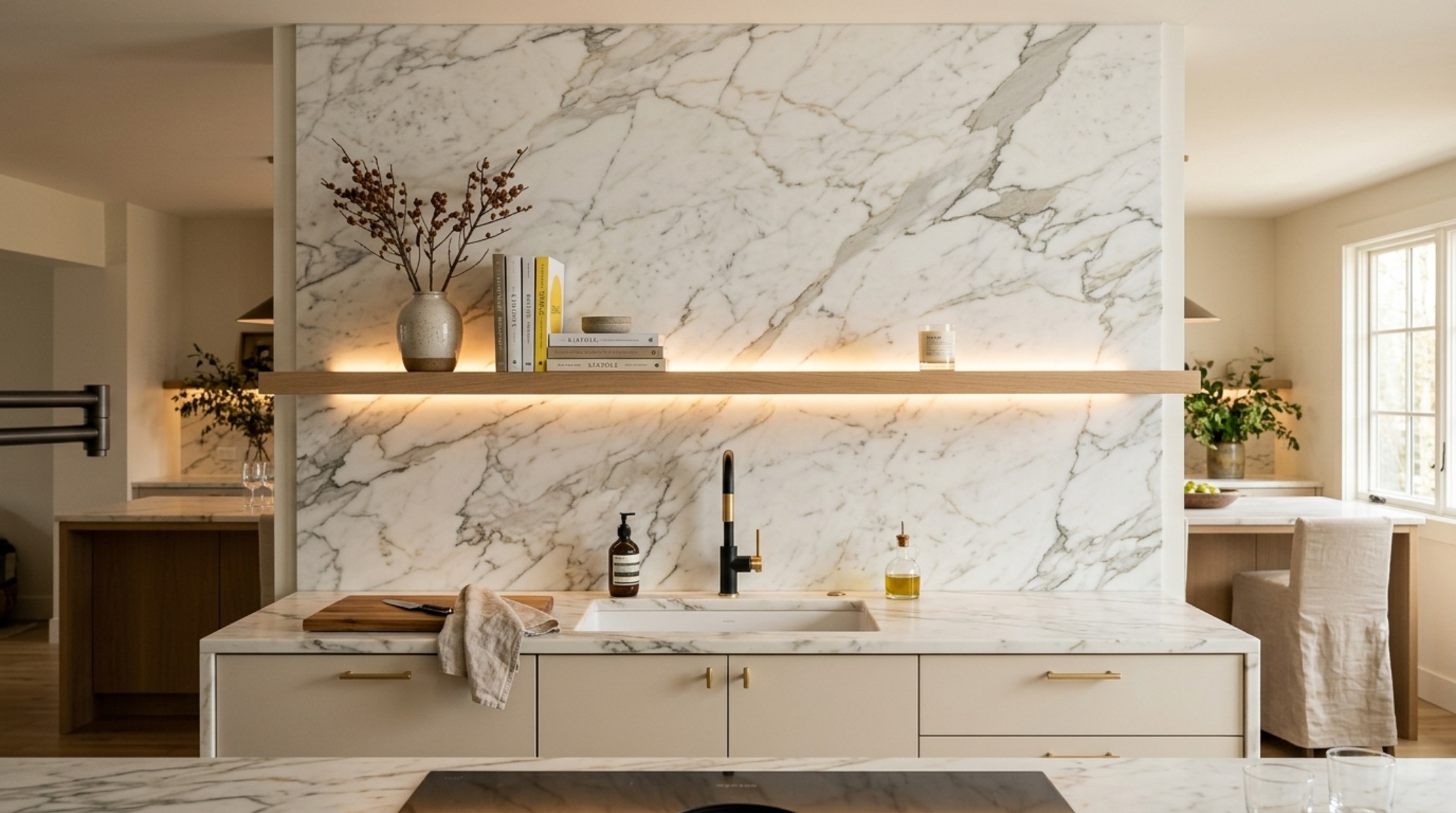
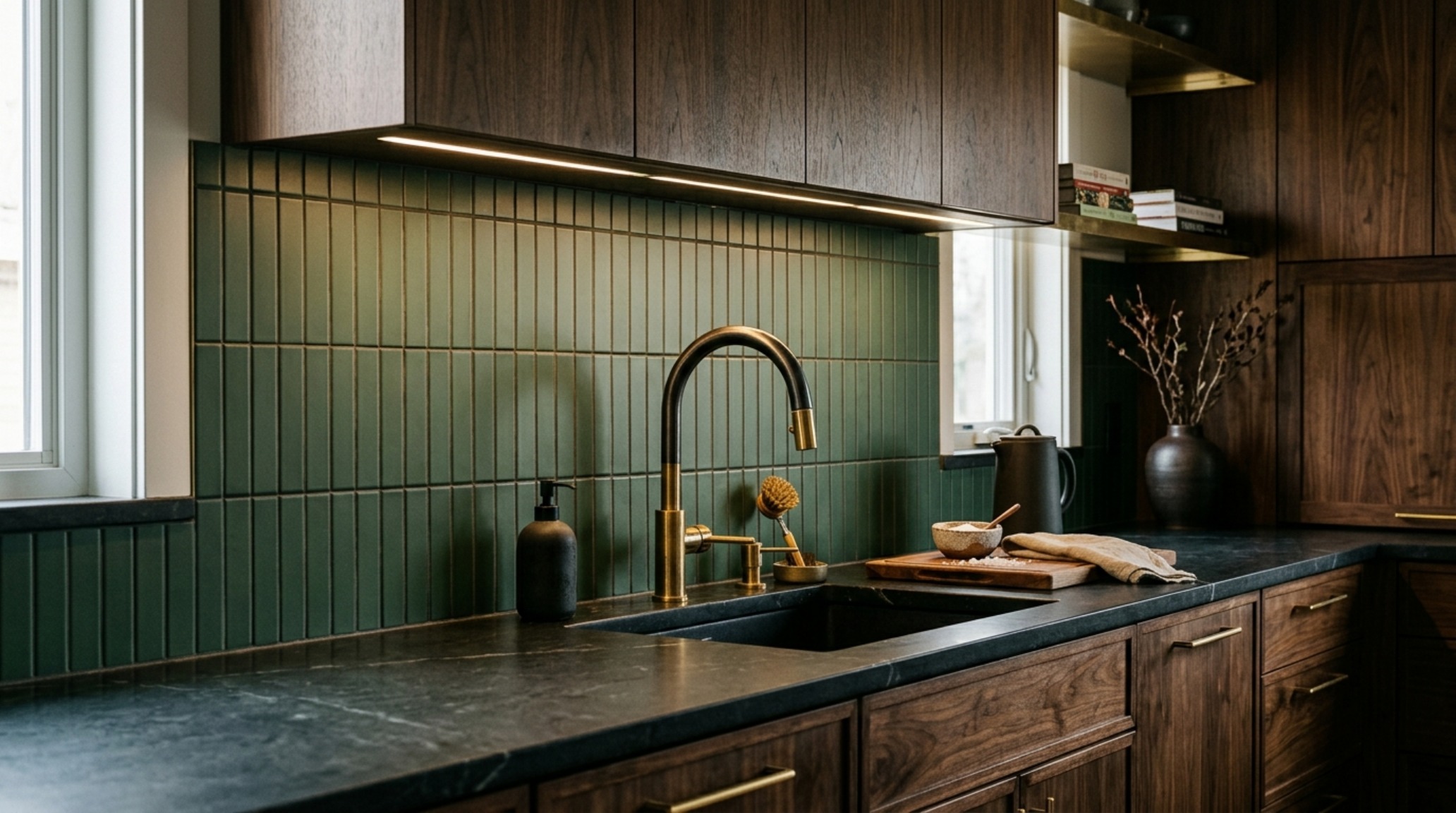
When considering modern kitchen backsplash ideas, the contemporary designer looks beyond the 4-inch standard. The current architectural standard is the full-height backsplash, often using the same material as the countertop. This ‘slab-splash’ technique creates a powerful vertical statement. By running a single material from the counter to the ceiling, you eliminate the visual clutter of multiple transitions. This is particularly effective in kitchens with open shelving, where the tile acts as a curated backdrop for artisanal ceramics and glassware. The light play on a continuous surface, especially when paired with 2700K warm ambient lighting, provides a soft, diffused glow that makes the material feel alive.
Zellige Tile Aesthetic: Mastering the Art of Tactile Variation
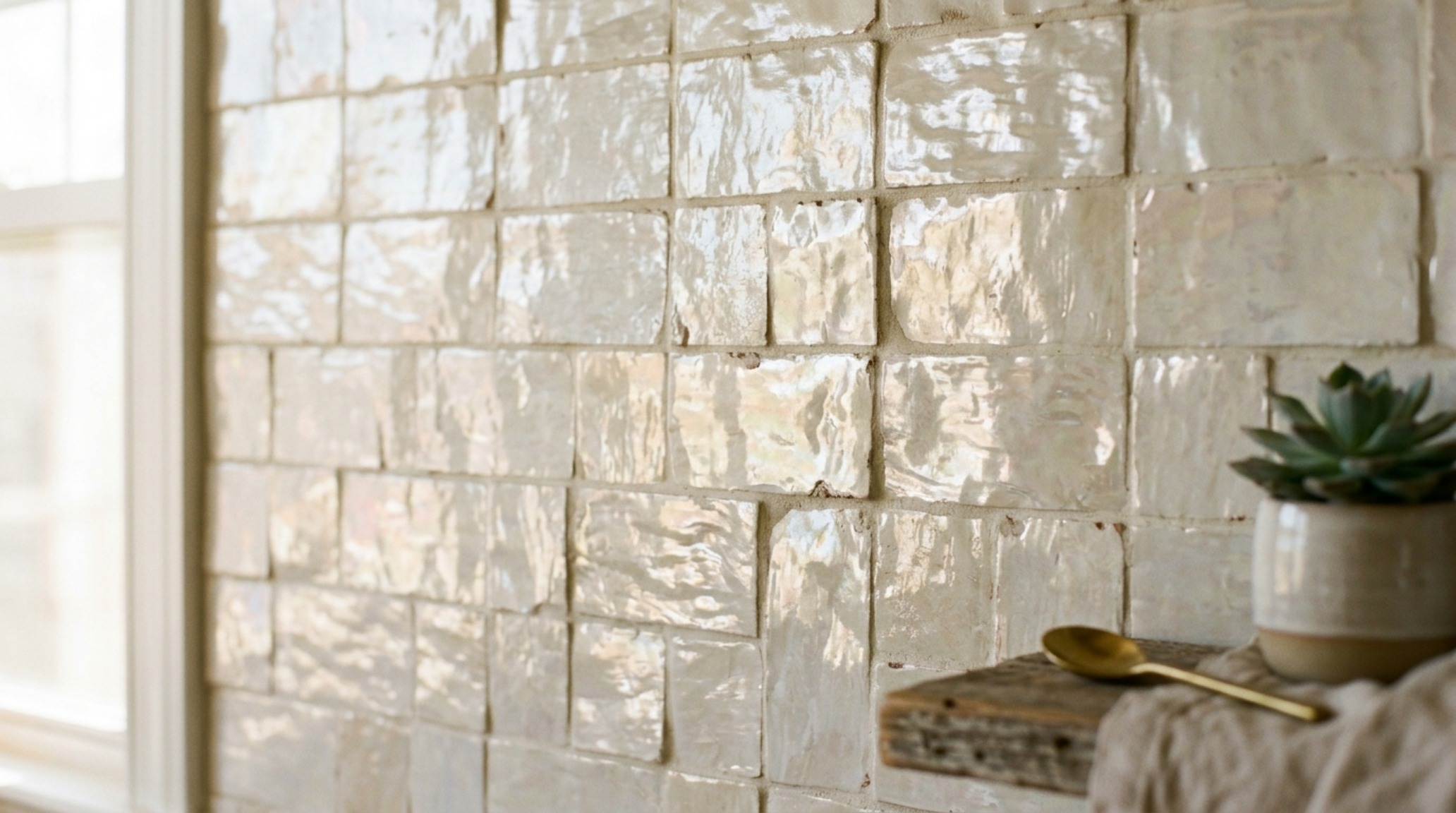
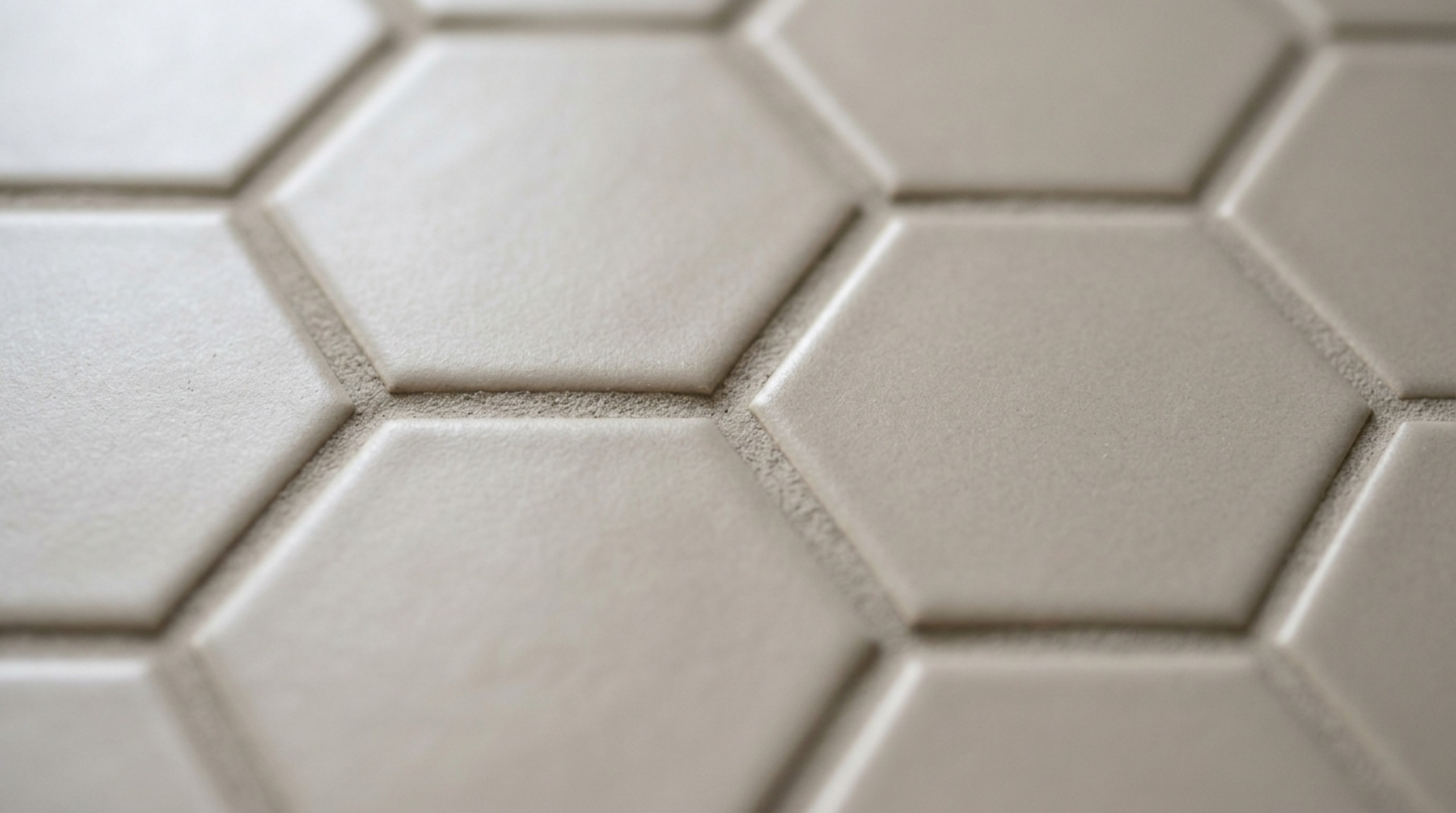
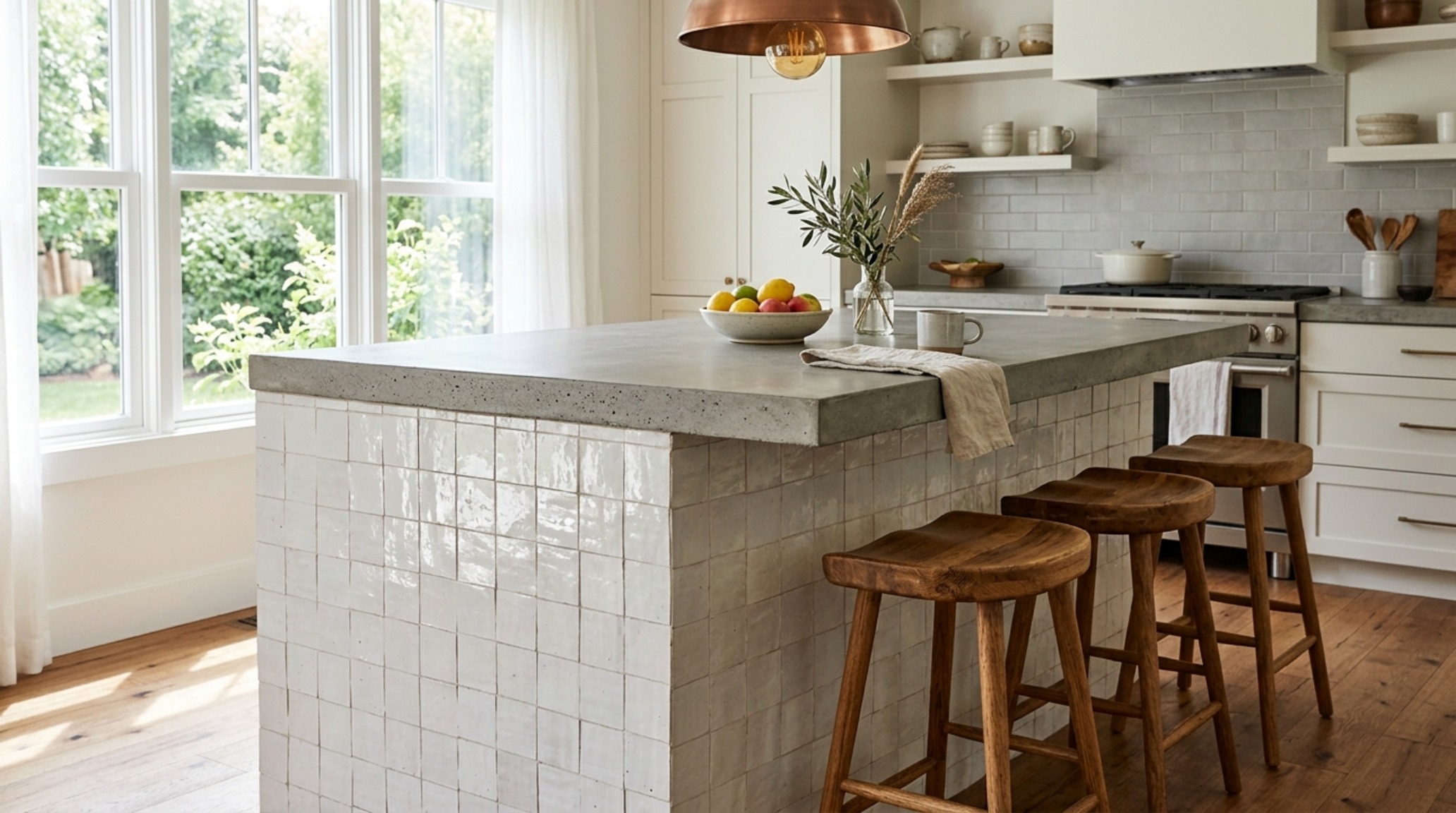
While the monolithic slab offers sleekness, the zellige tile aesthetic provides the necessary tactile grounding that prevents a modern kitchen from feeling sterile. These hand-molded Moroccan tiles are celebrated for their ‘perfect imperfections’—slight variations in thickness, tone, and edge. When installed with a ‘butt-joint’ (minimal to no grout), they create a shimmering, liquid-like surface. This texture is the perfect counterpoint to the flat, matte finish of large-format floor slabs. It introduces a human element, a reminder of the craft, which is essential in a space dedicated to the sensory experience of cooking.
Best Tile for High-Traffic Kitchens: Balancing Performance and Poise
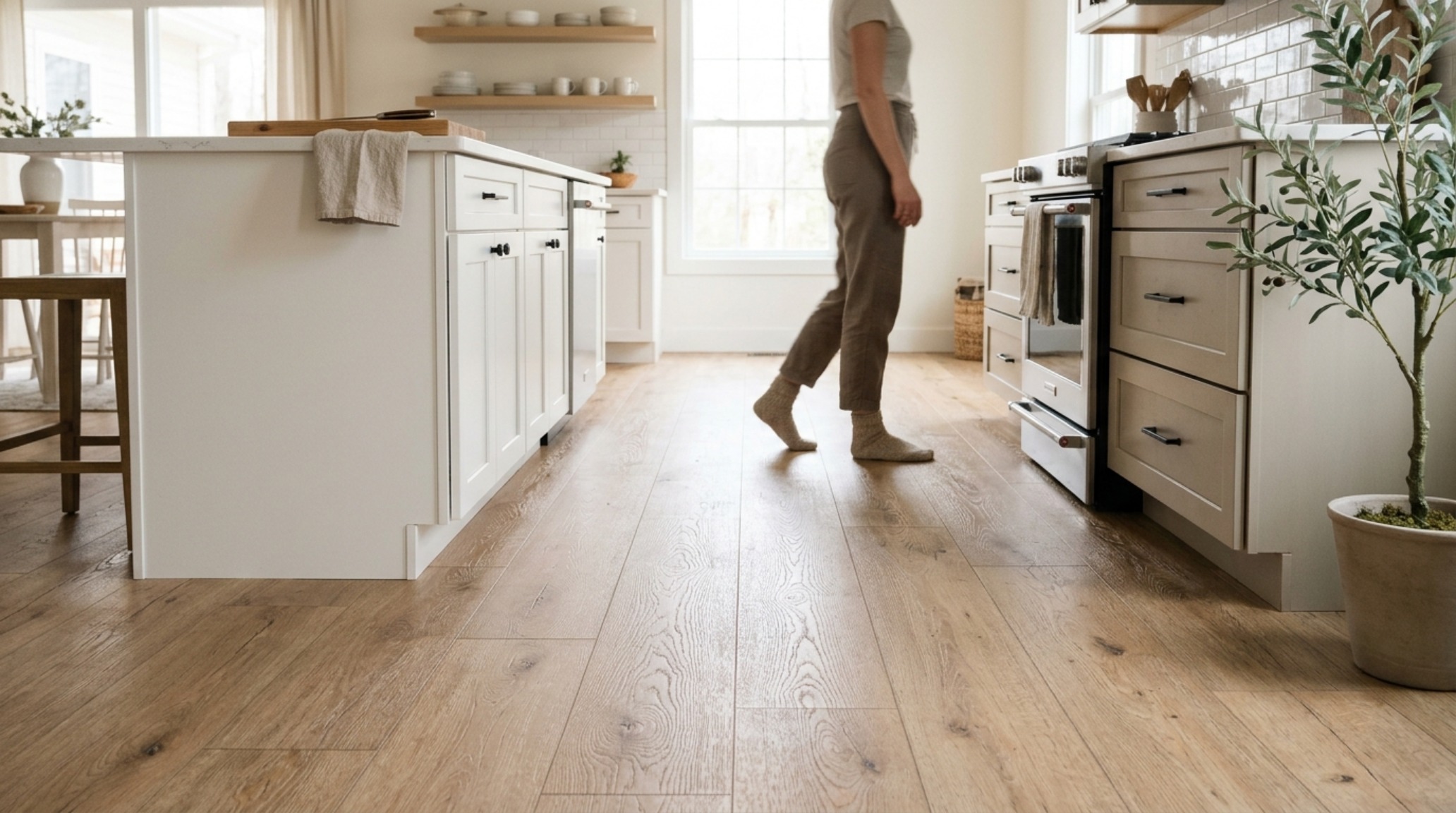
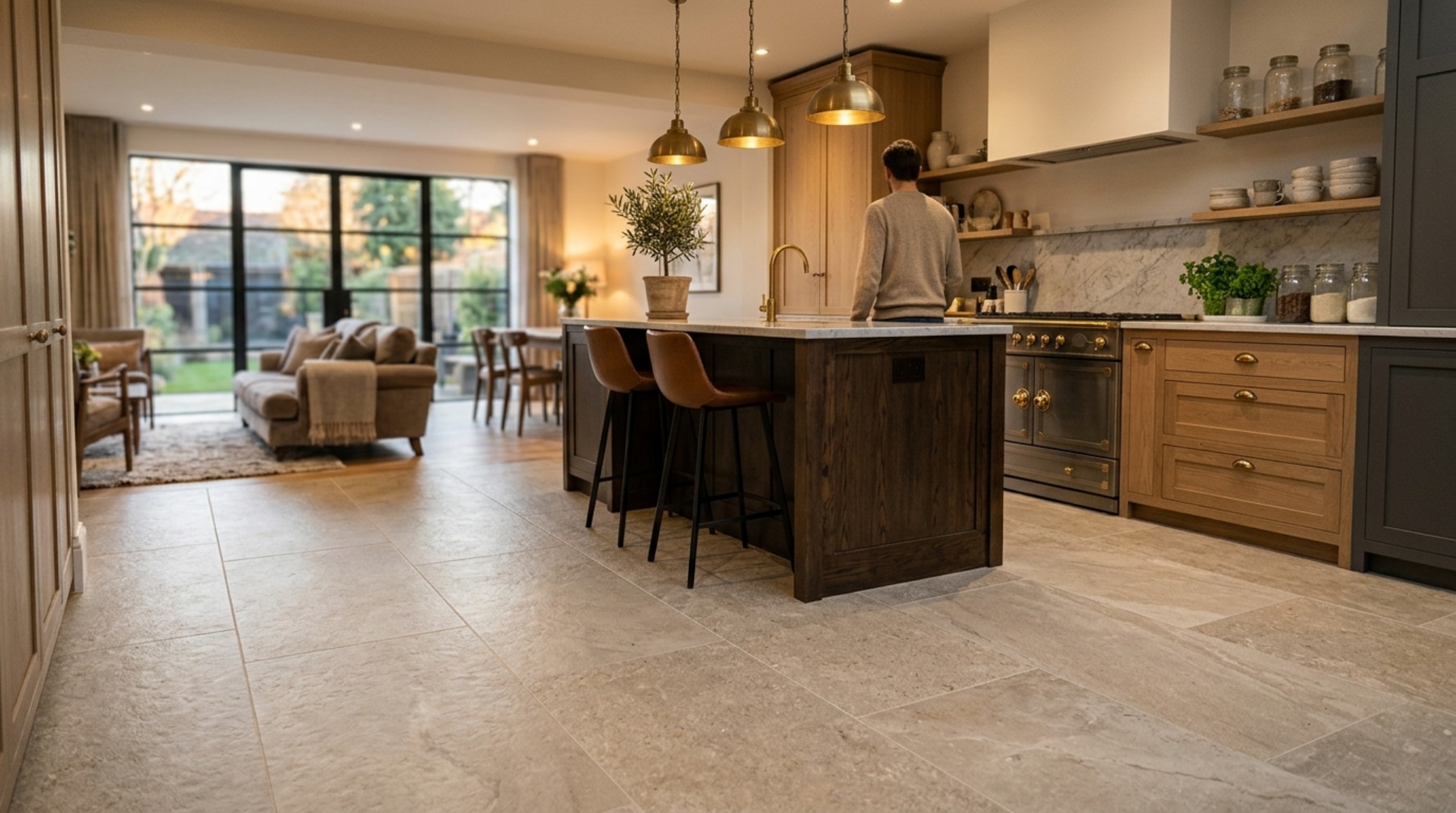
In a high-functioning home, the floor is the hardest working element. Identifying the best tile for high-traffic kitchens requires a synthesis of material science and aesthetic vision. Full-body porcelain remains the gold standard. Unlike standard ceramic, porcelain is vitrified and dense, making it nearly impervious to moisture and impact. From an architectural standpoint, the floor must act as a neutral anchor. We often look for materials with a high CRI (Color Rendering Index) compatibility, ensuring that the tile’s undertones remain consistent whether under midday sun or evening task lighting. A ‘honed’ finish is typically preferred over ‘polished’ for kitchens, as it hides micro-scratches and provides a more sophisticated, understated reflection.
Slip-Resistant Kitchen Flooring: Navigating Safety with Aesthetic Precision
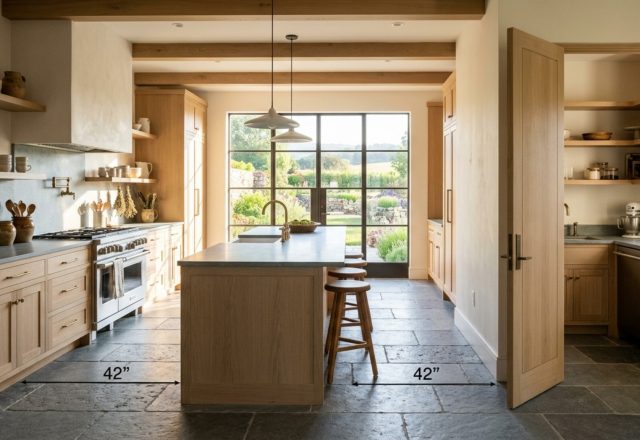
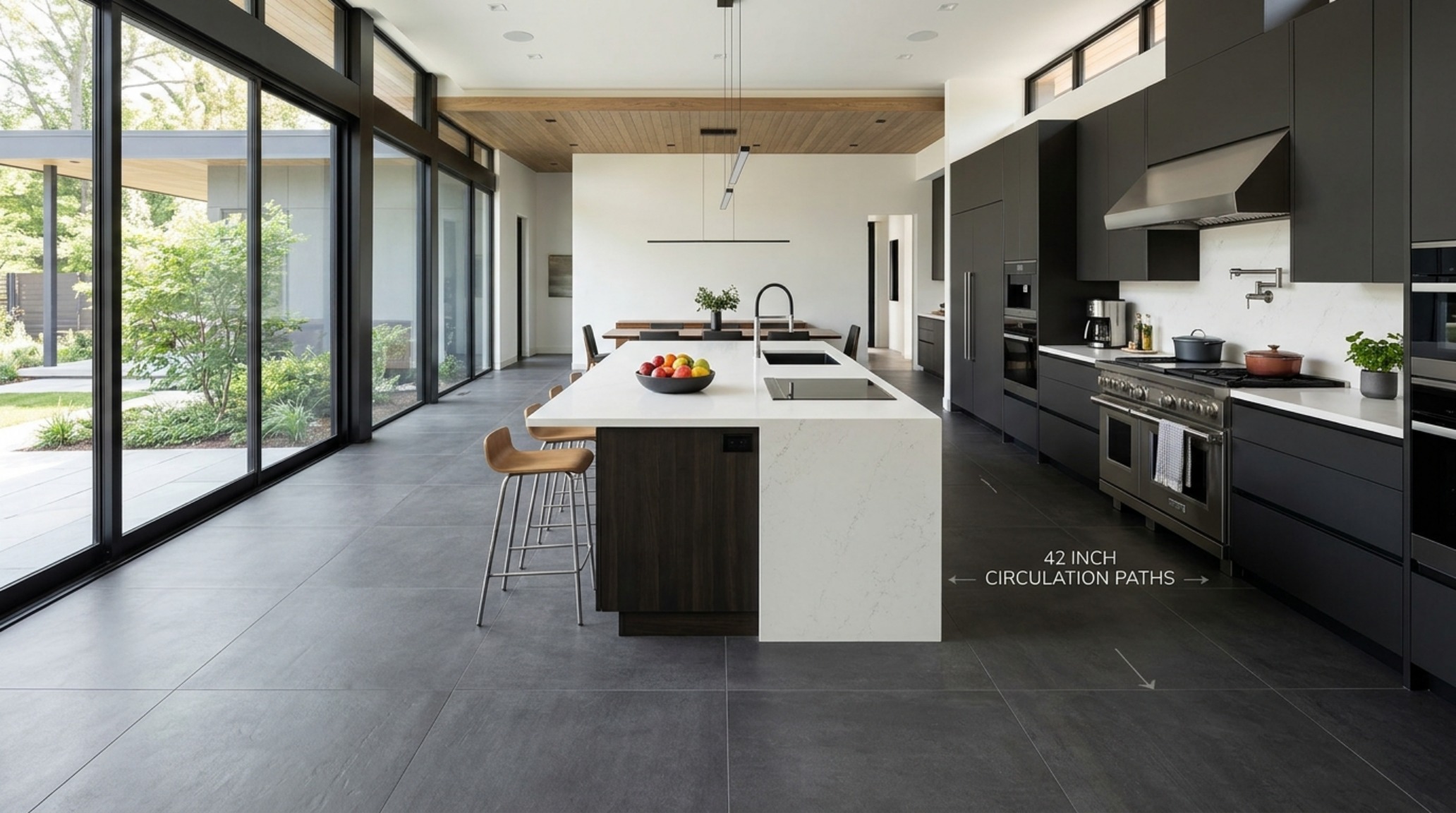
Safety should never compromise the design narrative. Modern slip-resistant kitchen flooring has come a long way from the abrasive, industrial textures of the past. Designers now specify tiles with a ‘DCOF’ (Dynamic Coefficient of Friction) rating of 0.42 or higher for wet areas. This is achieved through subtle, microscopic surface undulations that provide grip without sacrificing the ease of cleaning. When planning the layout, we maintain 42-inch work aisles to ensure two people can pass each other comfortably, and the slip-resistant nature of the tile provides the confidence for fluid movement during high-energy meal preparation.
The Invisible Detail: A Grout Color Coordination Guide
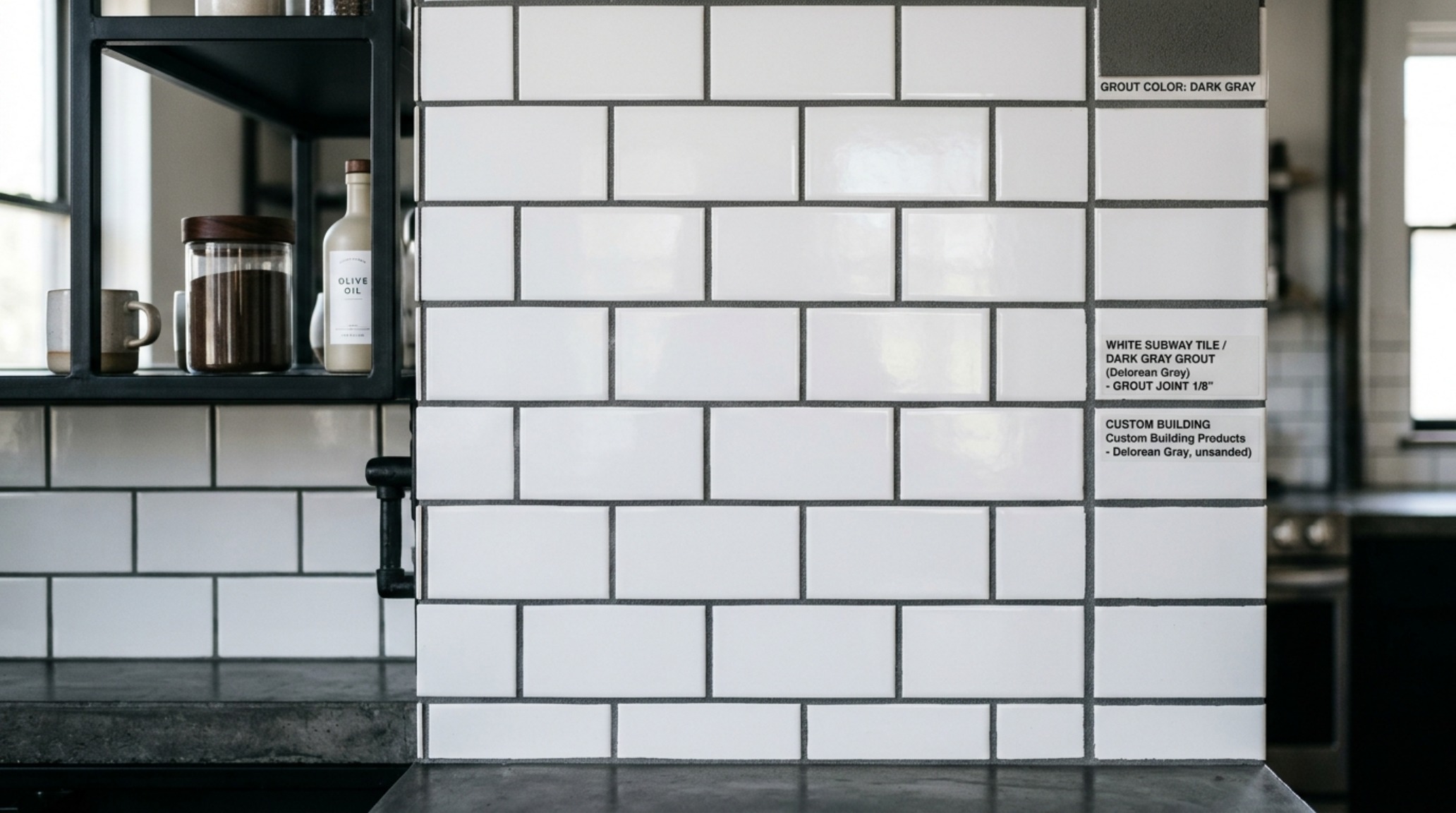
The most overlooked element in any kitchen renovation is the grout. A grout color coordination guide isn’t just about matching colors; it’s about controlling the visual contrast. To achieve the monolithic look, we specify grout that is a half-shade darker than the tile itself. This creates a ‘shadow play’ effect where the lines recede into the background. Conversely, if you are using a geometric tile and want to emphasize the pattern, a contrasting grout can turn the wall into a graphic feature. We always recommend epoxy-based grouts for kitchens; they are non-porous and resist the oils and acids that typically stain traditional cementitious grout, ensuring the architectural integrity of the design remains pristine for years.
Architectural Vignettes & Spatial Flow
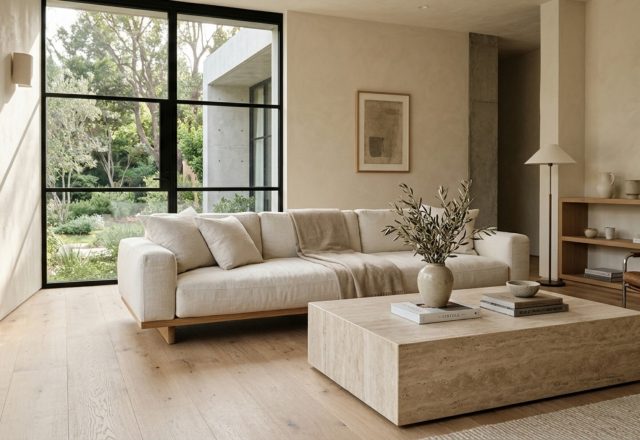
In our curated visual lookbook, we examine how these principles manifest in real-world environments. Notice how the alignment of floor joints with the edge of the kitchen island creates a sense of mathematical order. Sightline alignment is the hallmark of professional design; when the tile layout is planned in conjunction with the cabinetry, the entire room feels intentional. We also look at ‘tactile grounding’—the way a textured floor tile can make a large, airy kitchen feel intimate and warm. By layering different kitchen tile options, from the smooth expanse of a porcelain slab to the rhythmic pulse of a tiled island base, we create a rich, sensory narrative.
Architectural Detailing & Material Schedule
Key material specifications, color codes, lighting kelvin, and ergonomic clearances.
As we look toward the future of kitchen design, the distinction between ‘material’ and ‘structure’ continues to blur. The kitchen is no longer a collection of separate parts but a unified architectural statement. By mastering the application of these surfacing technologies, we create spaces that are not only durable but deeply evocative—kitchens that feel like a natural extension of the home’s soul, grounded in a philosophy of permanence and timeless flow.
Editorial Silo • Recommended Architecture Studies
- The Materiality Manifesto: Curation, Color Theory, and Sensory Depth in Modern House Design Blogs — Archival Design Case Study
- The Performance Pastoral: Country Style Kitchen Designs & High-Function Ergonomics and Invisible Innovation for Country Kitchens — Archival Design Case Study
Editorial Photo Collection
Visual exploration of sightlines, tactile surfaces, and ambient illumination crafted for timeless spaces.
Curated Visual Lookbook
Design Gallery & Spatial Studies
A visual curation of architectural arrangements, lighting concepts, and material palettes featured in this space.