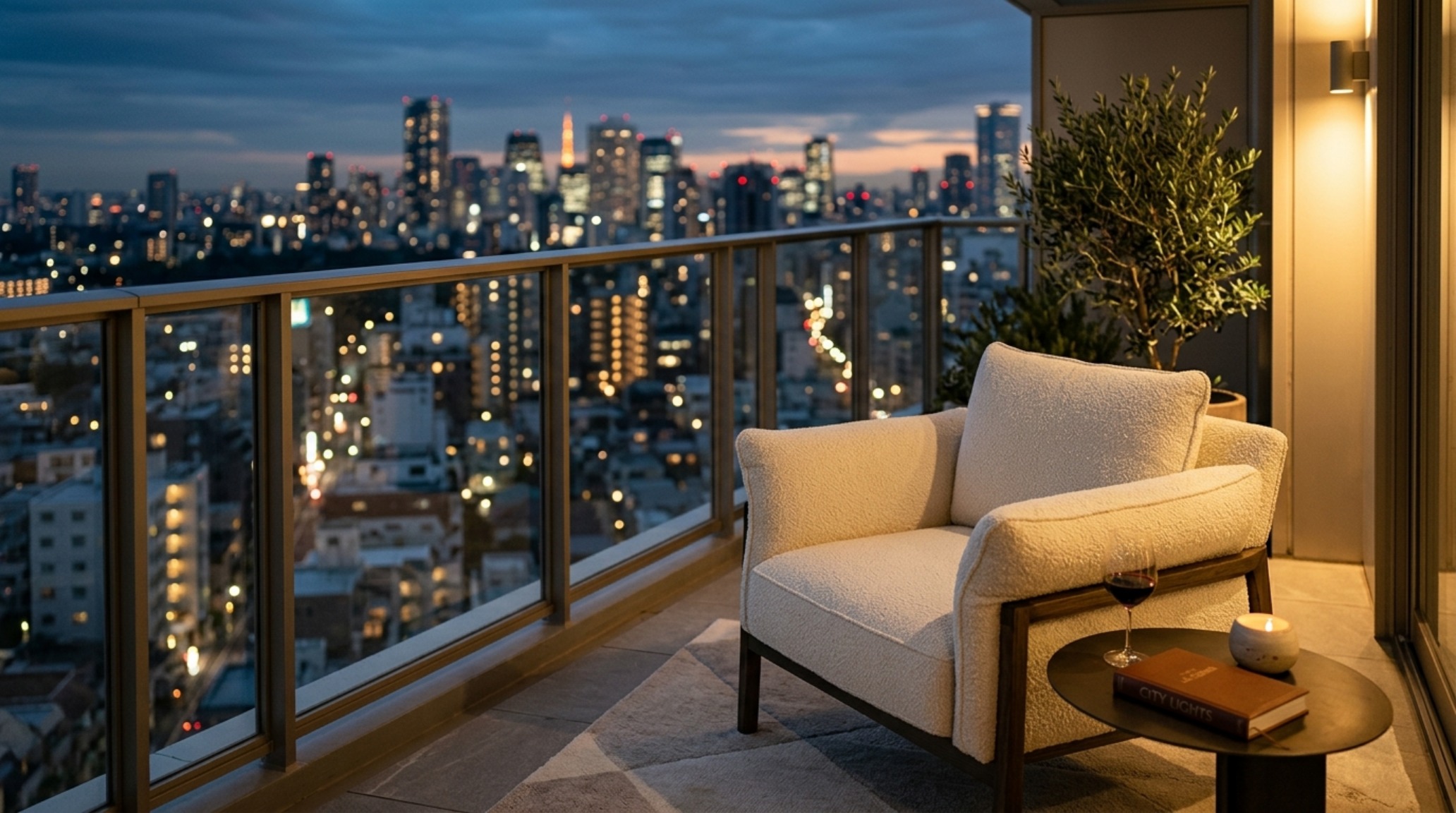
There is a specific, quiet magic that happens when the threshold between a living room and the city air disappears. For too long, the urban balcony has been treated as a utilitarian afterthought—a place for a folding plastic chair and perhaps a lonely terracotta pot. But the paradigm is shifting. As our internal lives demand more serenity, we are seeing a sophisticated evolution in small apartment balcony ideas that prioritizes tactile materiality over mere function. We are no longer just ‘decorating’ an outdoor area; we are curated a sensory extension of the home, a sanctuary defined by the soft nub of Olefin bouclé, the cool weight of honed travertine, and the golden, amber-hued embrace of 2700K illumination.
The Architecture of Intimacy: Beyond Utility
In high-end interior design, ‘Quiet Luxury’ isn’t about logos or price tags; it’s about the emotional resonance of materials. When applying this to a compact footprint, every square inch must justify its existence through both form and feeling. The goal is to create a ‘spatial cadence’—a rhythm of movement and rest that makes a five-by-ten-foot slab of concrete feel like a high-end hotel terrace in Milan. This starts with the foundational compact outdoor furniture choices that favor organic silhouettes over rigid, industrial lines.
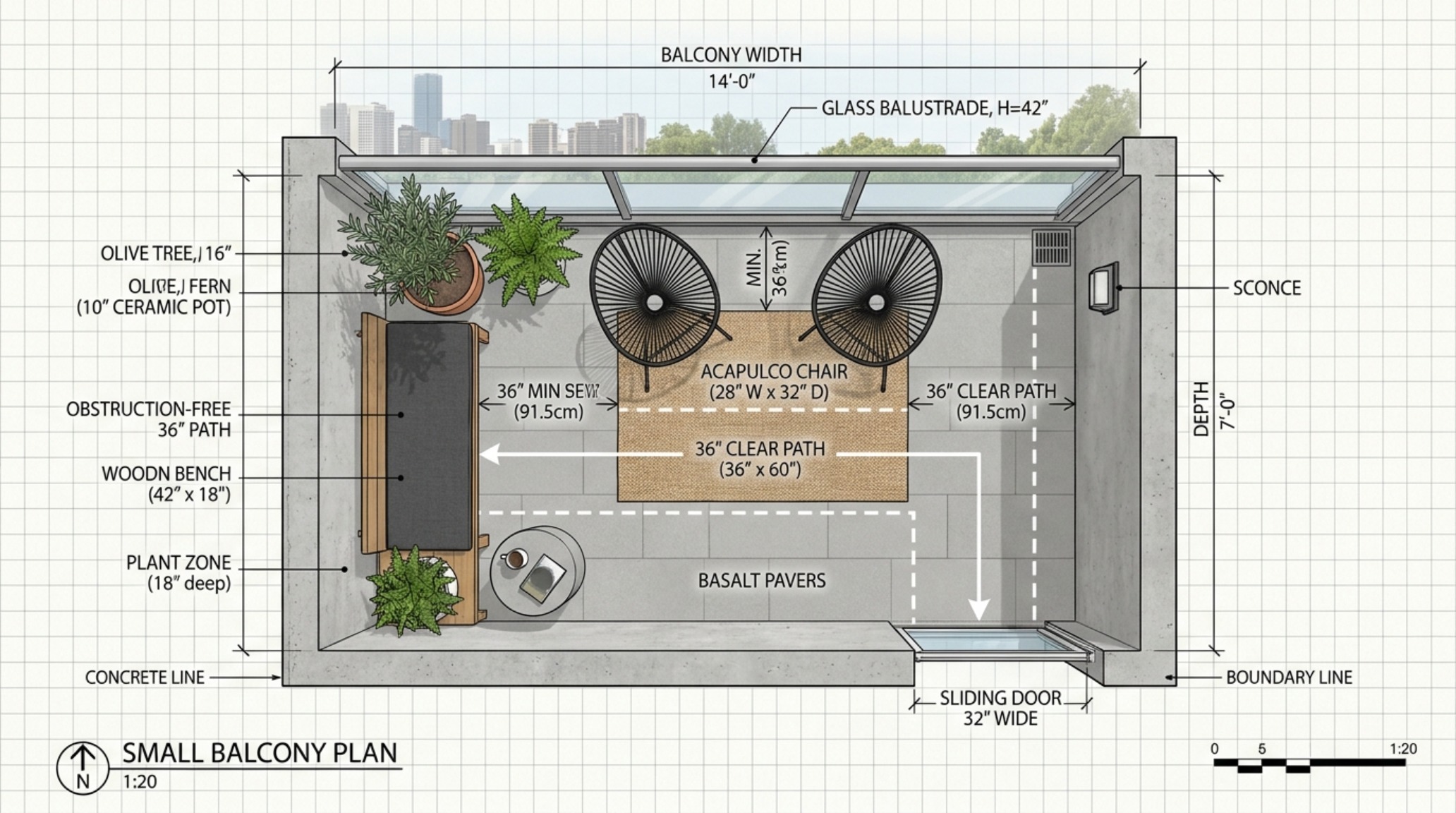
Consider the 24-inch rule. In architectural planning, 24 inches is the minimum clearance required for comfortable movement. On a small balcony, adhering to this allows the space to breathe. By selecting a singular, deep-seated lounge chair upholstered in weatherproof bouclé rather than a cramped set of four flimsy chairs, you introduce ‘negative space.’ This breathing room is what transforms a cluttered porch into a curated retreat. It’s the difference between feeling trapped and feeling held.
The Indoor-Outdoor Blur: A Material Synthesis
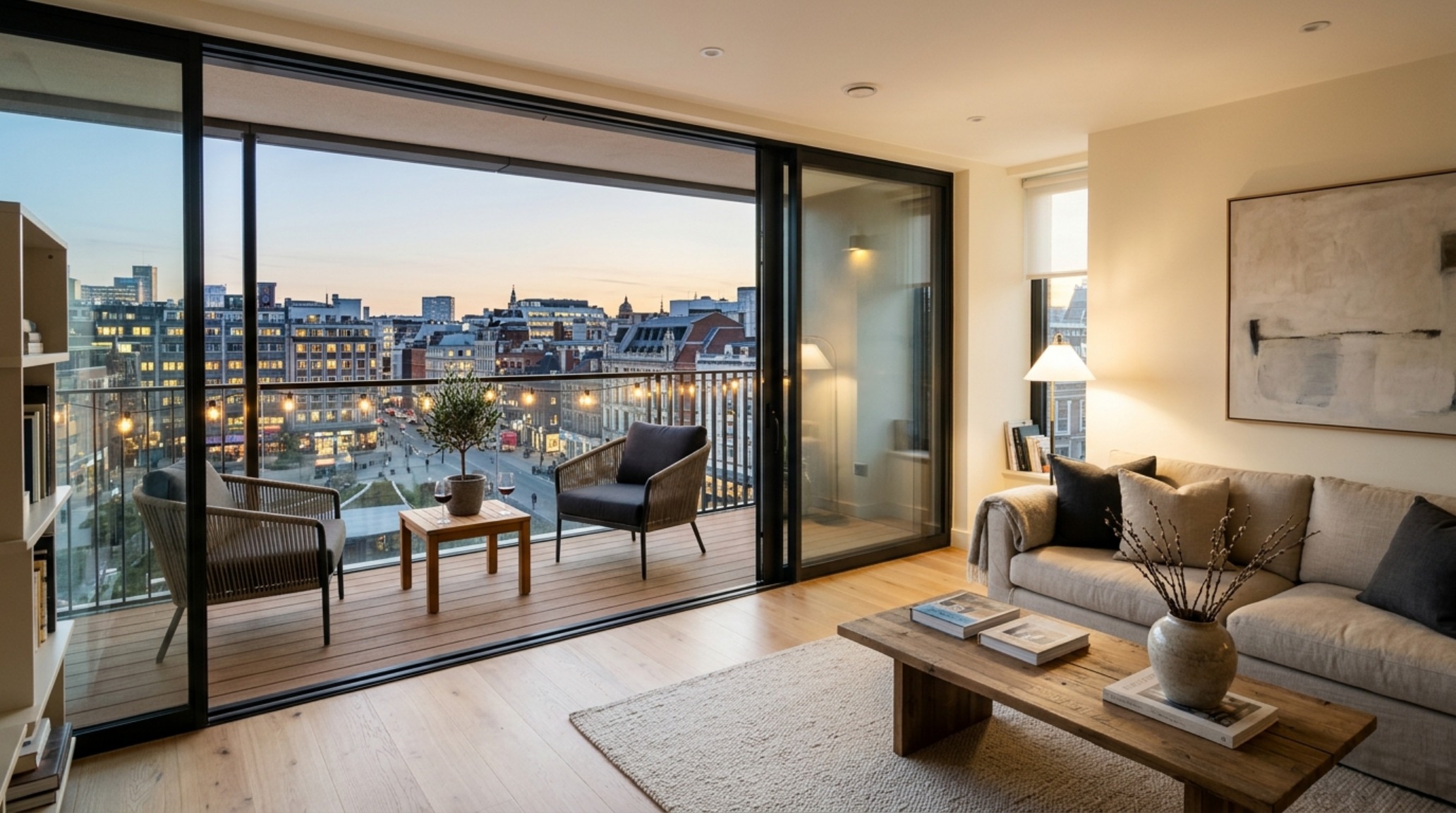
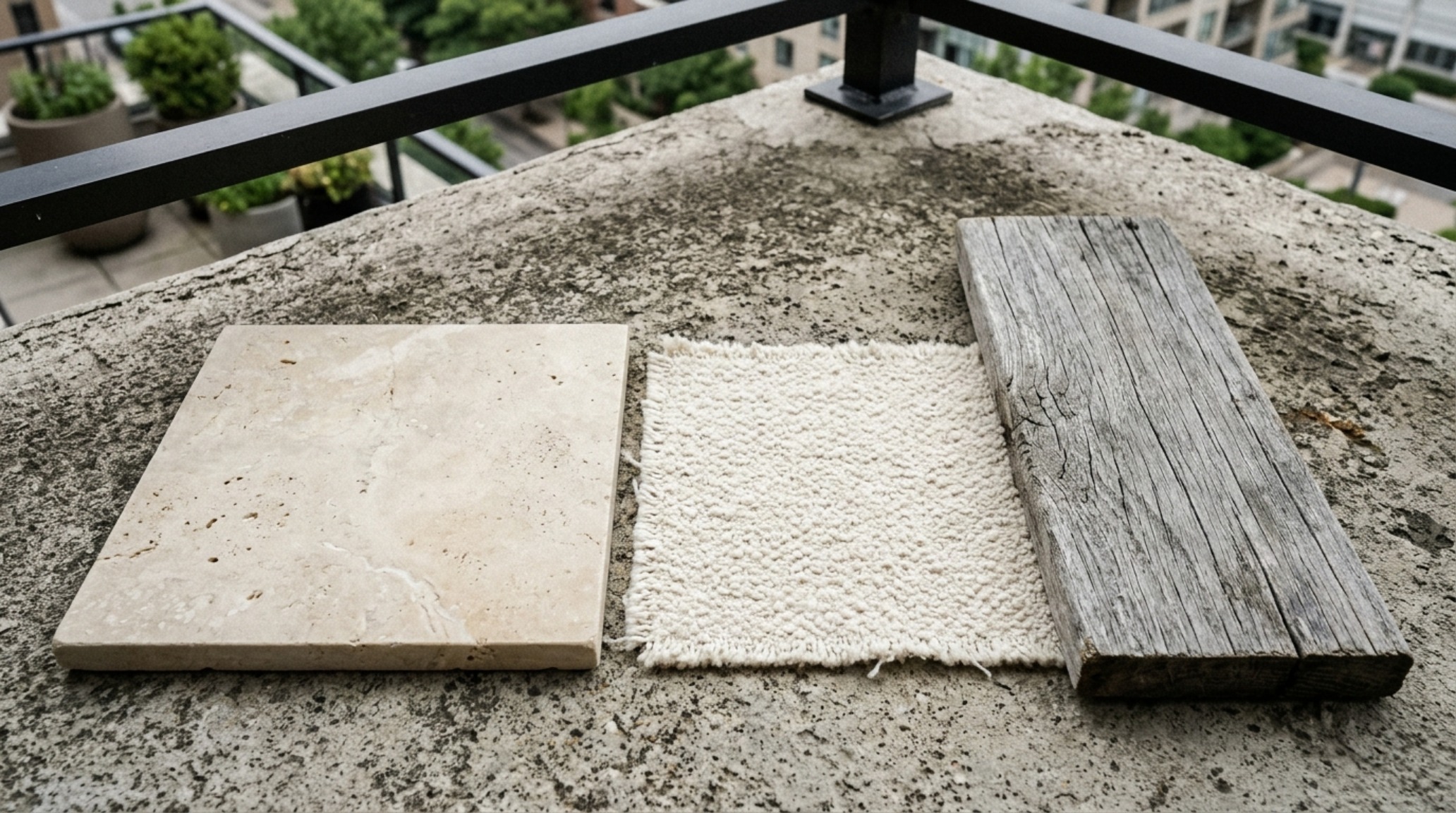
The secret to an expensive-looking balcony lies in the ‘Indoor-Outdoor Blur.’ This design philosophy suggests that the materials used outside should be of the same caliber as those used in your primary living area. We are seeing a massive surge in weatherproof bouclé outdoor furniture—specifically high-performance Olefin blends that mimic the cozy, looped texture of interior wool while resisting UV rays and moisture. When your eye travels from your indoor sofa to your balcony seating and sees a continuation of texture, the balcony immediately feels like a secondary living room rather than a separate ‘outside’ box.
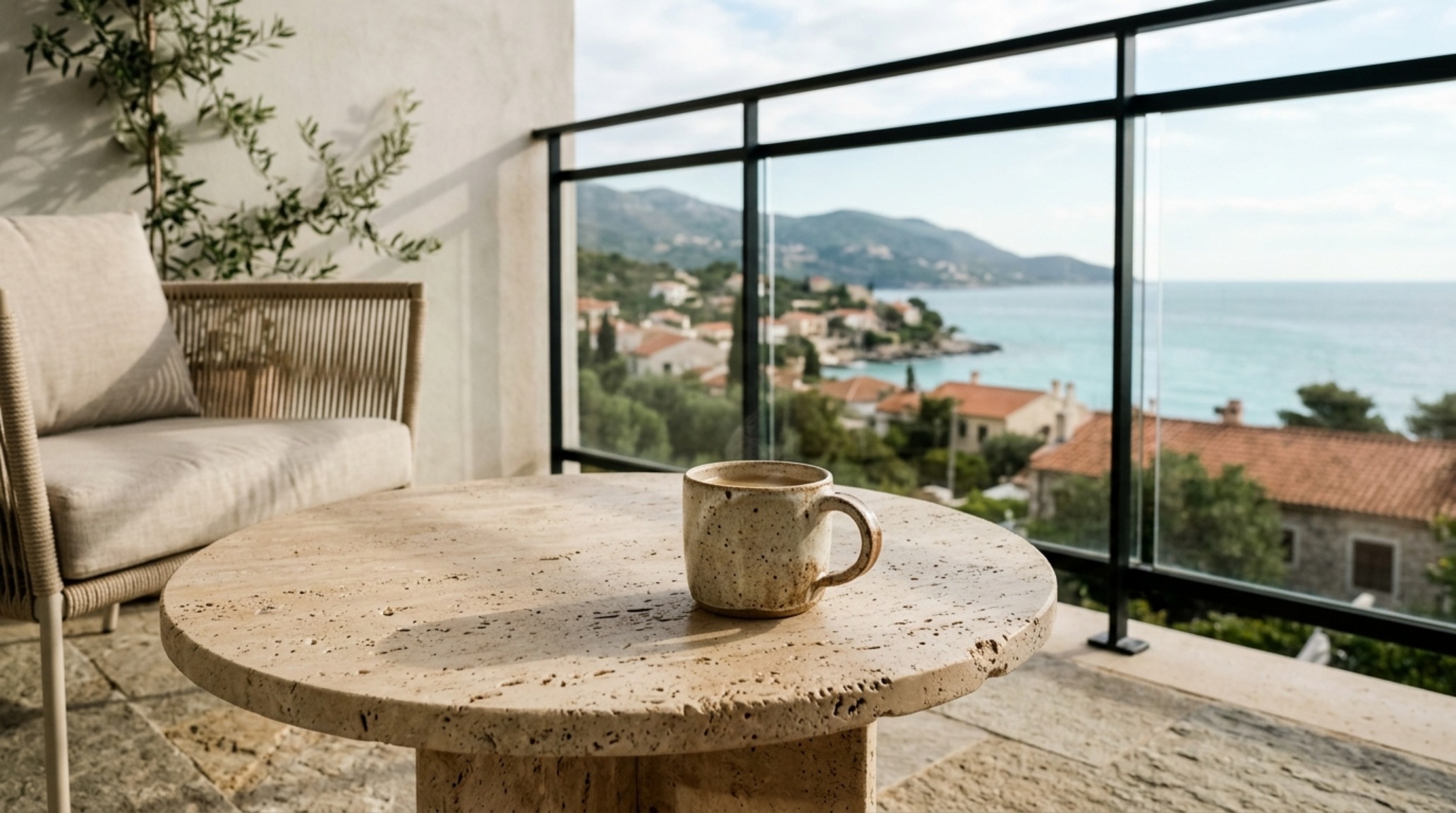
To ground these softer textiles, look to organic stone. A honed travertine coffee table or a set of stone plinths provides a necessary weight. Unlike glass or metal, travertine has a thermal mass that holds the sun’s warmth and a matte, porous finish that feels ancient and permanent. It’s a tactile grounding element that contrasts beautifully against the lightness of a slatted timber screen.
Refining the Palette: From Swiss Coffee to Setting Plaster
Color on a balcony should never compete with the view; it should frame it. The ‘Quiet Luxury’ aesthetic relies heavily on tonal layers. Think of a base of Benjamin Moore Swiss Coffee—a warm, creamy white that lacks the sterile blue undertones of commercial exterior paints. For those seeking a more grounded, earthy vibe, Farrow & Ball Setting Plaster offers a dusty, sophisticated terracotta-pink that glows during the ‘golden hour.’
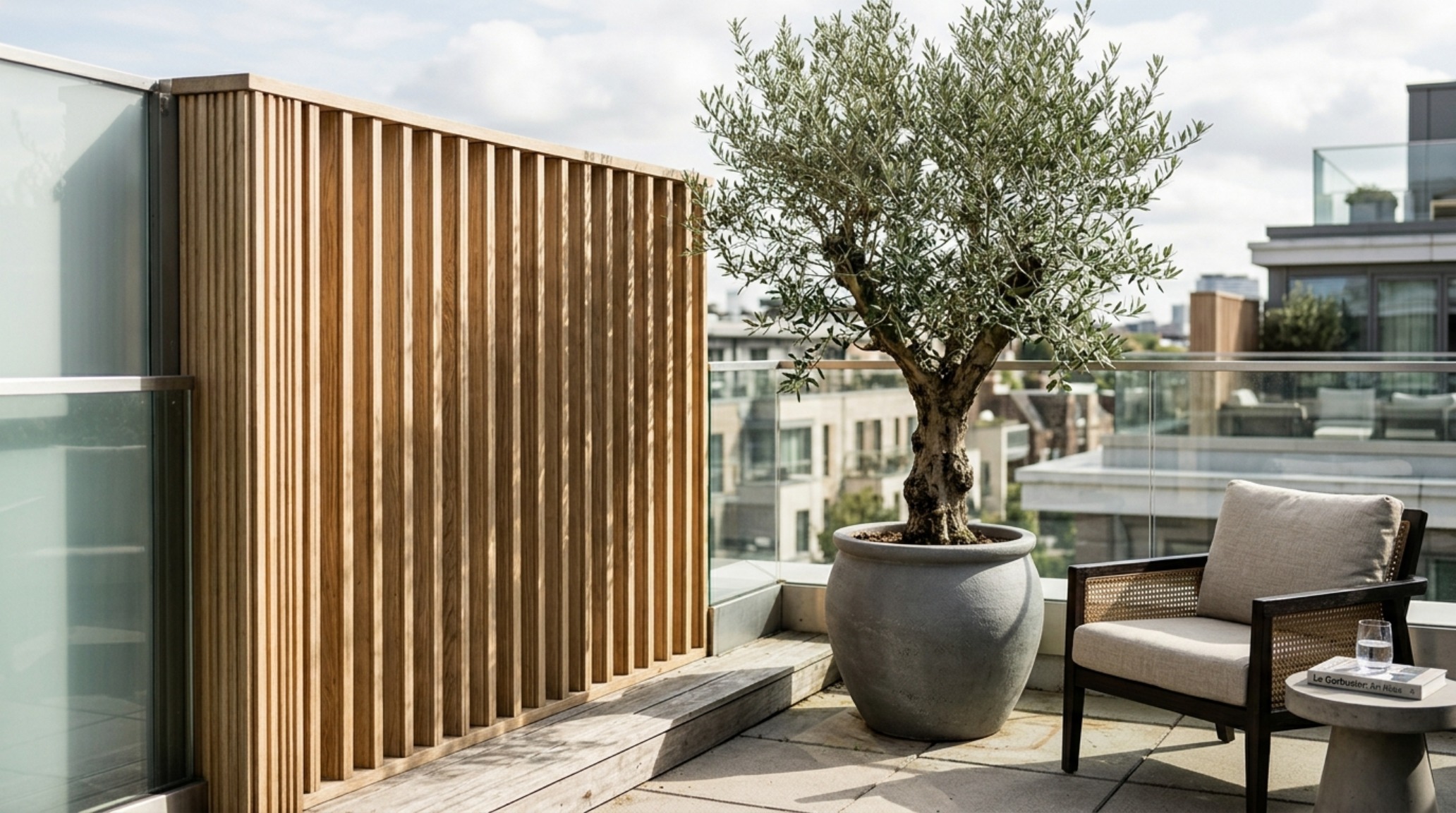
By sticking to a monochromatic or analogous color scheme, you minimize visual noise. This allows the textures—the grain of the wood, the weave of the fabric, the pores in the stone—to take center stage. When you integrate a balcony garden privacy screen made of fluted white oak or Ipe timber, the vertical lines create a sense of height, drawing the eye upward and making a narrow space feel significantly more expansive.
Small Apartment Balcony Ideas for High-Performance Comfort
The ergonomics of a small space require a ruthless edit. Instead of a bulky balcony furniture set, consider a modular approach. A low-slung, armless sectional piece can be tucked into a corner, maximizing seating without blocking sightlines. If your balcony is particularly narrow, a folding balcony bar table that attaches to the railing provides a surface for a morning espresso or a laptop without consuming a single inch of floor space. These are the functional anchors that allow the ‘luxury’ elements—the cushions, the lighting, the stone—to shine.
The Atmospheric Soul: Designing with 2700K Glow
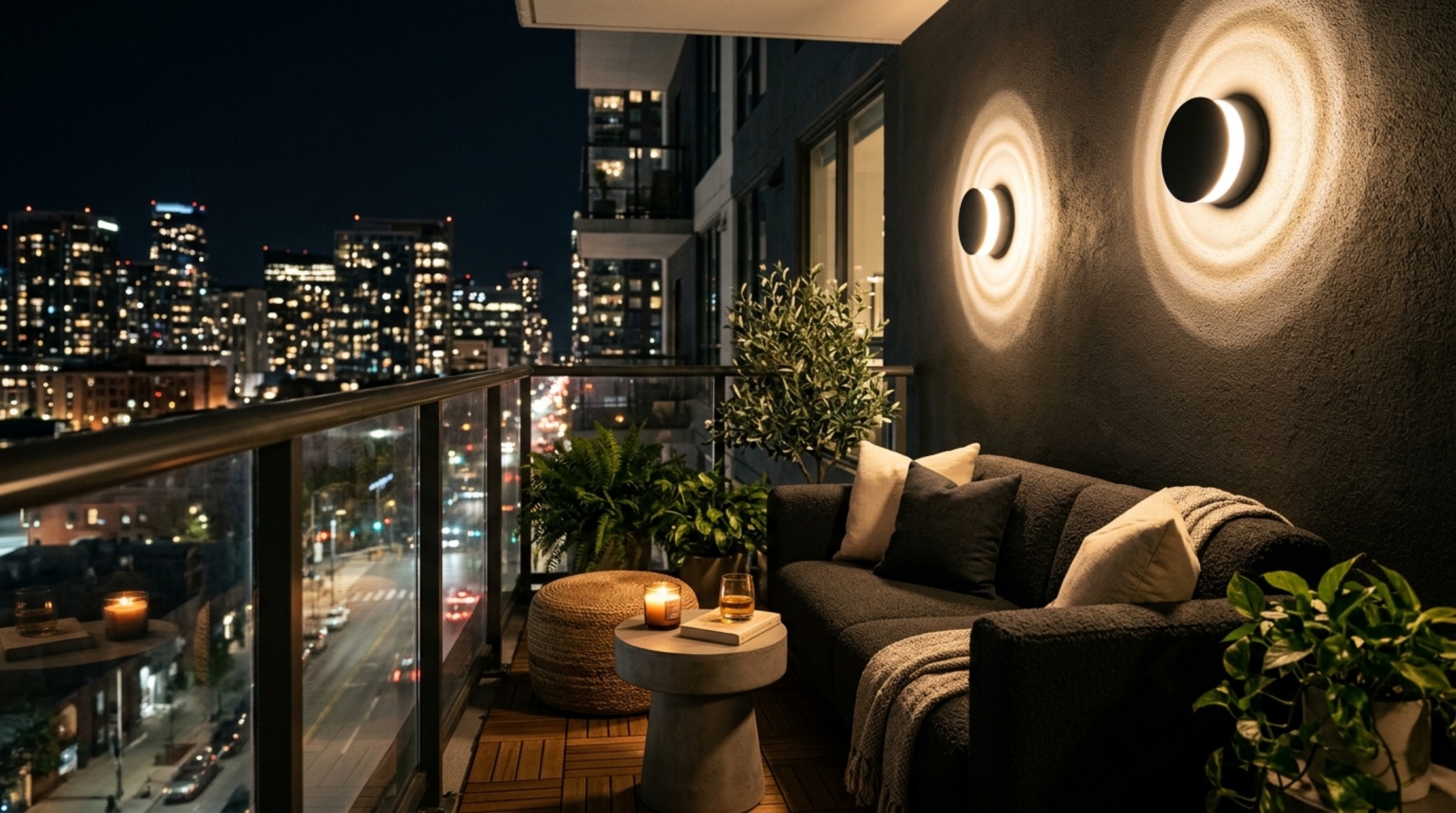
If materiality is the body of the balcony, lighting is its soul. Most urban balconies suffer from two lighting extremes: the harsh, surgical glare of a single overhead building light or the chaotic, multi-colored flicker of cheap fairy lights. To achieve a hotel-tier atmosphere, you must layer your light with the same precision as a gallery.
The magic number is 2700K. This Kelvin temperature provides a warm, candlelight-adjacent glow that feels intimate and relaxing. Avoid 3000K or 4000K, which can feel clinical and ‘cool.’ For the best results, use high CRI (Color Rendering Index) bulbs—ideally 90 or above—to ensure the rich tones of your travertine and timber aren’t washed out.
“Light should not just illuminate a space; it should sculpt it. By using wall-mounted up-down block lights, you create columns of amber light that emphasize the texture of your walls, turning a flat surface into a work of shadow play.”
Combine these with halo-style sconces that cast a soft, diffused ring of light, and cozy outdoor balcony string lights (the vintage-style Edison bulbs) draped low over a seating area. This creates ‘lighting zones’—pockets of warmth that invite you to linger long after the sun has set.
The Science of Spatial Harmony
While aesthetics drive the initial attraction, functionality ensures long-term enjoyment. Professional designers rely on specific measurements to ensure a space feels ‘right.’ On an urban balcony design project, we aim for a 36-inch primary circulation path where possible, though in tight city units, we can compress this to 30 inches. Your coffee table should be placed roughly 18 inches from your seating; this is the ‘golden reach’—close enough to set down a drink without leaning, but far enough to allow for legroom.
Verticality is another professional secret. In a small space patio, the floor is precious real estate. Utilize the walls. Wall-mounted planters, floating stone shelves, and even hanging textiles can add layers of interest without cluttering the walkway. This alignment of sightlines ensures that when you look out from your interior, the balcony appears as a structured, intentional composition rather than a pile of furniture.
Lush Greenery and Tactile Privacy
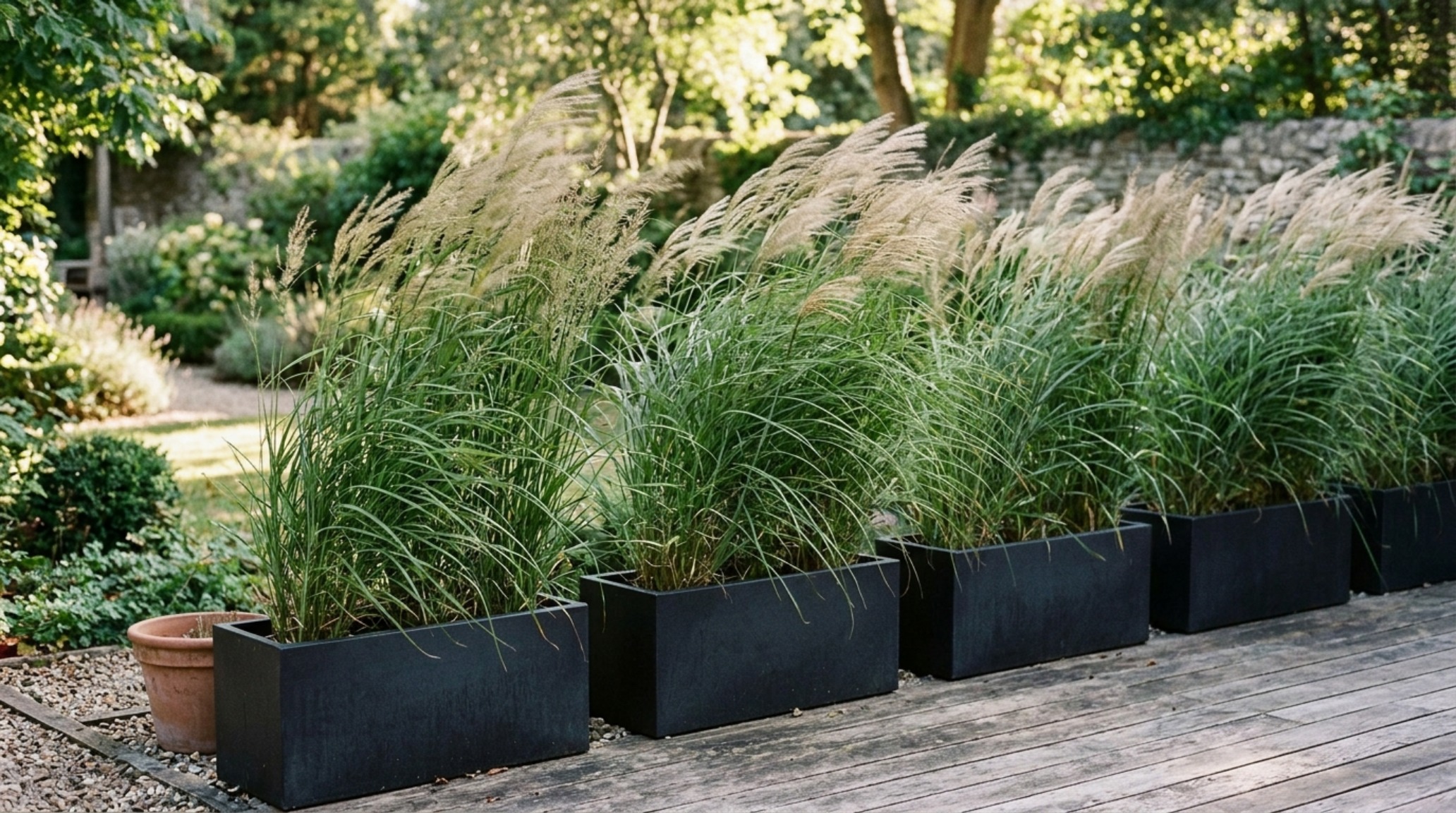
Plants are the lungs of the balcony, but they should also be part of the material palette. Instead of a hodgepodge of plastic pots, choose oversized vessels in matte ceramics or weathered zinc. Grouping plants in odd numbers (the rule of three) creates a more natural, organic feel. Focus on ‘architectural’ foliage—olive trees for their silvery-green leaves, or tall grasses that catch the wind and create a soft, rhythmic sound. These elements contribute to the ‘Quiet Luxury’ ethos by engaging the senses of sight, touch, and sound simultaneously.
Architectural Specification & Material Matrix
Curated tactile palette, spatial dimensions, and atmospheric lighting index for this design scheme.
Designing a balcony is an exercise in intentionality. By stepping away from disposable ‘outdoor’ trends and embracing a philosophy grounded in permanence and texture, we can transform these small urban patches into genuine sanctuaries. These small apartment balcony ideas are not about filling space; they are about curating an experience. When the light hits the curve of a bouclé chair and the air cools over the stone, the city’s noise fades into the background. You aren’t just outside—you are home, in a space that celebrates the sophisticated interplay of light, shadow, and touch.
Editorial Silo • Recommended Architecture Studies
- High-End Play, Zero Clutter: Ergonomic Secrets to Integrating a Stormi-Style Playhouse on a Compact Footprint — Archival Design Case Study
- The Blue Hour Palette: Recreating the Tactile Materiality and 2700K Glow of the Whole Home 2019 Mudroom Decor Ideas — Archival Design Case Study
Architectural Inspiration Lookbook
A high-resolution study in spatial proportions, tactile materiality, and light choreography curated for enduring modern living.


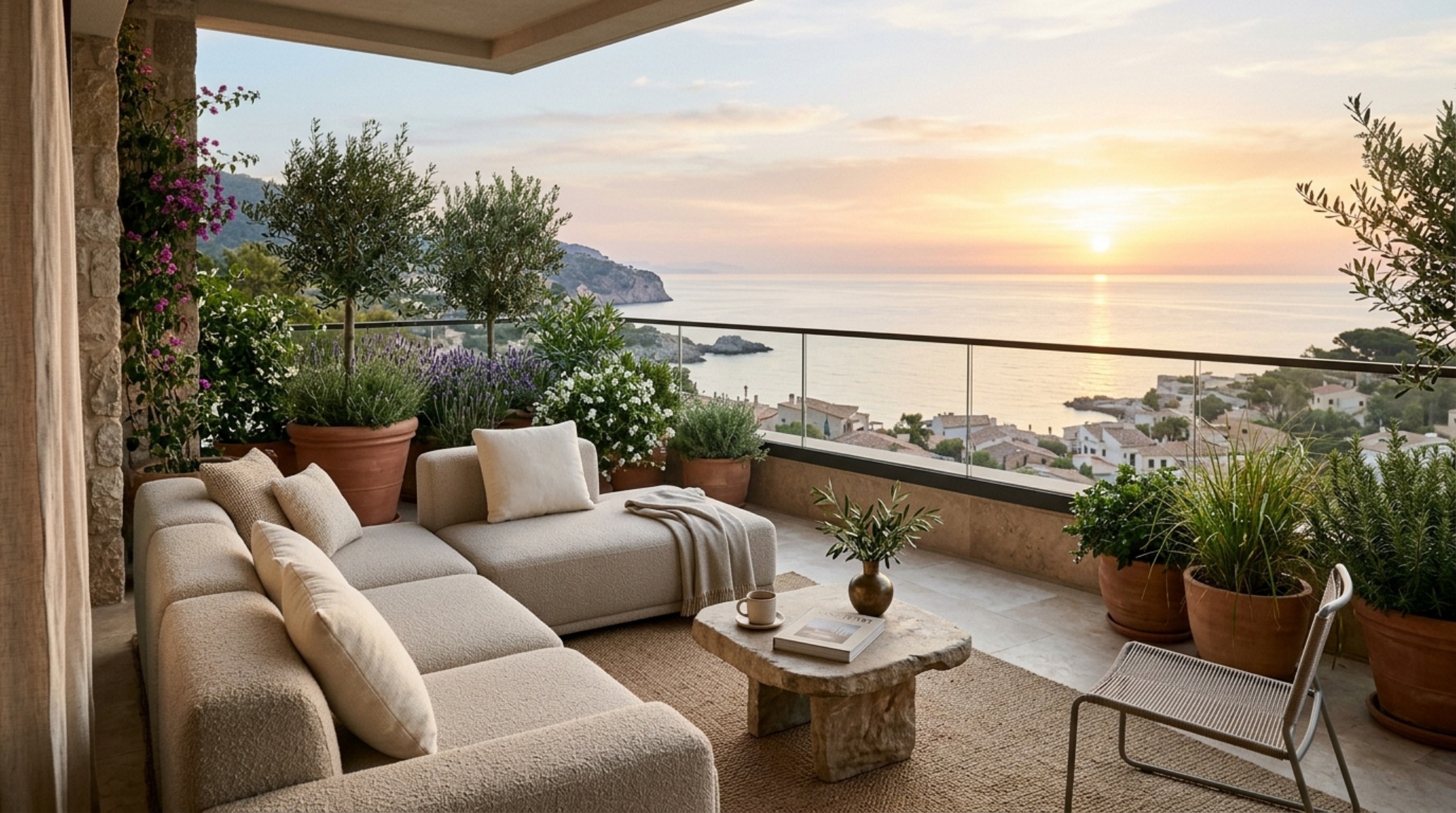
Curated Visual Lookbook
Design Gallery & Spatial Studies
A visual curation of architectural arrangements, lighting concepts, and material palettes featured in this space.
