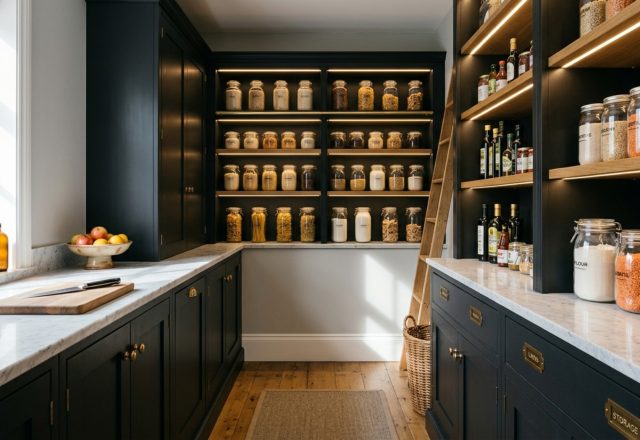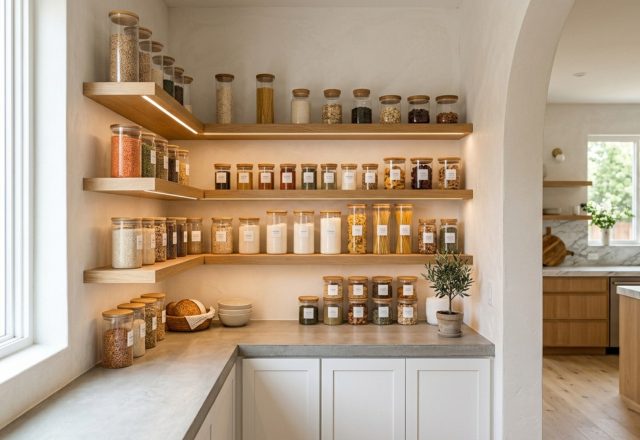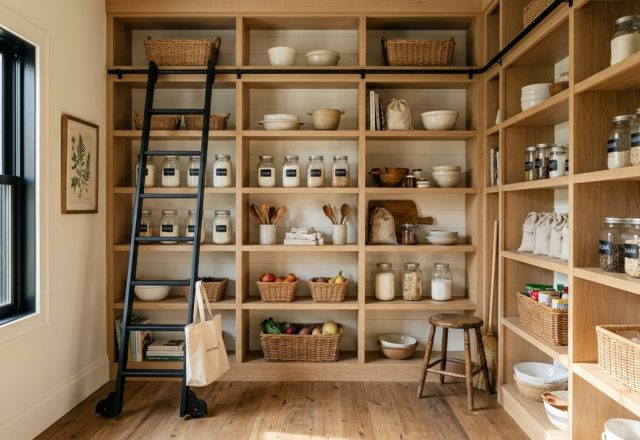
We have long relegated the pantry to the status of a utility closet—a windowless void where cereal boxes and disparate spice jars go to be forgotten. But a seismic shift is occurring in the architectural landscape. Influenced by the rise of the ‘back kitchen’ and the ‘scullery,’ we are seeing a movement toward the sensory pantry. This isn’t just about labels and bins; it’s about the soul of the home. When we approach small pantry organization ideas through the lens of quiet luxury, we stop looking for ways to hide our food and start looking for ways to curate it. It’s the difference between a storage locker and a boutique culinary gallery.
The philosophy here is simple: if you treat a space with the same materiality and lighting rigor as your primary living room, the act of reaching for a morning espresso bean or a handful of pasta becomes a tactile ritual. By merging House Beautiful’s logical decluttering frameworks with the bespoke millwork traditions of Architectural Digest, we can transform even the tightest 4×4 closet into a high-design sanctuary. The secret lies in the tension between raw textures and polished details.
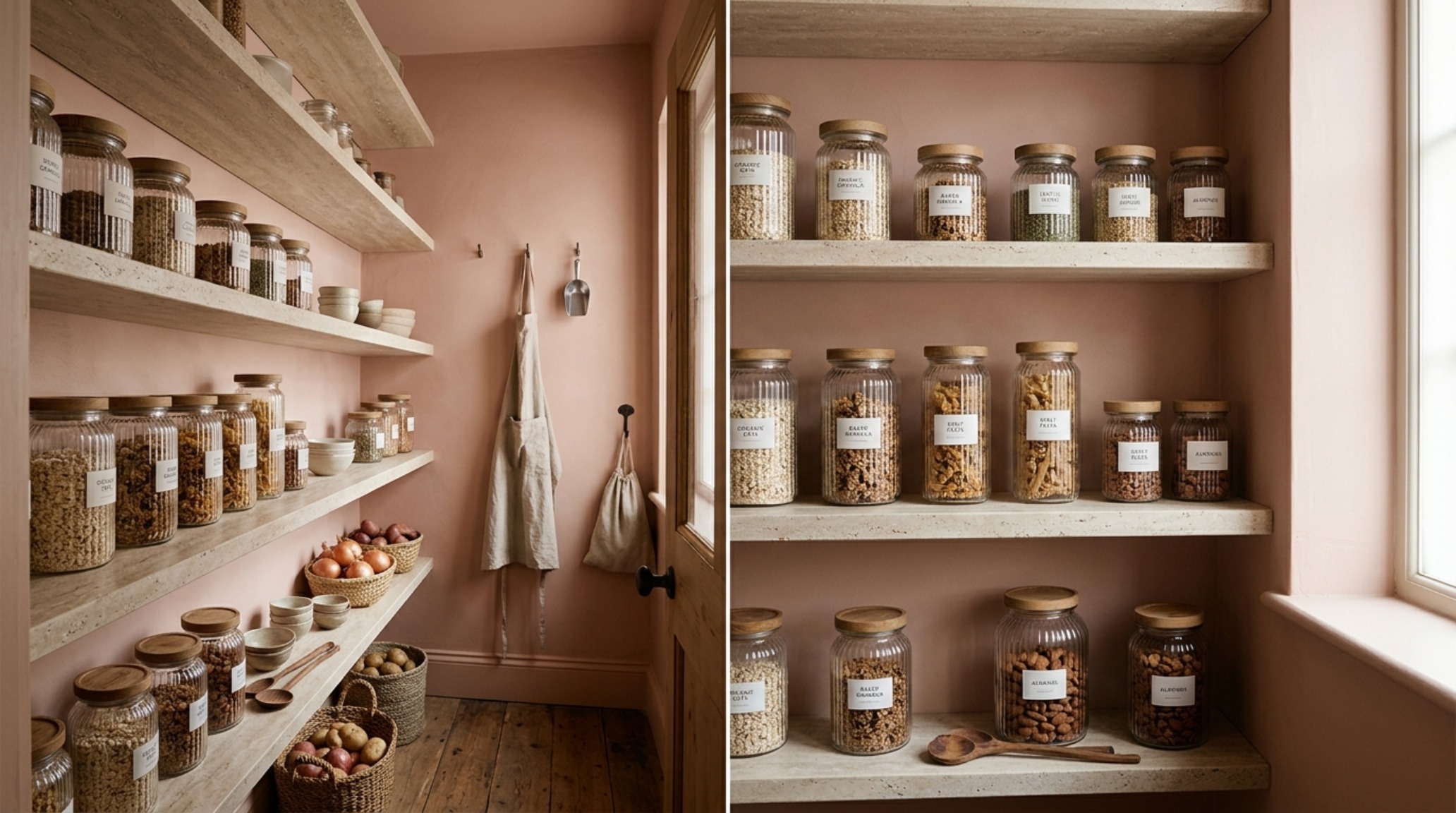
The Alchemy of Color and Texture: Why Setting Plaster Matters
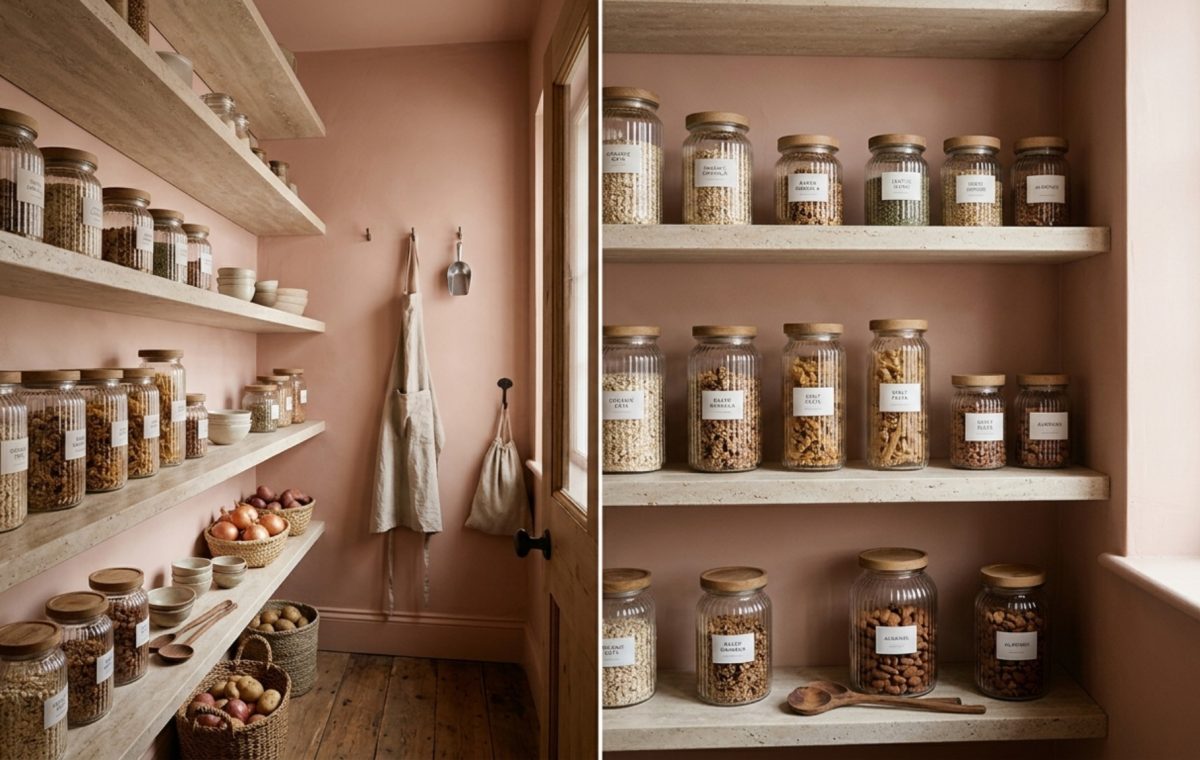
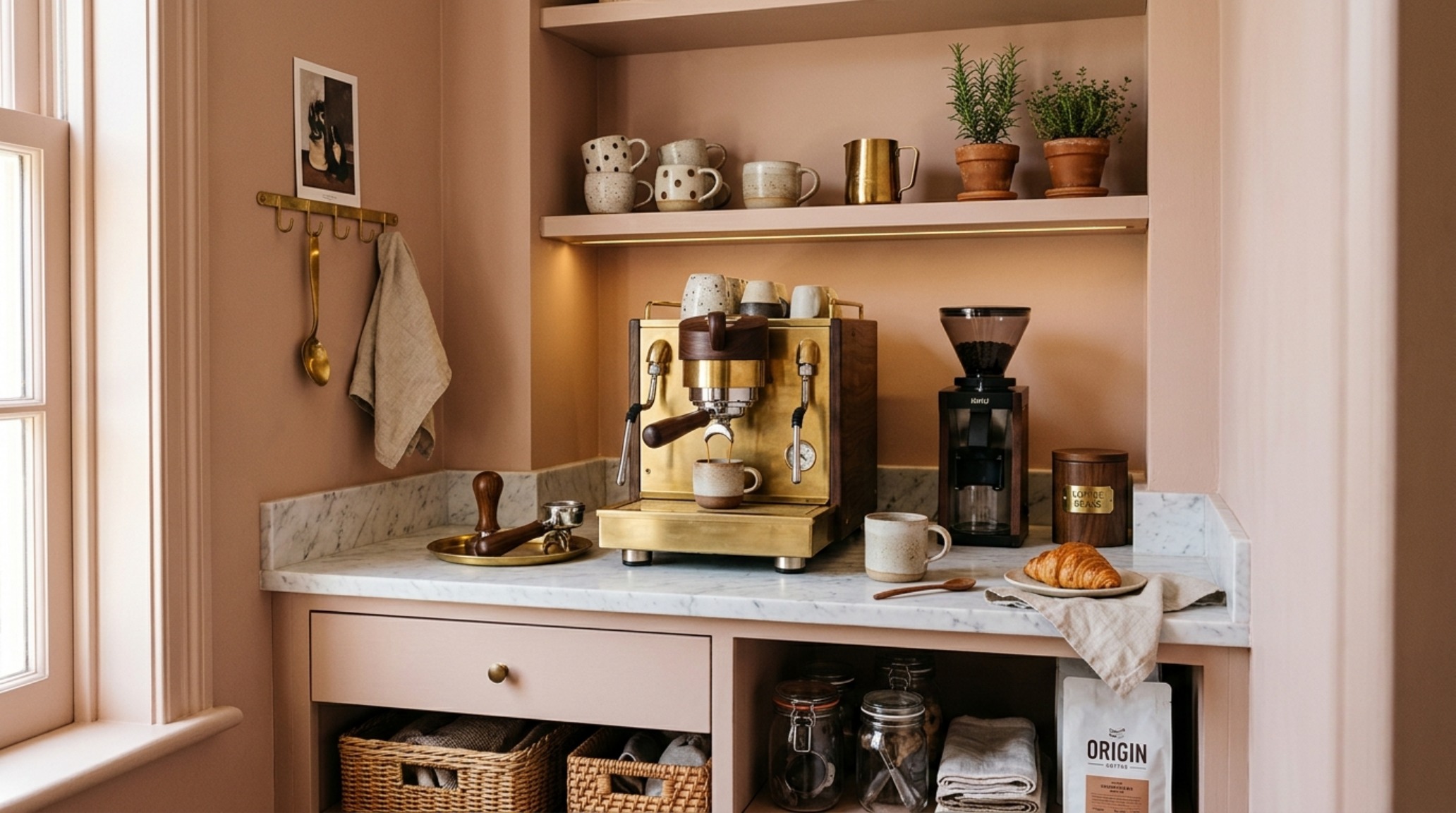
Color is the first sensory touchpoint. While clinical white has been the default for decades, it often feels sterile and unforgiving under LED light. Instead, I find myself returning to the soft, earthy embrace of Farrow & Ball’s ‘Setting Plaster.’ This particular shade of dusty pink-beige offers a sophisticated backdrop that mimics the warmth of Mediterranean lath and plaster. It provides a soft ‘visual silence’ that makes even a crowded shelf feel intentional. When you apply this hue across both the walls and the shelving—a technique known as ‘color drenching’—the physical boundaries of the small pantry seem to expand, creating a seamless, monochromatic envelope.
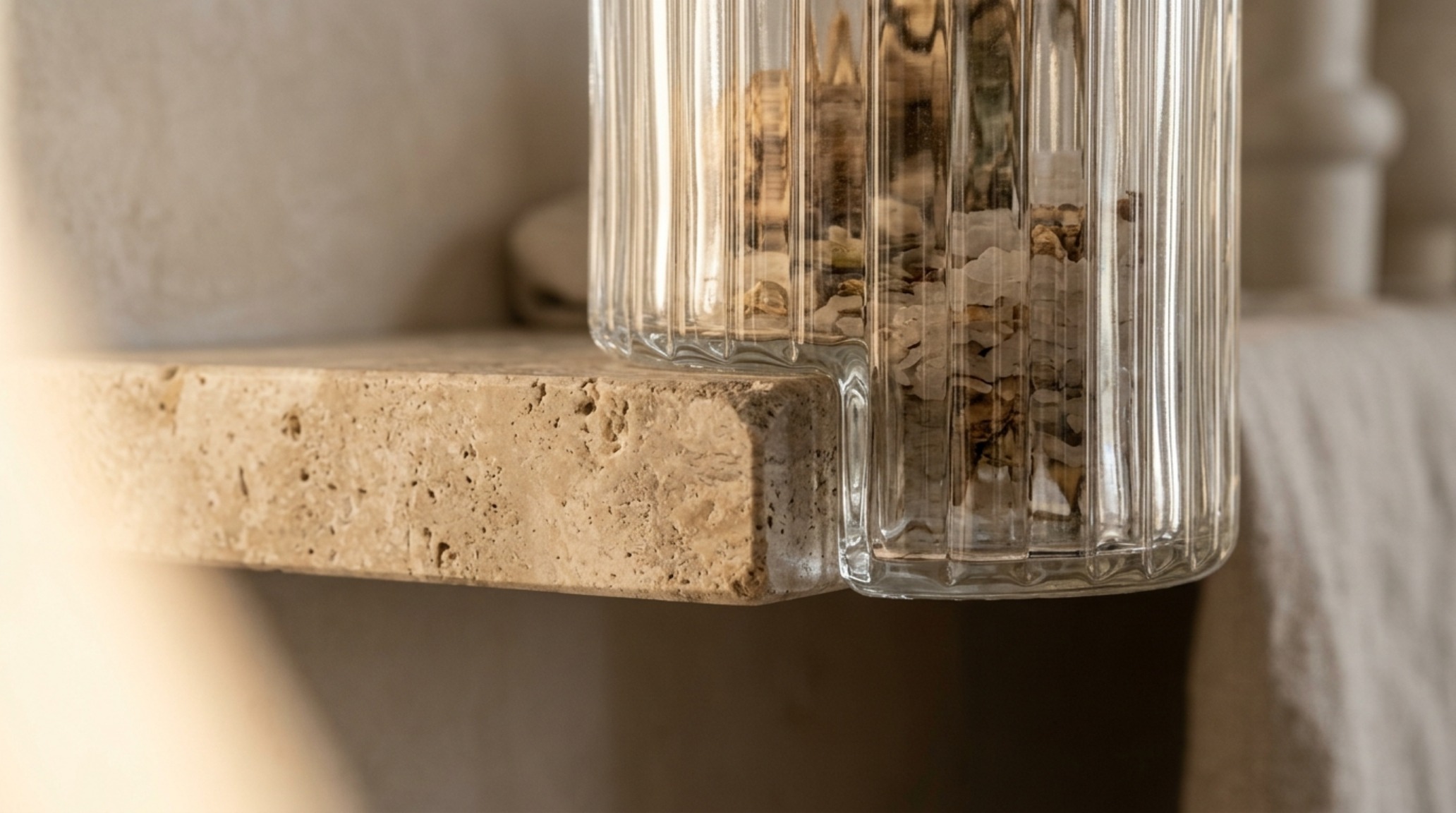
To ground this softness, we introduce the weight of natural stone. Replacing standard wire or laminate shelving with natural travertine risers or honed marble ledges adds a literal and figurative weight to the space. Travertine, with its porous, ancient character, offers a stunning contrast to the modern precision of fluted glass canisters. There is a specific, satisfying sound when a glass jar meets a stone surface—a heavy, muffled ‘thud’ that signals quality and permanence. This is the essence of high-end kitchen organization: it’s as much about the ear as it is about the eye.
The Technical Brilliance of 2700K Illumination
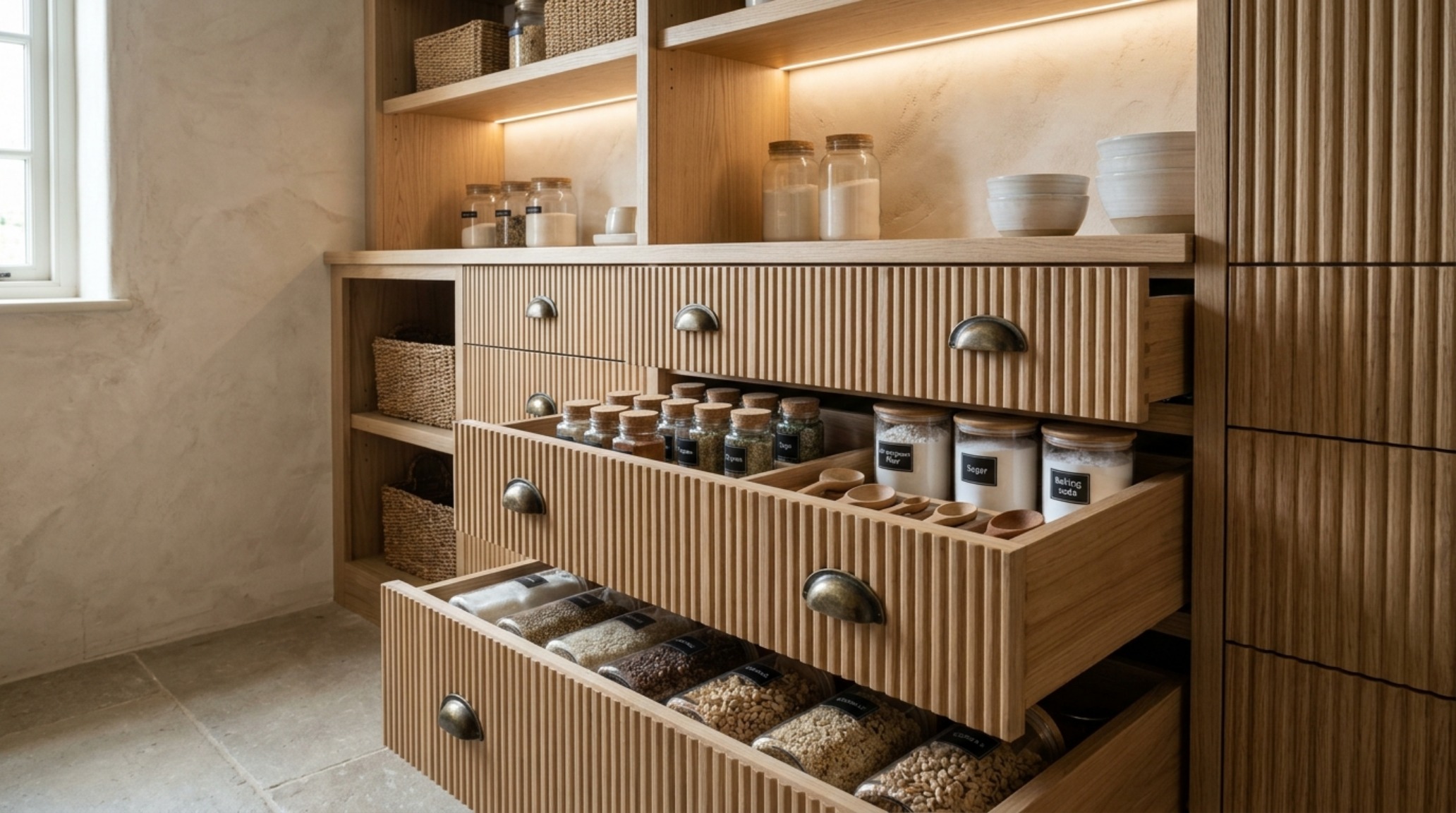
Lighting is the most overlooked element in small pantry organization ideas. Most pantries suffer from a single, high-kelvin overhead bulb that casts harsh, unflattering shadows. To achieve a gallery-like atmosphere, we must prioritize ‘warm-dim’ technology. Integrating 2700K LED strip lighting into the underside of each shelf creates a cascading waterfall of light. This isn’t just about visibility; it’s about ‘shadow play.’ By using high CRI (Color Rendering Index) ratings of 90 or above, the vibrant reds of sun-dried tomatoes and the deep greens of olive oil bottles are rendered with breathtaking accuracy.
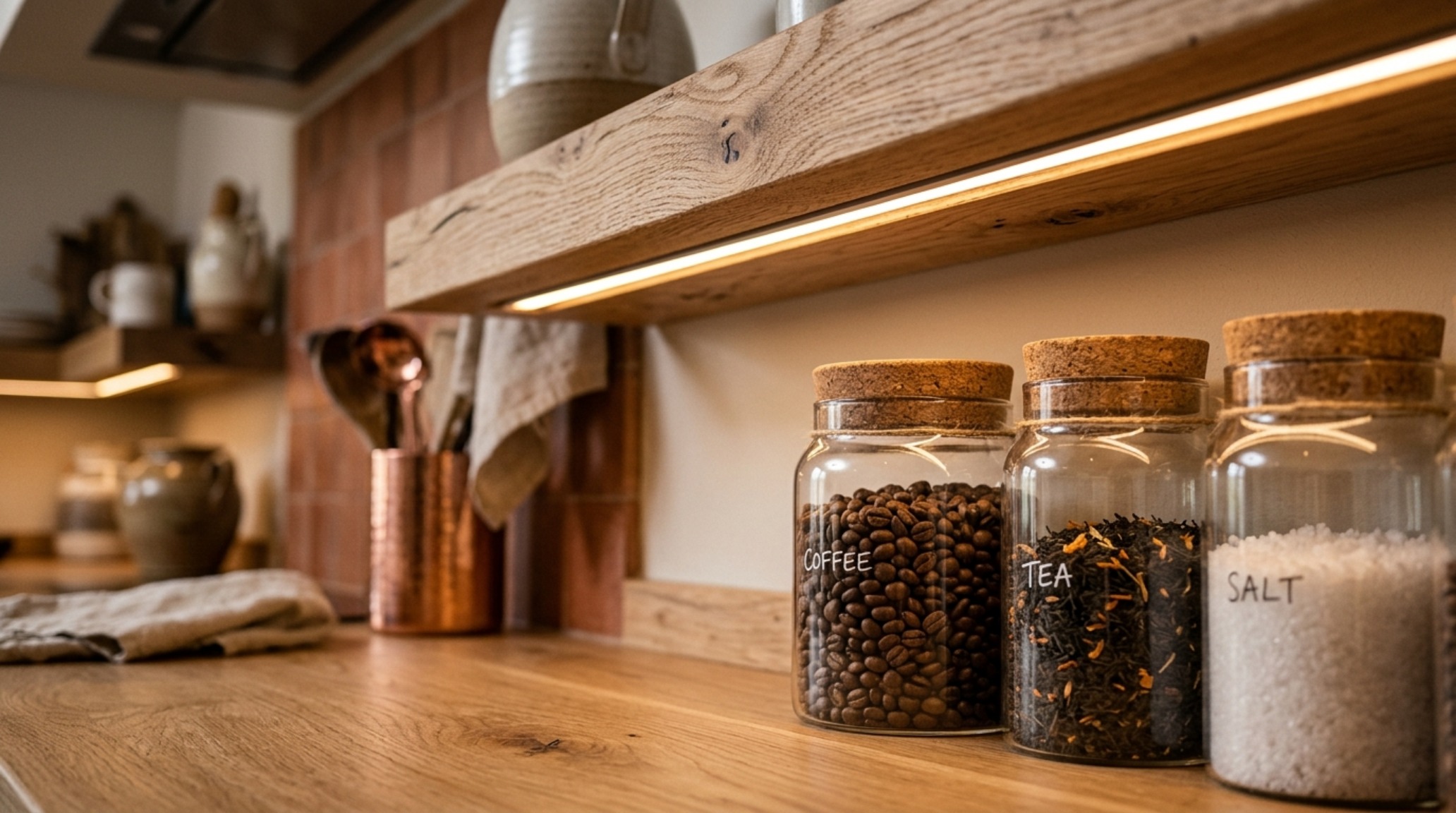
Mastering Small Pantry Organization Ideas through Spatial Cadence
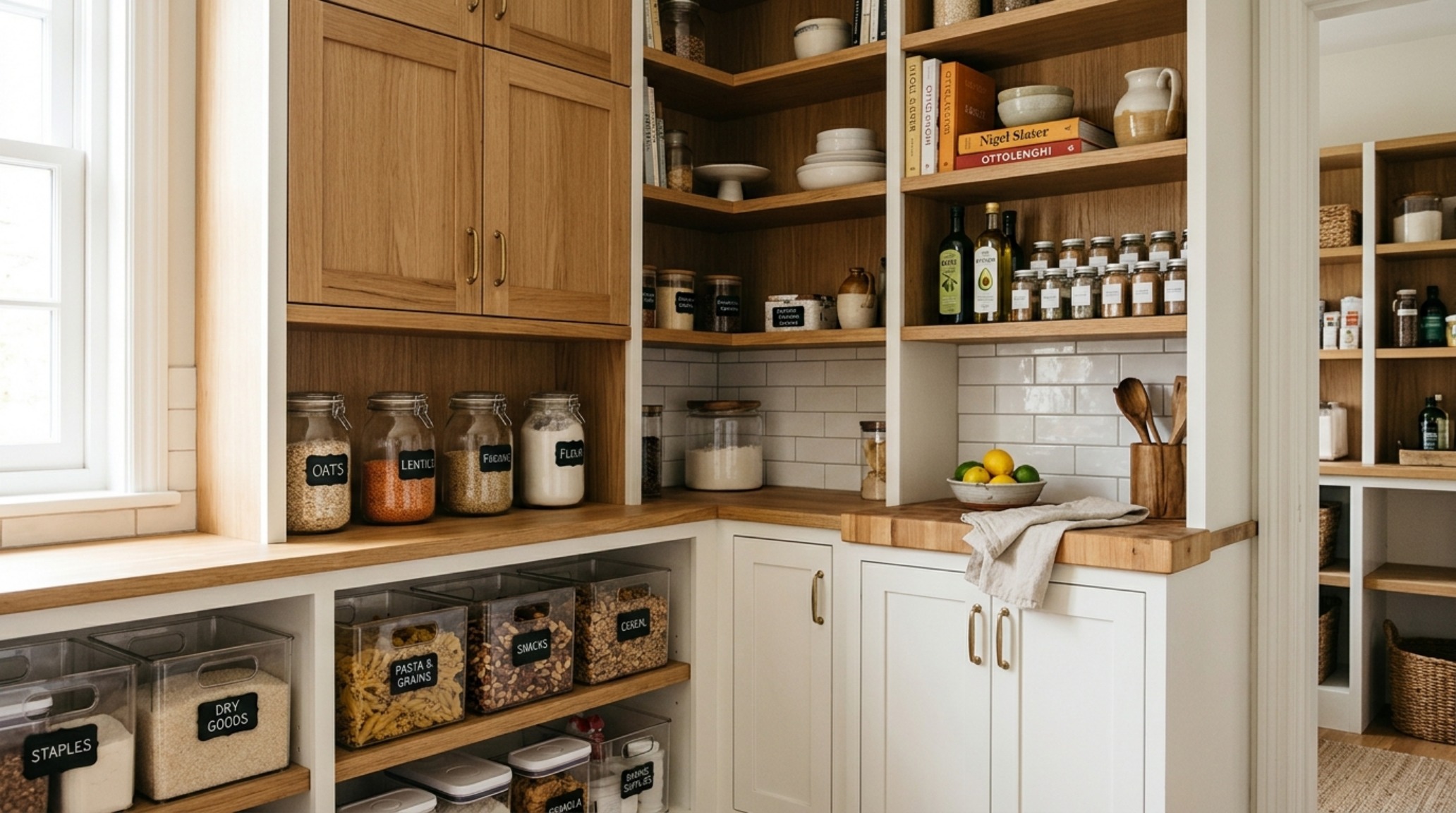
Designing a small pantry requires a mastery of spatial cadence—the rhythm of negative space between objects. A common mistake is over-packing every square inch. To maintain the ‘quiet luxury’ aesthetic, one must embrace the ‘breathable shelf.’ This means leaving roughly 15% of your shelf space empty. This negative space allows the eye to rest and highlights the beauty of your food storage solutions. When you look at the most celebrated back kitchen pantry trends of 2024, you’ll notice that they treat dry goods like sculptures.
The layout must also respect real-world architectural clearances. In a walk-in configuration, a 36-inch primary circulation path is the gold standard for comfortable movement. If you’re working with a reach-in cabinet, the depth of your shelves should never exceed 16 inches for dry goods; any deeper, and items are lost to the ‘pantry abyss.’ For a bespoke pantry millwork detail, consider varying your shelf heights: 10 inches for spices and oils, 14 inches for canisters, and a generous 18-inch ‘coffee reach’ for appliances. This creates a vertical variety that feels architecturally significant rather than purely functional.
The Materiality of Containment: Fluted Glass and White Oak
The vessels we choose are the ‘furniture’ of the pantry. Move away from mismatched plastic and toward a unified palette of fluted glass and white oak. Fluted glass is particularly effective because it obscures the visual ‘noise’ of colorful packaging while still allowing you to gauge inventory levels. It catches the 2700K light and refracts it, adding a layer of shimmer to the shelves. Pair these with solid white oak lids to bring in an organic, tactile grounding. This combination of wood, glass, and stone creates a material triad that feels timeless yet contemporary.
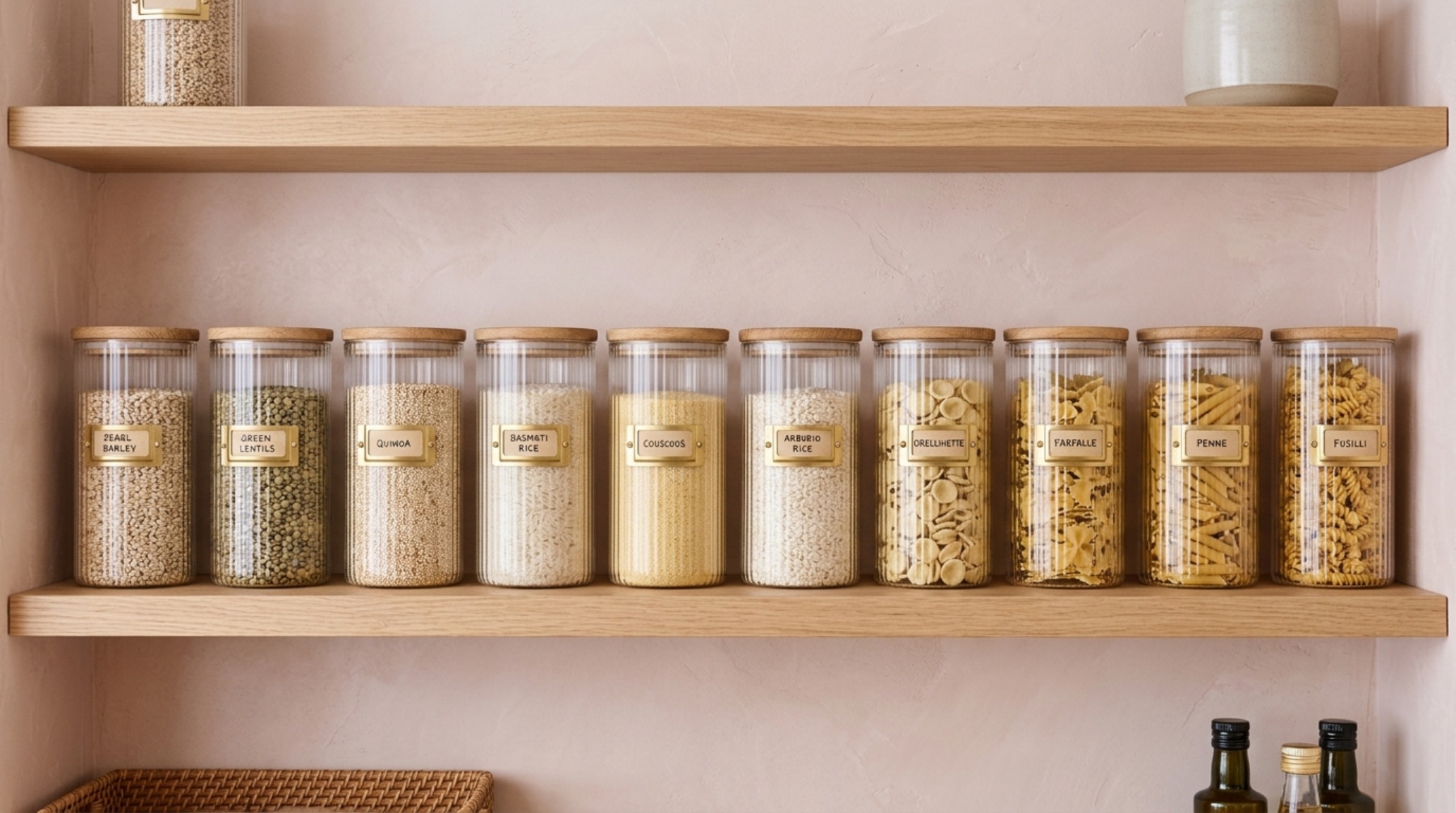
Minimalist pantry labeling aesthetics also play a role here. Instead of large, bold fonts, opt for small, discreet embossed labels or brass tag holders affixed directly to the shelf edge. This keeps the focus on the materiality of the jars themselves. When every element—from the grain of the oak to the texture of the travertine—is considered, the pantry ceases to be a chore to maintain; it becomes a curated collection of culinary potential.
Bespoke Millwork and the Vanishing Threshold
In high-end kitchen organization, the goal is often to blur the line between the kitchen and the pantry. If the pantry is visible from the main cooking area, the millwork should be a direct extension of the kitchen cabinetry. However, for a truly boutique feel, I often suggest a ‘vanishing threshold.’ This involves using a pocket door or a concealed ‘jib door’ that sits flush with the wall. When opened, it reveals the ‘jewel box’ interior—a sudden burst of Setting Plaster, warm light, and stone.
This architectural surprise is a hallmark of modern luxury. It’s about the transition from the high-activity zone of the kitchen to the serene, quiet atmosphere of the pantry. Within this space, we can implement pantry shelving systems that utilize clear acrylic pantry storage bins for lower-level visibility, ensuring that even the most utilitarian items, like backstock flour or root vegetables, are organized with precision. The integration of small pantry organization ideas into the very bones of the millwork ensures that the system is effortless to maintain.
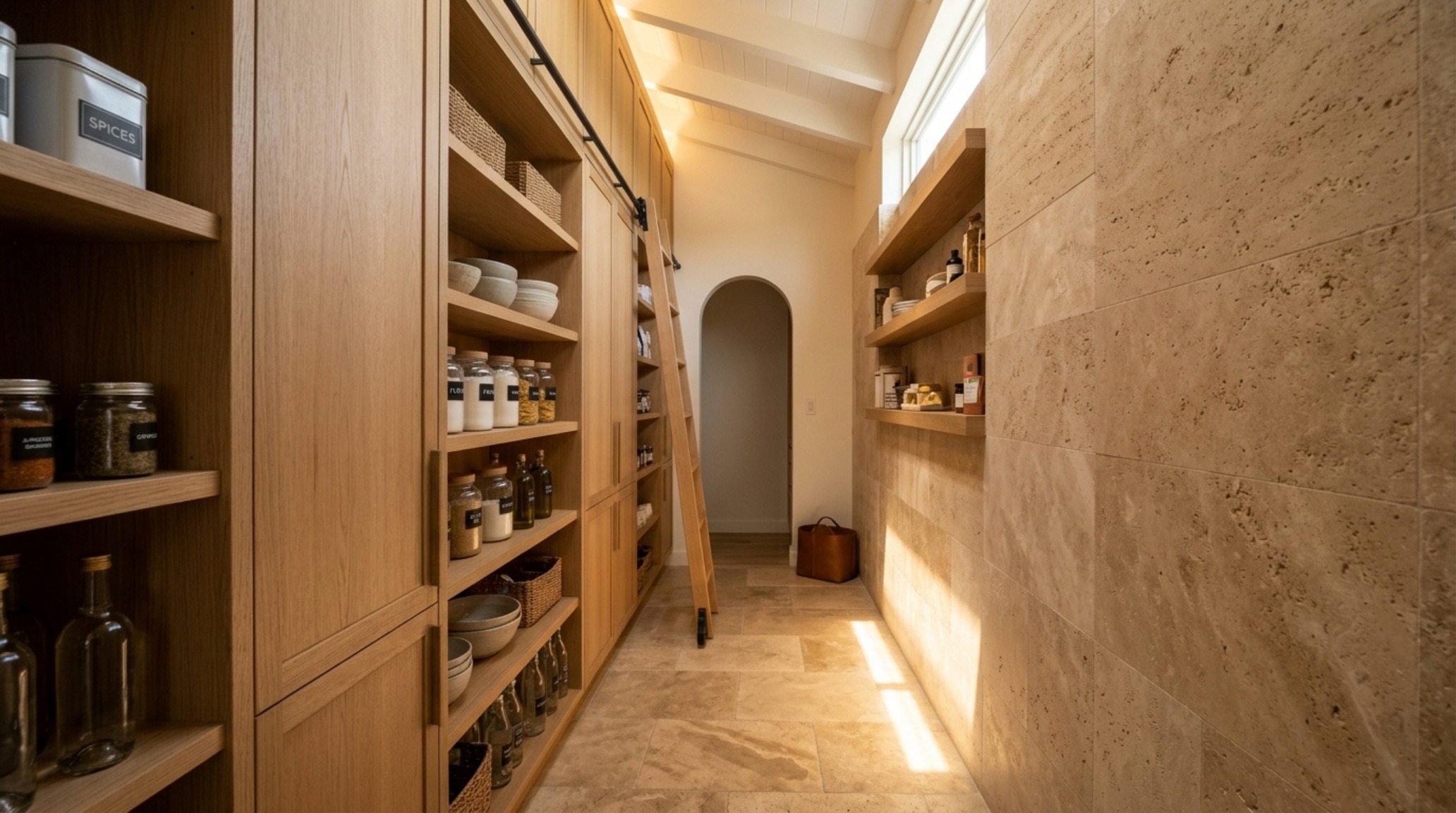
Beyond the shelves, consider the floor. If the budget allows, carrying the kitchen’s hardwood or stone flooring into the pantry creates a sense of continuity. However, a small-scale checkered marble tile can add a delightful ‘pâtisserie’ feel to the space. It’s these small, intentional details—the choice of a brass floor transition strip or a hand-turned wooden step stool—that elevate the experience from mundane to extraordinary.
Architectural Specification & Material Matrix
Curated tactile palette, spatial dimensions, and atmospheric lighting index for this design scheme.
Ultimately, the transition from a cluttered closet to a sensory sanctuary is a journey of refinement. By prioritizing small pantry organization ideas that celebrate materiality—the cool touch of travertine, the soft glow of 2700K light, and the rhythmic repetition of fluted glass—we create a space that nourishes more than just our bodies. It nourishes our aesthetic sensibilities. As we look toward the future of the home, the pantry stands as a testament to the idea that no space is too small for grand architectural thinking. It is an invitation to slow down, to appreciate the simple beauty of a well-stocked shelf, and to find luxury in the most everyday moments of our culinary lives.
Editorial Silo • Recommended Architecture Studies
- Ergonomic Mastery: Functional & Space-Saving Hacks with Small Pantry Organization Ideas — Archival Design Case Study
- The Architecture of Order: Engineering Vertical Proportions in the Micro-Pantry — Archival Design Case Study
Architectural Inspiration Lookbook
A high-resolution study in spatial proportions, tactile materiality, and light choreography curated for enduring modern living.
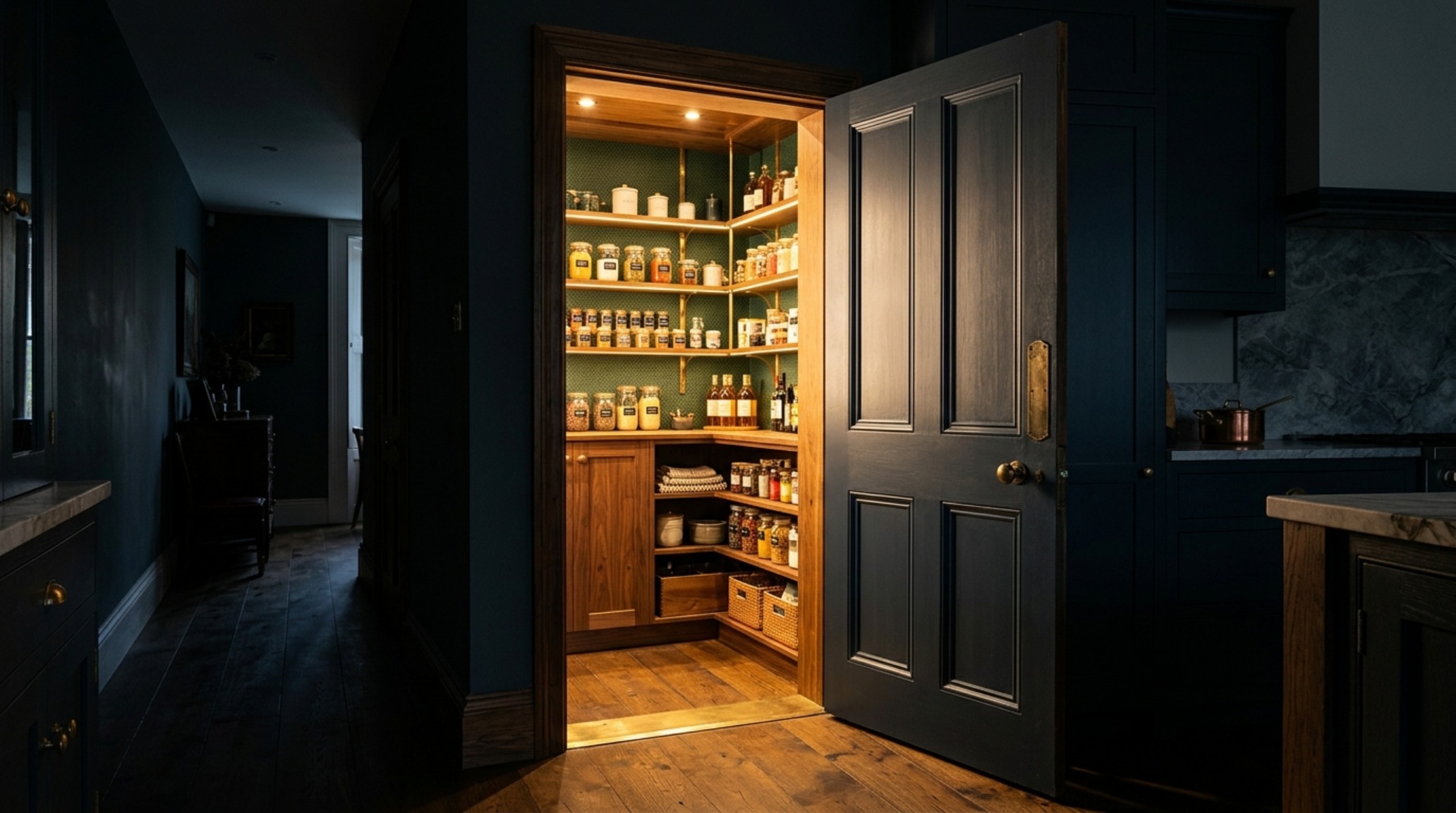
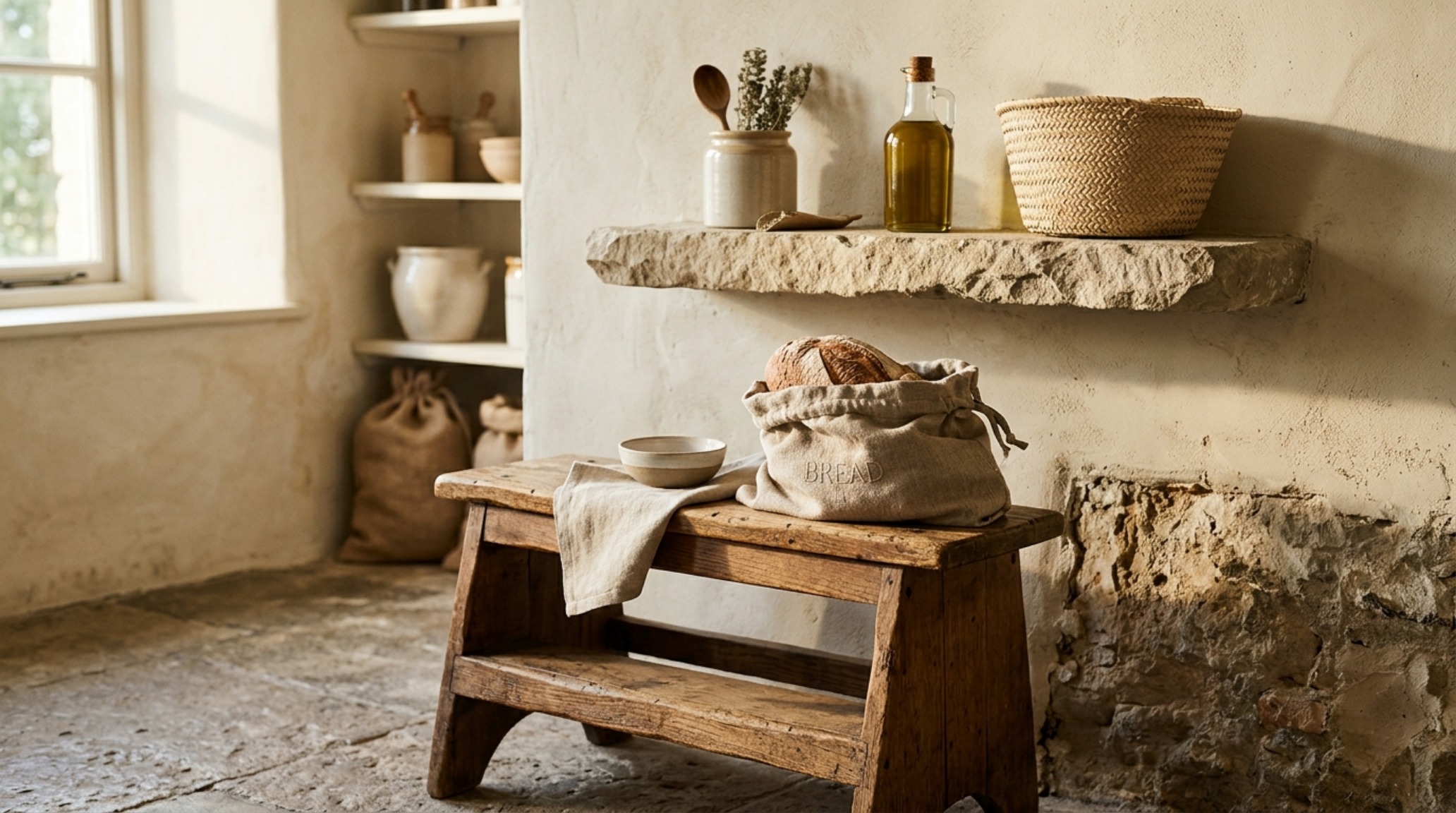
Curated Visual Lookbook
Design Gallery & Spatial Studies
A visual curation of architectural arrangements, lighting concepts, and material palettes featured in this space.