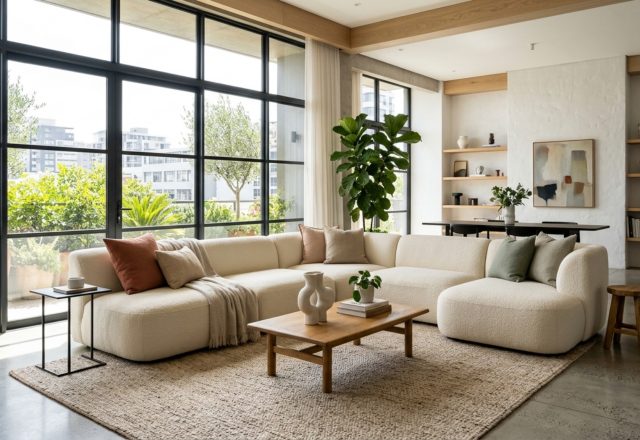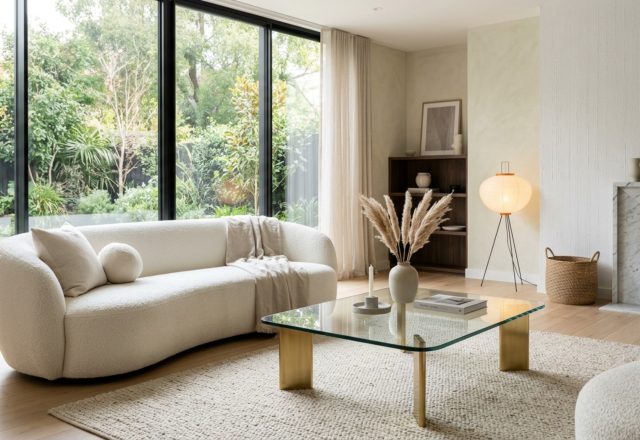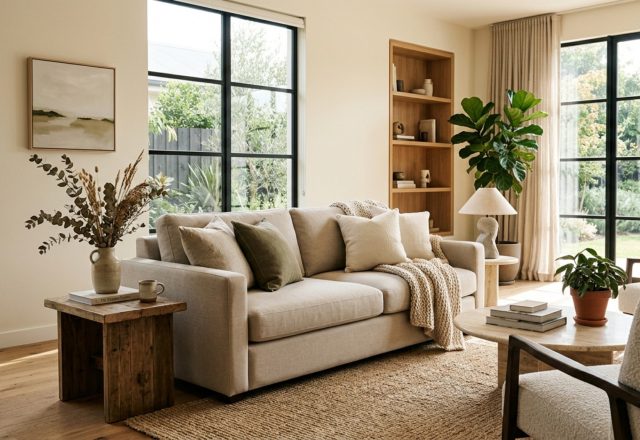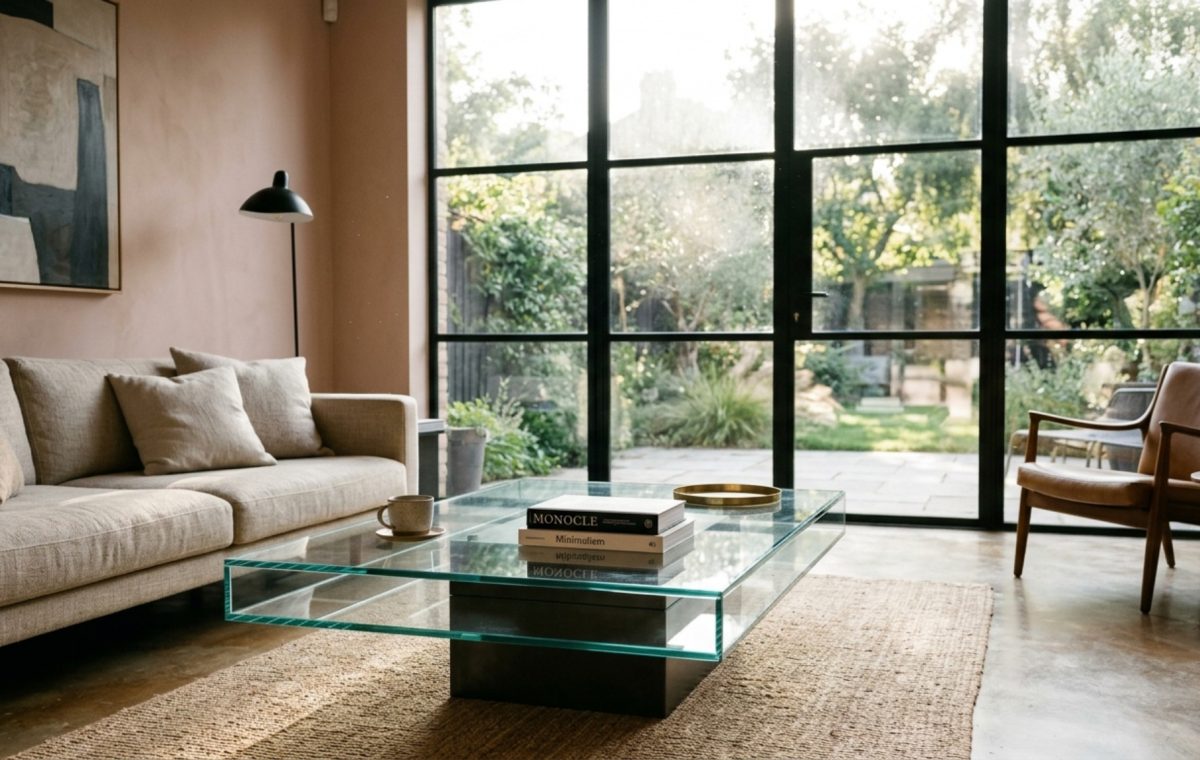
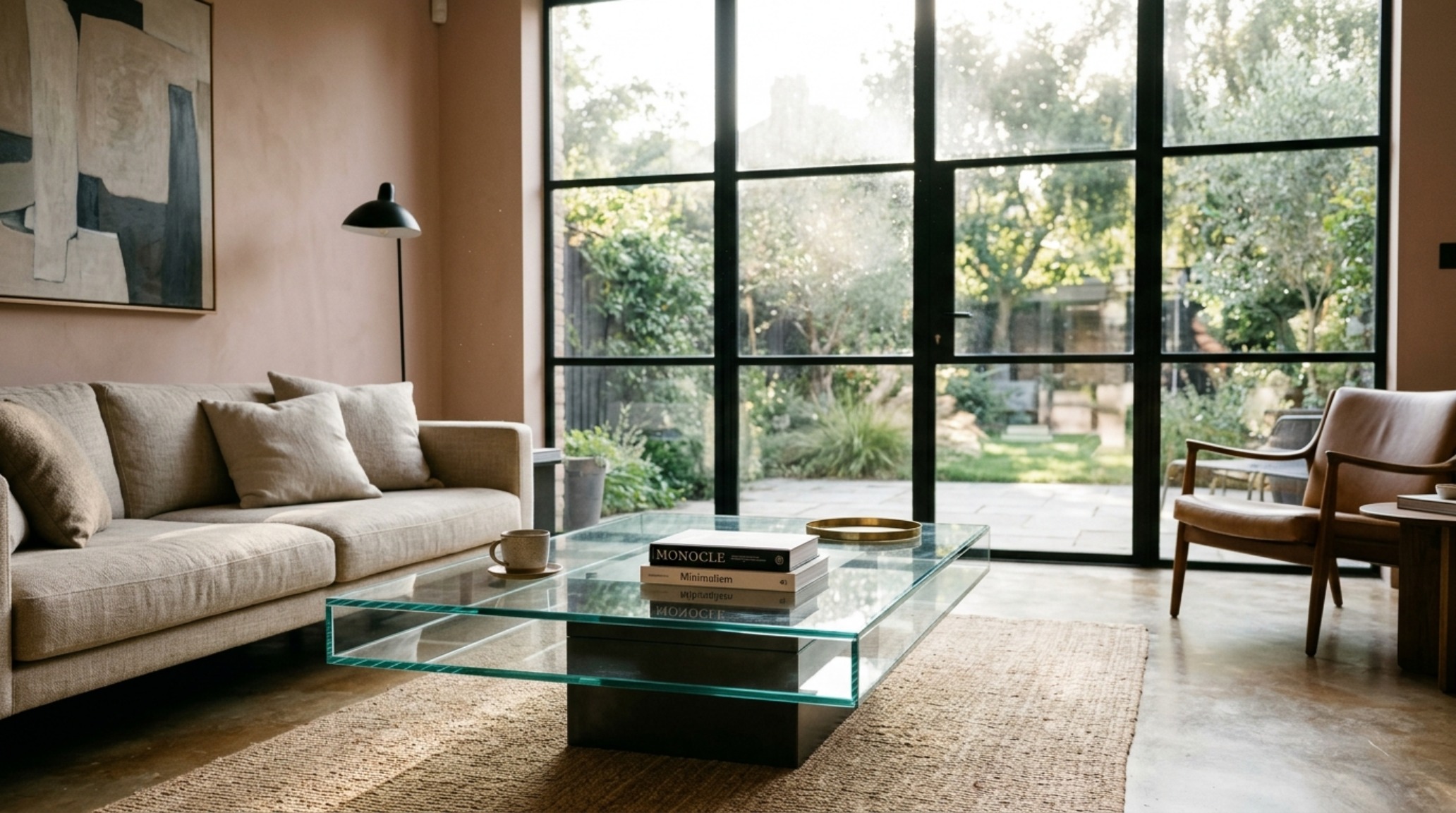
We often talk about interior design in terms of what we add to a room—the weight of a velvet sofa, the grounding presence of a walnut credenza, the verticality of a floor lamp. But the most sophisticated residential projects today aren’t focusing on presence; they are focusing on absence. In the world of high-end spatial harmony, finding the right mind blowing glass coffee tables decor ideas isn’t about filling a void; it’s about curating the void itself. It is the architectural equivalent of a deep, cleansing breath for your living room. By using 12mm tempered architectural glass and cantilevered structures, we can solve the paradox of the ‘crowded floor’ while maintaining a high-impact sensory atmosphere.
The Physics of Visual Weightlessness
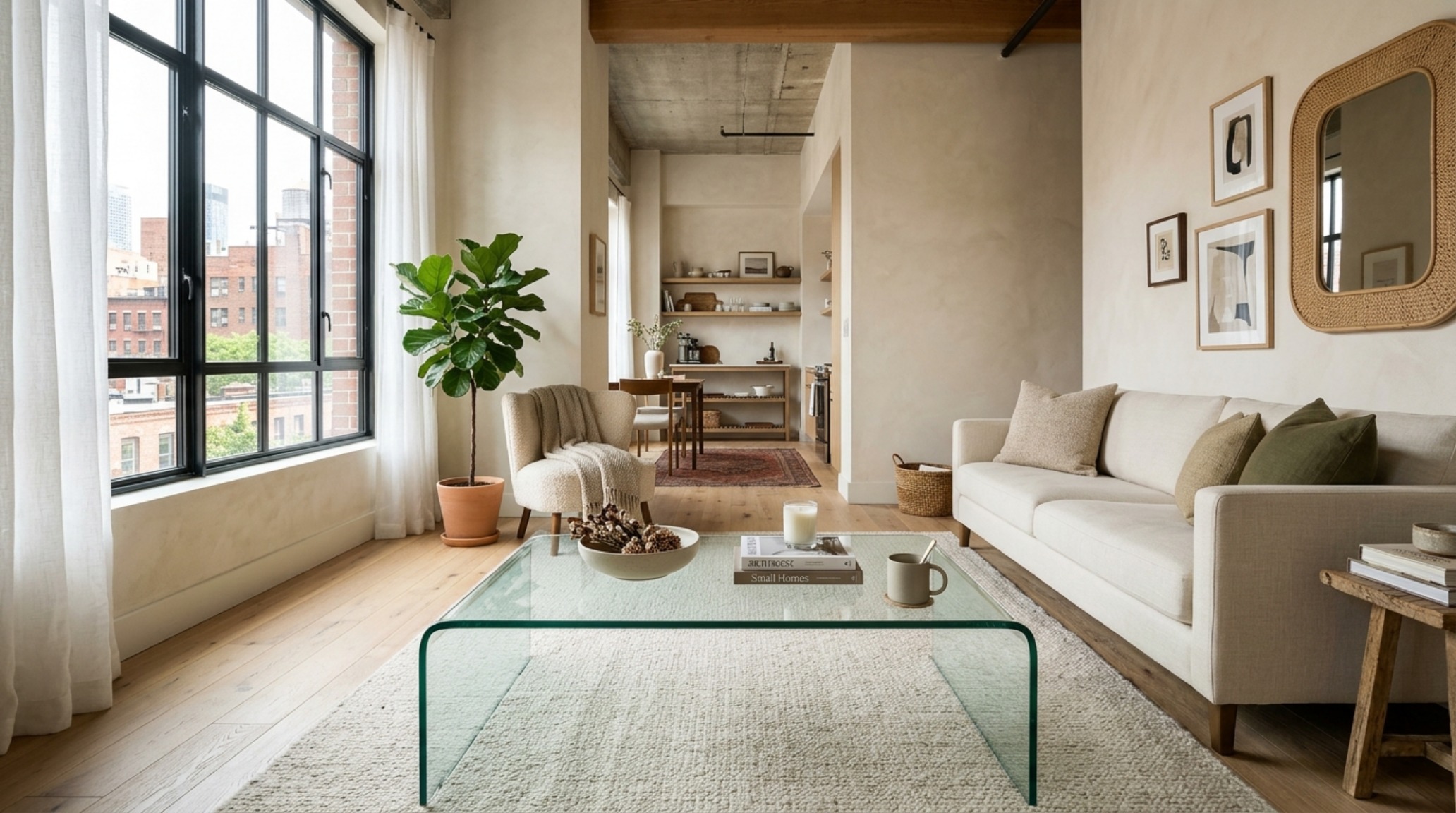
The concept of visual weight is the primary driver of spatial anxiety in compact urban dwellings. When a heavy, opaque block—like a solid wood coffee table—sits in the center of a room, it creates a visual dead zone. It stops the eye. Architectural glass, however, functions as a ‘ghost’ element. By utilizing low-iron glass (which eliminates that dated green tint common in cheaper alternatives), we allow the flooring material—whether it is a hand-knotted wool rug or honed European oak—to flow uninterrupted under the furniture. This creates a psychological perception of more square footage than actually exists.
Structural Engineering Meets High-End Aesthetics
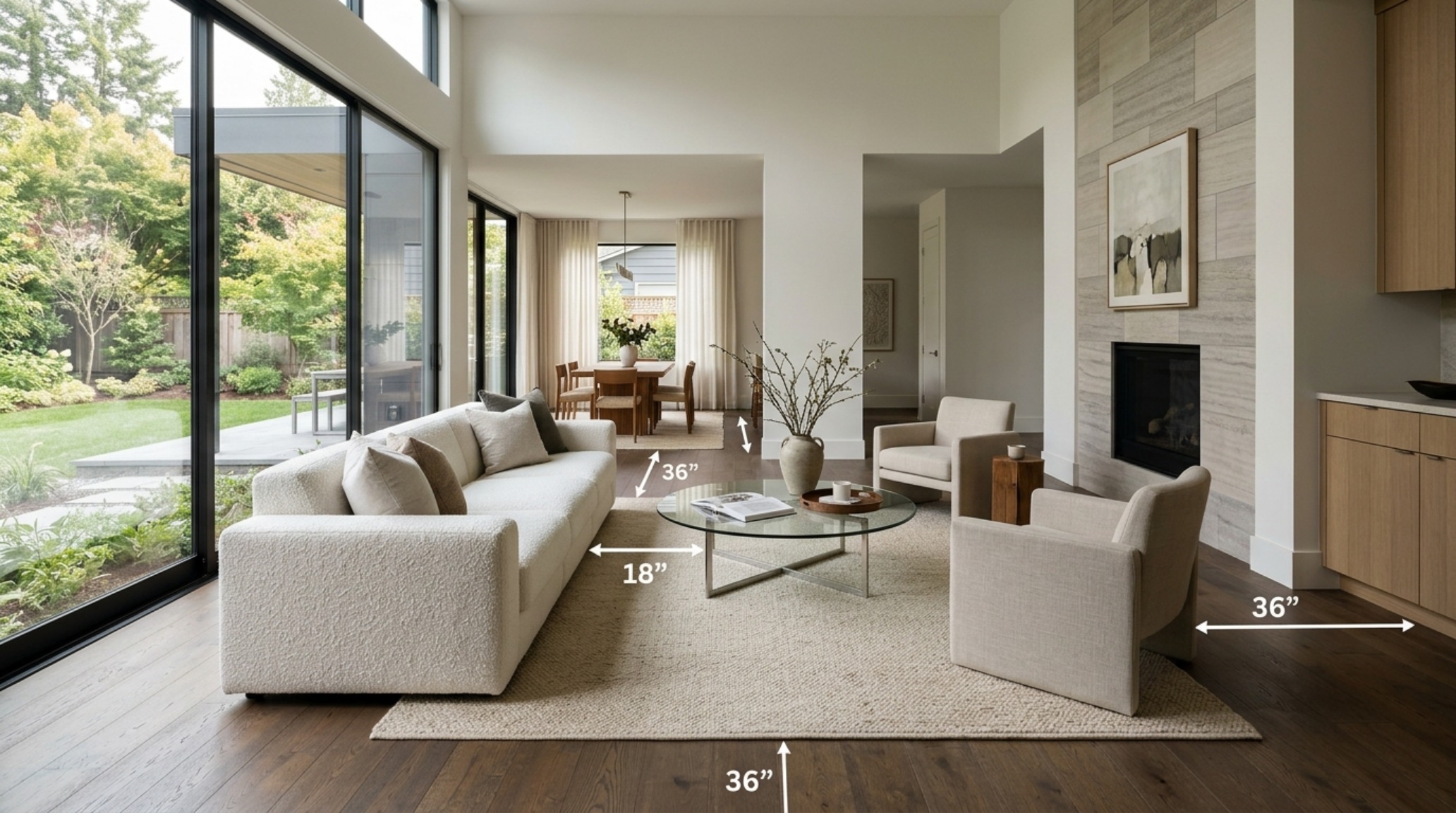
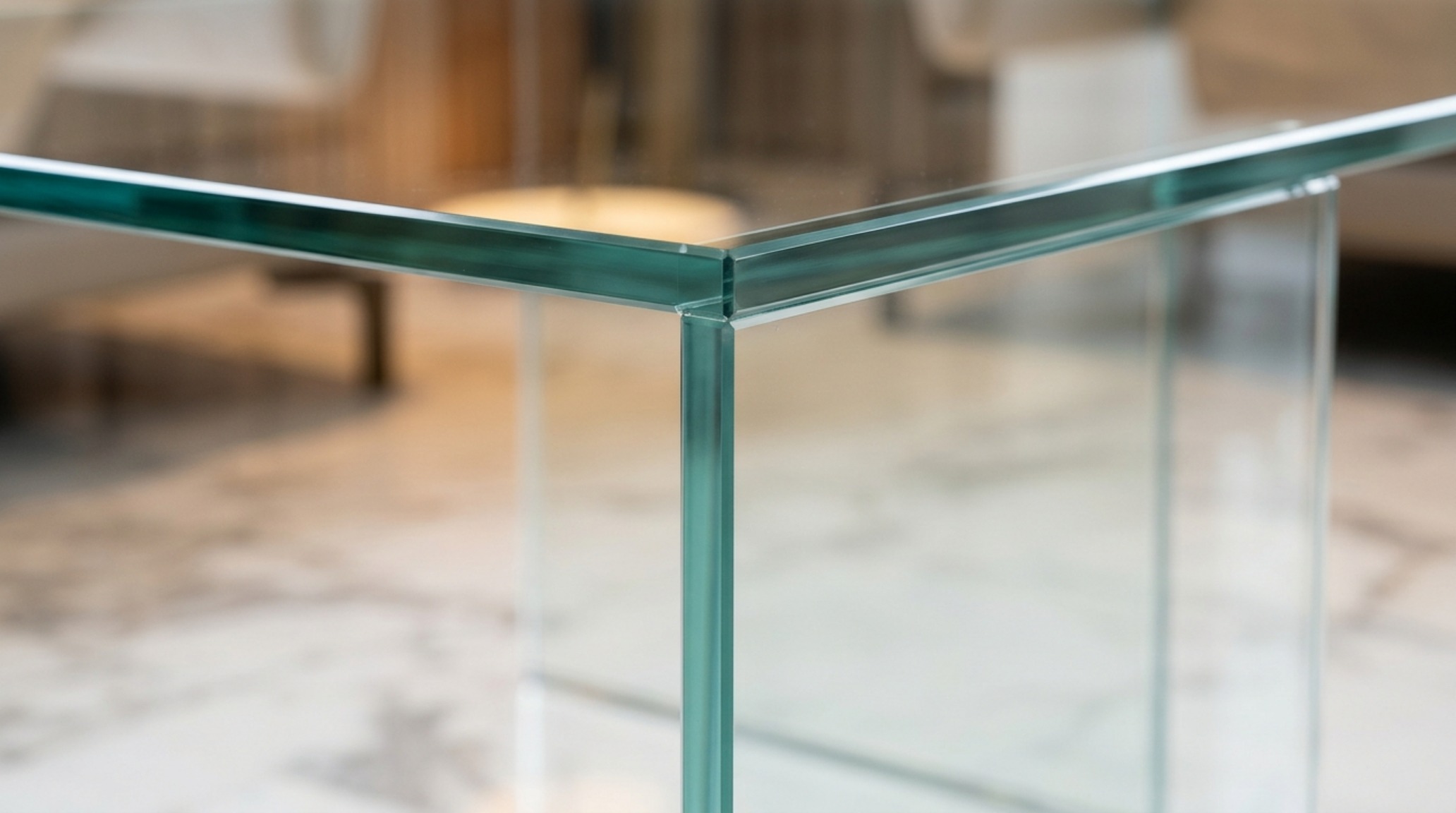
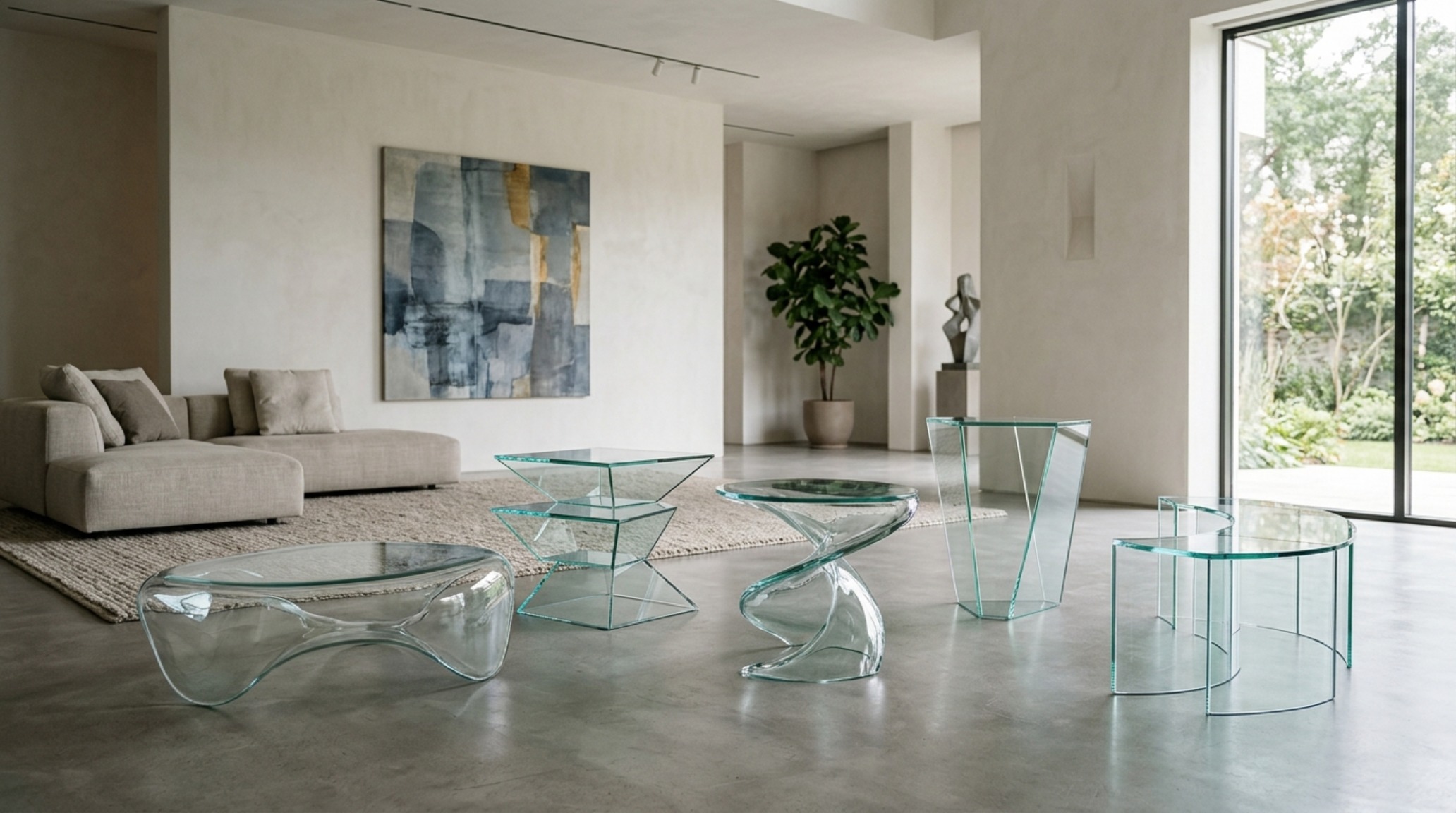
When we look at sculptural glass furniture, we are looking at a feat of engineering. The most sought-after designs today leverage UV-bonding technology, which allows glass-to-glass joints to remain entirely invisible, giving the illusion that a horizontal plane is simply hovering 18 inches above the floor. This height is no accident; 18 inches is the industry standard for coffee table reach, allowing for a comfortable ergonomic transition from a standard 17-to-19-inch sofa seat height. When you choose a cantilevered glass design, you are effectively removing the ‘legs’ of the furniture from the visual field, which instantly opens up 36-inch primary circulation walkways, making them feel airy rather than tight.
Mind Blowing Glass Coffee Tables Decor Ideas for the Organic Modernist
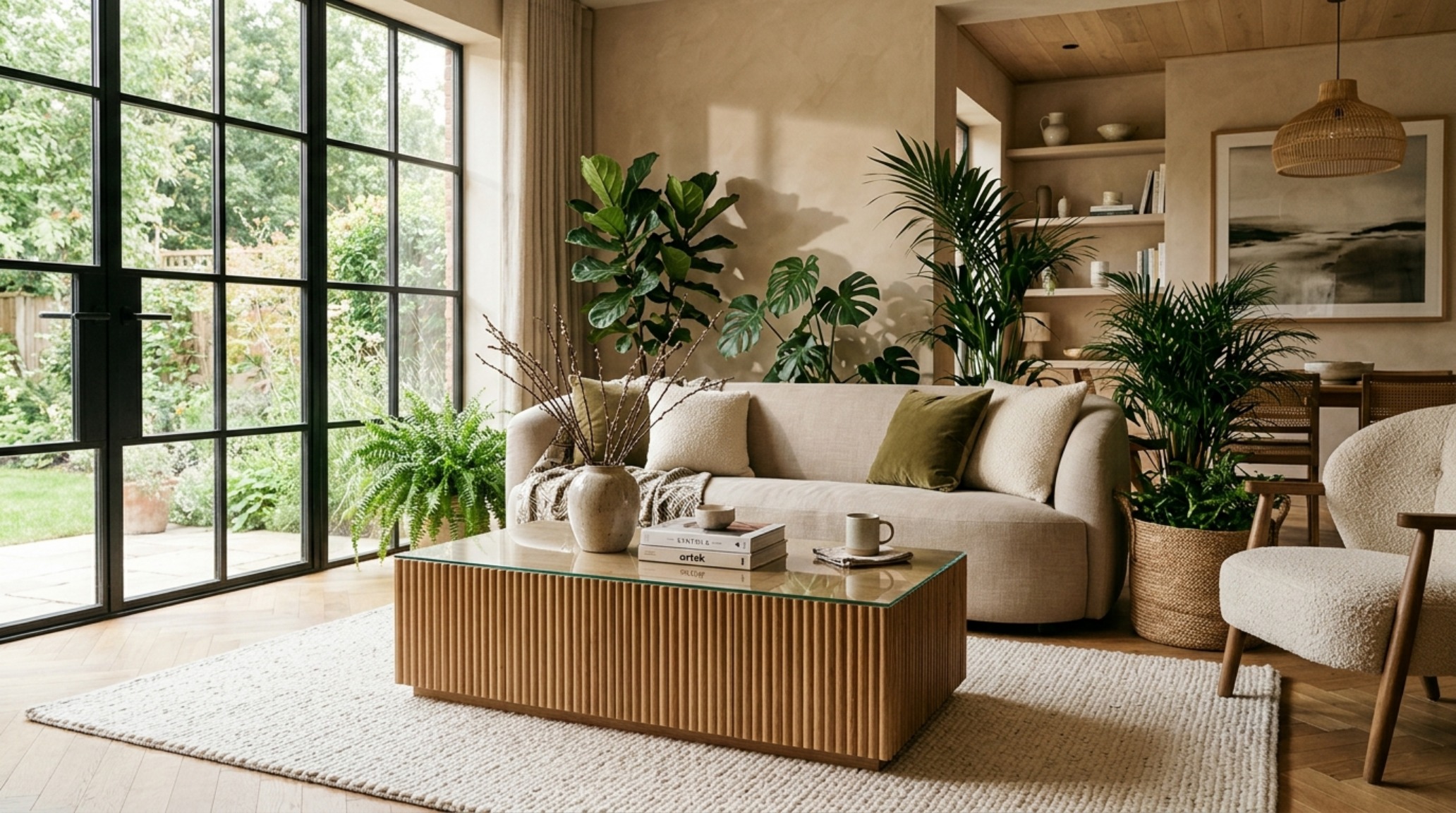
The most compelling evolution in modern transparent decor is the marriage of cold, sharp glass with warm, tactile materials. We are seeing a massive shift toward Organic Modernism—a style that favors the intersection of man-made precision and raw natural beauty. This is where mind blowing glass coffee tables decor ideas truly shine. Imagine a 12mm thick glass top supported by a singular, monolithic base of honed travertine or fluted white oak. The contrast is visceral. The glass provides the sightline alignment, while the stone or wood provides the tactile grounding required to make a room feel like a home rather than a gallery.
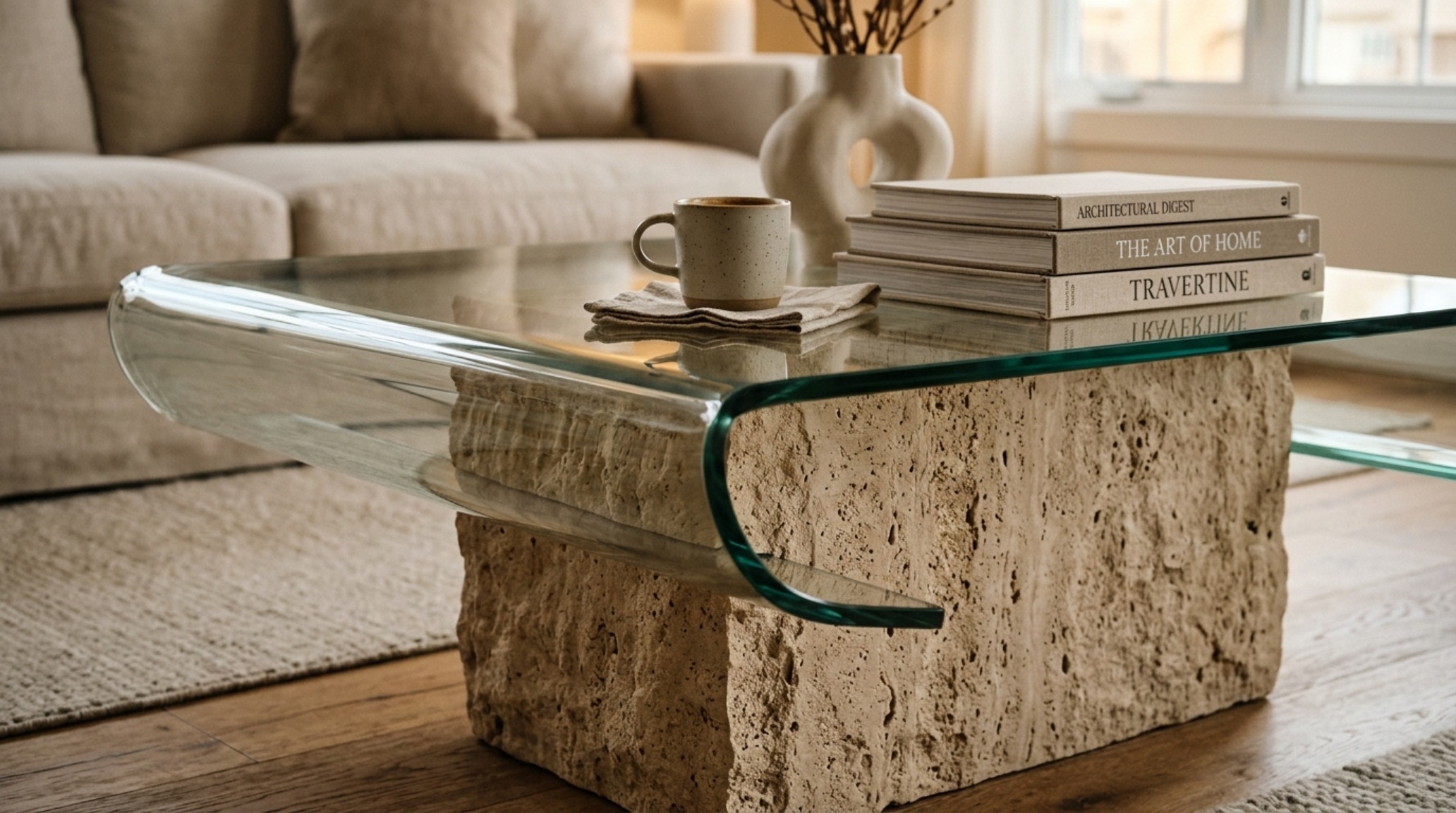
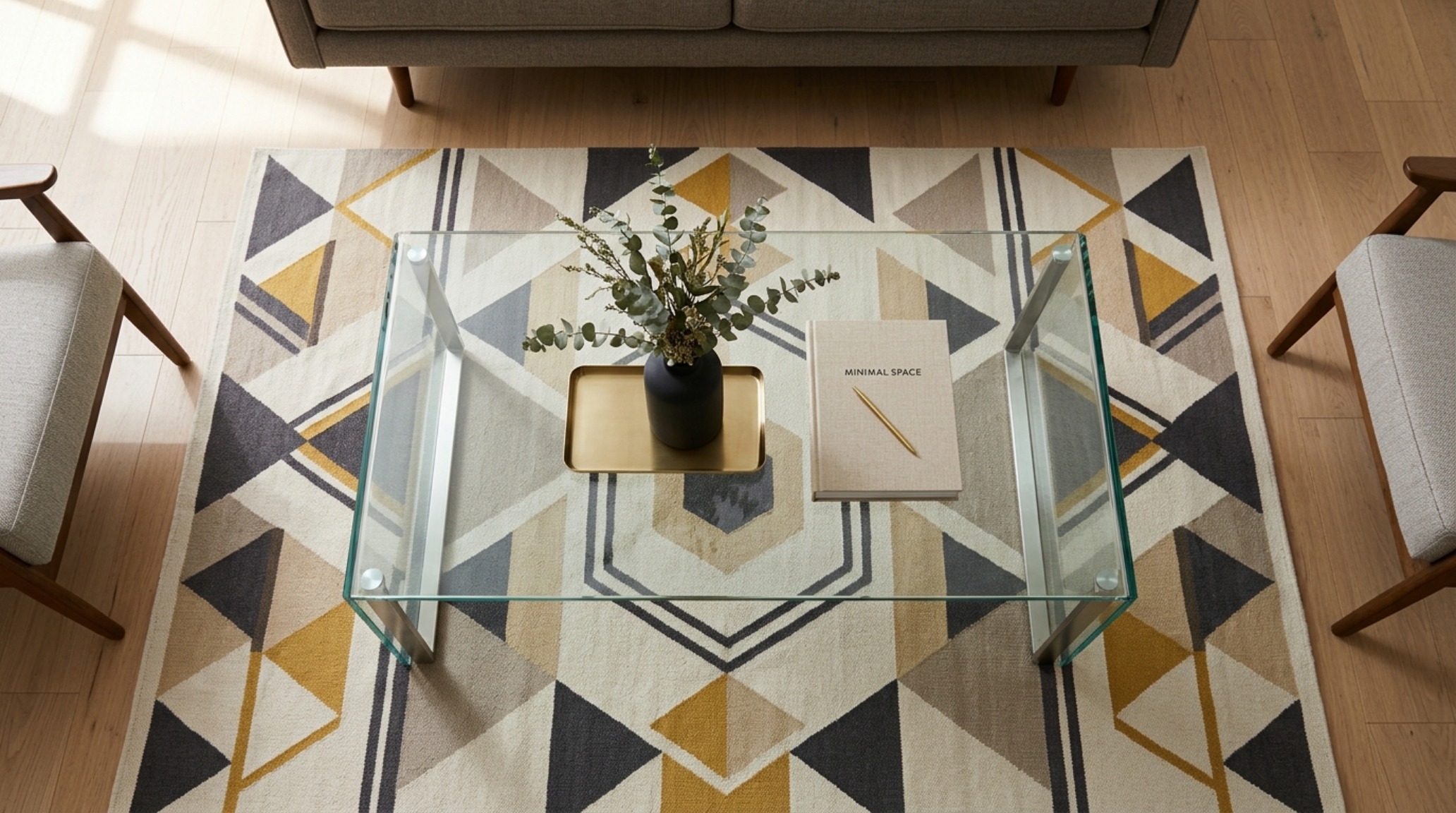
In this design paradigm, the glass acts as a protective, invisible lens through which we appreciate the textures beneath it. If you have invested in a high-pile Moroccan Beni Ourain rug, an opaque table would cover 30% of its visual beauty. A glass table, conversely, frames the rug. This is the ‘gallery effect’—treating your floor and its coverings as art pieces that deserve to be seen from every angle. It bridges the gap between structural engineering and the cozy, human-centric needs of a living space.
The Art of the Edge: Polished vs. Beveled
Architecture is in the details, and with glass furniture, the edge treatment is everything. A ‘pencil polish’ edge offers a soft, rounded finish that disappears into the room, ideal for households where safety and fluid movement are priorities. However, a ‘flat polish’ edge provides a sharp, crisp line that catches the light in a more architectural way, defining the boundaries of the table without closing them off. When we specify glass for high-end projects, we look for a minimum thickness of 1/2 inch (12mm) to ensure structural integrity and a premium feel. Anything thinner risks looking like a temporary fix; anything thicker can start to regain that visual weight we are trying to avoid.
Spatial Design Solutions: The 18-Inch Rule and Sightline Cadence
One of the most frequent mistakes in living room layouts is the ‘cluttering of the knees.’ When furniture is too dense, the spatial cadence is broken, and the room feels frantic. To maintain spatial harmony, we adhere to the 18-inch rule: the distance between the edge of the sofa and the coffee table should be precisely 18 inches. This allows for comfortable legroom while keeping the table within easy reach for a drink or a book. In smaller rooms, using a curved glass coffee table for cozy living environments helps soften the ‘traffic lanes’—those 36-inch walkways—by removing sharp corners that might catch a hip or a knee.
The transparency of these pieces also allows for ‘layering’ without the bulk. You can place a small, sculptural ottoman or a stack of oversized art books beneath a glass table. Because the table is transparent, these items become part of a three-dimensional composition rather than just more stuff under a table. This is a primary small living room glass furniture hack: use the space beneath the table as a curated display area that maintains the negative space breathing room.
Atmospheric Resonance: Shadow Play and Refraction
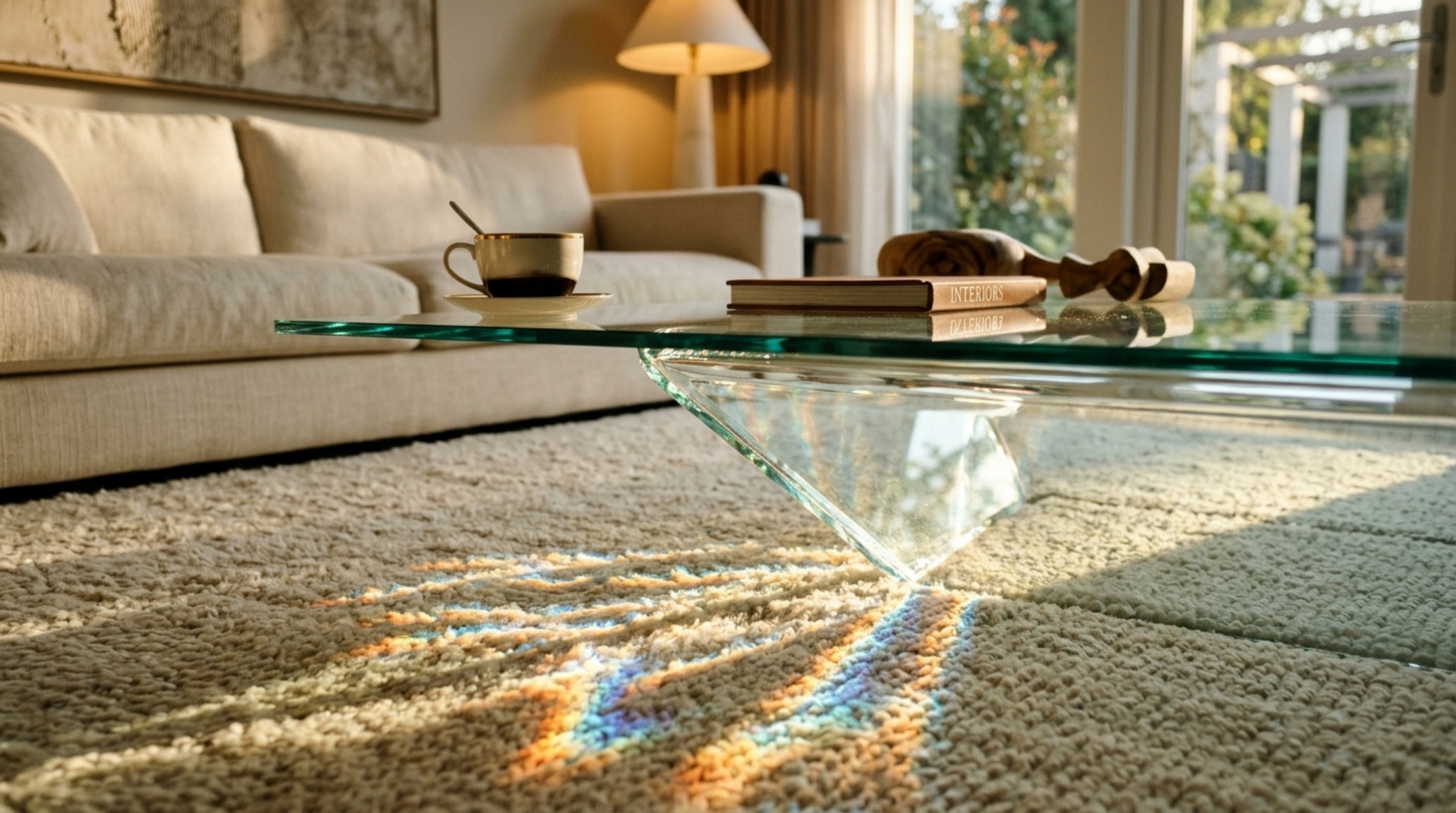
Glass is not just a material; it is a light-modifier. In a room flooded with natural sunlight, a glass table becomes a prism. It creates caustics—those dancing patterns of light that you see at the bottom of a swimming pool—across your rug and walls. This is where the choice of lighting becomes critical. For a truly high-end atmosphere, we recommend a warm ambient light at 2700K. This temperature brings out the creaminess in materials like Farrow & Ball Setting Plaster or Benjamin Moore Swiss Coffee walls. When this light hits the edge of a glass table, it creates a subtle, glowing line that defines the piece without overwhelming the space.
High CRI Lighting and the Glass Aesthetic
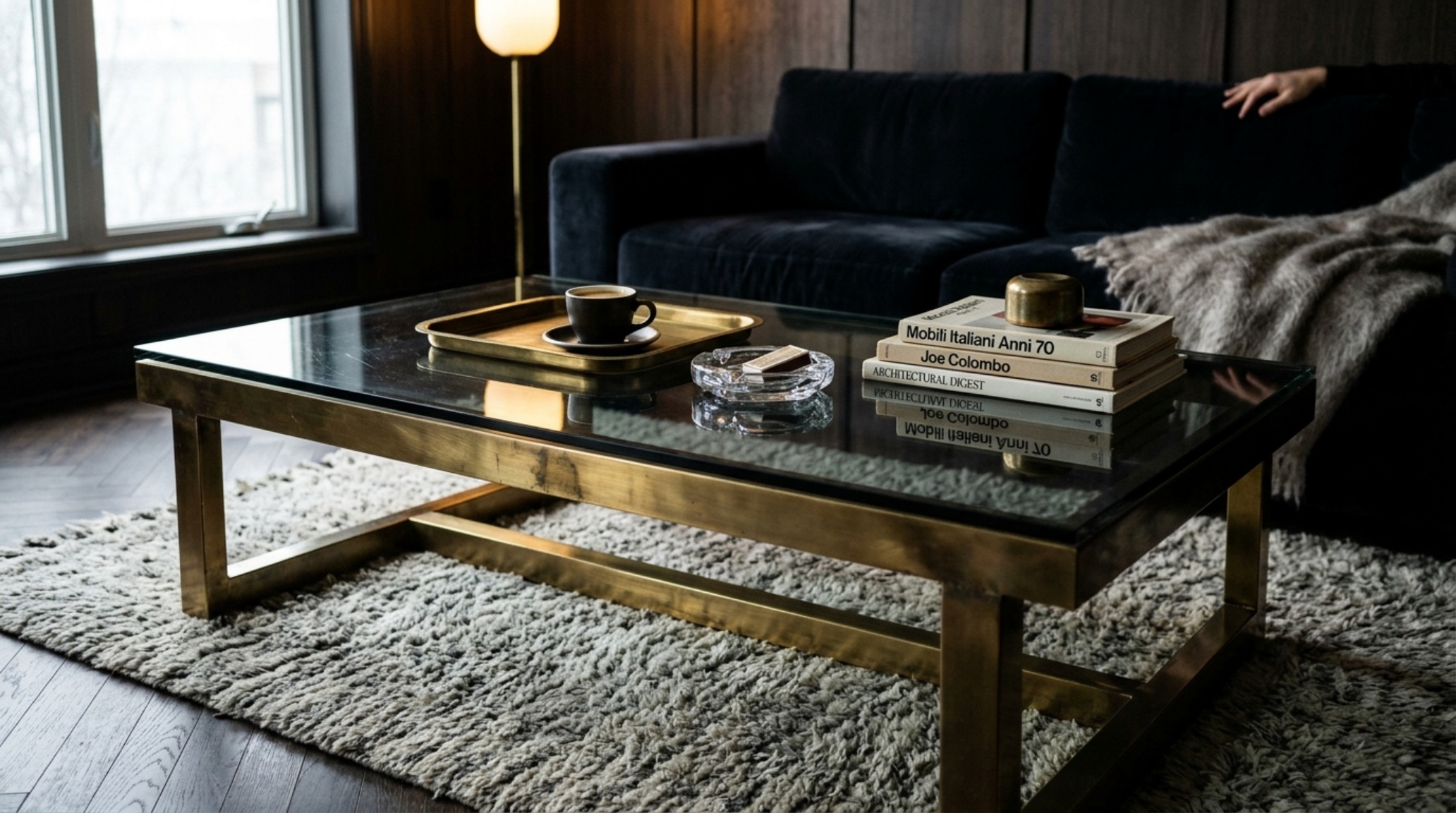
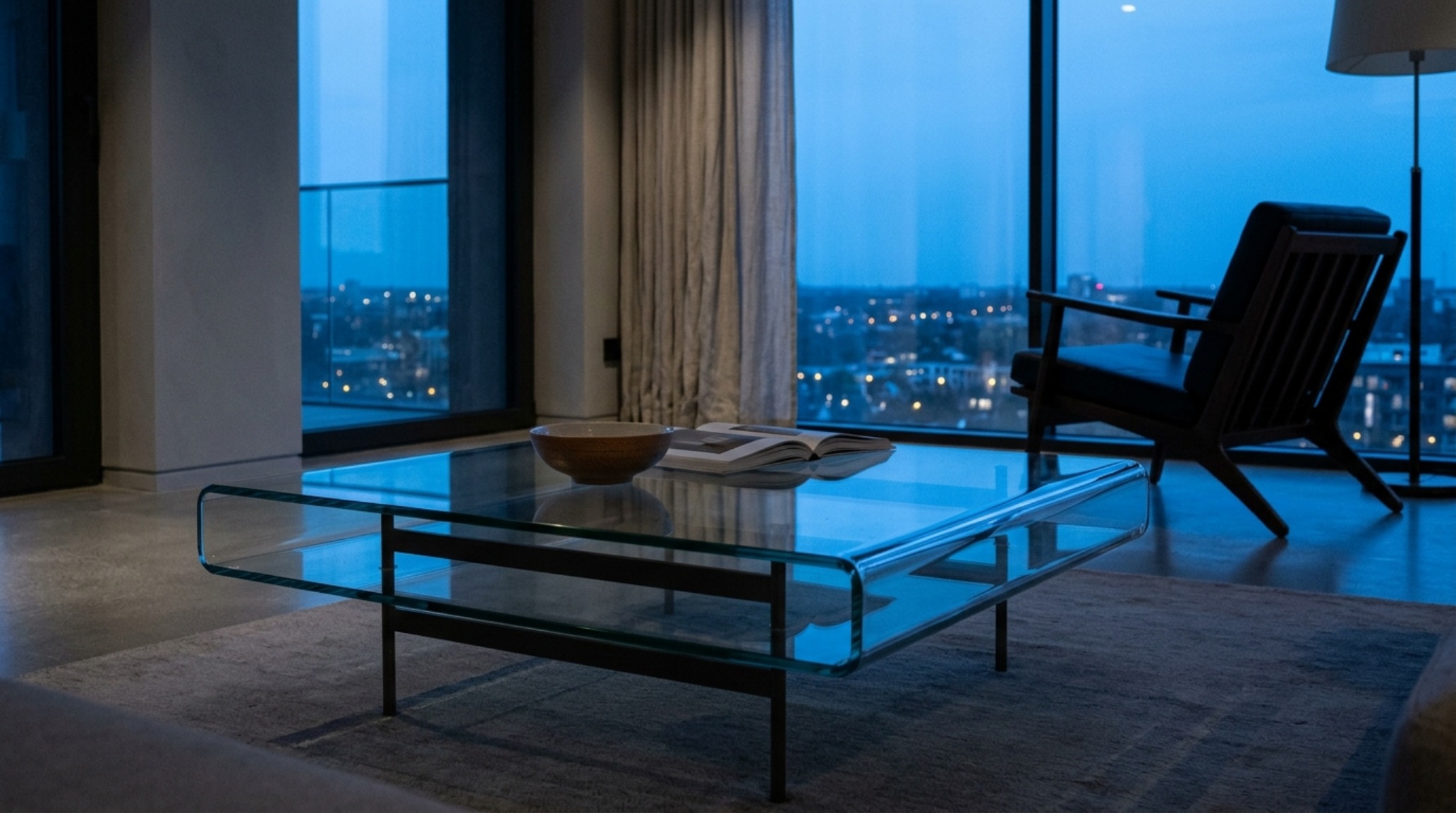
To avoid the ‘hospital feel’ sometimes associated with glass and metal, ensure your light sources have a High CRI (Color Rendering Index) of 90 or above. This ensures that the colors of your decor—the rich greens of a velvet sofa or the warm tones of a travertine base—are rendered accurately through the glass. At night, diffused directional lighting from a dimmable floor lamp can create dramatic shadow play, where the glass table almost disappears, leaving only the items styled on top of it to ‘float’ in the darkness. This adds a layer of mystery and sophistication that opaque furniture simply cannot replicate.
Styling the Invisible: Minimalist Curating
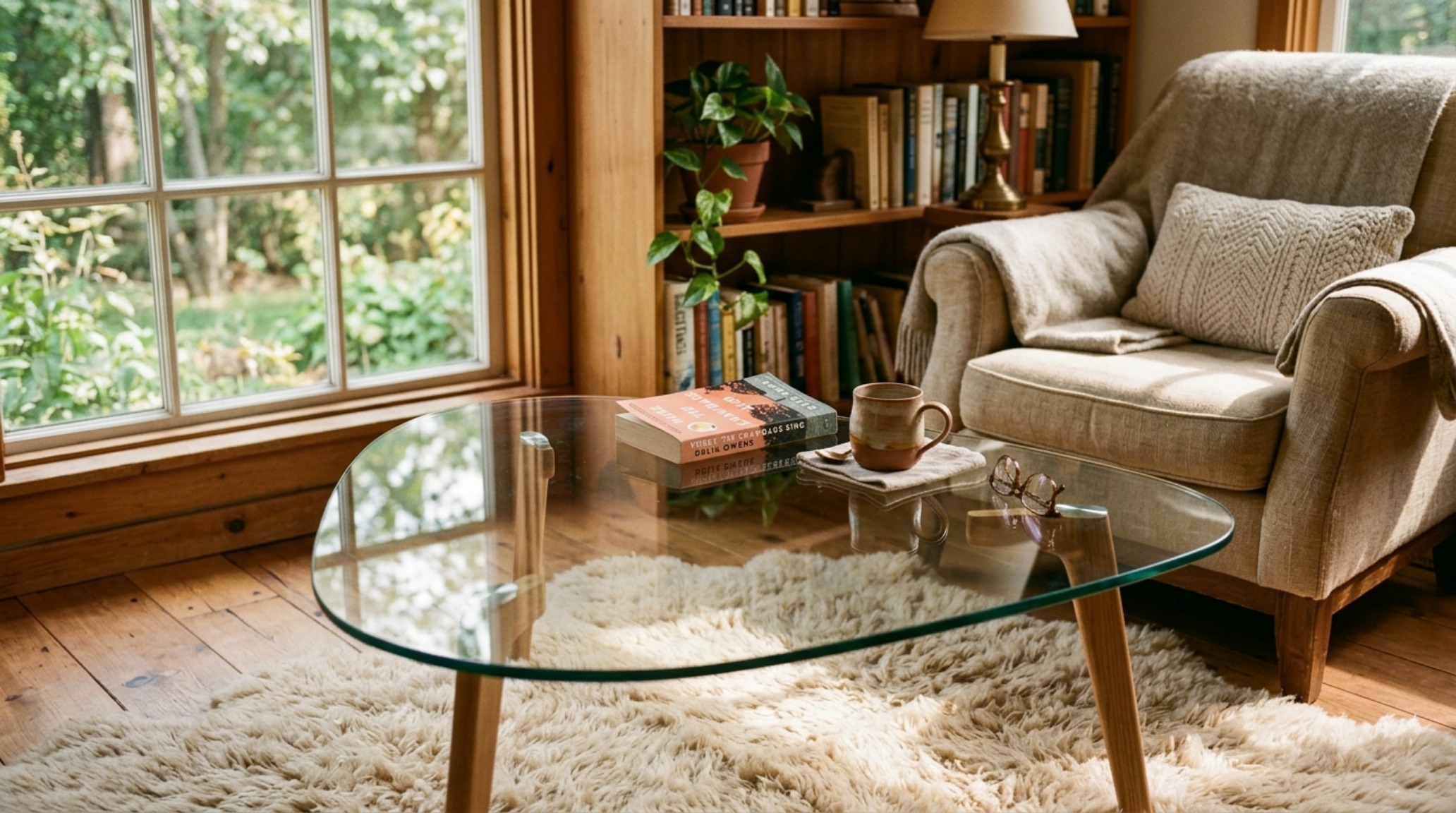
Styling a glass table requires a different mental model than styling wood or stone. Because the table is clear, the ‘bottom’ of your objects is just as important as the top. Avoid cluttered arrangements. Instead, opt for three distinct ‘islands’ of varying heights. A tall, sculptural vase with a single branch of eucalyptus, a flat tray in a contrasting material like brushed brass or blackened steel, and a small stack of textured books. This creates a hierarchy of interest. Using smoked glass coffee table interior design choices can also add a layer of moodiness; the slight tint acts like a pair of designer sunglasses for your floor, softening high-contrast rugs and adding a touch of ’70s Italian glamor.
Architectural Specification & Material Matrix
Curated tactile palette, spatial dimensions, and atmospheric lighting index for this design scheme.
Ultimately, the move toward transparency in our homes reflects a deeper desire for clarity and lightness in our daily lives. When we integrate mind blowing glass coffee tables decor ideas into our floor plans, we are doing more than just choosing a place to set a coffee cup. We are manipulating the very air of the room, inviting the light to stay longer and the walls to feel a little further apart. It is a quiet, structural magic that reminds us that the best design isn’t always what you see, but what you are finally able to see through.
Editorial Silo • Recommended Architecture Studies
- Fluid Living: The Modular Revolution in Compact Aesthetic Sofa Ergonomics — Archival Design Case Study
- The Architecture of Transparency: Engineering Visual Flow with Modern Glass Silhouettes — Archival Design Case Study
Architectural Inspiration Lookbook
A high-resolution study in spatial proportions, tactile materiality, and light choreography curated for enduring modern living.
Curated Visual Lookbook
Design Gallery & Spatial Studies
A visual curation of architectural arrangements, lighting concepts, and material palettes featured in this space.