The bedroom is arguably the only room in the home where the tactile experience should outweigh the visual. As we retreat from the digital noise of the day, our immediate surroundings must provide a soft landing—a sensory sanctuary that prioritizes touch, shadow, and the quiet weightlessness of well-considered design. This editorial exploration focuses on the art of the suspended surface, specifically looking at how floating nightstands decor ideas can transform a bedroom from a mere sleeping quarter into a high-end atmospheric retreat. By lifting the weight off the floor, we create a sense of spatial transparency, allowing the eye to travel further and the mind to breathe easier.
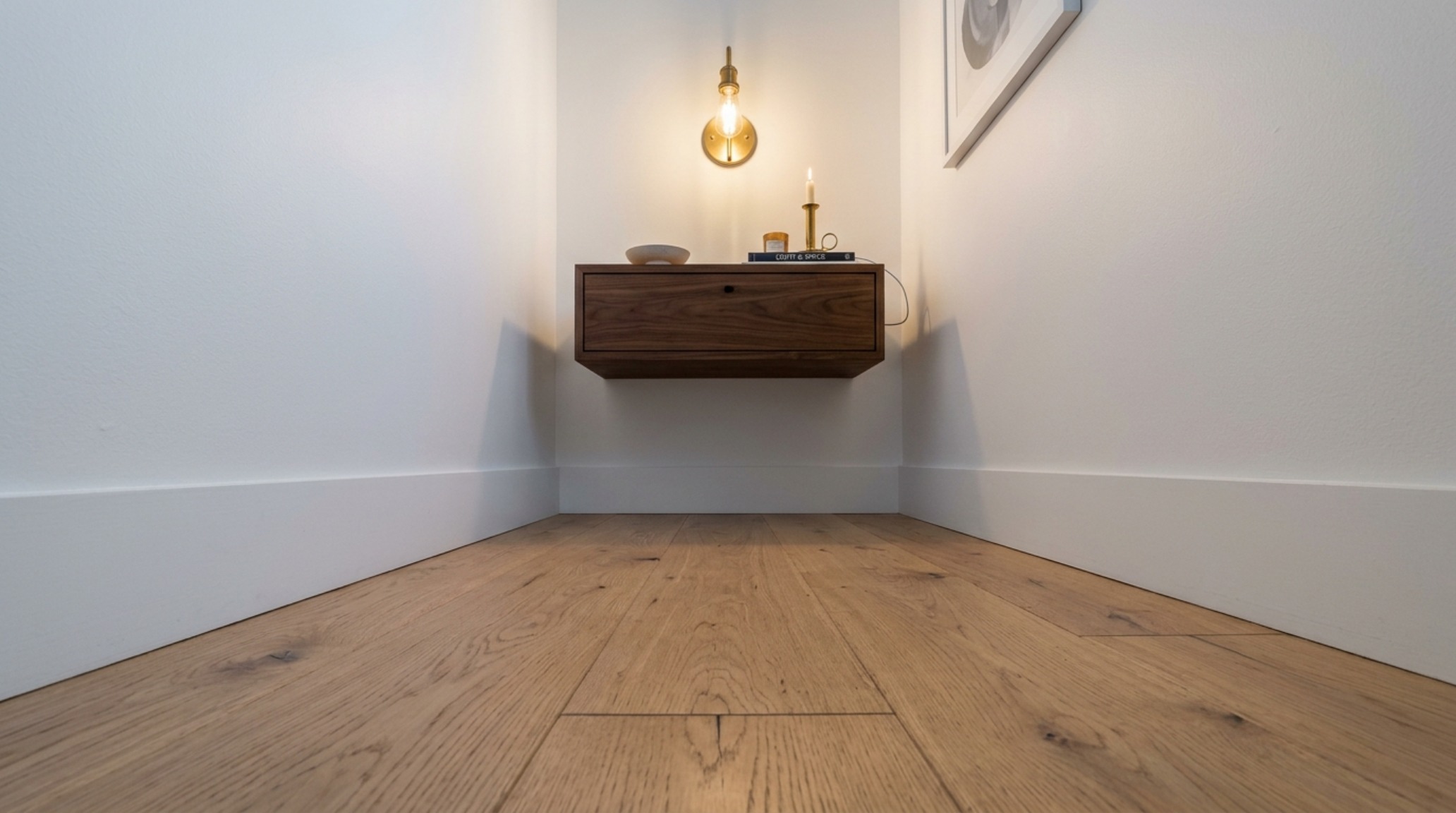
In the realm of structural architecture, the decision to wall-mount a bedside table is rarely just about saving inches in a studio apartment. It is a deliberate move toward Organic Modernism, where the negative space beneath the furniture becomes as significant as the object itself. When we remove the legs, we expose the flooring—be it wide-plank white oak or cool micro-cement—which instantly expands the perceived volume of the room. But once the surface is floating, the pressure shifts to the curation. How do we ground a suspended object? How do we balance the technical demands of 2700K lighting with the raw, unrefined textures of stone and timber?
The Materiality of Stillness: From Raw Timber to Honed Travertine
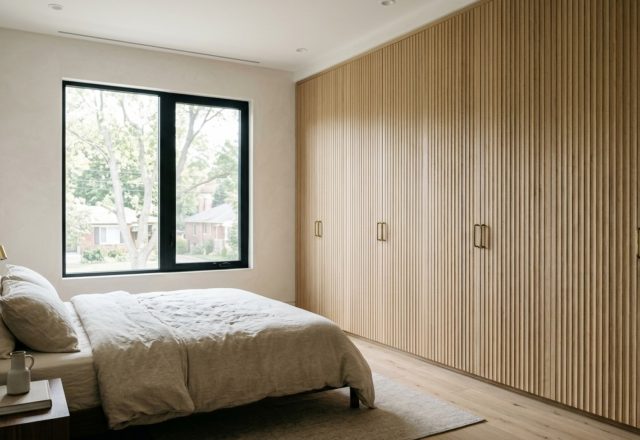
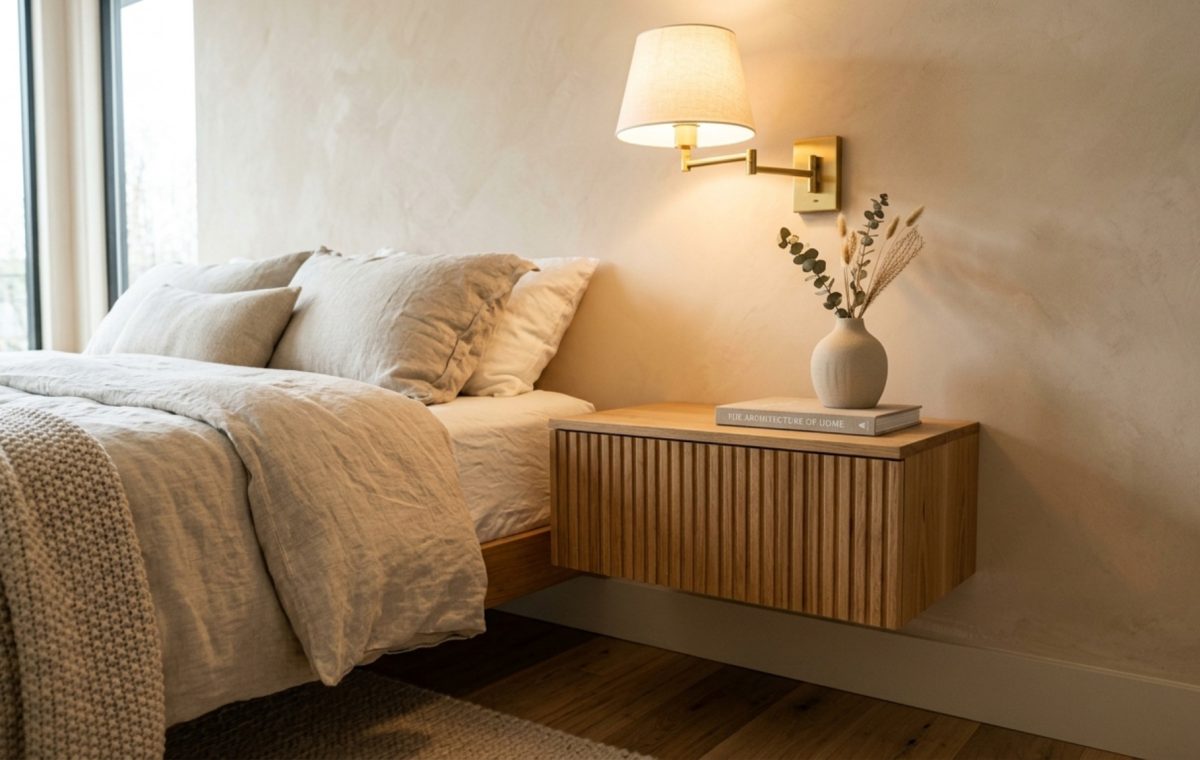
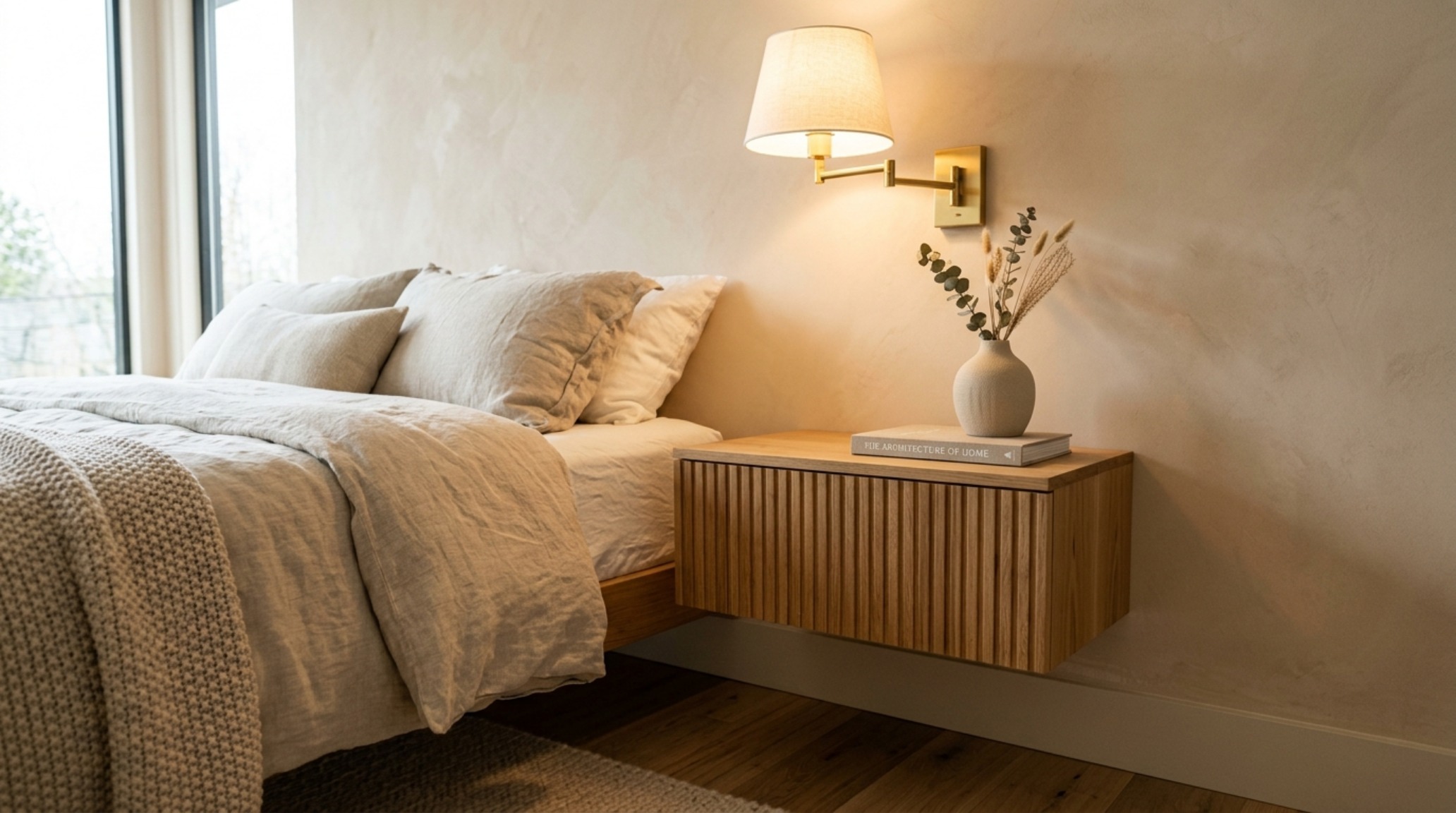
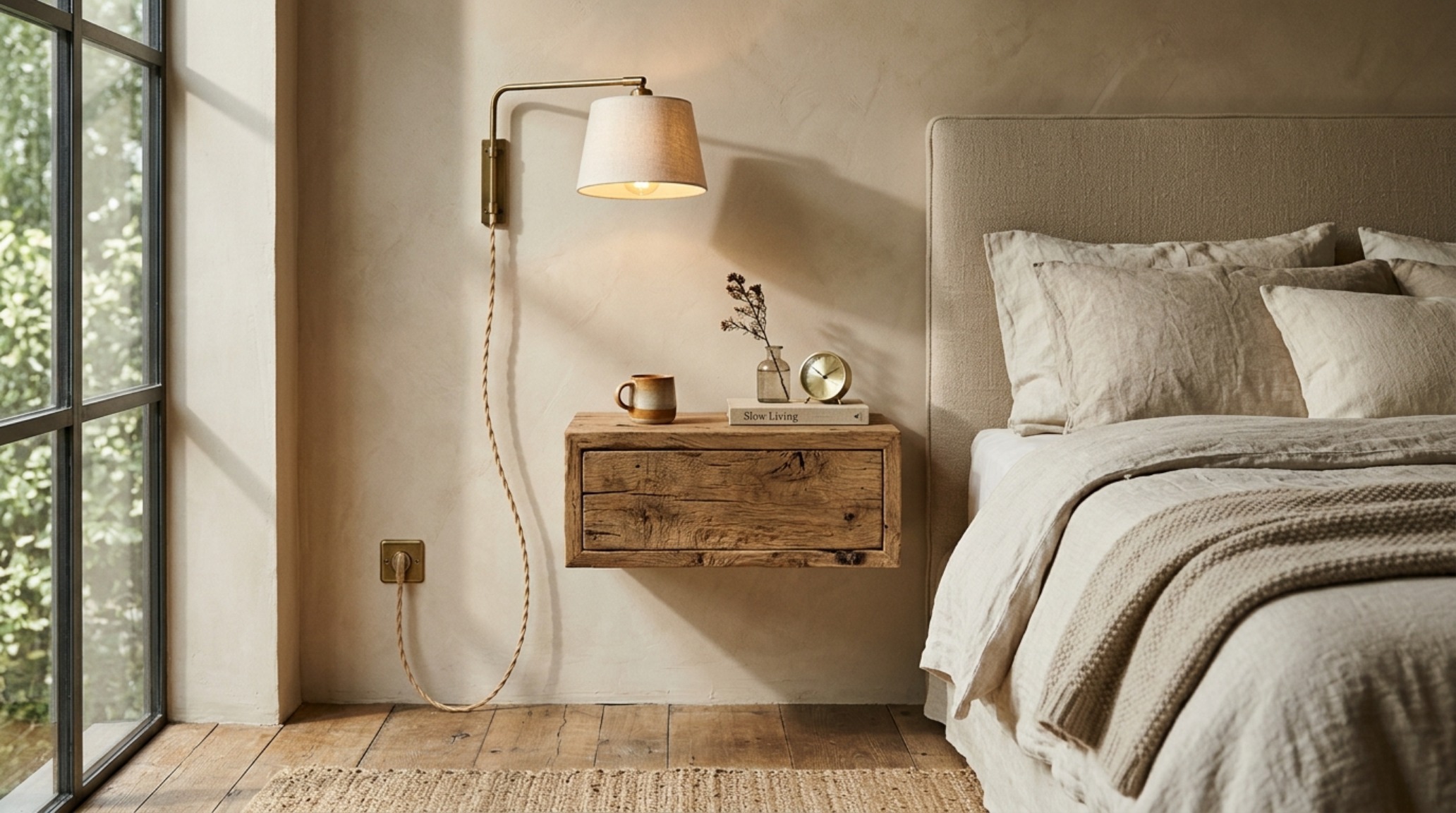
To master the aesthetic of wall-mounted bedroom furniture, one must first understand the dialogue between materials. We are seeing a significant move away from the high-gloss, synthetic finishes of the early 2010s toward a more grounded, earthy palette. Consider the visual tension created by a floating nightstand crafted from raw slatted timber. The verticality of the slats adds a rhythmic texture that plays with directional light, casting micro-shadows that change throughout the day. When paired with a limewash wall—perhaps in a shade like Farrow & Ball’s Ammonite—the result is a monochromatic depth that feels expensive yet effortless.
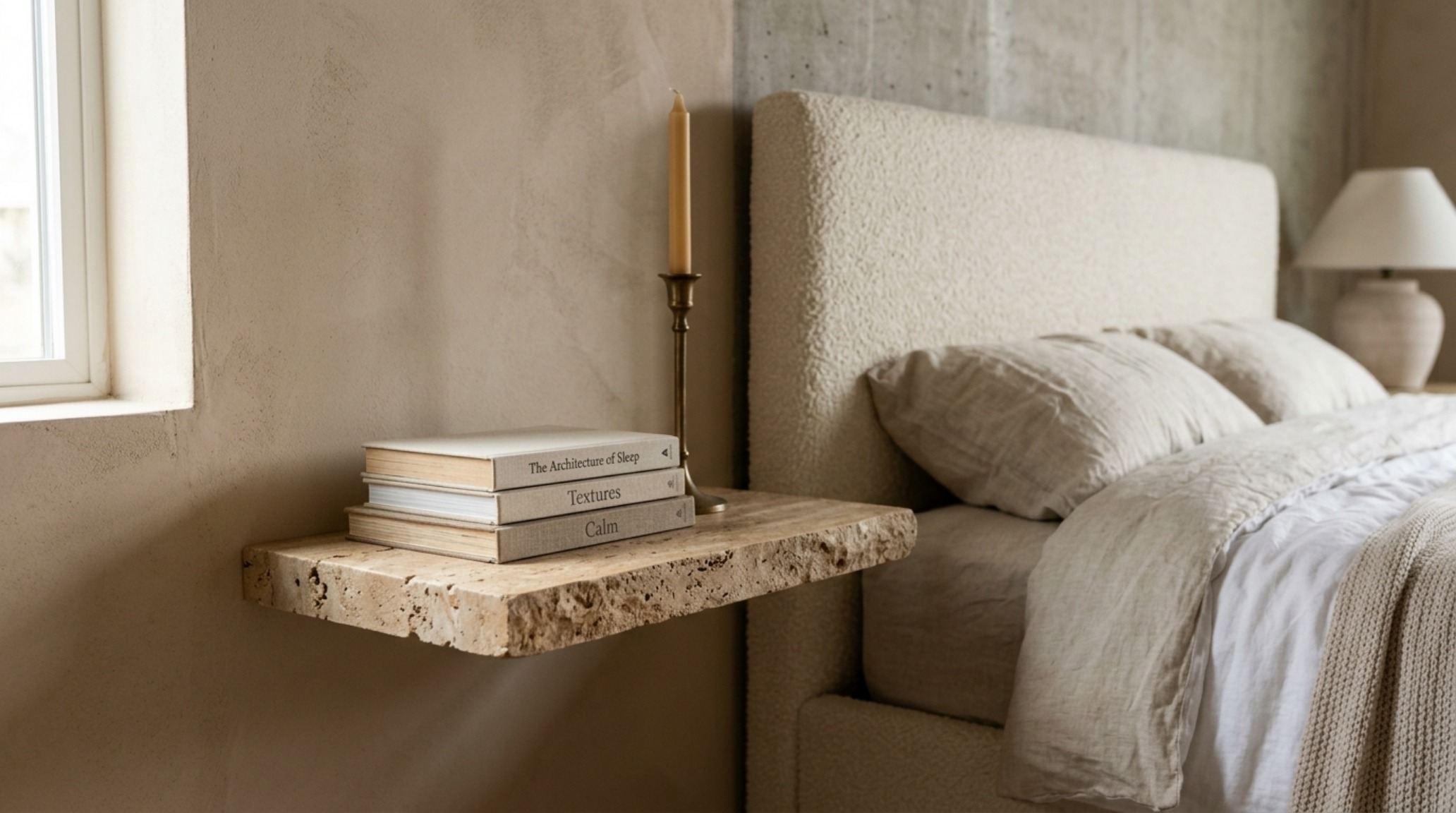
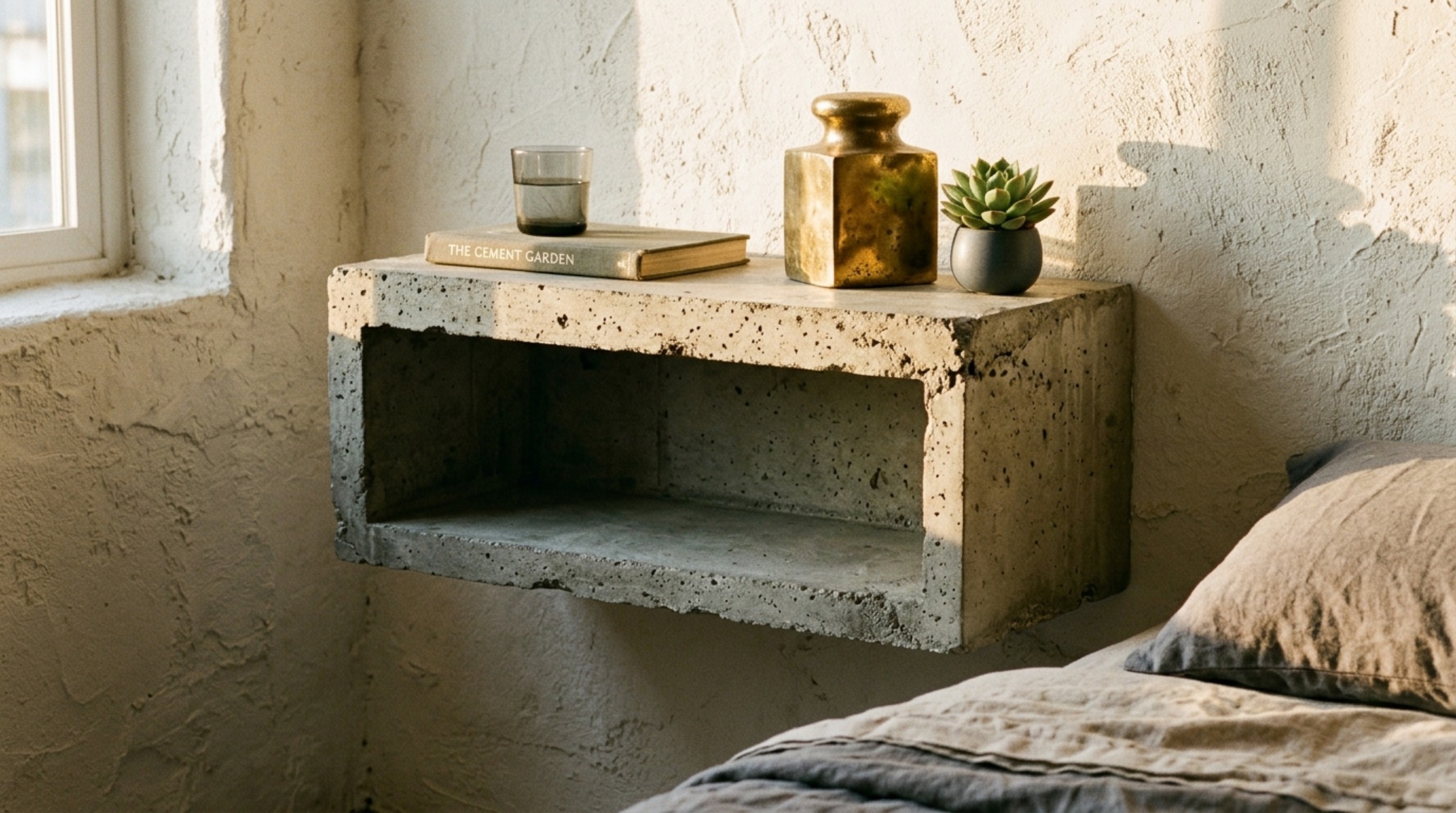
For those seeking a more monolithic presence, honed travertine is the undisputed champion of the moment. A floating travertine slab offers a fossilized history right at your fingertips. Its porous surface and cream-toned warmth provide a natural contrast to the crispness of 400-thread-count cotton linens. When styling these surfaces, the goal is to enhance, not obscure, the material. A single, heavy ceramic vessel or a stack of linen-bound books is often enough to establish a sense of place. This is the essence of minimalist nightstand decor: selecting objects that possess enough visual weight to anchor the floating form without cluttering the sightline.
The Rule of Three and Sensory Layering
Styling a floating surface requires a different editorial lens than styling a traditional nightstand. Because the piece is literally hanging in space, the arrangement on top must feel intentional and balanced. We lean heavily on the “Rule of Three”—a design principle that suggests objects arranged in odd numbers are more appealing, memorable, and effective than even-numbered groupings. However, in the context of floating bedside tables, we refine this further by varying the height, texture, and “transparency” of those three objects.
- The Vertical Anchor: This is typically your light source or a tall, architectural branch. It draws the eye upward, connecting the floating surface to the rest of the wall.
- The Tactile Object: A heavy stone tray, a brass bowl, or a stack of books. This provides the “grounding” element that makes the floating shelf feel permanent.
- The Soft Element: A small clay vase with a single dried stem or a piece of organic sculpture. This breaks the geometric lines of the furniture.
Designing the Intangible: Lighting and Spatial Flow for Floating Nightstands Decor Ideas
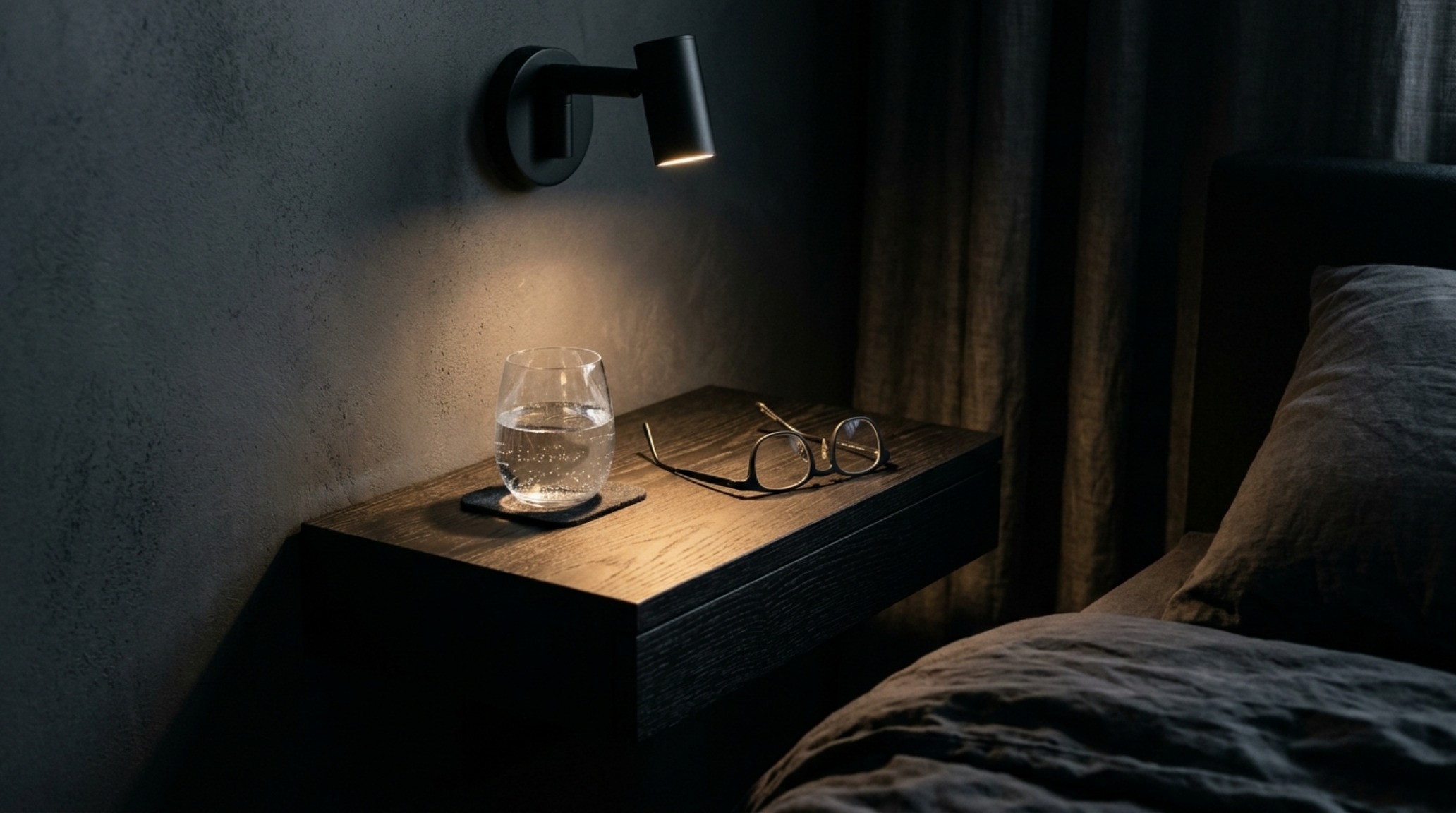
Lighting is the invisible architecture of a bedroom. For a truly high-end, “warm-dim” experience, we specify 2700K warm ambient lighting with a high Color Rendering Index (CRI 90+). This specific color temperature mimics the golden hour, softening the edges of the room and making textures like bouclé and wood grain pop. When dealing with modern floating nightstands ideas, the integration of the light source is paramount. A wall-mounted sconce positioned exactly 12 to 14 inches above the nightstand surface eliminates the need for bulky lamp bases, preserving that precious “floating” footprint.
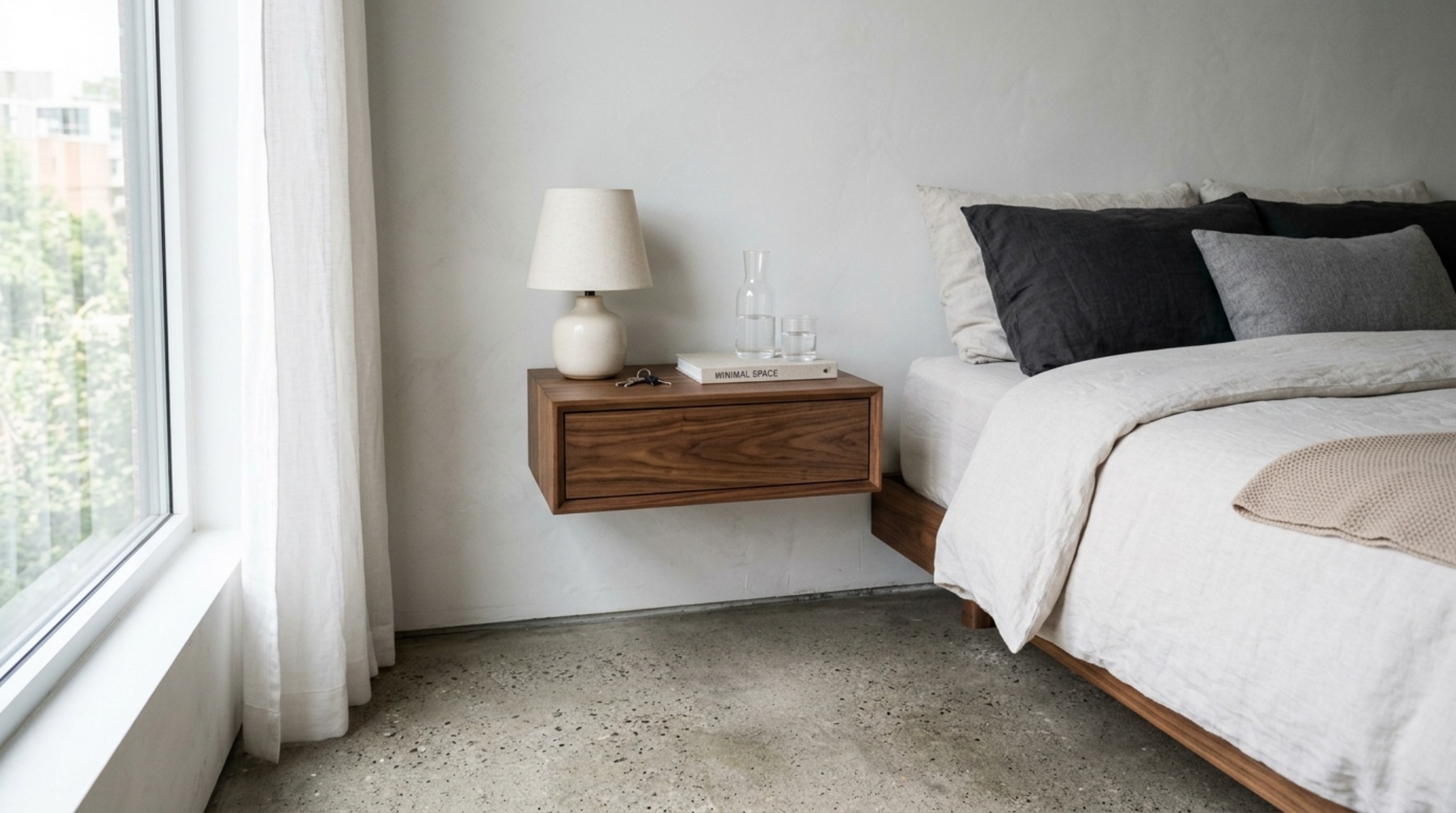
We often recommend fixtures with a brass or blackened steel finish to introduce a subtle metallic gleam. The key is to ensure the light is diffused—either through an opal glass globe or a linen shade—to prevent harsh glares. This creates a soft “pool” of light on the floating surface, highlighting the grain of the wood or the veins in the stone. From a functional perspective, this layout also honors small space bedroom solutions by keeping the surface clear for the essentials: a carafe of water, a pair of glasses, or a single meaningful object.
Architectural Clearances and Ergonomic Precision
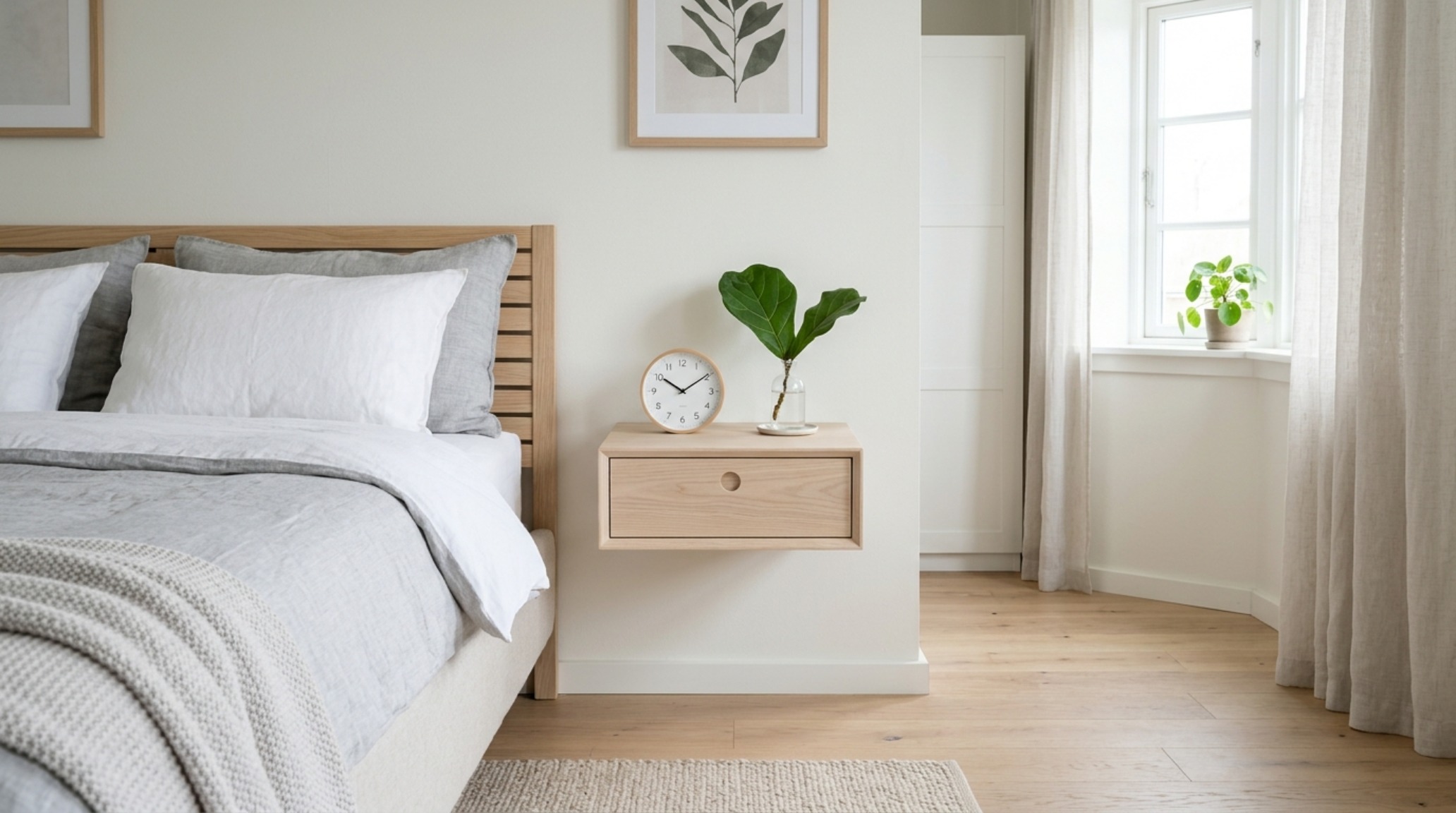
A common mistake in DIY installations is ignoring the ergonomics of the reach. In professional interior design, we adhere to strict architectural clearances to ensure the space feels fluid rather than cramped. A floating nightstand should typically be installed so the top surface is level with the top of your mattress—usually between 24 and 28 inches from the floor. This allows for a natural 18-inch reach from a reclining position.
“Design is not just what it looks like and feels like. Design is how it works. In the bedroom, this means the silent interaction between your hand and the bedside surface in the dark.”
Furthermore, maintain at least 36 inches of primary circulation space if the nightstand is near a walkway or a closet door. By lifting the unit off the ground, you regain that 10-12 inches of floor visibility, which tricks the brain into perceiving a larger area. This is why aesthetic floating nightstands interior choices are the gold standard for compact urban dwellings; they provide the utility of a traditional chest without the visual bulk that “eats” the floor.
The Synergy of Bouclé, Brass, and Biophilic Design
To truly elevate the bedside, one must look beyond the furniture and consider the surrounding textiles. The “Tactile Bedside” concept thrives on the interplay of opposites. If your nightstand is a hard, fluted oak, pair it with the softness of a bouclé-upholstered headboard. The nubby, irregular loops of bouclé fabric catch the 2700K light in a way that feels incredibly cozy and sophisticated. This is a hallmark of cozy floating nightstands styling—bringing in elements that invite touch.
Biophilic elements—design choices that connect us to nature—are the final layer of a quiet luxury bedroom. This doesn’t mean a forest of potted plants. Instead, it’s about the subtle inclusion of organic life: a piece of driftwood found on a coast, a small vessel of river stones, or a single sprig of eucalyptus in a hand-thrown ceramic bud vase. These elements provide a living contrast to the clean, architectural lines of scandinavian floating nightstand with drawer designs. They remind us of the world outside while we are ensconced in our private sanctuary.
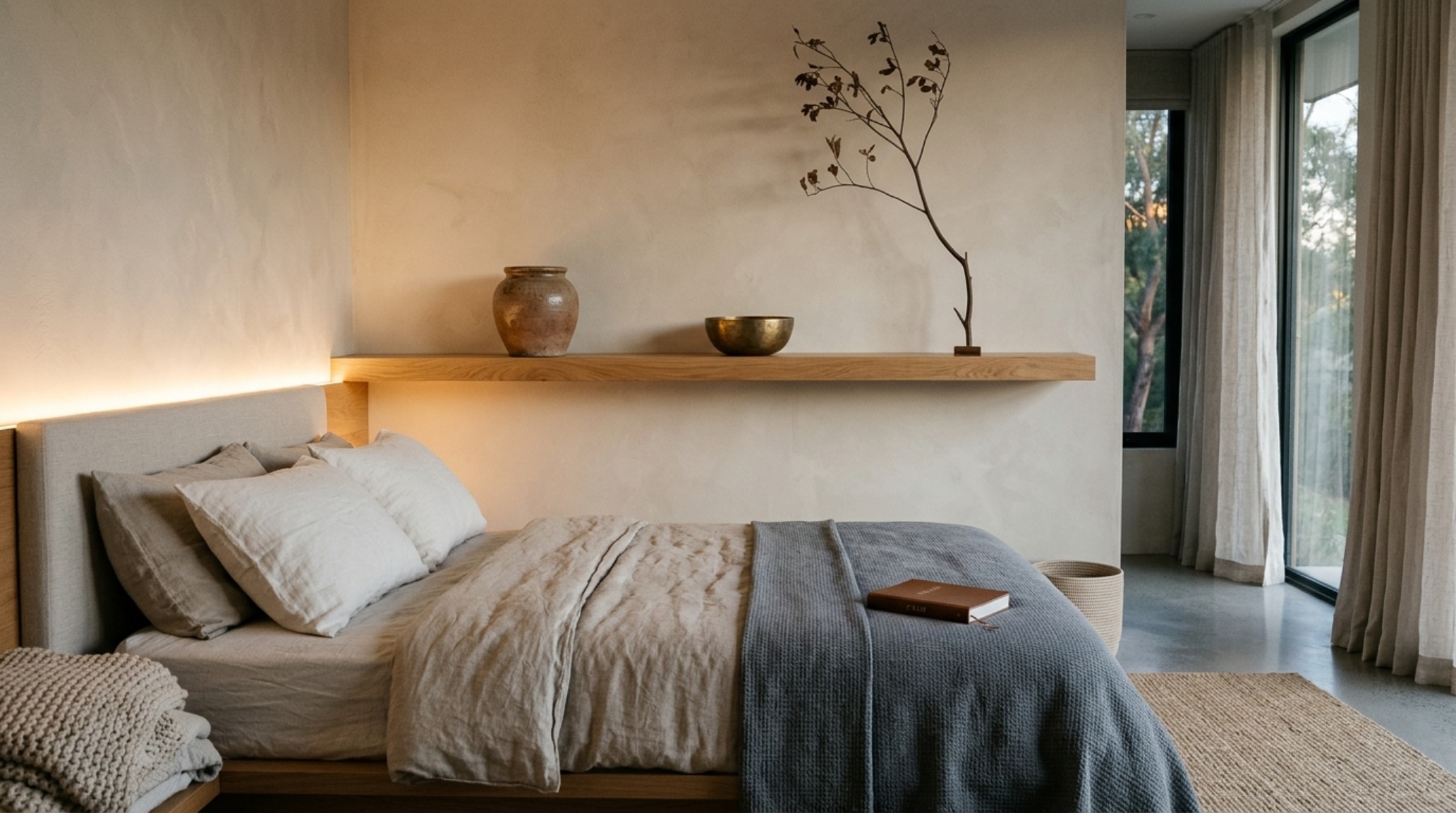
When we look at wall mounted nightstand height guide requirements, we must also consider the visual weight of the bedding. A heavy, linen duvet with a slight overhang can beautifully frame a floating nightstand, creating a layered, “nest-like” effect. The goal is to create a sightline alignment where the bed, the nightstand, and the wall-mounted art or lighting all exist in a balanced, horizontal plane. This reduces visual clutter and promotes a sense of calm—the ultimate luxury in modern interior design.
Architectural Specification & Material Matrix
Curated tactile palette, spatial dimensions, and atmospheric lighting index for this design scheme.
As we move deeper into an era that values the quality of our quiet moments over the quantity of our possessions, the way we treat our bedside becomes a barometer for our overall well-being. Selecting the right floating nightstands decor ideas is not merely an exercise in furniture placement; it is the curation of a transition. It is where the day ends and the restorative silence begins. By choosing materials that age gracefully—wood that patinas, stone that cools, and light that glows—we create more than just a bedroom. We create a cadence of calm that supports the rhythm of our lives. When the floor is clear and the surfaces are thoughtfully layered, the entire room feels elevated, lighter, and profoundly more human.
Editorial Silo • Recommended Architecture Studies
- Kinetic Sophistication: Engineering Space-Saving Closet Solutions for the Modern Urban Sanctuary — Archival Design Case Study
- The Materiality Error: Why Your ‘Aesthetic’ Closet Feels Sterile Instead of Quiet Luxury — Archival Design Case Study
Architectural Inspiration Lookbook
A high-resolution study in spatial proportions, tactile materiality, and light choreography curated for enduring modern living.
Curated Visual Lookbook
Design Gallery & Spatial Studies
A visual curation of architectural arrangements, lighting concepts, and material palettes featured in this space.