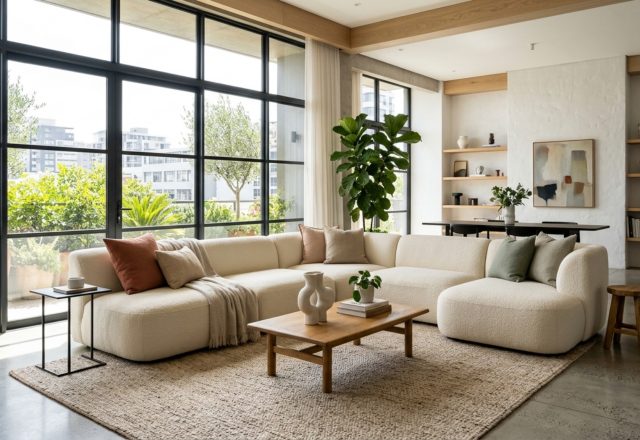
There is a specific, quiet magic in the way light moves through a room when it isn’t met with resistance. In the world of high-end residential design, we often talk about the ‘weight’ of a piece—how much visual real estate a sofa or a sideboard occupies. But the most sophisticated contemporary interiors are increasingly turning toward the invisible footprint. When we explore glass coffee tables decor ideas, we aren’t just choosing a surface for a cocktail book or a ceramic bowl; we are choreographing a room’s spatial cadence. By utilizing transparent volumes, we allow the eye to travel through the furniture rather than stopping at it, maintaining the integrity of the architecture and the floor plan’s original intent.
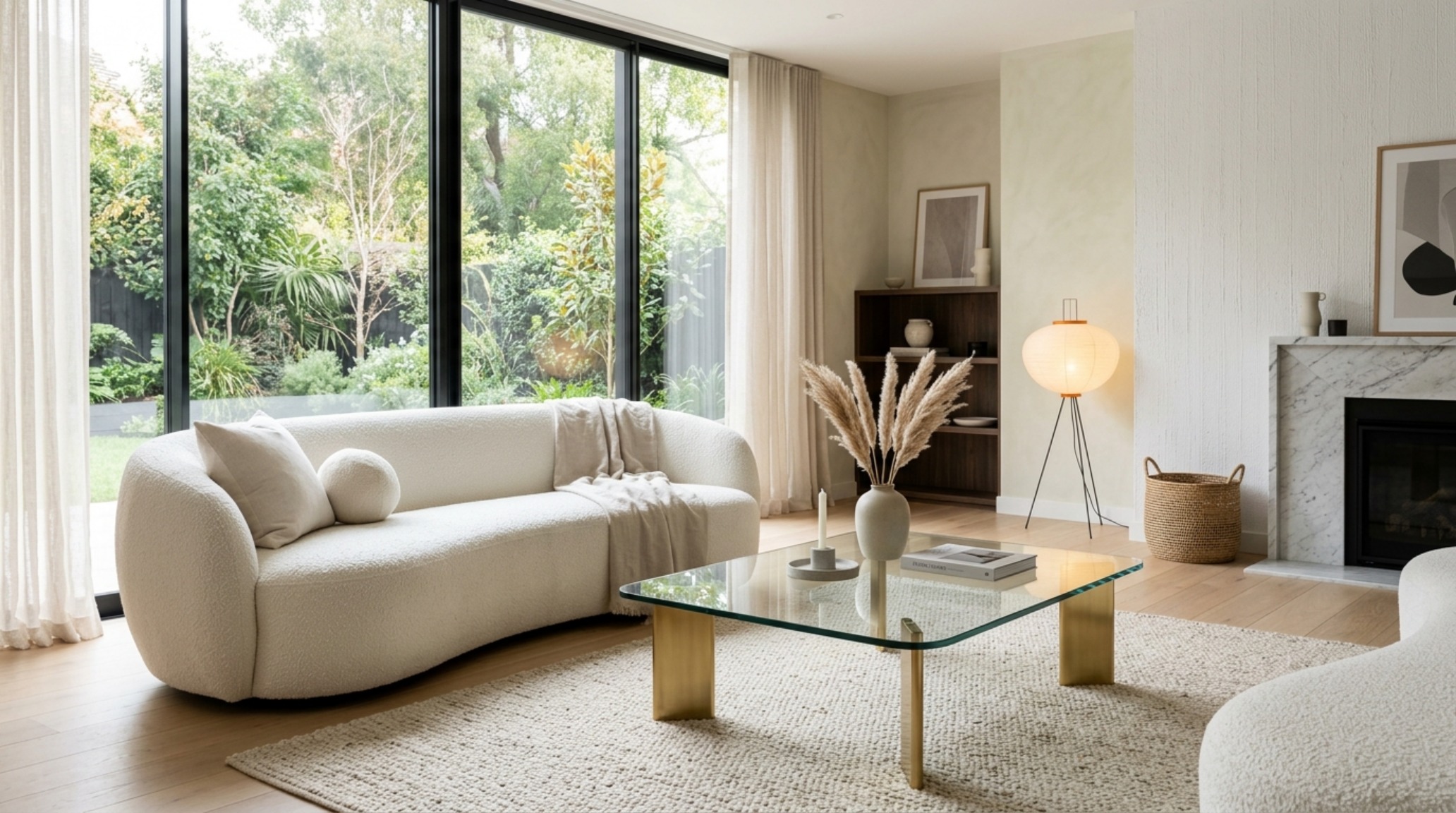
The Physics of Invisibility: Why Transparency Defines Modern Luxury
In a compact luxury floor plan, every square inch of flooring is precious. Traditional solid-mass furniture—think of a heavy mahogany trunk or a blocky upholstered ottoman—acts as a visual roadblock. It severs the floor plane. Transparent glass, however, functions as a structural ghost. It provides the necessary utility of modern living room furniture while preserving the ‘sightline alignment’ that makes a space feel expansive. This is particularly vital when you’ve invested in a hand-knotted silk rug or reclaimed chevron white oak flooring; glass ensures the floor remains the undisputed star of the show.
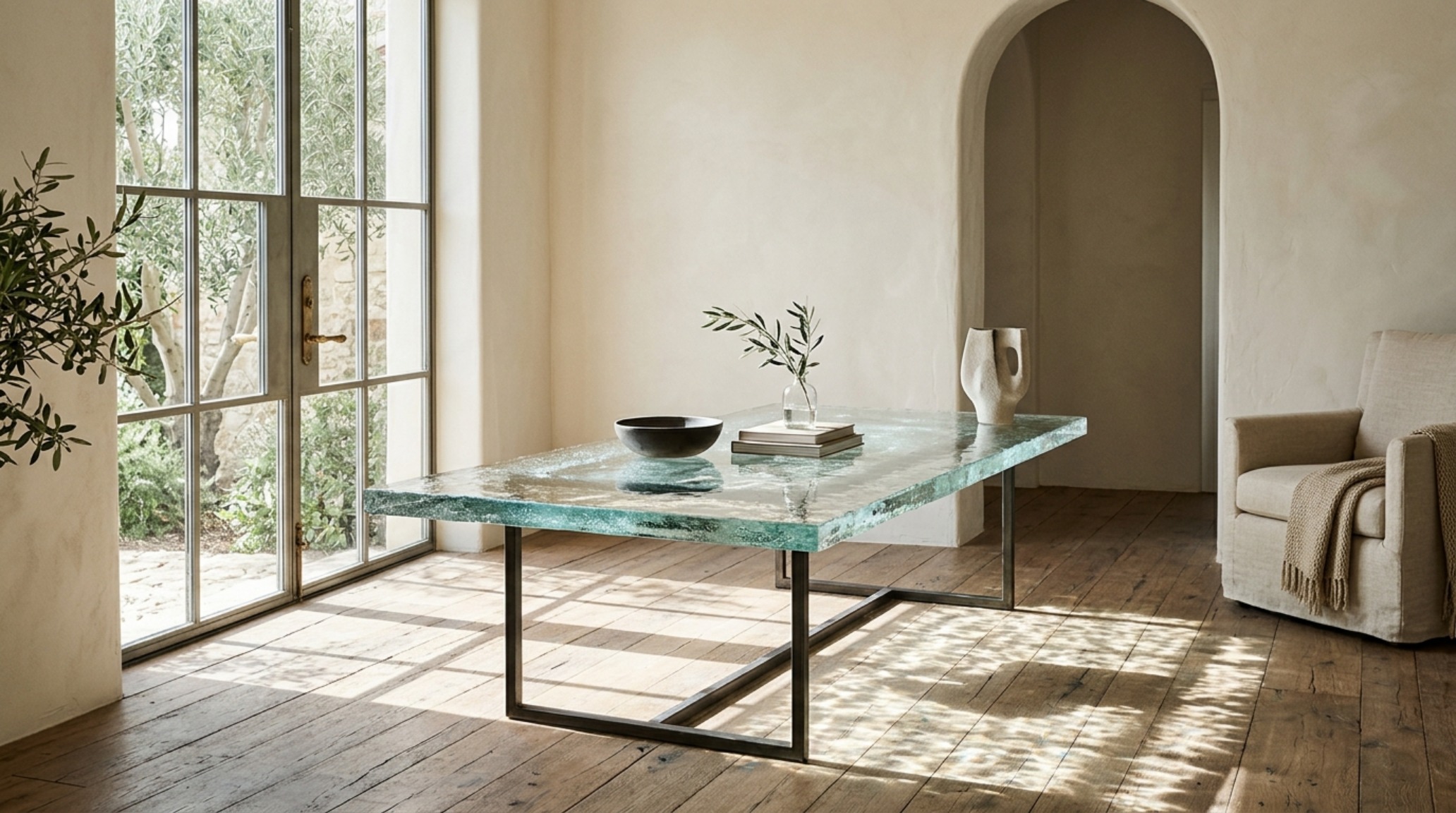
The engineering of these pieces has evolved beyond the simple four-legged frame. We are seeing a rise in cantilevered silhouettes and shadow-gap detailing, where the glass appears to hover above its support structure. This creates a sense of levitation that aligns perfectly with the ‘Quiet Luxury’ aesthetic. When the thickness of tempered glass reaches that sweet spot of 10mm to 12mm, it gains a subtle, jewel-like green or blue tint on the edge, providing just enough definition to exist without cluttering the room’s ‘negative space breathing room’.
The Golden Ratio of Table-to-Sofa Scaling
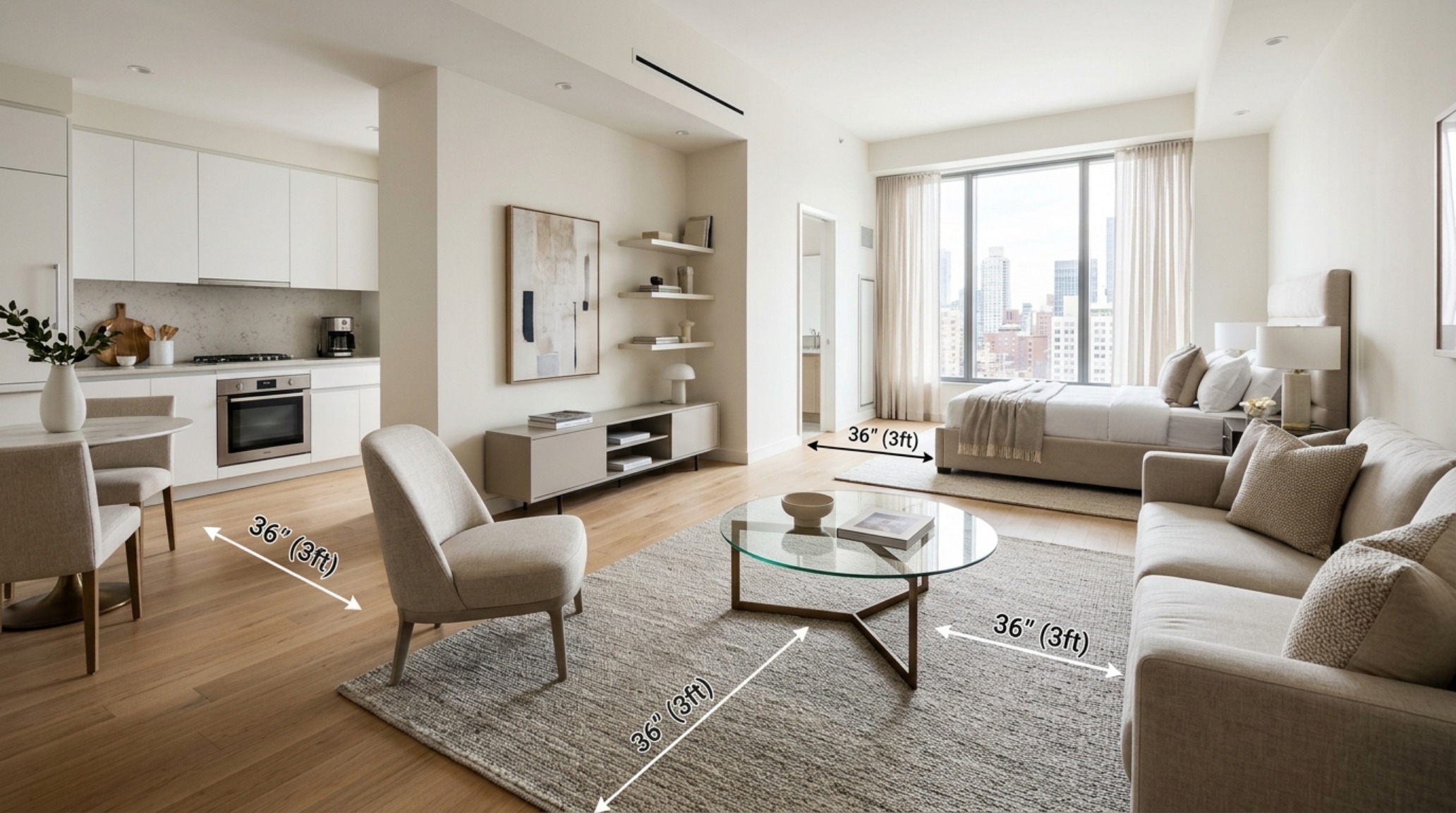
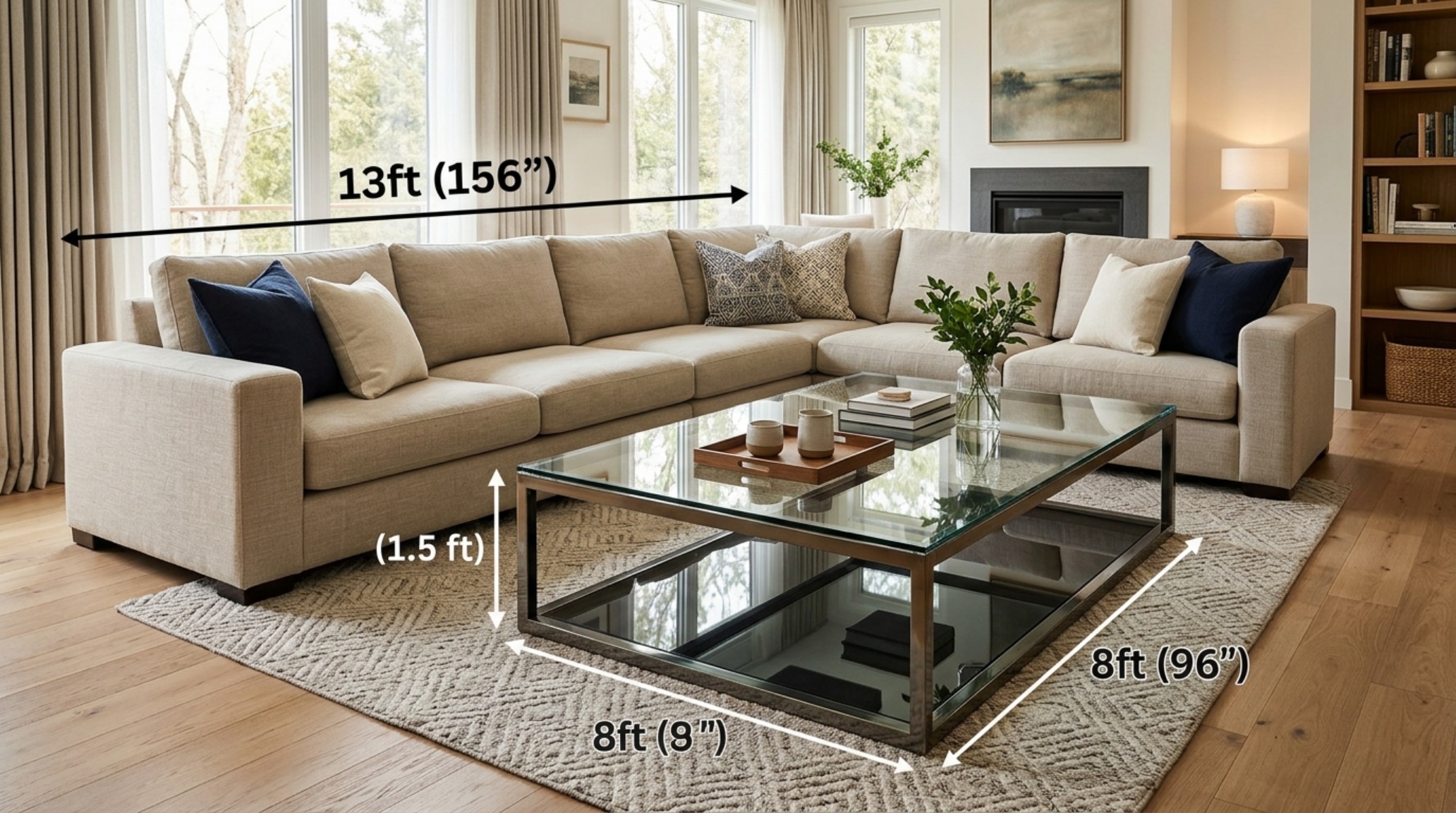
Architecture is as much about the gaps between things as the things themselves. For a glass table to feel intentional, it must adhere to strict spatial clearances. In my practice, I always advocate for the 18-inch rule: the distance from the edge of the sofa seat to the edge of the glass table should be exactly 18 inches. This allows for an effortless reach for a glass of water while maintaining enough clearance for legs to move comfortably. Furthermore, the length of the table should ideally be between one-half and two-thirds the length of your sofa. Anything larger feels predatory; anything smaller feels like an afterthought.
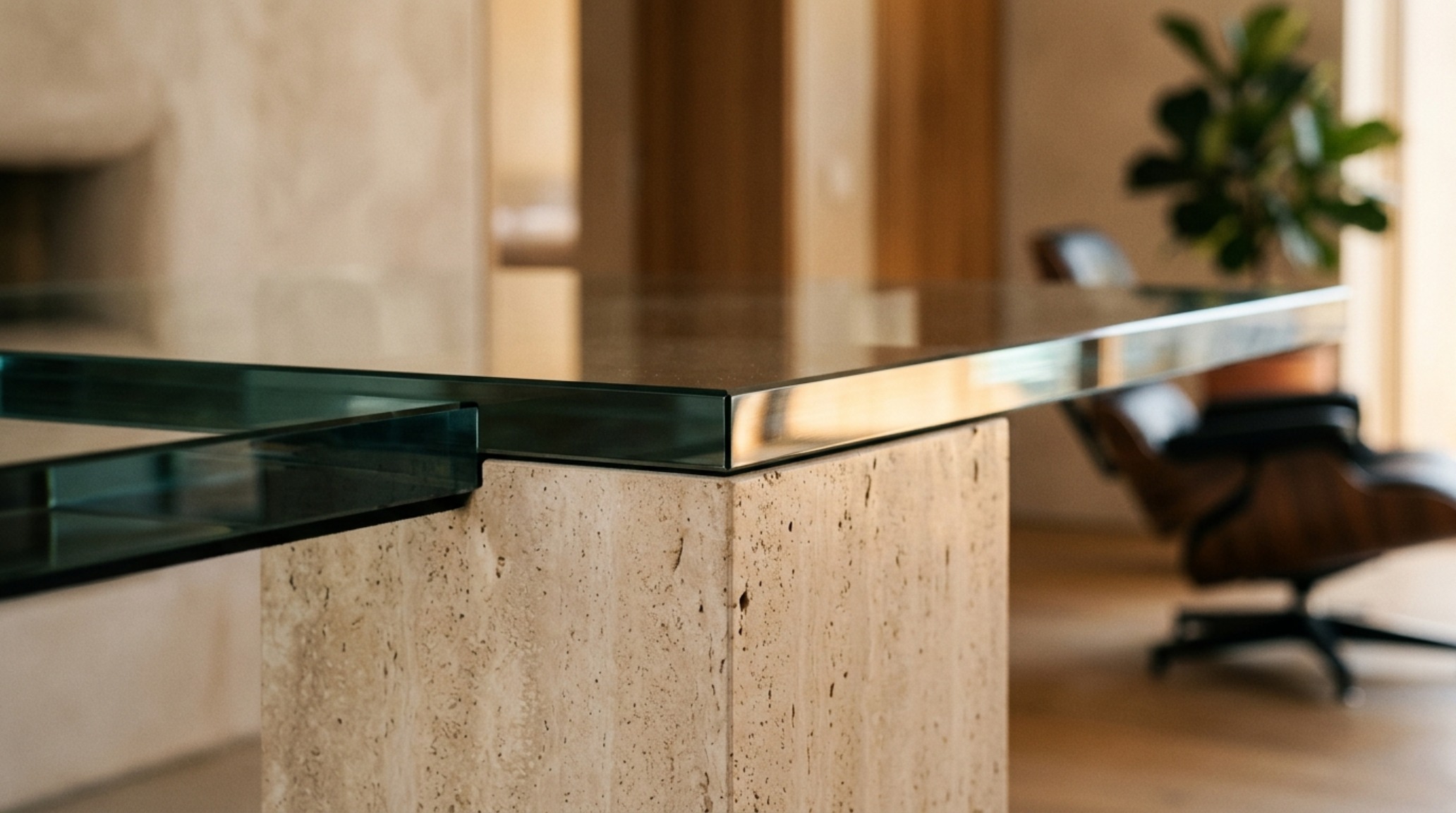
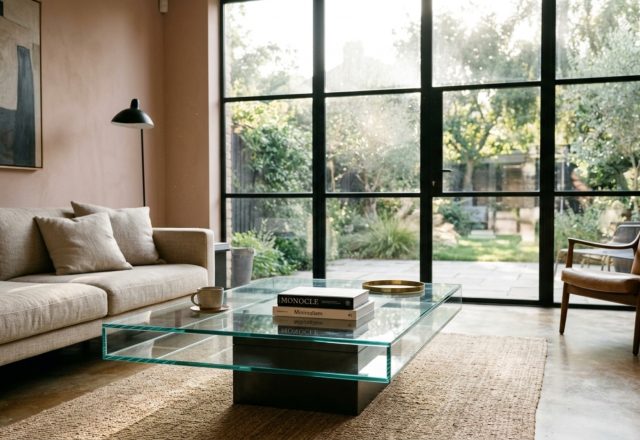
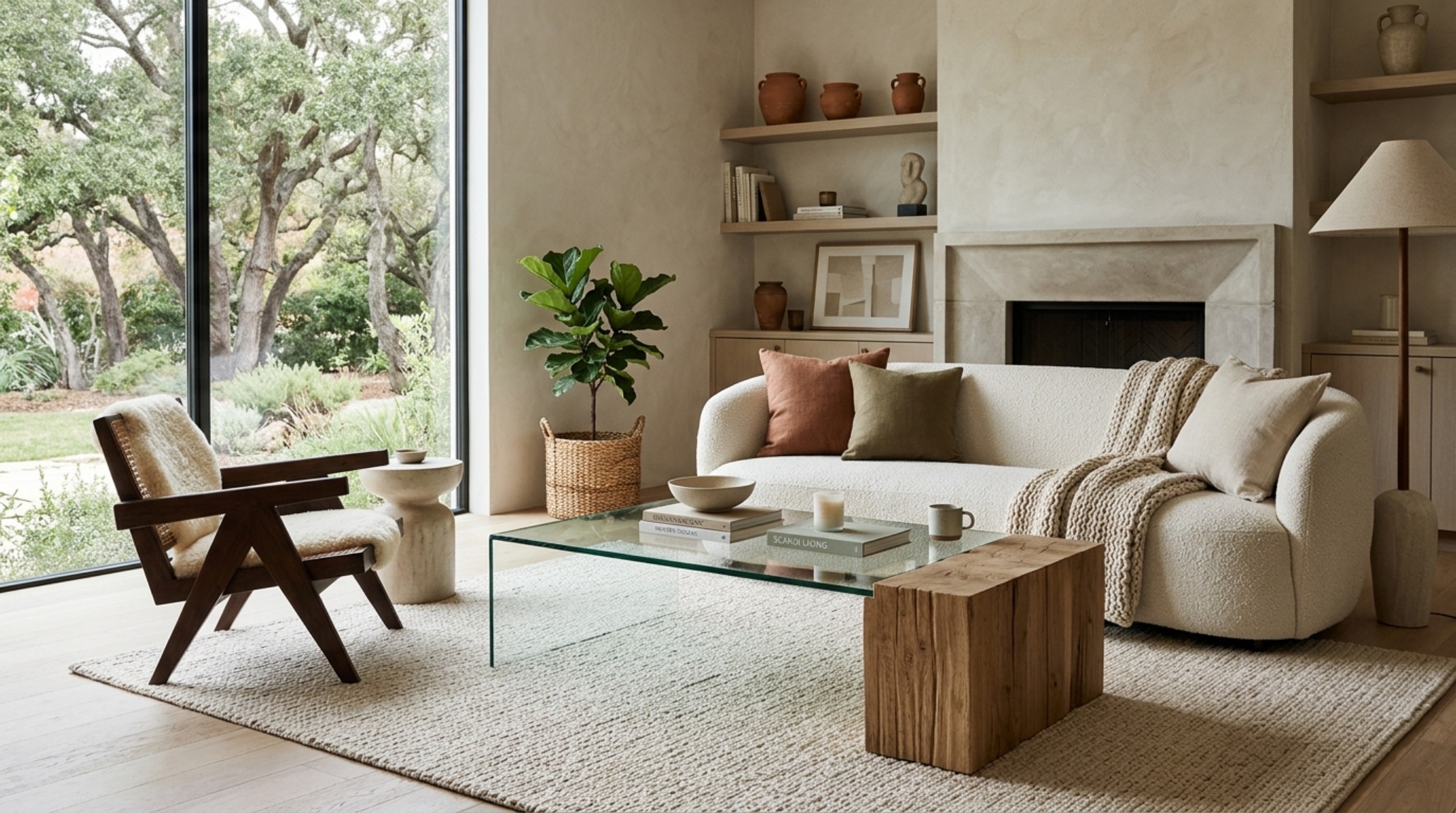
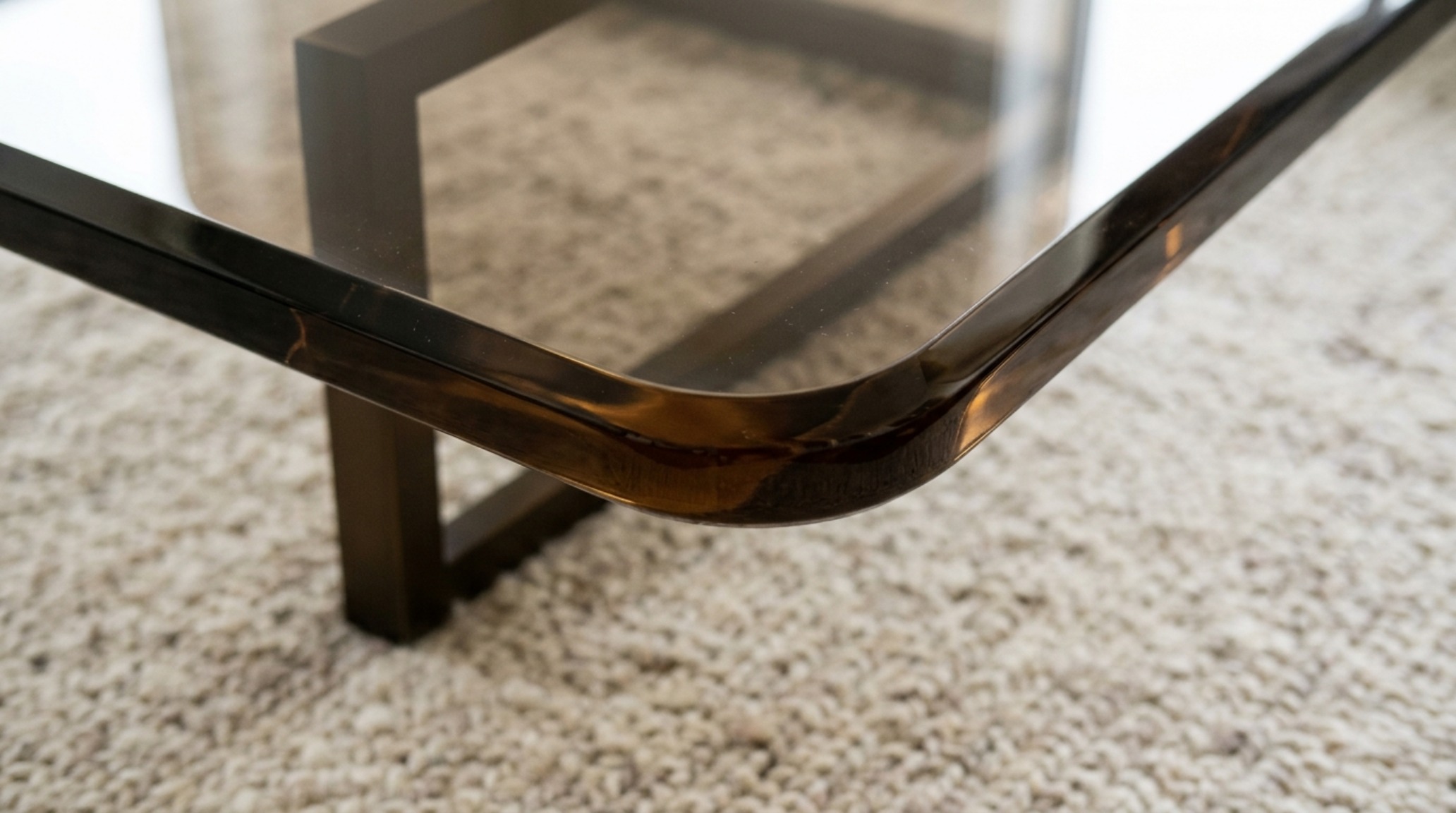
When you look at the shadow-gap detailing on a piece like the one shown above, you see how the intersection of glass and metal becomes a moment of architectural interest rather than just a functional joint. This level of detail is what separates a generic center table from a piece of modern organic glass table decor that feels curated and bespoke.
Mastering Spatial Geometry: Pro-Level Glass Coffee Tables Decor Ideas for Compact Luxury
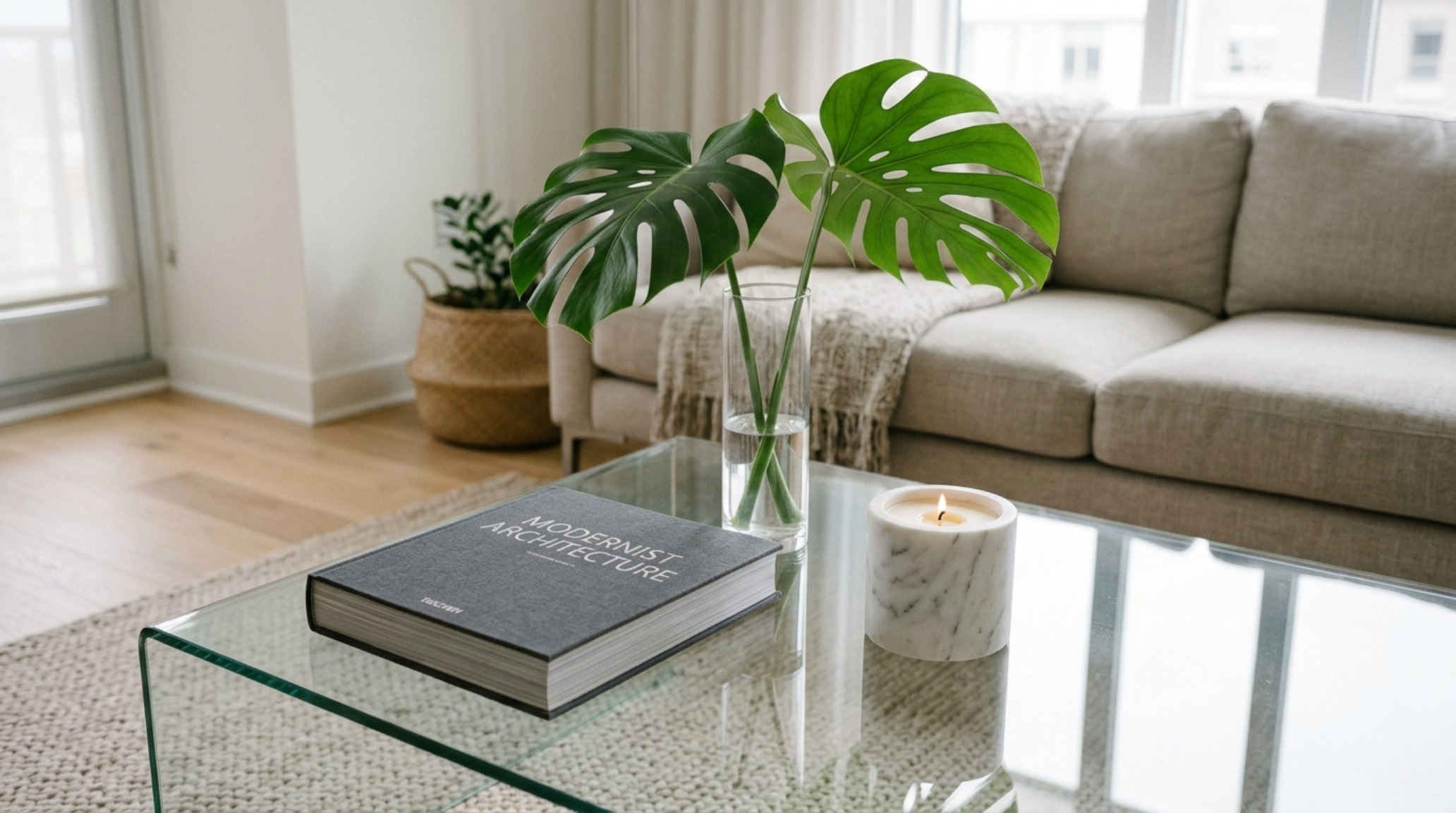
Styling a glass coffee table for small living rooms requires a different set of rules than styling an opaque one. Because the lower shelf—or the floor beneath—is visible, the ‘bottom layer’ is part of the composition. A common mistake is over-accessorizing, which leads to visual noise. Instead, think of the table as a gallery plinth. Use a ‘three-point’ composition: one large foundational item (like a tray or a massive tome), one organic element (a sculptural branch or a single monstera leaf in a clear vase), and one vertical object (a marble candlestick or a vintage ceramic vessel).
For those utilizing a two-tier glass coffee table, the strategy shifts to a vertical dialogue. The bottom tier should house heavier, more grounded items—think of a stack of linen-bound books or a low-profile basket—while the top tier remains airy. This ‘weighted bottom’ prevents the table from looking like it might float away, while the top remains clear for functional use. The transparency allows you to see the textures on the bottom shelf without them feeling claustrophobic.
Materiality and Tactile Grounding
To prevent a glass table from feeling too ‘cold’ or clinical, you must introduce tactile grounding through surrounding elements. I often pair a sharp-edged glass silhouette with the softness of a bouclé sofa or the warmth of a limewash wall in a shade like Benjamin Moore Swiss Coffee. The contrast between the silica-smooth glass and the grainy texture of a terracotta bowl creates a sensory tension that is the hallmark of a high-end interior styling masterclass.
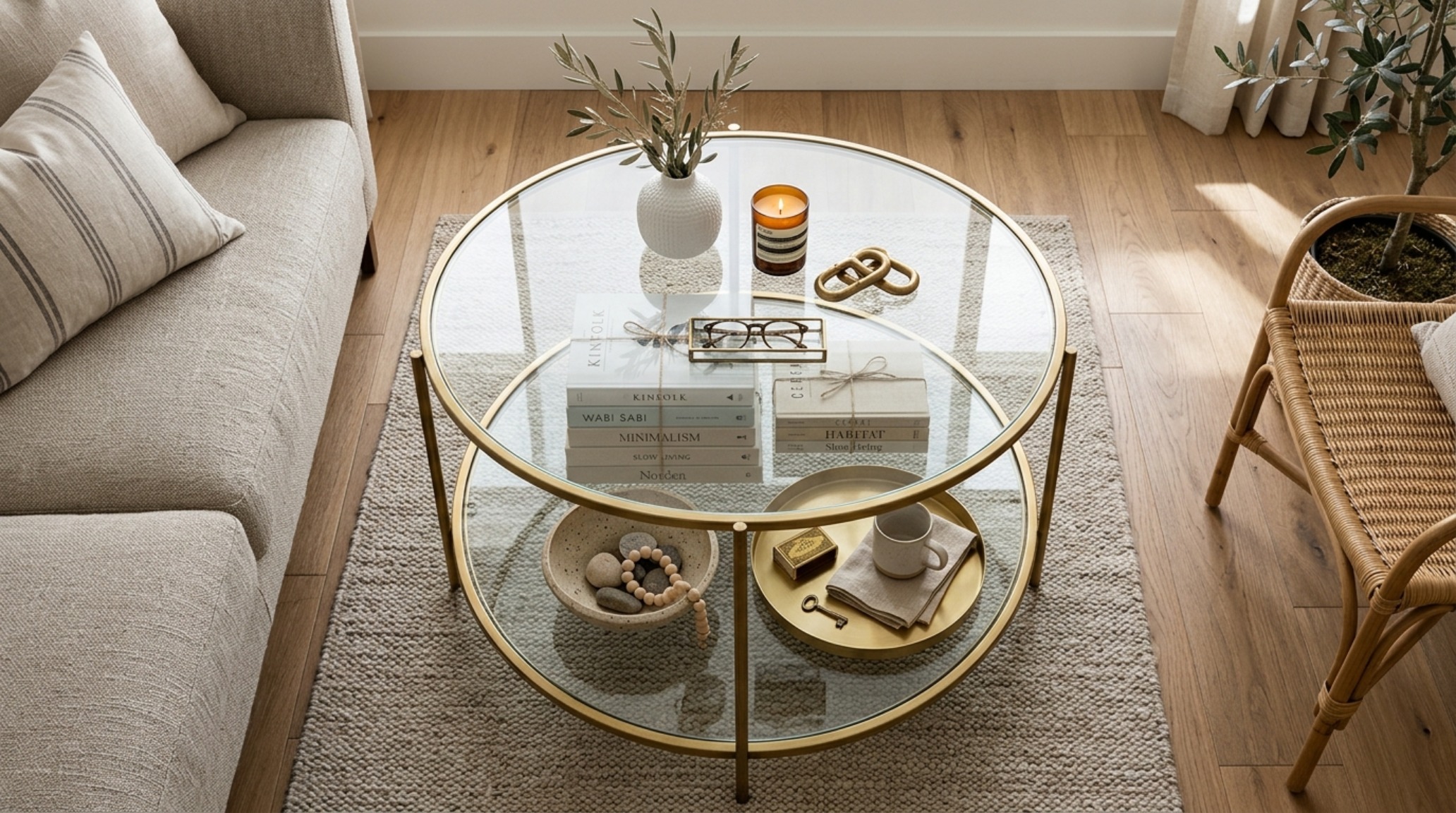
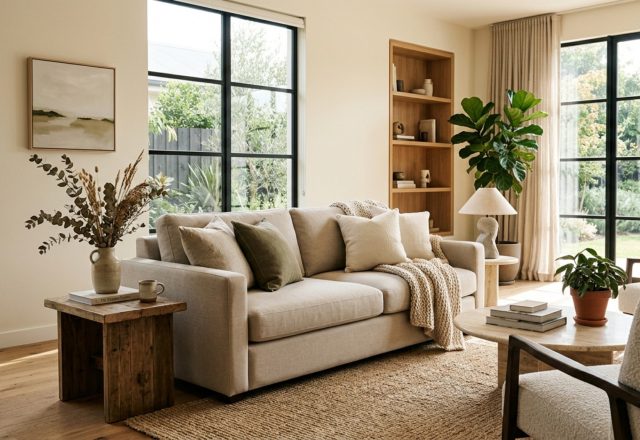
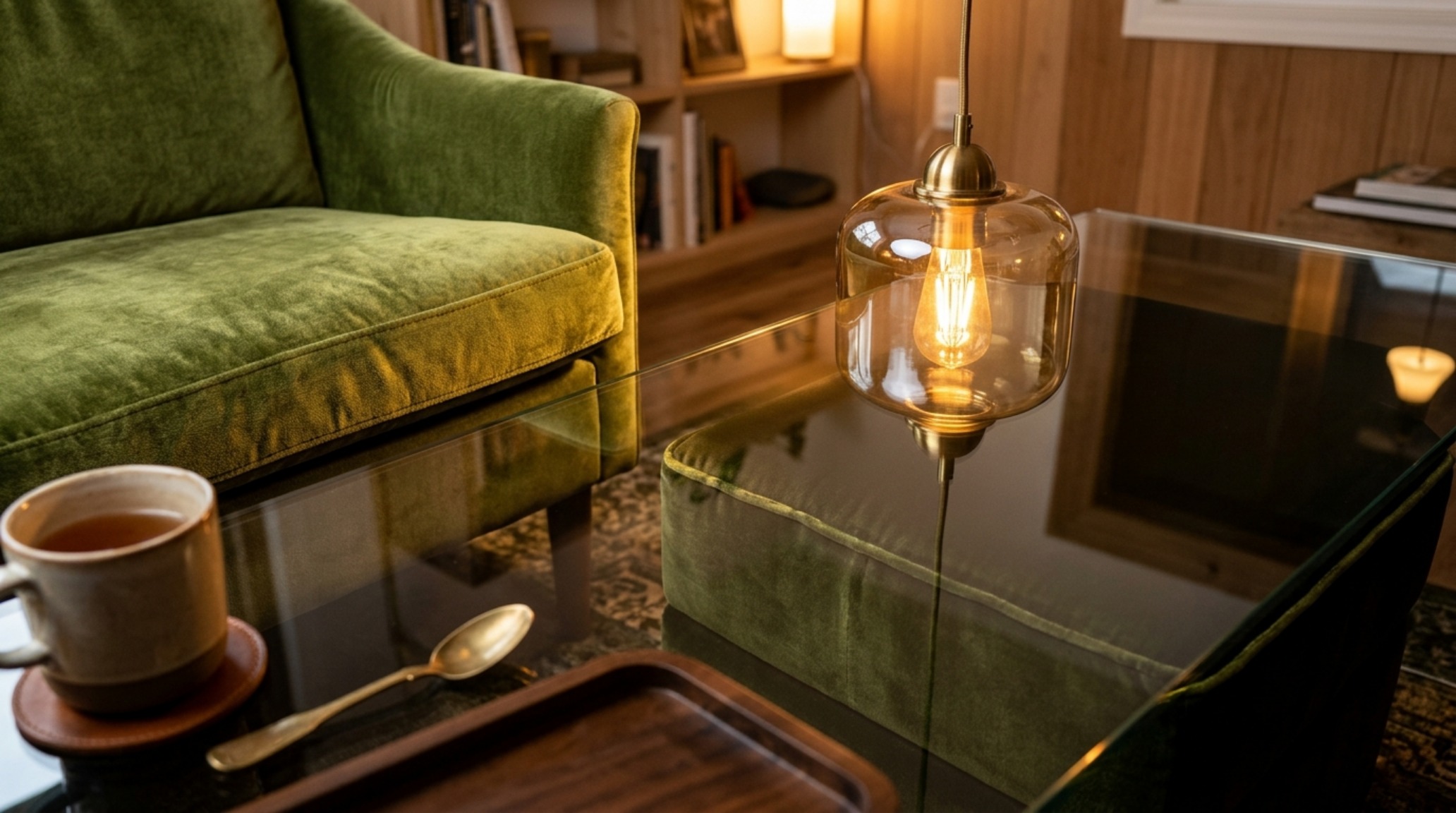
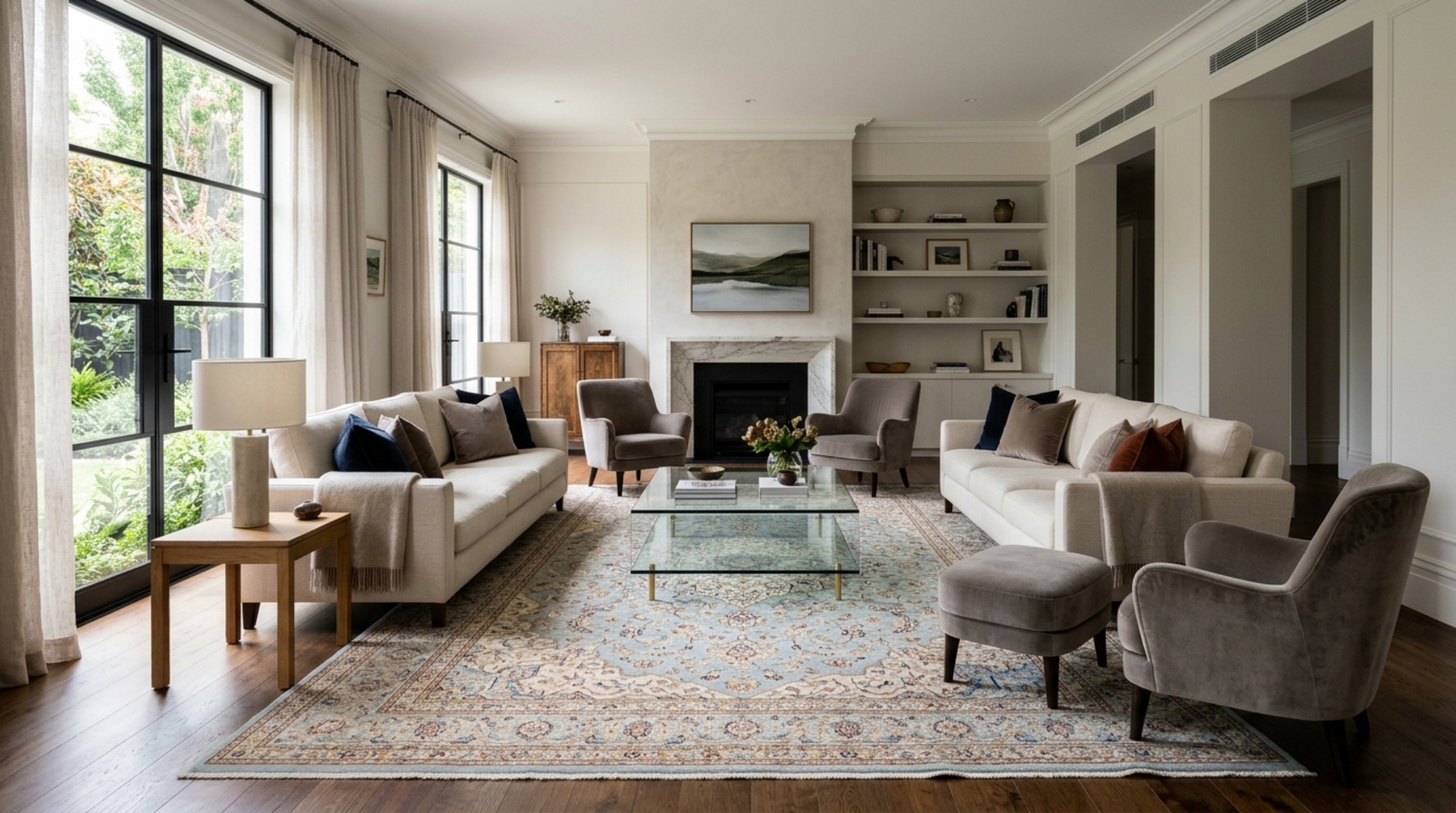
The image above illustrates how a multi-level glass surface can break up the monotony of a room. By playing with different heights, you create a landscape within the room rather than a flat horizon. Notice how the light from a 2700K warm ambient source catches the edges of the glass, creating a soft glow that eliminates the harshness often associated with modern materials.
The Impact of Tint and Texture: Smoked vs. Clear
While clear glass is the standard for maximizing visual flow, mid-century smoked glass coffee table ideas offer a moodier, more sophisticated alternative. Smoked glass—often in shades of bronze or charcoal—acts like a pair of high-end sunglasses for your floor. It still provides transparency, but it anchors the seating group with a more defined presence. This is particularly effective in rooms with a darker palette, perhaps featuring walls in Farrow & Ball Setting Plaster or deep slate tones.
Acrylic is another option often debated in the design world. While acrylic (or Lucite) offers a similar visual transparency, tempered glass remains the superior choice for luxury. It has a higher refractive index, a more substantial weight, and a ‘clink’ sound that acrylic can never replicate. In a contemporary center table, the weight of the glass contributes to the overall stability of the piece, preventing the ‘wobble’ often found in cheaper plastic alternatives.
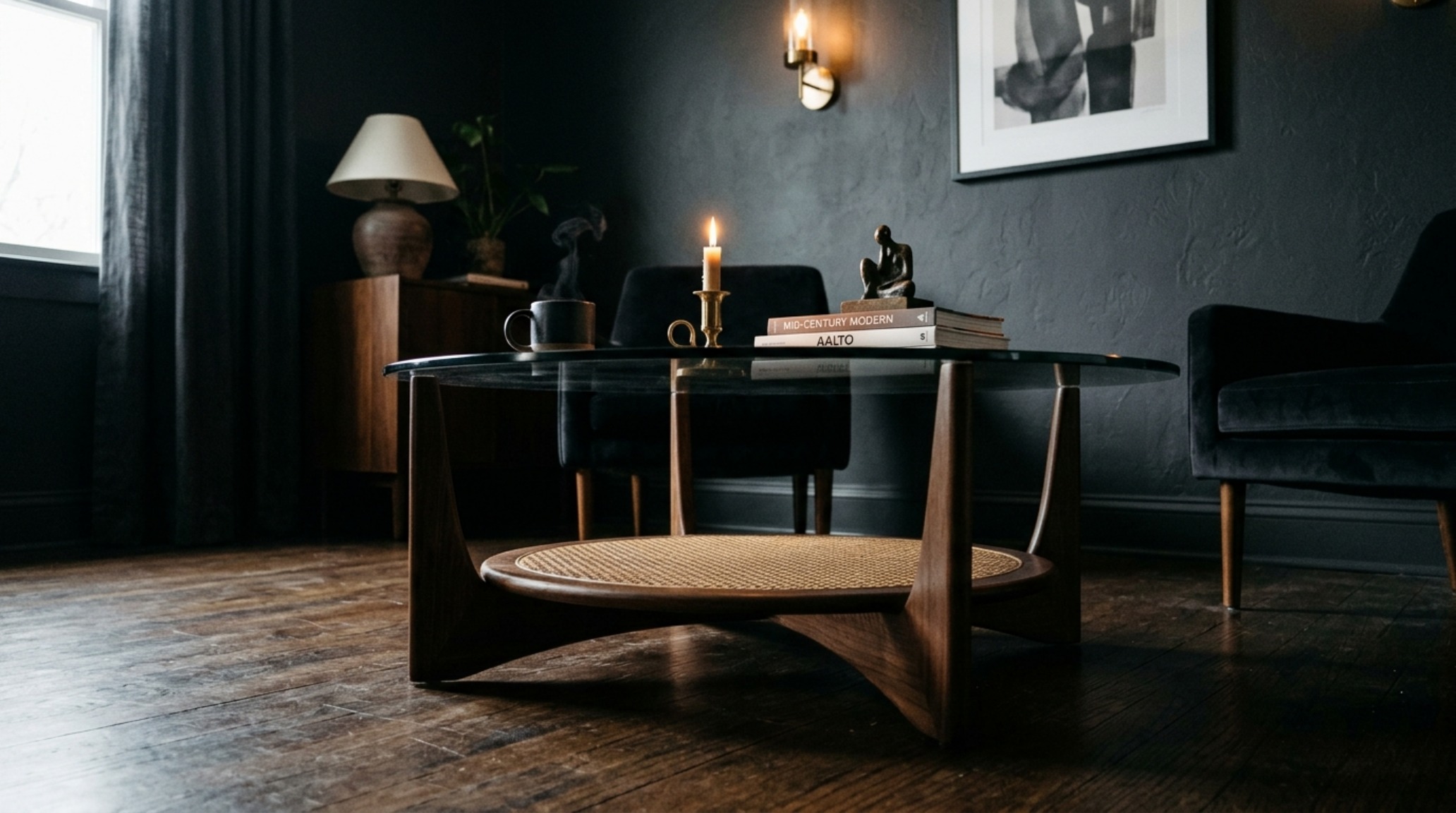
In the context of the ‘Organic Modern’ trend, we are seeing glass paired with raw, unrefined materials. Imagine a thick slab of glass resting atop a base of fluted white oak or a hunk of honed travertine stone. This juxtaposition of the man-made (the perfectly flat glass) and the geological (the stone or wood) grounds the furniture in nature, making it feel less like an office fixture and more like a piece of functional art.
Refining the Details: Lighting and Reflection
Lighting is the silent partner of glass furniture. Because glass reflects and refracts, your choice of bulbs is critical. I recommend a high CRI (Color Rendering Index) of 90+ to ensure that the objects on and around the table look true to life. A diffused directional light source—like a designer floor lamp or a recessed ceiling pin-spot—should be positioned to hit the glass at an angle rather than directly overhead to avoid harsh glares. The goal is to catch the ‘rim light’ of the glass edge, highlighting its silhouette without blinding the occupants.
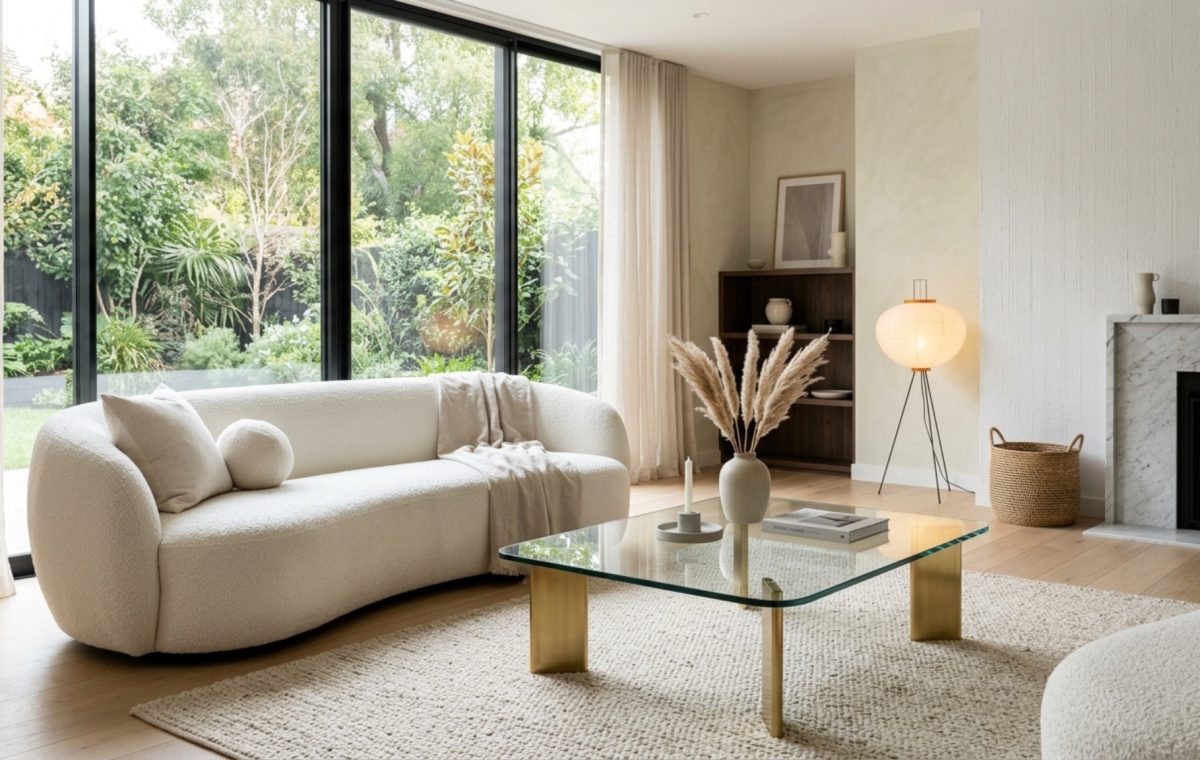
As seen in the arrangement above, the use of minimalist glass coffee table centerpieces ensures that the architectural lines of the room remain unobstructed. Whether you are working with a circular silhouette to soften a room full of hard angles or a sharp rectangular piece to define a seating zone, the key is consistency in the ‘spatial cadence’. You want the room to feel like it breathes.
Architectural Specification & Material Matrix
Curated tactile palette, spatial dimensions, and atmospheric lighting index for this design scheme.
Designing with transparency is ultimately an exercise in restraint. It is about understanding that sometimes the most powerful architectural statement isn’t what we see, but what we are allowed to see through. As we continue to refine our personal sanctuaries, the integration of these invisible volumes allows us to live with luxury without sacrificing the breathing room our souls require. When implementing your own glass coffee tables decor ideas, remember that the goal is not to fill the space, but to highlight the air and light that make a house a truly intentional home.
Editorial Silo • Recommended Architecture Studies
- Fluid Living: The Modular Revolution in Compact Aesthetic Sofa Ergonomics — Archival Design Case Study
- Invisible Gravity: Architectural Glass Coffee Tables That Redefine Spatial Flow and Sightlines — Archival Design Case Study
Architectural Inspiration Lookbook
A high-resolution study in spatial proportions, tactile materiality, and light choreography curated for enduring modern living.
Curated Visual Lookbook
Design Gallery & Spatial Studies
A visual curation of architectural arrangements, lighting concepts, and material palettes featured in this space.