We have long relegated the pantry to the status of a backstage utility—a windowless repository of chaotic cardboard boxes and static plastic bins. However, the current architectural zeitgeist is shifting toward a more evocative, high-performance ethos. Today, the most sophisticated homes treat storage not as a hidden necessity, but as a sensory experience defined by Quiet Luxury. By integrating thoughtful small pantry organization ideas into the very fabric of our architectural planning, we transform a functional footprint into a sanctuary of tactile materiality and atmospheric depth.
The transition from a mere cupboard to a sensory larder begins with a rejection of the generic. We are moving away from the clinical brightness of 4000K overhead bulbs and the friction of wire shelving. Instead, we are looking toward the spatial cadence of bespoke joinery, where fluted oak textures meet the soft, amber glow of 2700K integrated LED ribbons. This is design that respects the ritual of the home, acknowledging that the act of reaching for a morning espresso bean or a handful of sea salt should be as visually and tactilely rewarding as the meal itself.
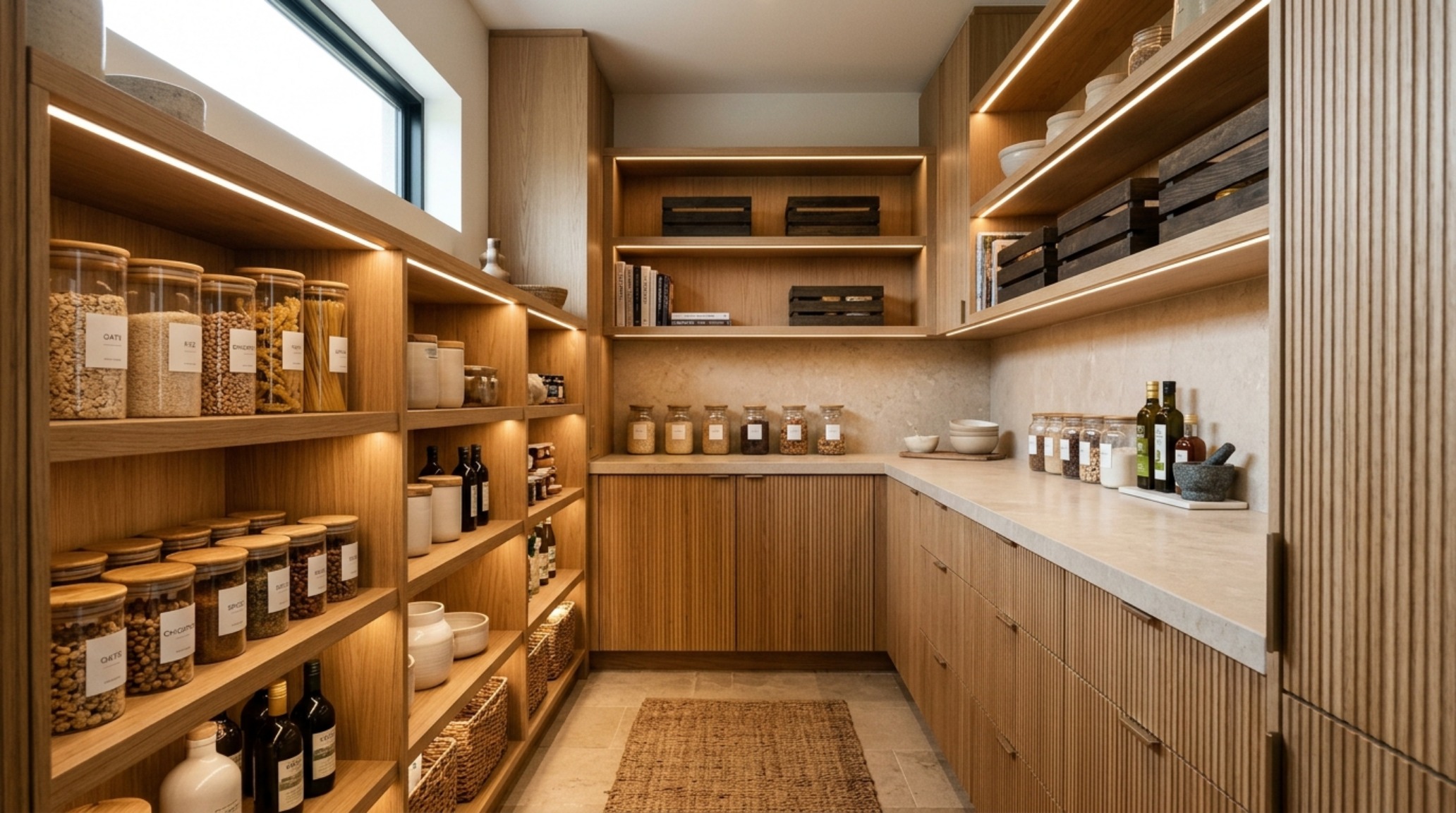
The Alchemy of Materiality: Moving Beyond Utility
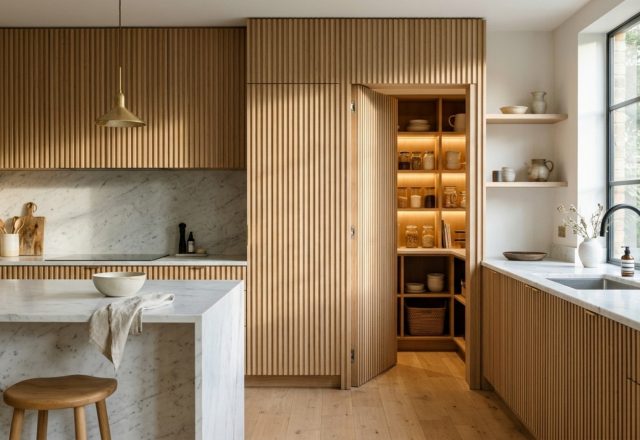
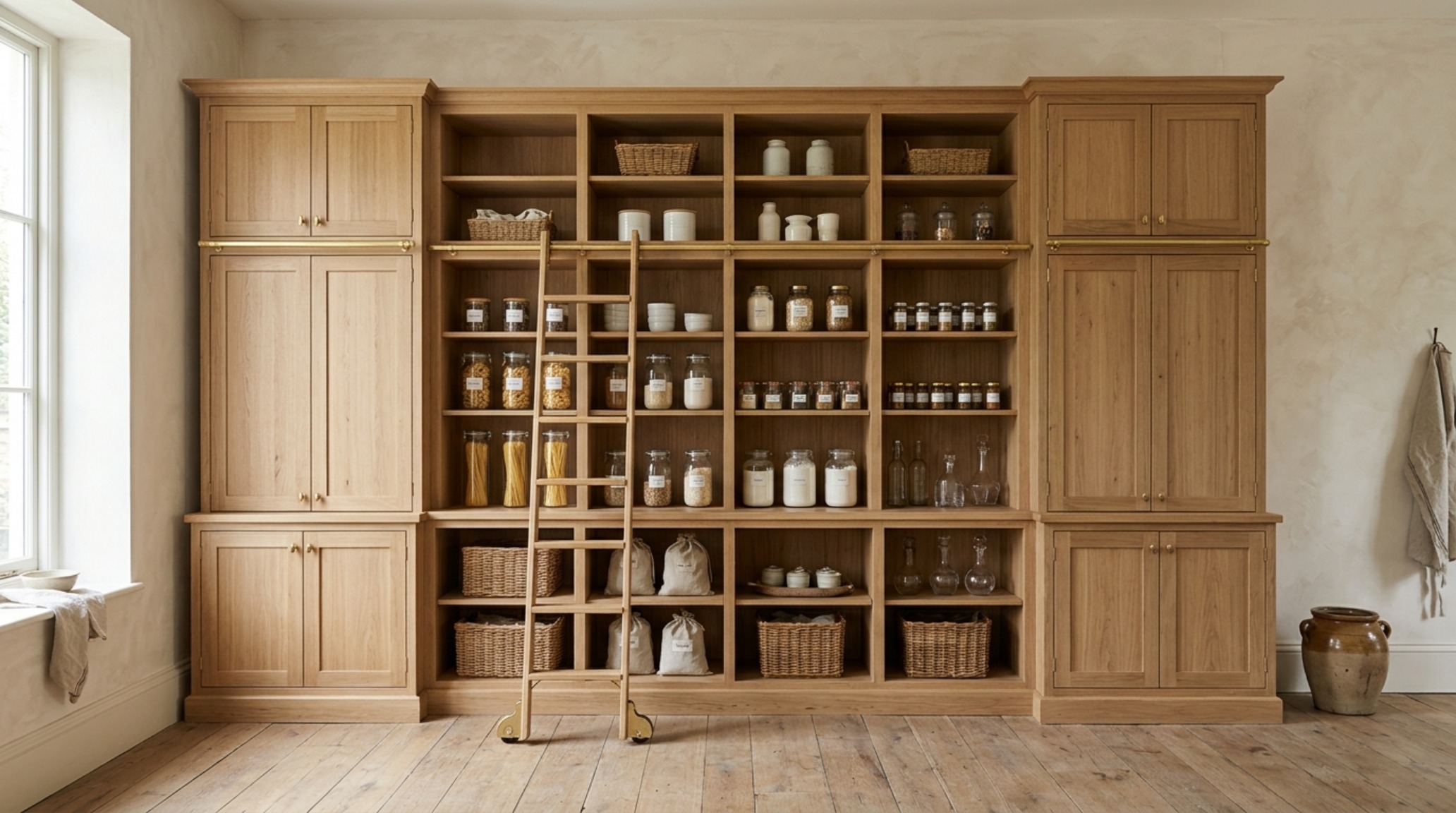
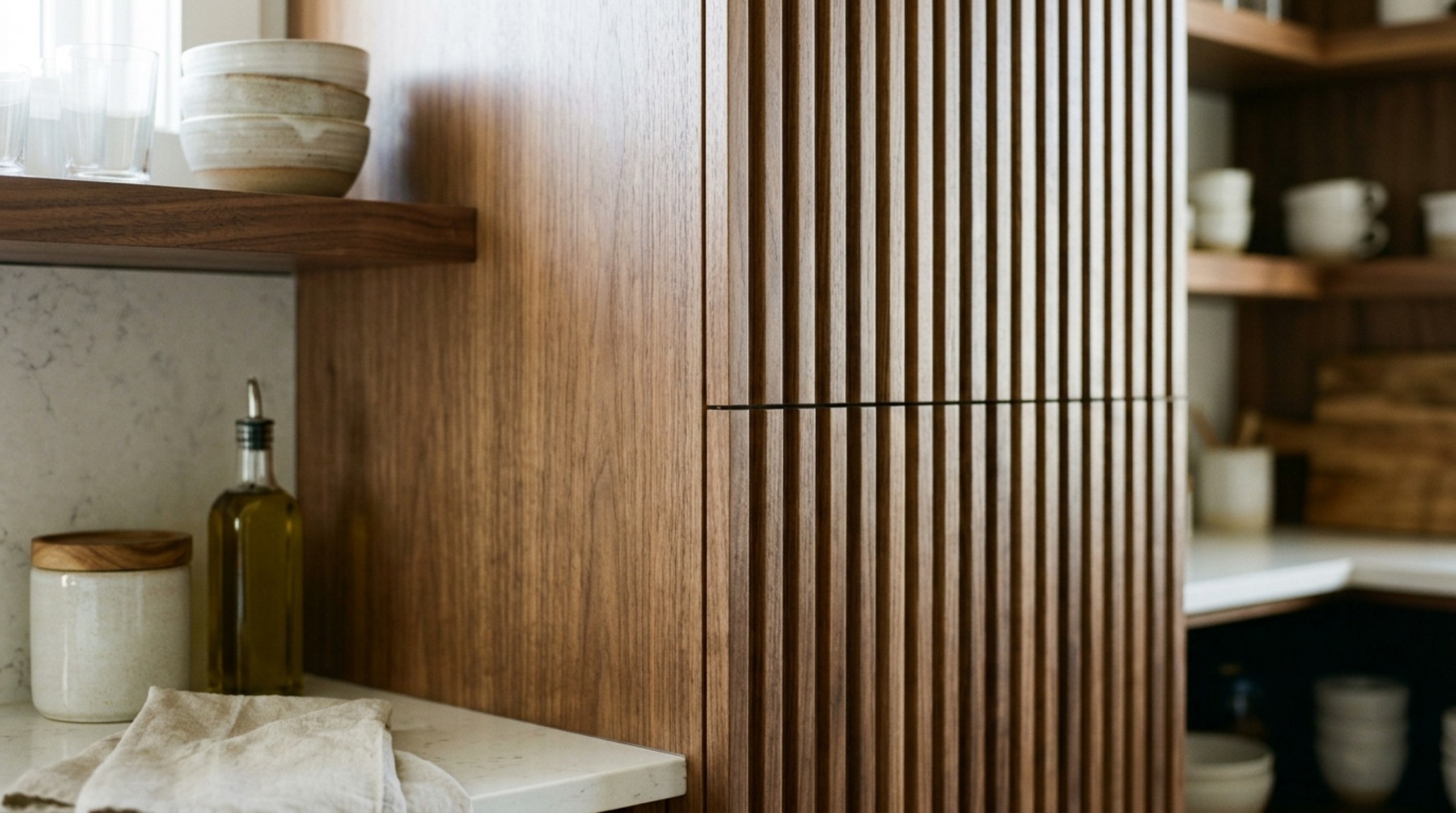
In the pursuit of an elevated kitchen storage solution, materiality is the primary driver of emotion. When we replace standard melamine with fluted white oak or hand-applied limewash, we introduce a grounding element to the home. Fluting, in particular, offers a rhythmic verticality that draws the eye upward, making even a compact walk-in pantry feel more expansive. This architectural detail creates a play of light and shadow that evolves throughout the day, providing a textured backdrop for curated pantry shelving systems.
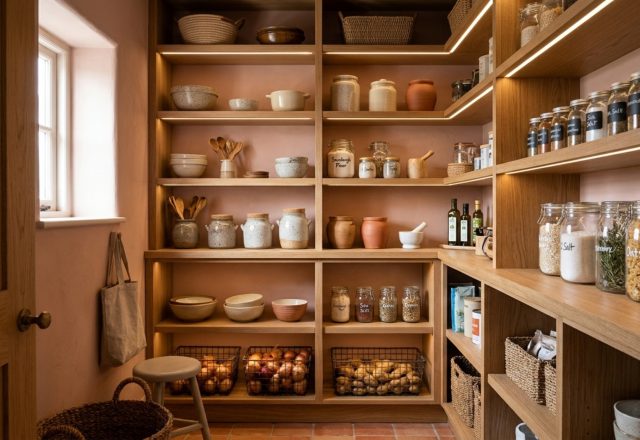
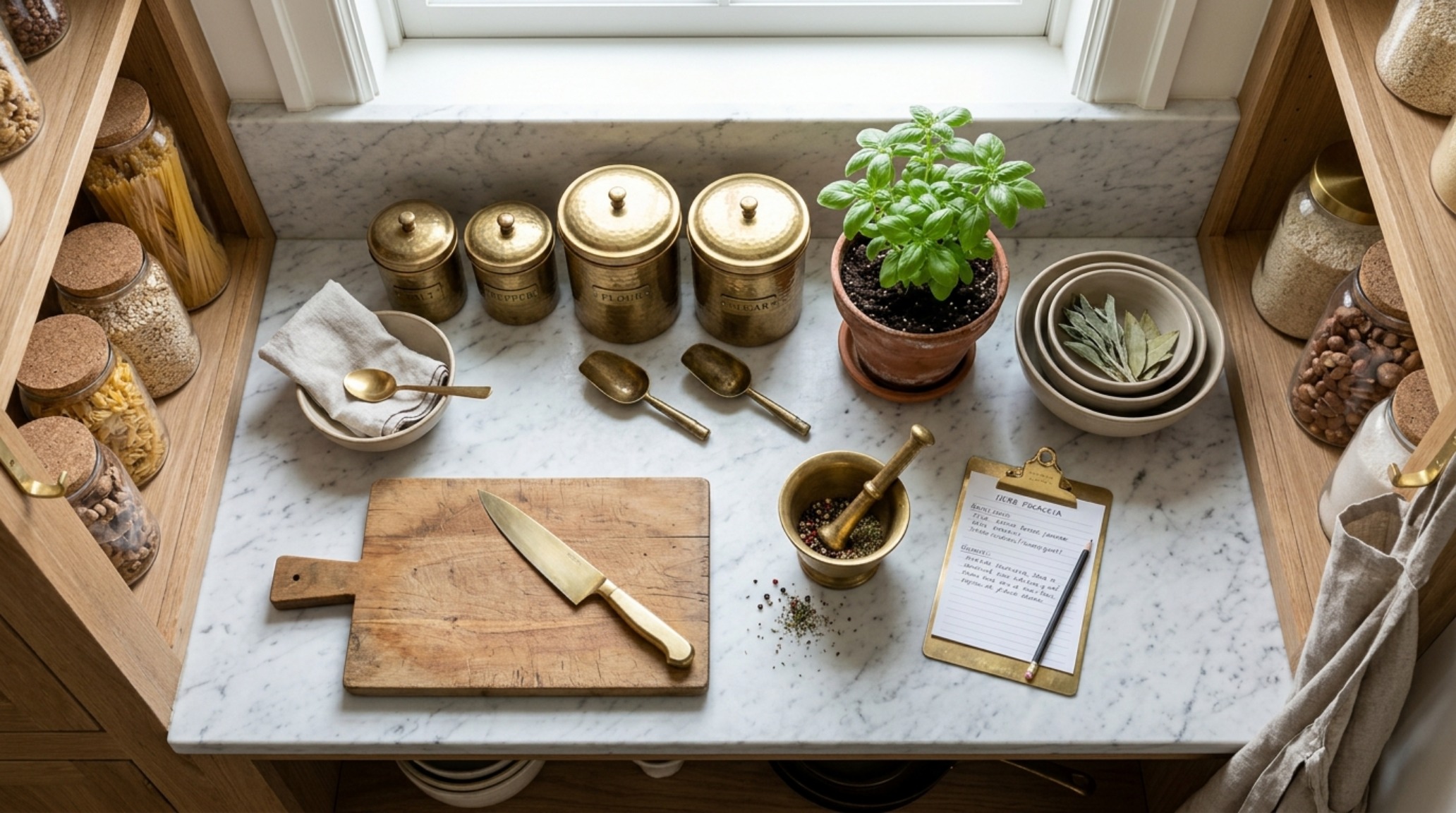
Consider the interplay of a honed travertine shelf against a backdrop of Farrow & Ball’s Setting Plaster. The earthy, muted pink of the walls provides a soft counterpoint to the cool, porous nature of the stone. This isn’t just about aesthetics; it’s about the haptic feedback of the space. A heavy, solid brass handle feels different in the hand than a hollow steel pull. It conveys a sense of permanence and intentionality. By specifying unlacquered brass hardware, you allow the space to age gracefully, developing a living patina that mirrors the organic nature of the ingredients stored within.
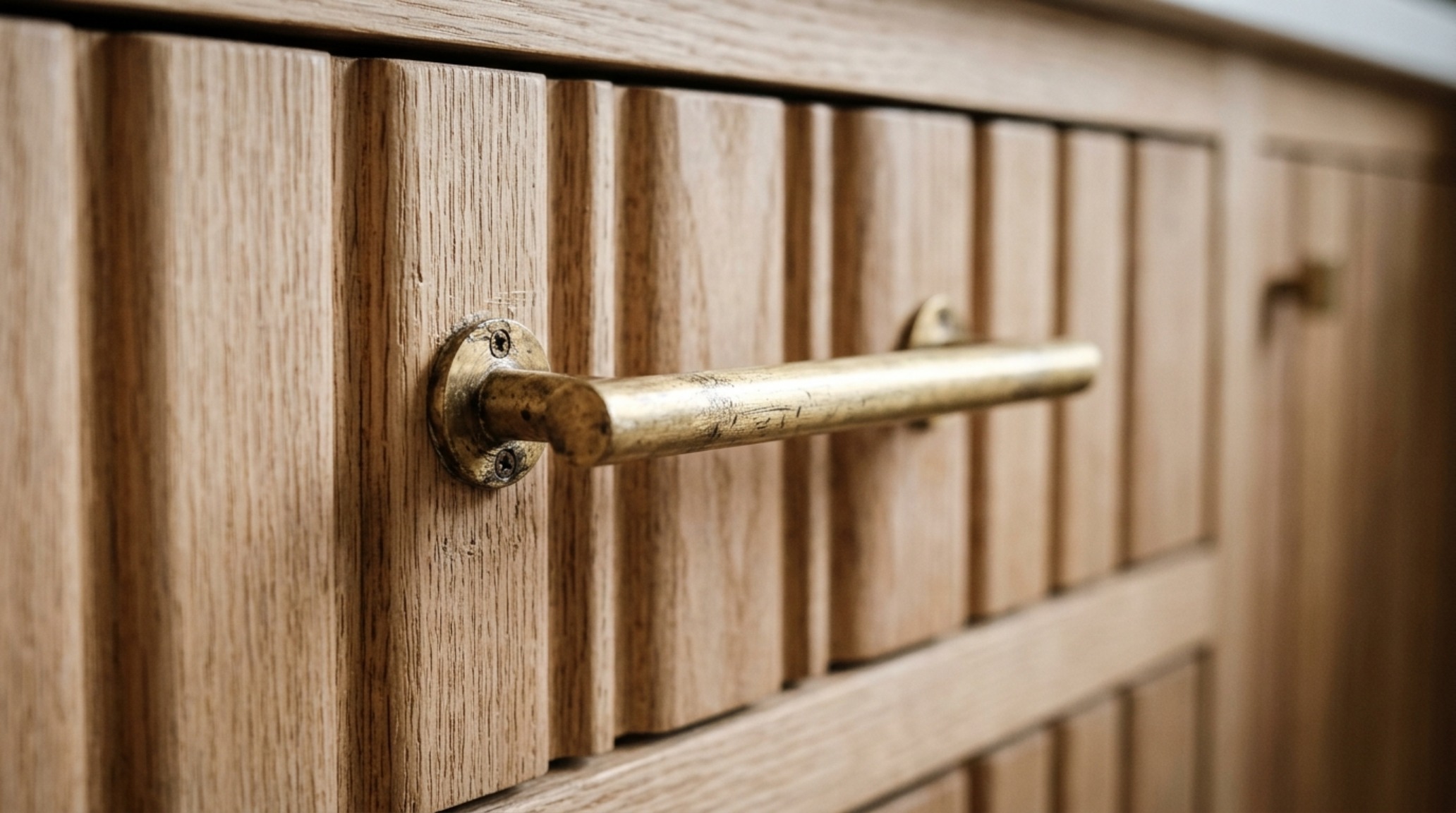
Atmospheric Calibration: The Role of 2700K Lighting
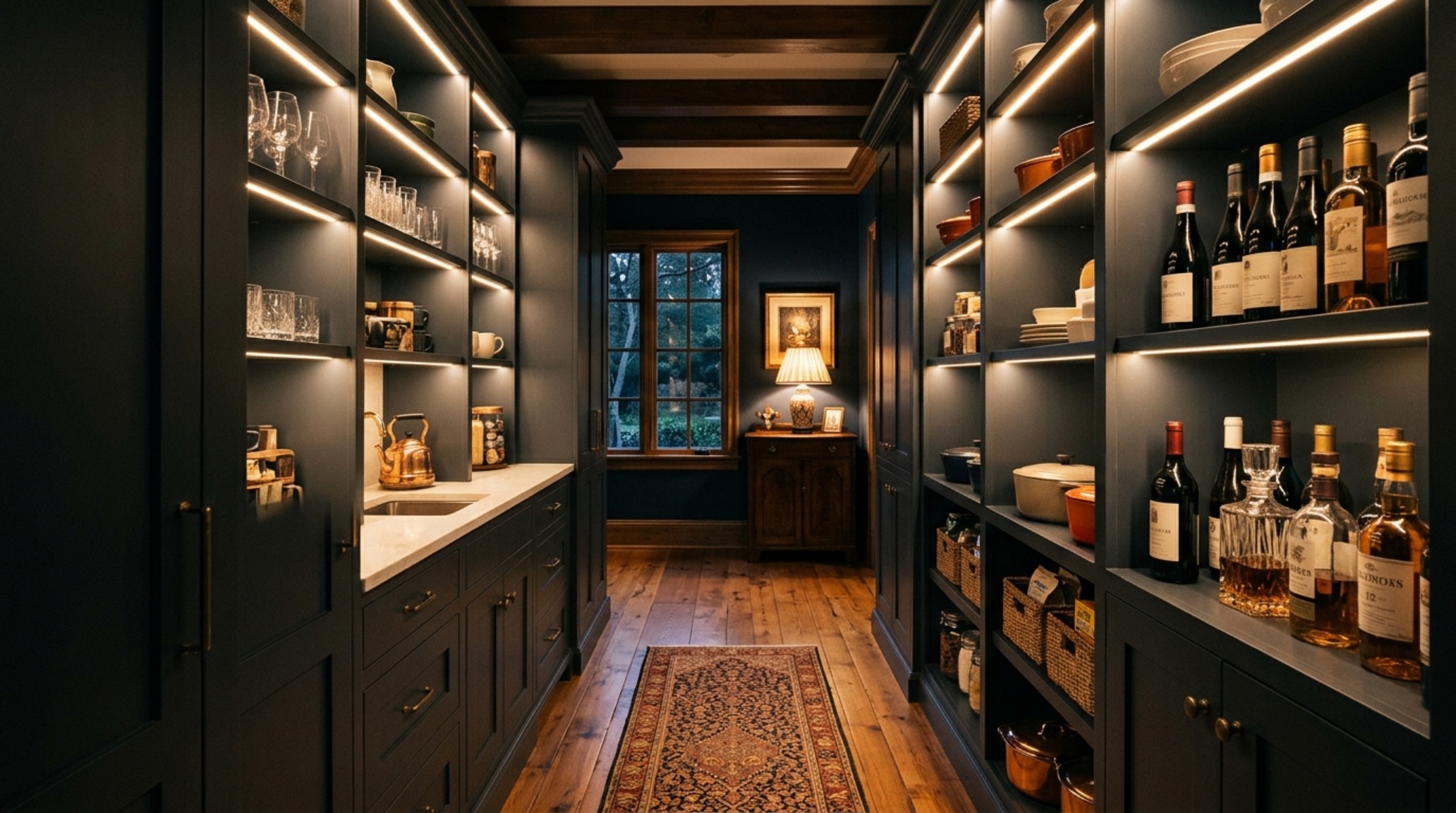
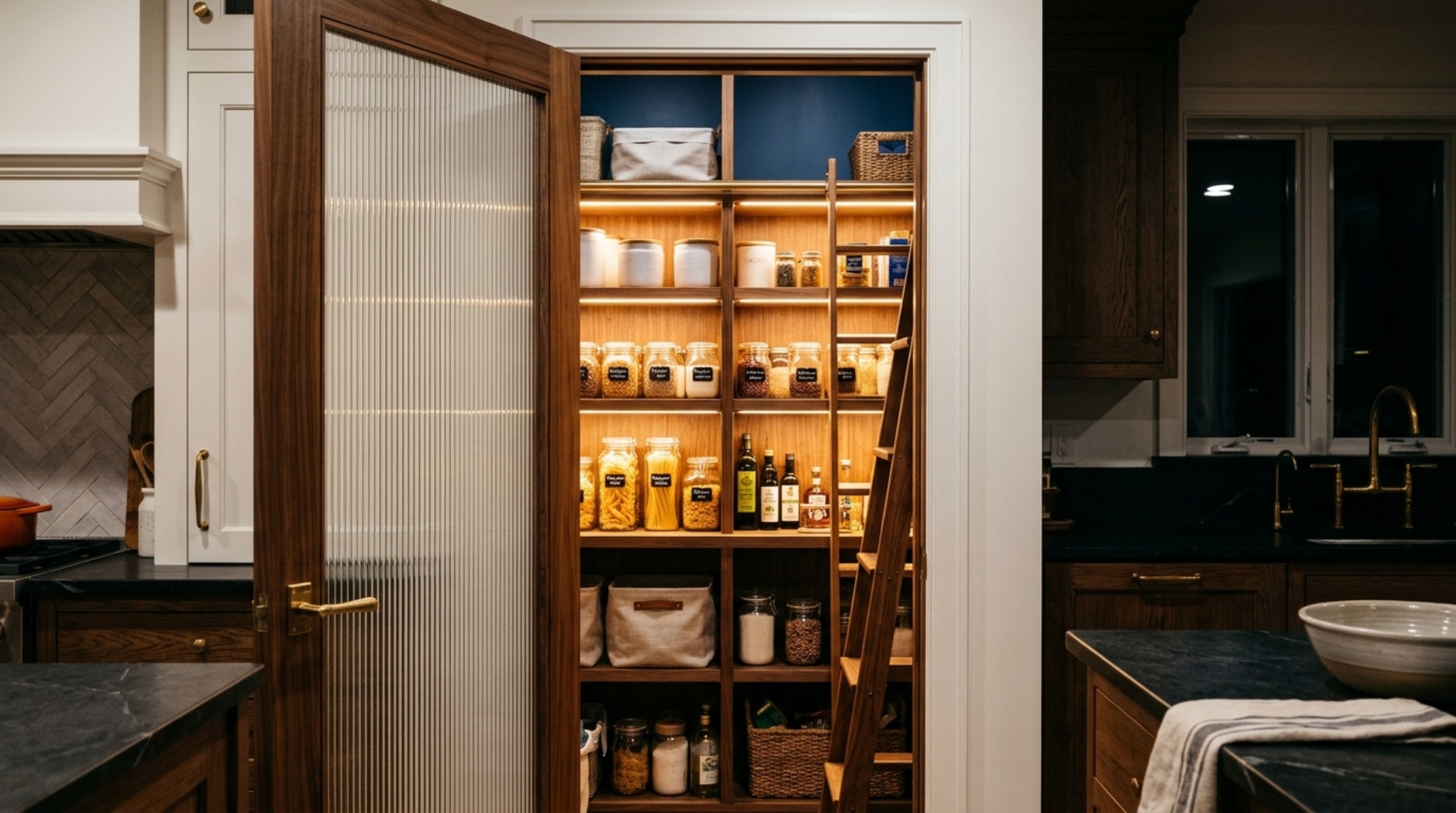
Lighting is the invisible architect of any storage space. In many pantry layout design projects, lighting is treated as an afterthought—a single flush-mount fixture that creates harsh glares and deep, unnavigable shadows. To achieve a truly high-end feel, we must look to integrated solutions. The gold standard for residential atmospheric design is 2700K lighting with a high Color Rendering Index (CRI) of 90+. This specific temperature mimics the warmth of a sunset, softening the edges of the room and making wood grains appear richer and more vibrant.
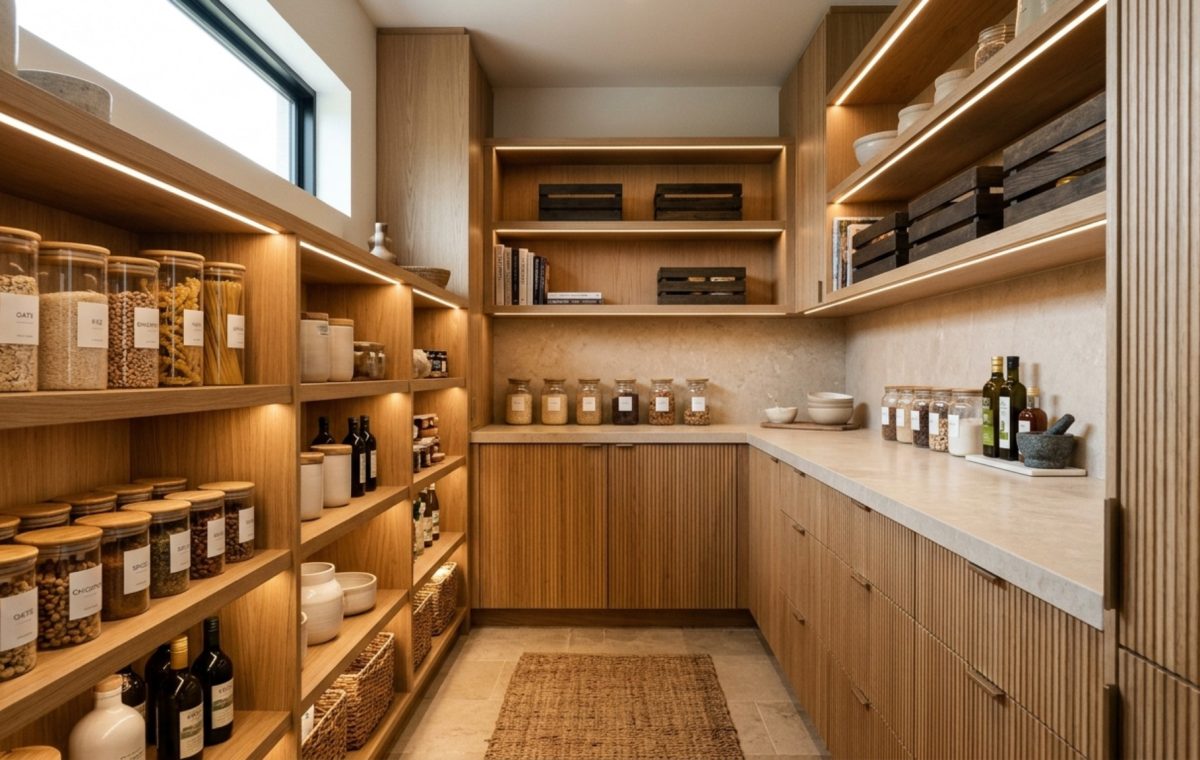
Strategically placed LED ribbon lighting, recessed into the undersides of shelves or hidden behind a front-facing lip, creates a diffused glow that eliminates ‘dead zones.’ When lighting is directed inward toward the contents rather than downward from the ceiling, the pantry becomes a luminous jewel box. This technique is particularly effective when using bespoke pantry shelving dimensions, allowing for a 3/4-inch recess that hides the light source while bathing the dry goods in a soft, museum-quality wash. This directional light highlights the clarity of glass jars and the texture of woven baskets, turning everyday staples into a curated display.
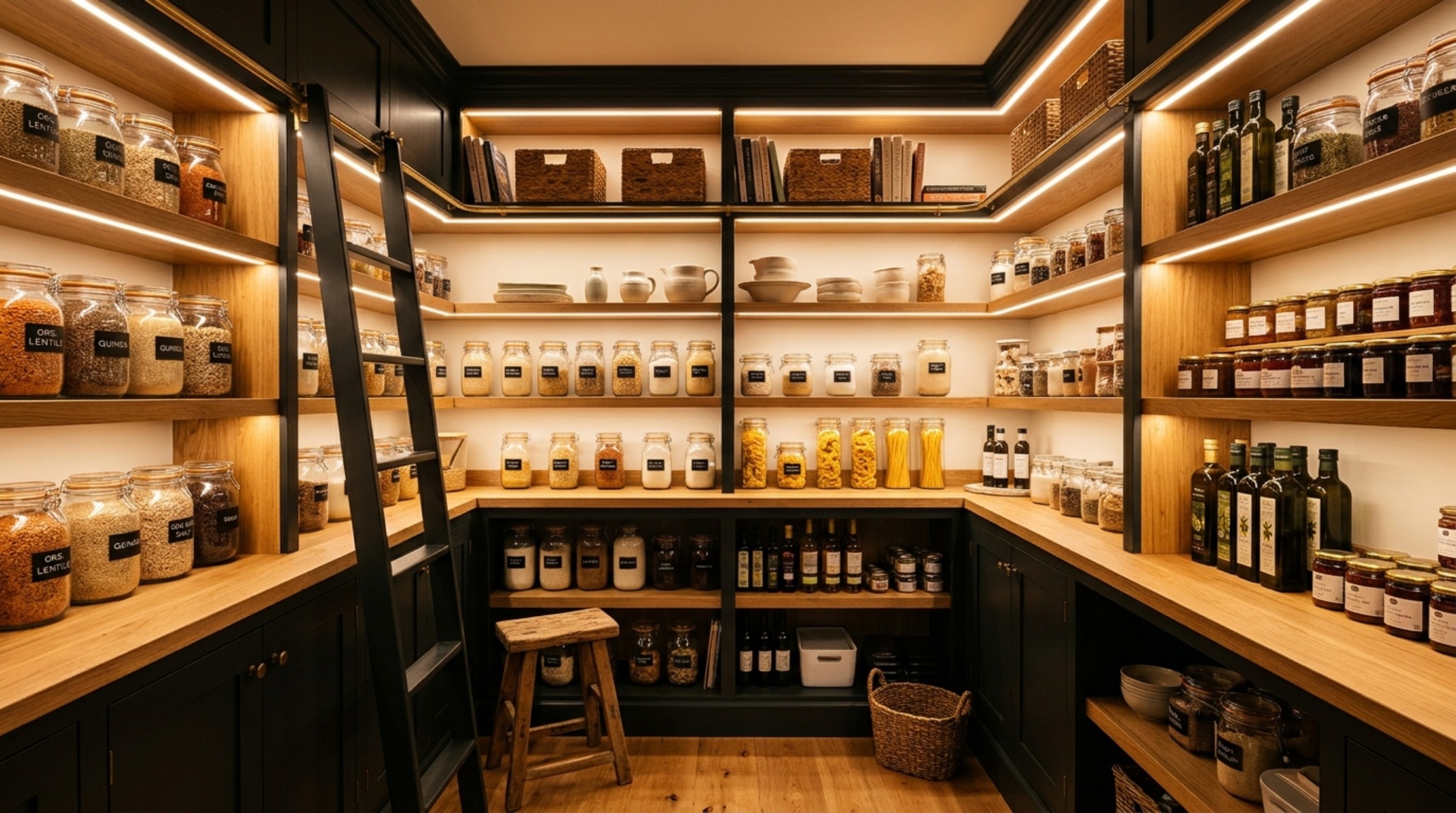
Strategic Small Pantry Organization Ideas for High-Performance Living
Designing for a smaller footprint requires a rigorous commitment to spatial logic and sightline alignment. When exploring small pantry organization ideas, the focus must shift from maximum density to optimal accessibility. We often see the mistake of over-crowding shelves, which creates visual noise and physical friction. Instead, implement the concept of ‘negative space breathing room.’ By leaving 15% of your shelving unoccupied, you allow the eye to rest and make the remaining items feel more precious.
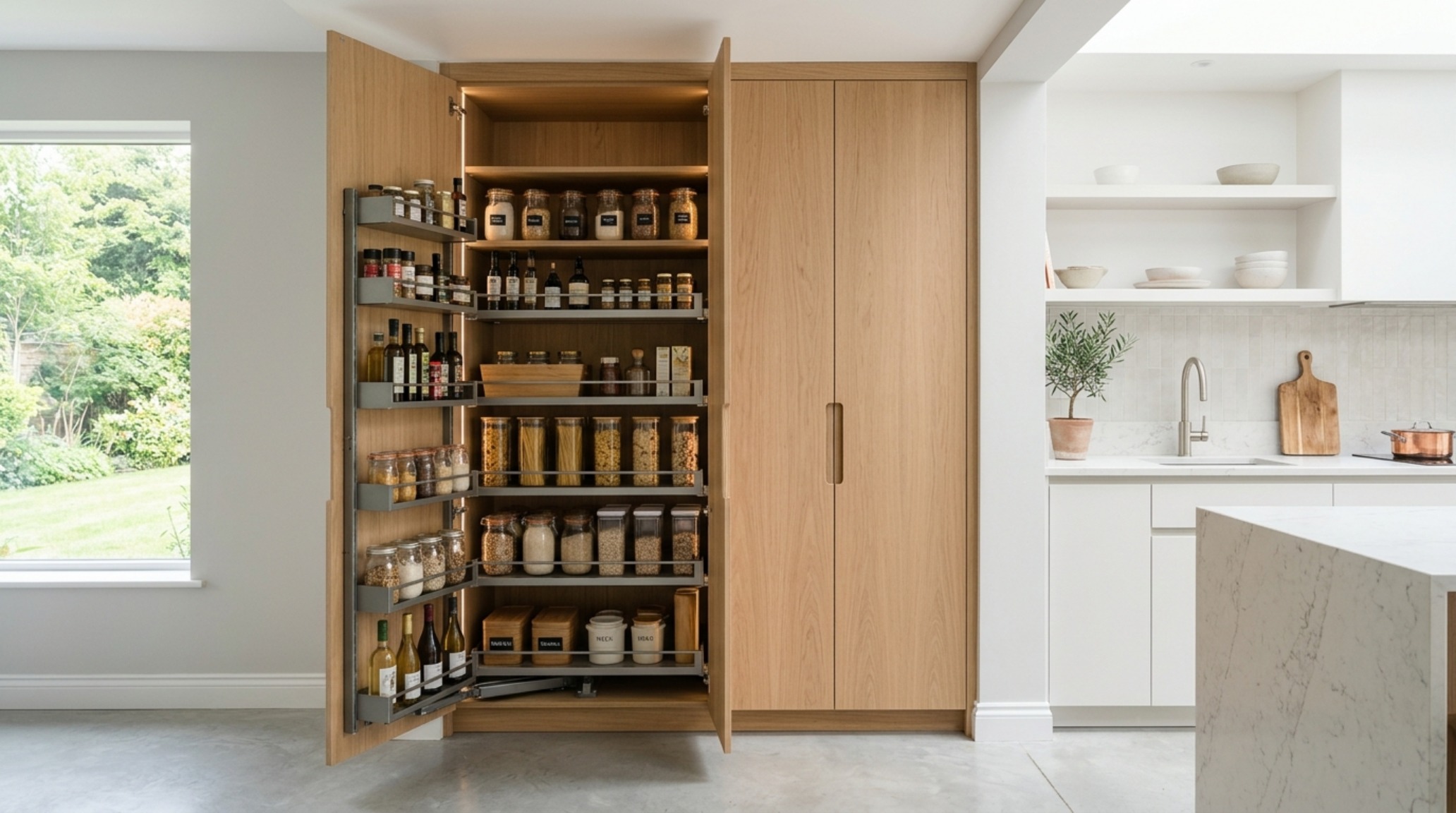
For those navigating the constraints of a butler’s pantry or a reach-in cabinet, pull out pantry drawers for small spaces are non-negotiable. These allow you to utilize the full depth of a 24-inch base cabinet without losing items to the ‘dark back.’ Specifying these drawers in a matching wood species—perhaps a rift-sawn oak with dovetail joinery—elevates the experience of opening a cabinet. Furthermore, small pantry shelves layout should prioritize vertical hierarchy: everyday items at chest height (the ‘reach zone’), heavier bulk items on lower pull-outs, and rarely used seasonal platters on the highest reaches. This 18-inch ‘coffee table reach’ logic ensures that the items used most frequently are always at the point of least resistance.
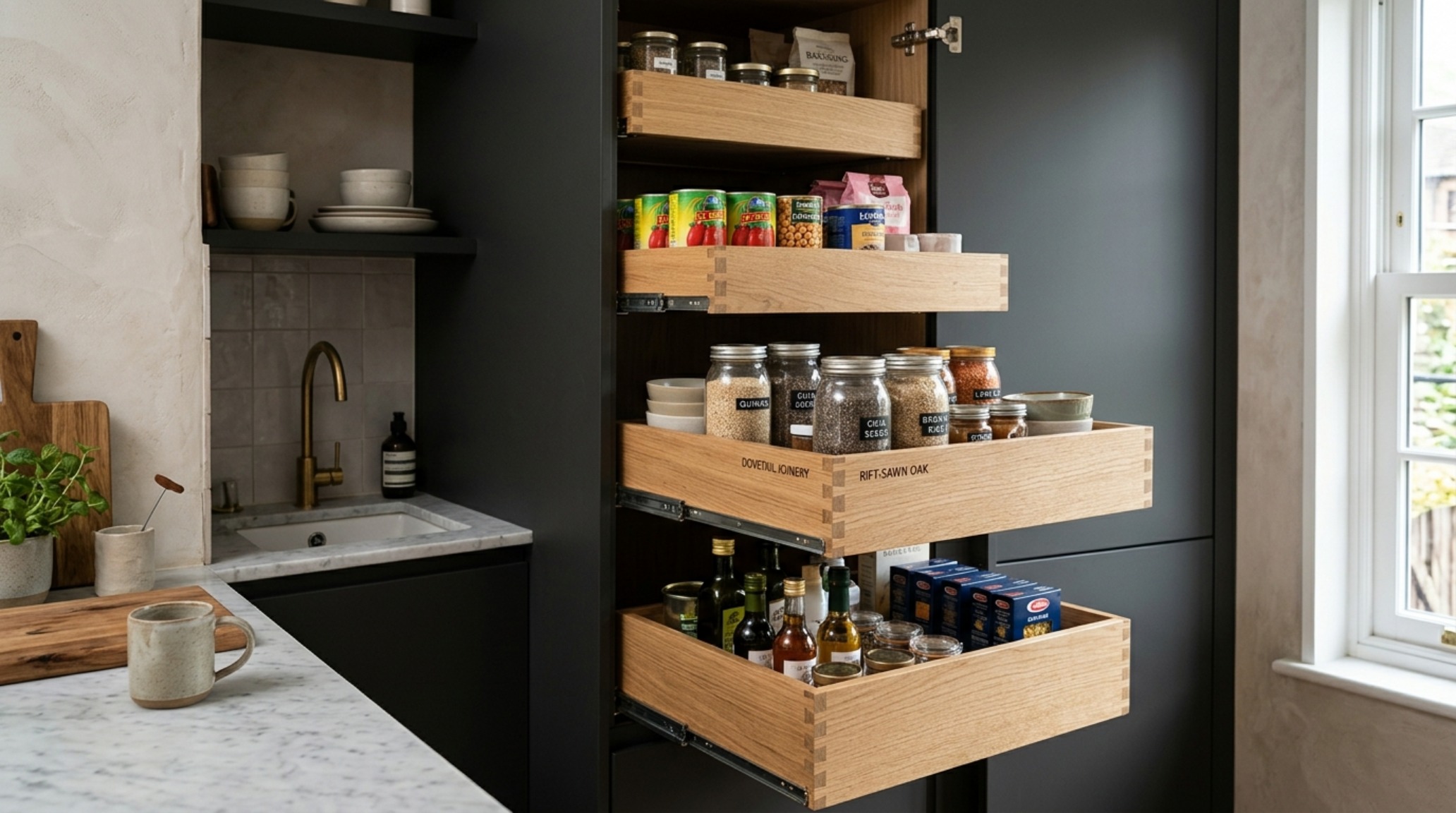
The Architecture of Order: Systems and Symmetry
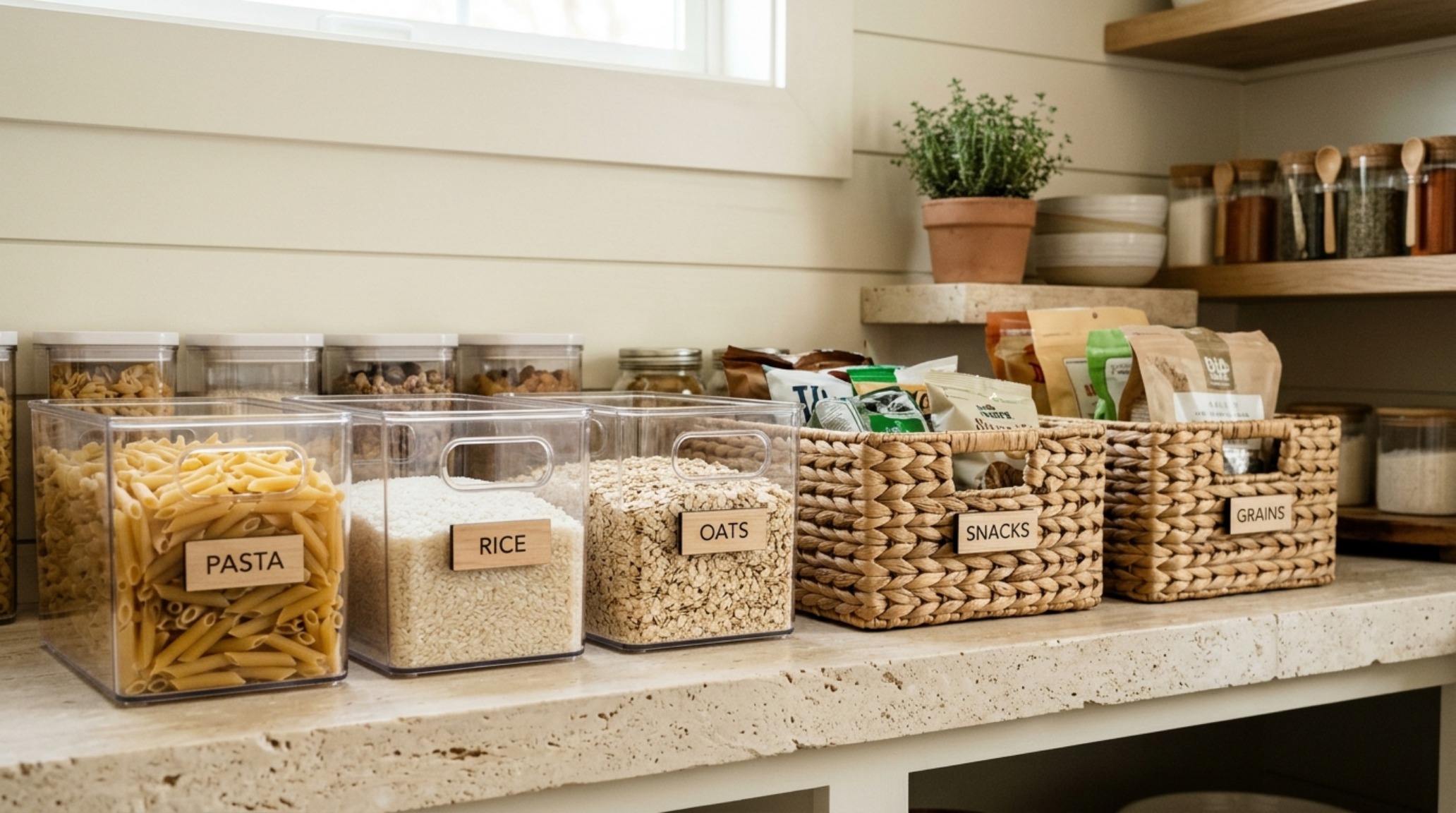
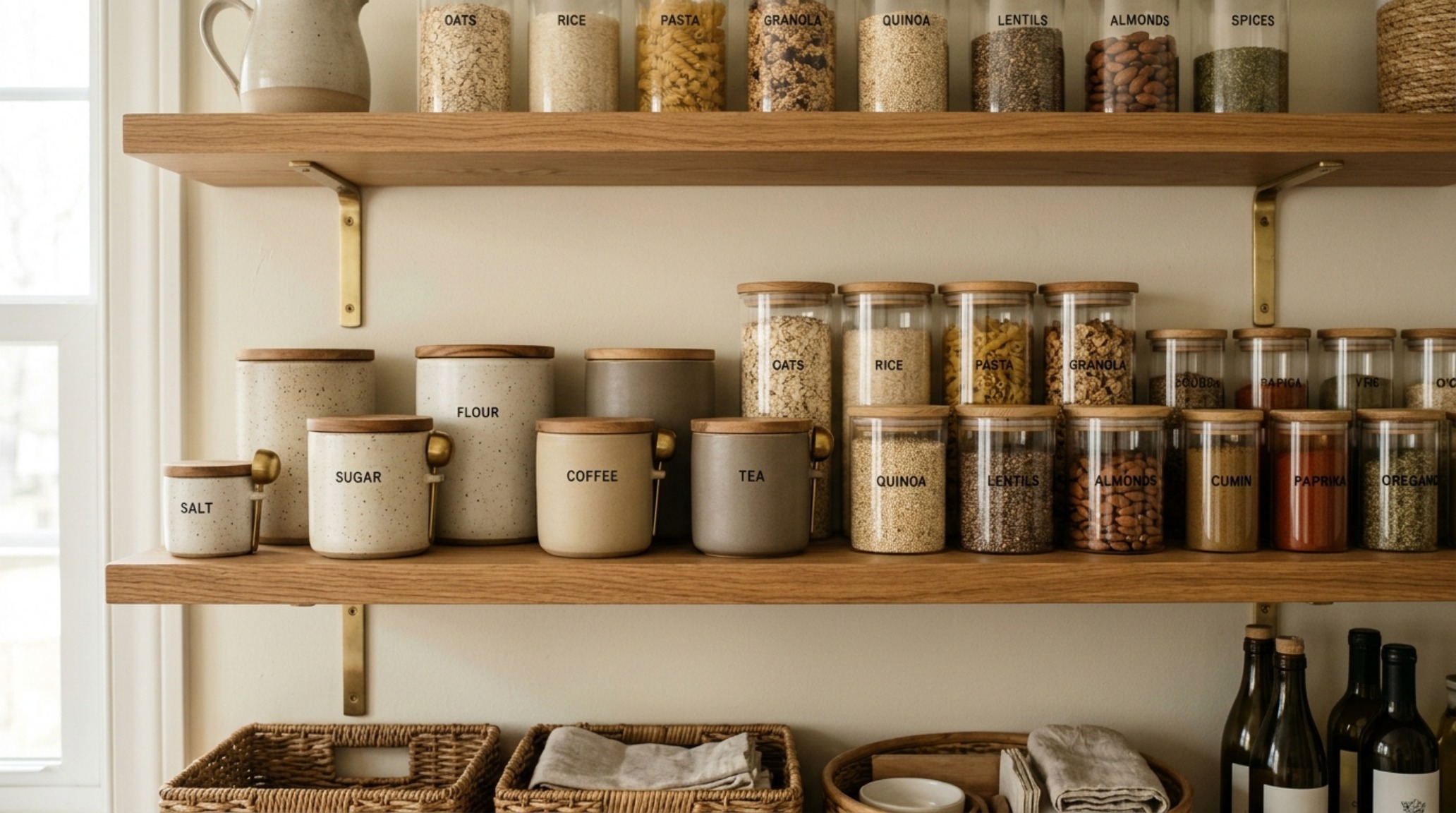
True organization is a blend of structural precision and visual harmony. The move toward clear acrylic pantry storage bins has dominated the market, and for good reason: they offer immediate visual inventory. However, in a Quiet Luxury pantry, these should be used sparingly or balanced with more opaque, natural materials. Use clear bins for items that are inherently colorful or textured—like dried pasta or lentils—but house less attractive packaging in hand-woven ash baskets or ceramic canisters. This creates a balanced visual field that doesn’t feel overly sterile.
Symmetry also plays a vital role in cabinet organization. Aligning the height of your canisters and ensuring that your labels are consistent in font and placement creates a sense of calm. When every element follows a predefined grid, the pantry feels like an extension of the home’s primary architecture rather than a cluttered closet. This is where bespoke joinery truly shines, allowing for adjustable shelving that can be tuned to the exact height of your favorite glassware or spice jars, maintaining a tight 1/8-inch tolerance that screams custom craftsmanship.
Architectural Specification & Material Matrix
Curated tactile palette, spatial dimensions, and atmospheric lighting index for this design scheme.
Ultimately, the evolution of the pantry is a testament to our desire for homes that support our well-being through every layer of the floor plan. By centering our design around materiality and light, we move away from the frantic energy of clutter and into the calm of curated storage. Whether you are implementing these small pantry organization ideas in a sprawling estate or a compact urban apartment, the goal remains the same: to create a space that feels intentional, grounded, and deeply personal. It is in these quiet, backstage moments of the home that the true quality of our architectural environment is felt most profoundly, turning the simple act of organization into a daily form of art.
Editorial Silo • Recommended Architecture Studies
- Ergonomic Mastery: Functional & Space-Saving Hacks for Secret Costco Door Kitchen Pantry — Archival Design Case Study
- Beyond Acrylic: Infusing Zooey’s ‘New Eccentric’ Materiality and Atmospheric Lighting into Small Pantries — Archival Design Case Study
Architectural Inspiration Lookbook
A high-resolution study in spatial proportions, tactile materiality, and light choreography curated for enduring modern living.
Curated Visual Lookbook
Design Gallery & Spatial Studies
A visual curation of architectural arrangements, lighting concepts, and material palettes featured in this space.