There is a profound, often overlooked stillness residing in the architectural void beneath a staircase. Historically relegated to the utilitarian—housing vacuum cleaners or tangled coats—this triangular footprint is undergoing a sophisticated metamorphosis. Today, the library under stairs has emerged as the definitive hallmark of the modern bibliophile’s home, bridging the gap between efficient spatial reclamation and the deeply emotive aesthetics of Dark Academia. It is not merely about storage; it is about the curation of a sensory escape that feels whispered, intentional, and entirely private.
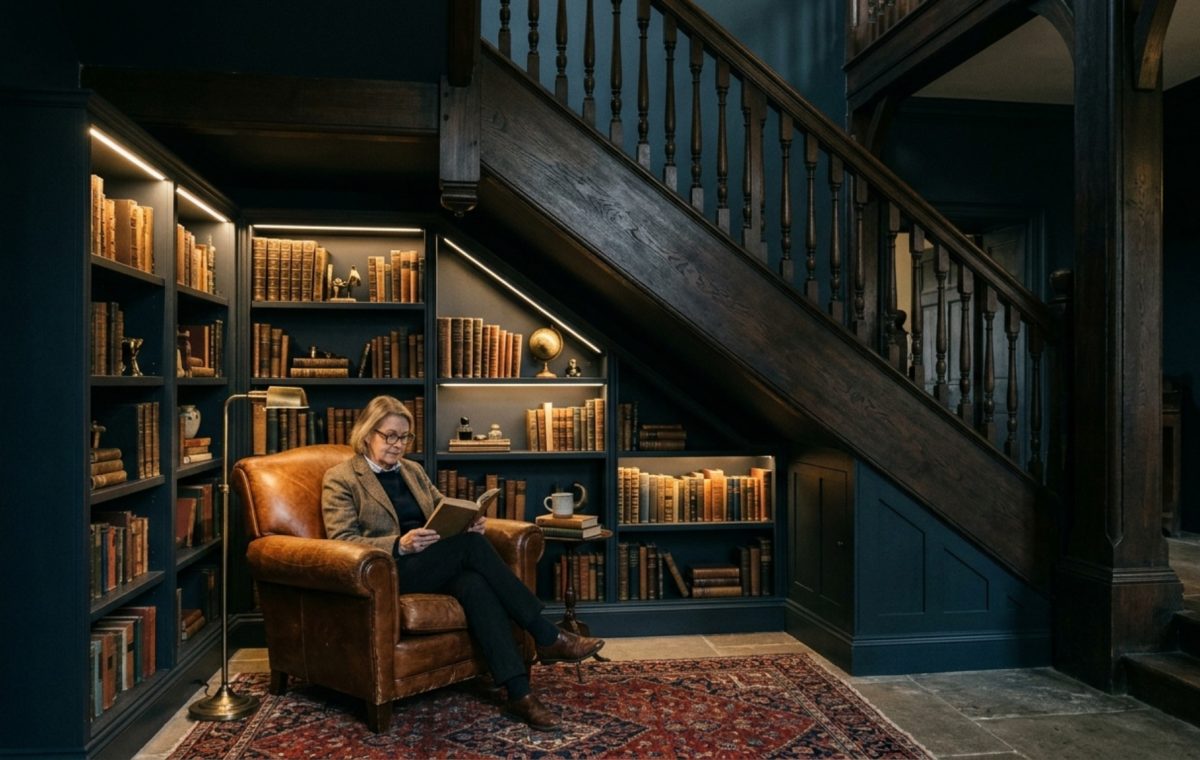
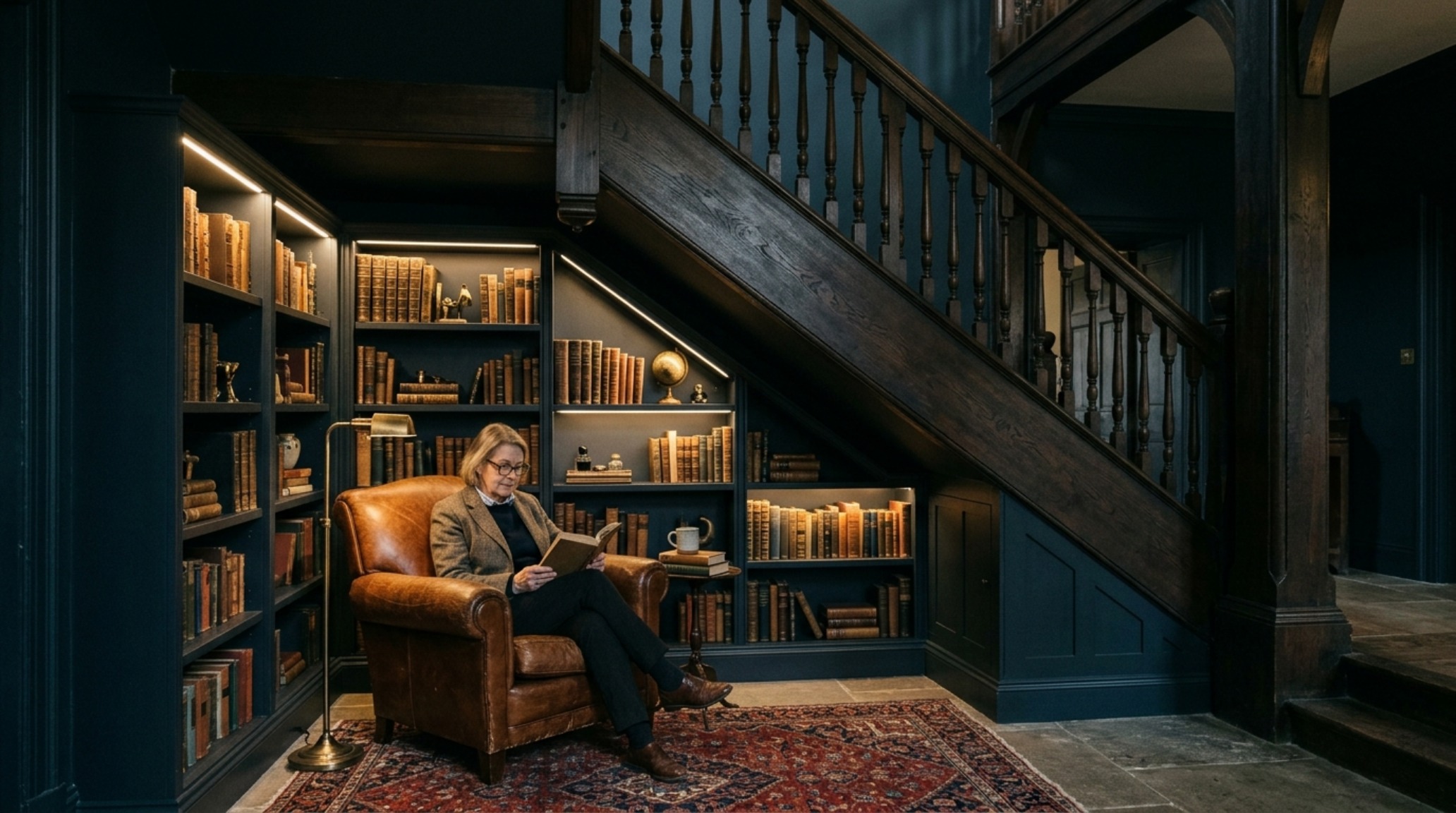
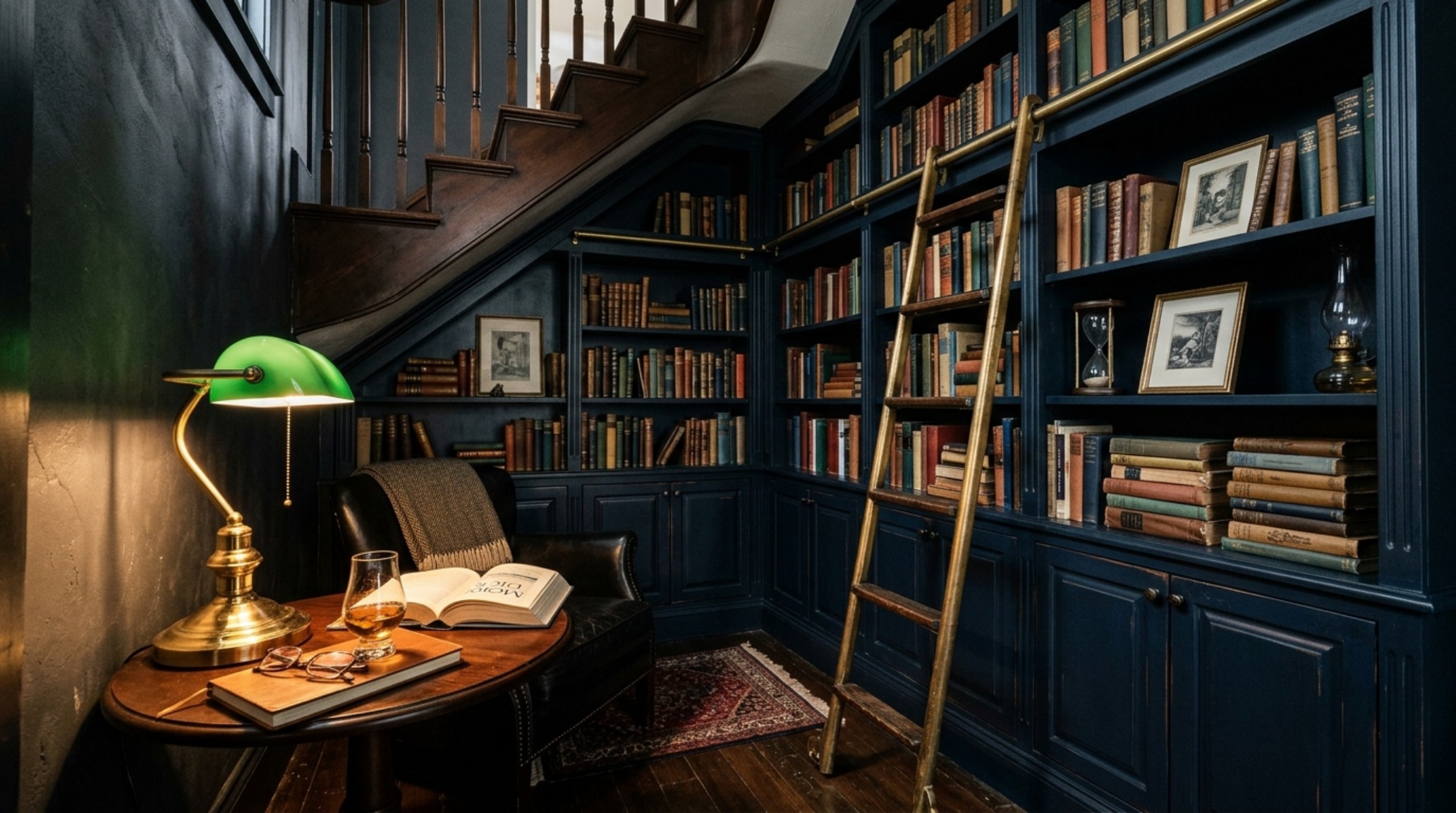
When we approach the design of a reading sanctuary, we are negotiating with the ‘liminal space’ of the home. This is where the transit of the household meets the stillness of the intellect. To achieve a successful library under stairs, one must look beyond simple shelving. We are aiming for ‘Quiet Luxury’—a movement defined by the absence of visual noise and the presence of high-tactility materials. Imagine the friction of a heavy cognac leather chair against a backdrop of color-drenched millwork in Farrow & Ball’s ‘Railings,’ illuminated by the soft, honeyed amber of 2700K lighting. This is the architecture of intimacy.
Designing the Ultimate Library Under Stairs: A Study in Dark Academia
The rise of Dark Academia in interior circles has reclaimed the moody, scholarly aesthetic of 19th-century universities, but with a refined, contemporary edge. Central to this look is the concept of color drenching. By painting your under stairs bookshelf, the surrounding walls, and even the underside of the staircase in a singular, saturated hue like ‘Hague Blue,’ the boundaries of the small space dissolve. This creates an enveloping effect that makes the library feel like a cavernous retreat rather than a cramped corner.
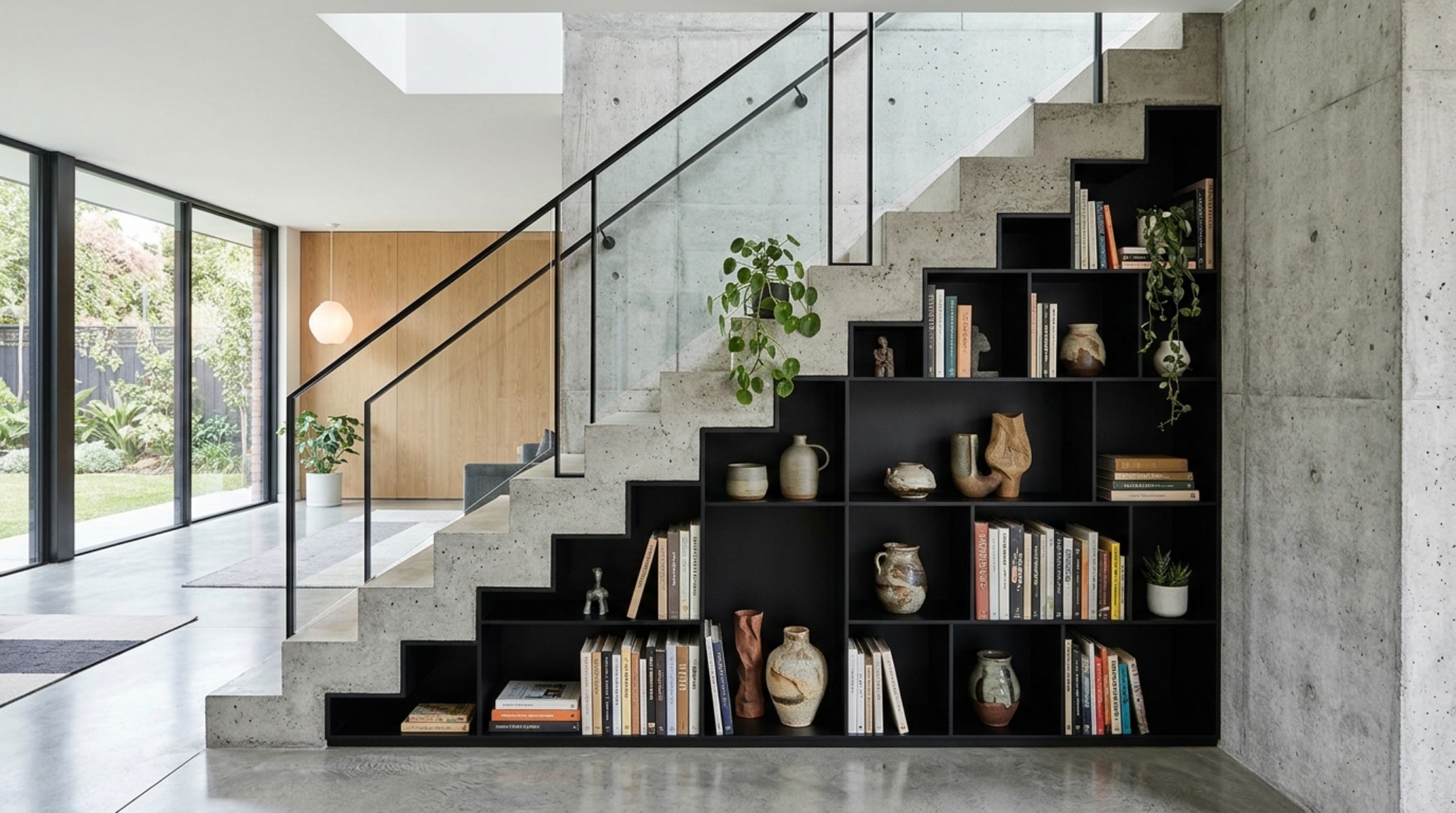
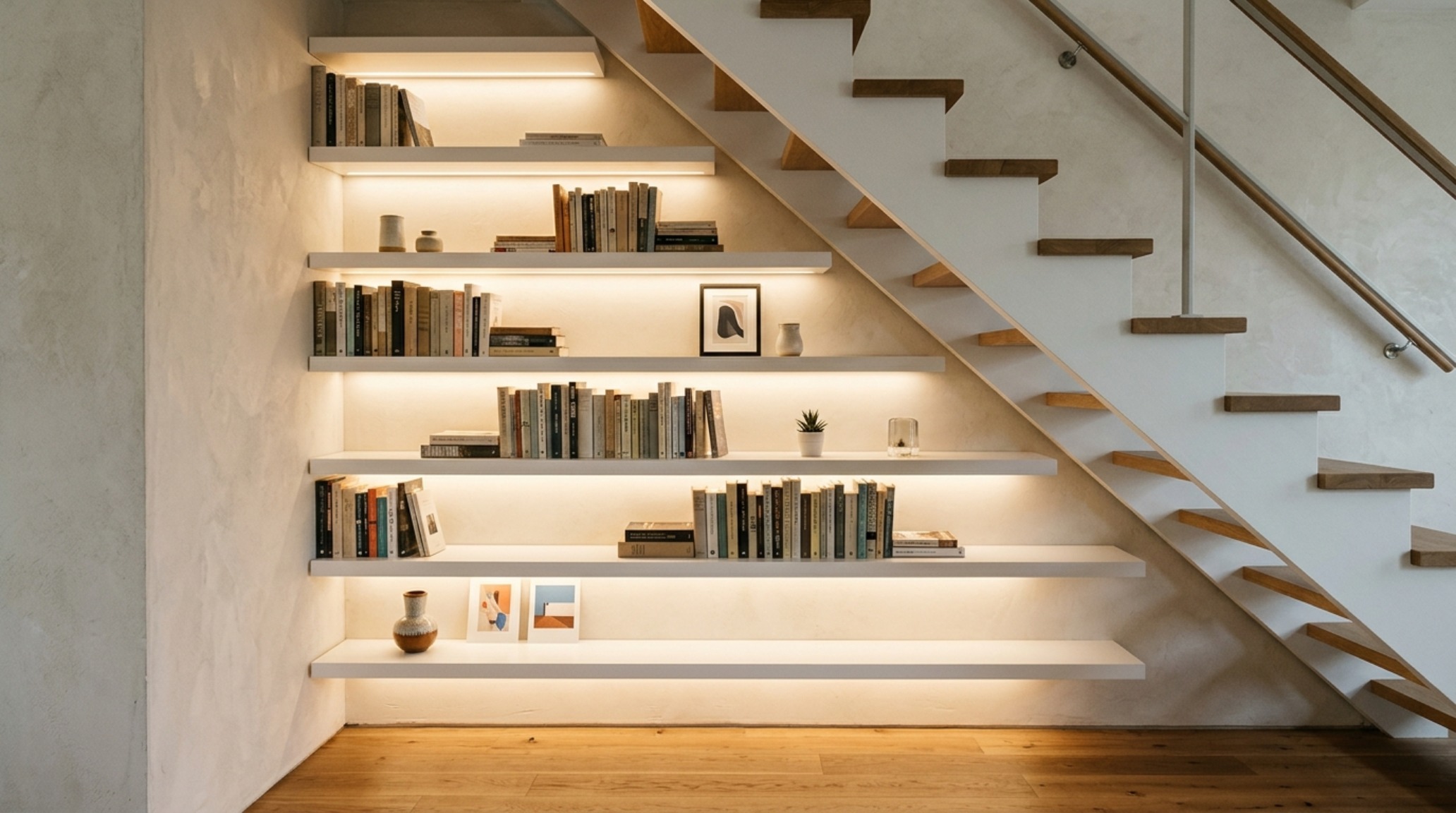
Structural integrity is the silent partner in this aesthetic. When planning bespoke staircase bookshelf ideas, the joinery must respect the pitch of the stairs. I often recommend a stepped shelving height that mimics the rise and run of the treads above. This maintains a visual rhythm and ensures that every square inch of the vertical plane is utilized. For a truly high-end finish, the shelving should be recessed into the wall framing rather than mounted on top, allowing for a flush, seamless transition that speaks to the ‘Quiet Luxury’ ethos.
The Geometry of Comfort: Clearances and Ergonomics
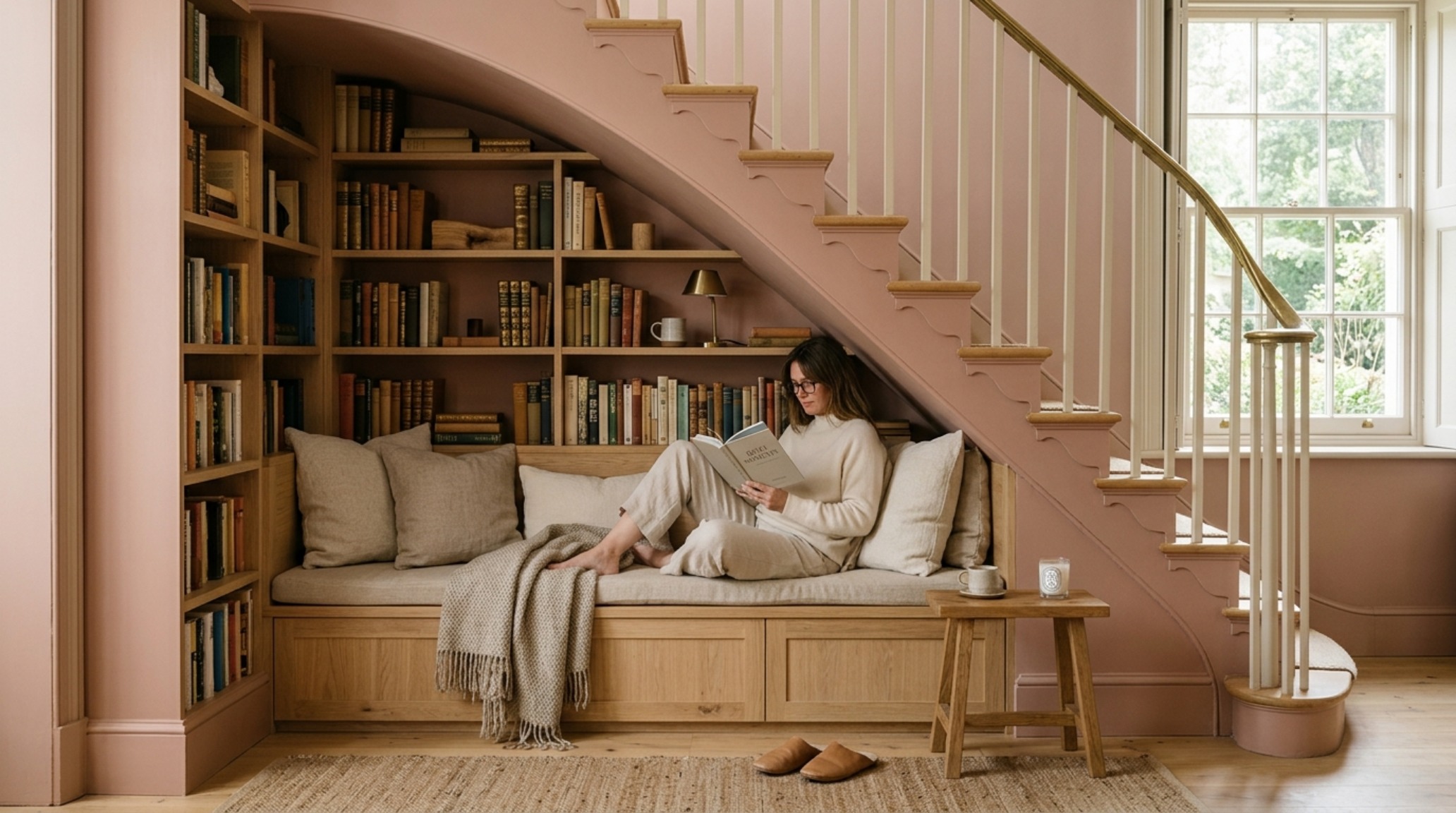
Design is a failure if it lacks function. In a small reading nook under stairs, the spatial cadence is determined by human proportions. For a comfortable walkway that doesn’t feel like a gauntlet, a minimum 36-inch primary circulation path is non-negotiable. If you are integrating a built-in bench, the seat height should rest between 17 and 18 inches, with a depth of at least 24 inches to allow for lounging. This is where the 18-inch coffee table reach becomes relevant; if you have a freestanding chair, your side table or book ledge must be within an easy arm’s sweep to maintain the flow of relaxation.
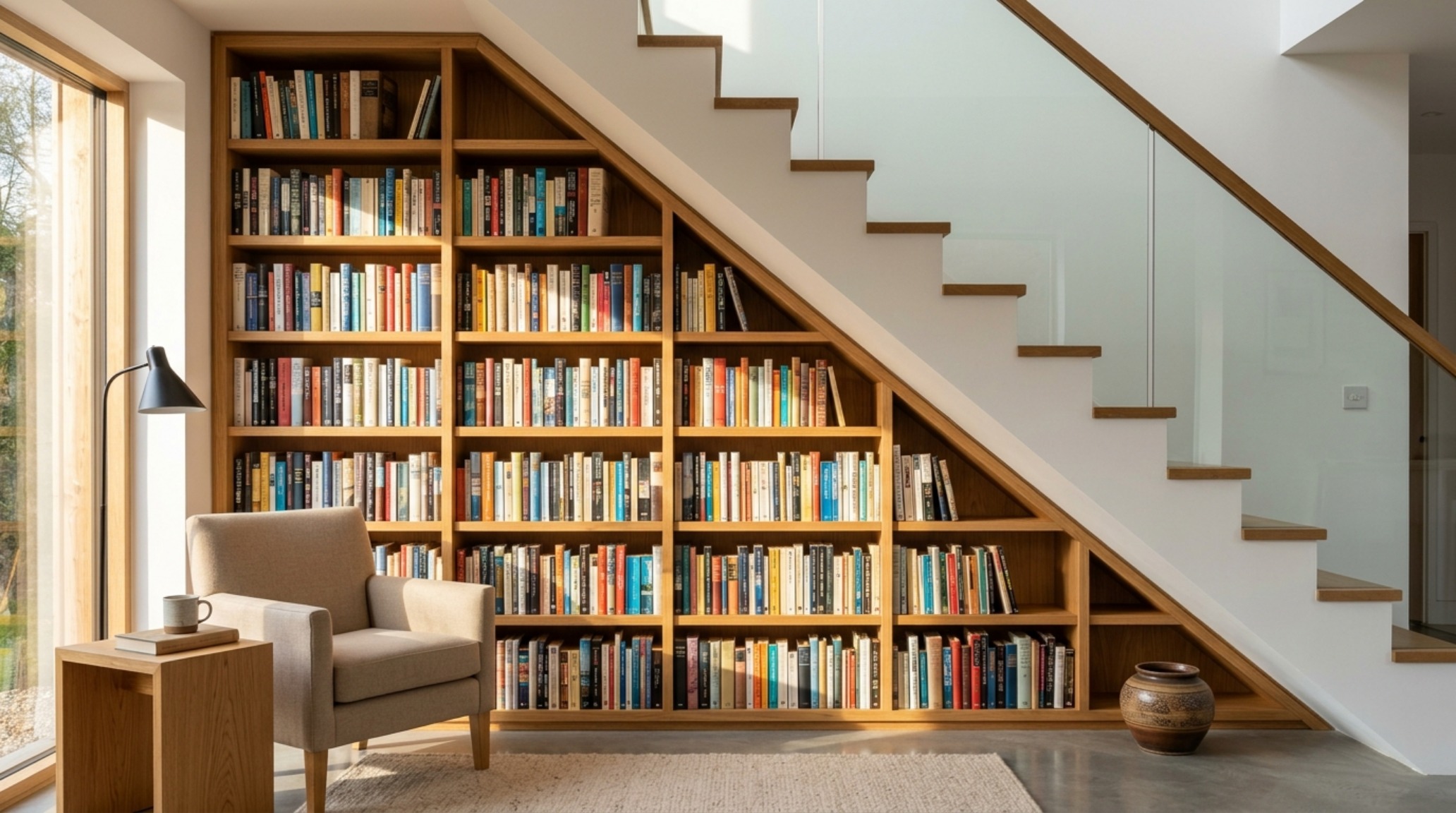
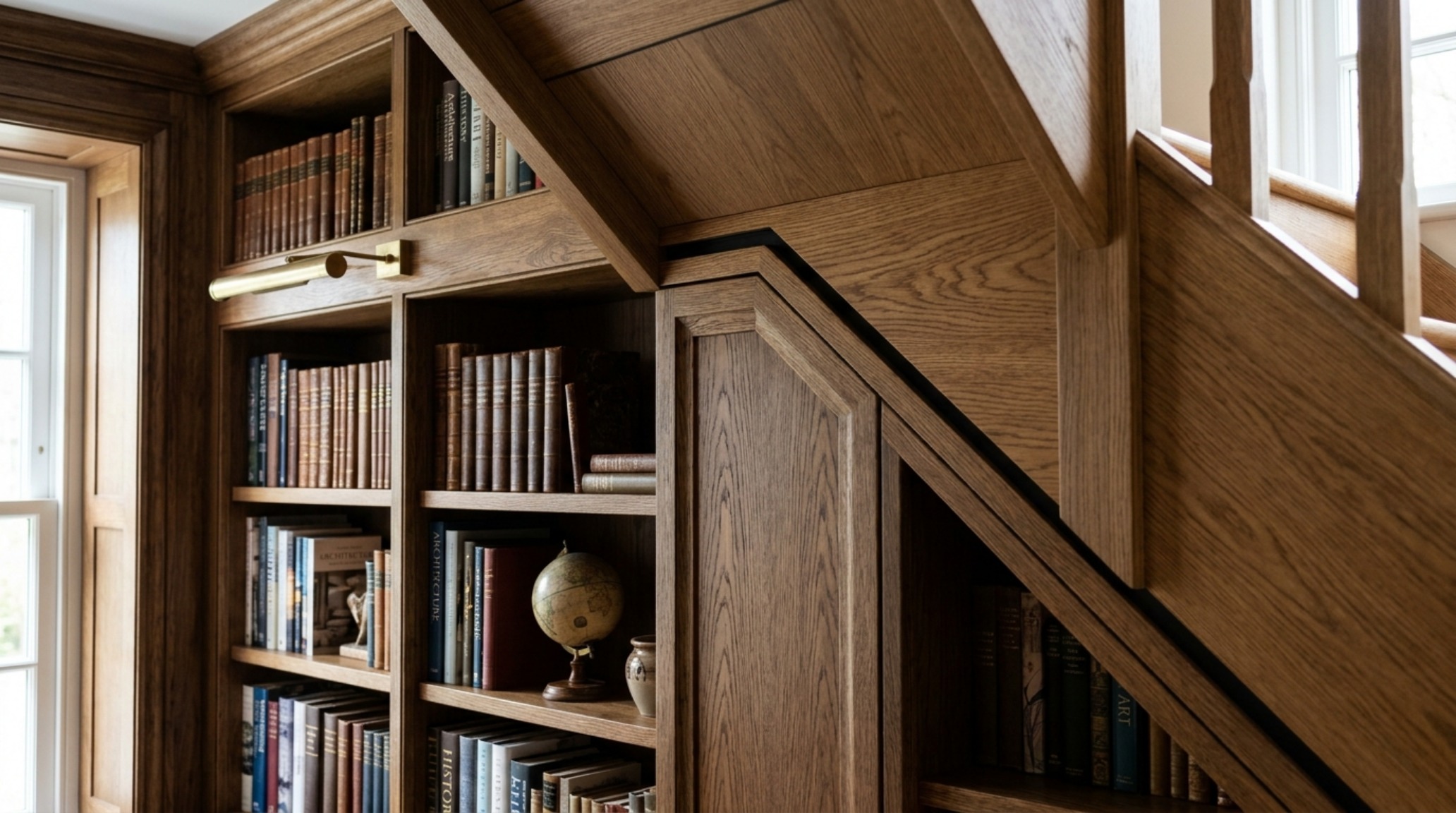
Integrating a reading nook within the library requires a focus on tactile grounding. We aren’t just looking at books; we are touching them, sitting near them, and breathing the same air. I advocate for the use of natural materials that age with grace. A fluted white oak paneling or a honed travertine ledger provides a haptic contrast to the smooth, matte finish of architectural paint. These materials absorb sound, contributing to the hushed atmosphere necessary for deep focus.
The Alchemy of Light: Mastering the 2700K Glow
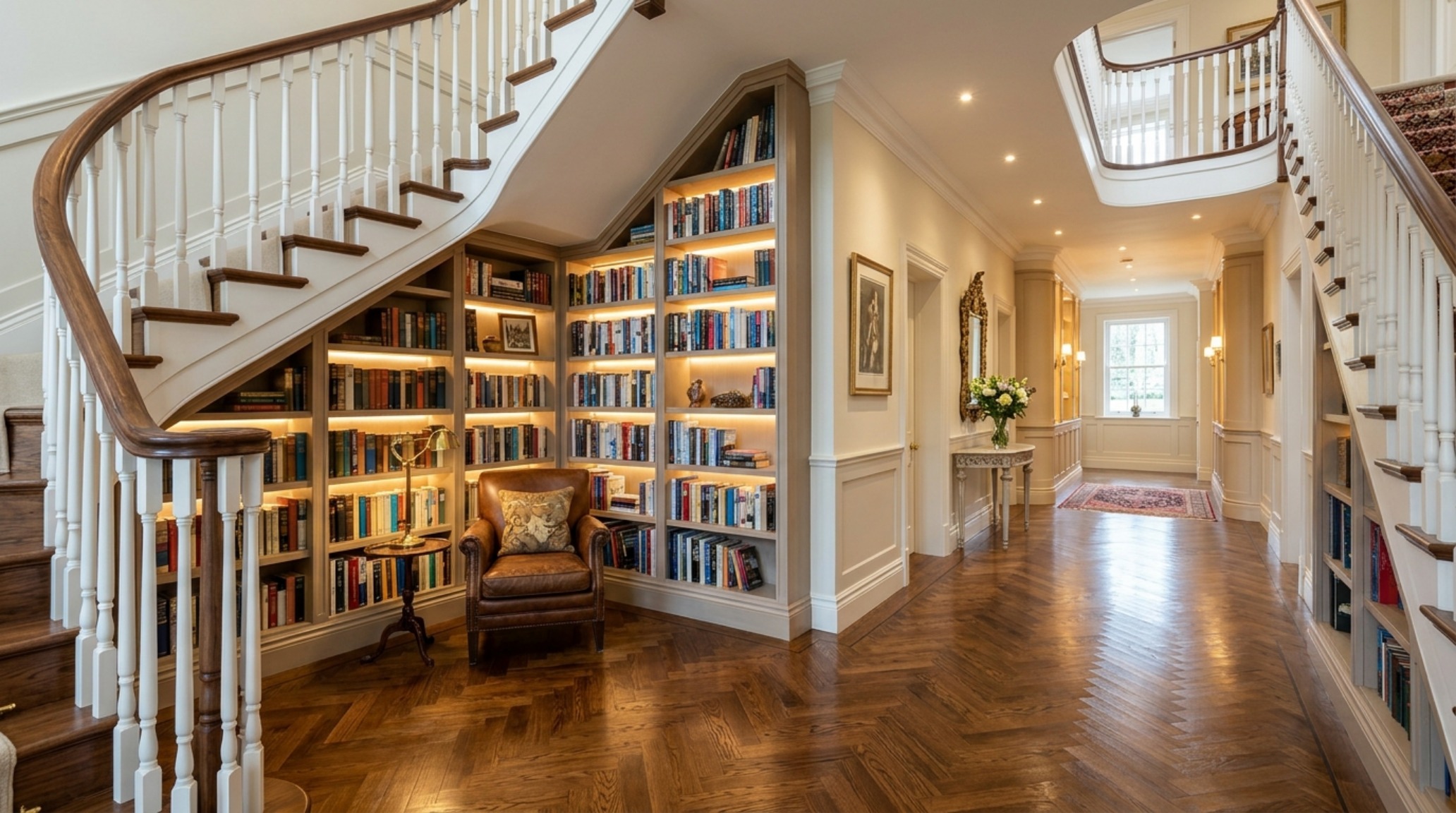
Lighting is the most powerful tool in your design arsenal for a reading corner under stairs. In these tucked-away spaces, natural light is often a luxury, meaning your artificial sources must work overtime to create warmth without clinical glare. The secret lies in the Kelvin scale. While 3000K is often used for kitchens and task-heavy areas, a library thrives in the 2700K range. This color temperature mimics the nostalgic glow of incandescent bulbs or candlelight, casting long, soft shadows that enhance the depth of your book collection.
To achieve this, I specify high CRI (Color Rendering Index) 90+ LED strips. A high CRI ensures that the deep reds of a leather binding or the complex pigments in your paint look true to life rather than washed out. These strips should be recessed into the underside of each shelf, hidden by a small lip or ‘baffle.’ This creates a ‘glow from within’ effect, highlighting the spines of the books and providing a diffused ambient light that eliminates the need for harsh overhead fixtures.
Layering Textures: Brass, Leather, and Velvet
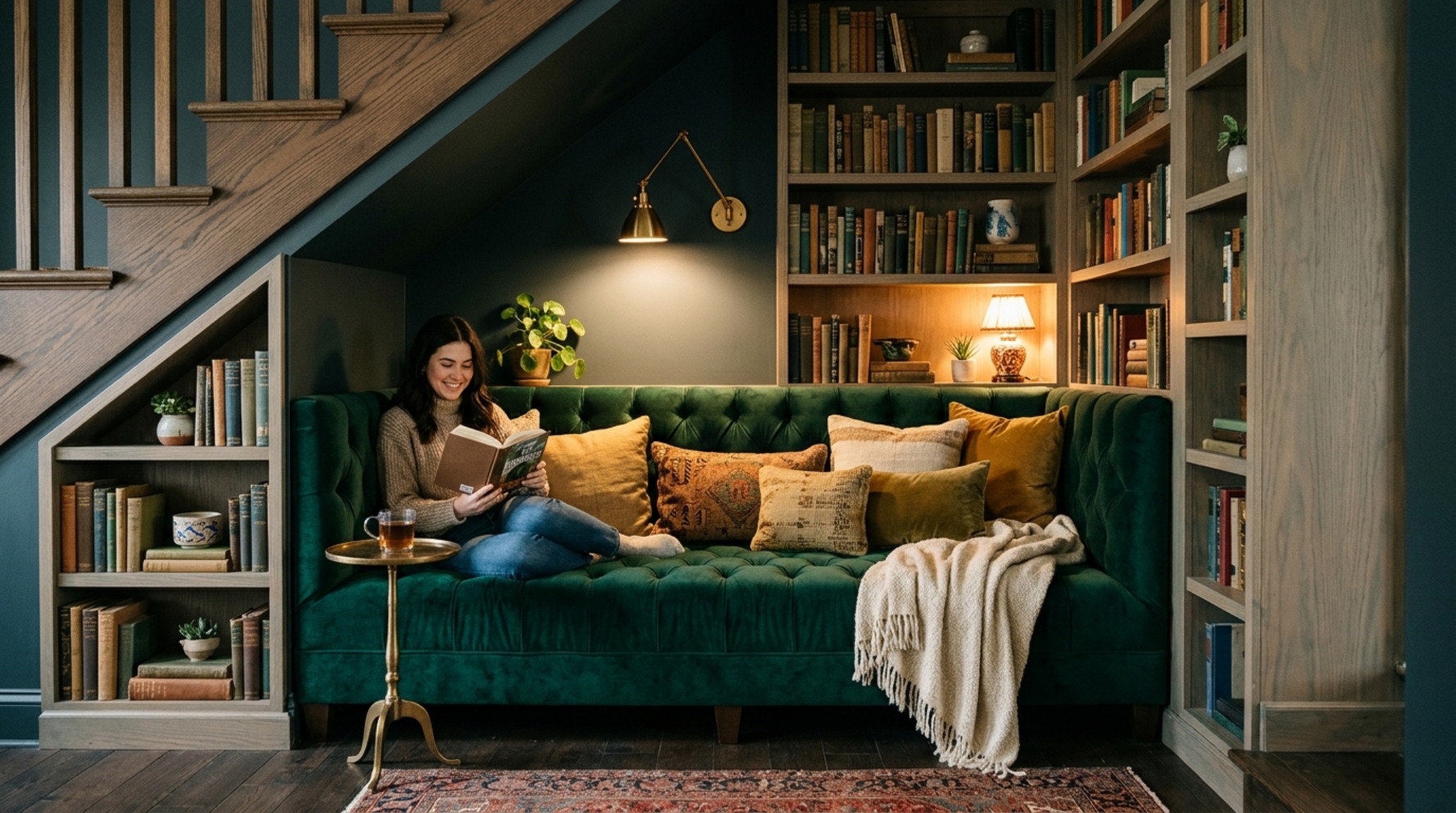
Materiality dictates the ‘soul’ of the staircase library. To lean into the Dark Academia aesthetic, we look for materials that feel ancestral. Solid brass hardware, perhaps in a living finish that patinas over time, offers a glint of light against dark cabinetry. When selecting seating for your home library design, consider a cognac leather that will develop character-rich creases, or a deep forest green velvet that absorbs light and softens the acoustics of the hallway.
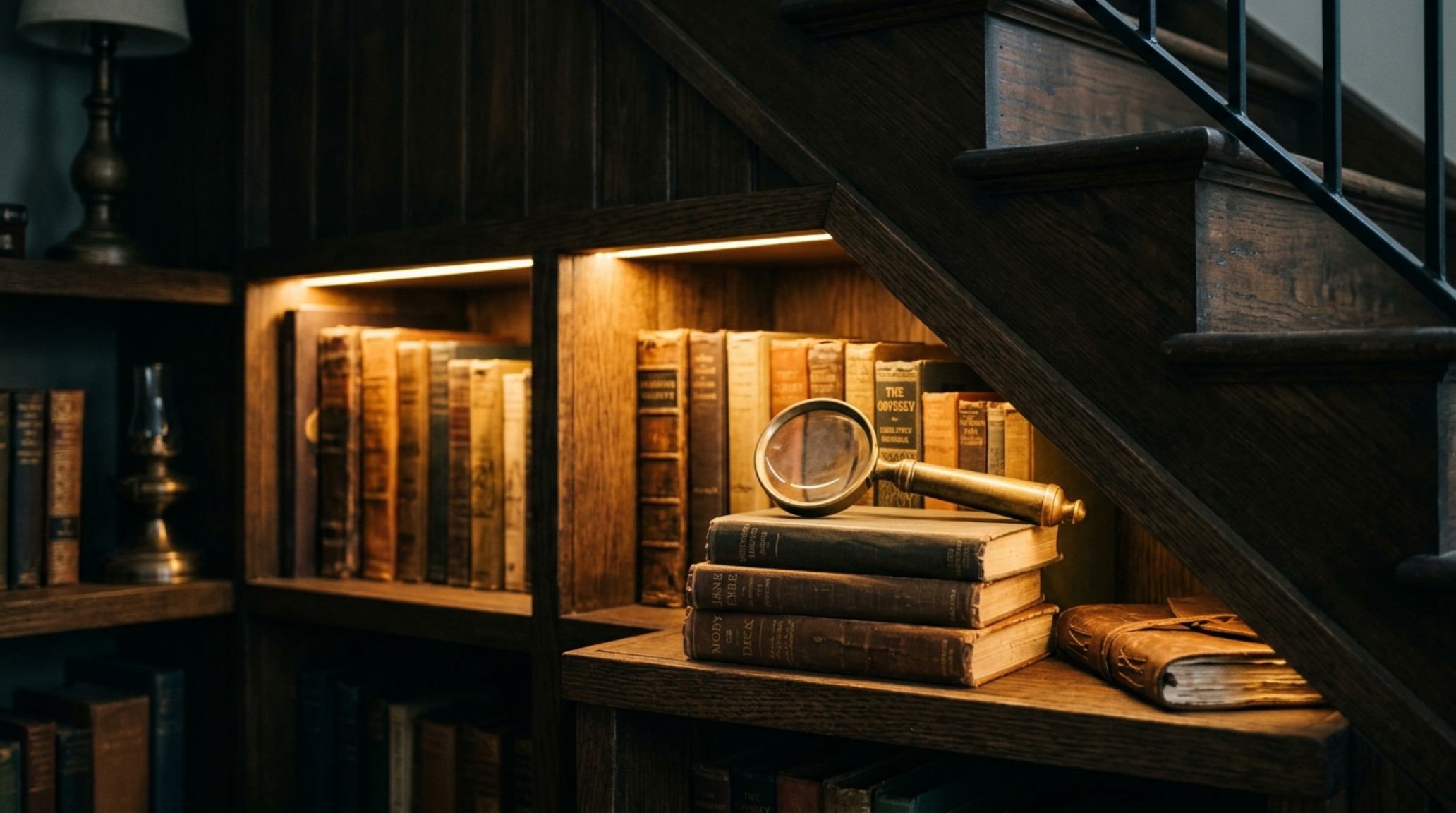
Negative space breathing room is equally important. It is a common mistake to pack every shelf to the brim. Instead, leave ‘pockets of air’ where a single sculptural object—a ceramic vase, a vintage brass magnifying glass, or a piece of driftwood—can sit. This allows the eye to rest and prevents the built-in book storage solutions from feeling cluttered or overwhelming. It is the difference between a storage unit and a curated gallery.
Structural Sophescence: Custom Joinery and Modern Layouts
Modern under stairs shelving layouts are moving away from the traditional ‘grid.’ We are seeing a trend toward asymmetrical shelving that accommodates oversized art books alongside smaller paperbacks. This ‘varied aperture’ approach makes the library feel more like a custom piece of furniture than a structural necessity. When working with custom joinery for awkward spaces, I always suggest incorporating at least one pull-out drawer at the lowest point of the triangle. These are perfect for storing blankets or technical equipment that would otherwise clutter the visual field.
Furthermore, consider the sightline alignment. As you descend the stairs, what do you see? The top of the library should be as considered as the eye-level shelves. Using a ‘shadow gap’—a small 10mm recessed detail between the top of the joinery and the underside of the stairs—creates a sophisticated architectural line that makes the library appear to float, adding a layer of contemporary lightness to an otherwise moody installation.
Acoustics and the Psychology of the Nook
The library under stairs offers more than just visual appeal; it provides a psychological ’embrace.’ The enclosure of the staircase above creates a sense of ‘prospect and refuge’—a term used in environmental psychology to describe spaces where we feel protected but can still observe our surroundings. To enhance this, consider the acoustic dampening of your materials. Books themselves are incredible sound absorbers, but adding an upholstered back panel to a reading bench can further mute the echoes of a busy household, turning the nook into a true sonic sanctuary.
Architectural Specification & Material Matrix
Curated tactile palette, spatial dimensions, and atmospheric lighting index for this design scheme.
The transformation of a staircase’s underbelly into a sophisticated library under stairs is a testament to the power of thoughtful, high-end residential design. It challenges us to look at the ‘dead space’ of our homes not as a problem to be solved, but as a canvas for atmosphere and intellect. By prioritizing the warmth of 2700K light, the depth of dark millwork, and the undeniable comfort of quality materials, we create more than a bookshelf—we create a legacy of quiet moments. It is in these shadows that we find our most vibrant stories, anchored by the weight of paper and the glow of a perfect, midnight sanctuary.
Editorial Silo • Recommended Architecture Studies
- The Architectural Ofuro: Masterclass Proportions for Integrating Wooden Bathtubs into Modern Floorplans — Archival Design Case Study
- The Tactile Aesthetic of Best Bathtub Trays: Materials, Moods & Lighting Kelvin — Archival Design Case Study
Architectural Inspiration Lookbook
A high-resolution study in spatial proportions, tactile materiality, and light choreography curated for enduring modern living.

Curated Visual Lookbook
Design Gallery & Spatial Studies
A visual curation of architectural arrangements, lighting concepts, and material palettes featured in this space.