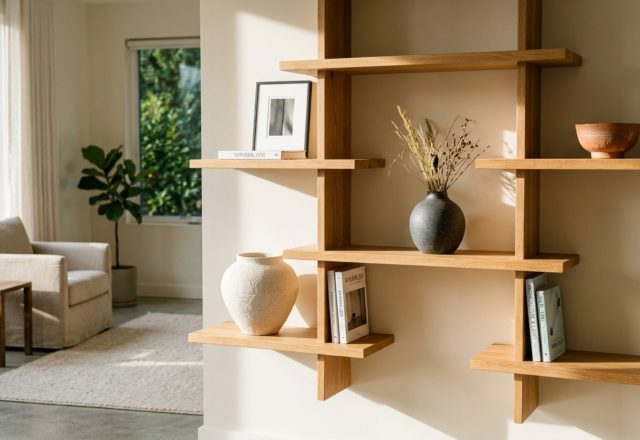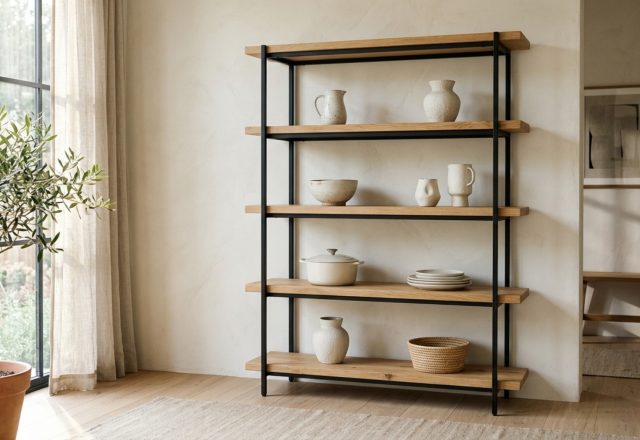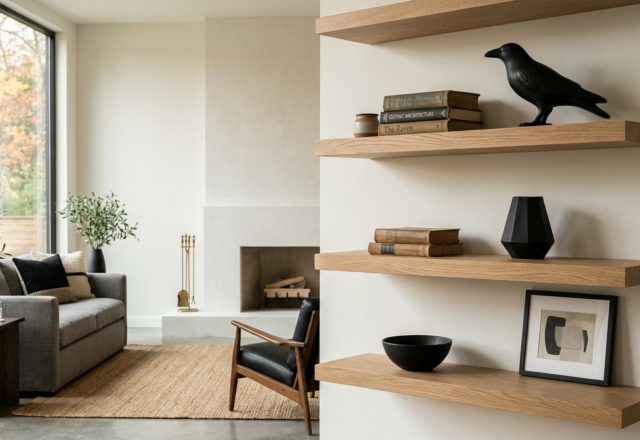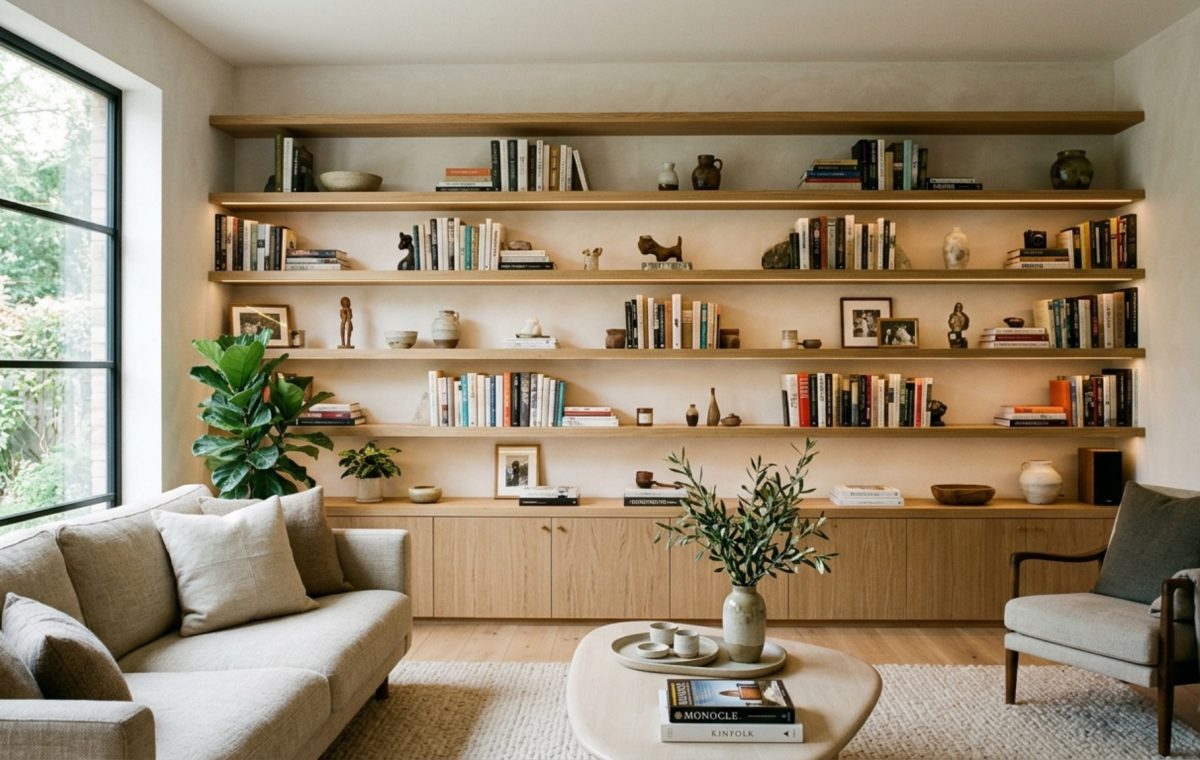
There is a specific, quiet gravity that comes with well-executed living room floating shelves ideas; it is the kind of architectural gesture that anchors a space without suffocating it. When we talk about built-in shelving, we are rarely just talking about storage. We are talking about the skeletal structure of a sanctuary. In my years of touring homes from the rugged coast of Maine to the brutalist flats of London, I’ve found that the most successful interiors don’t just fill a wall—they curate a conversation between the wall and the light. By integrating built-in bookshelves for your home that prioritize tactile materiality over mere utility, you transform a static surface into a living, breathing canvas of shadow and form.
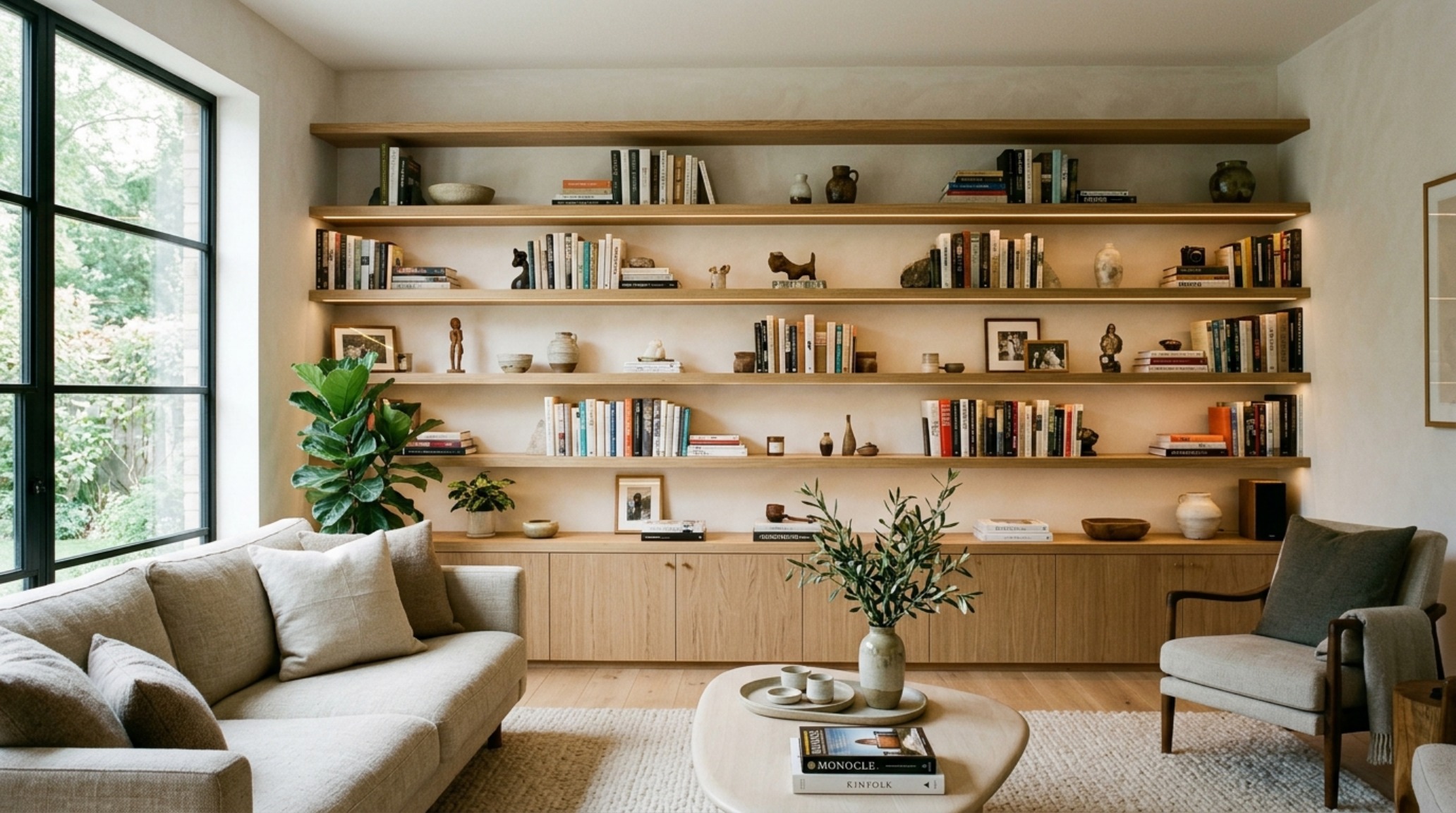
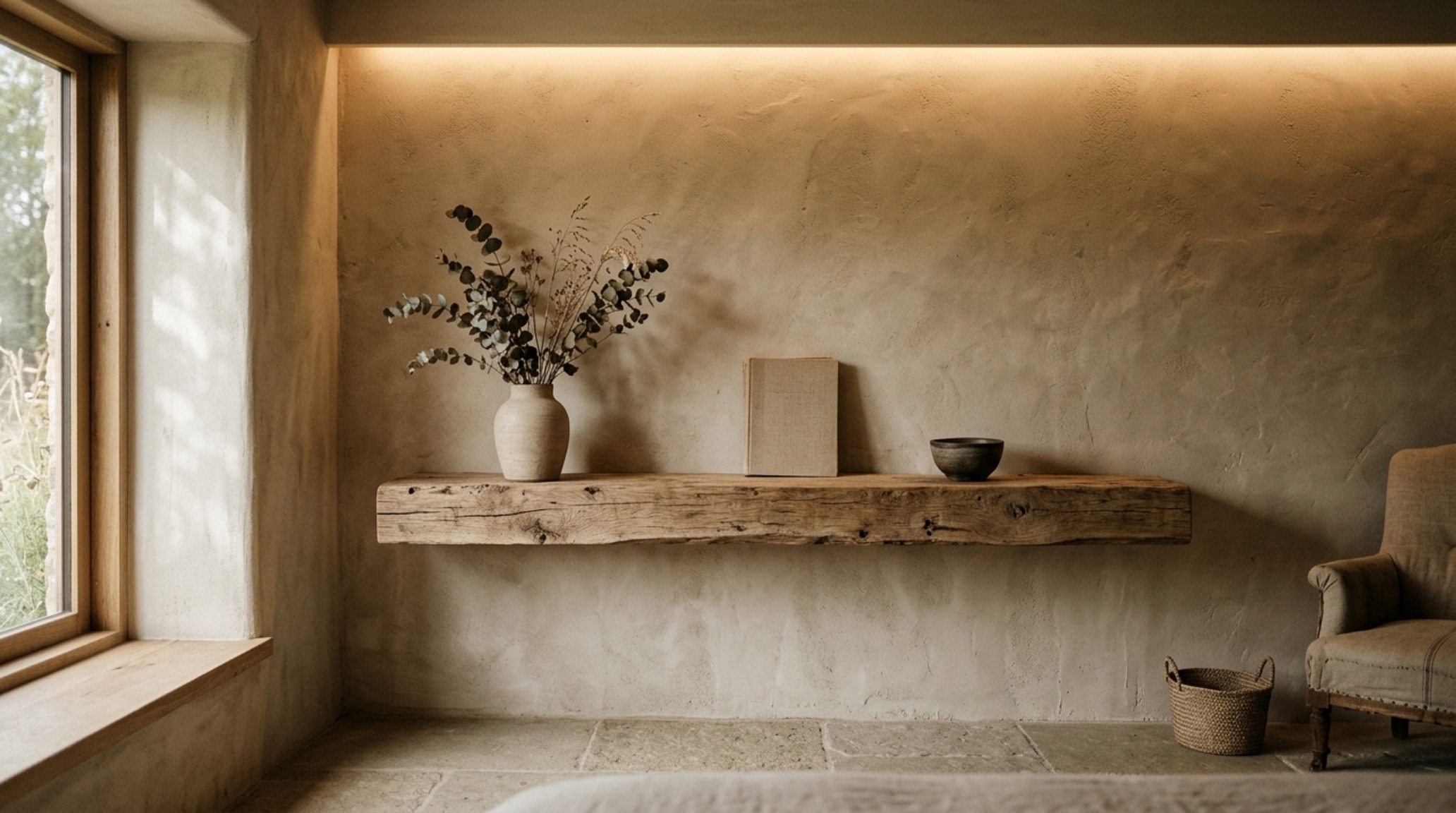
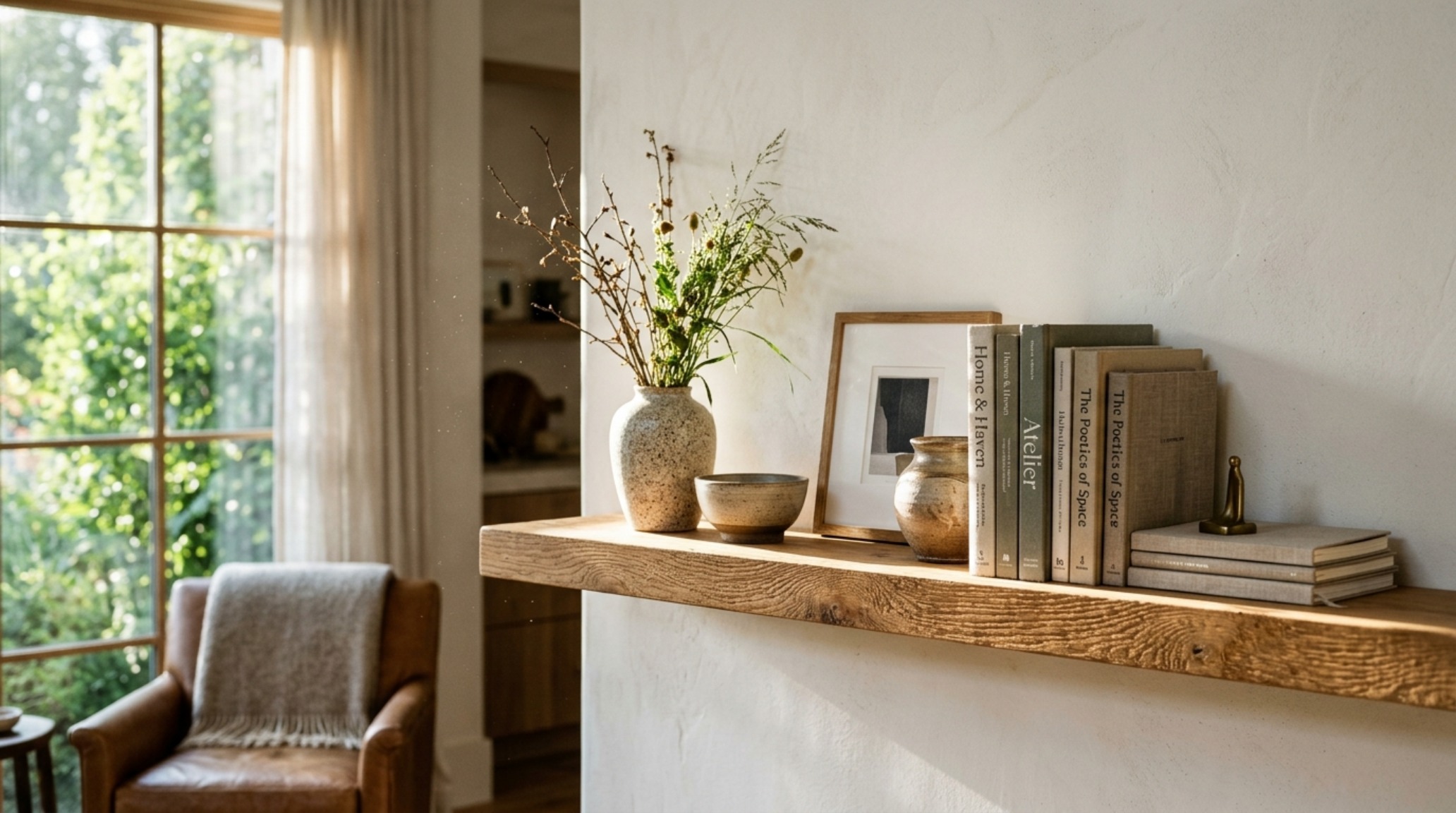
To achieve this, we must first look at the shelf not as a horizontal plank, but as a textural anchor. The current shift in high-end residential design moves away from the glossy, sterile whites of the early 2010s toward something much more grounded. We are seeing a resurgence of raw, wire-brushed white oak, honed travertine ledges, and even the velvety depth of limewash finishes. When you explore modern living room floating shelves ideas, the objective is to create a sense of permanence. This isn’t about the flimsy flat-pack solutions of the past; it’s about millwork that feels like it was birthed from the very studs of the house.
Mastering the Technical Nuance of Living Room Floating Shelves Ideas
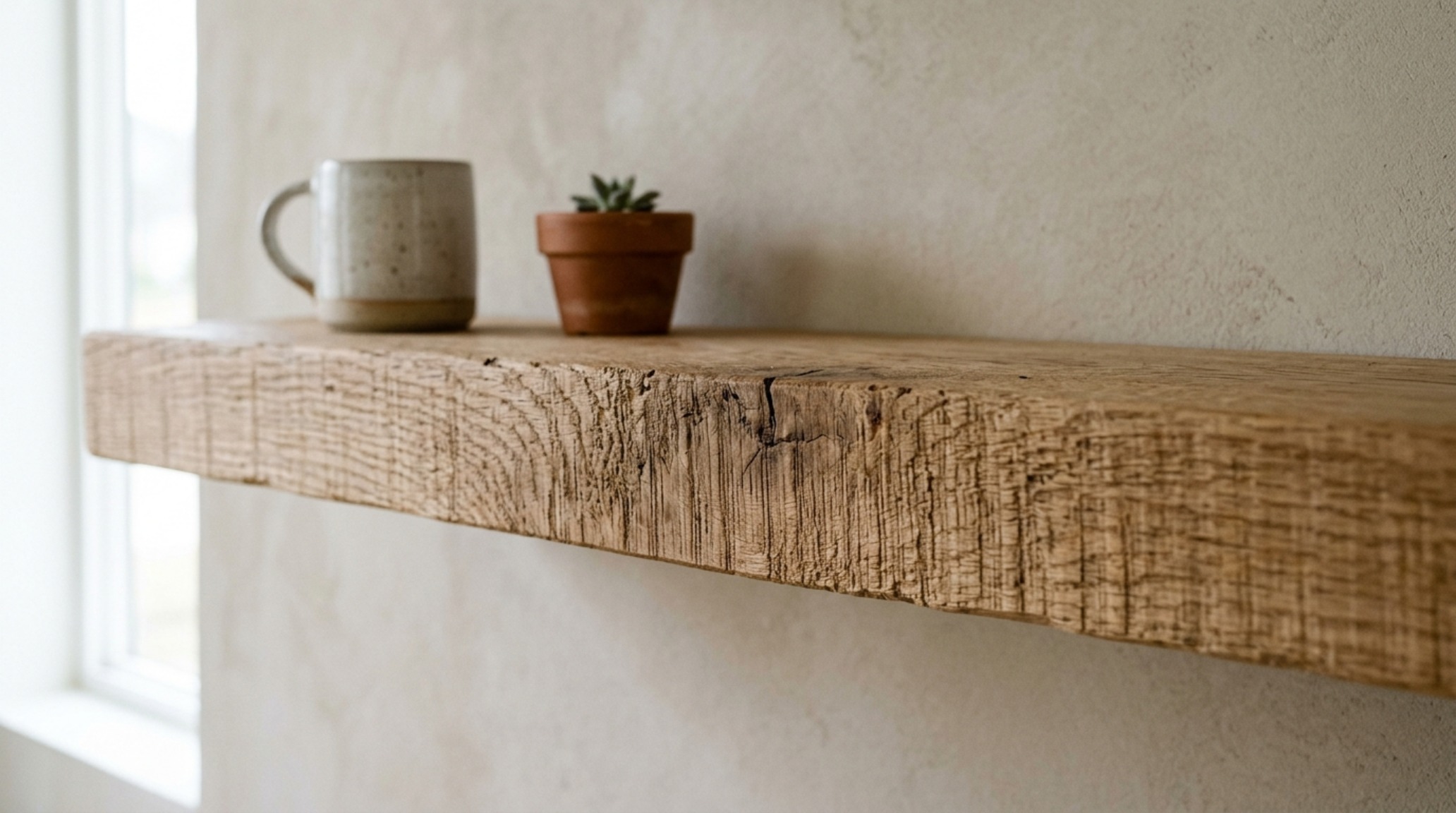
From an architectural standpoint, the success of a floating installation relies entirely on the invisible. It is a feat of engineering hidden behind the drywall. To maintain the ‘serene sanctuary’ vibe, the shelf must appear weightless while supporting the heavy reality of a curated library. I always recommend a steel-backed bracket system—something like the Hovr bracket—to ensure that a 2-inch thick oak shelf can withstand the lateral pressure of several dozen art books without a hint of sagging. In terms of living room floating shelves ideas architecture, the thickness is your primary tool for visual weight. A 3-inch chunky shelf commands a different emotional response than a slender 1-inch minimalist blade. The former offers a sense of safety and heritage; the latter, a sharp, modern intellectualism.
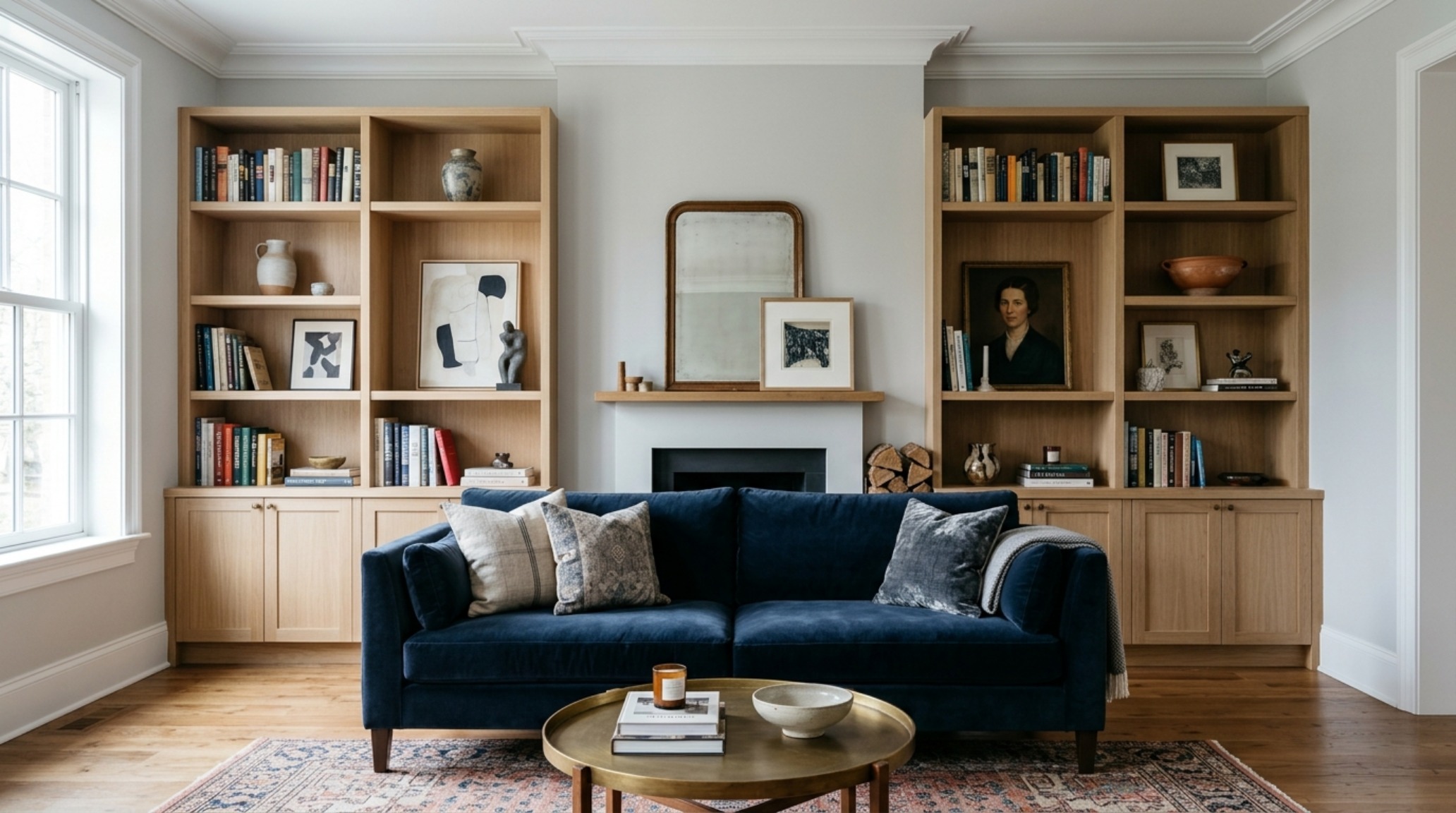
When planning your living room floating shelves ideas layout, spatial cadence is everything. You cannot ignore the mathematics of the room. A standard primary circulation path requires a 36-inch clearance to feel truly comfortable. If your shelving units are flanking a fireplace, ensure they don’t encroach upon the 18-inch ‘reach zone’ from your primary seating. This ergonomic balance ensures the room remains functional rather than just a museum of objects. By respecting these architectural clearances, you allow the negative space to breathe, preventing the visual clutter that often plagues poorly planned built-ins.
The Alchemy of 2700K: Lighting Your Library
Lighting is the invisible material. You can spend thousands on fluted walnut cabinetry, but if you illuminate it with a cold, 5000K ‘daylight’ bulb, you have effectively neutralized the warmth of the wood and created a clinical, uninviting environment. For a true sanctuary, we look toward 2700K warm ambient lighting. This is the ‘Golden Hour’ in a bulb. It mimics the soft glow of a candle or a sunset, pulling the amber tones out of natural wood grains and softening the edges of stone finishes.
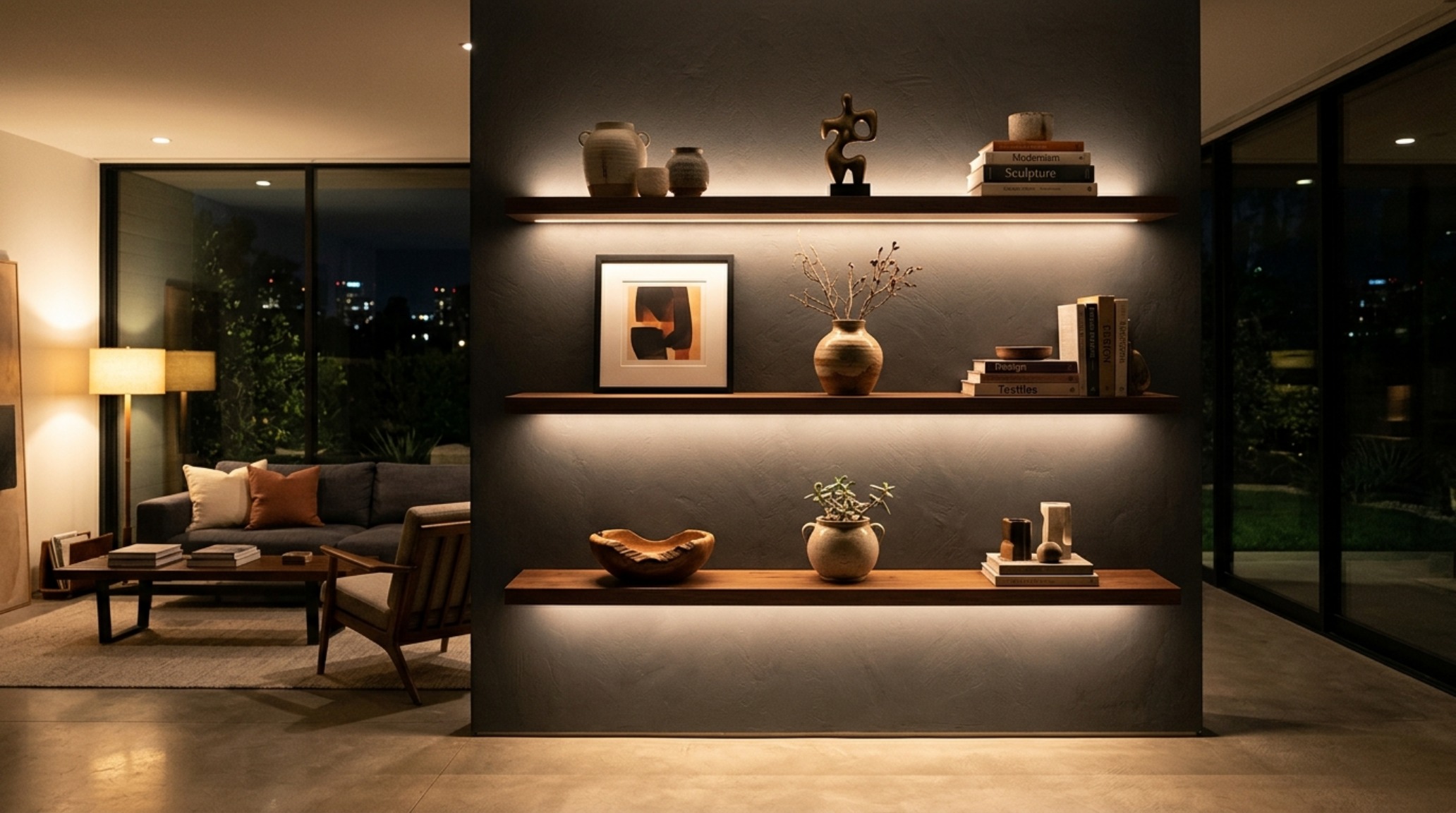
However, warmth alone isn’t enough. You must consider the Color Rendering Index (CRI). In professional living room floating shelves ideas lighting guides, we specify a CRI of 90 or higher. This ensures that the pigments in your book spines and the subtle undertones of your paint—perhaps the muted, earthy pink of Farrow & Ball Setting Plaster—remain true to life. Integrated LED tape lighting, recessed into a 45-degree channel at the front of each shelf, provides a diffused wash that eliminates harsh hotspots and creates a dramatic shadow play against the back wall. This is where the magic happens: when the light catches the texture of a grasscloth wallpaper lining the back of a shelf, the room suddenly gains a third dimension.
Tactile Grounding and Material Contrast
Luxury living room floating shelves ideas textures are defined by the interplay of opposites. If your walls are finished in a smooth, matte Benjamin Moore Swiss Coffee, consider shelves with a heavy grain or a fluted edge. The contrast between the ‘perfect’ wall and the ‘imperfect’ organic wood creates a tactile tension that is inherently sophisticated. I often suggest incorporating a singular, unexpected material—like a lower shelf made of honed Nero Marquina marble—to ground the unit. This heavy base acts as a visual foundation, allowing the lighter floating wood shelves above to feel even more ethereal.
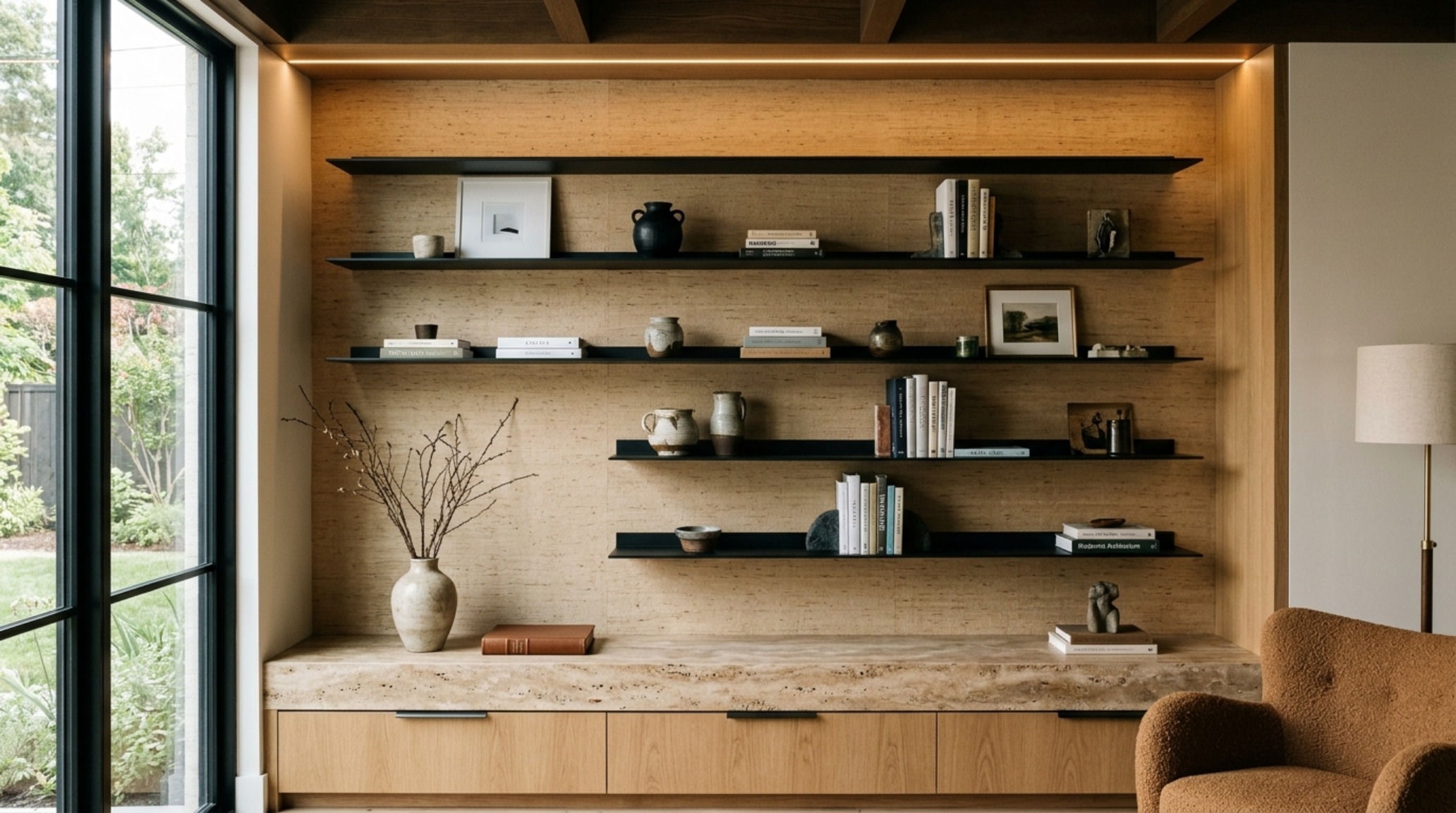
Consider the tactile experience of reaching for a book. The coolness of stone, the warmth of wood, and the slight tooth of a high-quality paint finish all contribute to the ‘sensory sanctuary’ concept. This is why we avoid synthetic laminates. Authentic materials age; they develop a patina that reflects the life lived within the home. A small-space living room floating shelves idea can be elevated simply by using reclaimed timber, where the history of the wood adds an immediate layer of character that new materials simply cannot replicate.
The Ergonomics of Curated Space
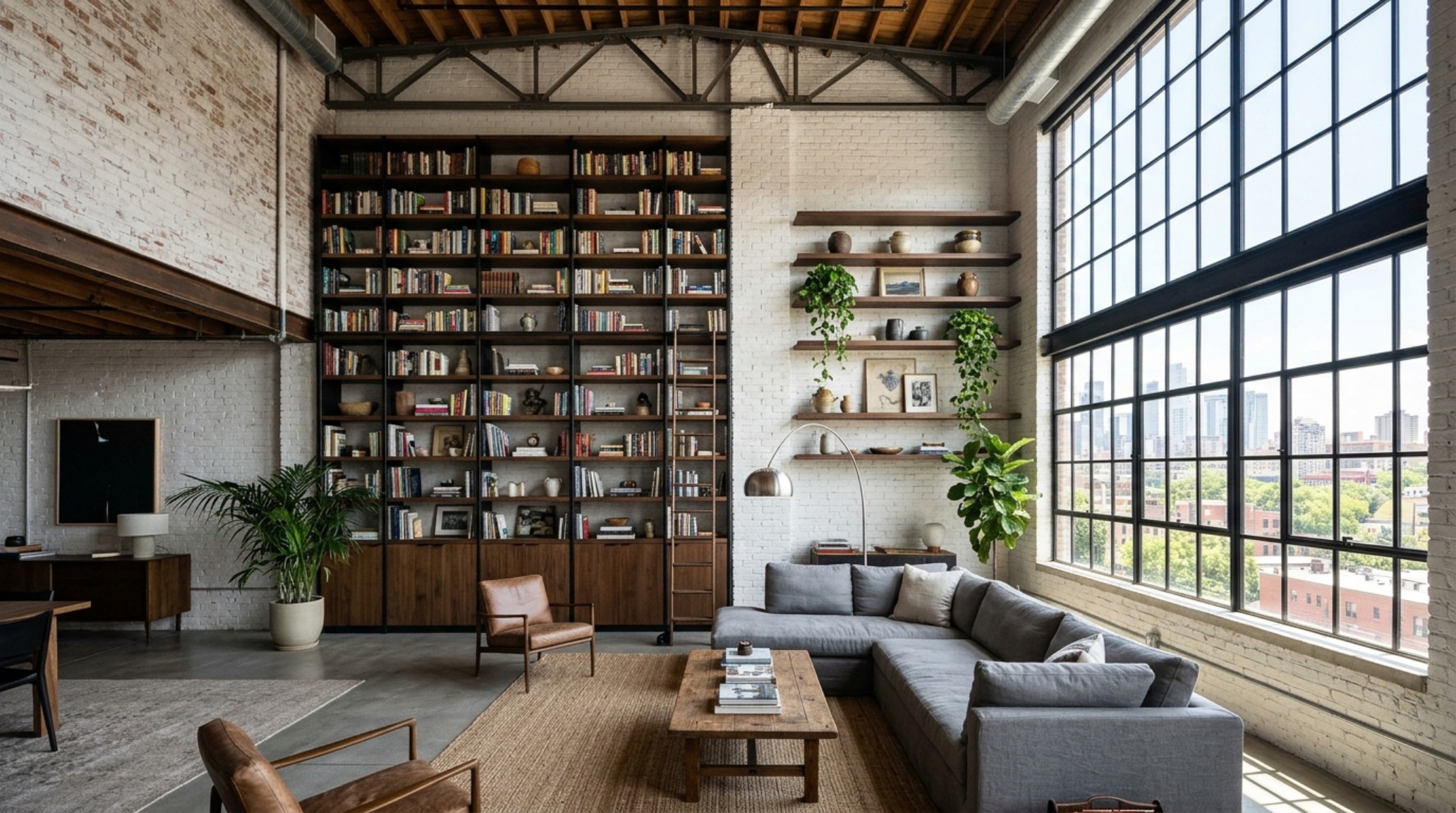
In smaller dwellings, the living room floating shelves ideas ergonomics become even more critical. You are fighting for every square inch. Utilizing vertical space with a floor-to-ceiling built-in can actually make a room feel larger by drawing the eye upward, but only if the sightlines remain clear. Avoid placing deep shelves at eye level in narrow thoroughfares. Instead, use shallower 8-inch depths for books and reserve the 12-inch depths for lower, ‘weightier’ storage or zones where furniture already occupies the floor plane. This maintains the 30-inch dining chair clearance or the necessary walkway flow while maximizing every available bit of vertical real estate.
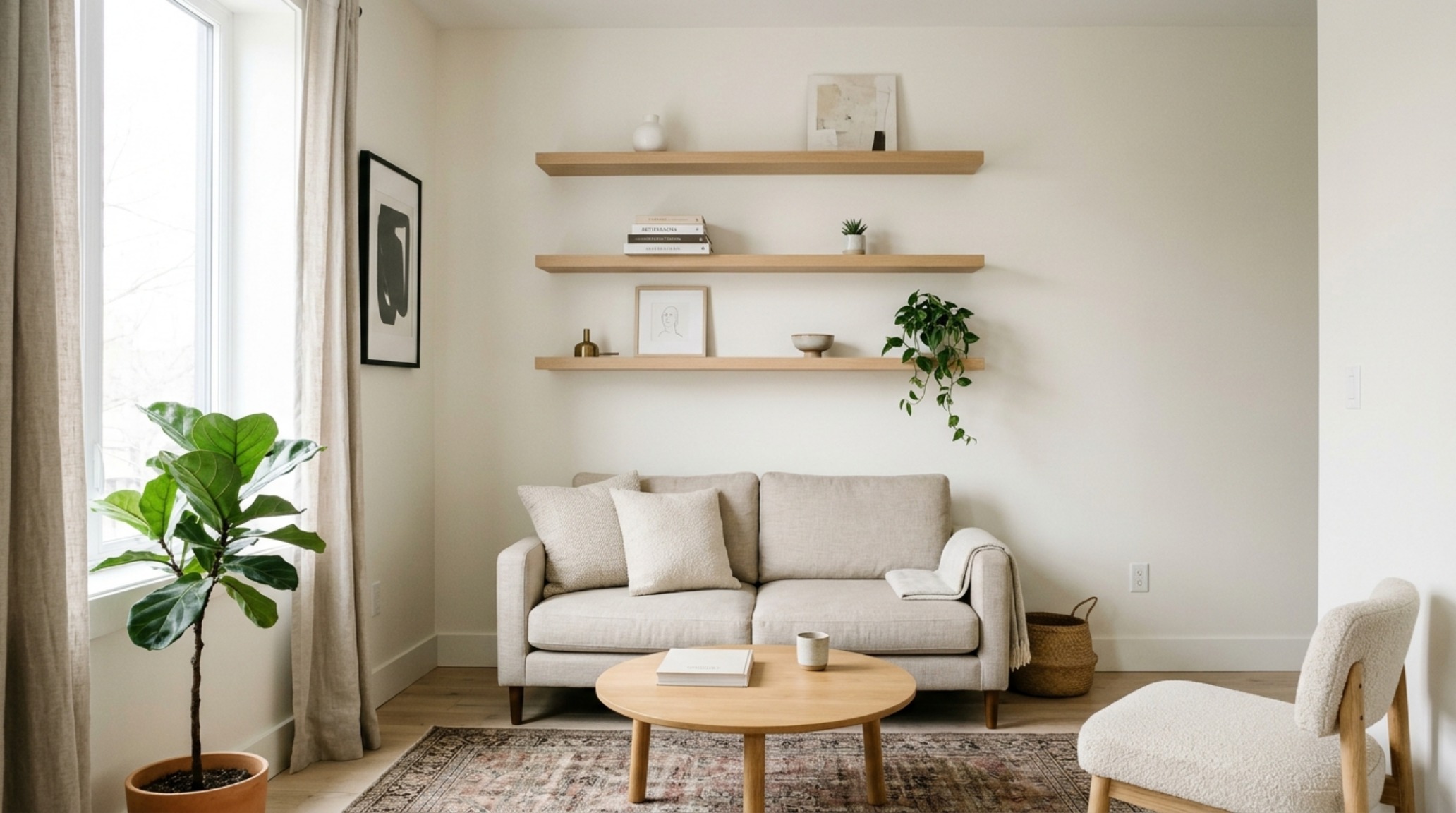
A frequent mistake is over-styling. The concept of ‘breathing room’ or negative space is your greatest ally. Leave gaps. Allow the back wall to be seen. If you have used a textured plaster or a bold paint color behind the shelves, let it participate in the design. One large, significant ceramic vessel often has more impact than ten small trinkets. This approach to curation aligns with the ‘quiet luxury’ movement—it’s about having the confidence to let the architecture speak for itself.
Integrating Technology and Hidden Assets
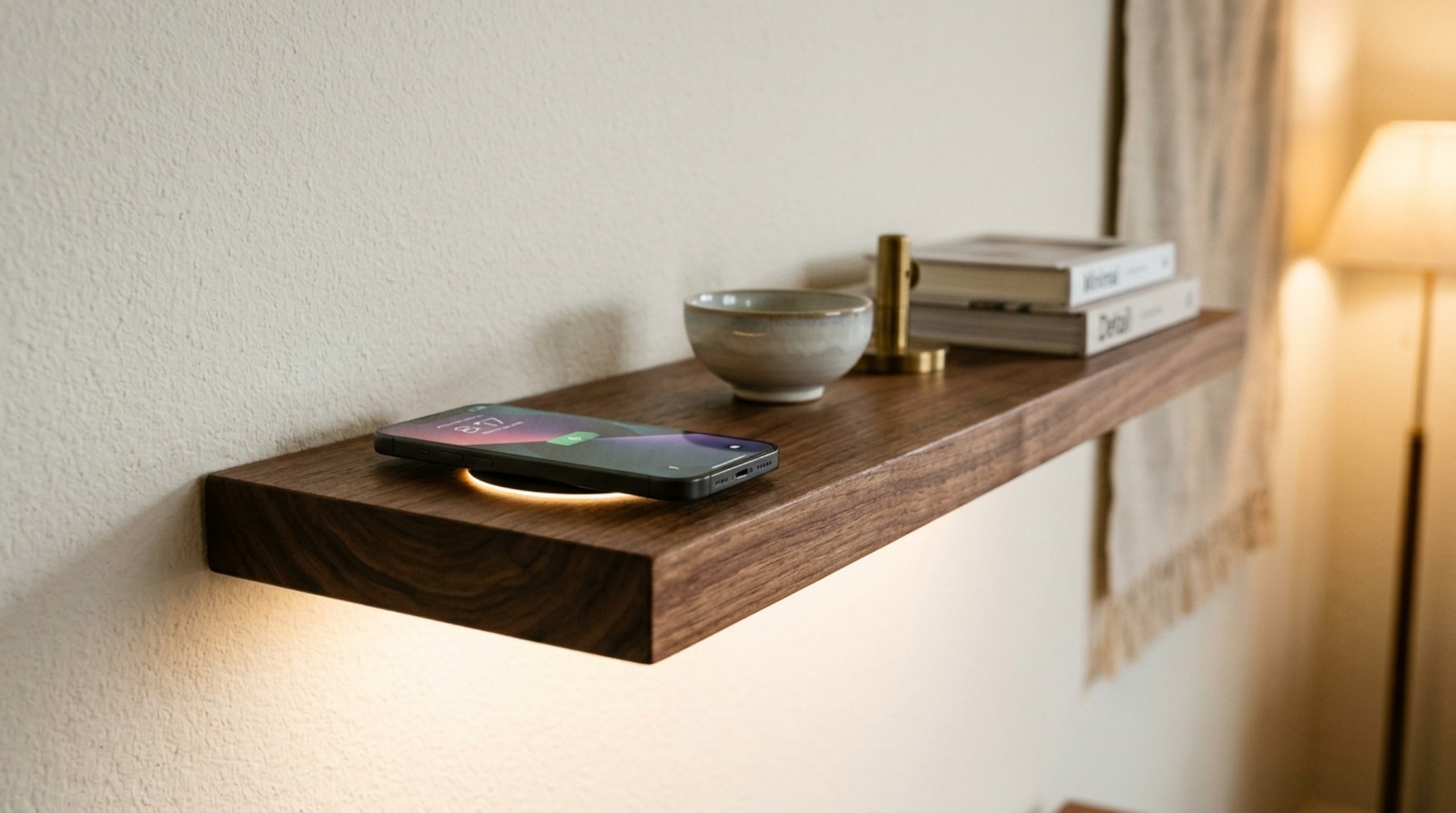
Modern built-in bookshelves for your home must also contend with the digital age. Wire management is no longer an afterthought; it’s a design requirement. In a truly bespoke installation, we route channels through the uprights or behind the back panels to hide power cables for lamps, speakers, or digital frames. This ‘invisible’ tech integration ensures that the serenity of your sanctuary isn’t disrupted by a chaotic web of black wires. Imagine a floating shelf that seamlessly houses a hidden wireless charging pad beneath its oak veneer—this is where traditional craftsmanship meets contemporary necessity.

As we observe the evolution of home offices and multi-functional living areas, the built-in shelf has transitioned from a display case to a structural workhorse. By incorporating a deeper ‘desk’ shelf at a 29-inch height, you can blend a workspace into a library without the need for a separate, bulky desk. This fluidity of function is the hallmark of modern architectural design, allowing a single room to shift moods from a productive morning hub to a cozy evening retreat.
Architectural Specification & Material Matrix
Curated tactile palette, spatial dimensions, and atmospheric lighting index for this design scheme.
Ultimately, the most resonant living room floating shelves ideas are those that reflect the souls of the people who live among them. It is not about a perfect display of unread books, but about the rhythm of a life well-curated—a collection of stones from a favorite beach, a dog-eared poetry volume, and the way the 2700K light catches the edge of an oak plank at 6 PM. When we design with this level of tactile intention, we aren’t just building furniture. We are constructing a backdrop for the quietest, most meaningful moments of our lives. The architecture of the home should always serve as a gentle container for the human experience, and a beautifully considered shelf is the perfect place to start.
Editorial Silo • Recommended Architecture Studies
- The Tactile Aesthetic of Product Of The Week Omba Bookshelf: Elevating Living Room Floating Shelves Ideas with Materials, Moods & Lighting Kelvin — Archival Design Case Study
- Ikea Hyllis Shelves Hacks: The Architectural Blueprint & Spatial Flow Guide — Archival Design Case Study
Architectural Inspiration Lookbook
A high-resolution study in spatial proportions, tactile materiality, and light choreography curated for enduring modern living.
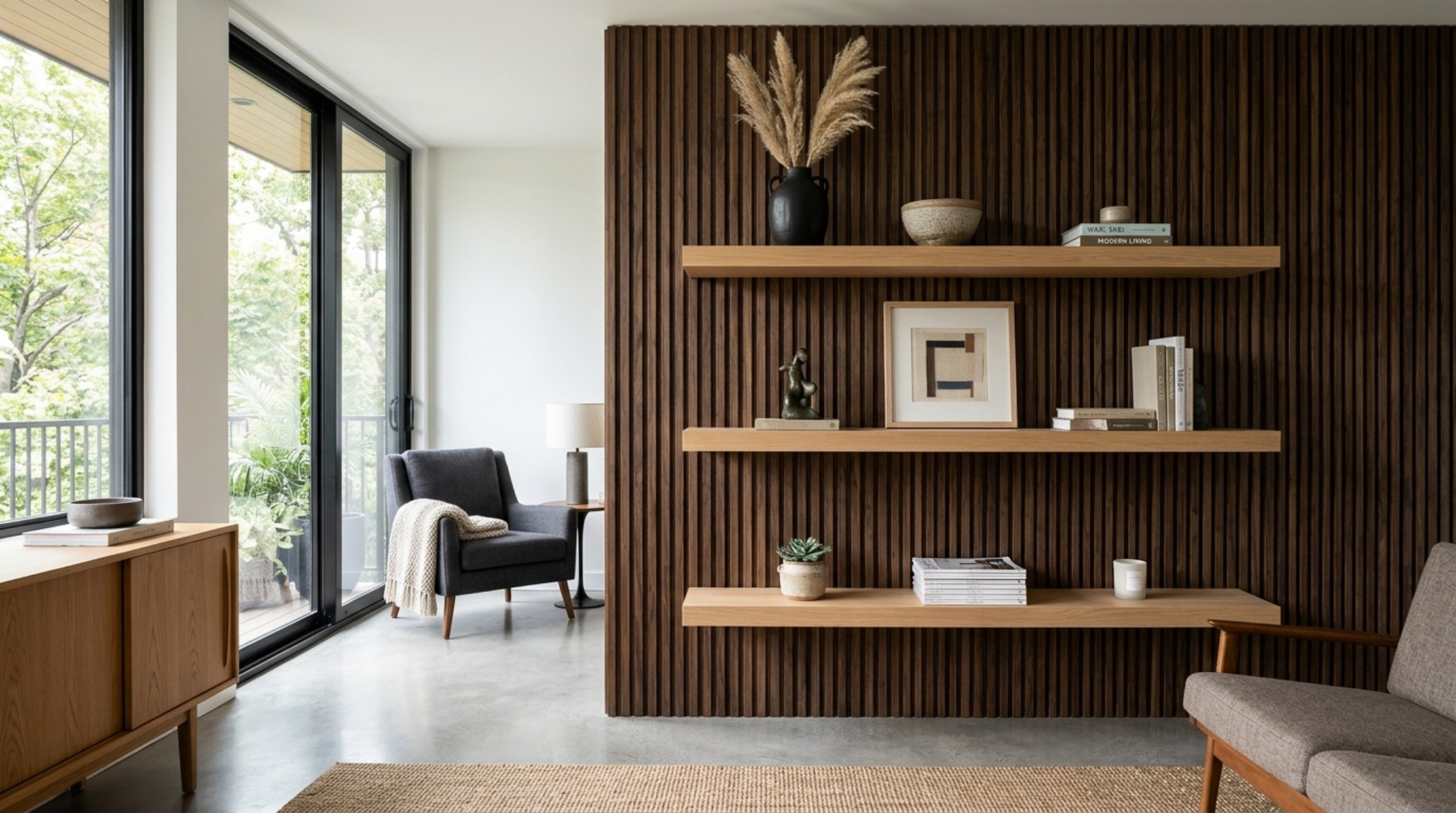
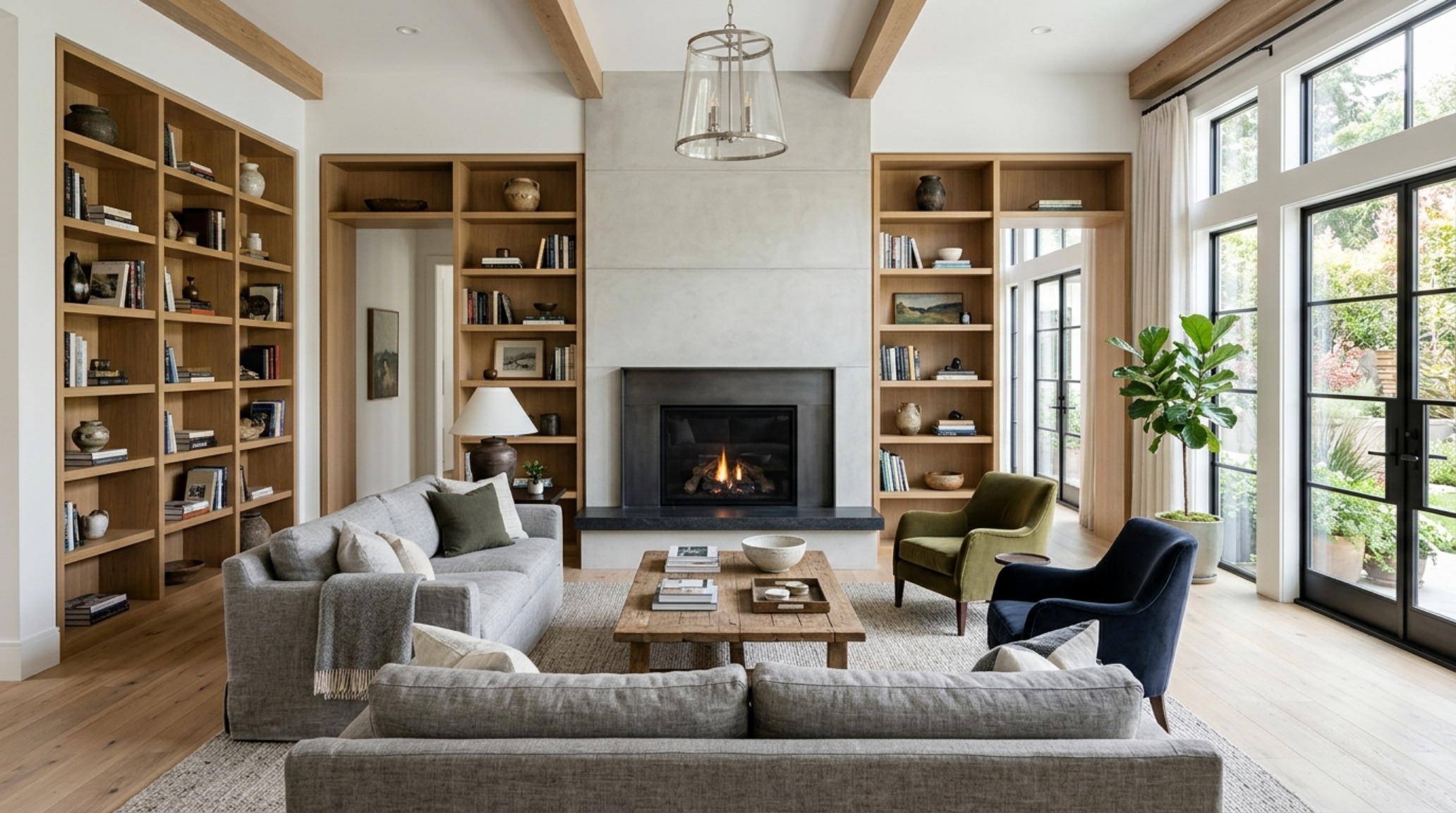
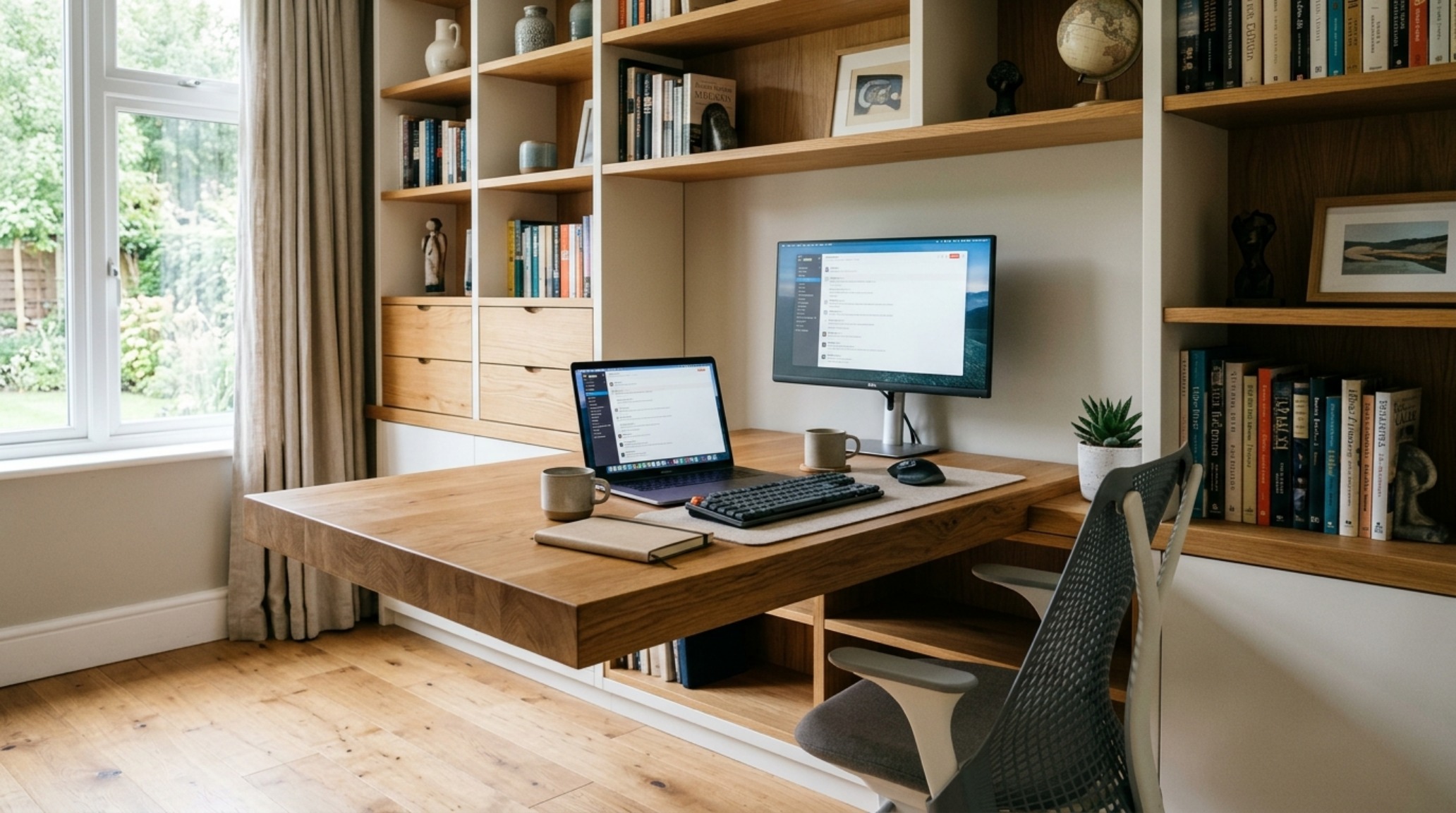
Curated Visual Lookbook
Design Gallery & Spatial Studies
A visual curation of architectural arrangements, lighting concepts, and material palettes featured in this space.