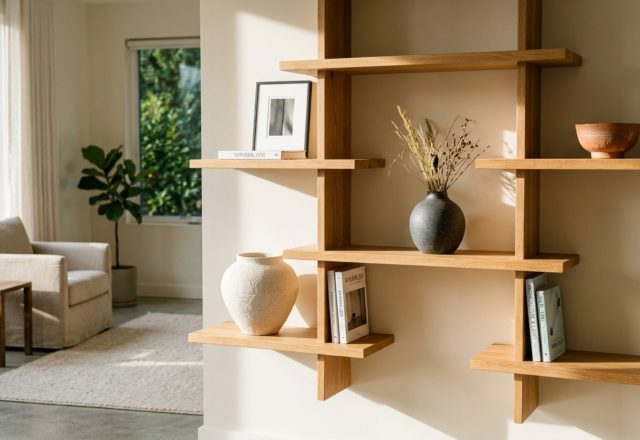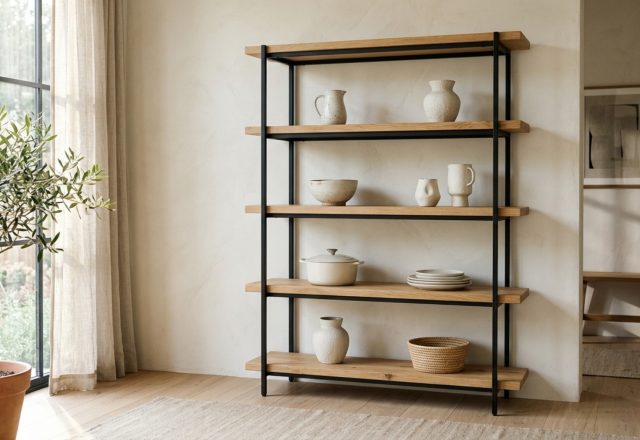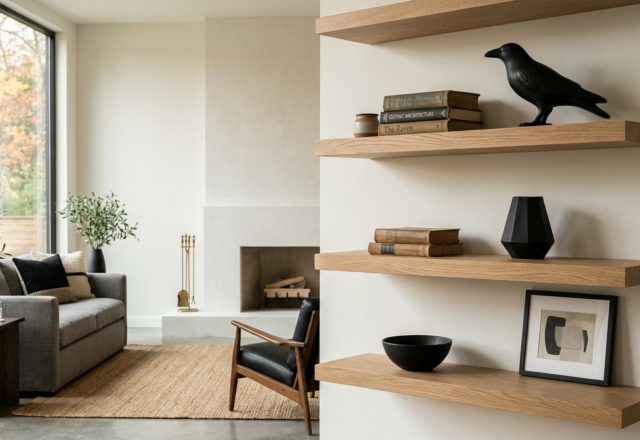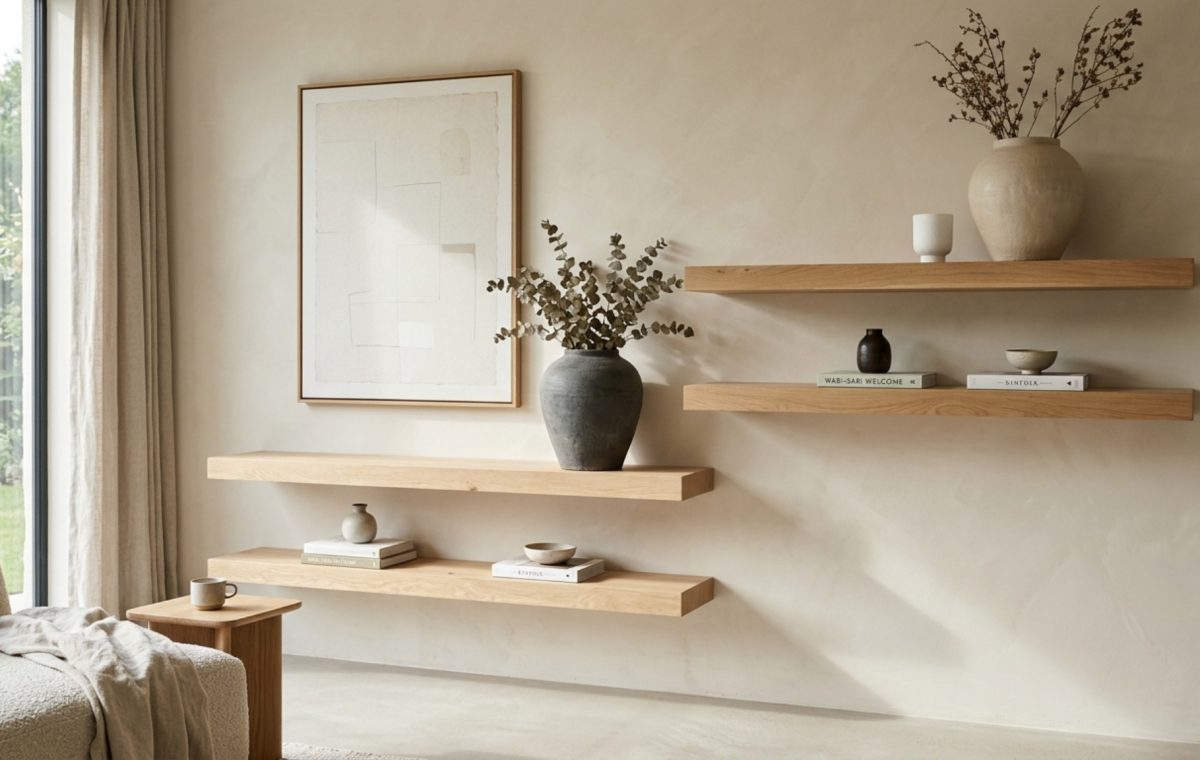
There is a quiet revolution happening on our walls. We are moving away from the rigid, mirror-image symmetry that once defined the ‘decorated’ home, gravitating instead toward a more tectonic, soulful expression of space. In the quest for the perfect living room floating shelves ideas, the shift is decidedly architectural. It is no longer about simply ‘filling a gap’ above the sofa; it is about creating a rhythmic, asymmetrical dialogue between the wall and the volume of the room. This is the era of the ‘New Geometry,’ where we prioritize the breath of negative space over the clutter of a thousand small things.
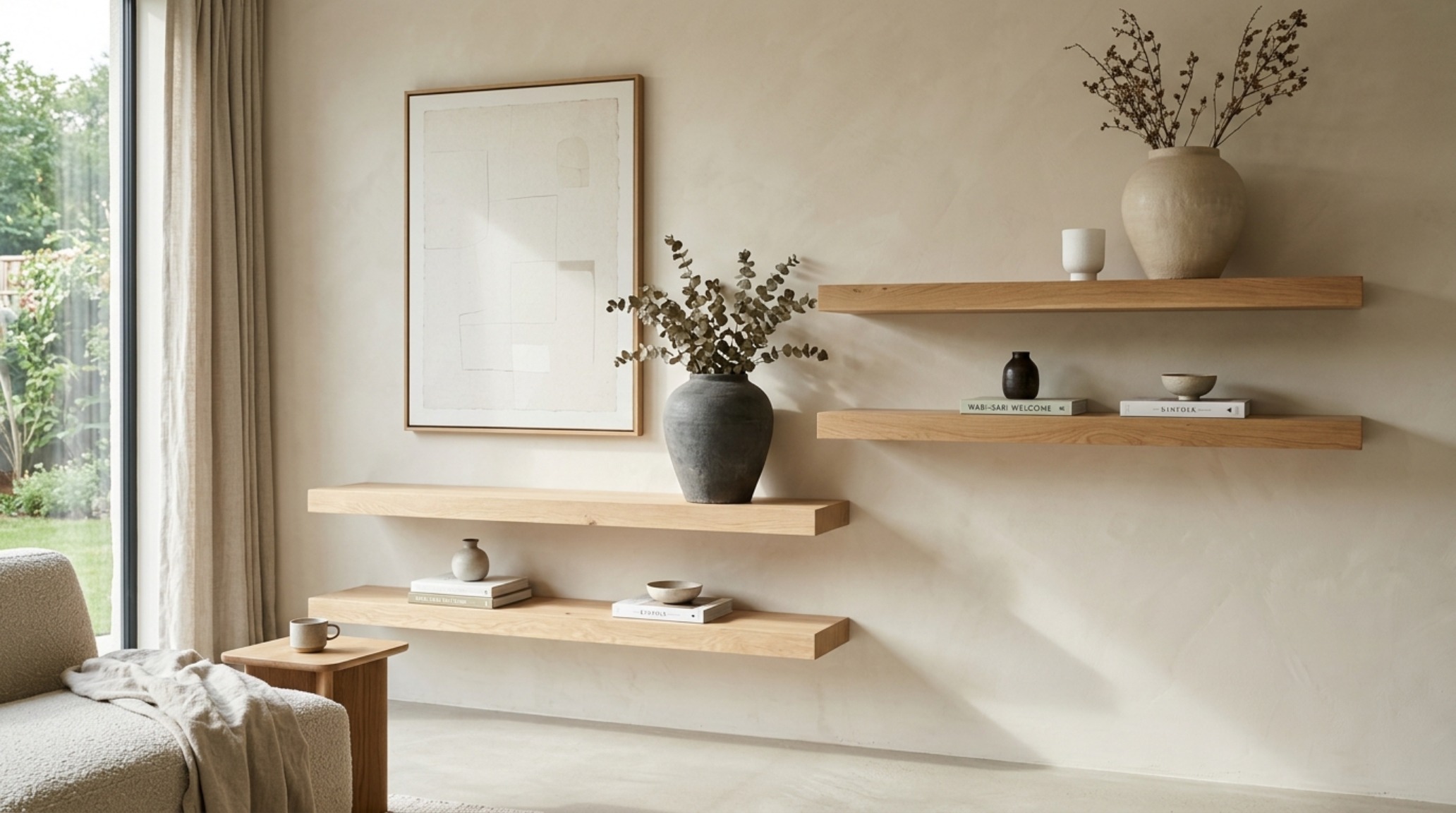
Modern Wall Shelving Systems and the Power of Asymmetry
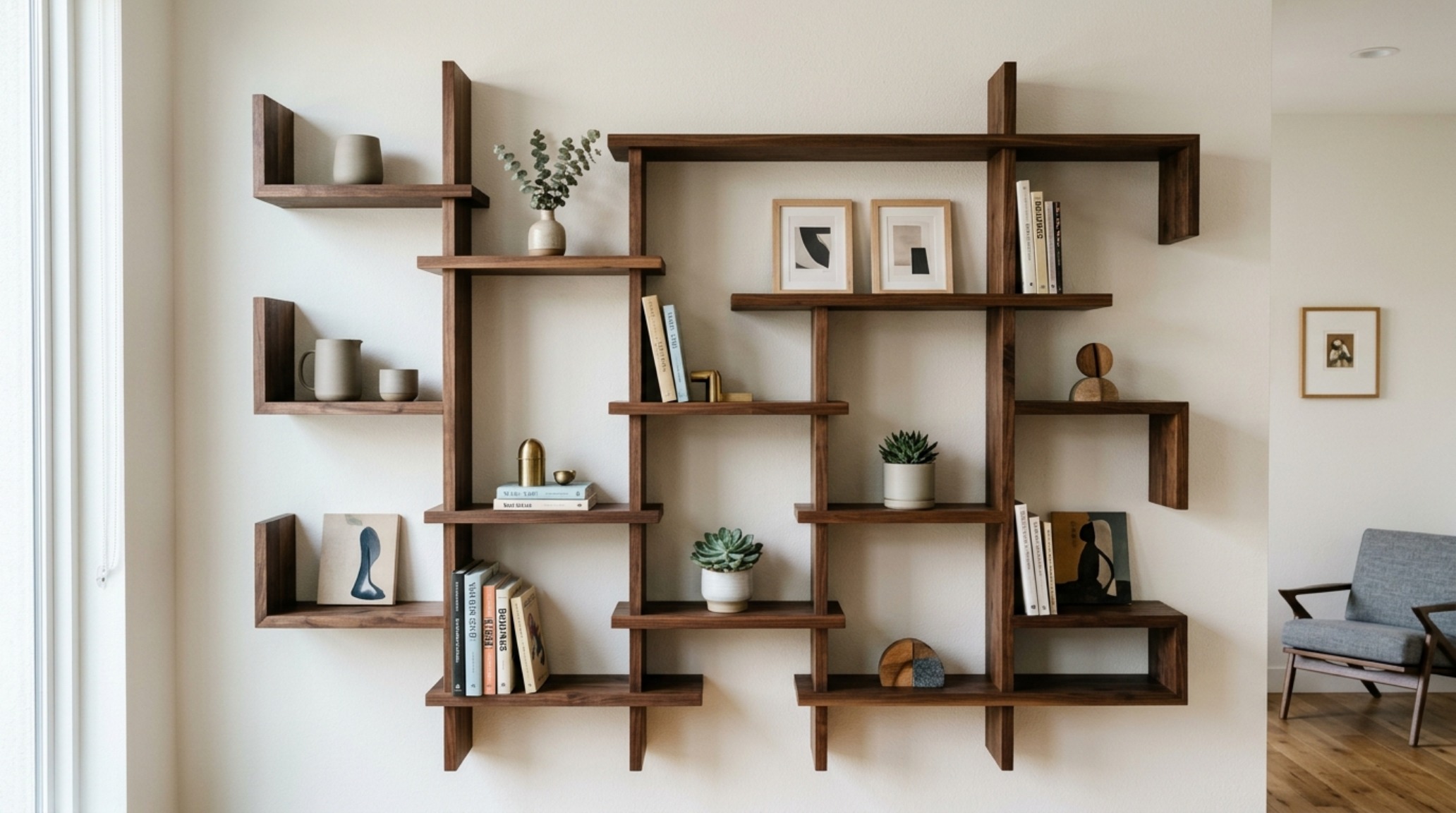
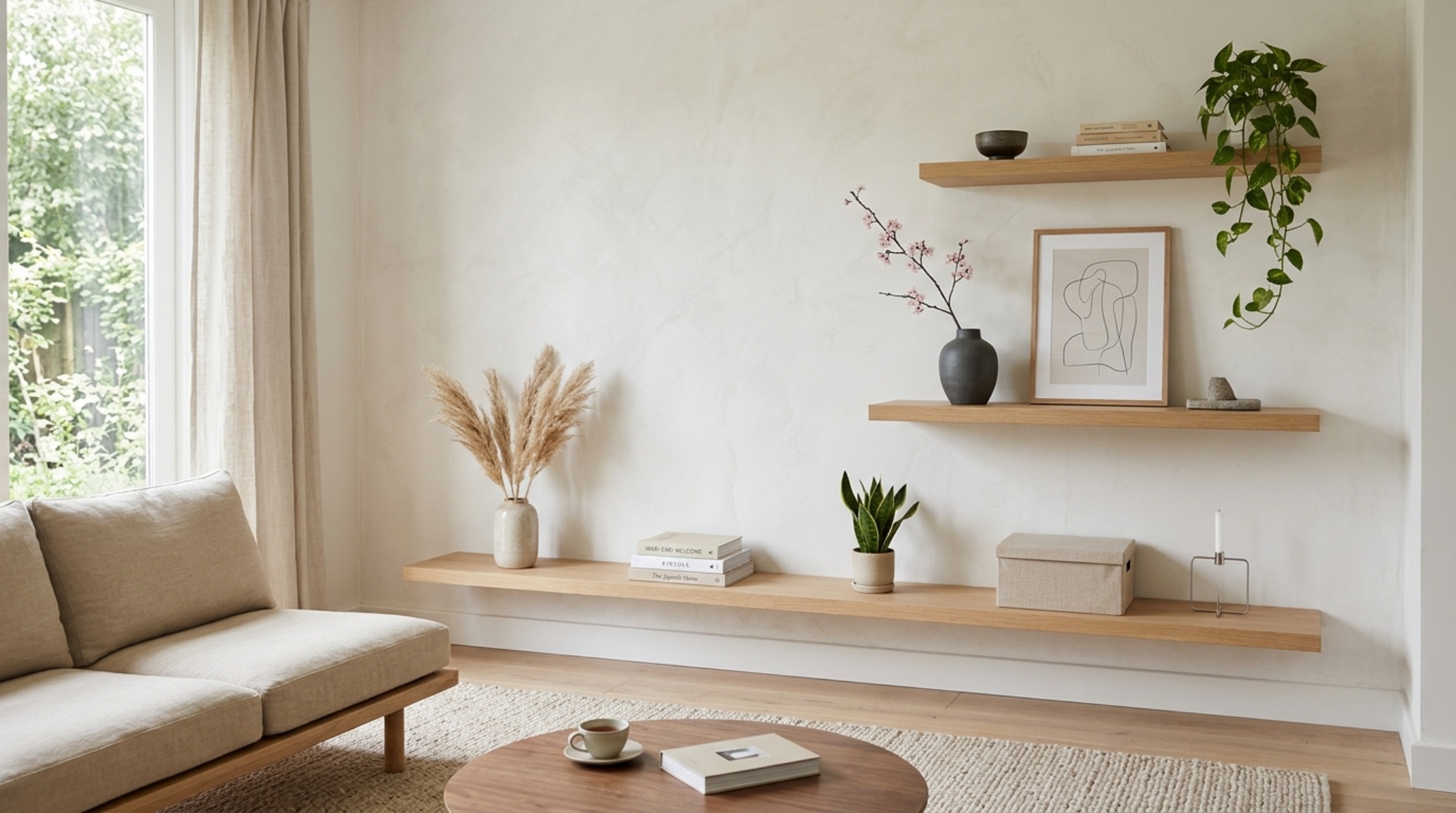
The core of this movement lies in understanding that asymmetry is not the absence of order, but a more sophisticated form of balance. When we look at professional modern wall shelving systems, we see a deliberate play with visual weight. A single, long, thick-profile shelf on the bottom might be balanced by two shorter, staggered ledges above it. This creates a diagonal flow that leads the eye across the room, making the space feel dynamic rather than static. To master this, one must look at the furniture anchors already present. A shelf should never exist in a vacuum; it must respond to the length of a sideboard or the height of a lounge chair’s silhouette.
The 15-18 Inch Vertical Rule: Creating Gallery Scale
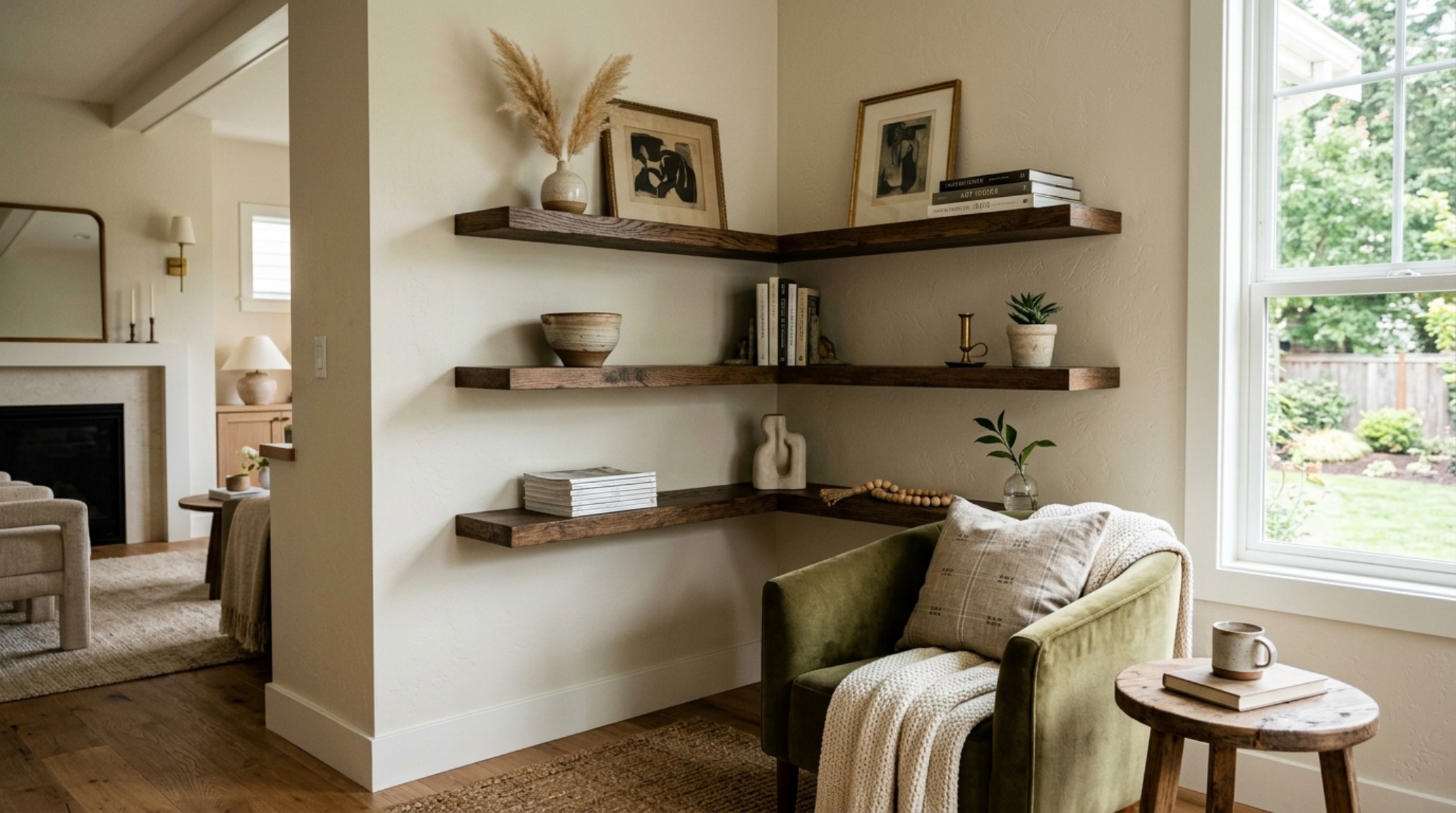
One of the most common mistakes in shelf placement is ‘the squeeze’—crowding shelves so closely that the objects upon them feel suffocated. The architectural gold standard for 2025 is a generous 15 to 18-inch vertical clearance between tiers. Why this specific range? Because it allows for the inclusion of gallery-sized art—those 11×14 or 16×20 frames that provide a structural ‘anchor’ for your styling. When you provide this much vertical breathing room, the floating shelf layout principles transition from mere storage to an intentional architectural display ledge. It transforms the wall into a curated landscape where shadows can stretch and light can play.
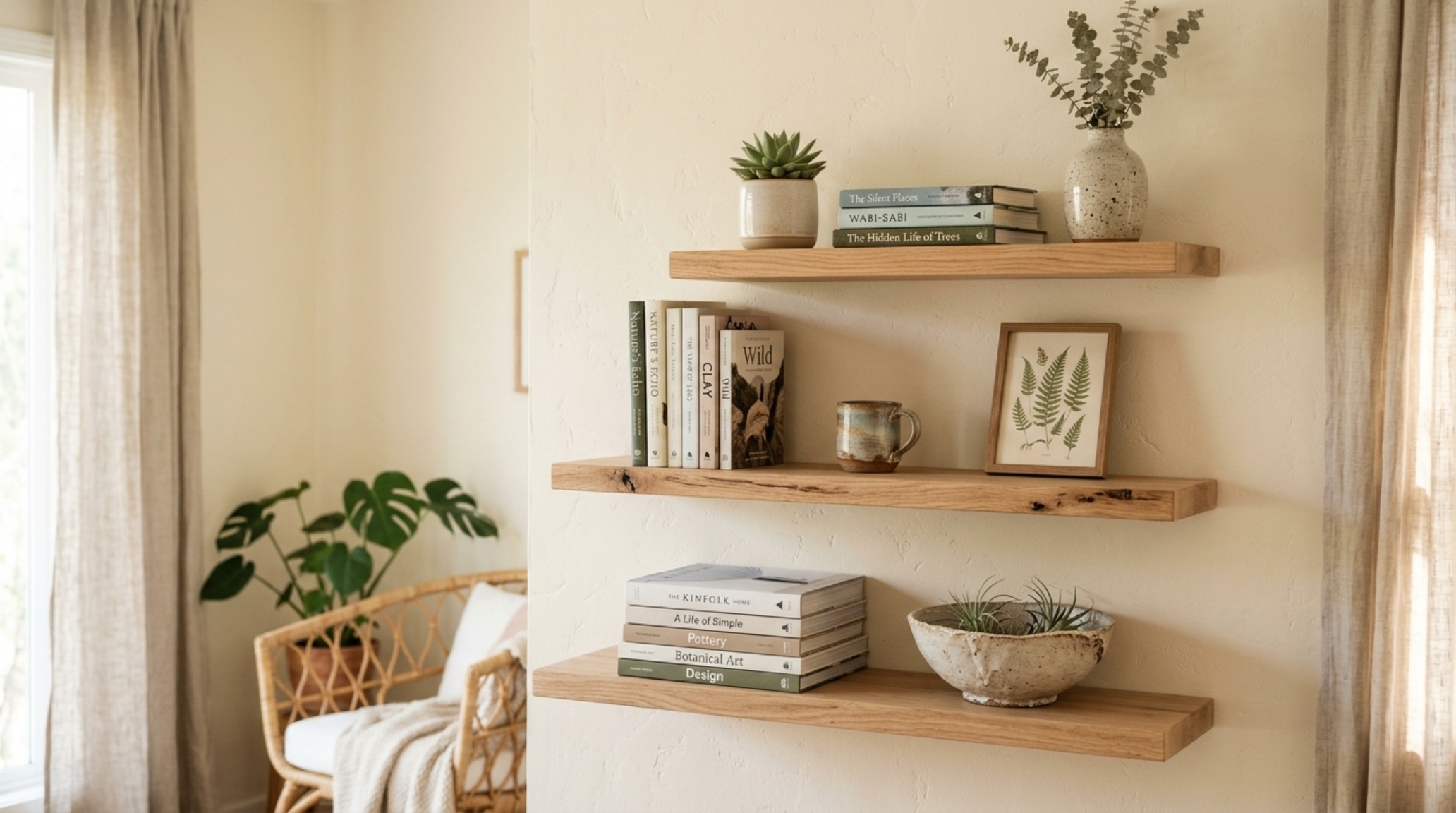
When executing this staggered layout, consider the ‘Rule of Three.’ This isn’t just about grouping three vases; it’s about the triad of the shelves themselves. Try a configuration of three varying lengths—perhaps a 60-inch base, a 36-inch middle, and a 24-inch top—all aligned along a single vertical axis on one side while floating out into ‘white space’ on the other. This creates a sense of movement that feels organic and high-end, reminiscent of the minimalist precision found in custom Japandi millwork.
Tactile Grounding: Materials that Elevate the Ledge
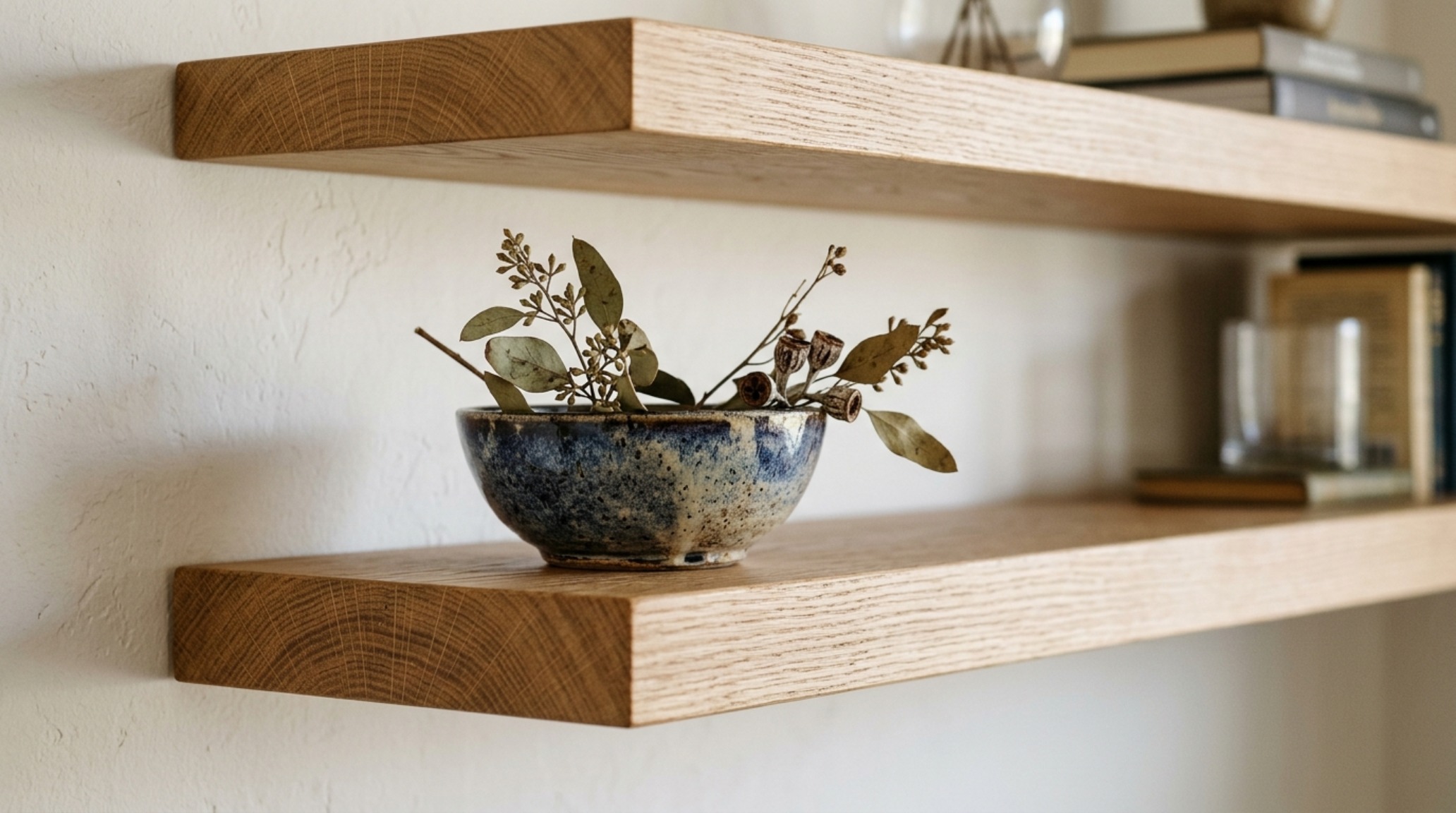
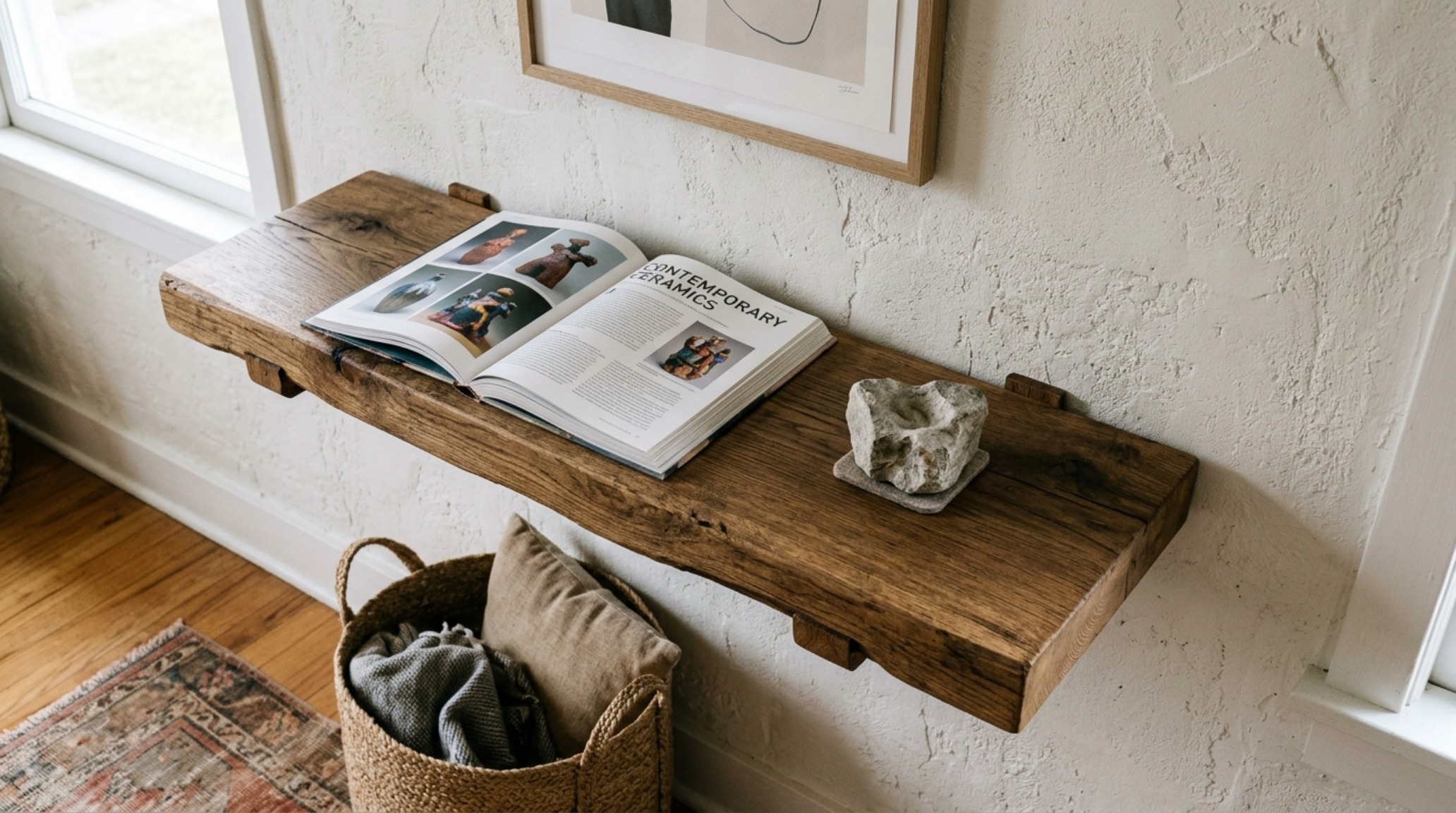
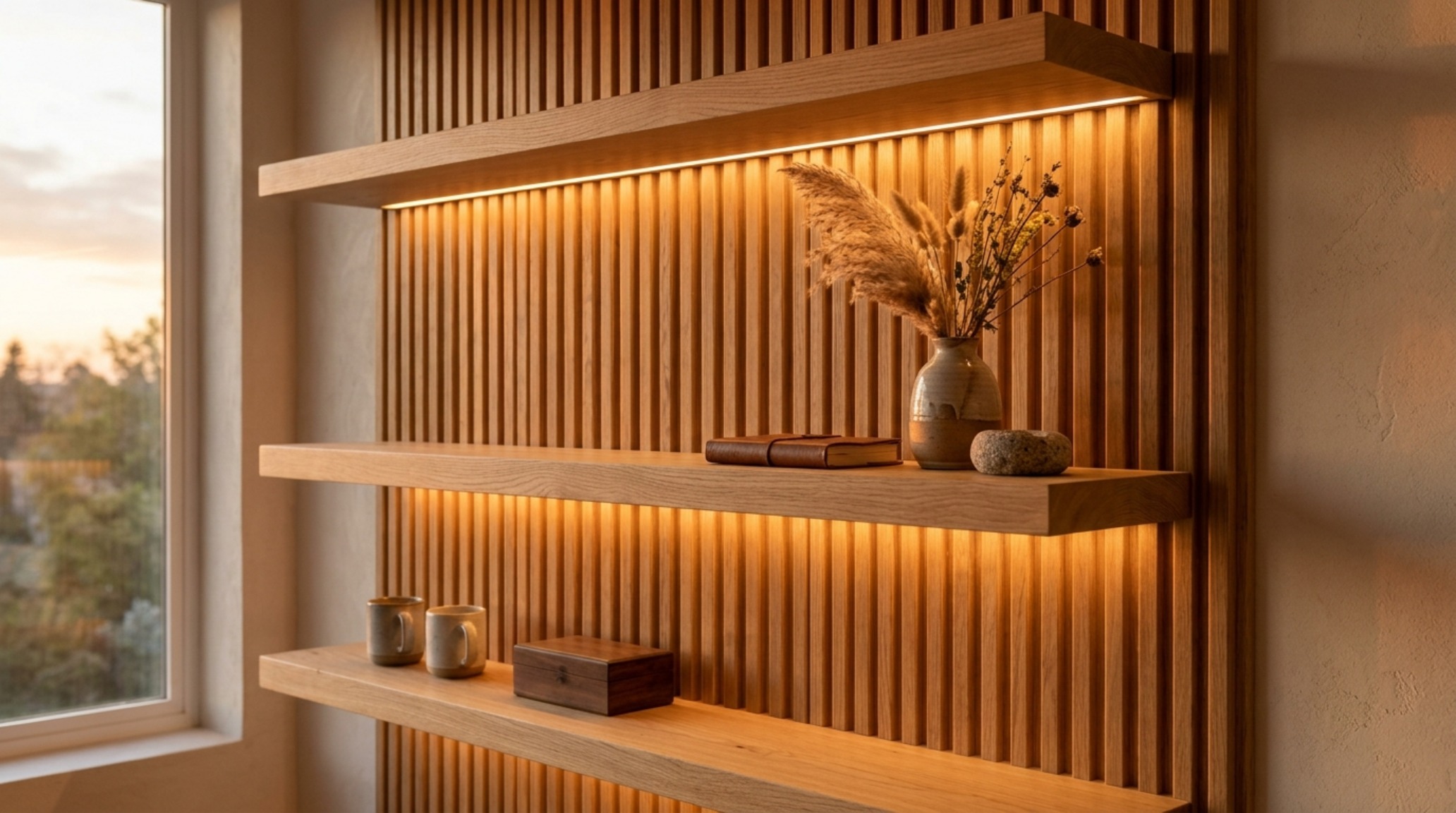
Materiality is the bridge between a DIY project and a permanent architectural element. To achieve that ‘built-in’ look, we are seeing a move toward heavy-weight materials. Thick profile wood wall shelves—ranging from 2.5 to 4 inches in thickness—provide a sense of permanence. White oak with a rift-sawn grain offers a linear, clean aesthetic, while reclaimed elm brings a necessary grit to a modern space. For those leaning into the ‘Organic Modern’ aesthetic, pairing these woods with walls finished in Benjamin Moore Swiss Coffee or the earthy, velvet-like depth of Farrow & Ball Setting Plaster creates a tonal harmony that feels incredibly expensive.
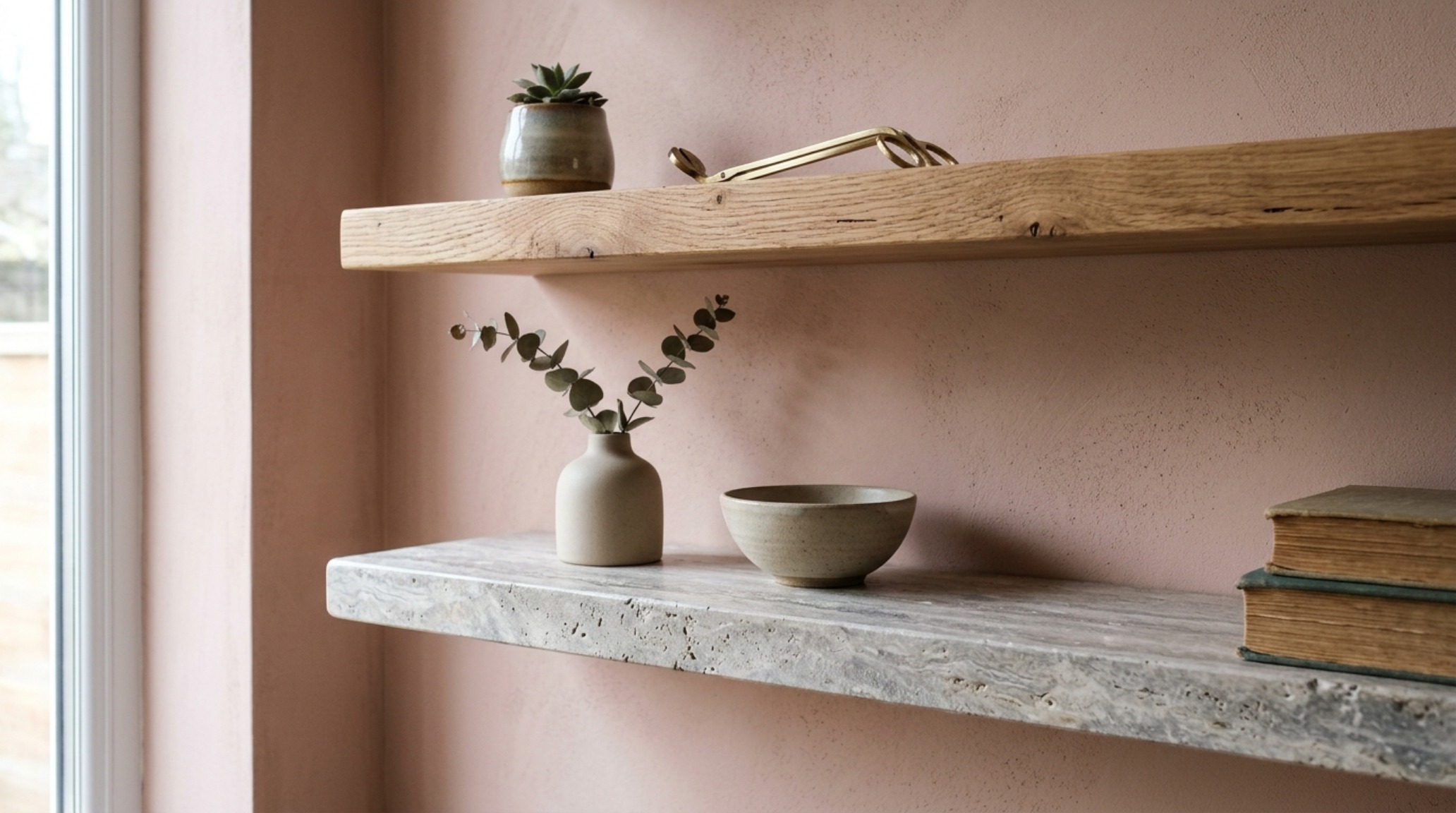
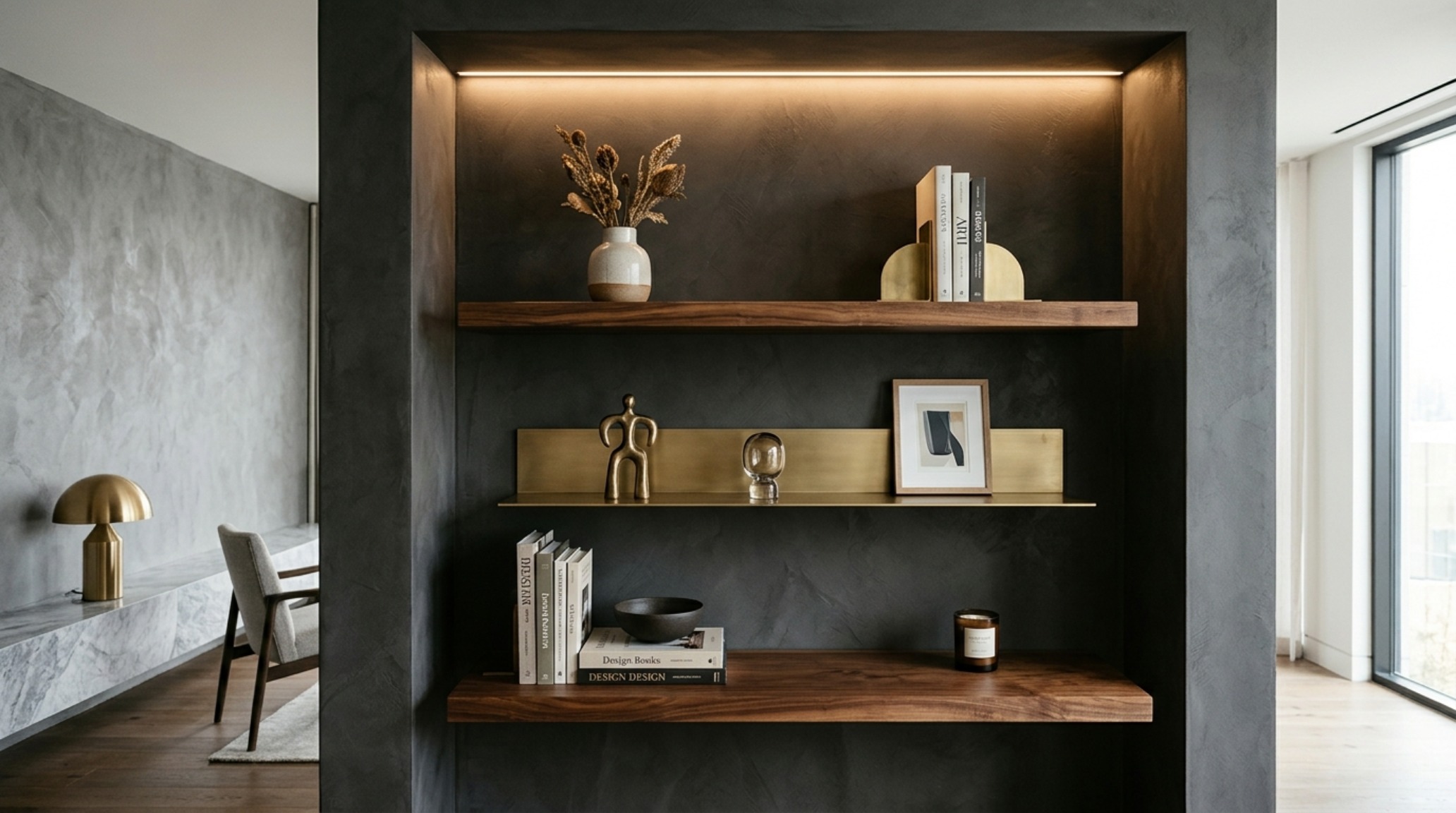
We shouldn’t stop at wood. The integration of stone—honed travertine or matte Carrara marble—as a secondary shelf material introduces a tectonic shift in the room’s texture. Imagine a thick oak ledge for books, paired with a smaller, lower stone plinth for a single, heavy sculpture. This mix of materials grounds the living room storage solutions in a way that feels curated over time, rather than purchased from a catalog.
Atmospheric Lighting: The 2700K Architectural Glow
Light is the invisible architecture of a room. Without it, your carefully curated shelves flatten into the wall. The most sophisticated integrated LED shelf lighting today utilizes recessed channels with a 2700K color temperature. This specific warmth mimics the soft glow of a late-afternoon sun, avoiding the clinical, blue-ish tint of higher Kelvin ratings. When selecting LEDs, look for a High CRI (Color Rendering Index) of 90+. This ensures that the deep ochres of your ceramics and the subtle patinas of your vintage book spines are rendered with absolute fidelity.
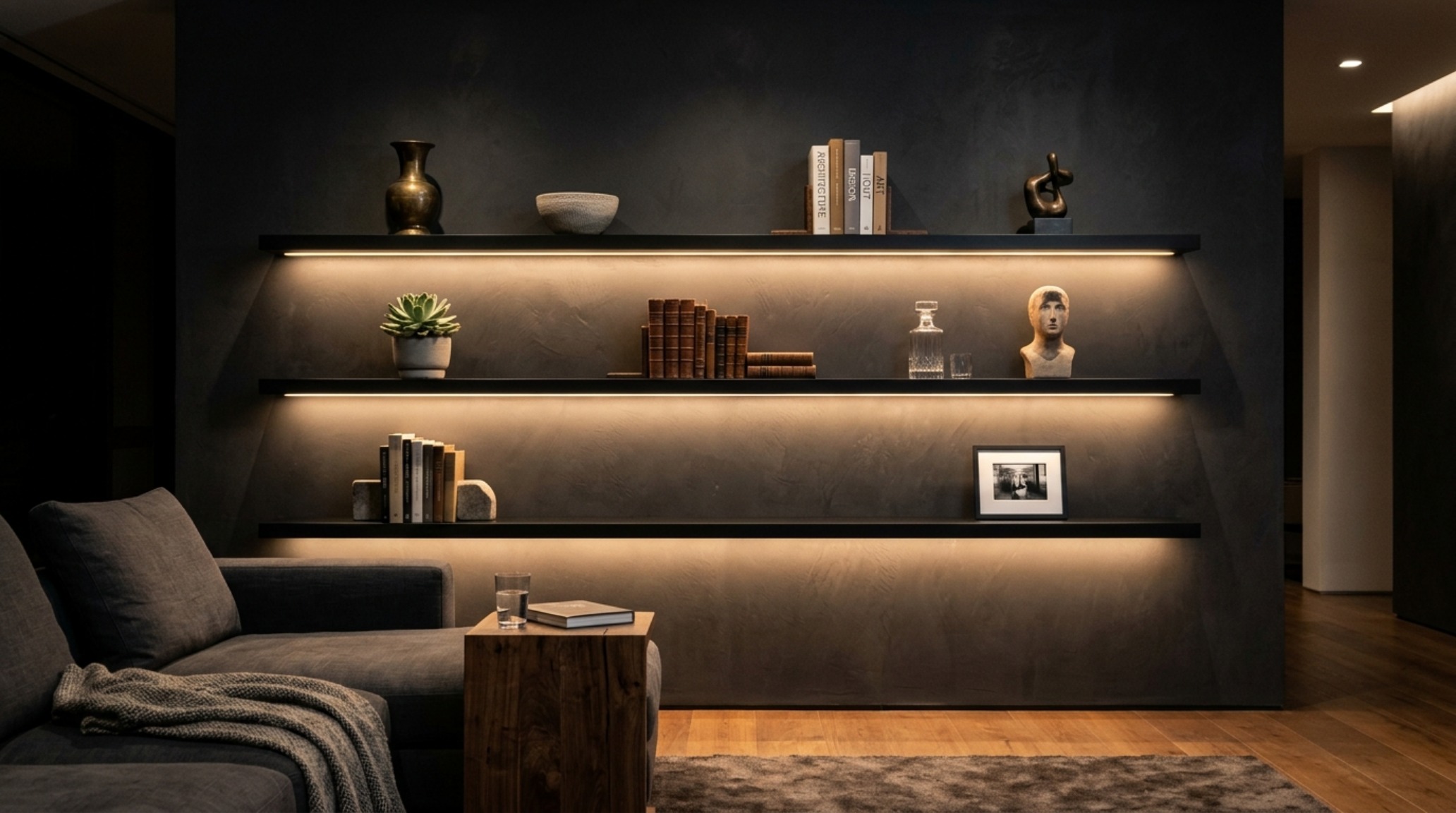
Directional lighting is equally vital. Instead of a single wash of light, consider micro-spots or ‘puck’ lights recessed into the underside of the shelf, angled specifically toward a piece of art or a textured vessel. This creates ‘shadow play’—the interplay of light and dark that gives a wall depth. When the ambient room lights are dimmed, these architectural display ledges become the primary source of mood, casting soft pools of light that define the perimeter of the living space.
Mastering the Sightlines: Anchoring and Clearances
Spatial awareness is what separates a professional interior from an amateur one. When planning your modern wall shelves styling rules, you must account for the physical experience of the room. This means honoring the 36-inch standard walkway clearance; a shelf that protrudes too far into a primary path is a physical nuisance, no matter how beautiful it is. Similarly, if a shelf is placed above a coffee table, ensure it maintains the 18-inch reach rule—allowing someone to set down a drink without feeling like they are ducking under a structural overhang.
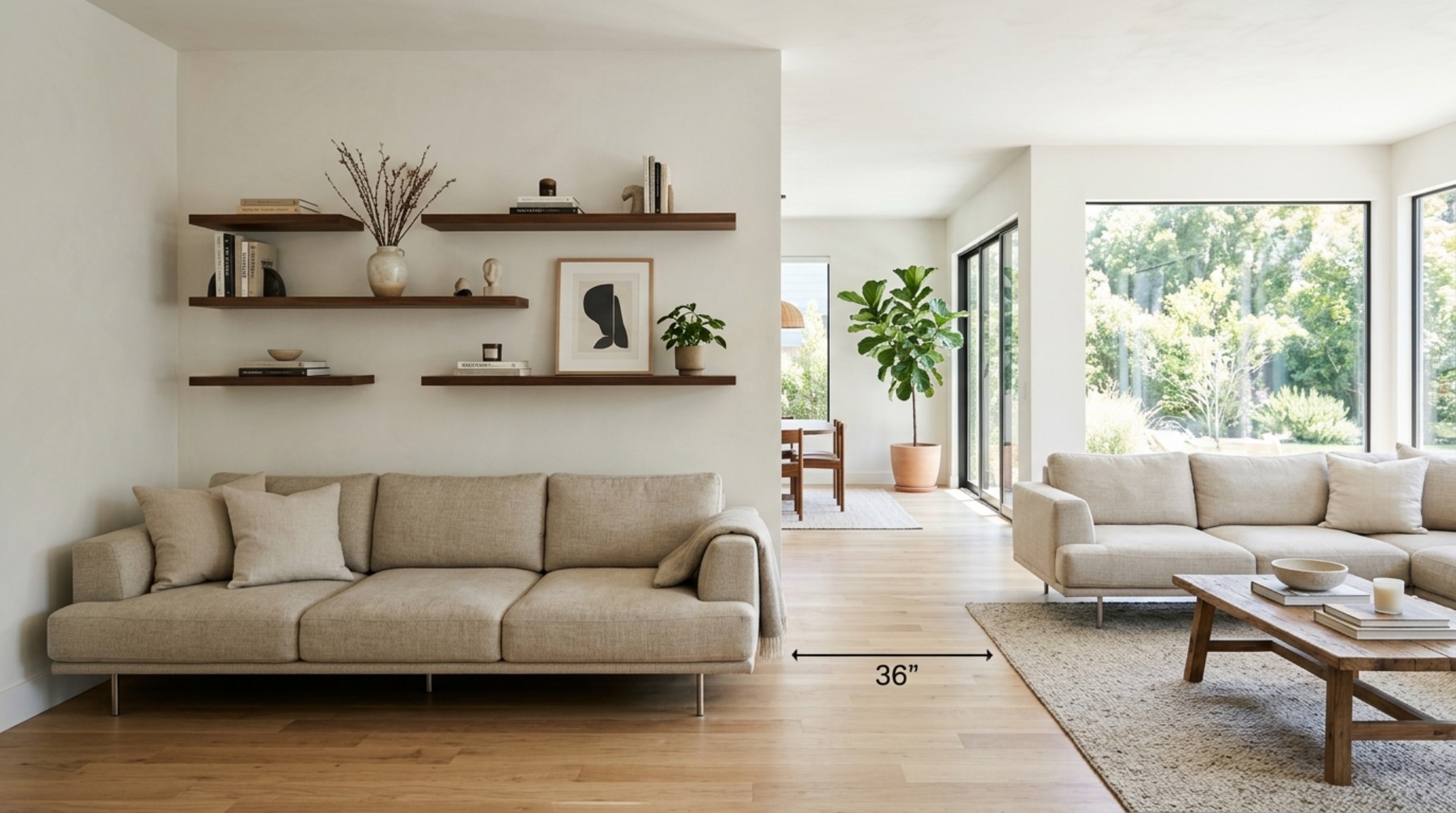
Aligning with sightlines is the final touch of the master designer. Sit in your primary armchair. Where does your eye naturally rest? The ‘hero’ object on your shelving system—perhaps a large-scale photograph or an heirloom ceramic—should be positioned at an eye-level height of approximately 42 to 48 inches from the floor. By aligning the heaviest visual elements with these natural sightlines, the asymmetrical arrangement feels intentional and ‘locked’ into the room’s architecture.
The Small Apartment Pivot: Verticality as a Luxury
In smaller footprints, the strategy shifts. Here, small apartment vertical storage hacks require us to think about the ‘skyline’ of the room. By taking a series of asymmetrical shelves all the way to the ceiling, you draw the eye upward, creating an illusion of height. In these instances, the bottom shelf should remain clear of the floor—at least 12 to 15 inches—to maintain a sense of ‘floating’ lightness. Using a monochromatic palette—matching the shelf color to the wall (e.g., Farrow & Ball Ammonite)—allows the architecture to recede, leaving only the curated objects to tell the story.
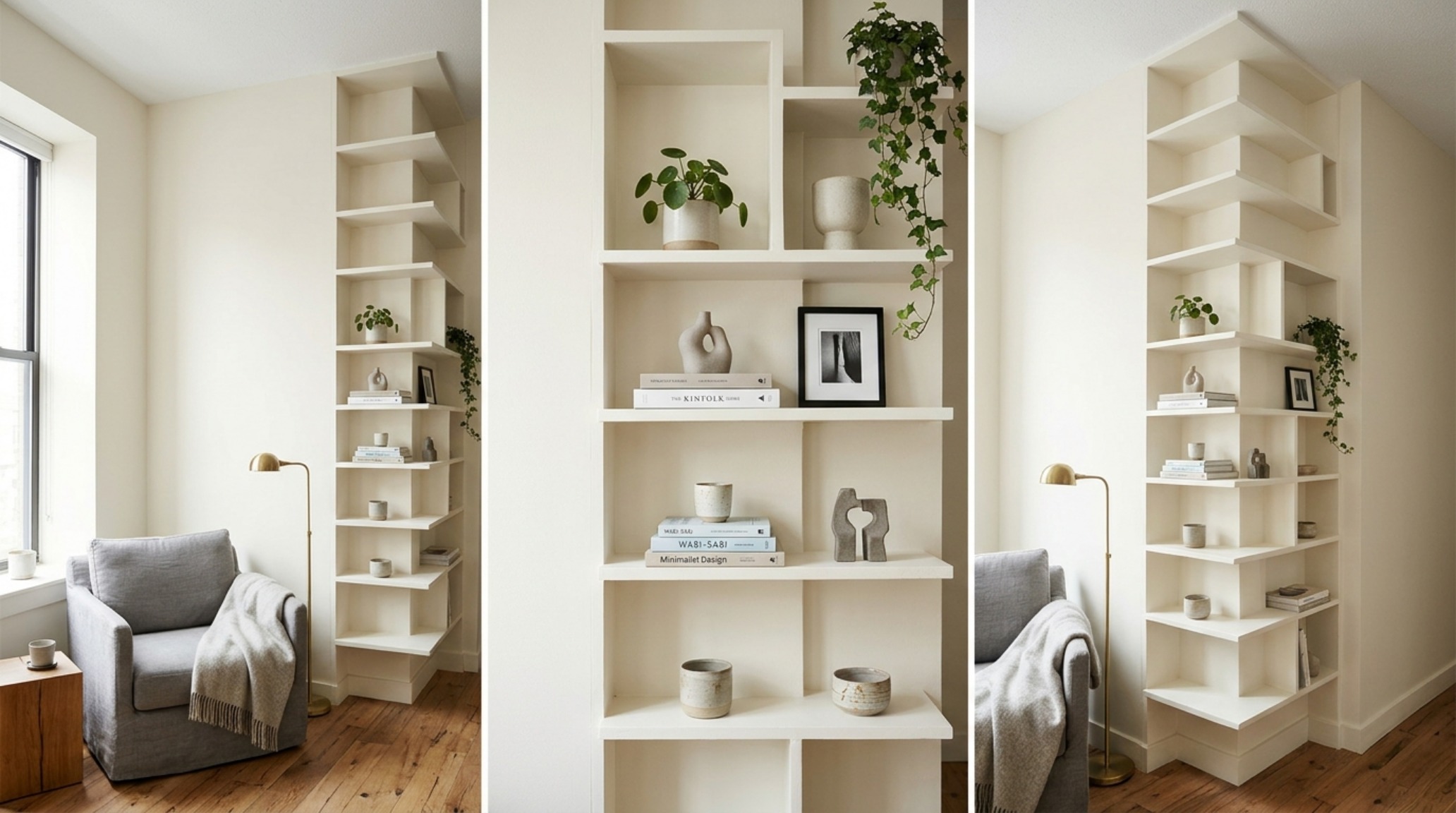
Whether you are working with a sprawling open-plan loft or a compact urban flat, the goal remains the same: to create a wall that feels like it was grown, not just hung. By following these living room floating shelves ideas, you move beyond the decorative and into the realm of the architectural, where every ledge and every void serves a purpose in the greater rhythm of the home.
Architectural Specification & Material Matrix
Curated tactile palette, spatial dimensions, and atmospheric lighting index for this design scheme.
The shift toward these expressive, asymmetrical geometries represents a maturing of the modern interior. We are no longer afraid of the empty corner or the off-center line. Instead, we embrace the rhythm they create. By integrating living room floating shelves ideas that respect the 15-18 inch vertical rule and the tactile honesty of raw oak and stone, we turn our walls into more than just storage—we turn them into a quiet, evolving choreography of personal archaeology and architectural intent.
Editorial Silo • Recommended Architecture Studies
- The Tactile Aesthetic of Product Of The Week Omba Bookshelf: Elevating Living Room Floating Shelves Ideas with Materials, Moods & Lighting Kelvin — Archival Design Case Study
- Ikea Hyllis Shelves Hacks: The Architectural Blueprint & Spatial Flow Guide — Archival Design Case Study
Architectural Inspiration Lookbook
A high-resolution study in spatial proportions, tactile materiality, and light choreography curated for enduring modern living.
Curated Visual Lookbook
Design Gallery & Spatial Studies
A visual curation of architectural arrangements, lighting concepts, and material palettes featured in this space.