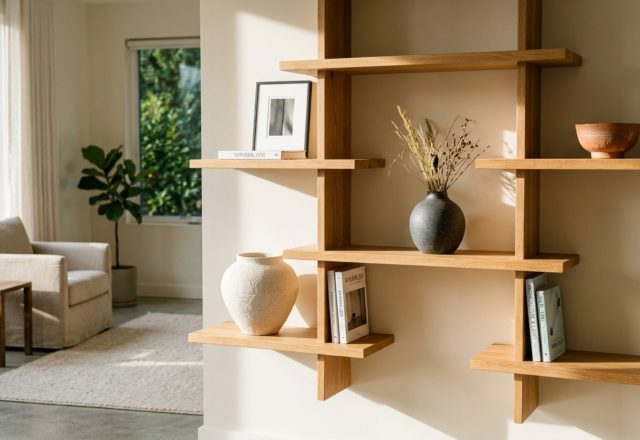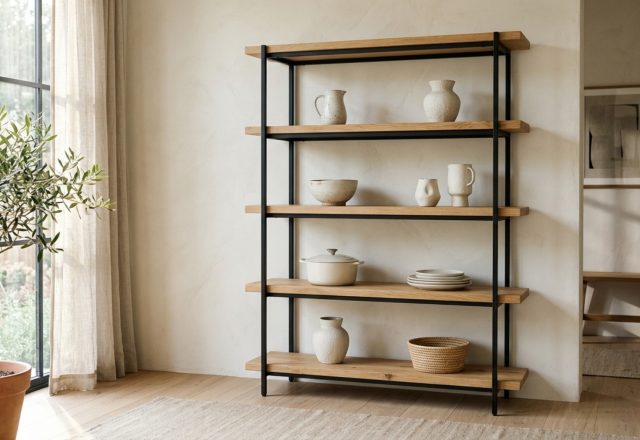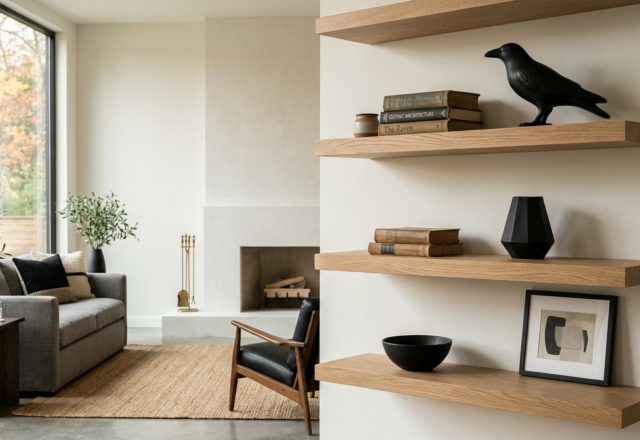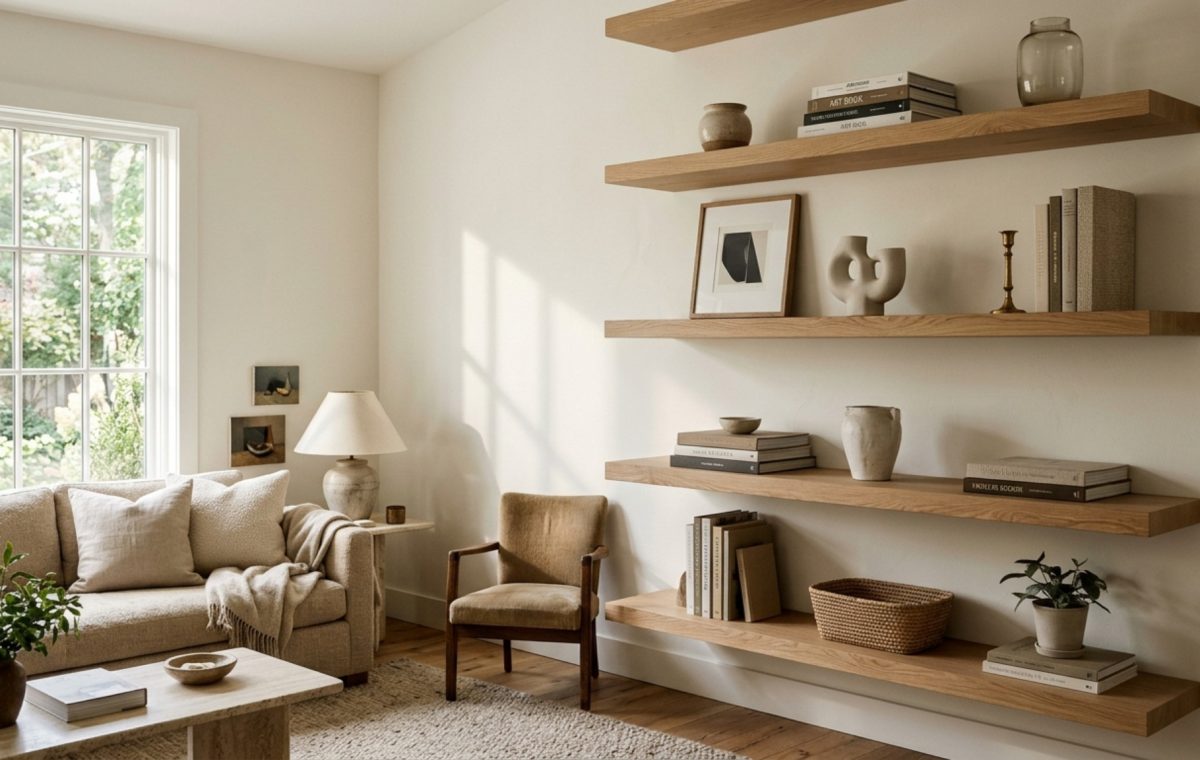
There is a profound, almost silent dialogue that occurs between a room and its vertical surfaces. When we approach the concept of living room floating shelves ideas, we aren’t merely looking for a place to park a stack of hardcovers or a stray ceramic vessel. We are navigating the architecture of the wall itself. A shelf is a bridge between the structural skeleton of a home and the tactile, lived-in reality of the people within it. To master this space, one must move beyond the superficial ‘decorating’ mindset and enter the realm of spatial composition. It is here that the Triangle Method transforms from a simple stylist’s trick into a rigorous architectural blueprint for visual equilibrium.
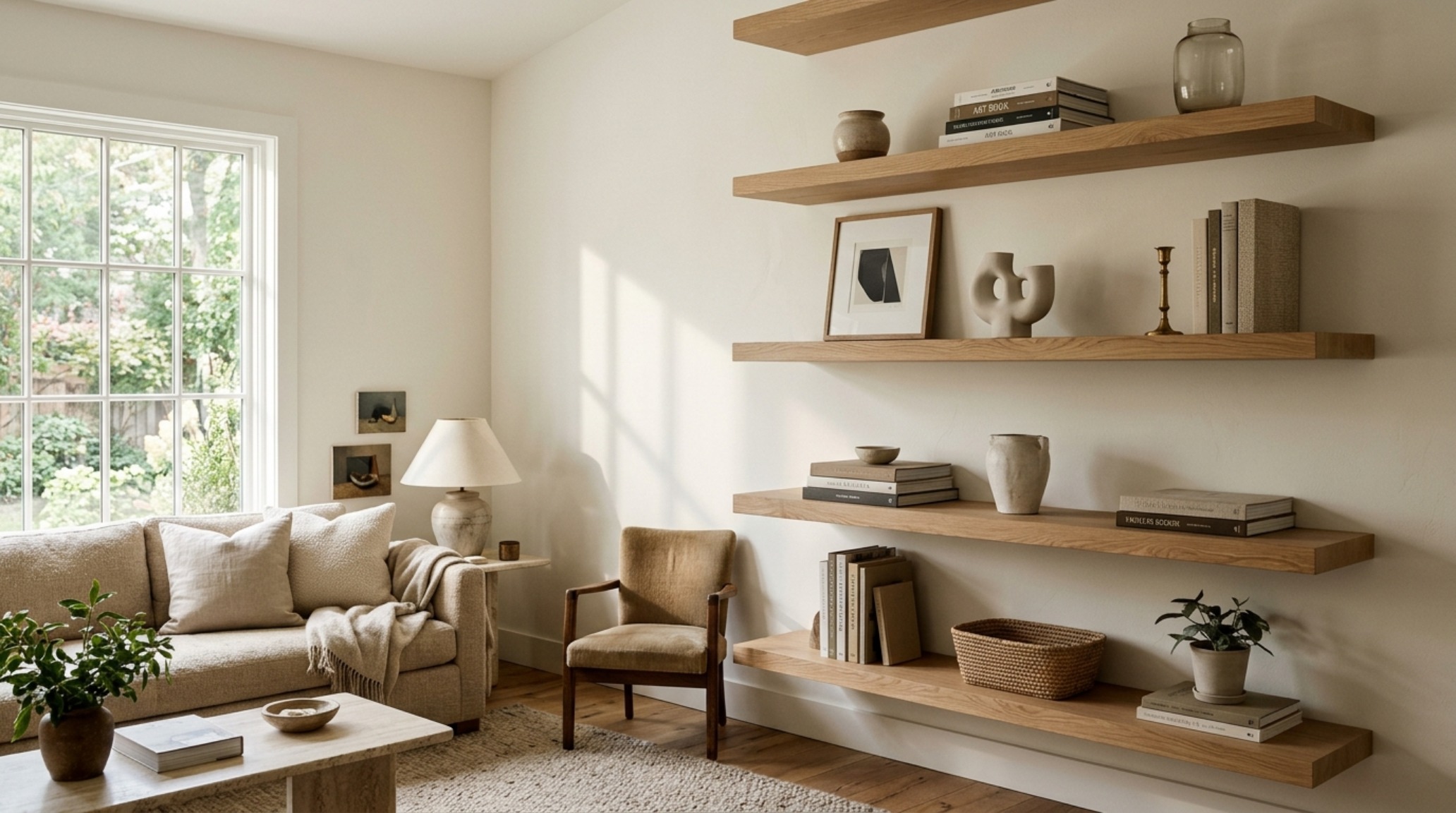
The Geometric Logic of the Triangle Method Shelf Styling
The human eye is naturally a seeker of patterns. It craves a path to follow, a visual narrative that feels resolved rather than chaotic. The Triangle Method exploits this biological impulse by creating a series of invisible three-point anchors across your shelving unit. Instead of lining items up like soldiers or grouping them in haphazard clusters, you place similar elements—be it a specific material, a color, or a textural weight—at the points of an imaginary triangle. This forces the gaze to dance across the entire installation, ensuring no single corner feels heavy while another feels neglected.
Establishing the Primary Anchor
Every successful shelf starts with a point of gravitas. This is often a large-scale piece—perhaps a heavy stoneware vase or a framed charcoal sketch—that provides the ‘weight’ the eye needs to feel grounded. From this primary point, you draw your first invisible line to a secondary piece of similar visual mass, usually on a different shelf and offset horizontally. The third point completes the triangle, often with a lighter touch, such as a delicate brass object or a singular trailing plant like a Ceropegia woodii. This geometric interplay is the secret to why some living room floating shelves ideas layout designs feel effortless while others feel cluttered.

Materiality and the Tactile Language of Shelving
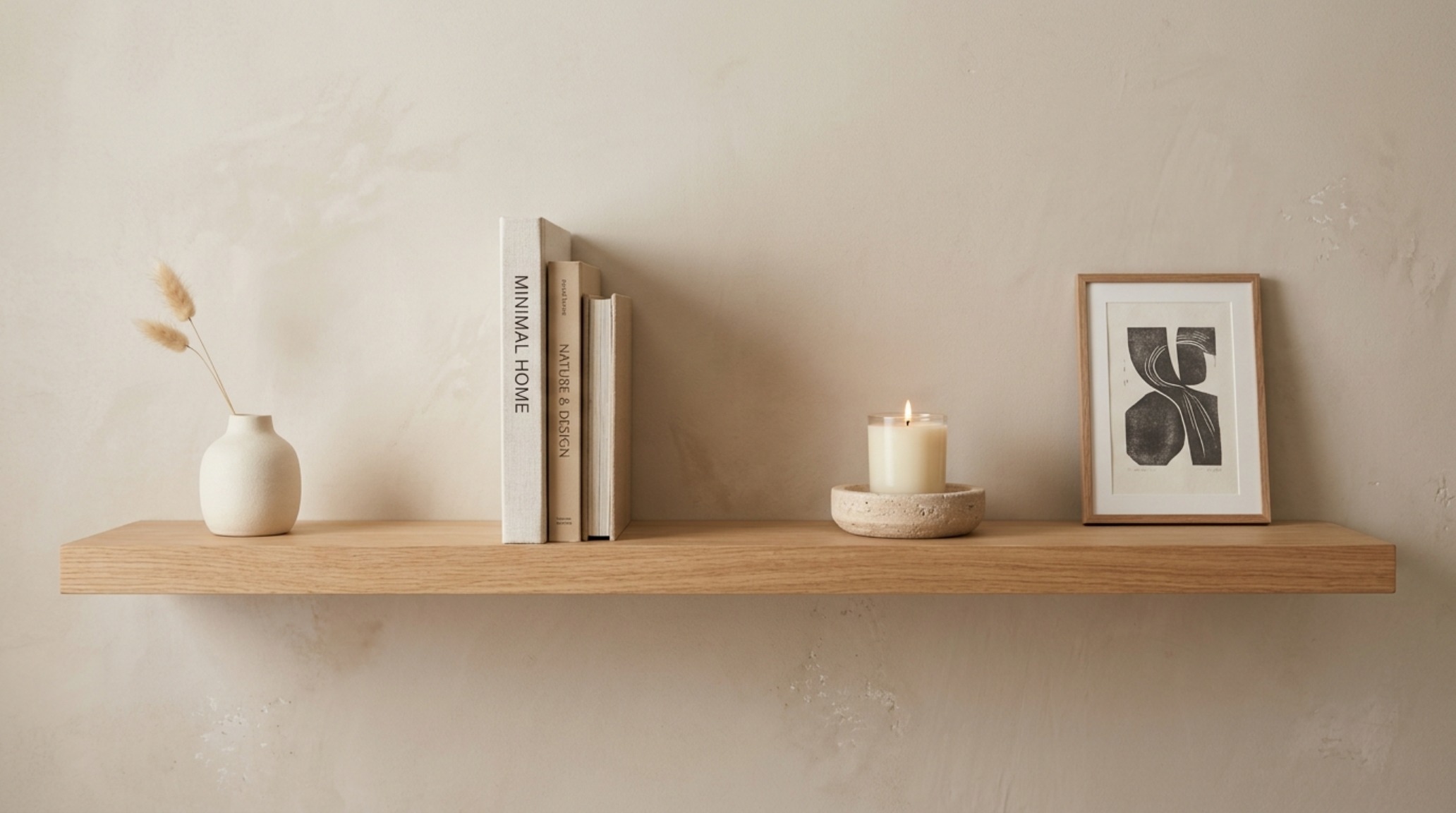
Architecture is as much about what you touch as what you see. When considering living room floating shelves ideas architecture, the choice of shelf material should be an intentional extension of your home’s vernacular. A fluted white oak shelf offers a soft, organic warmth that interacts beautifully with the matte chalkiness of a limewash wall, such as Portola Paints’ Lime Wash in ‘Saint Sauveur’. Conversely, a honed Nero Marquina marble shelf provides a sharp, cool contrast against a smooth gypsum finish, injecting a sense of permanence and luxury.
Texture as a Spatial Tool
We often forget that texture has volume. A smooth, reflective glass vessel takes up less ‘visual space’ than a rough, hand-built ceramic bowl of the same dimensions. To create a sophisticated flow, mix your materialities. Pair the industrial edge of blackened steel brackets with the softness of linen-bound books. The goal is to create a sensory landscape where the hand wants to reach out and touch the surfaces. This tactile grounding is what separates a showroom display from a soulful, architectural interior.
The Invisible Layer: A Comprehensive Lighting Guide
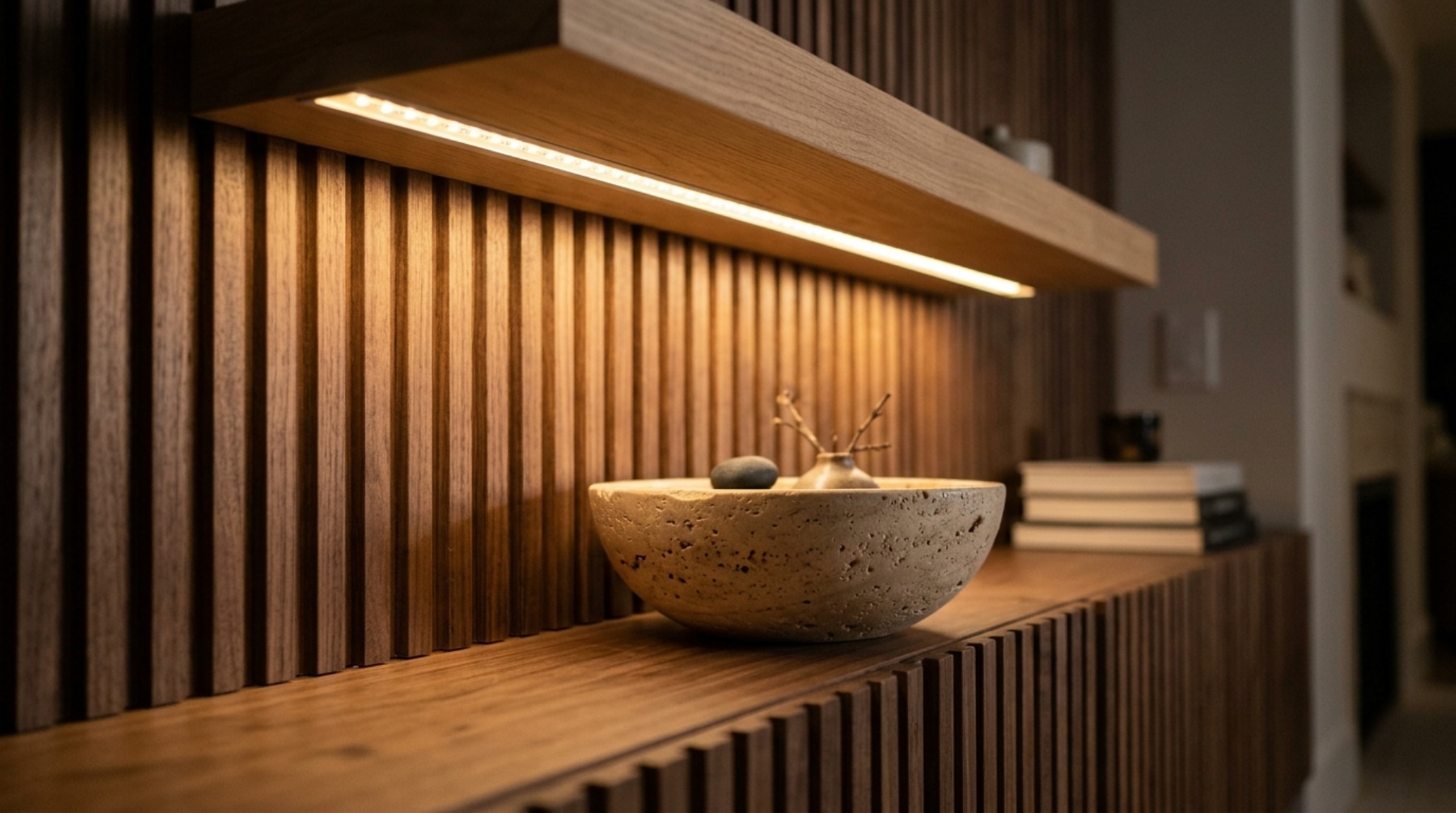
Lighting is the most transformative, yet often overlooked, component of shelf styling. You can have the most exquisitely balanced triangle of objects, but without the right illumination, the depth is lost to the shadows. For living room floating shelves ideas lighting guide success, we look toward high CRI (Color Rendering Index) solutions. A CRI of 90+ is non-negotiable if you want the true pigments of your art and the natural grain of your wood to resonate.
Kelvin and Mood
The temperature of your light dictates the emotional resonance of the room. We generally avoid the clinical 4000K range for residential living spaces. Instead, opt for a 2700K warm ambient glow for traditional or cozy settings, or a 3000K soft white for a more contemporary, crisp architectural feel. Integrated LED channels recessed into the underside of the shelf provide a ‘wash’ effect, eliminating harsh hotspots and creating a soft, museum-quality glow that highlights the negative space breathing room between your curated objects.
Ergonomics and the Architecture of Sightlines
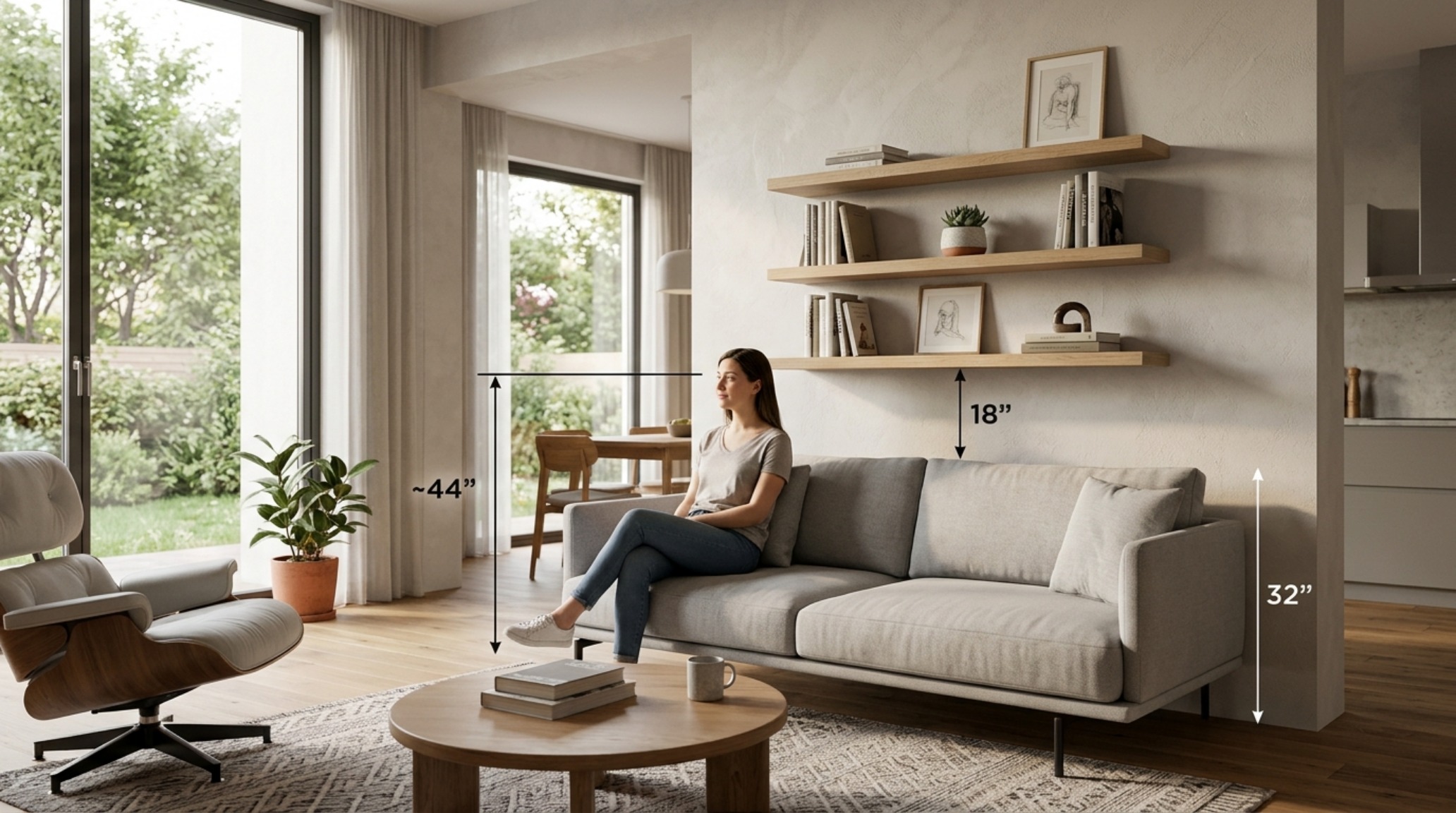
A shelf does not exist in a vacuum; it exists in a three-dimensional environment where people move, sit, and interact. This is where living room floating shelves ideas ergonomics become critical. If your shelves are positioned above a sofa, they must be high enough to avoid a head-strike—usually at least 15 to 18 inches above the top of the back cushion—but low enough that the bottom shelf remains within the primary field of vision for someone seated.
Circulation and Clearances
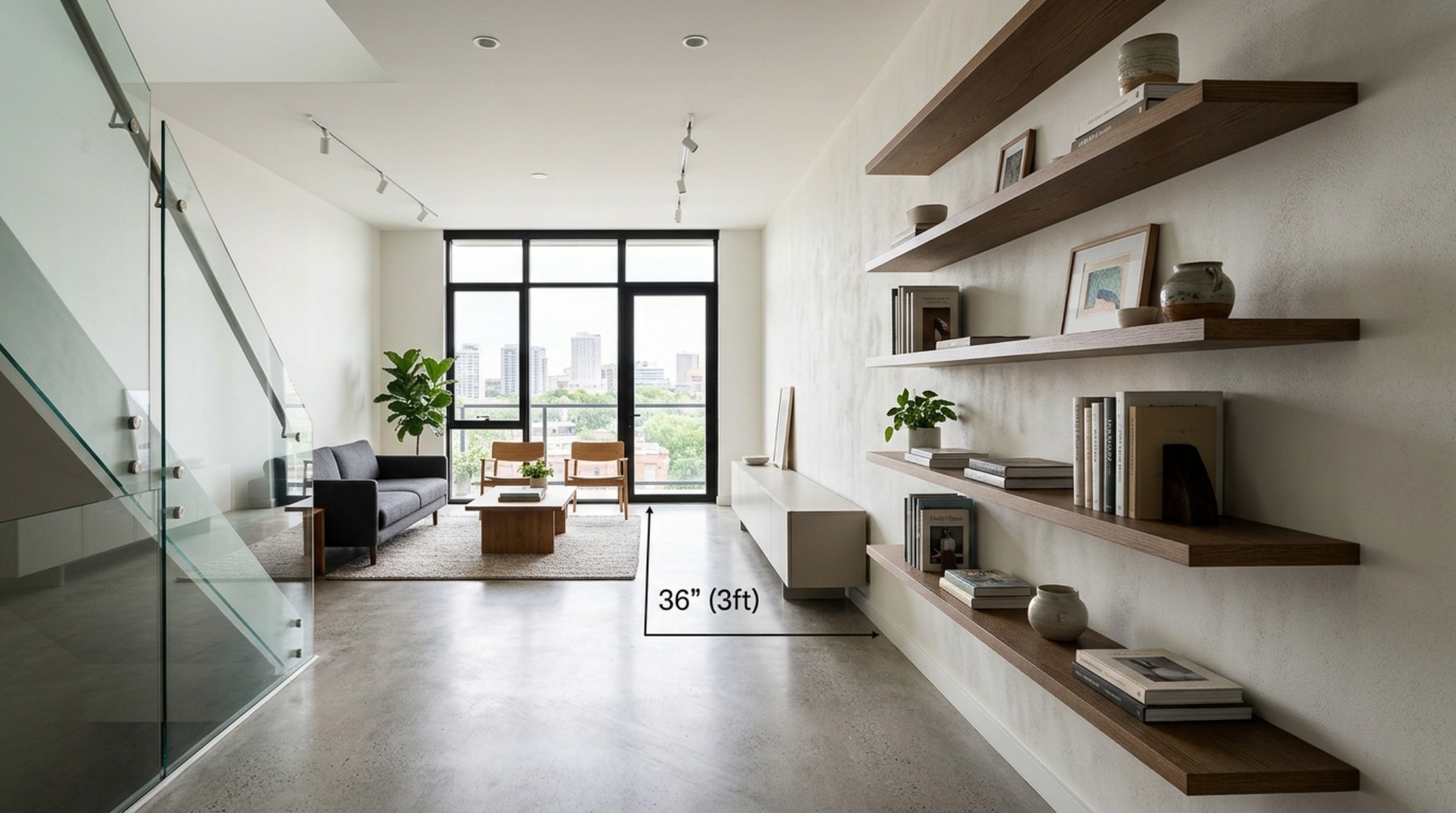
In the broader context of living room floating shelves ideas, we must respect the 36-inch standard walkway clearance. A shelf that protrudes too far into a primary circulation path feels like an obstacle rather than an amenity. For deeper shelves (12 inches or more), ensure they are placed in areas where foot traffic is minimal. For narrow hallways or transitional spaces, a shallow 6-inch ledge for leaning art and small artifacts preserves the spatial cadence of the home without encroaching on movement.
Scaling for Impact: Small Spaces vs. Luxury Expanses
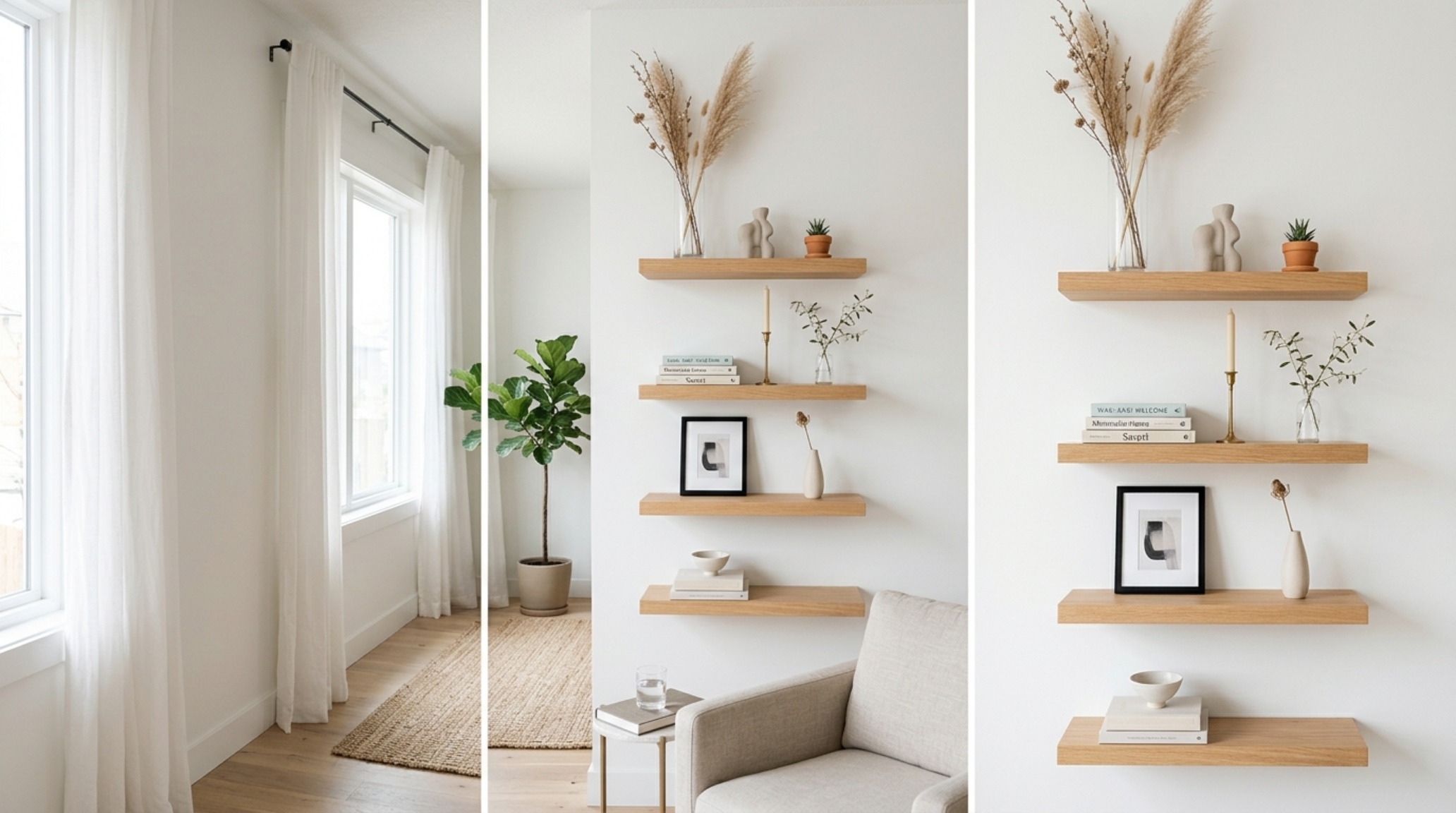
In small space living room floating shelves ideas, the objective is often to draw the eye upward to create the illusion of height. Verticality is your greatest ally here. Use tall, slender objects—like a single architectural branch or a narrow sculptural pillar—to emphasize the distance between the floor and ceiling. This vertical ‘stretch’ breaks the horizontal monotony of a small room.
The Luxury of Negative Space
In contrast, luxury living room floating shelves ideas textures often rely on the power of restraint. In large-scale custom millwork, the greatest luxury isn’t the number of objects you can fit, but the amount of ‘breathing room’ you leave empty. Allowing a beautiful piece of Honed Travertine or a Farrow & Ball Setting Plaster wall to be seen through the gaps is a mark of confidence. It suggests that the architecture itself is the art, and the objects are merely punctuation marks in a larger, more elegant sentence.
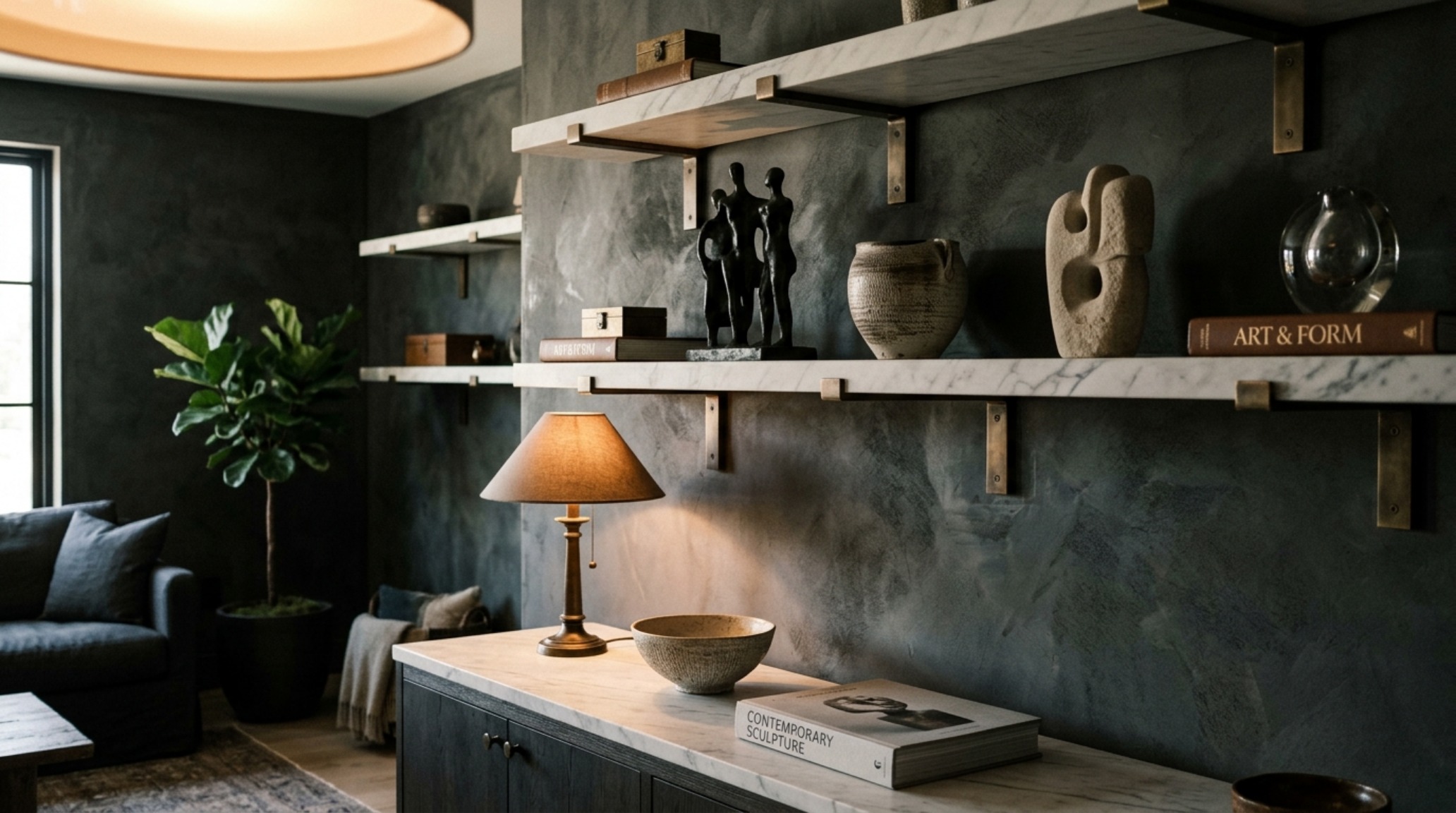
Architectural Specification & Material Matrix
Curated tactile palette, spatial dimensions, and atmospheric lighting index for this design scheme.
Ultimately, the most successful living room floating shelves ideas are those that feel deeply personal while adhering to these structural truths. Whether you are using the Triangle Method to balance a collection of vintage mid-century ceramics or organizing a modern library, remember that your shelves are a living installation. They should evolve with you, reflecting the seasons of your life and the growth of your curiosities. By grounding your creative choices in architectural precision and tactile honesty, you create more than just storage; you curate a visual landscape that anchors the soul of the home.
Editorial Silo • Recommended Architecture Studies
- The Tactile Aesthetic of Product Of The Week Omba Bookshelf: Elevating Living Room Floating Shelves Ideas with Materials, Moods & Lighting Kelvin — Archival Design Case Study
- Ikea Hyllis Shelves Hacks: The Architectural Blueprint & Spatial Flow Guide — Archival Design Case Study
Architectural Inspiration Lookbook
A high-resolution study in spatial proportions, tactile materiality, and light choreography curated for enduring modern living.
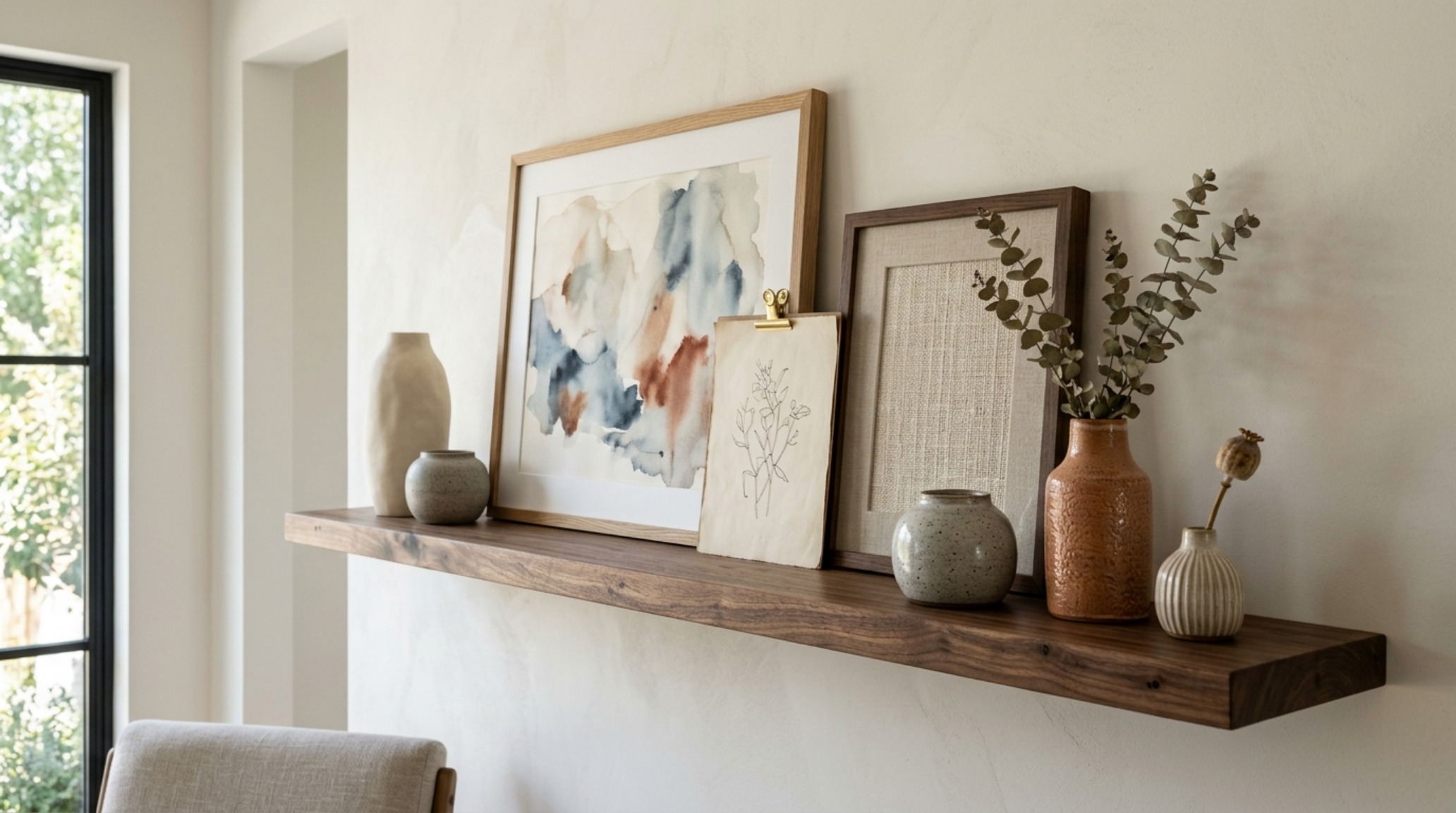
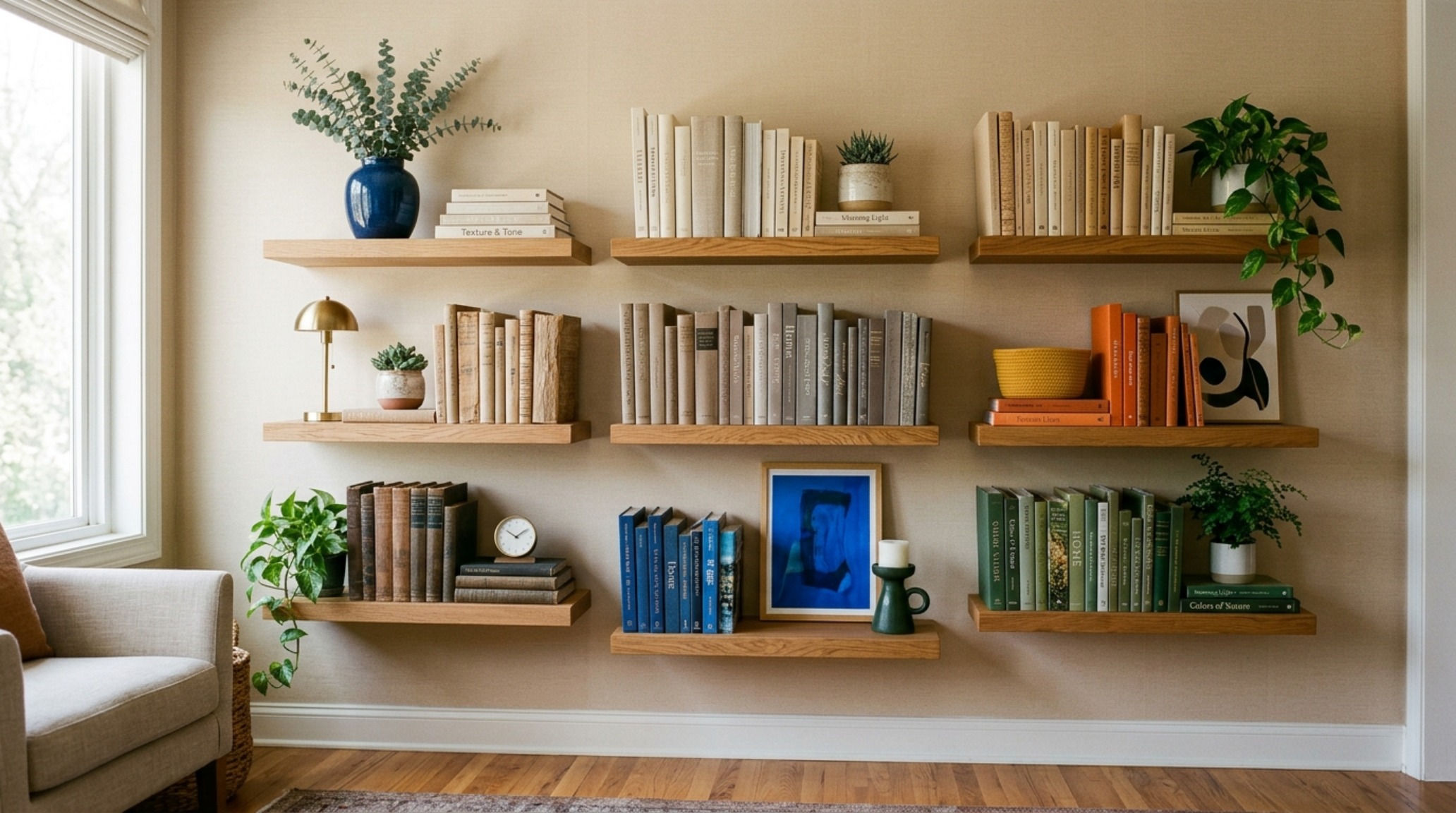
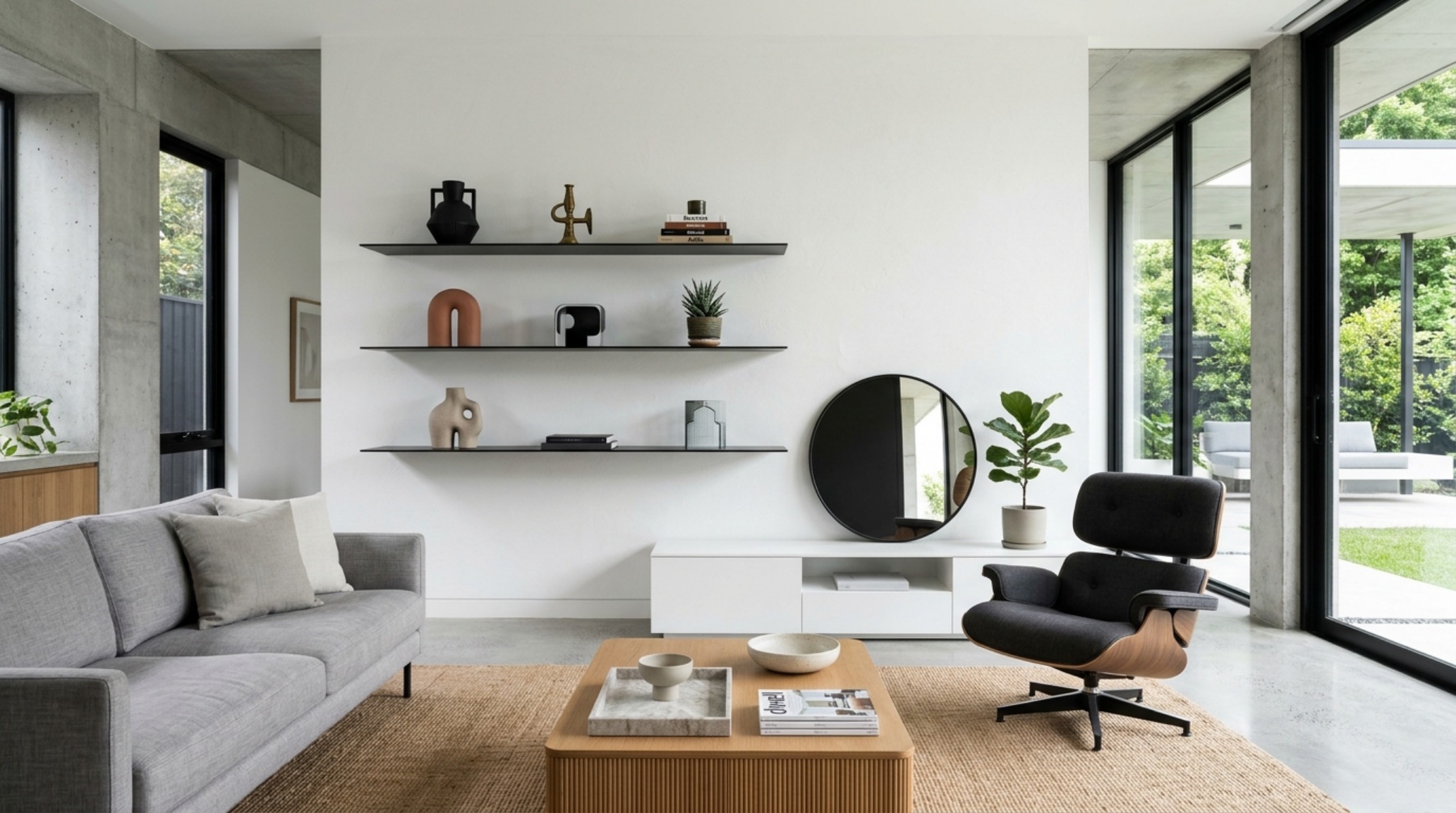
Curated Visual Lookbook
Design Gallery & Spatial Studies
A visual curation of architectural arrangements, lighting concepts, and material palettes featured in this space.