When we approach the threshold of an urban terrace, we often treat it as a secondary thought—a utilitarian ledge for a drying rack or a solitary chair. However, the true architectural potential of these outdoor slivers lies in their ability to act as a sensory expansion of our living rooms. Finding the right small apartment balcony ideas is less about square footage and more about the curation of atmosphere, shifting the focus from mere objects to a cohesive, immersive environment. By harmonizing the raw, brutalist edge of weathered zinc with the creamy, light-reflective depth of Benjamin Moore’s Swiss Coffee, we can transform a standard concrete slab into a high-design retreat that feels like a natural extension of the interior footprint.
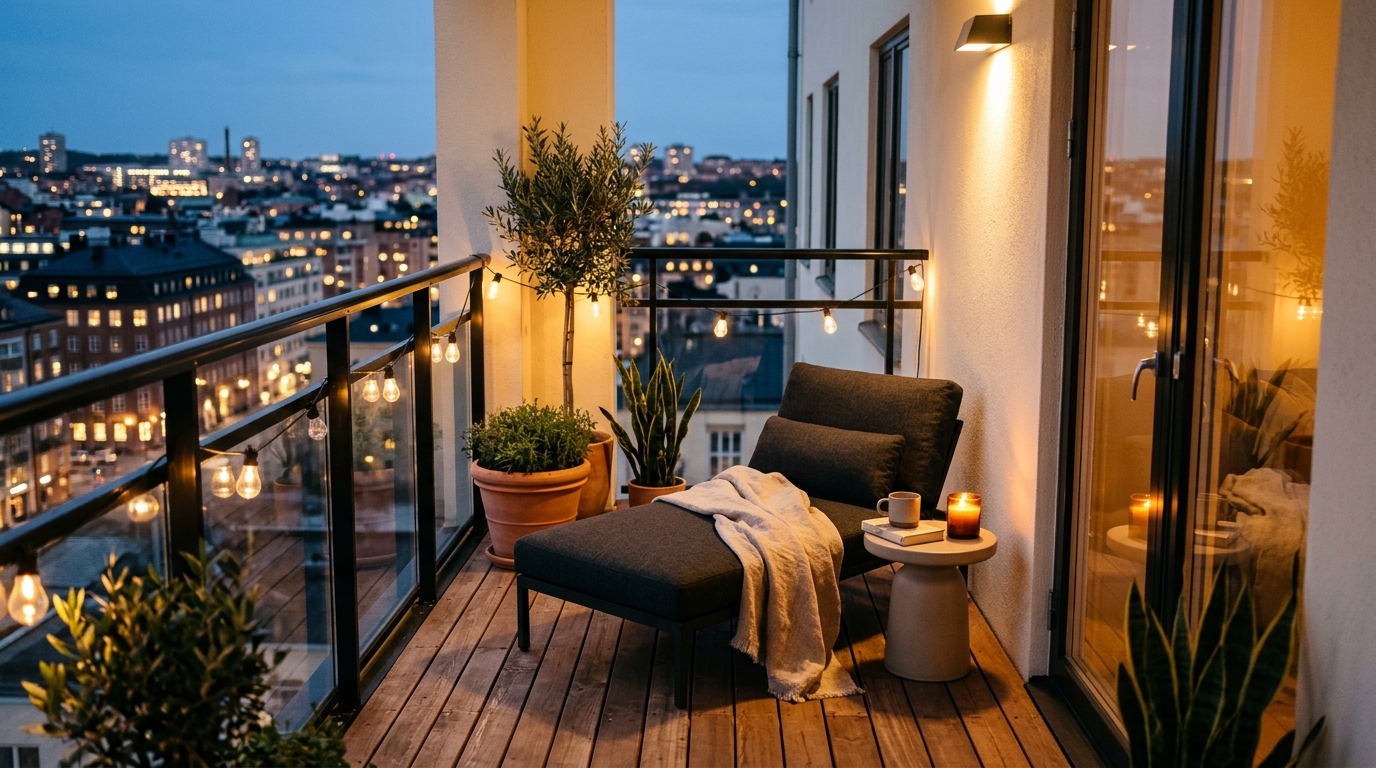
The Material Language of Organic Modernism
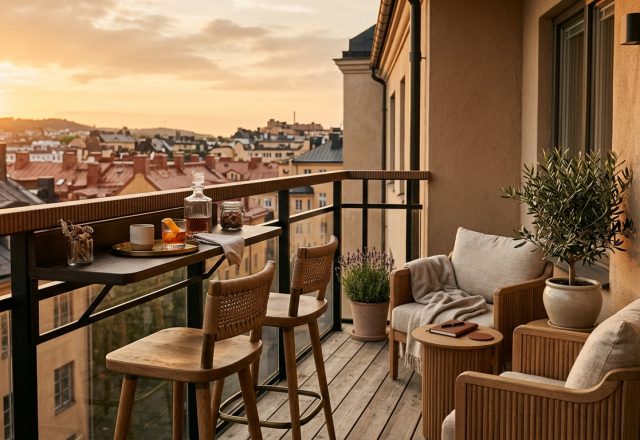
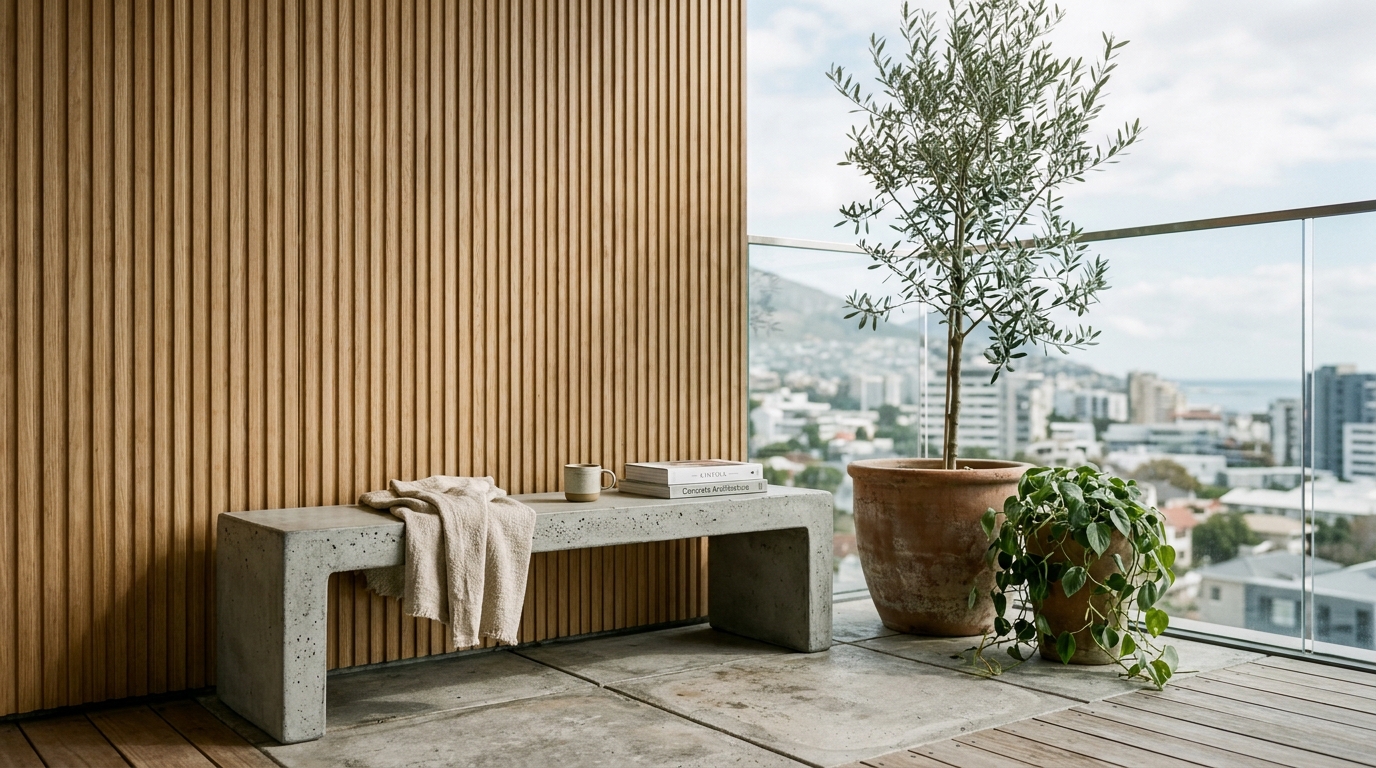
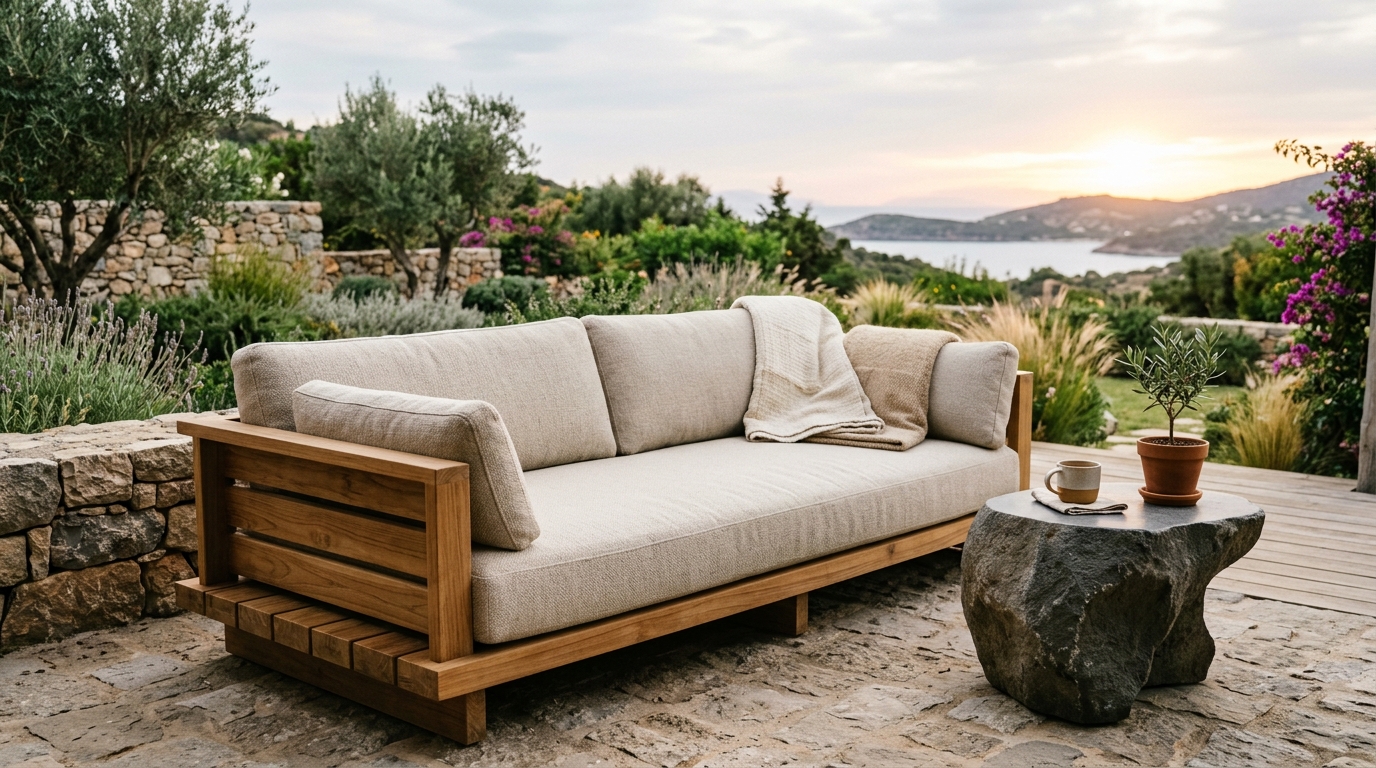
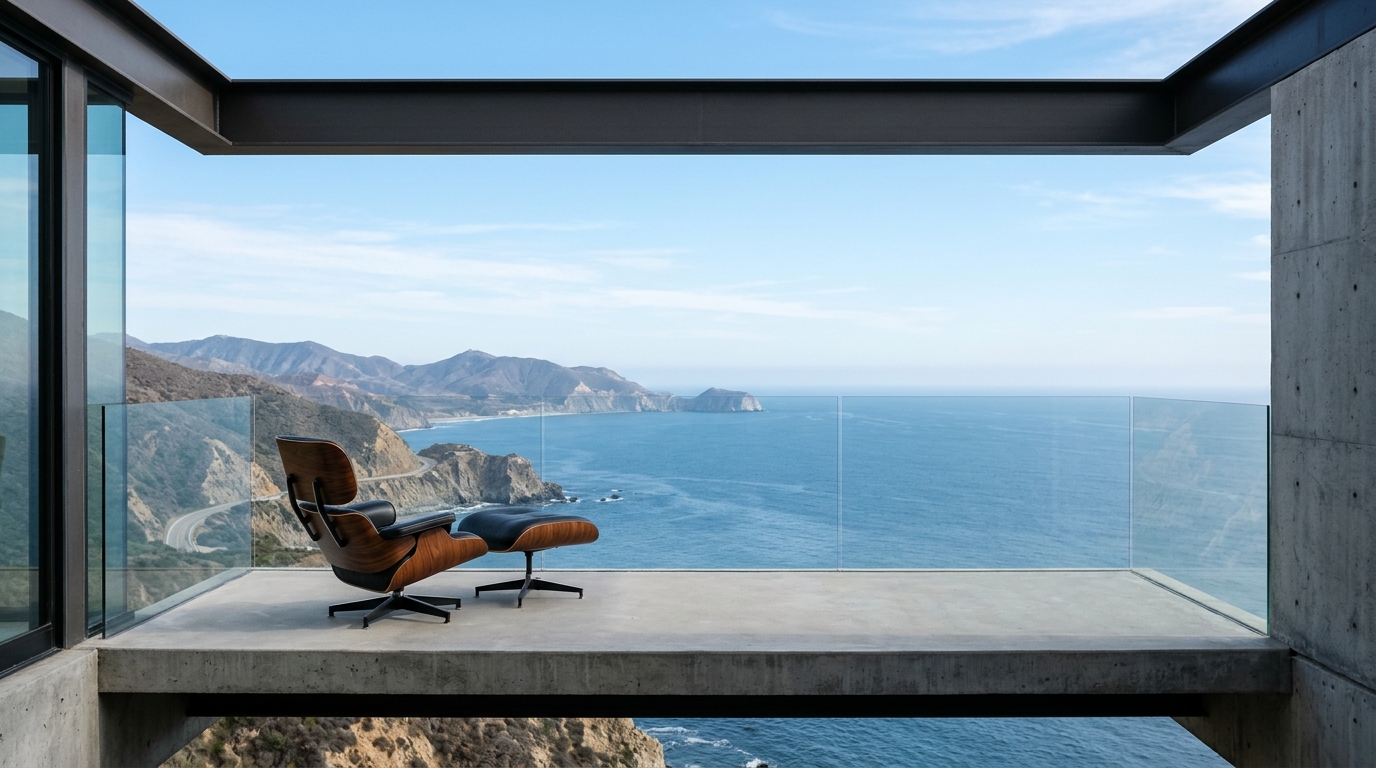
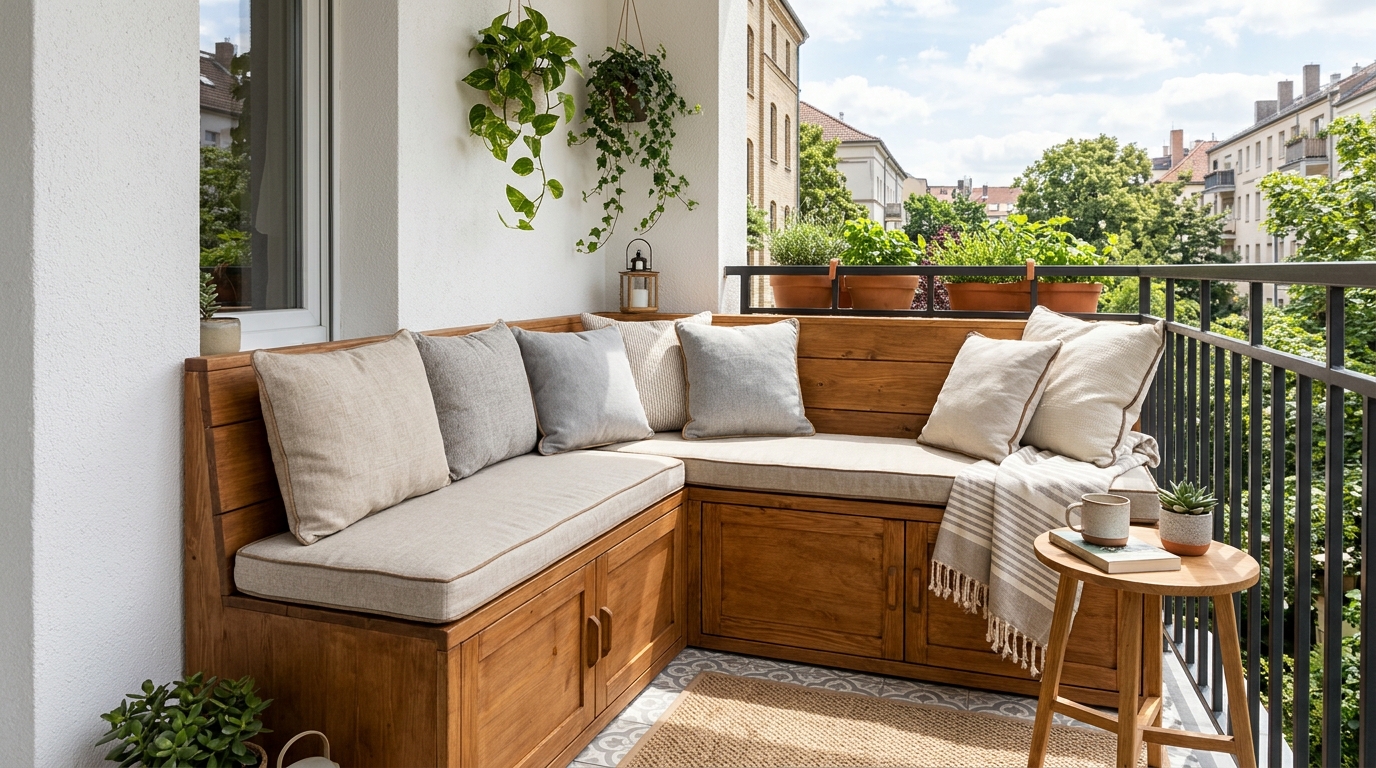
The foundation of a sophisticated outdoor space begins with tactile grounding. In the realm of contemporary design, the ‘Organic Modern’ movement has taught us that luxury isn’t found in the ornate, but in the integrity of materials. For a compact balcony, this means moving away from generic plastic-wicker sets and toward a palette of honest, weather-beaten textures. Consider the interplay between a honed travertine side table and the linear precision of slatted Ipe wood decking. The travertine offers a cool, porous weight that grounds the space, while the Ipe provides a warm, architectural rhythm underfoot.
Color selection is the silent architect of spatial perception. While many default to stark whites, a nuanced approach involves using deep, moody tones to create depth or warm off-whites to maximize light. Farrow & Ball’s ‘Railings’—a soft black with a blue undertone—is transformative when applied to a back wall or a metal railing. It allows the boundary of the balcony to recede into the shadows, creating an illusion of infinite space at night. Conversely, using Benjamin Moore’s ‘Swiss Coffee’ on a brick or stucco wall provides a soft, matte glow that captures the golden hour without the harsh glare of a pure optic white. This strategic use of pigment helps in defining the urban balcony layout as a deliberate room rather than a leftover niche.
Spatial Cadence and the 36-Inch Rule
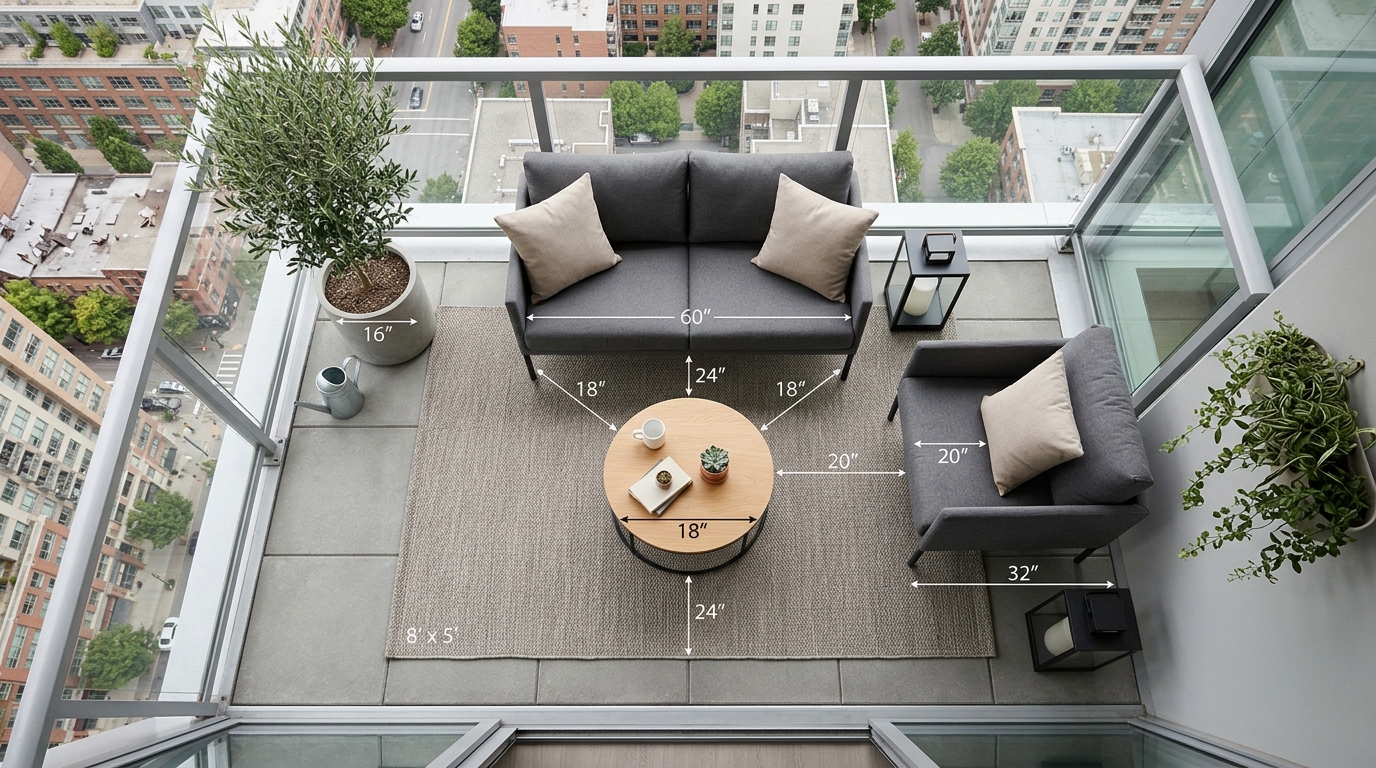
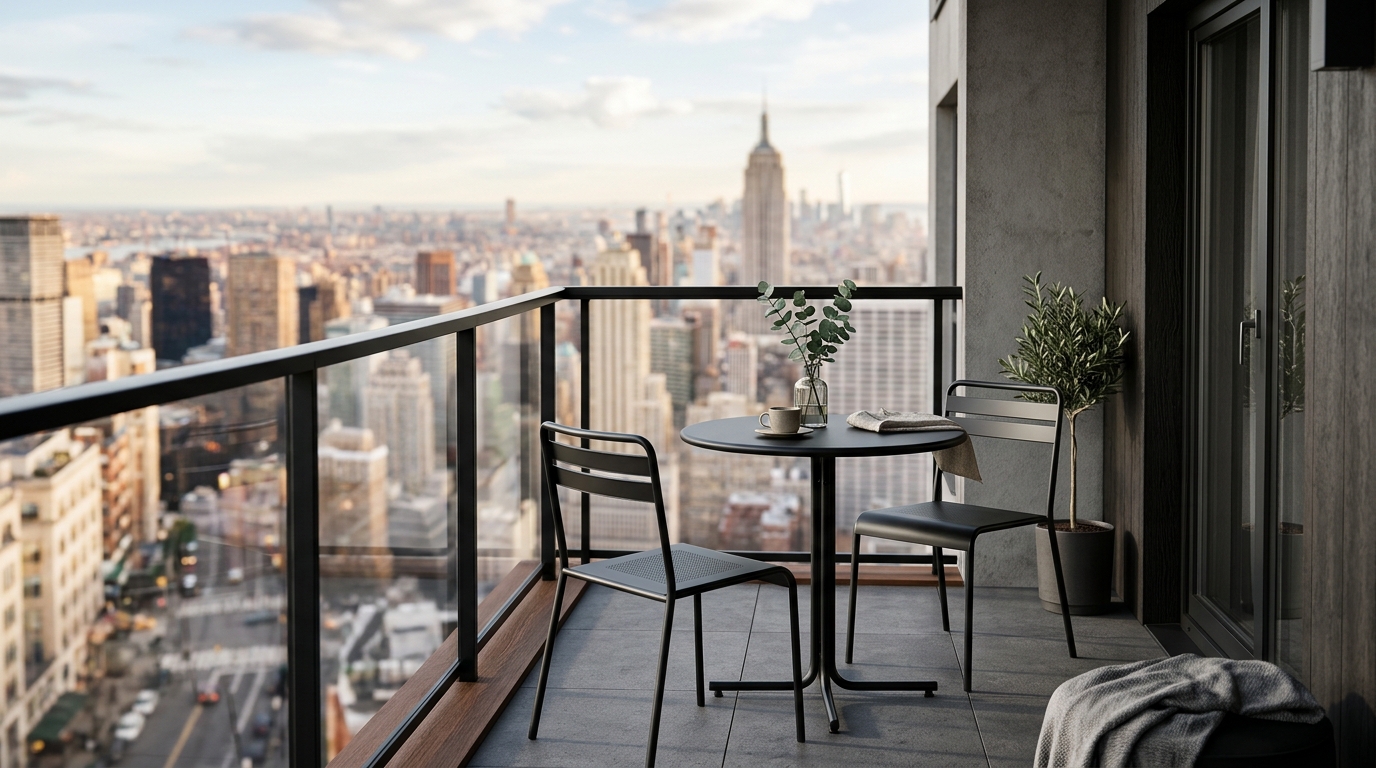
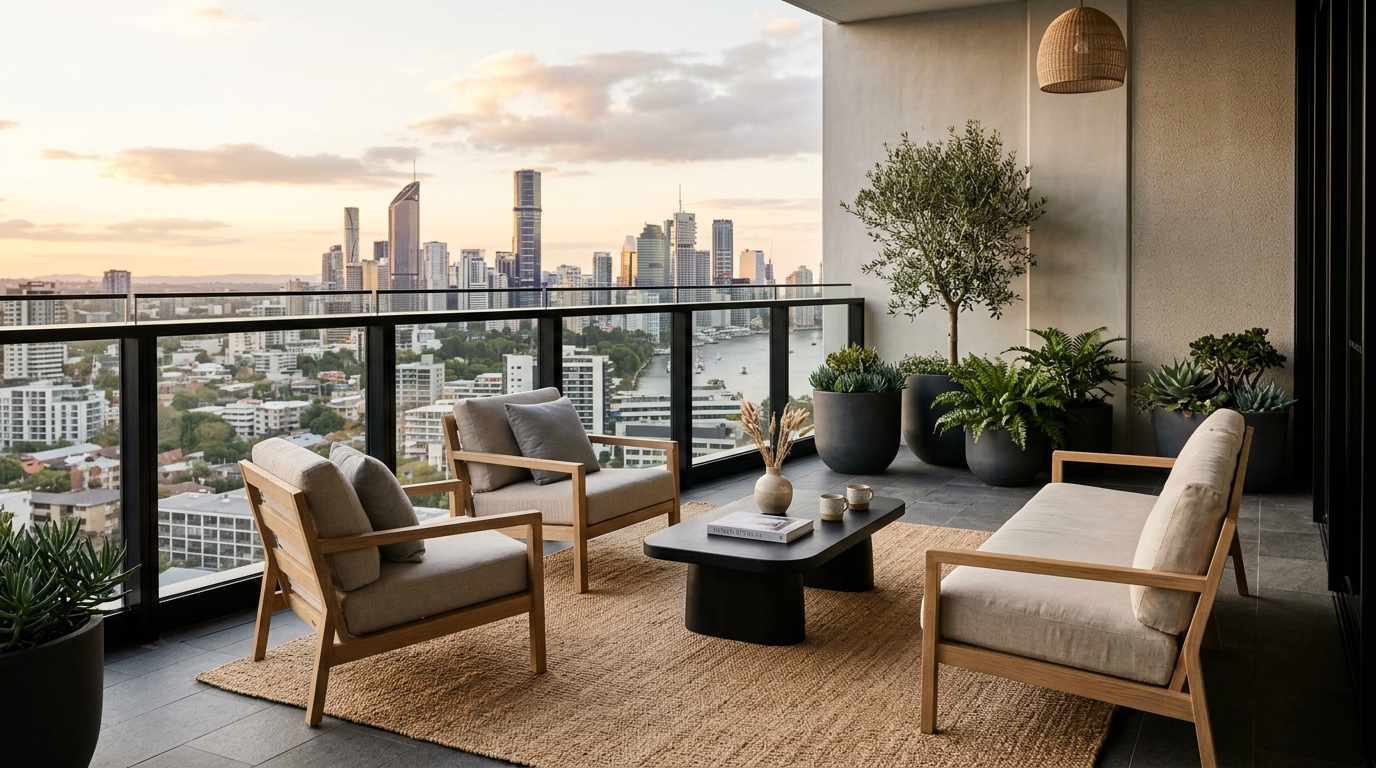
Design is a dance of clearances. One of the most frequent mistakes in small patio design is overcrowding the circulation path. To maintain a sense of ‘Quiet Luxury,’ you must respect the 36-inch standard walkway clearance. This ensures that the transition from the interior to the exterior feels fluid and intentional. Even in the tightest quarters, preserving a clear sightline from the doorway to the horizon is essential for visual breathing room. We often speak of ‘negative space’ in galleries, and the same principle applies here: what you leave empty is just as important as the furniture you place.
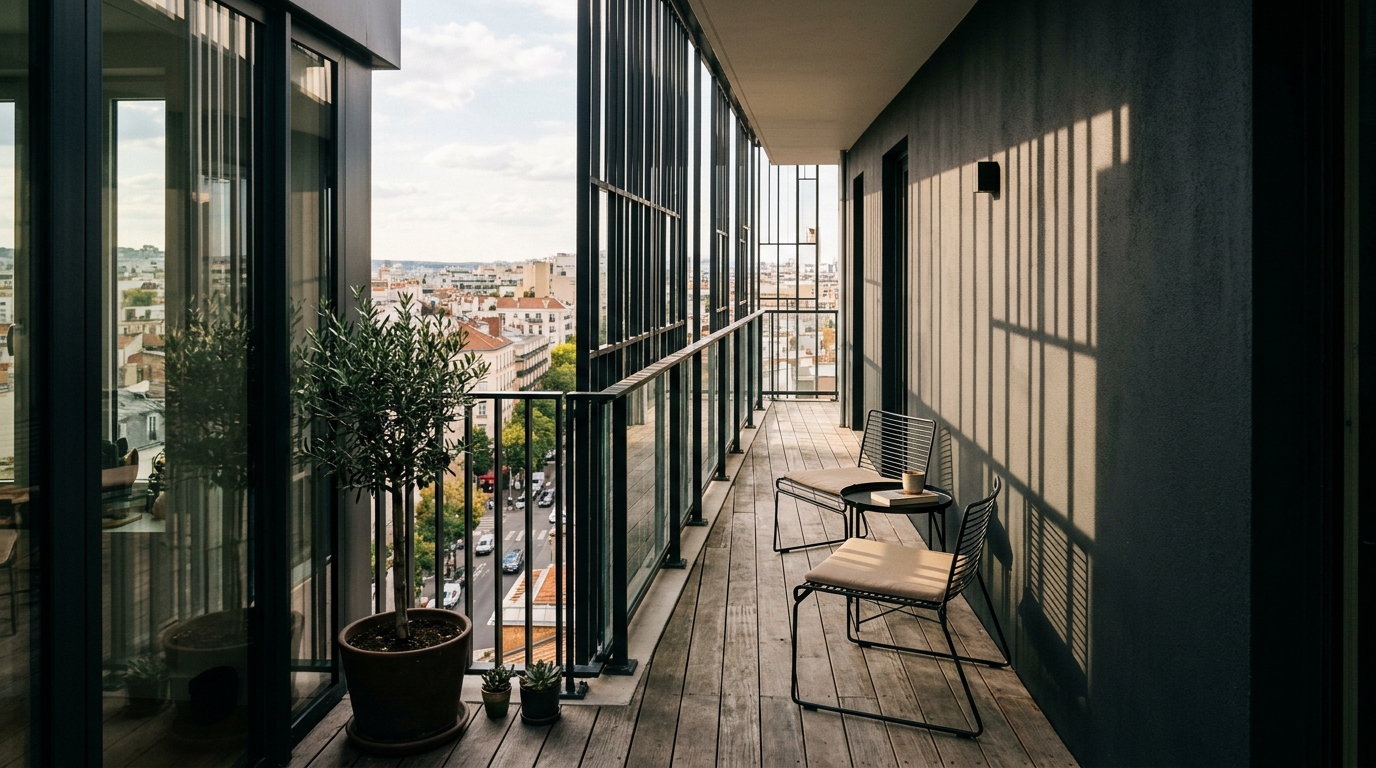
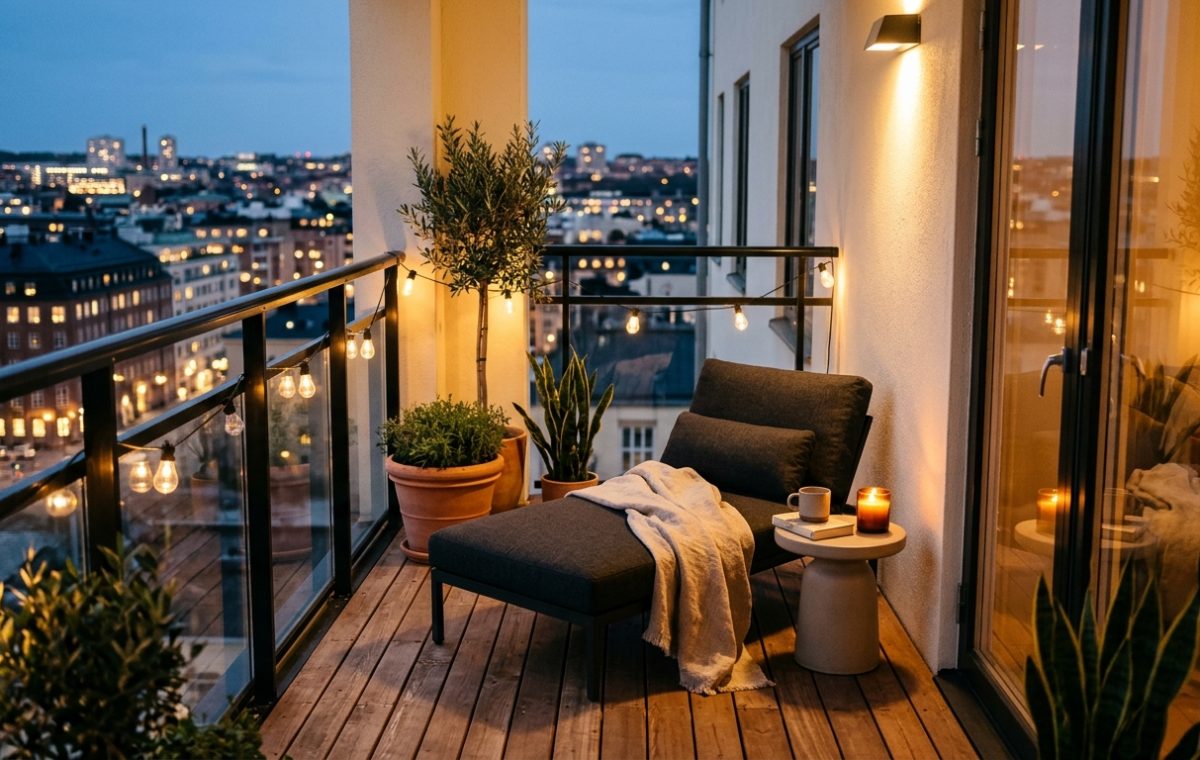
When selecting compact outdoor furniture, ergonomics should never be sacrificed for scale. An 18-inch coffee table reach—the distance between the edge of your seating and the center of your table—is the golden ratio for comfort. For dining, a 30-inch chair clearance allows for easy movement without hitting the balcony rail. By prioritizing a few high-quality, perfectly scaled pieces—like a low-slung lounge chair in a weather-resistant charcoal performance fabric—you create a sophisticated warm minimalist outdoor seating arrangement that invites lingering rather than a quick exit.
Innovative Layout Strategies for High-Impact Small Apartment Balcony Ideas
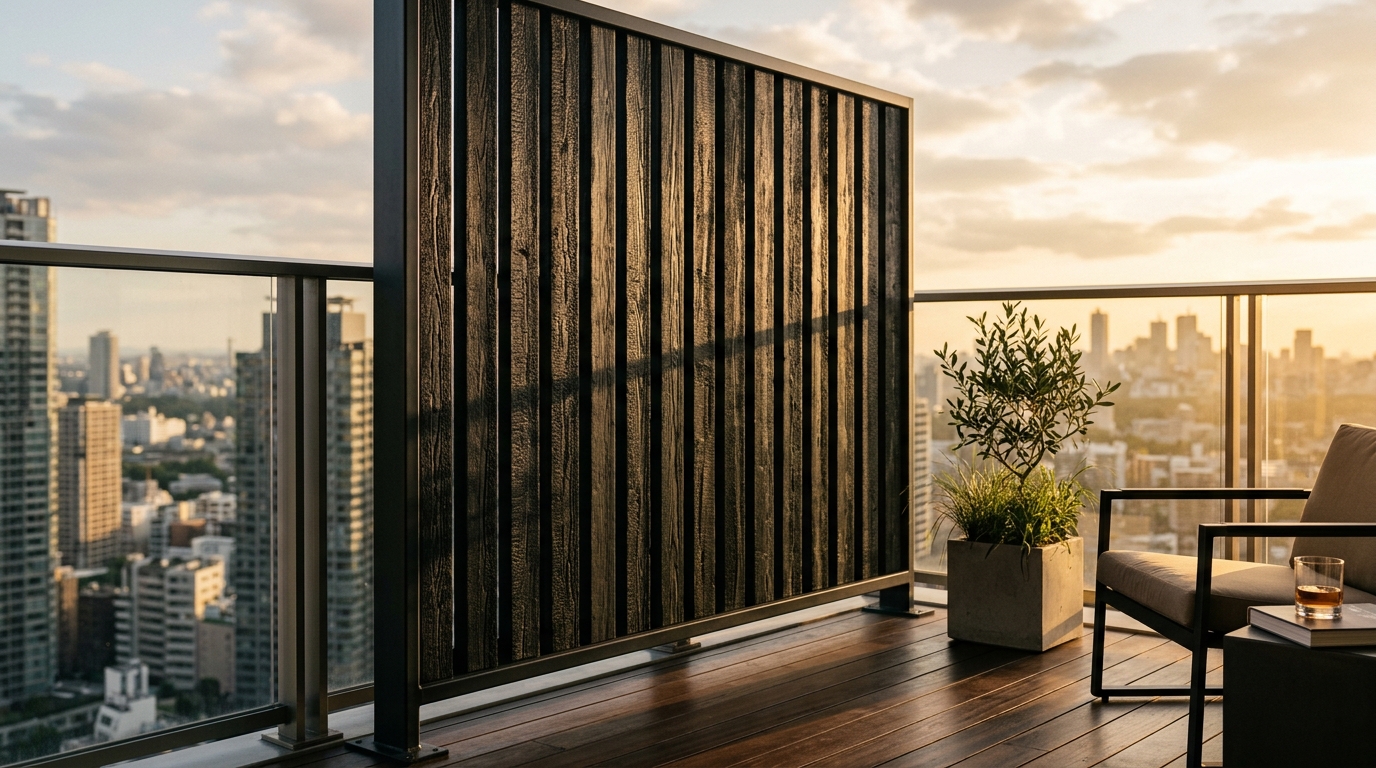
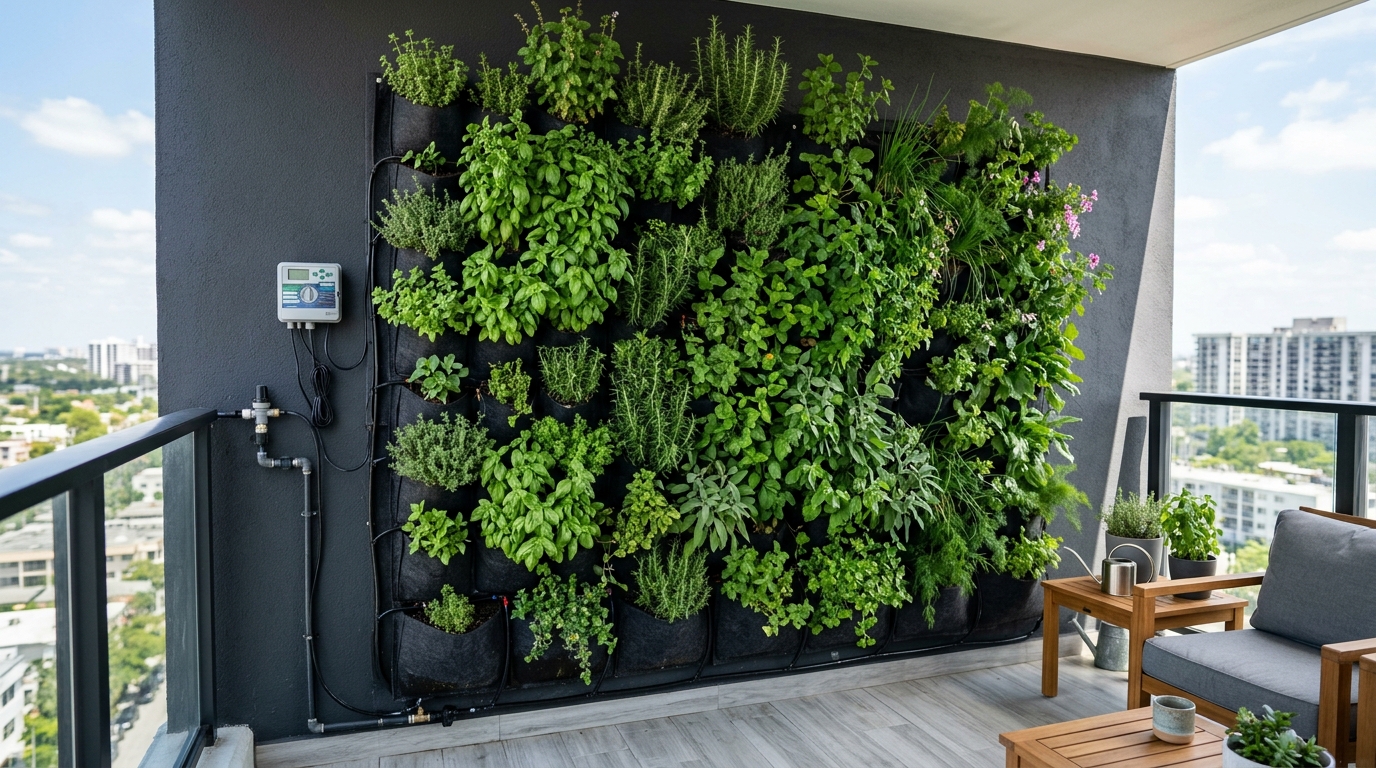
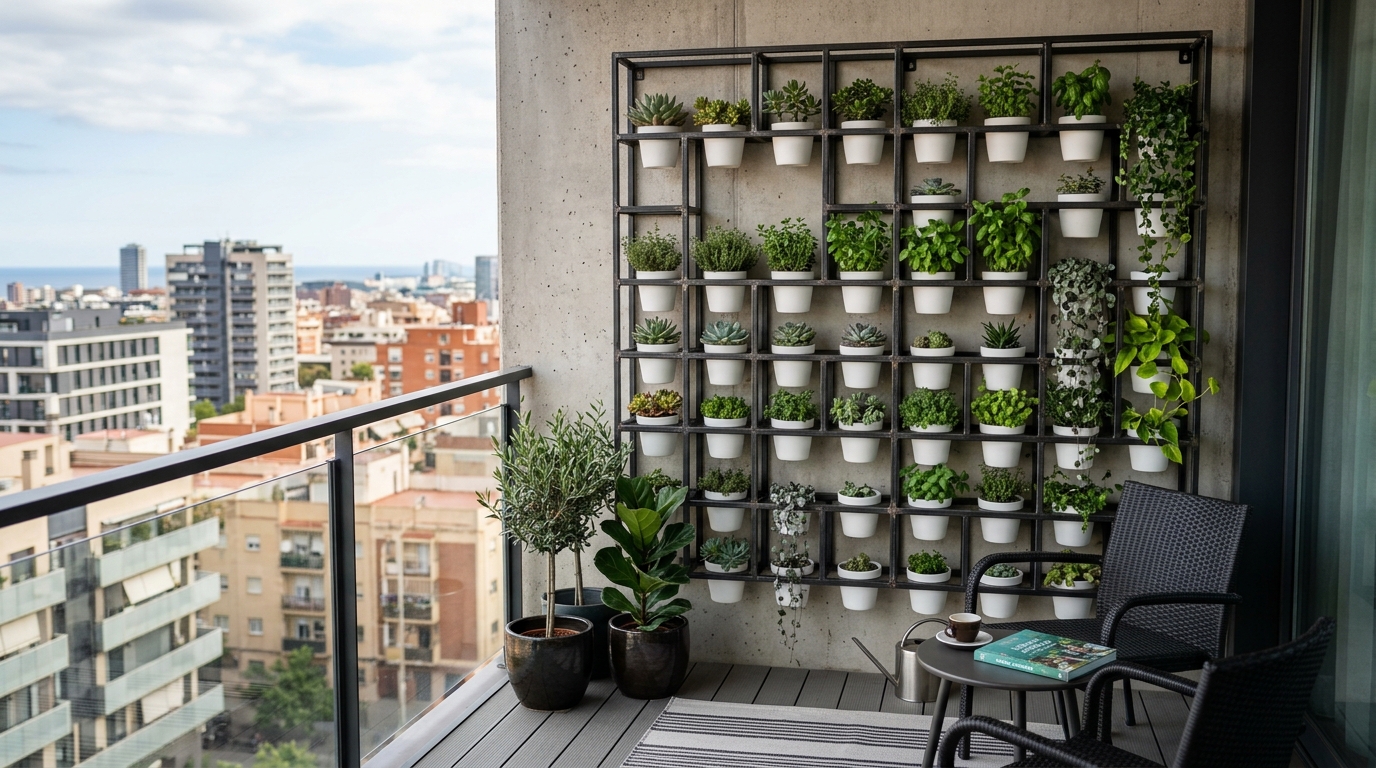
To master the layout, we must look upward and outward. Verticality is the secret weapon of the urban designer. Instead of cluttering the floor with small pots, look toward vertical gardening systems that utilize the wall as a living canvas. A custom-built trellis of fluted white oak or a simple blackened steel grid can support climbing jasmine or ivy, providing both a lush backdrop and essential privacy. This method of ‘green screening’ is one of the most effective small balcony privacy screen ideas, as it feels soft and organic rather than defensive and walled-off.

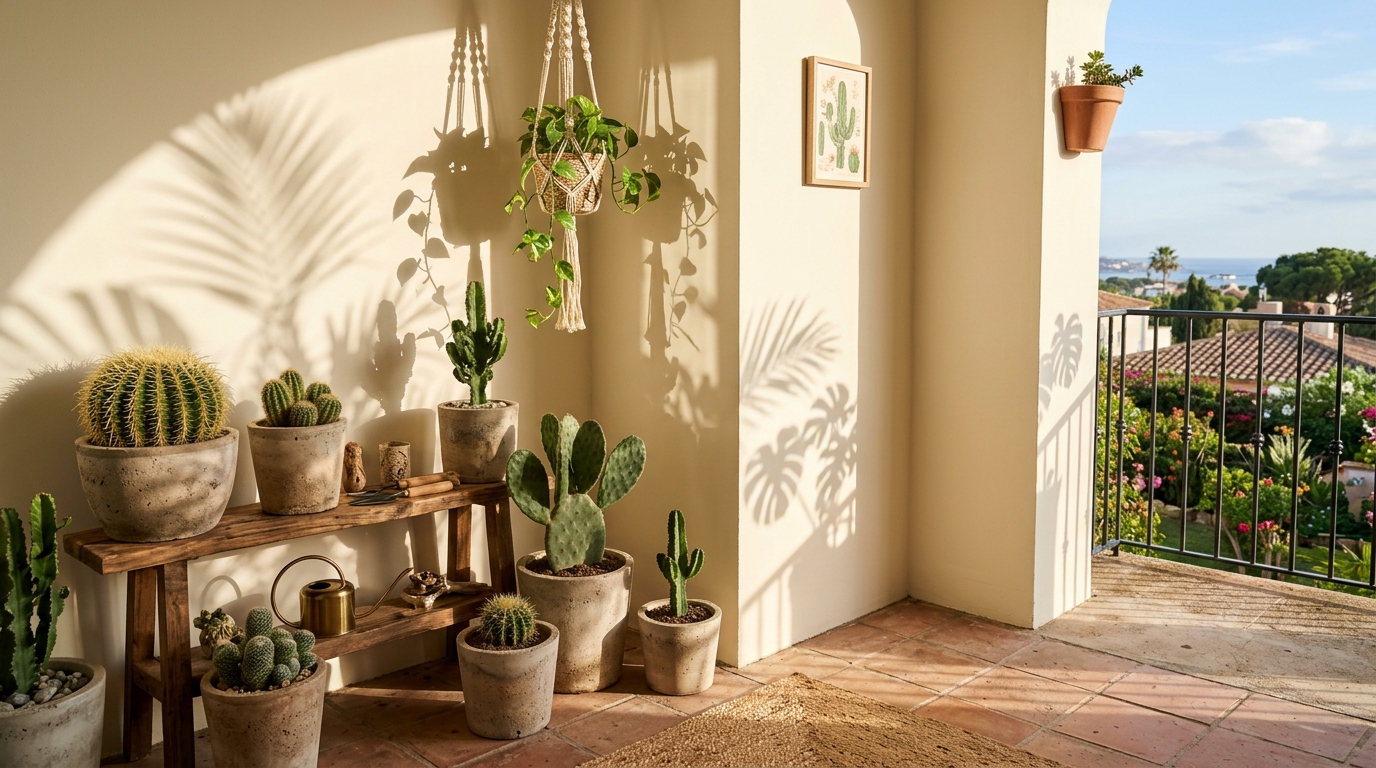
The organic modern balcony aesthetic 2025 is characterized by this fusion of hardscape and softscape. Imagine the contrast of a sleek, charcoal-toned zinc planter against the feathery texture of Mexican Feather Grass. The zinc brings a sharp, industrial precision, while the grass introduces movement and sound as it catches the wind. This layer of ‘sensory noise’—the rustle of plants, the coolness of stone, the scent of cedar—is what elevates a balcony from a place you look at to a place you experience.
The Nocturnal Edit: A Masterclass in 2700K Illumination
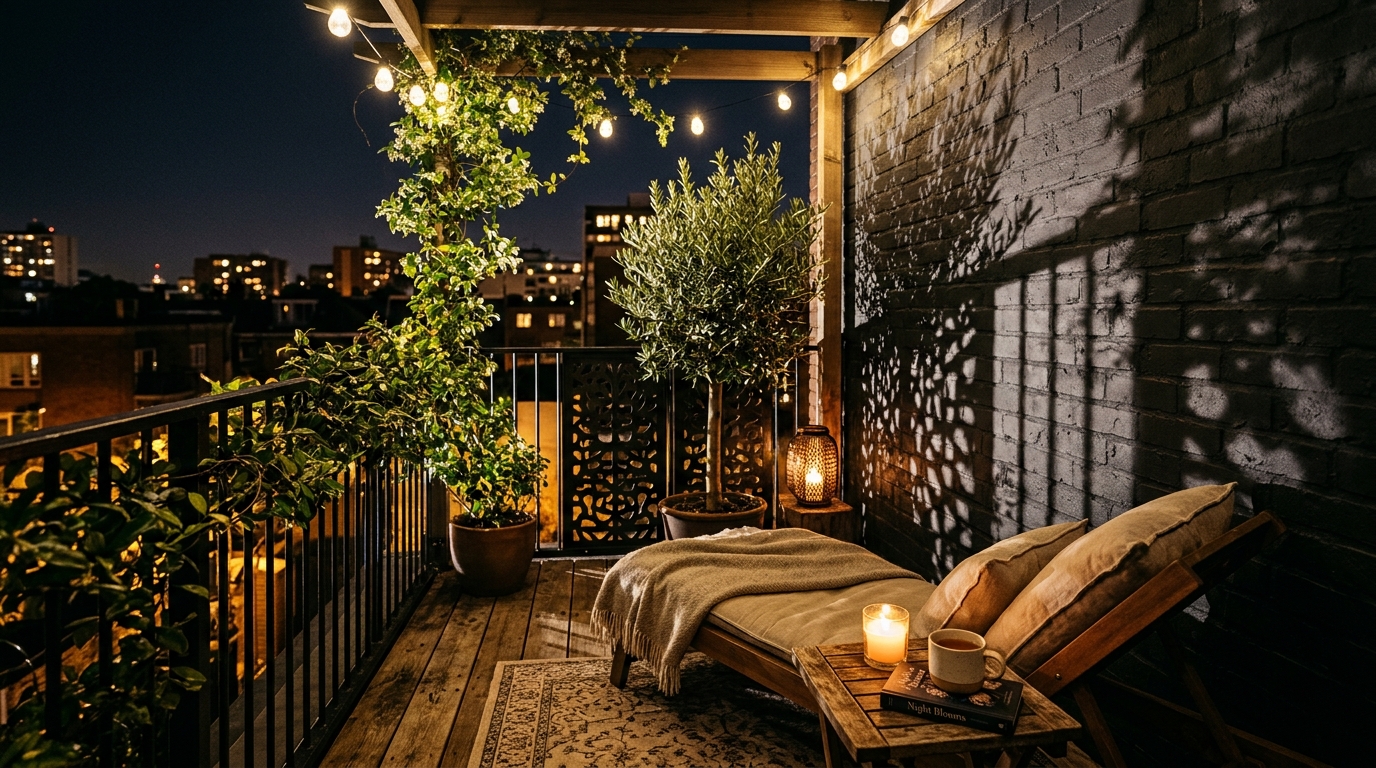
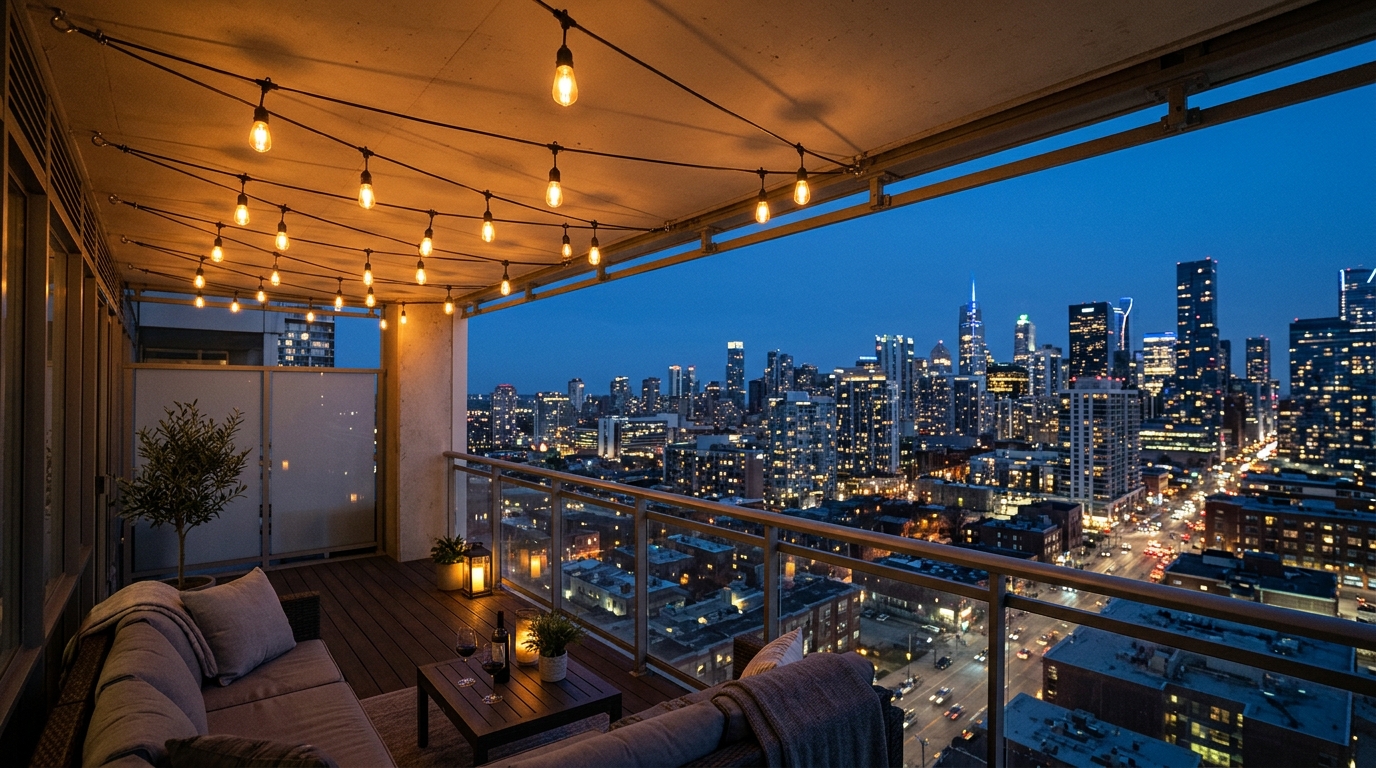
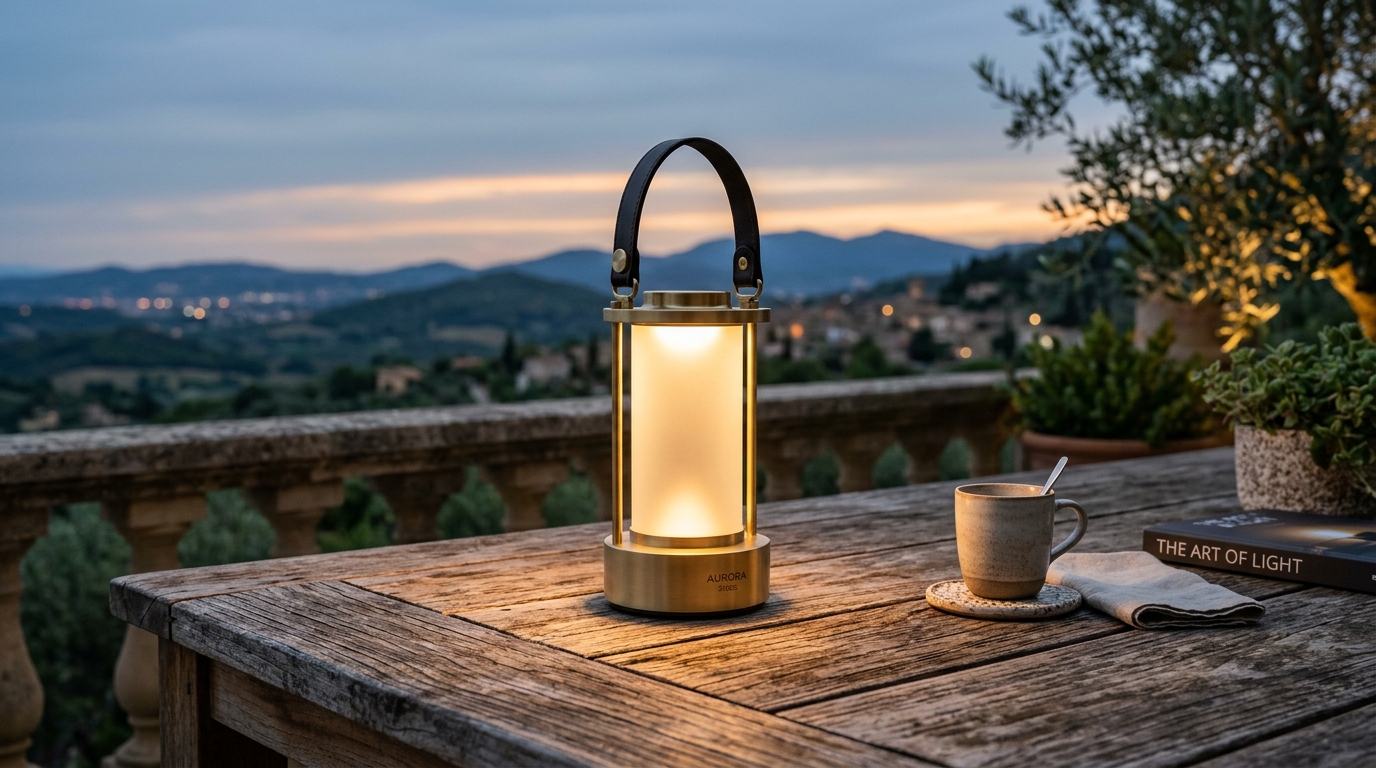
As the sun sets, the balcony undergoes its most significant transformation. This is the ‘Nocturnal Edit,’ where lighting becomes the primary designer. Most outdoor lighting is far too cool and aggressive, casting a sterile, blue-ish tint that kills the mood. To achieve that coveted high-end hospitality glow, you must specify 2700K ambient illumination. At 2700K, the light mimics the warmth of a candle or a setting sun, creating an inviting, golden atmosphere that bridges the gap between the indoors and the night sky.
For a truly professional modern balcony string lights layout, avoid the sagging ‘carnival’ look. Instead, tension the wires tightly along the architectural lines of the ceiling or railing, or better yet, use discreet, rechargeable LED lanterns with a high CRI (Color Rendering Index) of 90+. A high CRI ensures that the colors of your textiles and plants remain vibrant and true under artificial light. Layering your light is equally vital: a soft wash of light at floor level, a dimmable task light for reading, and a subtle spotlight on a focal plant. This ‘shadow play’ adds a cinematic dimension to the space, making it feel significantly larger and more luxurious.
The Art of Layered Textiles
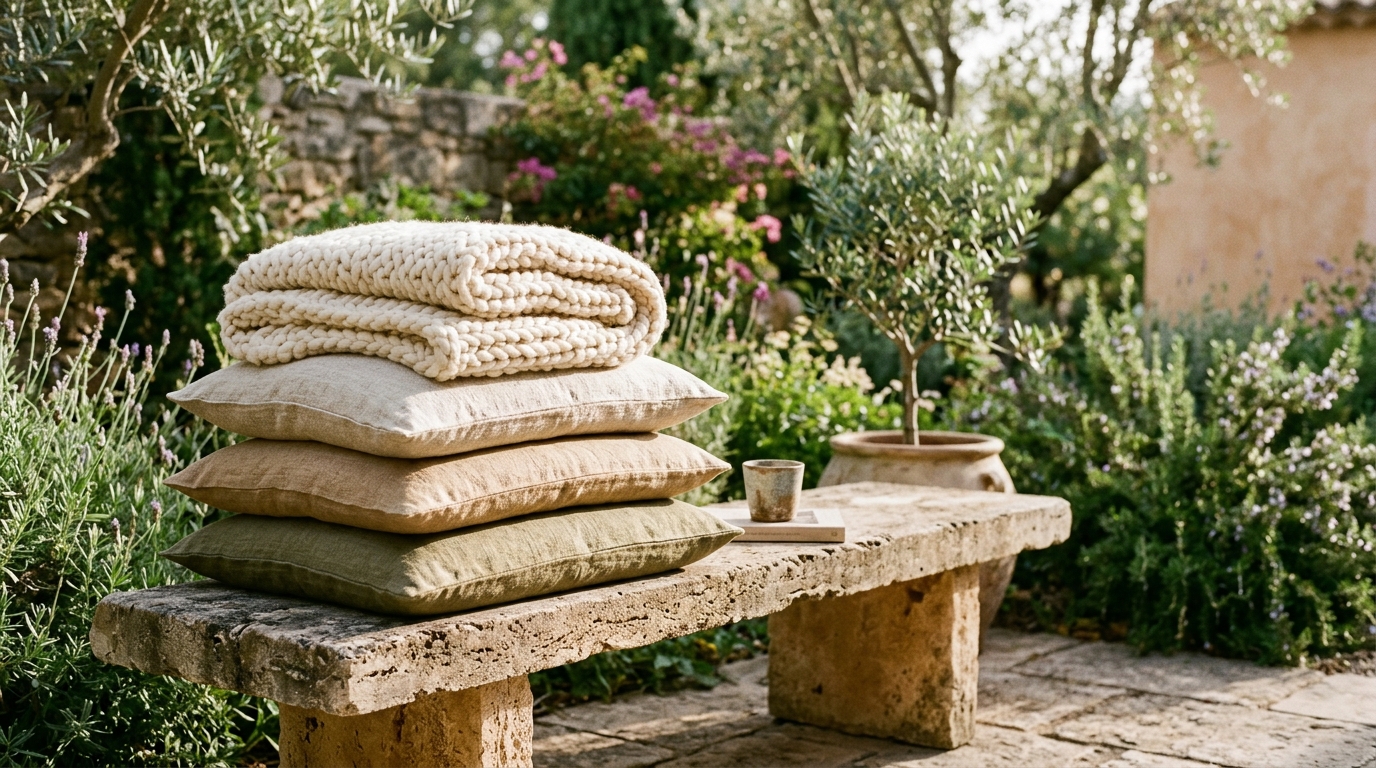
The final layer of the sensory nook is the textile edit. In the past, outdoor fabrics felt like plastic; today, we have access to high-performance acrylics and recycled polyesters that mimic the hand-feel of Belgian linen and heavy-weight wool. To make a balcony feel like a seamless indoor extension, carry your interior color story outside through rugs and throws. A flat-weave rug in a neutral oat or stone tone can define the ‘living’ zone of the balcony, providing a soft tactile transition for bare feet.
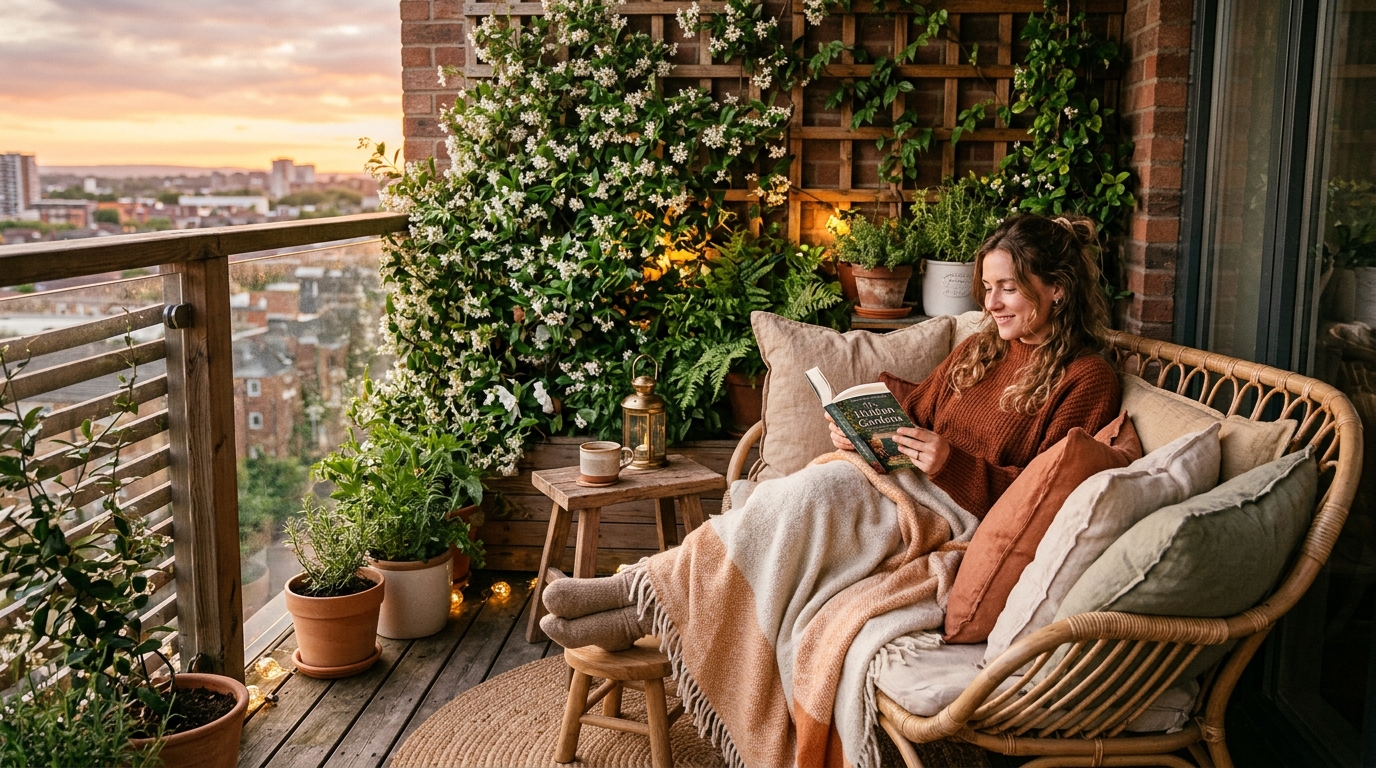
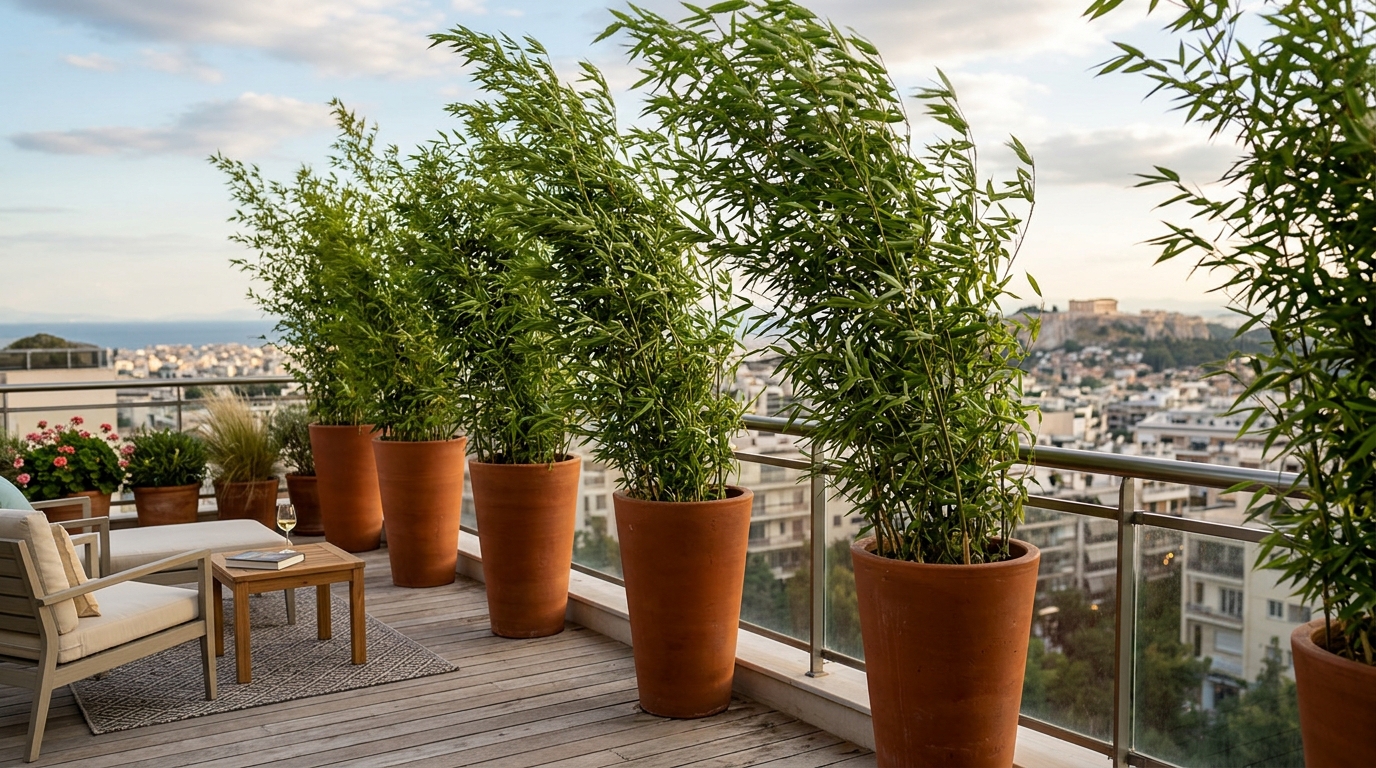
When searching for the best plants for small apartment balcony privacy, consider those that offer year-round structure. Clipped boxwoods in oversized terracotta pots provide a classic, architectural weight, while clumping bamboo (like Fargesia) offers a modern, airy screen that doesn’t feel heavy. These botanical choices, when paired with compact weatherproof furniture for urban patios, create a private sanctuary that stands up to the elements without losing its aesthetic edge. The key is consistency: stick to a restrained palette of three main materials and two primary colors to keep the visual narrative tight and focused.
Architectural Specification & Material Matrix
Curated tactile palette, spatial dimensions, and atmospheric lighting index for this design scheme.
Ultimately, the most successful small apartment balcony ideas are those that prioritize the human experience over mere decoration. By grounding our choices in real architectural clearances, authentic materials, and a sophisticated lighting temperature, we create more than just a place to sit; we create a threshold that invites the soul to breathe. As urban density increases, these small, private apertures to the sky become our most precious architectural assets—reminders that even within a concrete grid, there is always room for the organic, the tactile, and the beautifully illuminated.
Editorial Silo • Recommended Architecture Studies
- Ergonomic Mastery: Functional & Space-Saving Enclose Screened Porch Decor Ideas for Modern Living — Archival Design Case Study
- The Vertical Architectural Edit: 12 Structural Rules to Master Small Apartment Balcony Proportions — Archival Design Case Study
Architectural Inspiration Lookbook
A high-resolution study in spatial proportions, tactile materiality, and light choreography curated for enduring modern living.

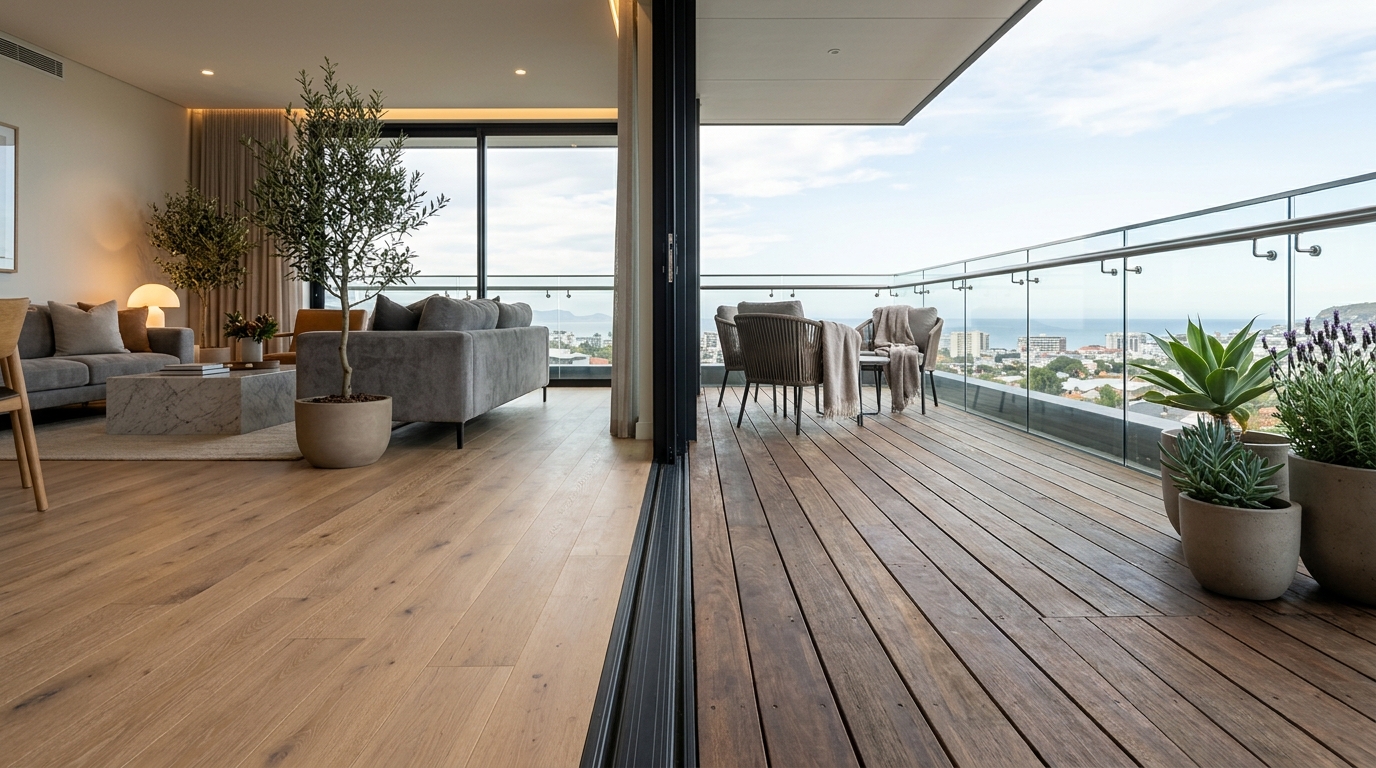
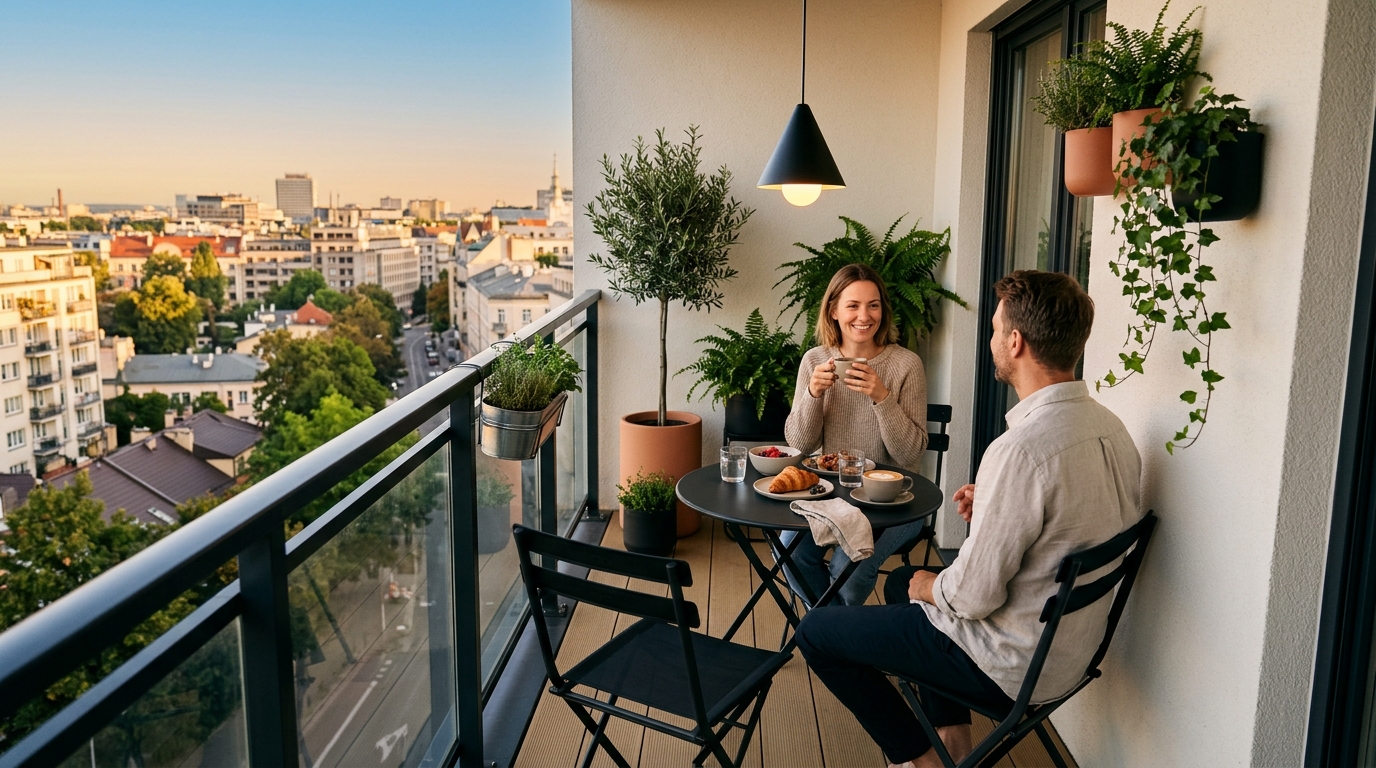
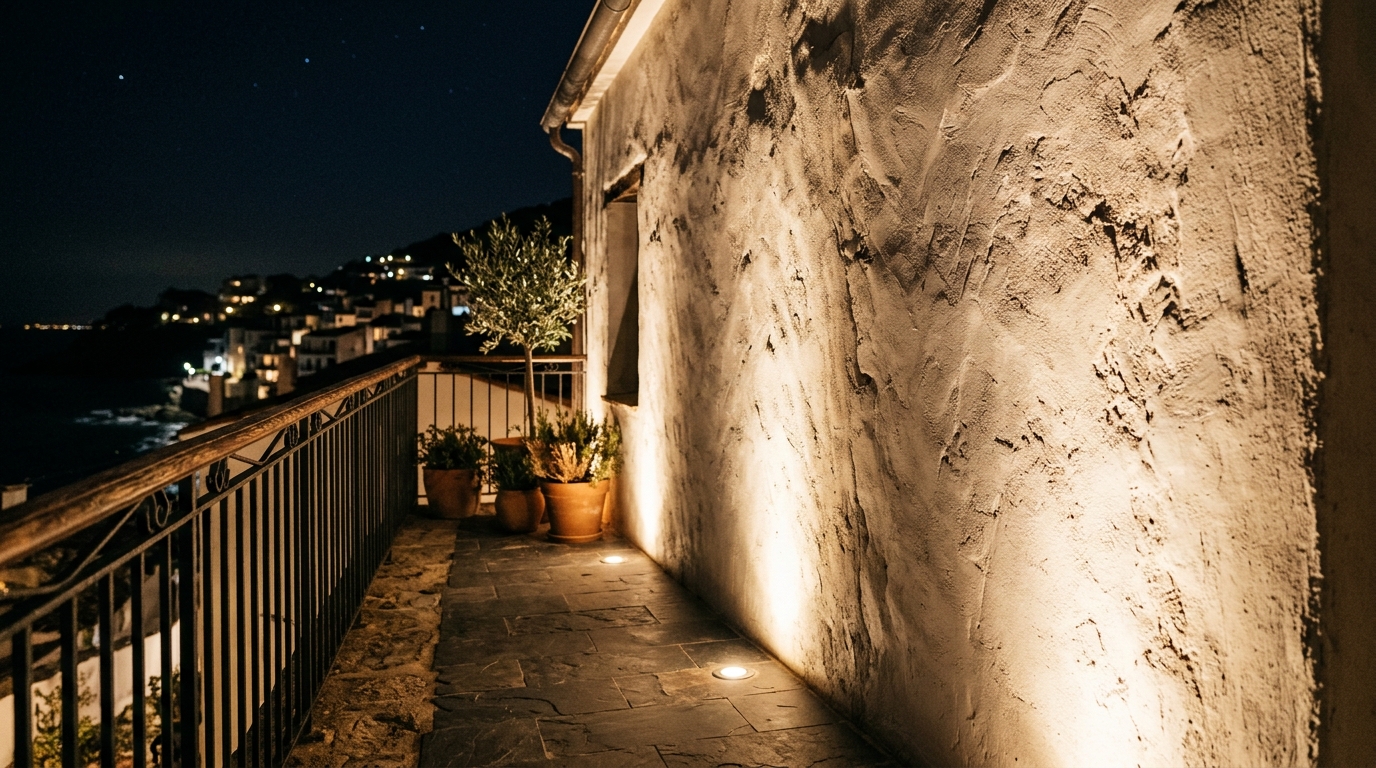
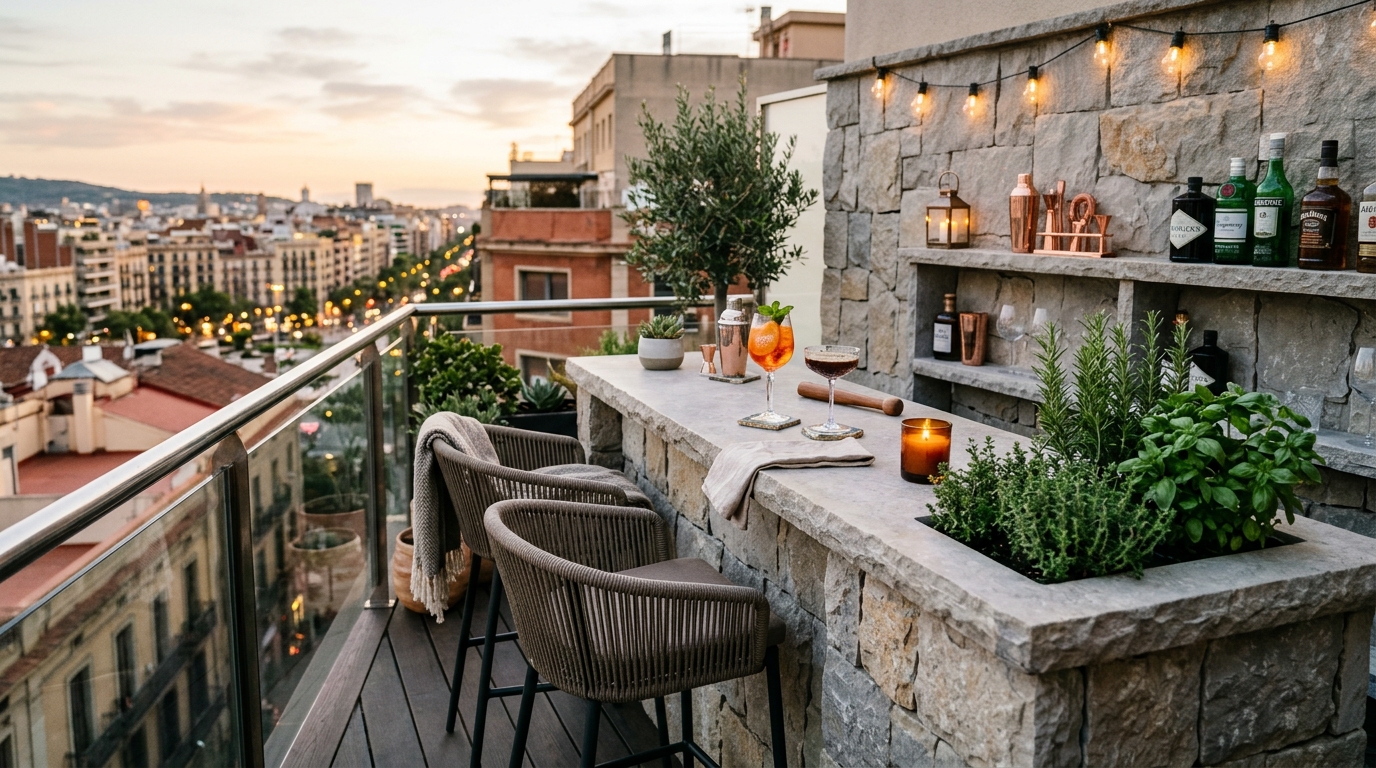
Curated Visual Lookbook
Design Gallery & Spatial Studies
A visual curation of architectural arrangements, lighting concepts, and material palettes featured in this space.