There is a specific kind of architectural tension found in the modern urban dwelling—a friction between the desire for expansive living and the rigid…
There is a specific kind of architectural tension found in the modern urban dwelling—a friction between the desire for expansive living and the rigid reality of a forty-square-foot concrete slab. For those of us navigating the constraints of metropolitan density, the search for small apartment balcony ideas often begins with a compromise. We assume we must choose between the bulky comfort of a traditional lounge chair or the spindly, bone-aching aesthetic of a bistro set. But the ‘Small Apartment Space Paradox’ is being solved not through subtraction, but through high-performance engineering and the rise of ‘Quiet Luxury’ in the outdoor sector.
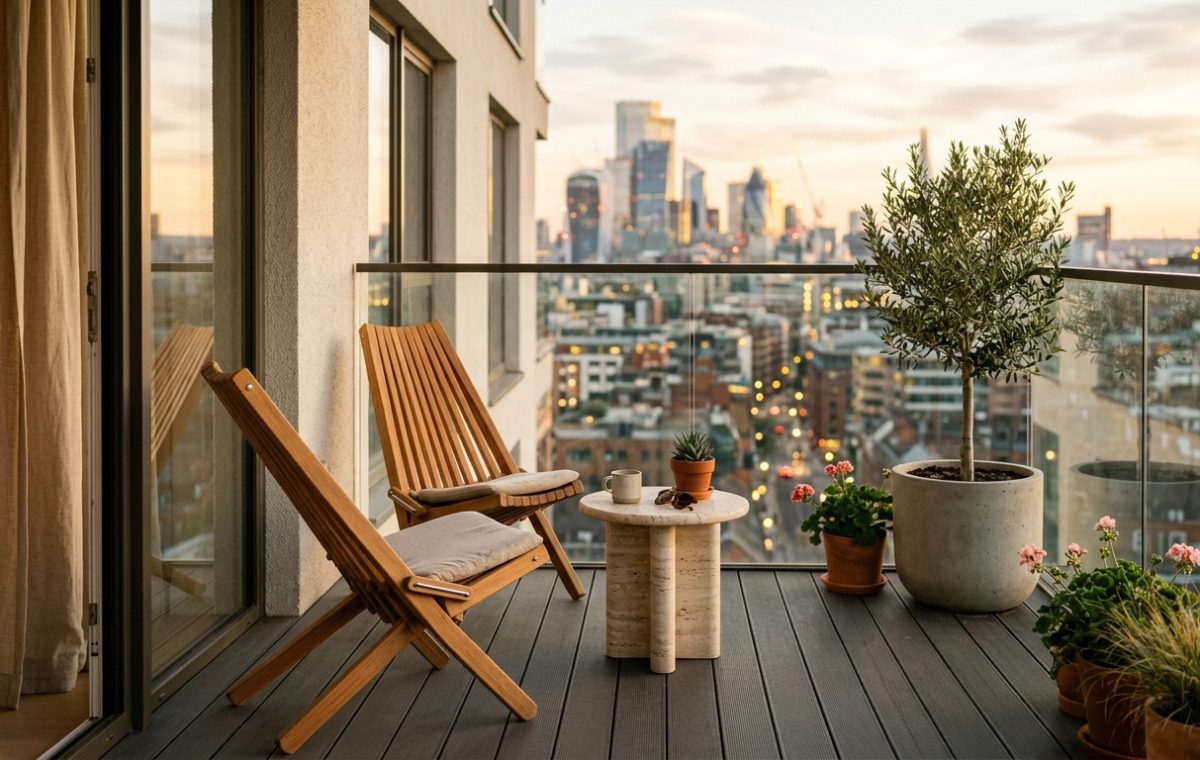
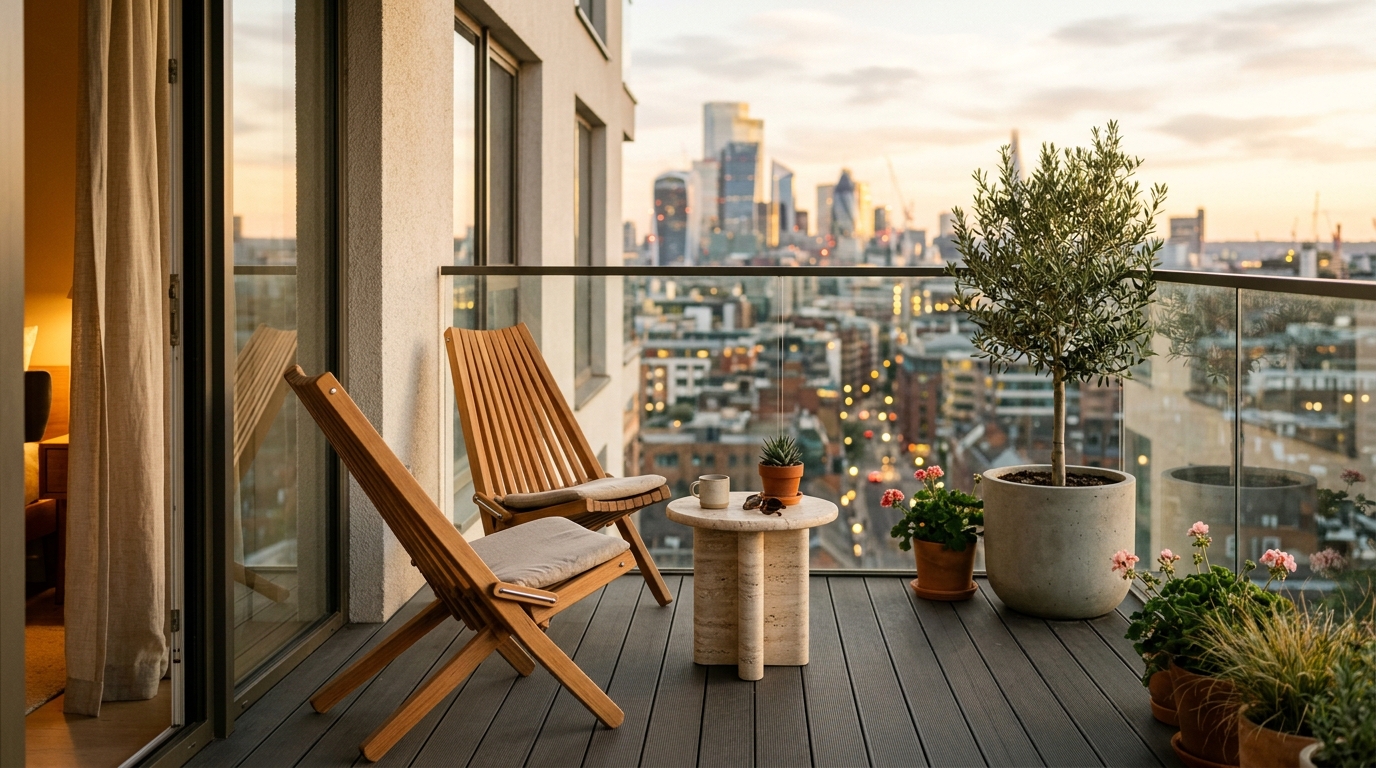
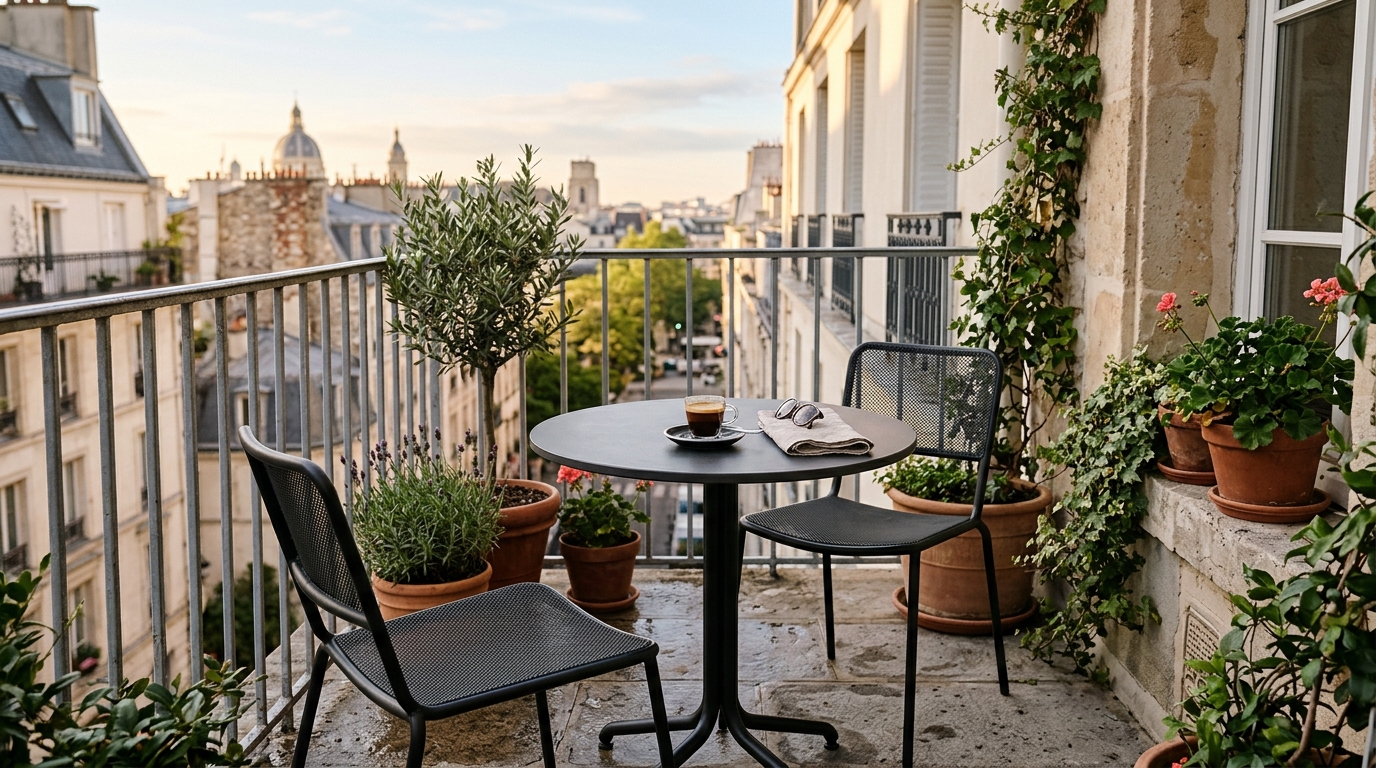
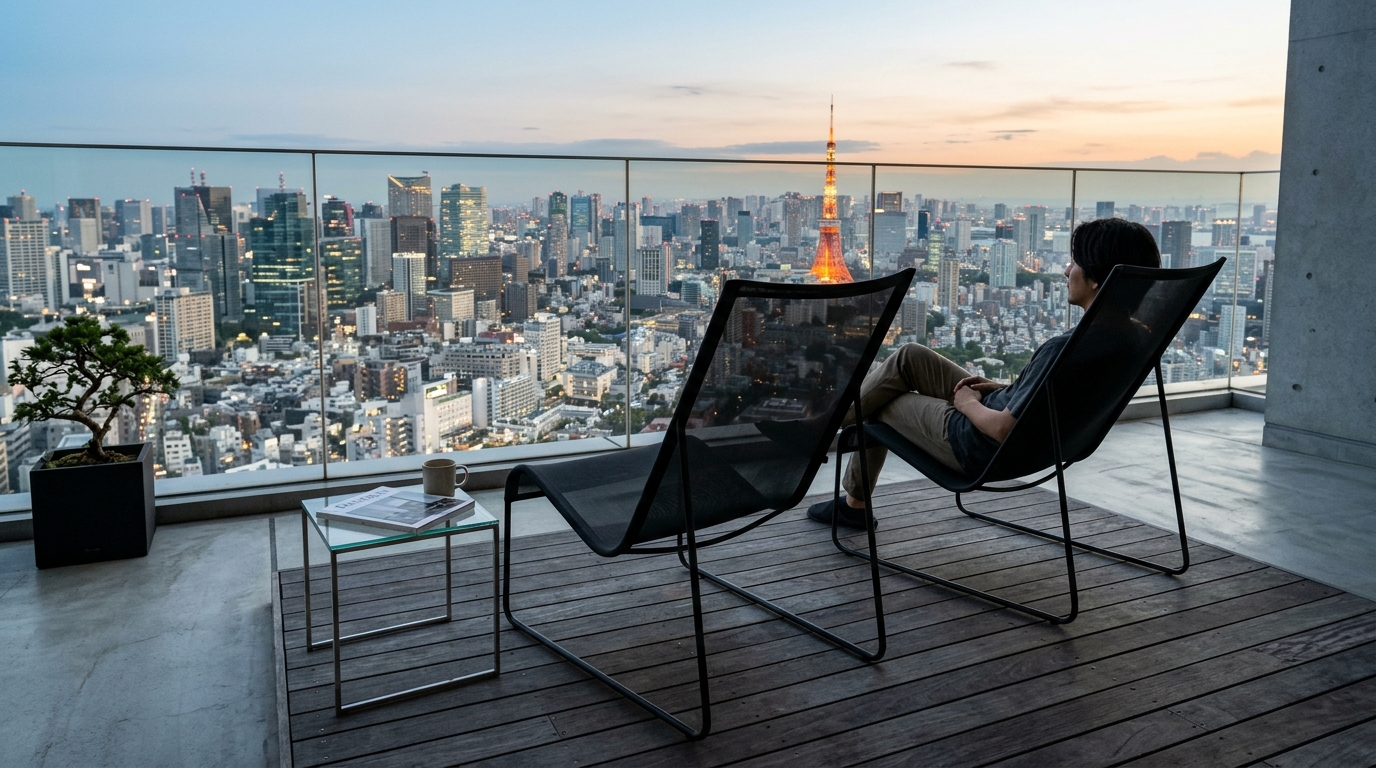
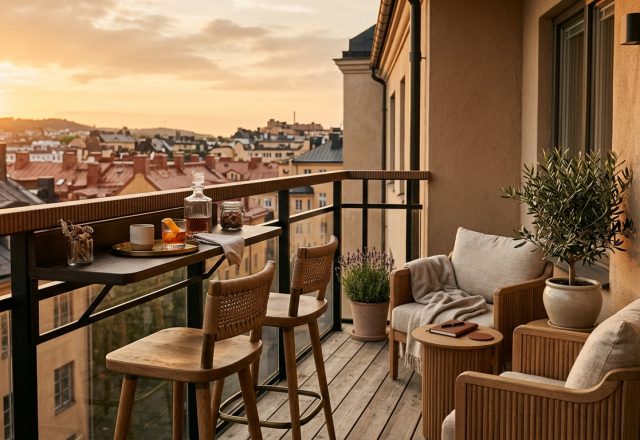
High-performance small apartment balcony ideas featuring ergonomic teak chairs and panoramic city views during golden hour.
When we discuss the balcony as a high-performance zone, we are moving beyond simple decoration. We are talking about spatial intelligence. A balcony is no longer just a place to store a bicycle or a stray potting mix bag; it is a primary living area that demands the same ergonomic rigor as a home office or a primary suite. The current shift toward organic modernism has introduced a generation of patio chairs that prioritize lumbar health without devouring the precious negative space that allows a small area to breathe.
The Ergonomics of Urban Sanctuary: Small Balcony Seating Ideas
Ergonomics in a small footprint is a game of millimeters. Most standard outdoor furniture is designed for the sprawling suburban deck, featuring deep seat depths of 24 inches or more that effectively swallow a narrow balcony whole. To maintain a functional narrow balcony furniture layout, we must look for chairs with a seat depth of 18 to 20 inches and a backrest angle that supports an upright, conversational posture. This is the ‘vanishing’ furniture philosophy—pieces that provide a full-scale comfort experience while occupying a minimal visual and physical footprint.
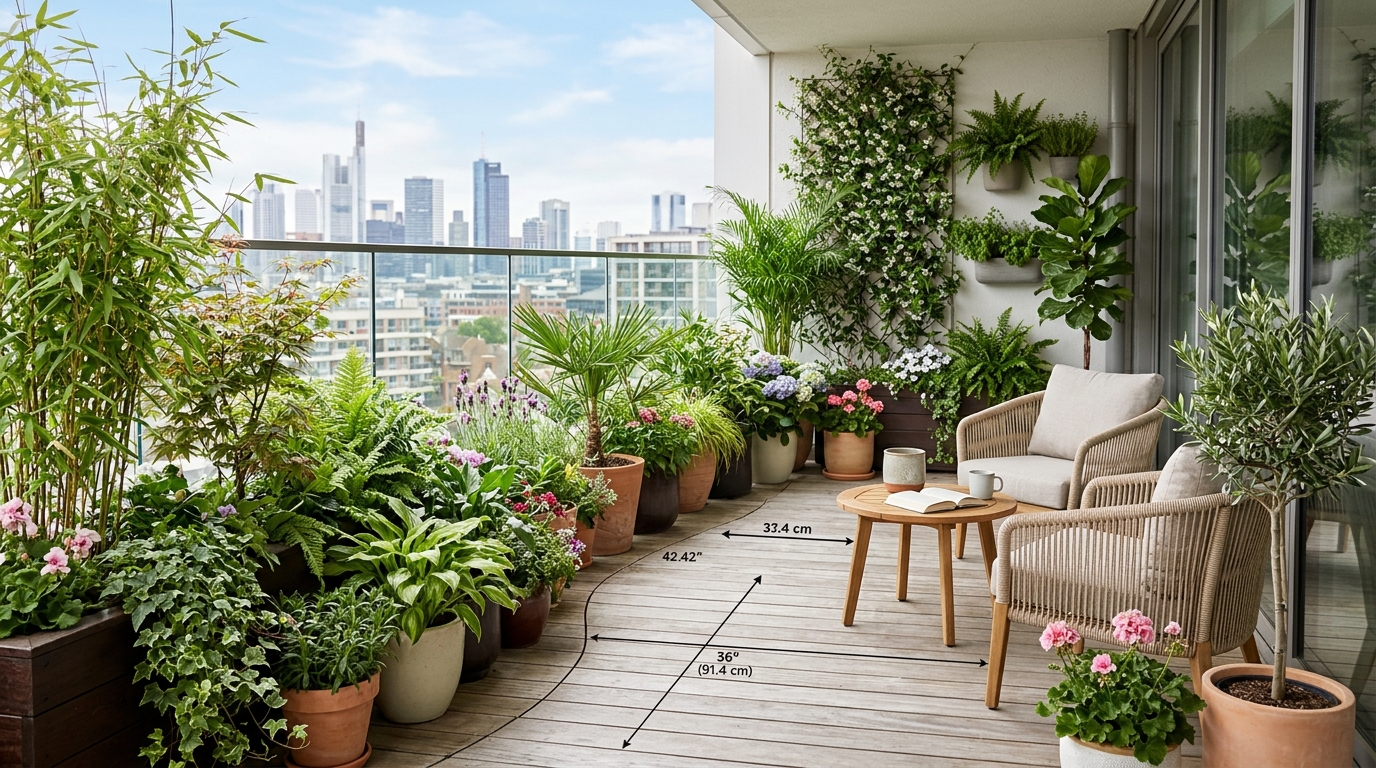
High-performance seating for a small balcony decor scheme often utilizes tensioned textiles like Batyline or marine-grade rope weaves. These materials offer the ‘give’ required for long-duration seating—ideal for those three-hour sunset cocktails—without the need for thick, moisture-trapping cushions. When the chair itself acts as a suspension system, you eliminate the bulk, allowing for a 36-inch standard walkway clearance even on the tightest terraces. This movement toward streamlined, high-tension design is what defines the ‘Organic Modern’ aesthetic currently dominating architectural circles.
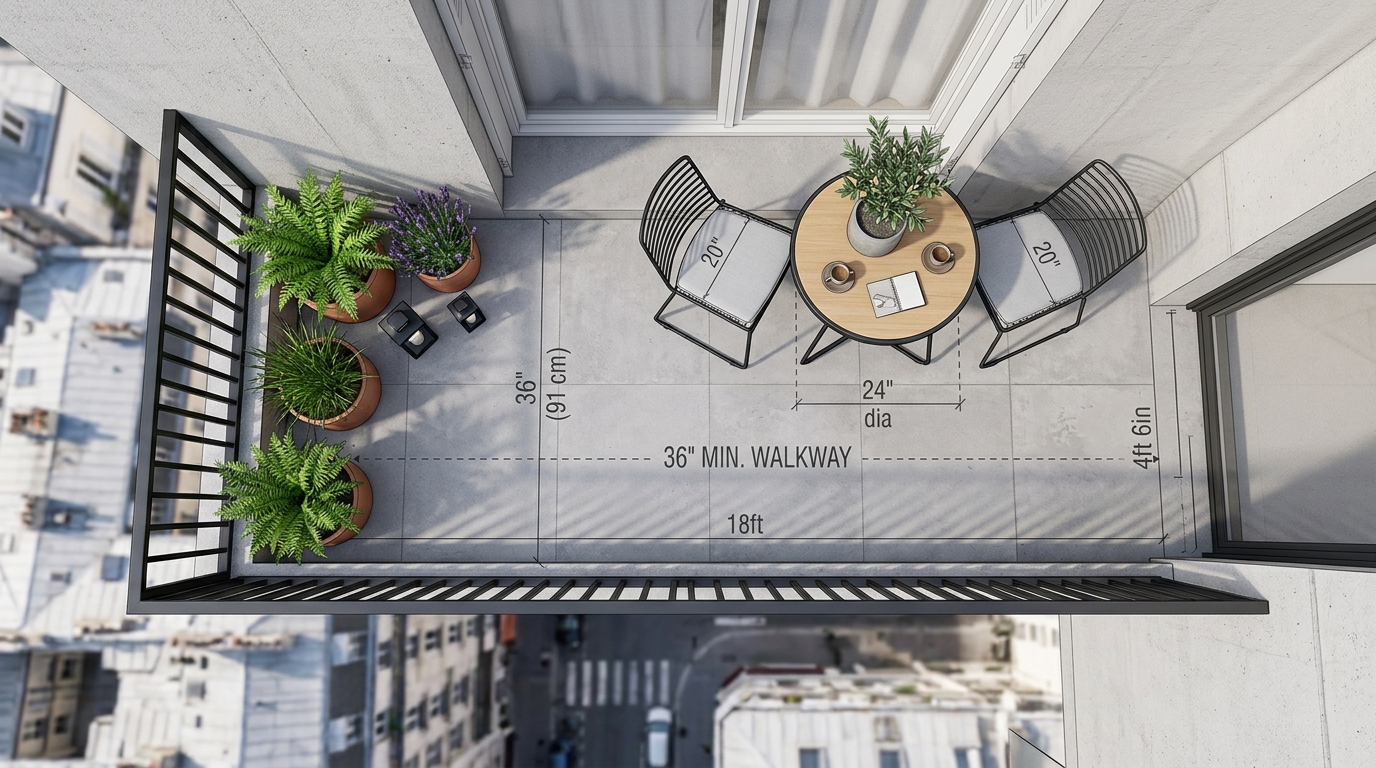
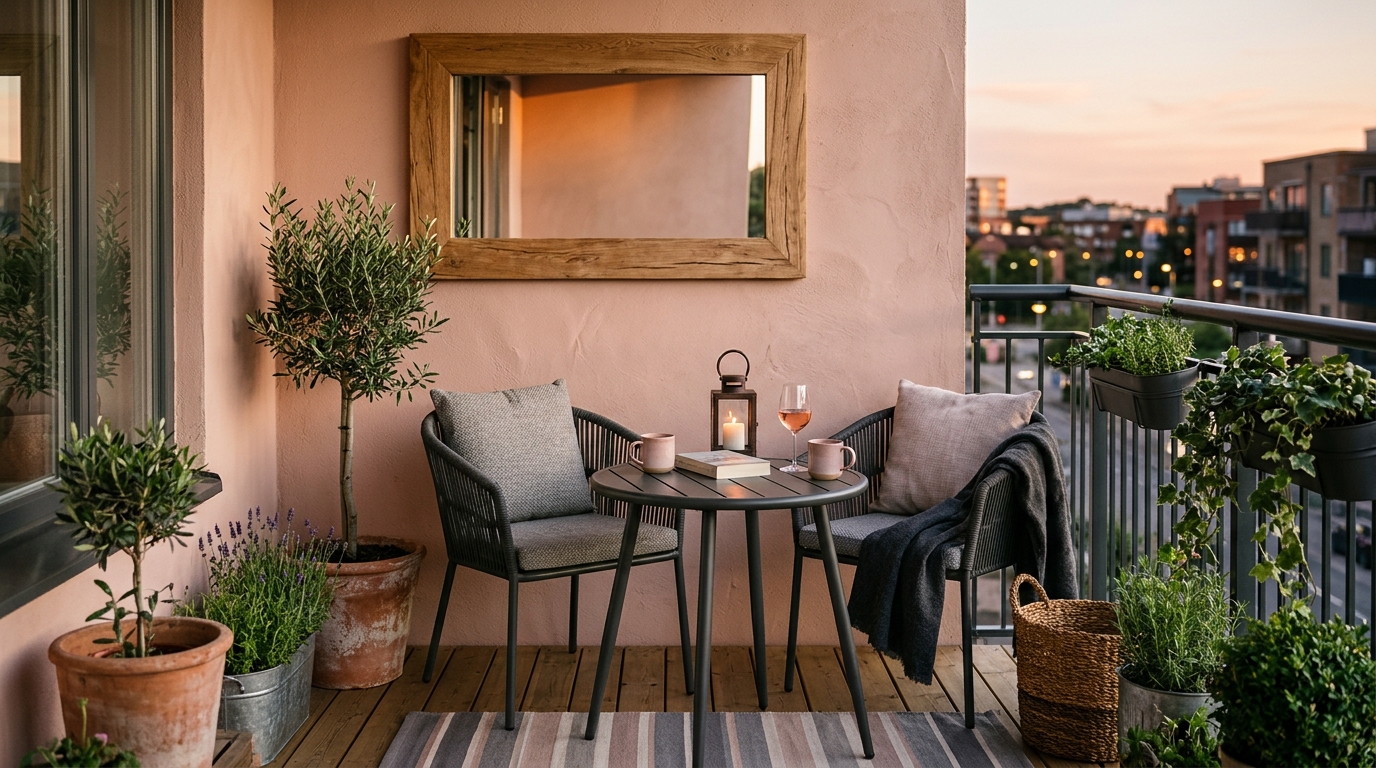
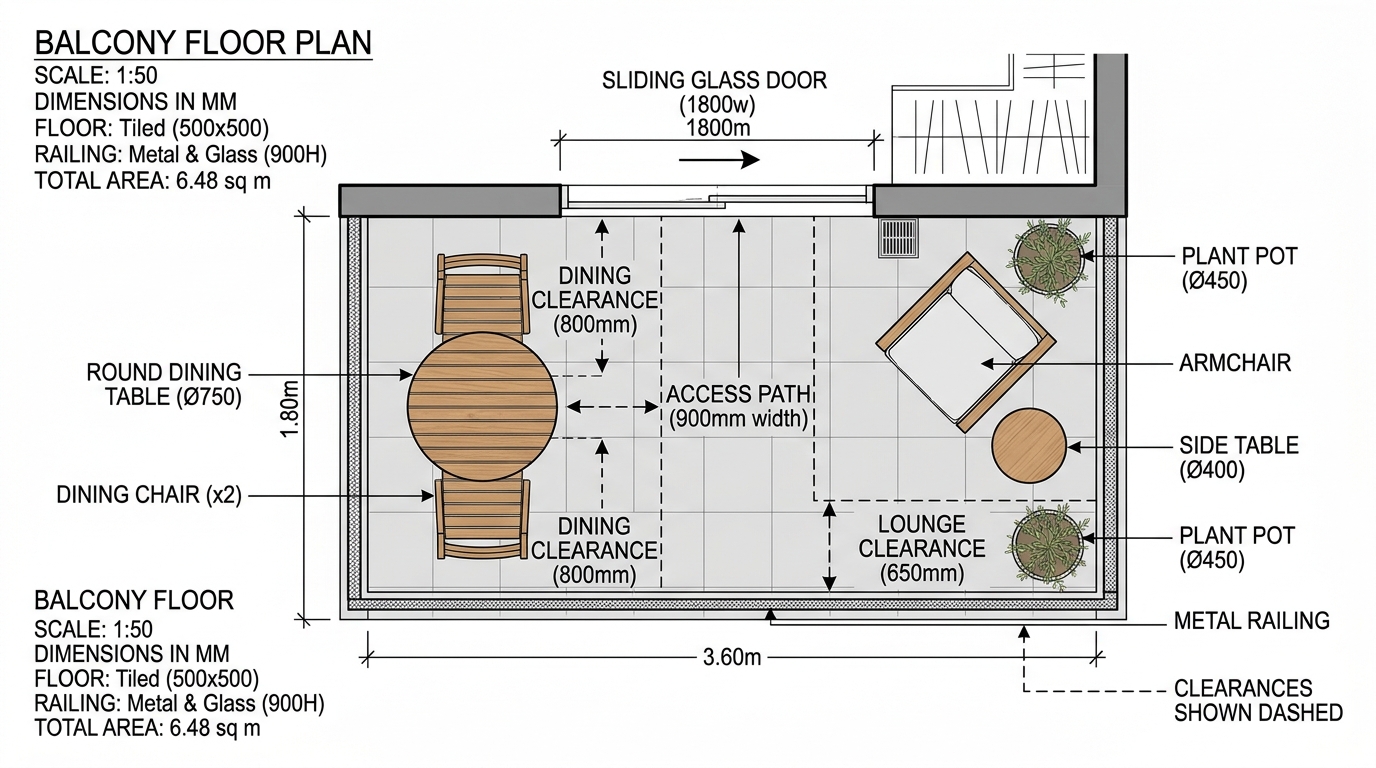
Architectural layout of a narrow balcony showing 36-inch walkway clearances and a compact weather-resistant bistro set.
The Rise of the ‘Vanishing’ Designer Chair
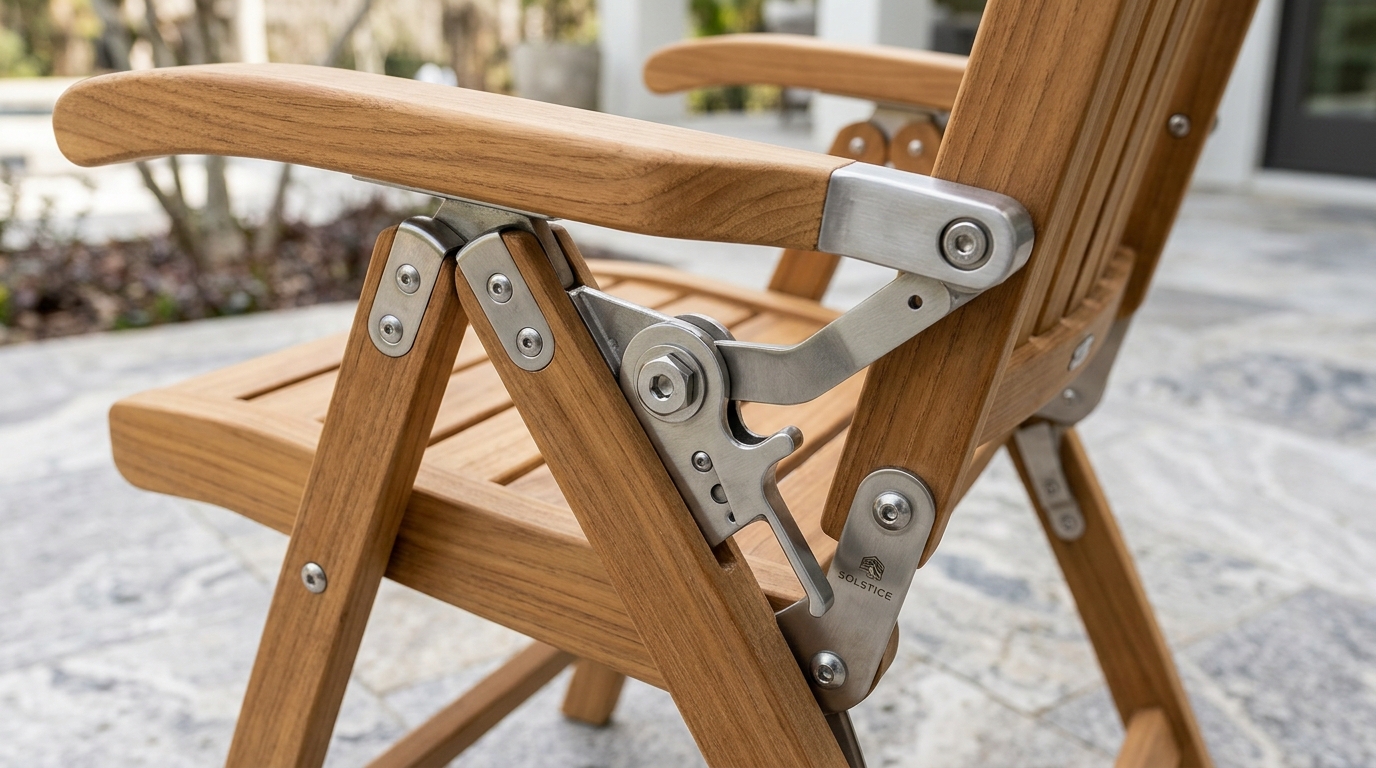
The term ‘foldable’ used to be an insult in the design world, synonymous with flimsy plastic or rusting metal. Today, however, designer foldable designer patio chairs are being crafted from sustainably harvested Grade-A teak and powder-coated aerospace-grade aluminum. These pieces are engineered with precision-machined joints that glide rather than clatter. They are the ultimate solution for the ‘space paradox’: they provide a high-end seating experience when needed and tuck away into a 4-inch profile when the space is required for movement or maintenance.
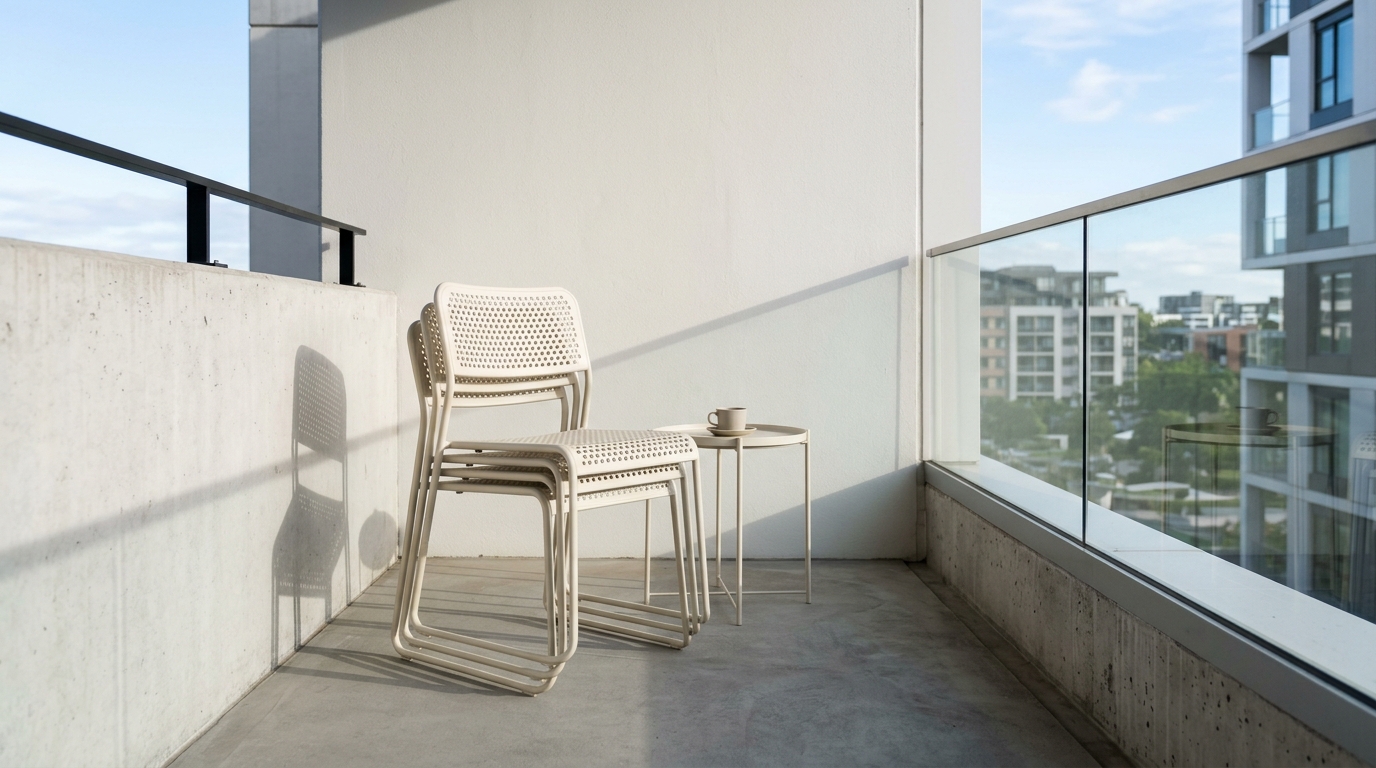
Stackability is another frontier in apartment balcony solutions. We are seeing a resurgence of mid-century Italian silhouettes—think the perforated metal work of EMU or the fluid lines of Magis—reimagined for 2026. These chairs don’t just stack; they nest. This nesting capability is crucial for residents who want to keep a set of four chairs for guests but only need two for daily coffee rituals. By stacking the excess seating against a wall painted in a soft, reflective hue like Benjamin Moore Swiss Coffee, the furniture becomes a sculptural element rather than a cluttered obstacle.
Tactile Grounding and Material Integrity
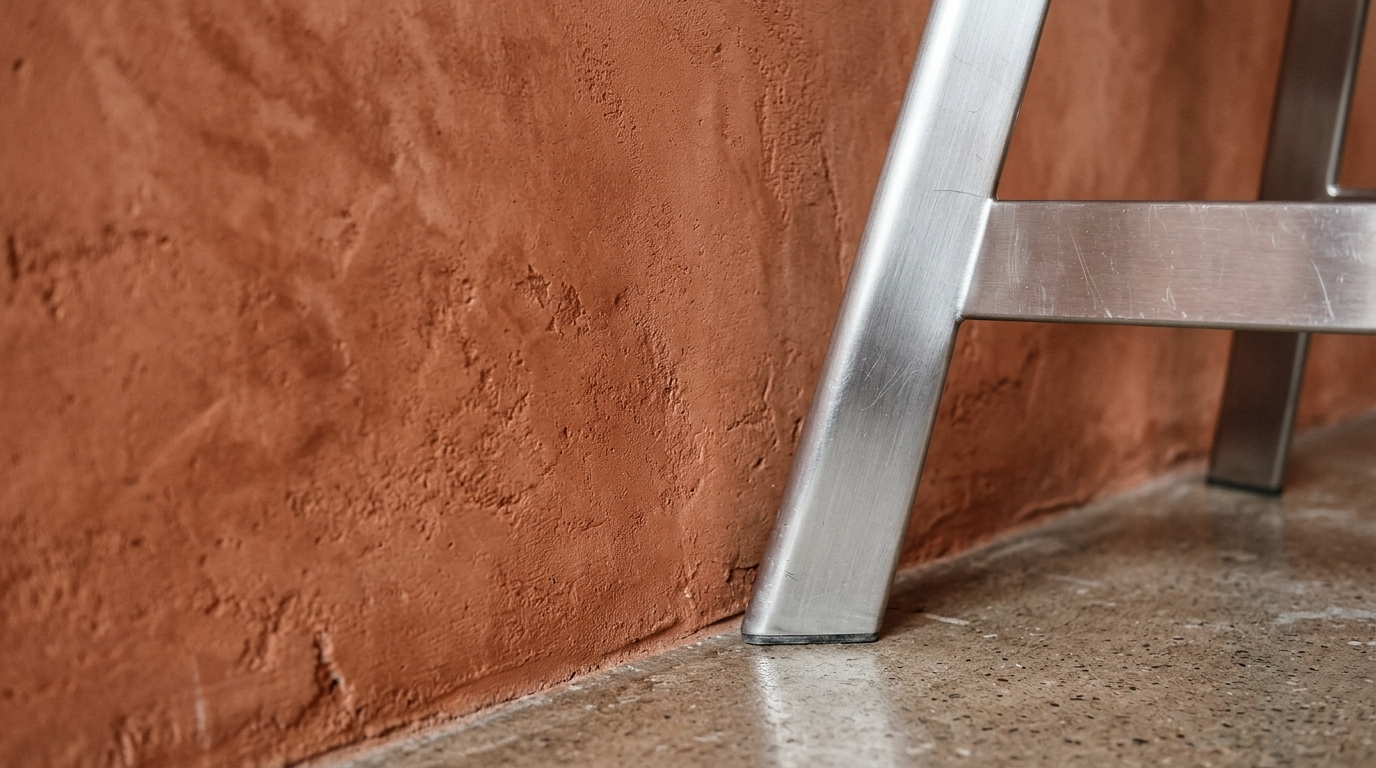
In a compact outdoor living space, every surface is within reach, which makes the tactile quality of your furniture paramount. We are seeing a move away from ‘faux’ textures toward authentic materiality. Honed travertine side tables, fluted oak accents, and brushed stainless steel frames are replacing the generic resin-wicker that dominated the last decade. The goal is to create a sensory bridge between the interior and the exterior.
Macro detail of marine-grade rope weaving on a designer patio chair with a background of honed travertine stone.
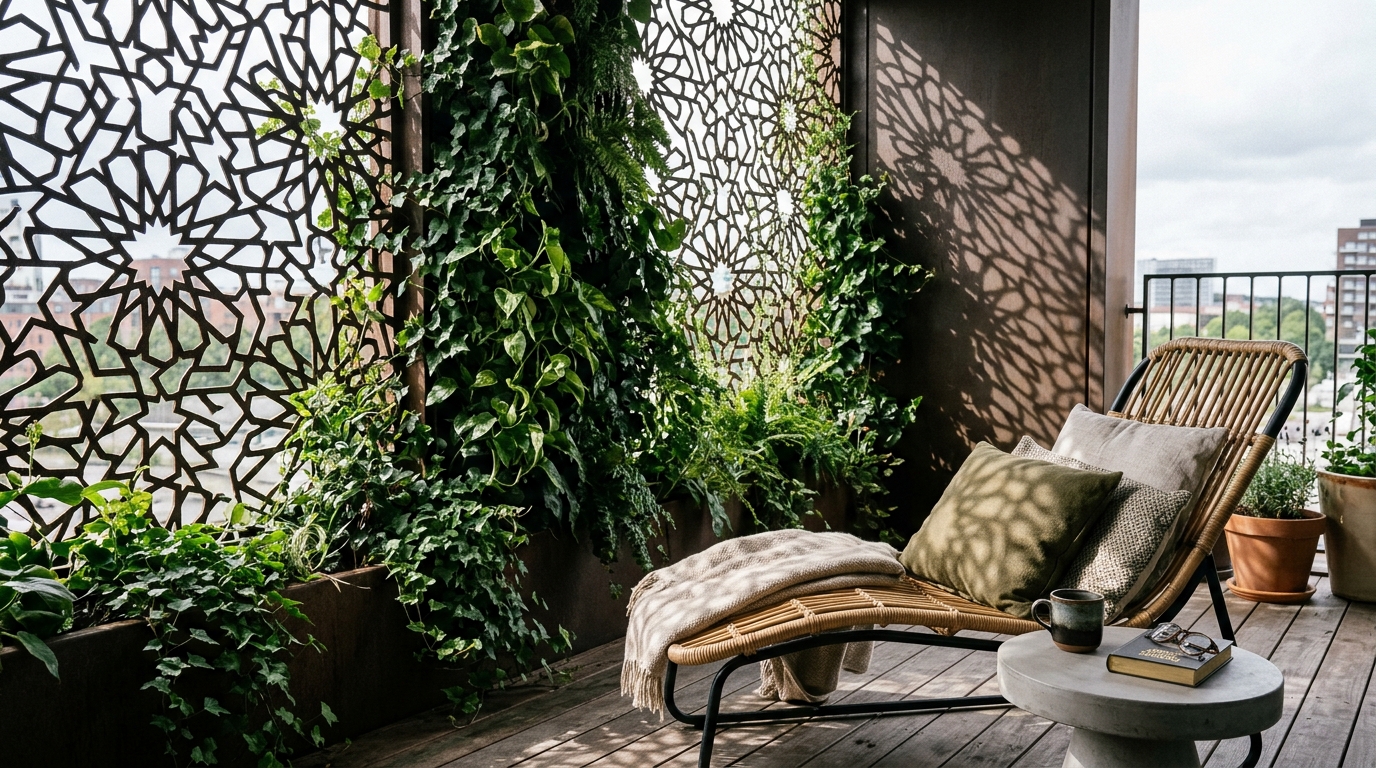
Consider the interplay of shadow and light on a balcony garden privacy screen. When you use a laser-cut metal screen or a high-quality cedar lath, the shadows cast during the golden hour create a ‘spatial cadence’ that makes the area feel larger. These screens serve a dual purpose: they provide the necessary psychological barrier from neighbors and act as a vertical garden anchor. By integrating greenery vertically, you preserve the floor space for your ergonomic patio chairs, maintaining that essential 30-inch dining chair clearance for comfortable movement.
Atmospheric Precision: Lighting the Urban Nook
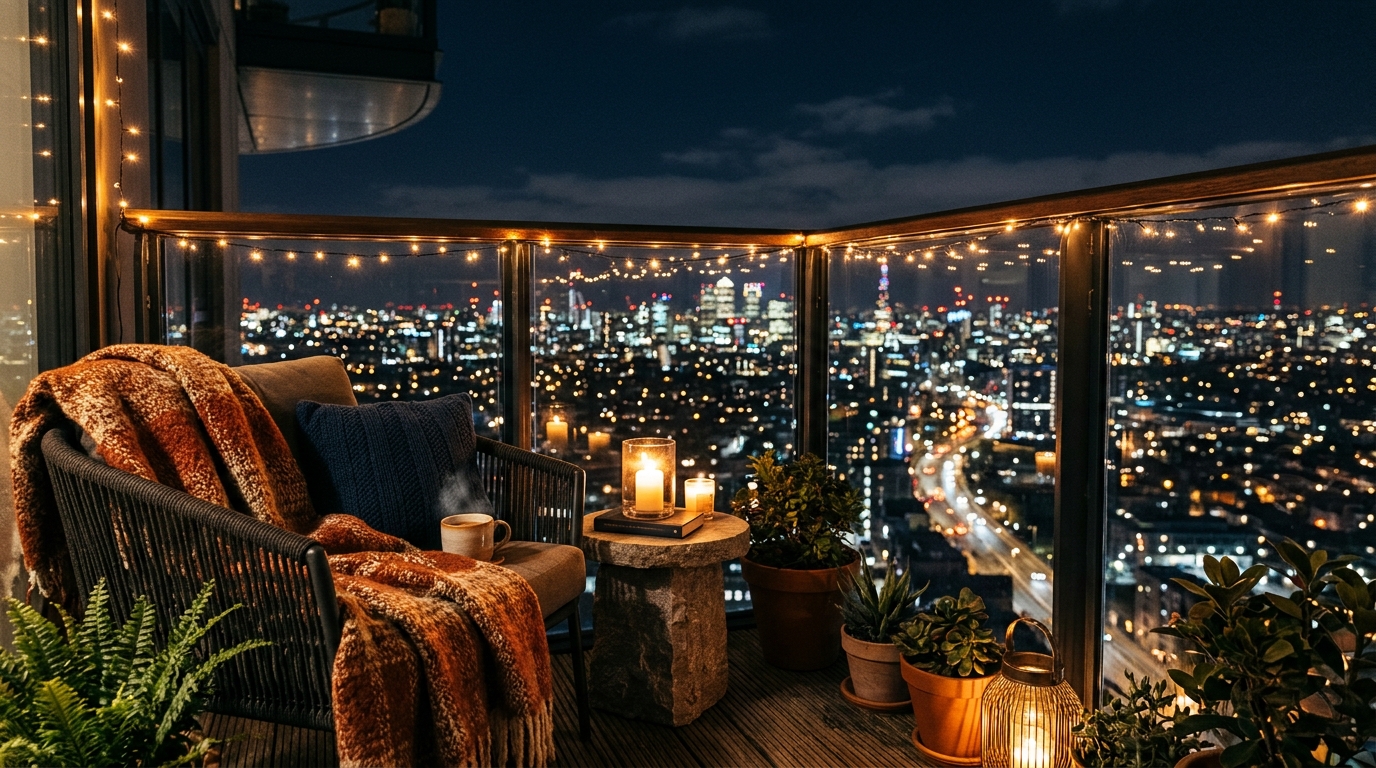
The atmosphere of a high-performance nook is dictated by its light temperature. Many urban dwellers make the mistake of using cool-toned solar lights that cast a clinical, blue-ish hue. To achieve that Pinterest-worthy ‘Quiet Luxury’ glow, look for cozy outdoor balcony string lights or portable LED lamps with a 2700K Kelvin rating. This warm, amber light mimics the quality of candlelight and complements the earthy tones of a Farrow & Ball Setting Plaster accent wall.
High CRI (Color Rendering Index) ratings of 90+ are also non-negotiable for those who value architectural integrity. This ensures that the deep greens of your Mediterranean fan palms and the rich charcoals of your furniture frames look as vibrant at midnight as they do at noon. Directional lighting, such as a small, shielded spotlight aimed at a textured stone planter, creates depth and ‘sightline alignment,’ drawing the eye to the furthest corners of the balcony to expand the perceived volume of the space.
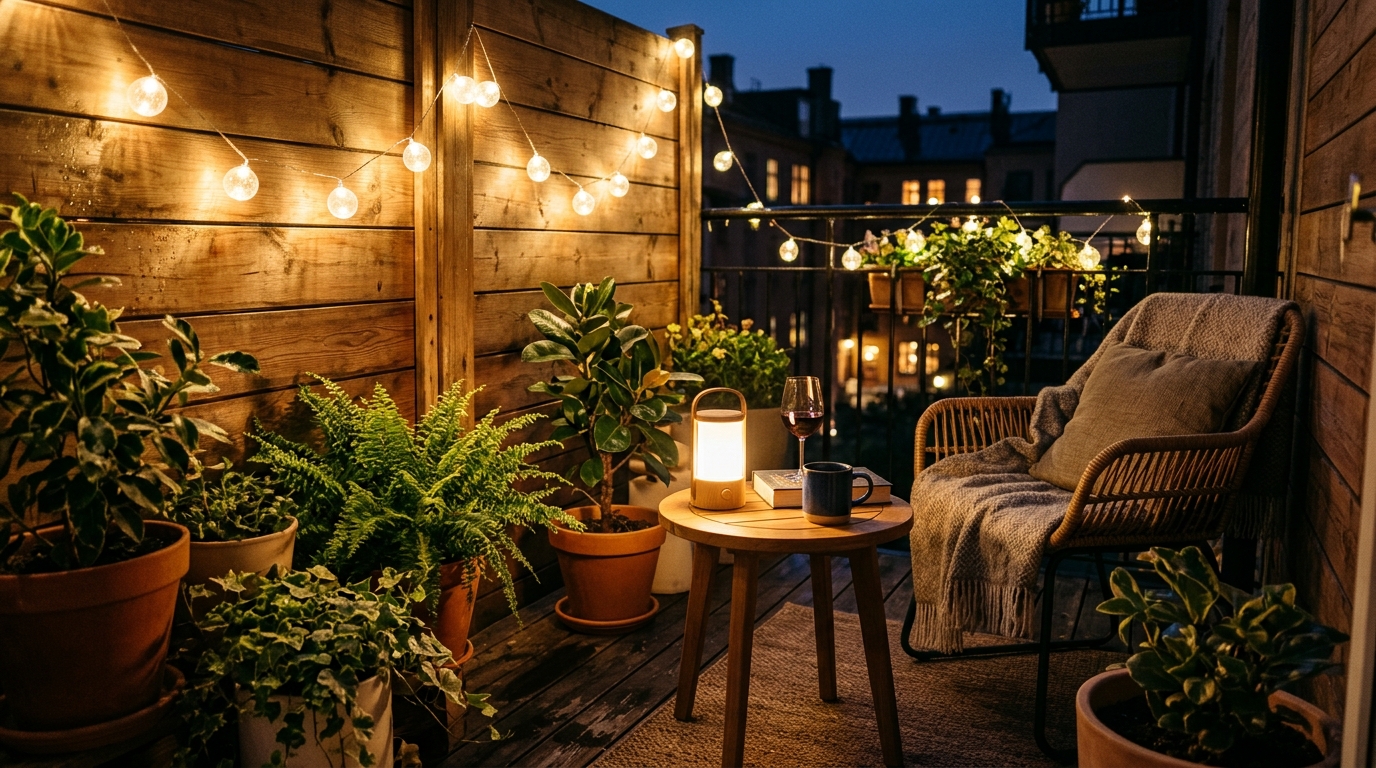
Warm 2700K atmospheric lighting casting soft shadows across a balcony garden privacy screen in a luxury apartment.
The Anatomy of a Weather-Resistant Bistro Set
For many, the weather-resistant bistro set remains the gold standard for small apartment balcony ideas. However, the modern iteration is far more sophisticated than the wobbly iron sets of the past. Today’s high-performance bistro tables feature weighted bases to prevent tipping in high-rise wind tunnels and tops made from ultra-compact surfaces like Dekton or Neolith, which are impervious to UV rays and scratches.
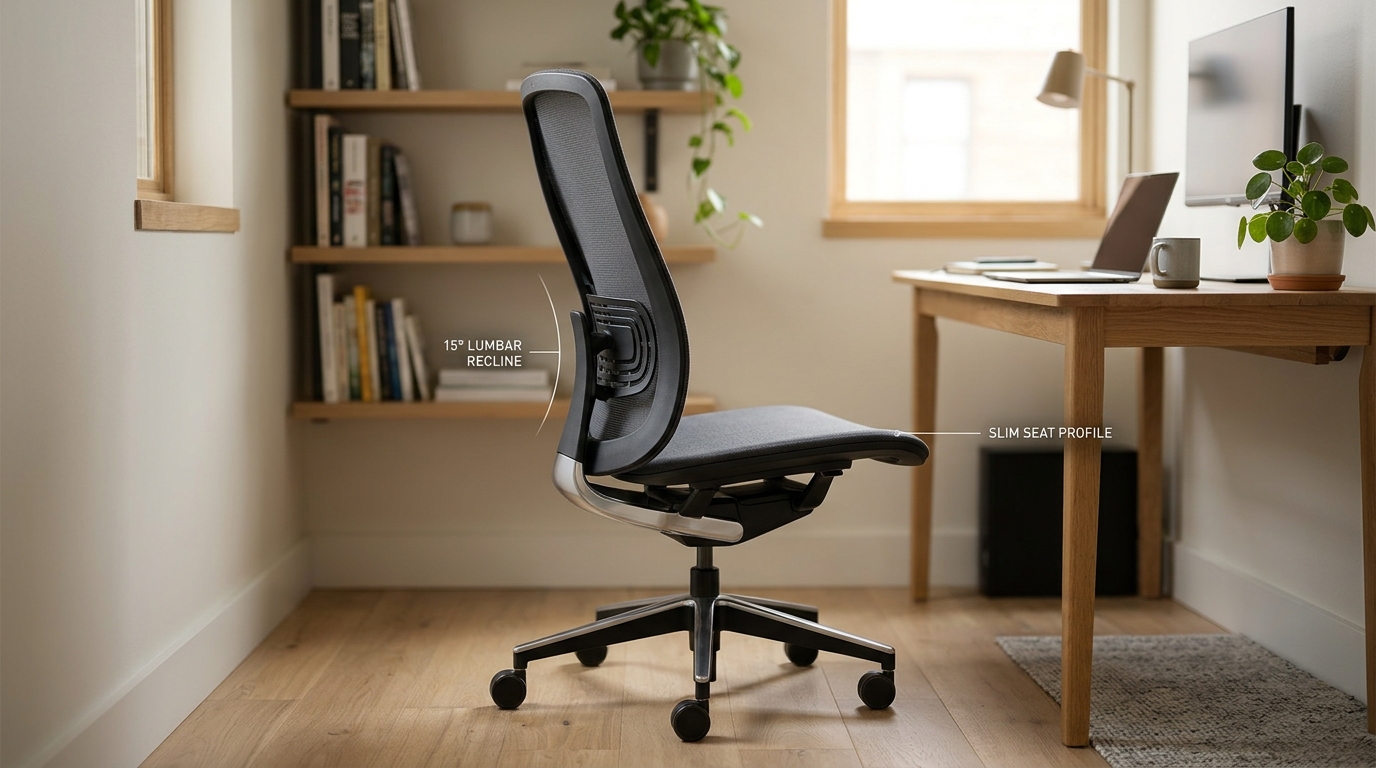
The spatial geometry of a bistro set should favor the circle over the square. A 24-inch round table allows for a more fluid ‘path of travel’ than a square one, eliminating sharp corners that catch on clothing in tight quarters. When paired with chairs that feature a slight 15-degree recline, the bistro set transforms from a quick breakfast spot into a legitimate lounge zone. This is where the 18-inch coffee table reach rule is modified—on a balcony, the table often doubles as a workspace, requiring a height of 28 to 30 inches to maintain ergonomic alignment for laptop use.
Close-up of a foldable designer patio chair showcasing precision-machined joints and high-end material integrity.
Spatial Cadence and the 36-Inch Rule
Success in small-space design is often found in the margins. Maintaining a 36-inch primary circulation path is the difference between a balcony that feels like a sanctuary and one that feels like a storage unit. Even on a narrow terrace, prioritizing this walkway ensures that the flow from the interior sliding glass door to the balcony railing is unobstructed. This ‘negative space’ is what allows the eye to rest, making the small apartment balcony ideas you implement feel intentional rather than cluttered.
Architectural Specification & Material Matrix
Curated tactile palette, spatial dimensions, and atmospheric lighting index for this design scheme.
The ultimate goal of high-performance small apartment balcony ideas is to erase the distinction between ‘outdoor furniture’ and ‘fine furniture.’ When we treat our balconies with the same architectural respect as our living rooms, the square footage of our homes effectively expands. By selecting pieces that prioritize ergonomic integrity and spatial efficiency, we transform these overlooked concrete ledges into vibrant hubs of urban life—places where the city’s roar fades into the background, replaced by the quiet luxury of a perfectly balanced chair and a well-curated view.
A high-resolution study in spatial proportions, tactile materiality, and light choreography curated for enduring modern living.
PLATE 01
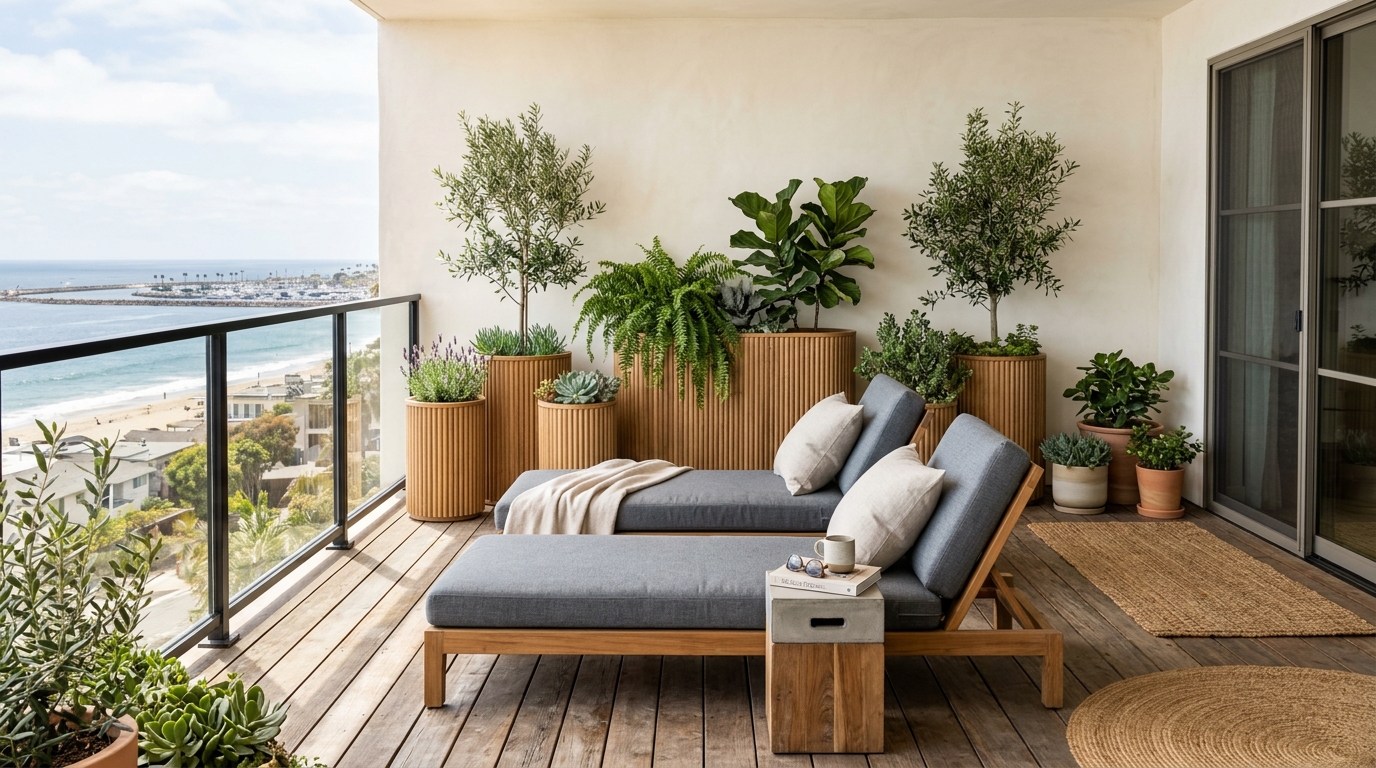
Organic modern balcony design with fluted oak planters and a slate grey floor finish for a cohesive outdoor living space.
STUDY NO. 01 300 DPI MASTER
PLATE 02
Minimalist apartment balcony solutions featuring stackable perforated metal chairs in a warm alabaster finish.
STUDY NO. 02 300 DPI MASTER
PLATE 03
Lush vertical garden wall integrated with a laser-cut privacy screen on a small urban terrace.
STUDY NO. 03 300 DPI MASTER
PLATE 04
Sleek 24-inch round bistro table with a Dekton top paired with ergonomic low-profile seating.
STUDY NO. 04 300 DPI MASTER
PLATE 05
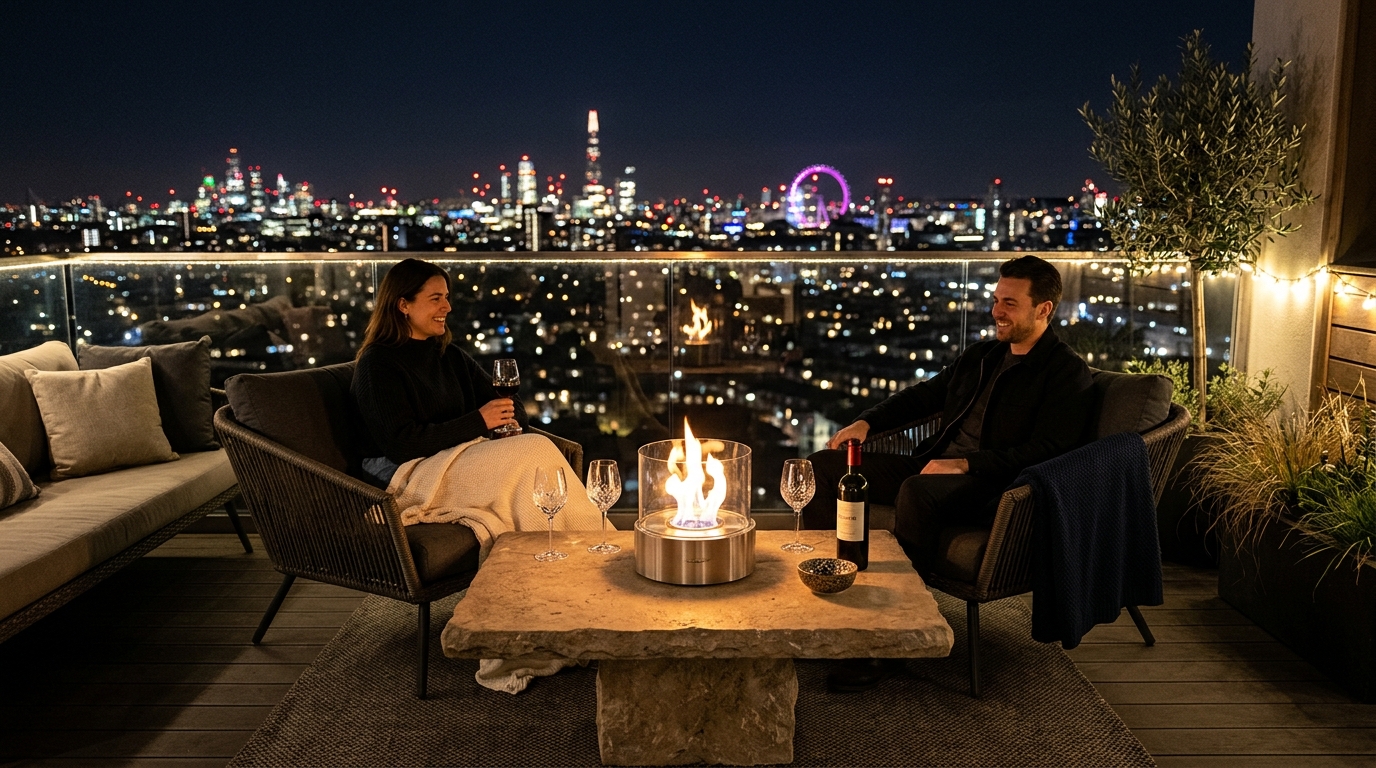
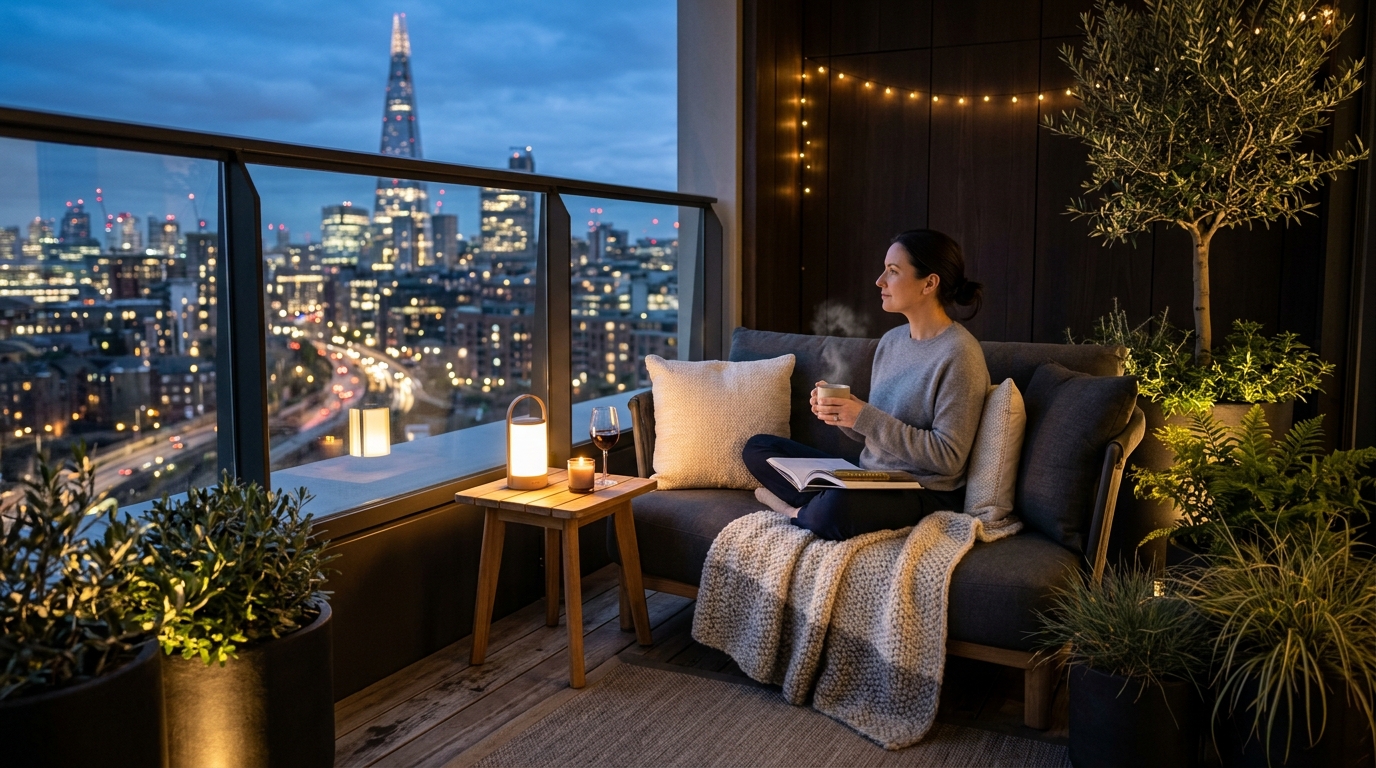
Evening view of a cozy outdoor balcony with warm string lights and a glass of wine on a stone side table.
STUDY NO. 05 300 DPI MASTER
PLATE 06
Tactile contrast between brushed stainless steel furniture frames and a soft terracotta limewash wall.
STUDY NO. 06 300 DPI MASTER
PLATE 07
High-density urban living balcony showing a spatial cadence of furniture and negative breathing room.
STUDY NO. 07 300 DPI MASTER
PLATE 08
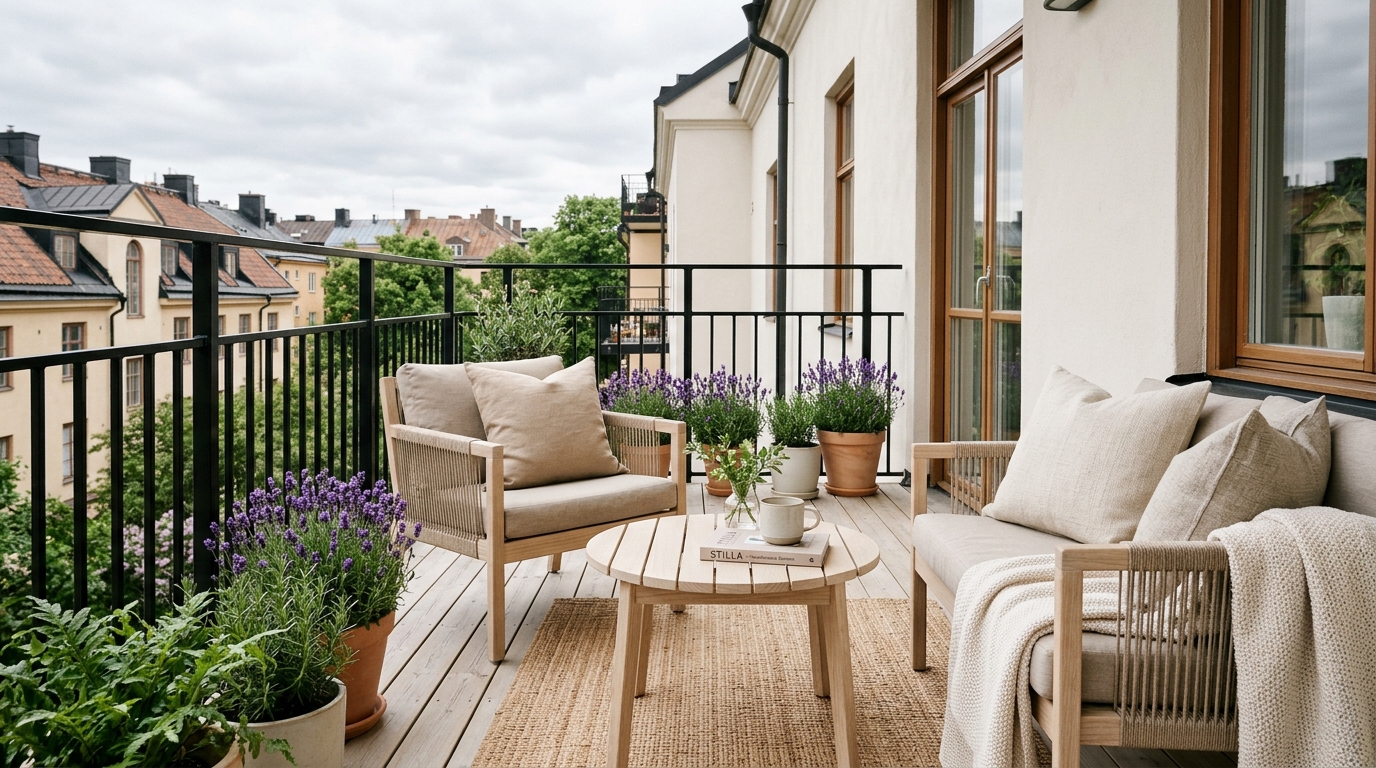
Scandinavian-inspired small balcony decor with light wood textures and neutral weather-resistant textiles.
STUDY NO. 08 300 DPI MASTER
PLATE 09
Detail of a 15-degree reclined patio chair providing lumbar support in a compact footprint.
STUDY NO. 09 300 DPI MASTER
PLATE 10
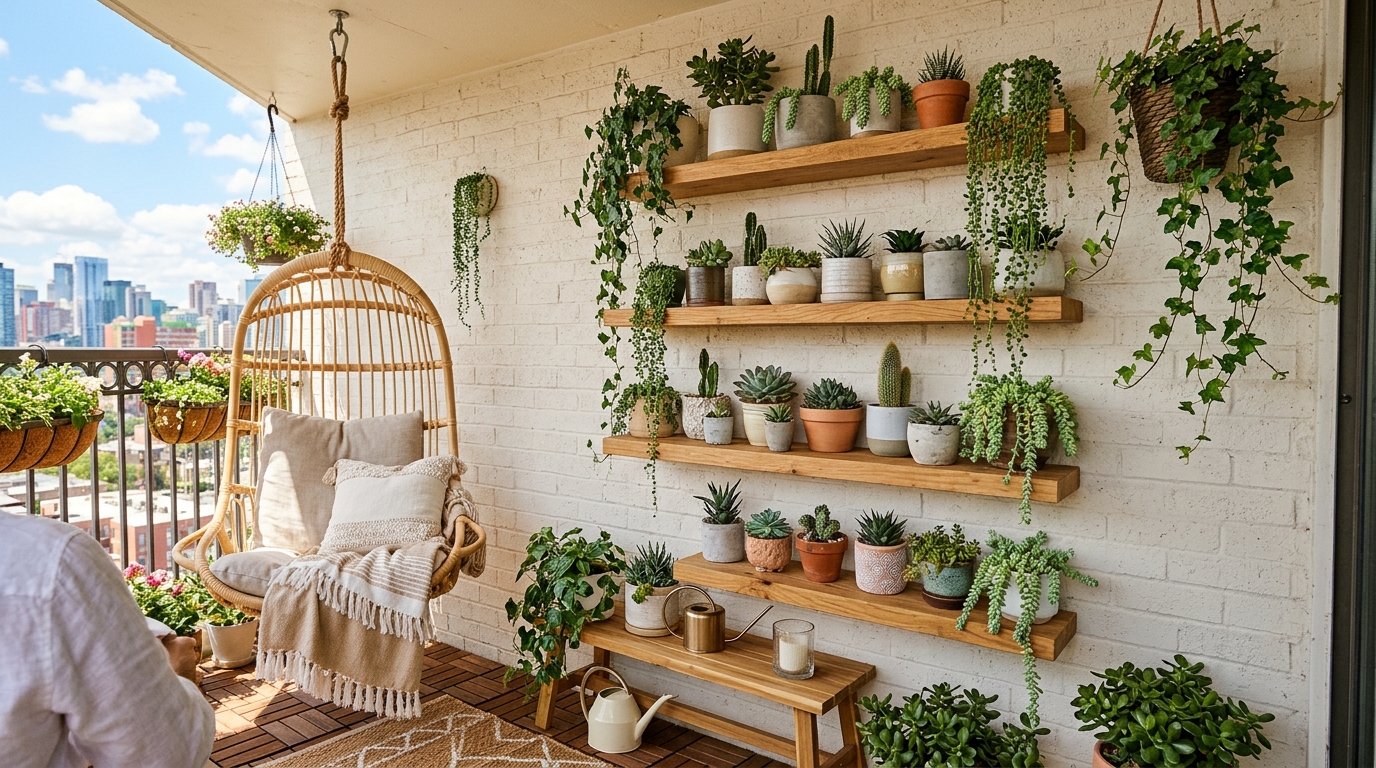
Vertical spatial intelligence showing hanging planters and floating shelves on a narrow balcony wall.
STUDY NO. 10 300 DPI MASTER
PLATE 11
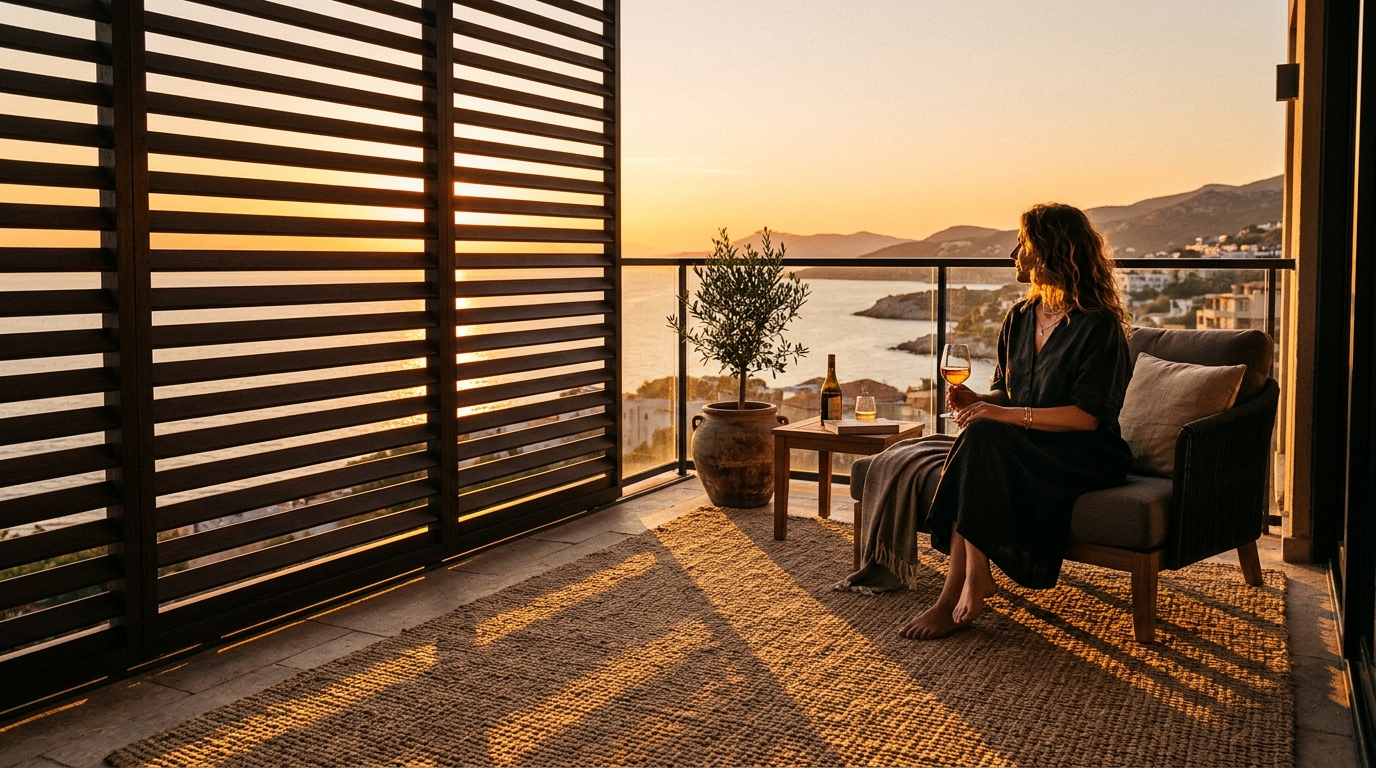
Dramatic shadow play from a cedar lath privacy screen during sunset on a high-rise balcony.
STUDY NO. 11 300 DPI MASTER
PLATE 12
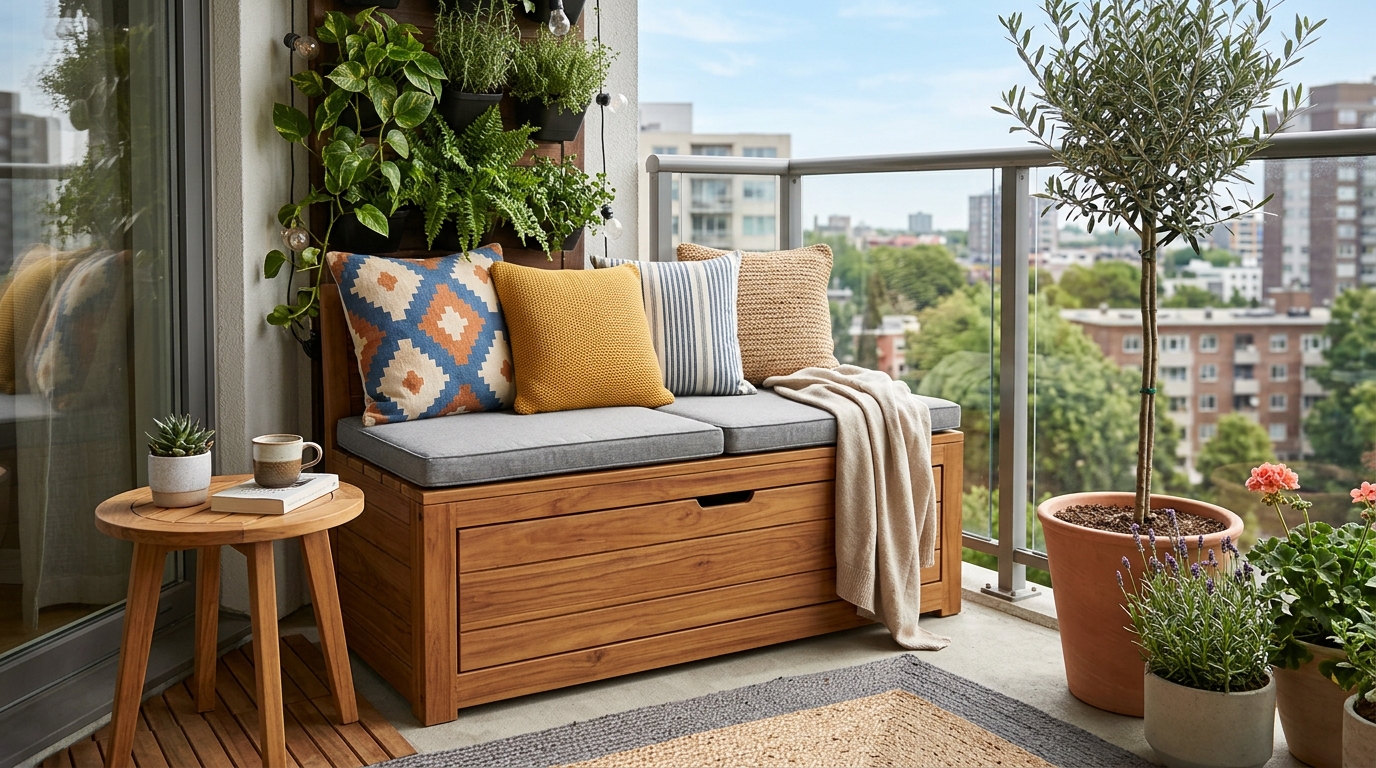
Multi-functional outdoor furniture including a storage bench that doubles as a lounge seat.
STUDY NO. 12 300 DPI MASTER
PLATE 13
Refined color palette of Benjamin Moore Swiss Coffee and gunmetal slate on a modern terrace.
STUDY NO. 13 300 DPI MASTER
PLATE 14
Low-profile lounge seating with high-tension fabric for a ‘vanishing’ furniture effect on a balcony.
STUDY NO. 14 300 DPI MASTER
PLATE 15
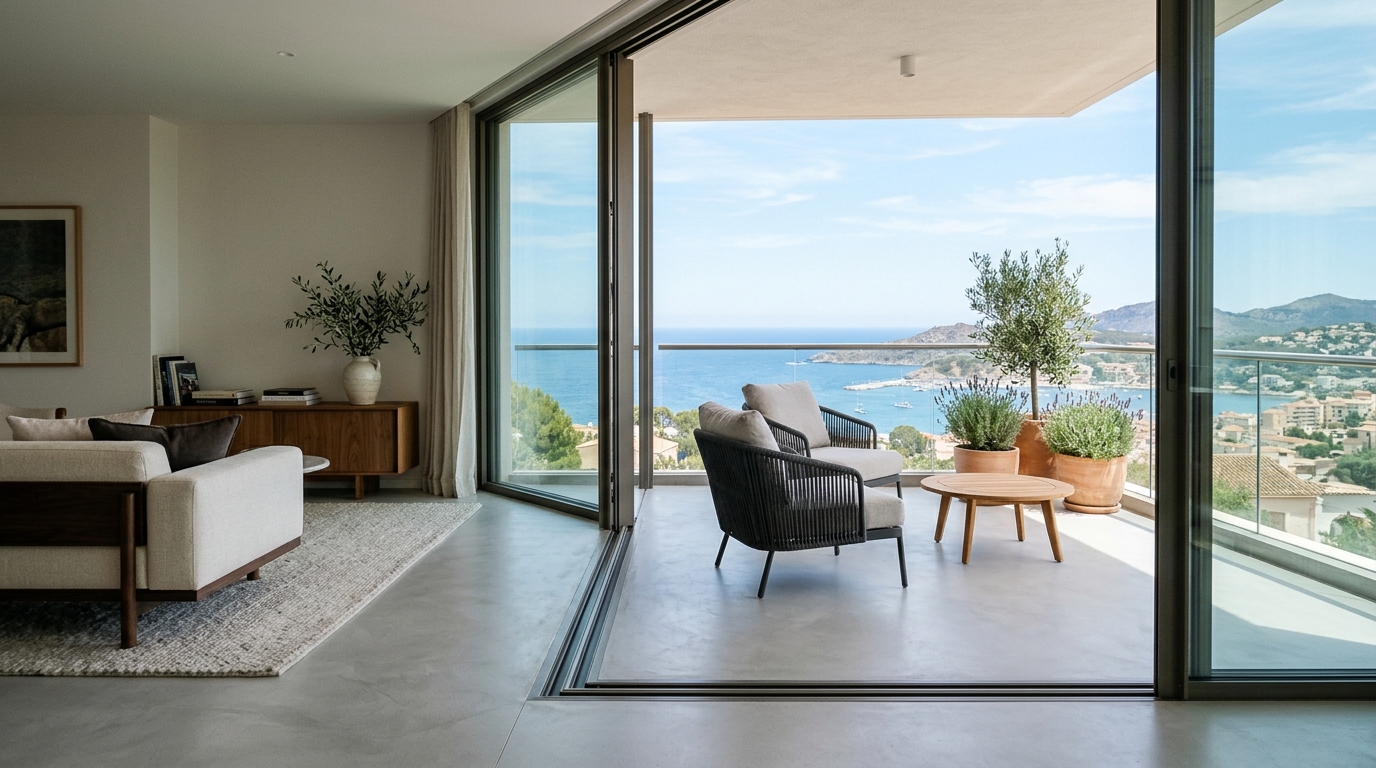
Architectural shot of a sliding glass door transition between a living room and a perfectly styled balcony.
STUDY NO. 15 300 DPI MASTER
PLATE 16
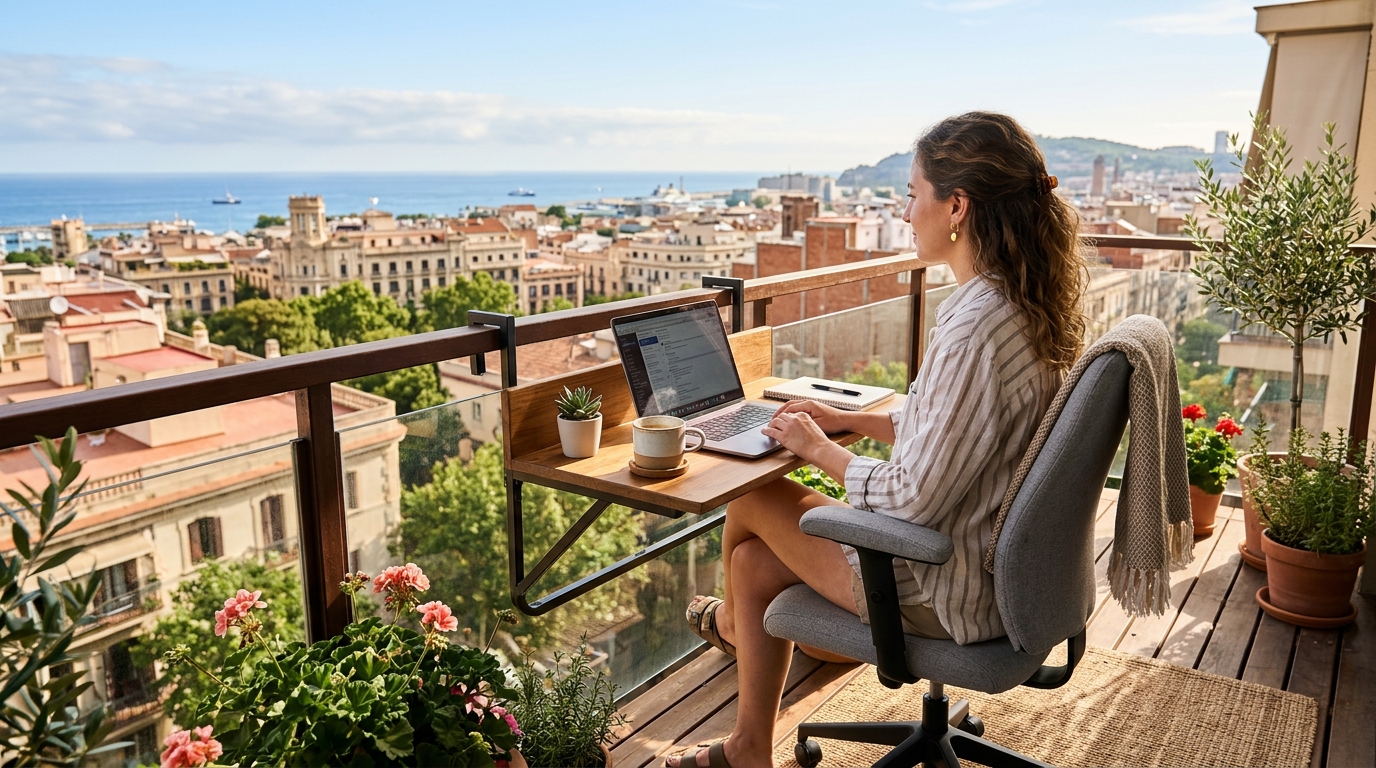
Compact outdoor workspace with an ergonomic chair and a small cantilevered table for remote work.
STUDY NO. 16 300 DPI MASTER
PLATE 17
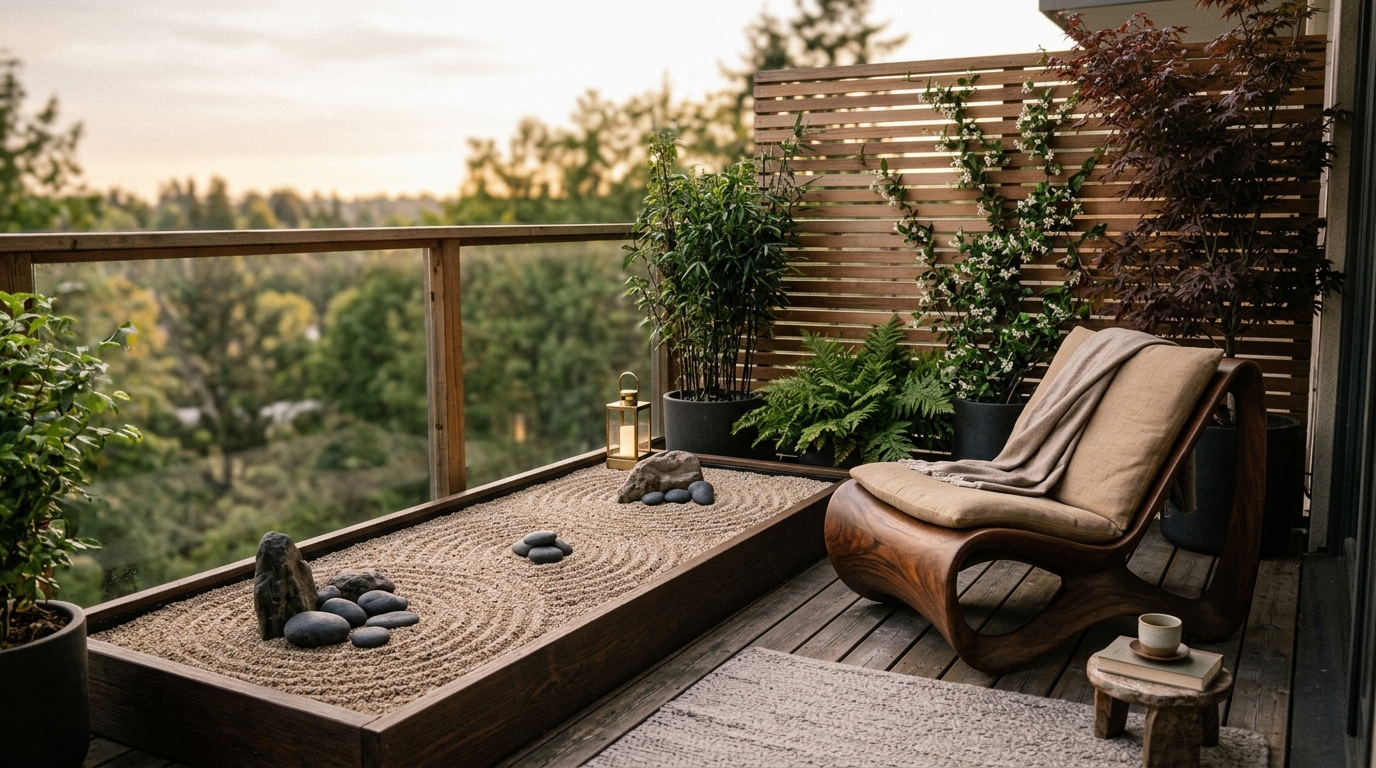
Modern zen balcony with smooth river stones, a small water feature, and a single sculptural chair.
STUDY NO. 17 300 DPI MASTER
PLATE 18
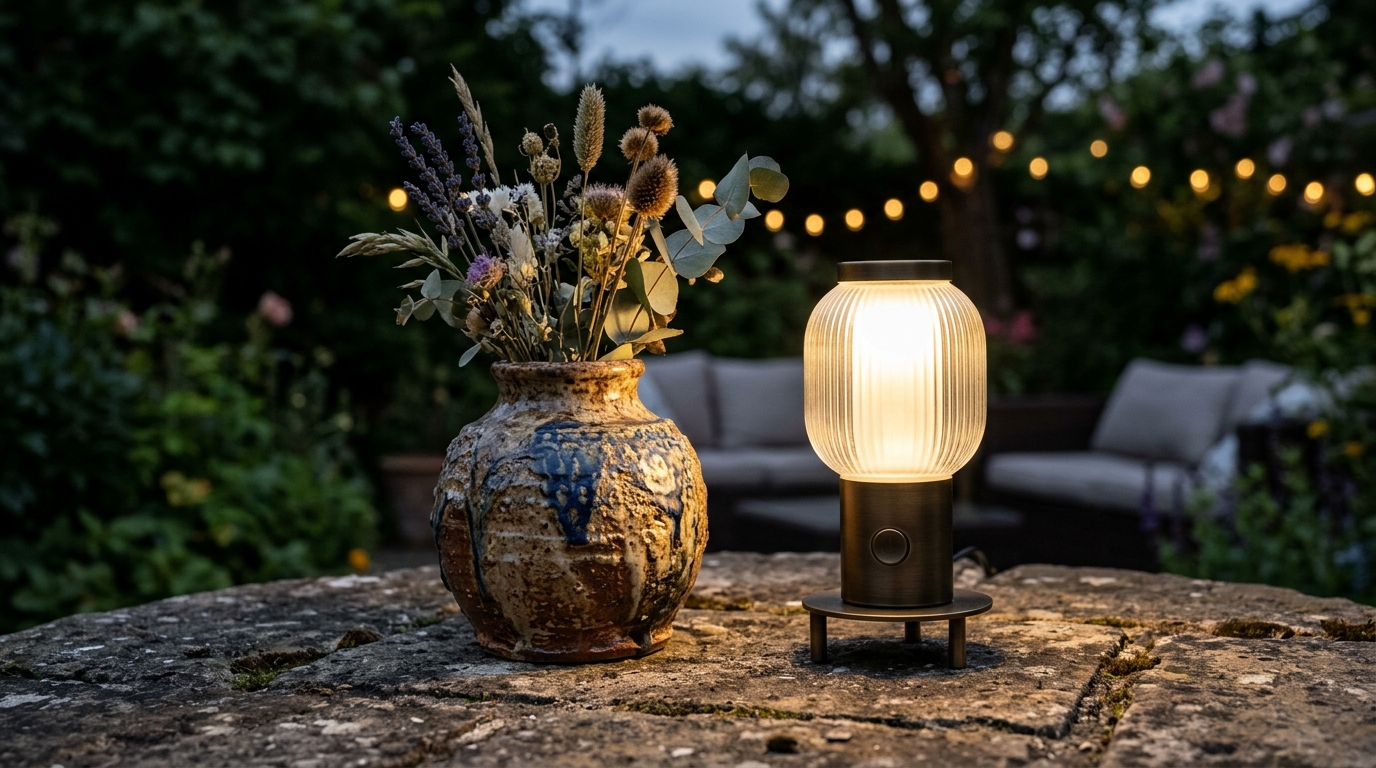
Detail of a high-CRI LED portable lamp illuminating a textured ceramic vase on a balcony table.
STUDY NO. 18 300 DPI MASTER
PLATE 19
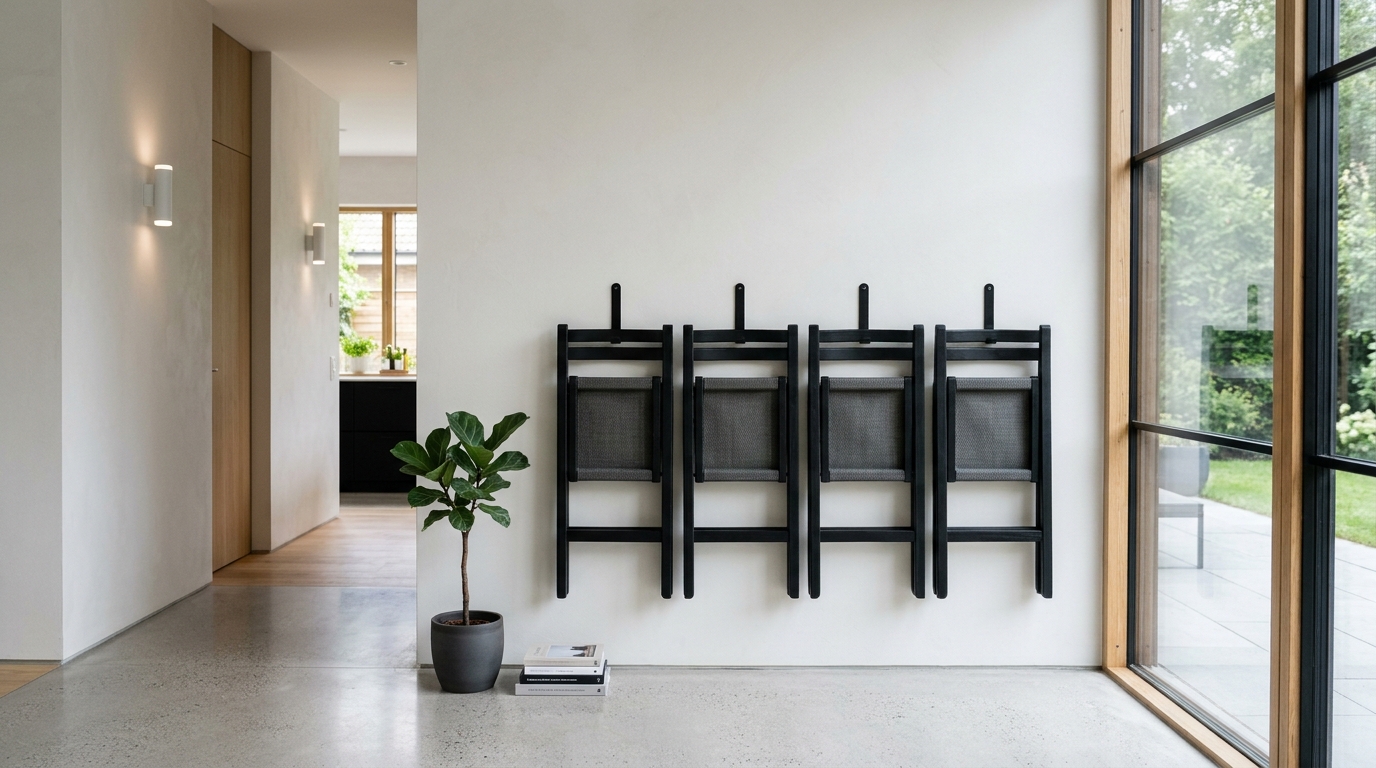
Precision-engineered aluminum folding chairs leaning against a wall in a space-saving arrangement.
STUDY NO. 19 300 DPI MASTER
PLATE 20
Wide-angle view of a small apartment balcony layout showing furniture proportions and sightline alignment.
STUDY NO. 20 300 DPI MASTER
PLATE 21
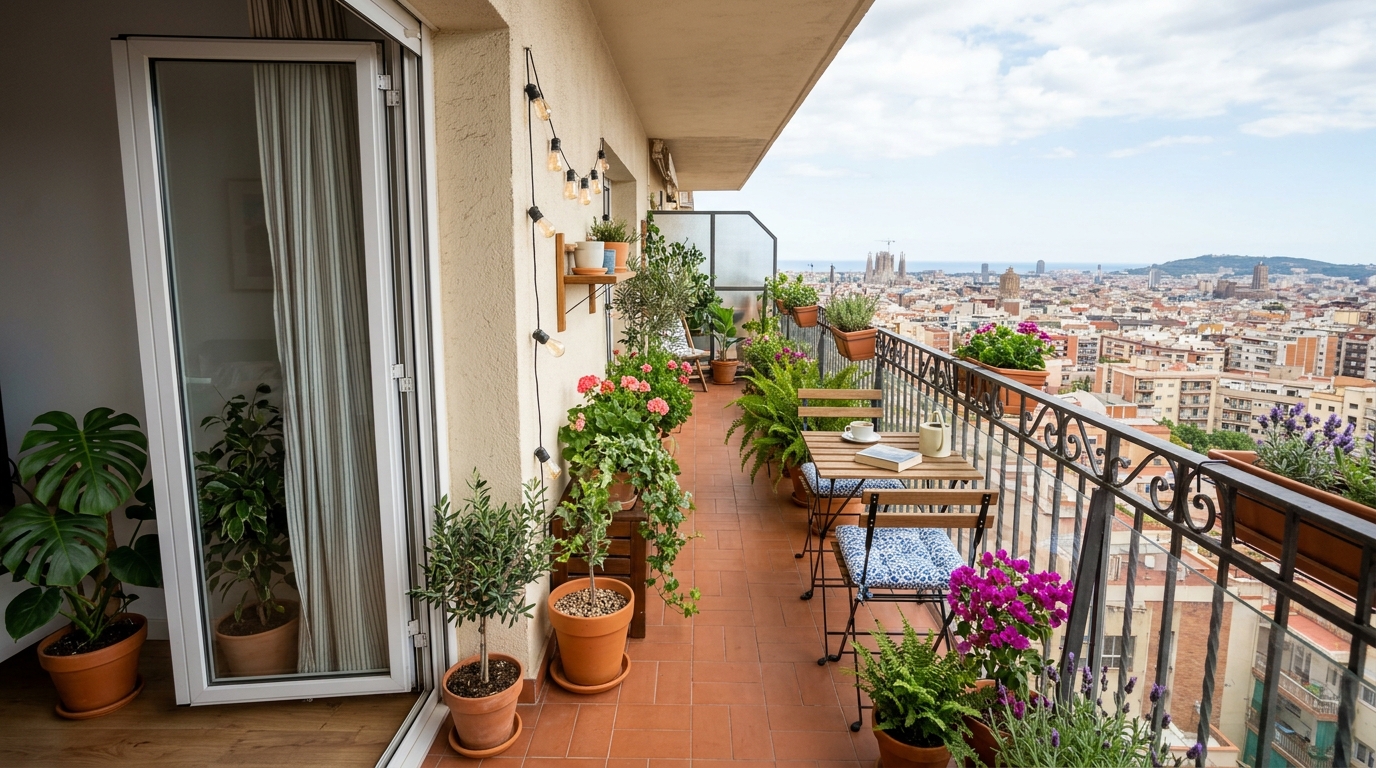
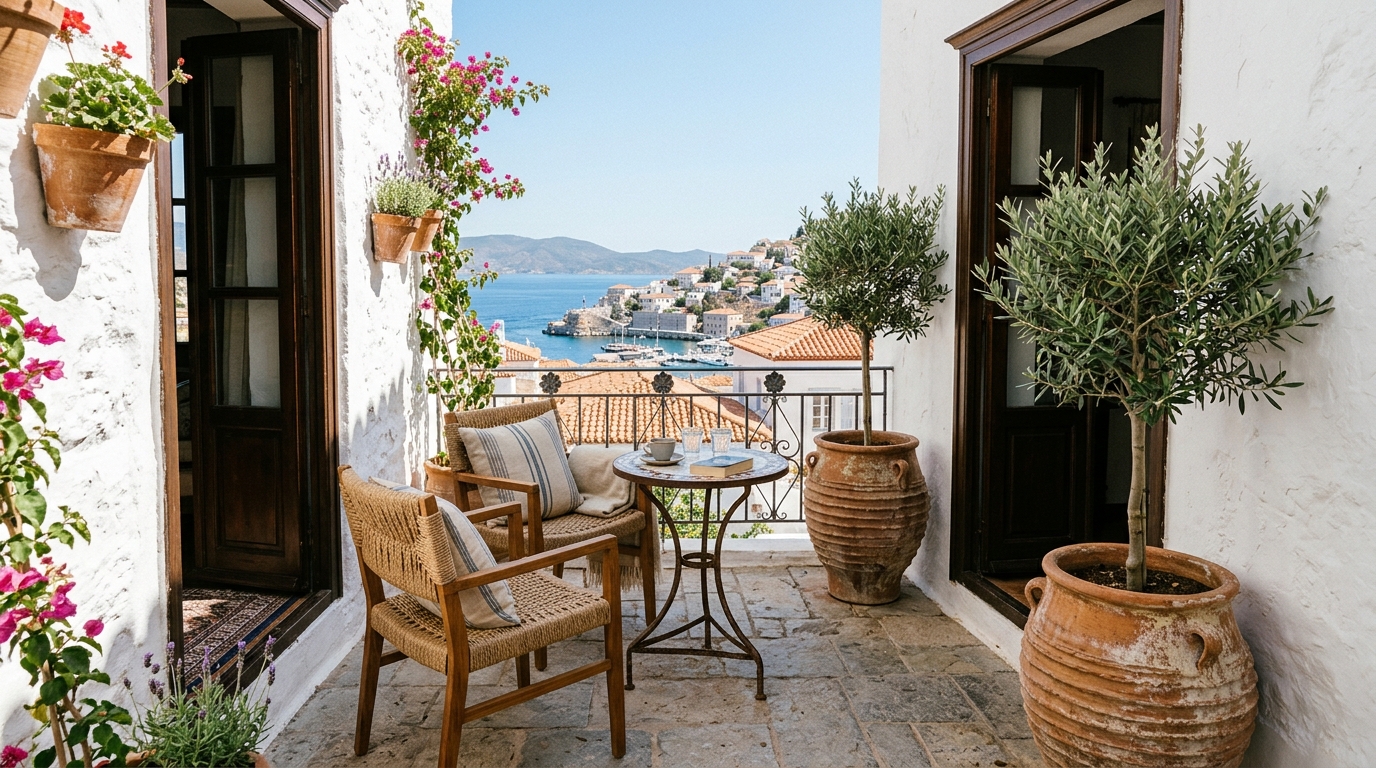
Mediterranean-inspired balcony with olive trees in fluted pots and woven rope seating.
STUDY NO. 21 300 DPI MASTER
PLATE 22
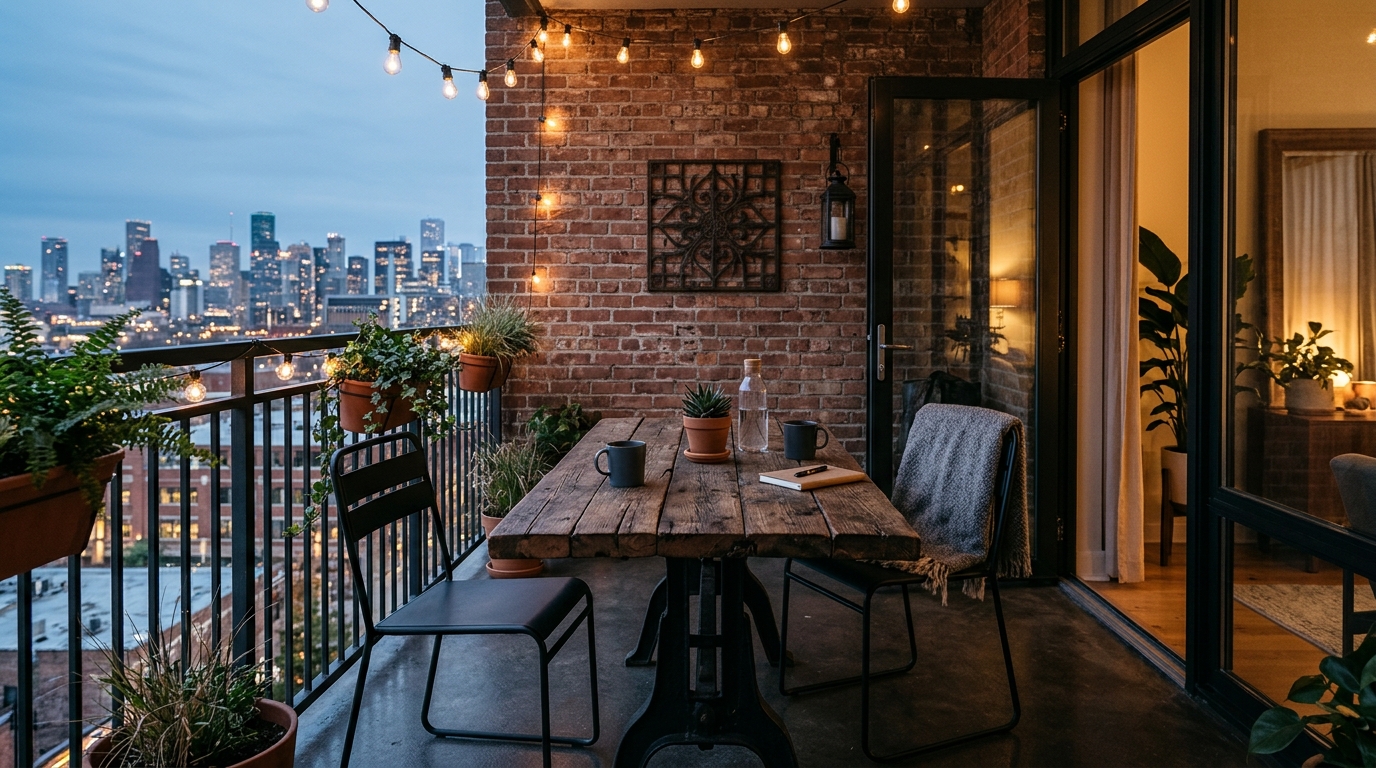
Industrial chic balcony with matte black finishes and warm wood accents under soft twilight.
STUDY NO. 22 300 DPI MASTER
PLATE 23
Overhead architectural plan view of a 45-square-foot balcony optimized for two people.
STUDY NO. 23 300 DPI MASTER
PLATE 24
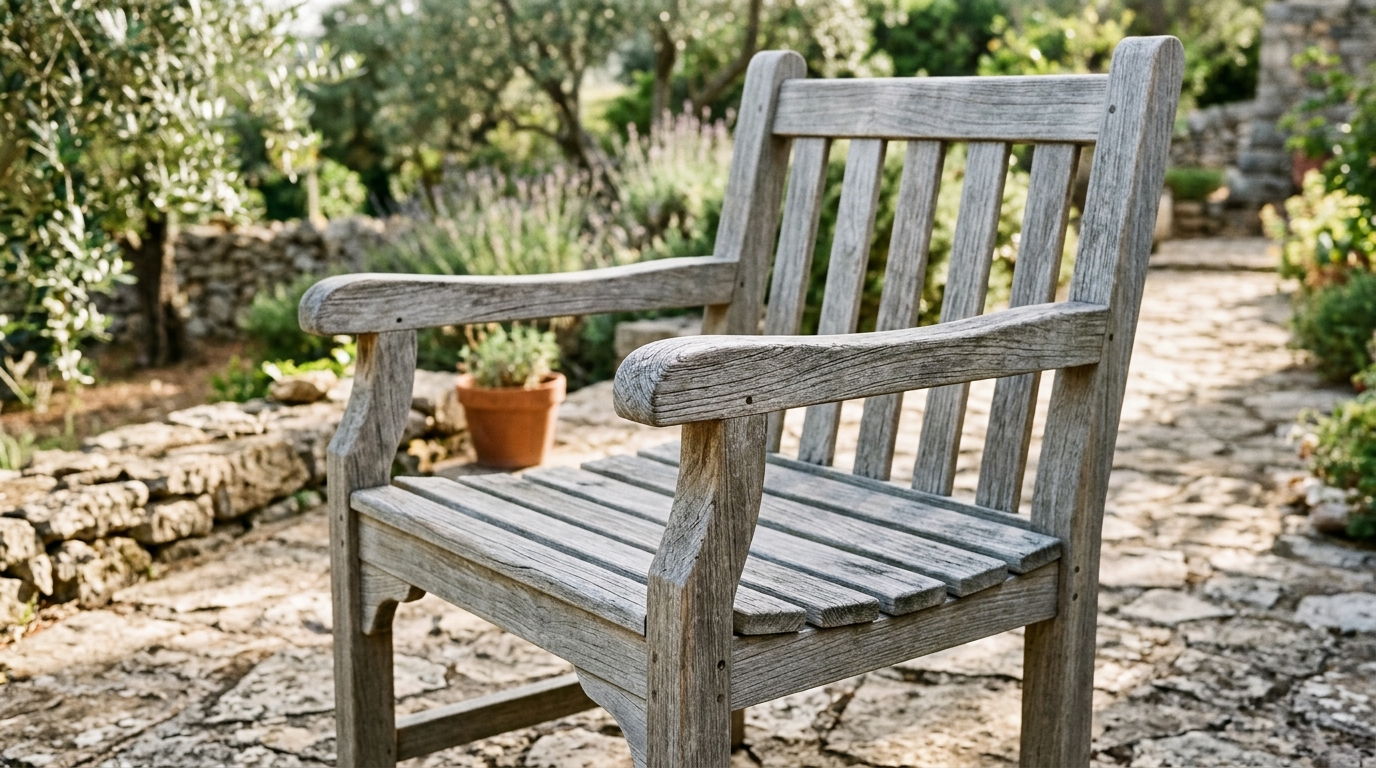
Sustainable teak patio chairs with a silver patina finish on a weathered wood deck.
STUDY NO. 24 300 DPI MASTER
PLATE 25
Luxury urban retreat featuring a small fire pit table and deep-seated but narrow-profile chairs.
STUDY NO. 25 300 DPI MASTER
PLATE 26
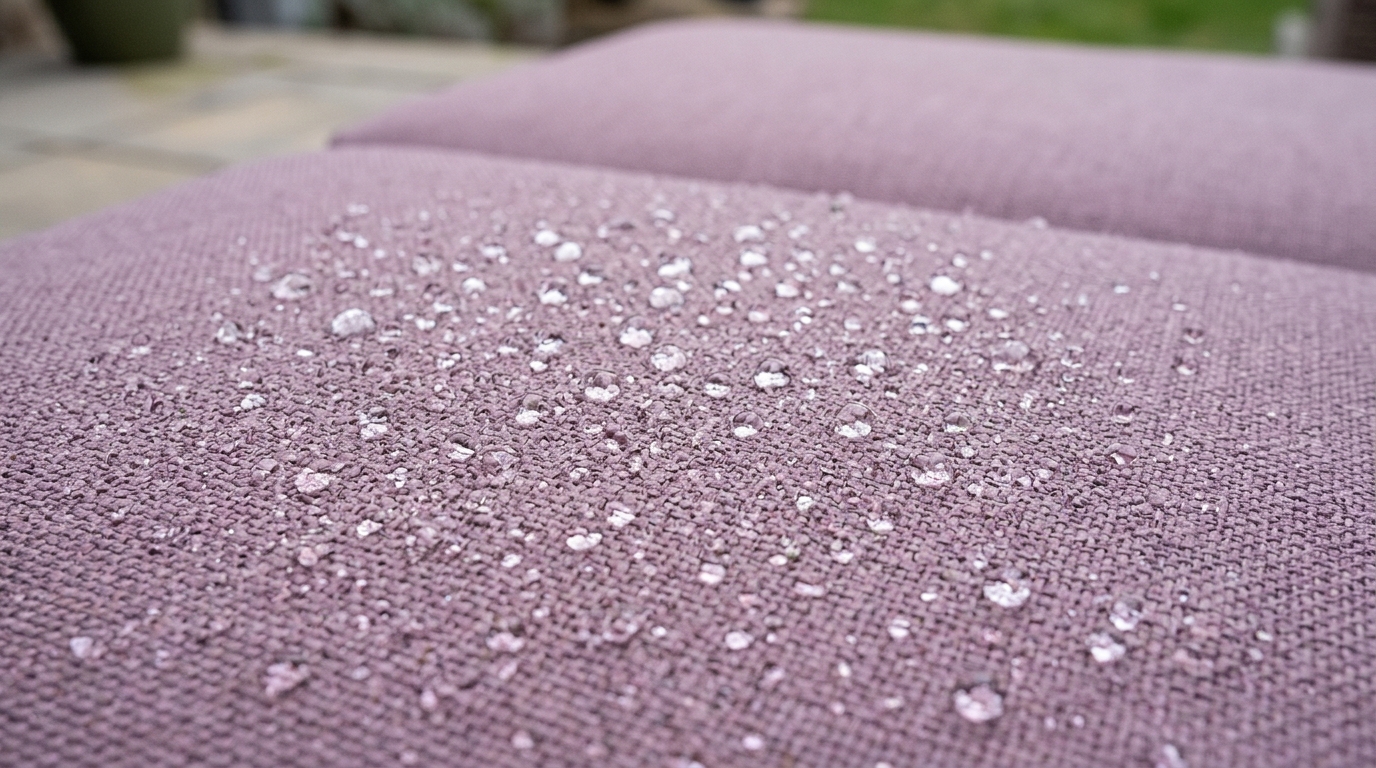
Close-up of weather-resistant upholstery in a soft Farrow & Ball Setting Plaster hue.
STUDY NO. 26 300 DPI MASTER
PLATE 27
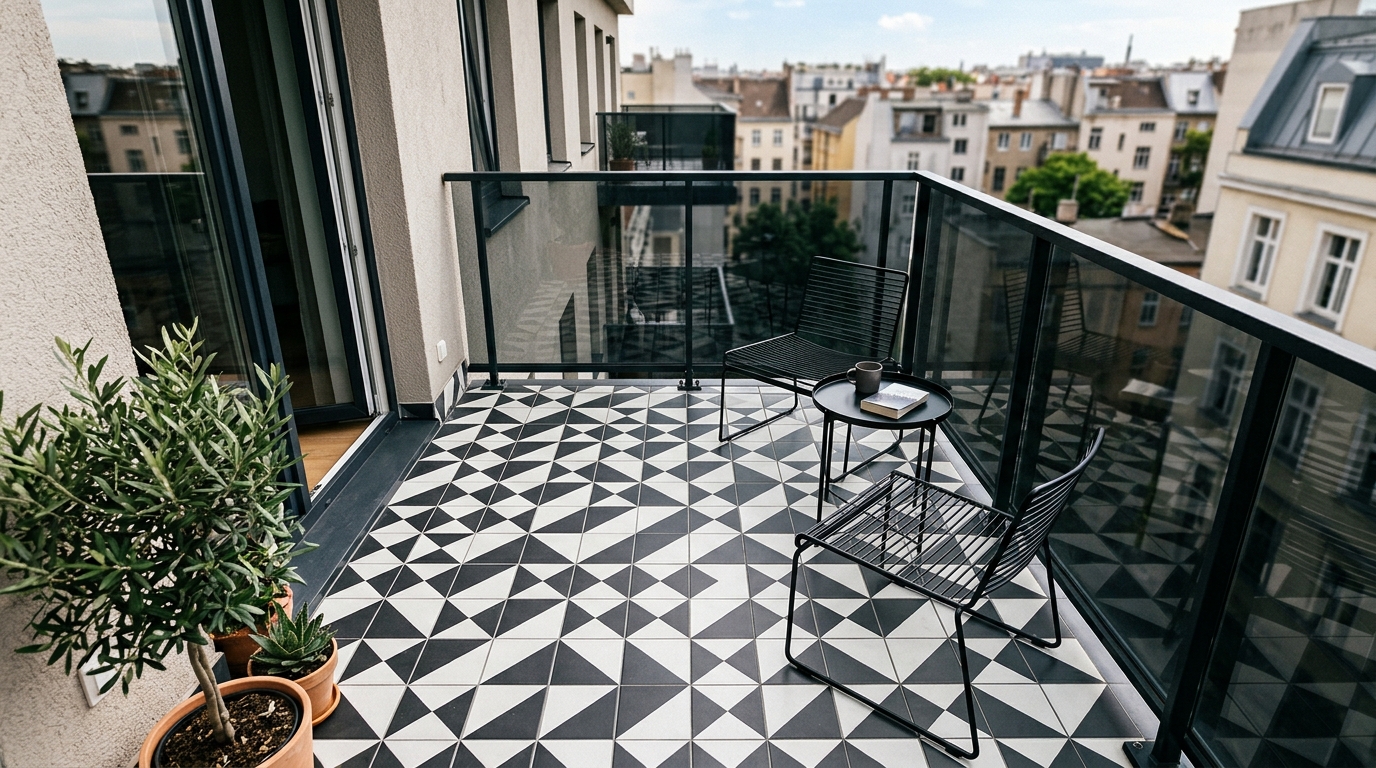
Geometric tile flooring on a small balcony providing a strong visual foundation for minimalist furniture.
STUDY NO. 27 300 DPI MASTER
PLATE 28
The final architectural reflection of a high-performance balcony nook at night with soft ambient glow.
STUDY NO. 28 300 DPI MASTER
Curated Visual Lookbook
Design Gallery & Spatial Studies
A visual curation of architectural arrangements, lighting concepts, and material palettes featured in this space.
33 Curated Views
Written by
JayhawkRent Editorial Team
Henry Williams is a Lighting Atmosphere Designer with over 15 years of hands-on experience in 2700K warm ambient illumination, architectural cove lighting, and shadow contrast. Henry believes that true luxury lies in restraint and authentic material honesty. An avid contributor to architectural and design dialogues, Henry writes extensively on creating elevated residential sanctuaries.
Editorial review fields are available through custom fields: jayhawk_reviewer_name and jayhawk_reviewer_note.
The architectural evolution of the American home has reached a fascinating inflection point where the traditional ‘seasonal’ space is being reclaimed as a primary…
Exploring small apartment balcony ideas with an architectural focus on spatial harmony and material authenticity. High-end interior design visual depicting small apartment balcony ideas…