The Geometry of Great Flooring Laying wood planks at a precise forty-five-degree angle changes everything.
It is not just about covering the subfloor anymore.…
The Geometry of Great Flooring
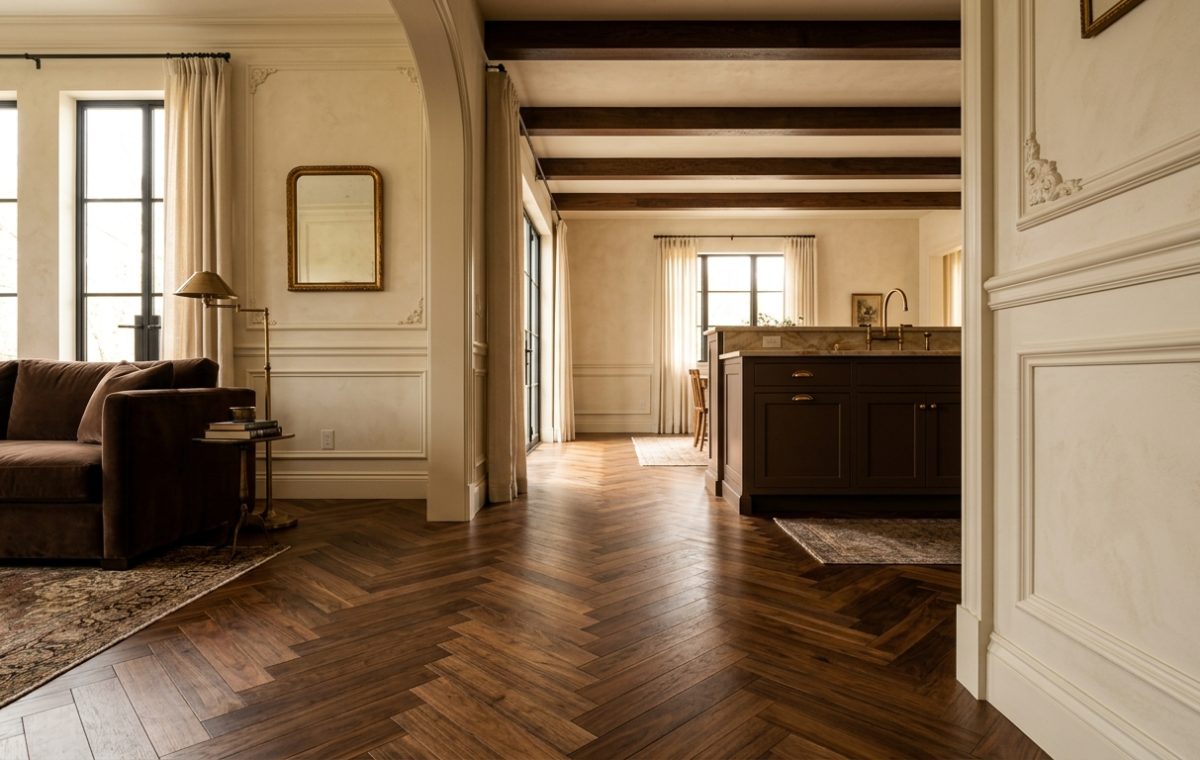
Laying wood planks at a precise forty-five-degree angle changes everything. It is not just about covering the subfloor anymore. It brings distinct rhythm to an open-plan home. You notice the directional flow immediately as your eyes track from the heavy brown sofa across the dark grain.
Patterned wood installation requires extreme patience. Master installers will tell you that a single millimeter error early on ruins the entire run. This is why shortcuts fail. If you rush the layout, gaps appear where the blocks meet. Precision costs more upfront, but it pays off every time afternoon light hits the grain.
Balancing Dark Wood and Architectural Trim
Dark walnut tones anchor large spaces. They demand respect. Pair them with pale walls and crisp architectural molding to keep rooms feeling open rather than cave-like. Ceiling beams add another layer of visual weight above, balancing the rich flooring down below.
Dust and pet hair show up faster on deep finishes. Regular maintenance is non-negotiable. You will sweep more often. Yet, the deep character of rich stains hides minor dents far better than glossy blonde surfaces do.
Where to Invest Your Budget
Spend money on the subfloor preparation before buying expensive planks. Even premium wood fails if the foundation is uneven. Acoustic underlayment also matters, especially in multi-level houses where foot traffic creates hollow echoes.
Good design looks effortless, but underneath lies hours of tedious leveling and careful alignment.
How do you balance high-maintenance dark flooring with daily foot traffic in your own home?
The Case for Unfussy Wall Storage Bulky entertainment centers and heavy bookcases often crowd small spaces. They trap visual weight in corners that deserve…