The Anatomy of an Effortless Tablescape Most people overcomplicate setting a dining surface.
They buy expensive floral arrangements that wilt within days.
They stack…
The Anatomy of an Effortless Tablescape
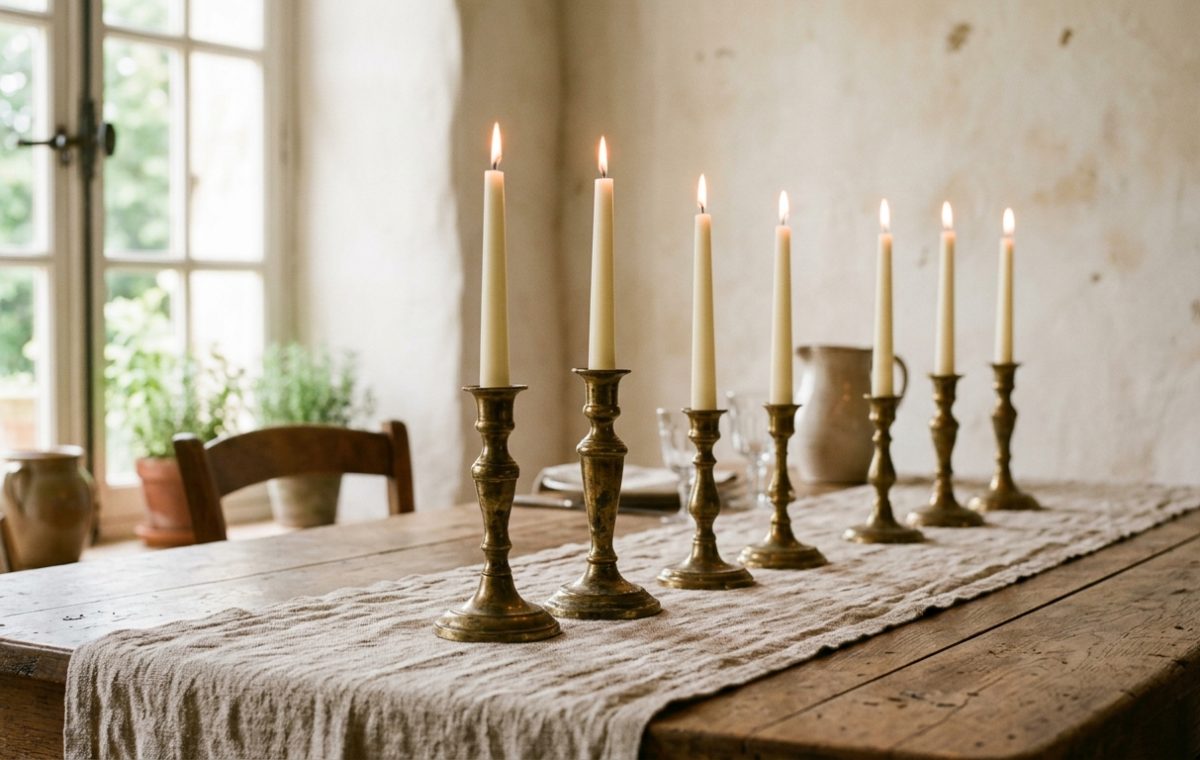
Most people overcomplicate setting a dining surface. They buy expensive floral arrangements that wilt within days. They stack mismatched ceramics that clutter the eating zone. Real style rarely comes from trying too hard. Consider a row of weathered brass candle holders lining a rustic wooden board. It feels grounded. It feels lived-in. It leaves actual room for passing bowls of food.
Why Scale and Spacing Matter
Putting objects down the middle of a long board requires restraint. If pieces sit too close together, the arrangement feels claustrophobic. Too far apart, and the visual rhythm dies. Matching heights work wonders here. Taper candles burning steadily in slim brass vessels draw the eye horizontally across the room without blocking the faces of anyone sitting across from you. That is the secret to functional styling.
A table should invite gathering, not act as a museum exhibit.
Textures That Ground the Space
Contrast makes a room sing. Hard metals need soft fabrics beneath them. A neutral linen runner with raw edges softens the glare of polished brass. Sunlight filtering through an old window pane highlights dust motes and grain on the timber. Do not hide every imperfection. Those knots in the wood and tarnished finishes tell a story.
How do you usually style your main eating surface when guests are not coming over?